


3D Mapping And Modeling Market Size 2025-2029
The 3d mapping and modeling market size is forecast to increase by USD 35.78 billion, at a CAGR of 21.5% between 2024 and 2029.
- The market is experiencing significant growth, driven primarily by the increasing adoption in smart cities and urban planning projects. This trend is attributed to the ability of 3D mapping and modeling technologies to provide accurate and detailed visualizations of complex urban environments, enabling more efficient planning and management. Another key driver is the emergence of digital twin technology, which allows for real-time monitoring and simulation of physical assets in a digital environment. However, the market also faces challenges, most notably privacy and security concerns. With the increasing use of 3D mapping and modeling in various applications, there is a growing risk of data breaches and unauthorized access to sensitive information.
- As such, companies must prioritize robust security measures to protect customer data and maintain trust. Additionally, the high cost of implementing and maintaining these technologies remains a barrier to entry for some organizations. Despite these challenges, the market's potential for innovation and growth is substantial, with opportunities for companies to capitalize on emerging trends and navigate challenges effectively.
What will be the Size of the 3D Mapping And Modeling Market during the forecast period?
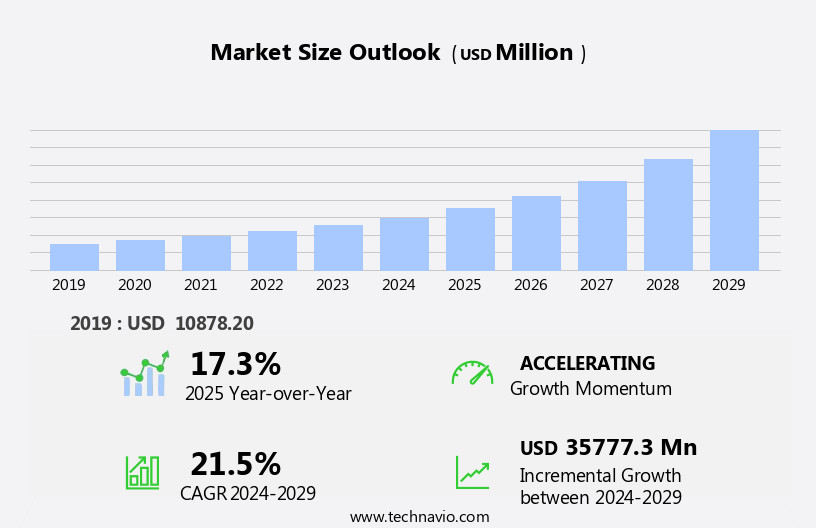
The market continues to evolve, driven by advancements in spatial data acquisition, project management, and navigation systems. BIM software, artificial intelligence (AI), and 3D visualization services are increasingly integrated into infrastructure management, real estate development, and cultural heritage preservation. Image recognition and 3D scanning are revolutionizing asset management and virtual reality (VR) applications. In precision agriculture, AI development and machine learning enable object detection and scene understanding, while data analysis and processing facilitate more efficient crop management. Autonomous vehicles and remote sensing rely on 3D modeling software and point cloud processing for accurate environmental monitoring.
Additive manufacturing and 3D printing services are transforming industries, from construction to healthcare, with advancements in 3D modeling software, materials, and processing techniques. Urban planning benefits from AI-driven data analytics and 3D model optimization for smarter city design. Deep learning and computer vision are enhancing object tracking and data visualization services, while software development and spatial analysis are improving facility management and location-based services. The ongoing integration of these technologies is shaping a dynamic and innovative market landscape.
How is this 3D Mapping And Modeling Industry segmented?
The 3d mapping and modeling industry research report provides comprehensive data (region-wise segment analysis), with forecasts and estimates in "USD million" for the period 2025-2029, as well as historical data from 2019-2023 for the following segments.
- Product Type
- 3D modeling
- 3D mapping
- Component
- Software
- Services
- Geography
- North America
- US
- Canada
- Europe
- France
- Germany
- Italy
- UK
- APAC
- China
- India
- Japan
- South Korea
- Rest of World (ROW)
- North America
By Product Type Insights
The 3d modeling segment is estimated to witness significant growth during the forecast period.
The 3D modeling market encompasses the creation of three-dimensional digital representations of objects, environments, and surfaces, finding extensive applications in industries such as architecture, gaming, film production, product design, and medical imaging. This technology's integration has revolutionized these sectors, fostering more precise and efficient design, planning, and analysis. Key technologies driving this market include computer-aided design (CAD) software, 3D scanning and rendering, simulation and animation tools, and geospatial data. CAD is a cornerstone technology in architecture, engineering, and manufacturing, enabling professionals to create intricate and accurate designs. 3D scanning and rendering technologies convert physical objects into digital models, crucial for industries where exact replicas are required.
Artificial intelligence (AI) and machine learning algorithms are increasingly integrated into 3D modeling, enhancing object detection, computer vision, and data analysis capabilities. Virtual reality (VR) and augmented reality (AR) technologies are transforming 3D modeling by providing immersive experiences for design visualization, enabling better scene understanding and spatial analysis. Precision agriculture employs 3D modeling for terrain modeling and crop monitoring, while infrastructure management uses it for asset management and urban planning. 3D modeling is also instrumental in heritage preservation, environmental monitoring, and additive manufacturing. Advancements in 3D modeling include mesh generation, structure from motion, point cloud processing, and laser scanning.
These innovations contribute to the development of digital twins, location-based services, and data visualization services. Furthermore, 3D modeling services and software development continue to evolve, offering 3D model optimization, object tracking, and 3D model visualization. Autonomous vehicles, remote sensing, and facility management are among the emerging applications of 3D modeling. As 3D modeling technologies continue to advance, they will further revolutionize industries by enabling more accurate data processing, analysis, and visualization.

The 3D modeling segment was valued at USD 7.91 billion in 2019 and showed a gradual increase during the forecast period.
Regional Analysis
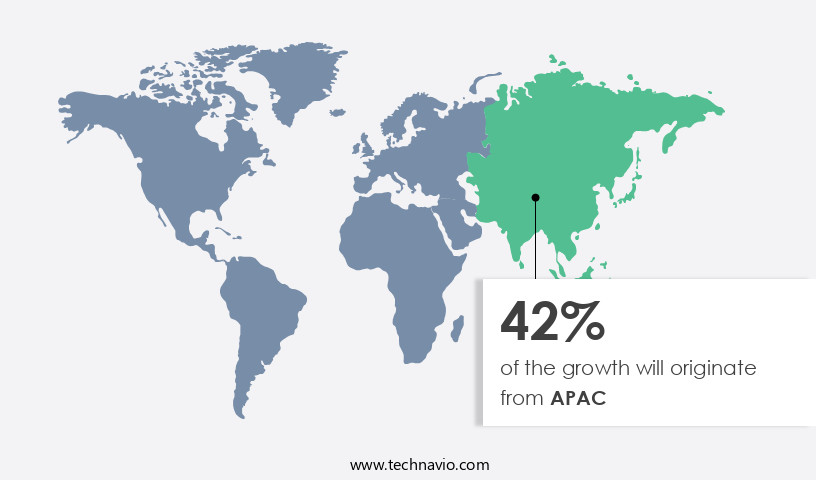
APAC is estimated to contribute 42% to the growth of the global market during the forecast period.Technavio’s analysts have elaborately explained the regional trends and drivers that shape the market during the forecast period.
In The market, North America stands out as a significant region due to the widespread adoption of 3D technologies in industries like construction, automotive, healthcare, and gaming. The region's focus on infrastructure development and technological innovation fuels the demand for advanced 3D mapping and modeling solutions. Notably, the Bipartisan Infrastructure Law (BIL), passed in November 2021, allocated USD1.2 trillion for upgrading roads, bridges, railways, and airports over a five-year period. Canada's infrastructure plan, announced in March 2016, committed approximately USD131.6 billion to projects such as roads, bridges, and public transit expansion over a 12-year period. 3D technologies, including spatial data, project management, navigation systems, BIM software, artificial intelligence (AI), 3D visualization services, image recognition, 3D scanning, and more, play essential roles in these infrastructure projects.
AI and machine learning enable object detection, computer vision, data analysis, and AI development, while 3D modeling software, 3D printing, and 3D scanning services facilitate the creation and manipulation of 3D models. Geospatial data, precision agriculture, environmental monitoring, and heritage preservation also benefit from these technologies. Urban planning, additive manufacturing, 3D model animation, 3D reconstruction, and deep learning further expand the market's scope. Autonomous vehicles, remote sensing, VR/AR development, facility management, scene understanding, CAD software, 3D design software, digital twin, location-based services, data visualization services, 3D model optimization, software development, spatial analysis, and augmented reality (AR) are additional areas where 3D mapping and modeling solutions are making an impact.
Market Dynamics
Our researchers analyzed the data with 2024 as the base year, along with the key drivers, trends, and challenges. A holistic analysis of drivers will help companies refine their marketing strategies to gain a competitive advantage.
What are the key market drivers leading to the rise in the adoption of 3D Mapping And Modeling Industry?
- The increasing implementation of smart technologies in city development and urban planning is the primary catalyst fueling market growth in this sector.
- The market is experiencing significant growth due to the increasing adoption of these technologies in various industries, particularly in urban planning and development. With over half of the world's population living in urban areas as of 2024, and this number projected to reach 68% by 2050, the demand for advanced urban planning solutions is on the rise. In response, initiatives like the National Industrial Corridor Development Programme in India are leveraging 3D mapping and modeling technologies to enhance infrastructure planning, resource management, and overall urban development. 3D mapping and modeling technologies are also being utilized in precision agriculture, environmental monitoring, and 3D printing industries.
- Precision agriculture uses 3D modeling software and data analysis to optimize crop yields and reduce waste. Environmental monitoring relies on 3D scanning services and mesh generation to analyze terrain and identify potential hazards. In the 3D printing industry, 3D modeling software, object detection, and computer vision are essential for creating precise and accurate models, while machine learning and AI development are used to optimize the 3D printing process. Moreover, 3D printing materials and laser scanning technologies, such as structure from motion, are crucial components of the market. These technologies enable the creation of immersive and harmonious 3D models, which can be used for various applications, including architectural design, engineering, and entertainment.
- Overall, the market is a dynamic and innovative industry that is transforming the way we approach data analysis, resource management, and infrastructure planning.
What are the market trends shaping the 3D Mapping And Modeling Industry?
- Digital twin technology is gaining significant traction in the market, representing an emerging trend. This advanced technology enables virtual replicas of physical assets to be created, allowing for more efficient and effective management and optimization.
- Digital twin technology, which creates virtual replicas of physical assets, is gaining traction in industries such as aerospace, construction, and manufacturing. This technology enhances performance, predicts failures, and streamlines operations, making it essential for modern industrial practices. In aerospace, digital twins simulate and monitor aircraft systems, enabling predictive maintenance and improving operational efficiency. By modeling aircraft components in detail, manufacturers can identify potential issues before they materialize, thereby reducing downtime and maintenance costs, ensuring higher reliability and safety. The construction sector utilizes digital twins for urban planning and infrastructure development. Through 3D modeling and point cloud processing, digital twins provide accurate terrain modeling and object tracking.
- Additionally, 3D model visualization and data analytics enable better decision-making and heritage preservation. Deep learning algorithms and data processing techniques further enhance the capabilities of digital twins, enabling advanced applications such as additive manufacturing and GIS software integration. 3D modeling and 3D printing services play a crucial role in creating these digital twins, providing the necessary data and expertise. Overall, digital twin technology offers significant benefits, making it a valuable investment for businesses seeking to optimize their operations and gain a competitive edge.
What challenges does the 3D Mapping And Modeling Industry face during its growth?
- The growth of the industry is significantly impacted by privacy and security concerns, which represent a major challenge that necessitates continuous attention and effective mitigation strategies from industry professionals.
- The market is experiencing significant growth due to the increasing adoption of autonomous vehicles, remote sensing, and Virtual Reality/Augmented Reality (VR/AR) development. These technologies are revolutionizing various industries, including facility management, scene understanding, and location-based services. CAD software and 3D design software are essential tools for creating digital twins, optimizing 3D models, and providing data visualization services. Spatial analysis and software development are also critical components of this market. However, the growing use of 3D mapping and modeling technologies raises privacy and security concerns. High-resolution 3D maps generated using drones, LiDAR, and satellite imaging can capture sensitive information about individuals, private properties, and critical infrastructure.
- Without proper safeguards, this data could be exploited for malicious activities, including unauthorized surveillance, cyberattacks, and identity theft. Additionally, facial recognition and AI-based mapping systems raise ethical concerns regarding mass surveillance and potential infringement of civil liberties. Governments, businesses, and consumers must address these concerns by implementing robust data security measures and ethical guidelines. This includes ensuring data privacy, securing data transmission, and implementing transparent data usage policies. Collaboration between technology companies, regulatory bodies, and stakeholders is essential to create a trustworthy and secure ecosystem for 3D mapping and modeling technologies. In conclusion, the market offers numerous benefits, including improved efficiency, enhanced safety, and new business opportunities.
- However, it is crucial to address the privacy and security concerns associated with these technologies to ensure their ethical and responsible use.
Exclusive Customer Landscape
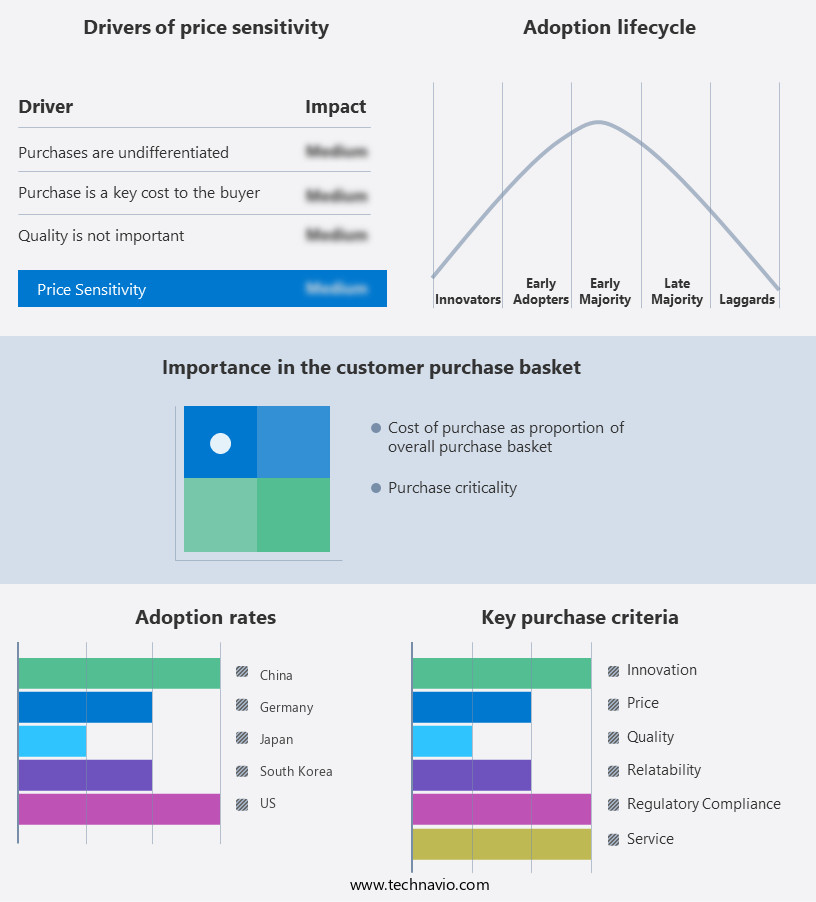
The 3d mapping and modeling market forecasting report includes the adoption lifecycle of the market, covering from the innovator’s stage to the laggard’s stage. It focuses on adoption rates in different regions based on penetration. Furthermore, the 3d mapping and modeling market report also includes key purchase criteria and drivers of price sensitivity to help companies evaluate and develop their market growth analysis strategies.
Customer Landscape
Key Companies & Market Insights
Companies are implementing various strategies, such as strategic alliances, 3d mapping and modeling market forecast, partnerships, mergers and acquisitions, geographical expansion, and product/service launches, to enhance their presence in the industry.
3D Systems Corp. - This company specializes in advanced 3D mapping and modeling solutions. Utilizing AI-driven photogrammetry, creators can convert photos into precise 3D models through Substance 3D suite. Additionally, Substance 3D Modeler allows for sculpting objects in a virtual reality environment. Access to a curated library of 3D assets from Adobe Stocks is also included. These innovative tools cater to industries such as gaming, e-commerce, and marketing, enhancing immersive content creation.
The industry research and growth report includes detailed analyses of the competitive landscape of the market and information about key companies, including:
- 3D Systems Corp.
- Adobe Inc.
- Airbus SE
- Astrivis Technologies Ltd.
- Autodesk Inc.
- Bentley Systems Inc.
- CyberCity 3D Inc.
- Dassault Systemes SE
- Dynamic Map Platform Co. Ltd.
- Esri Global Inc.
- FARO Technologies Inc.
- Golden Software LLC
- Hexagon AB
- Innersight Labs Ltd.
- Intermap Technologies Corp.
- Maxon Computer GmbH
- Mitsubishi Electric Corp.
- Onionlab
- Pix4D SA
- PTC Inc.
- Robert McNeel and Associates
- Saab AB
- Siemens AG
- The Foundry Visionmongers Ltd.
- Topcon Positioning Systems Inc.
- Trimble Inc.
- VariCAD
Qualitative and quantitative analysis of companies has been conducted to help clients understand the wider business environment as well as the strengths and weaknesses of key industry players. Data is qualitatively analyzed to categorize companies as pure play, category-focused, industry-focused, and diversified; it is quantitatively analyzed to categorize companies as dominant, leading, strong, tentative, and weak.
Recent Development and News in 3D Mapping And Modeling Market
- In February 2023, Autodesk, a leading software corporation, introduced ReCap Reality Modeling 2023, an enhanced version of its 3D reality scanning software (Autodesk Press Release). This update includes advanced features for processing large-scale data and improved accuracy, catering to industries such as construction, engineering, and manufacturing.
- In June 2022, Trimble and Bentley Systems, two major players in the construction technology sector, announced a definitive agreement to merge (Trimble Press Release). The merger aims to create a comprehensive digital solutions provider for the infrastructure and construction industries, combining Trimble's field and office software with Bentley's modeling, simulation, and engineering offerings.
- In November 2021, Epson, a leading manufacturer of 3D printers, unveiled its new MetalFab series, featuring large-format 3D metal printers (Epson Press Release). With a build volume of 300 mm x 300 mm x 300 mm, these printers target the automotive, aerospace, and medical industries, offering high precision and surface finish.
- In March 2020, the European Union launched the Digital Single Market Strategy for Europe's Cultural Heritage (European Commission Press Release). This initiative includes a focus on 3D modeling and mapping of cultural heritage sites, aiming to promote accessibility, education, and preservation. The strategy includes funding for projects and collaborations between EU member states and cultural institutions.
Research Analyst Overview
- The market is experiencing significant advancements in 3D model resolution and detail, driven by the development of sophisticated 3D visualization tools. Data management plays a crucial role in handling the increasing complexity of 3D models, with a focus on efficient data integration and processing. 3D scanning technology is also evolving, with higher resolutions and improved accuracy enabling more detailed and realistic 3D models. AI algorithms and photogrammetry techniques are being employed to enhance 3D model validation and improve scanning speed. Advancements in 3D modeling techniques, such as machine learning models and computer vision algorithms, are revolutionizing industries like VR/AR applications, geospatial data analysis, and lidar data processing.
- These techniques enable more accurate 3D model rendering and certification, enhancing the overall user experience. Deep learning frameworks and spatial data visualization are becoming essential components of the 3D modeling process, allowing for more intricate 3D model reconstruction algorithms and enabling real-time data analysis. Lidar data analysis and image processing techniques are also gaining popularity, expanding the range of applications for 3D models in various industries. 3D printing applications are benefiting from these advancements, with the ability to produce highly detailed and accurate models for prototyping and manufacturing purposes. The market is expected to continue evolving, with a focus on improving 3D model complexity and expanding the range of applications across various industries.
Dive into Technavio’s robust research methodology, blending expert interviews, extensive data synthesis, and validated models for unparalleled 3D Mapping And Modeling Market insights. See full methodology.
|
Market Scope |
|
|
Report Coverage |
Details |
|
Page number |
211 |
|
Base year |
2024 |
|
Historic period |
2019-2023 |
|
Forecast period |
2025-2029 |
|
Growth momentum & CAGR |
Accelerate at a CAGR of 21.5% |
|
Market growth 2025-2029 |
USD 35777.3 million |
|
Market structure |
Fragmented |
|
YoY growth 2024-2025(%) |
17.3 |
|
Key countries |
US, China, Japan, Germany, Canada, UK, South Korea, France, Italy, and India |
|
Competitive landscape |
Leading Companies, Market Positioning of Companies, Competitive Strategies, and Industry Risks |
What are the Key Data Covered in this 3D Mapping And Modeling Market Research and Growth Report?
- CAGR of the 3D Mapping And Modeling industry during the forecast period
- Detailed information on factors that will drive the growth and forecasting between 2025 and 2029
- Precise estimation of the size of the market and its contribution of the industry in focus to the parent market
- Accurate predictions about upcoming growth and trends and changes in consumer behaviour
- Growth of the market across North America, APAC, Europe, Middle East and Africa, and South America
- Thorough analysis of the market’s competitive landscape and detailed information about companies
- Comprehensive analysis of factors that will challenge the 3d mapping and modeling market growth of industry companies
We can help! Our analysts can customize this 3d mapping and modeling market research report to meet your requirements.