


Agriculture Sensing And Monitoring Devices Market Size 2026-2030
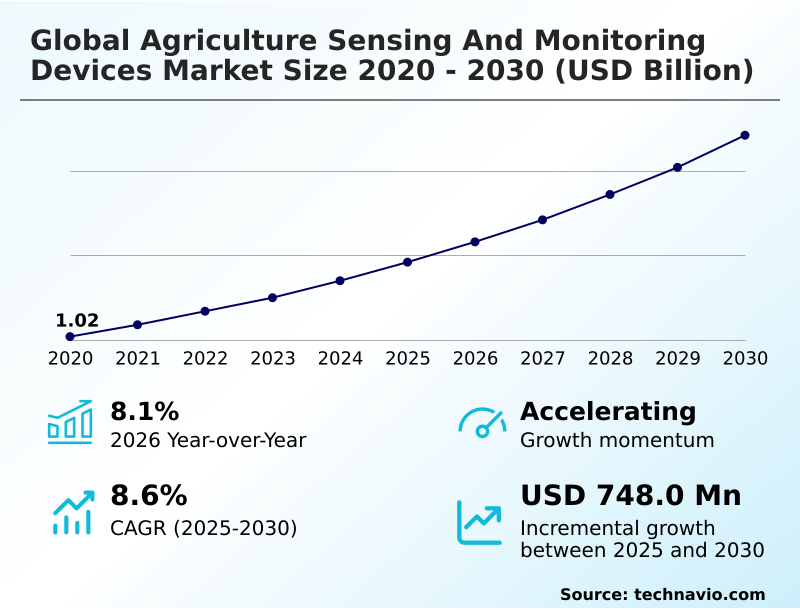
The agriculture sensing and monitoring devices market size is valued to increase by USD 748 million, at a CAGR of 8.6% from 2025 to 2030. Imperative for enhanced food security and agricultural productivity will drive the agriculture sensing and monitoring devices market.
Major Market Trends & Insights
- North America dominated the market and accounted for a 36% growth during the forecast period.
- By Application - Crop sensing and monitoring segment was valued at USD 713.6 million in 2024
- By End-user - Farmers segment accounted for the largest market revenue share in 2024
Market Size & Forecast
- Market Opportunities: USD 1.19 billion
- Market Future Opportunities: USD 748 million
- CAGR from 2025 to 2030 : 8.6%
Market Summary
- The agriculture sensing and monitoring devices market is undergoing a significant transformation, moving from traditional farming to data-driven precision agriculture. This shift is driven by the urgent need for more efficient, sustainable, and resilient food production systems to meet the demands of a growing global population amid finite natural resources.
- The core of this market lies in providing farmers with precise, actionable insights through a range of instruments, including soil sensors for nutrient levels, weather stations for climate data, and advanced imaging systems on drones or satellites. By leveraging the Internet of Things (IoT), these tools form an interconnected ecosystem that enables real-time decision-making.
- For instance, a large-scale commercial farm can use an integrated platform to analyze soil moisture data from across thousands of acres, automatically adjusting irrigation schedules to conserve water while ensuring optimal crop hydration. This not only reduces operational costs and minimizes environmental impact but also enhances crop yield and quality.
- While challenges such as high initial investment and rural connectivity gaps exist, the compelling return on investment from optimized resource management continues to fuel market expansion and innovation, making these devices essential for modern agriculture.
What will be the Size of the Agriculture Sensing And Monitoring Devices Market during the forecast period?
Get Key Insights on Market Forecast (PDF) Request Free Sample
How is the Agriculture Sensing And Monitoring Devices Market Segmented?
The agriculture sensing and monitoring devices industry research report provides comprehensive data (region-wise segment analysis), with forecasts and estimates in "USD million" for the period 2026-2030, as well as historical data from 2020-2024 for the following segments.
- Application
- Crop sensing and monitoring
- Livestock sensing and monitoring
- End-user
- Farmers
- Agricultural companies
- Government and research
- Product
- Soil sensors
- Water sensors
- Climate sensors
- Others
- Geography
- North America
- US
- Canada
- Mexico
- Europe
- Germany
- UK
- France
- APAC
- China
- Japan
- India
- South America
- Brazil
- Argentina
- Colombia
- Middle East and Africa
- Saudi Arabia
- UAE
- South Africa
- Rest of World (ROW)
- North America
By Application Insights
The crop sensing and monitoring segment is estimated to witness significant growth during the forecast period.
The crop sensing and monitoring segment is central to the agriculture sensing and monitoring devices market, driven by the need for advanced yield optimization tools. This area focuses on technologies that capture granular field data for farm efficiency improvement.
Key technologies include remote sensing drones equipped with hyperspectral imaging for advanced crop stress detection and analysis of metrics like the Normalized Difference Vegetation Index.
In-field sensor networks complement this by providing continuous data, while plant phenotyping sensors advance research capabilities.
The integration of computer vision for agriculture into precision spraying equipment is a significant development, allowing for a 20% reduction in chemical use by targeting specific areas.
These crop monitoring systems enable real-time crop analytics, supporting sustainable farming practices through precise, data-driven interventions.
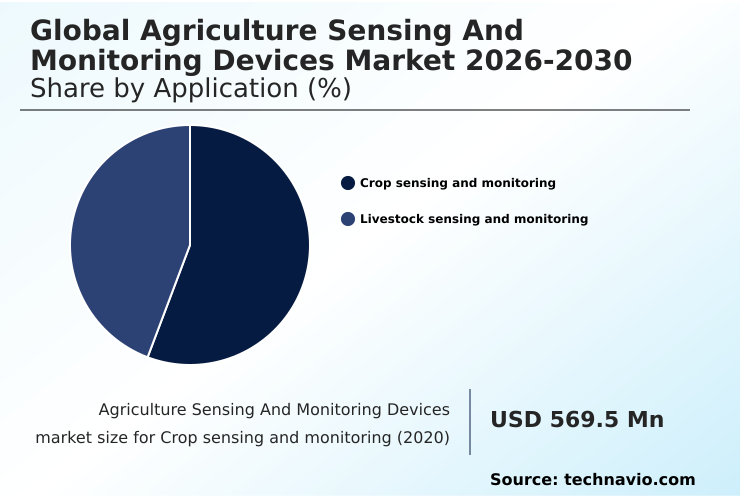
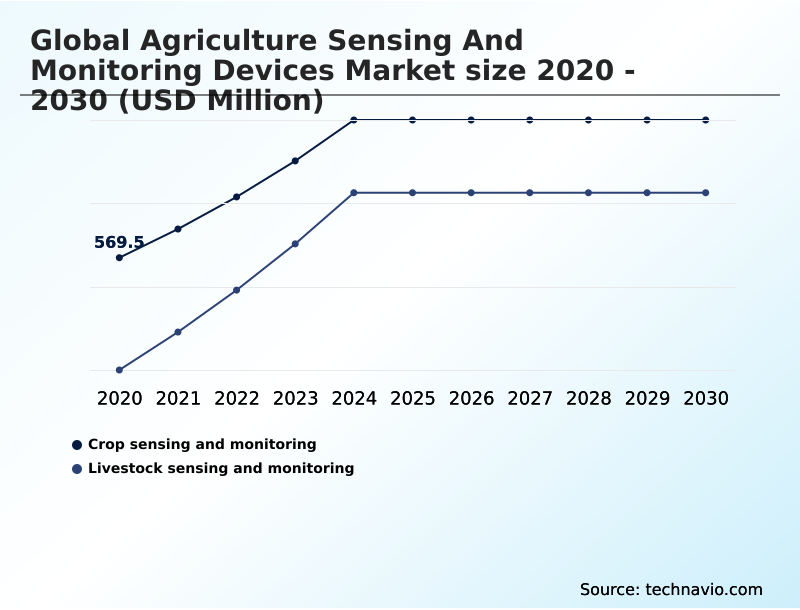
The Crop sensing and monitoring segment was valued at USD 713.6 million in 2024 and showed a gradual increase during the forecast period.
Regional Analysis
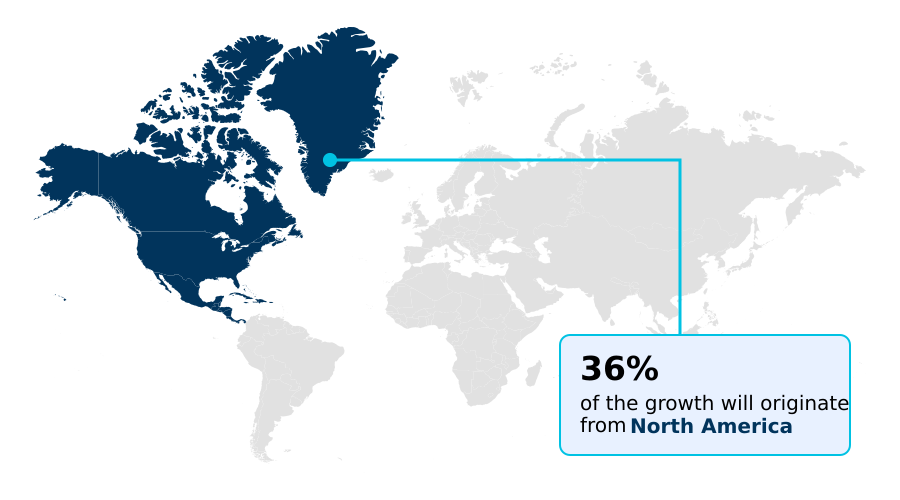
North America is estimated to contribute 36% to the growth of the global market during the forecast period.Technavio’s analysts have elaborately explained the regional trends and drivers that shape the market during the forecast period.
See How Agriculture Sensing And Monitoring Devices Market Demand is Rising in North America Request Free Sample
The market landscape shows distinct regional adoption patterns. North America, accounting for 36% of the incremental growth opportunity, leads in large-scale automated farm operations using advanced yield optimization tools.
Europe, driven by stringent regulations, focuses on precision viticulture and technologies for soil nutrient sensing. In Australia and South America, precision livestock farming is expanding, with livestock tracking technology and livestock activity monitoring being critical for managing vast rangelands.
The use of ingestible bolus sensors improves animal welfare technology by enabling early disease detection.
APAC, the fastest-growing region with a 9.6% CAGR, is rapidly adopting affordable soil moisture sensor technology and in-field sensor networks to enhance food security, which is reflected in its 26.8% contribution to market growth.
Market Dynamics
Our researchers analyzed the data with 2025 as the base year, along with the key drivers, trends, and challenges. A holistic analysis of drivers will help companies refine their marketing strategies to gain a competitive advantage.
- Understanding the global agriculture sensing and monitoring devices market requires examining specific use cases and financial considerations. A key question for producers is the cost of soil moisture sensors for farms and the subsequent ROI of precision agriculture technology.
- While government subsidies for precision agriculture equipment can offset initial expenses, the challenges of rural internet connectivity for agtech remain a significant hurdle.
- The decision to invest in the best drone for crop scouting and analysis depends on its ability to provide actionable data, just as livestock monitoring systems for dairy cows are evaluated on their capacity for real-time disease detection in livestock.
- The impact of 5G on smart farming promises to enhance capabilities, but producers must first learn how to integrate different farm data platforms and grapple with data privacy concerns in digital farming.
- The benefits of variable rate fertilizer application are clear, yet their realization depends on accurate data from technologies like NIR sensors for crop quality analysis and improving sub-inch accuracy in GPS guidance. Comparing in-field sensors vs drone imagery reveals different strengths, while the role of telemetry in remote farm monitoring is crucial for both.
- Ultimately, successful adoption hinges on implementing integrated farm management systems and leveraging AI-powered prescriptive analytics in agriculture to translate data into profit. Knowing how LiDAR technology works in agriculture and using satellite imagery to predict crop yield are becoming essential skills, with successful implementation showing more than a twofold increase in operational awareness compared to traditional methods.
- Finally, automated irrigation systems for water conservation offer a clear path to resource efficiency.
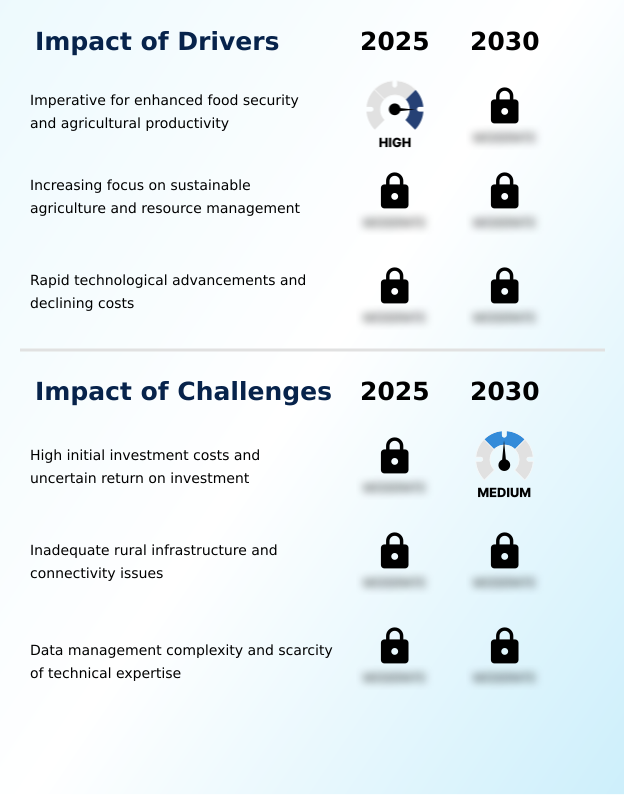
What are the key market drivers leading to the rise in the adoption of Agriculture Sensing And Monitoring Devices Industry?
- The imperative to enhance agricultural productivity for global food security is a primary driver for the agriculture sensing and monitoring devices market.
- The imperative for resource efficiency drives adoption of precision agriculture solutions, particularly in water management in agriculture.
- Technologies like automated irrigation control, integrated with climate sensor integration through IoT in agriculture, have demonstrated water savings of over 30% in arid regions.
- The use of GPS guidance systems to achieve sub-inch steering accuracy facilitates precision fertilization, reducing input waste. Simultaneously, yield monitoring systems provide crucial data for effective farm data management.
- This agribusiness technology integration enables smart irrigation systems and variable rate technology, which together can boost input efficiency by 18%, making a compelling economic case for adoption.
What are the market trends shaping the Agriculture Sensing And Monitoring Devices Industry?
- The integration of artificial intelligence and machine learning is a defining market trend. This evolution moves beyond basic data collection toward predictive and prescriptive analytics for enhanced decision-making.
- A defining market trend is the integration of machine learning algorithms into smart farm platforms, enabling advanced AI in agricultural analytics. This shift toward data-driven agronomy transforms raw sensor data into actionable insights for predictive disease modeling, improving forecast accuracy by up to 25%.
- Enhanced ag-tech interoperability is fostering a connected farm ecosystem, where digital agriculture platforms can create a digital twin for agriculture. The convergence of LiDAR scanning with robotic farming systems is accelerating the development of fully autonomous farming systems, which can increase operational uptime by 15%.
- This wave of smart farming technology moves the industry from reactive monitoring to proactive, automated management.
What challenges does the Agriculture Sensing And Monitoring Devices Industry face during its growth?
- High initial investment costs and uncertain return on investment represent a key challenge affecting industry growth and widespread adoption.
- Significant challenges restrain market growth, particularly inadequate rural infrastructure for agricultural IoT devices. The lack of reliable LPWAN connectivity hinders the functionality of telemetry systems for remote farm monitoring, creating data transmission delays that can negate the benefits of real-time analytics. Integrating disparate data into cohesive farm management information systems also presents a major hurdle, complicating agronomic data analytics.
- High initial costs for equipment like GNSS receivers with real-time kinematic capabilities affect agritech investment trends, with payback periods sometimes exceeding three years. Furthermore, a scarcity of skilled labor capable of managing complex environmental monitoring systems limits the effective deployment of regenerative agriculture technology.
Exclusive Technavio Analysis on Customer Landscape
The agriculture sensing and monitoring devices market forecasting report includes the adoption lifecycle of the market, covering from the innovator’s stage to the laggard’s stage. It focuses on adoption rates in different regions based on penetration. Furthermore, the agriculture sensing and monitoring devices market report also includes key purchase criteria and drivers of price sensitivity to help companies evaluate and develop their market growth analysis strategies.
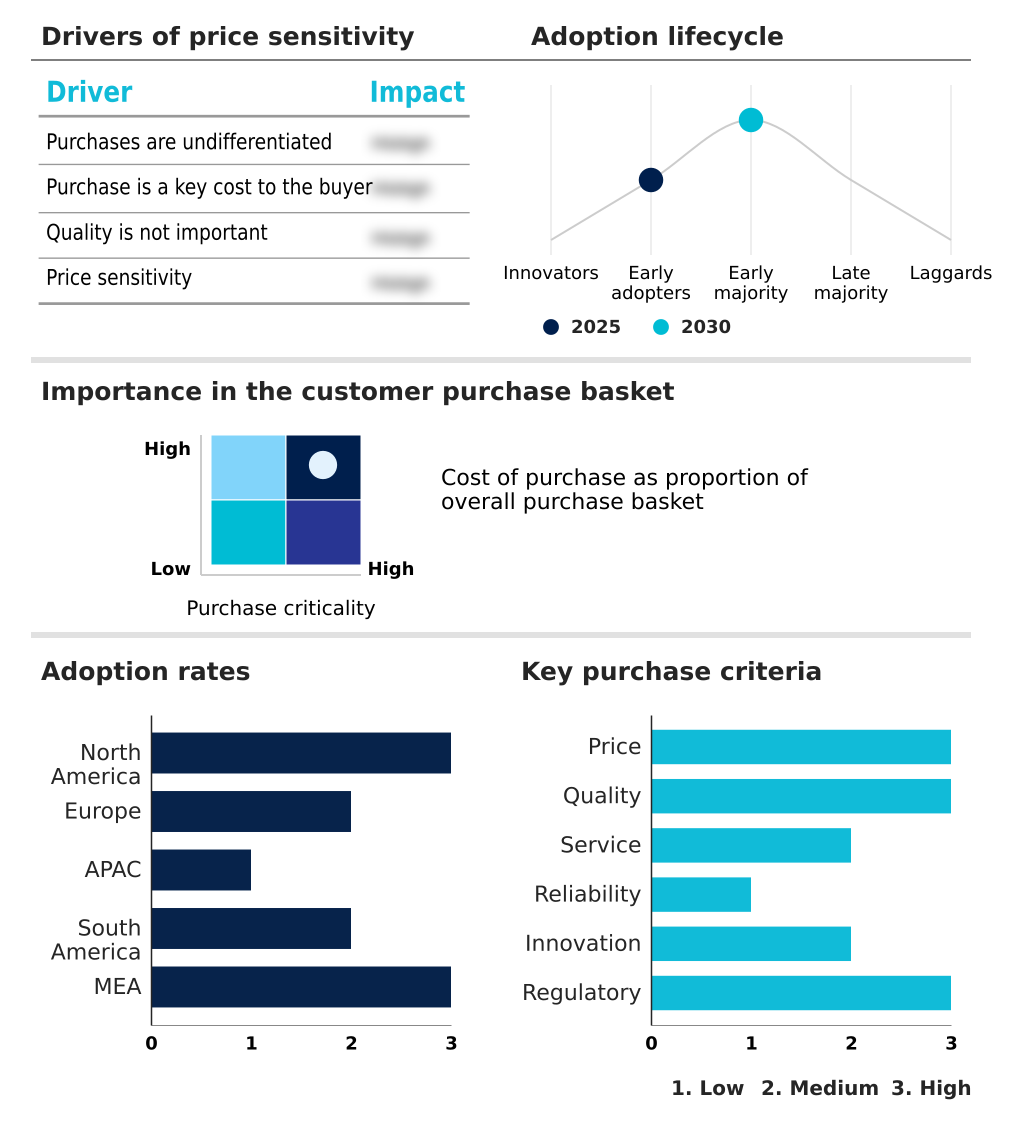
Customer Landscape of Agriculture Sensing And Monitoring Devices Industry
Competitive Landscape
Companies are implementing various strategies, such as strategic alliances, agriculture sensing and monitoring devices market forecast, partnerships, mergers and acquisitions, geographical expansion, and product/service launches, to enhance their presence in the industry.
AGCO Corp. - Provides an all-in-one IoT device combining weather, soil, and plant sensing with integrated imaging and machine learning-driven intelligence to deliver comprehensive crop insights.
The industry research and growth report includes detailed analyses of the competitive landscape of the market and information about key companies, including:
- AGCO Corp.
- Arable Labs Inc.
- Auroras Srl
- Bayer AG
- CropX Technologies Ltd.
- Deere and Co.
- DICKEY john
- DTN LLC
- GroGuru Inc.
- Hexagon AB
- Murata Manufacturing Co. Ltd.
- Parker Hannifin Corp.
- Raven Industries Inc.
- Sentera Inc.
- Syngenta Crop Protection AG
- Teralytic Inc.
- Trimble Inc.
Qualitative and quantitative analysis of companies has been conducted to help clients understand the wider business environment as well as the strengths and weaknesses of key industry players. Data is qualitatively analyzed to categorize companies as pure play, category-focused, industry-focused, and diversified; it is quantitatively analyzed to categorize companies as dominant, leading, strong, tentative, and weak.
Recent Development and News in Agriculture sensing and monitoring devices market
- In September 2024, Deere & Co. announced the acquisition of a leading AI-driven agronomy platform, integrating predictive analytics for pest outbreaks directly into its Operations Center in a deal valued at approximately $500 million.
- In November 2024, CropX Technologies Ltd. launched its next-generation spiral soil sensor with enhanced capabilities to detect soil organic carbon levels in real-time, providing critical data for regenerative agriculture practices.
- In February 2025, Raven Industries Inc. entered a strategic partnership with a major satellite imagery provider to fuse high-resolution satellite data with its autonomous steering systems, enabling sub-inch accuracy for in-season nitrogen application.
- In April 2025, AGCO Corp. announced the establishment of a new smart farming R&D center in Brazil, backed by government incentives, to develop localized precision agriculture technologies for soybean and sugarcane cultivation.
Dive into Technavio’s robust research methodology, blending expert interviews, extensive data synthesis, and validated models for unparalleled Agriculture Sensing And Monitoring Devices Market insights. See full methodology.
| Market Scope | |
|---|---|
| Page number | 305 |
| Base year | 2025 |
| Historic period | 2020-2024 |
| Forecast period | 2026-2030 |
| Growth momentum & CAGR | Accelerate at a CAGR of 8.6% |
| Market growth 2026-2030 | USD 748.0 million |
| Market structure | Fragmented |
| YoY growth 2025-2026(%) | 8.1% |
| Key countries | US, Canada, Mexico, Germany, UK, France, Italy, Spain, The Netherlands, China, Japan, India, South Korea, Australia, Indonesia, Brazil, Argentina, Colombia, Saudi Arabia, UAE, South Africa, Israel and Turkey |
| Competitive landscape | Leading Companies, Market Positioning of Companies, Competitive Strategies, and Industry Risks |
Research Analyst Overview
- The agriculture sensing and monitoring devices market is fundamentally reshaping farm management through a sophisticated suite of technologies. At the core are in-field sensor networks, featuring devices like the soil moisture sensor, which provide foundational data for data-driven agronomy.
- This is enhanced by remote sensing drones utilizing hyperspectral imaging and LiDAR scanning for advanced crop stress detection and analysis of metrics such as the Normalized Difference Vegetation Index and chlorophyll fluorescence. For animal agriculture, precision livestock farming leverages ingestible bolus sensors and livestock activity monitoring for health insights.
- These hardware components, including advanced GNSS receivers that enable real-time kinematic positioning for sub-inch steering accuracy, feed into telemetry systems. The data is aggregated on smart farm platforms or farm management information systems, where machine learning algorithms perform agronomic data analytics. This integration is vital for predictive disease modeling and enabling variable rate technology via precision spraying equipment.
- Critical technologies like NIR spectroscopy and computer vision for agriculture are being integrated into autonomous farming systems and yield monitoring systems, with a focus on improving ag-tech interoperability. The entire ecosystem, supported by LPWAN connectivity and climate sensor integration, is driving a shift toward automated irrigation control and other efficiencies, with some integrated systems reducing input waste by over 25%.
What are the Key Data Covered in this Agriculture Sensing And Monitoring Devices Market Research and Growth Report?
-
What is the expected growth of the Agriculture Sensing And Monitoring Devices Market between 2026 and 2030?
-
USD 748 million, at a CAGR of 8.6%
-
-
What segmentation does the market report cover?
-
The report is segmented by Application (Crop sensing and monitoring, and Livestock sensing and monitoring), End-user (Farmers, Agricultural companies, and Government and research), Product (Soil sensors, Water sensors, Climate sensors, and Others) and Geography (North America, Europe, APAC, South America, Middle East and Africa)
-
-
Which regions are analyzed in the report?
-
North America, Europe, APAC, South America and Middle East and Africa
-
-
What are the key growth drivers and market challenges?
-
Imperative for enhanced food security and agricultural productivity, High initial investment costs and uncertain return on investment
-
-
Who are the major players in the Agriculture Sensing And Monitoring Devices Market?
-
AGCO Corp., Arable Labs Inc., Auroras Srl, Bayer AG, CropX Technologies Ltd., Deere and Co., DICKEY john, DTN LLC, GroGuru Inc., Hexagon AB, Murata Manufacturing Co. Ltd., Parker Hannifin Corp., Raven Industries Inc., Sentera Inc., Syngenta Crop Protection AG, Teralytic Inc. and Trimble Inc.
-
Market Research Insights
- The agriculture sensing and monitoring devices market is shaped by the push for farm efficiency improvement through smart farming technology and precision agriculture solutions.
- The adoption of agricultural IoT devices for remote farm monitoring and automated farm operations is increasing, with deployments showing a reduction in water usage by up to 30% while improving yield consistency by 15% in certain crops. These technologies are central to sustainable farming practices and better water management in agriculture.
- As agribusiness technology integration deepens, platforms for farm data management are becoming crucial for real-time crop analytics. The focus on yield optimization tools and smart irrigation systems highlights a market where the return on investment, which can be 2-3 times the initial outlay over five years, is a key adoption driver.
We can help! Our analysts can customize this agriculture sensing and monitoring devices market research report to meet your requirements.