


Compensation Software Market Size 2026-2030
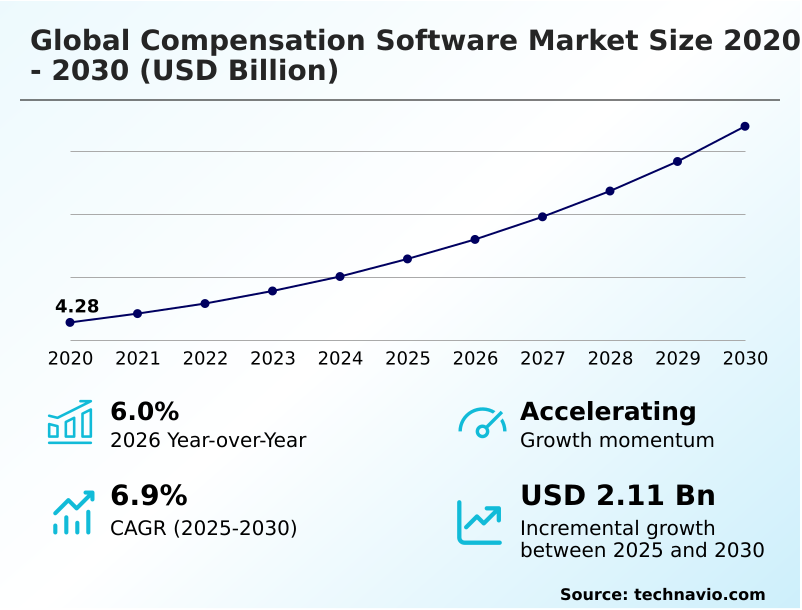
The compensation software market size is valued to increase by USD 2.11 billion, at a CAGR of 6.9% from 2025 to 2030. Adopting pricing strategies of companies in compensation software will drive the compensation software market.
Major Market Trends & Insights
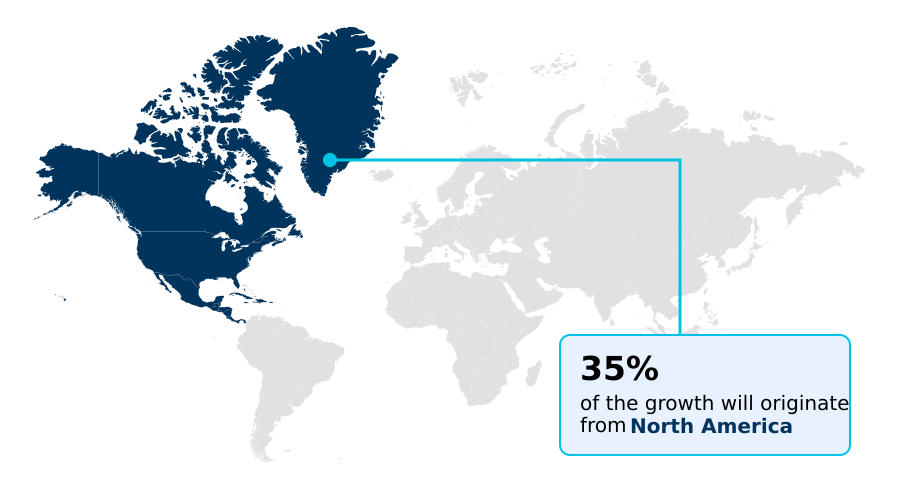
- North America dominated the market and accounted for a 35.3% growth during the forecast period.
- By End-user - Large enterprises segment was valued at USD 3.21 billion in 2024
- By Deployment - Cloud-based segment accounted for the largest market revenue share in 2024
Market Size & Forecast
- Market Opportunities: USD 3.11 billion
- Market Future Opportunities: USD 2.11 billion
- CAGR from 2025 to 2030 : 6.9%
Market Summary
- The compensation software market is evolving from a transactional administrative tool to a strategic asset for human capital management. A key driver is the increasing demand for automated compensation management to ensure accuracy, efficiency, and governance, especially as organizations expand globally. The adoption of SaaS-based compensation platforms is accelerating, offering scalability and lower upfront costs.
- For instance, a multinational enterprise can use a unified platform to manage pay transparency regulations across different jurisdictions, running real-time budget simulations to ensure compliance without exceeding financial targets. This capability reduces legal risk and improves employee trust. However, the market faces challenges from high implementation costs and persistent data privacy and security concerns, which can temper adoption rates.
- Trends such as the integration of AI for predictive analytics, the focus on pay equity auditing, and the need for total rewards communication are reshaping vendor offerings, pushing them toward more intelligent and comprehensive solutions that align compensation with strategic business outcomes.
What will be the Size of the Compensation Software Market during the forecast period?
Get Key Insights on Market Forecast (PDF) Get Free Sample
How is the Compensation Software Market Segmented?
The compensation software industry research report provides comprehensive data (region-wise segment analysis), with forecasts and estimates in "USD million" for the period 2026-2030, as well as historical data from 2020-2024 for the following segments.
- End-user
- Large enterprises
- SMEs
- Deployment
- Cloud-based
- On-premises
- Application
- Base pay management
- Incentive management
- Equity management
- Others
- Geography
- North America
- US
- Canada
- Mexico
- Europe
- Germany
- UK
- France
- APAC
- China
- India
- Japan
- South America
- Brazil
- Argentina
- Middle East and Africa
- South Africa
- Saudi Arabia
- UAE
- Rest of World (ROW)
- North America
By End-user Insights
The large enterprises segment is estimated to witness significant growth during the forecast period.
Large enterprises represent a dominant share of the compensation software market, driven by the need for centralized data governance across complex global operations.
These organizations require platforms that can handle real-time currency fluctuations and integrate with existing enterprise resource planning (ERP) systems. The adoption of AI-powered compensation analytics helps leadership model various budget scenarios, improving allocation accuracy by over 15%.
Managing long-term incentive plans and ensuring compliance with disparate regulatory requirements, such as pay equity mandates, necessitates sophisticated, secure, and scalable solutions.
A unified data model is essential for predictive analytics, which informs employee retention strategies and aligns total rewards with corporate objectives, making these systems a strategic necessity for maintaining competitive advantage and operational stability in a dynamic talent landscape.
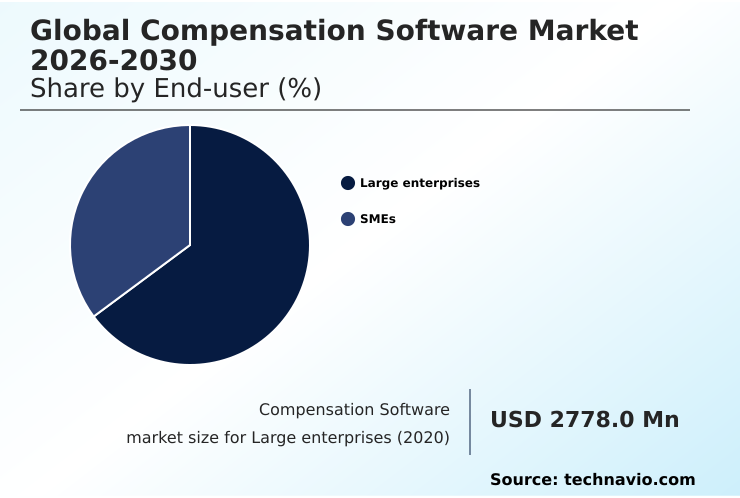
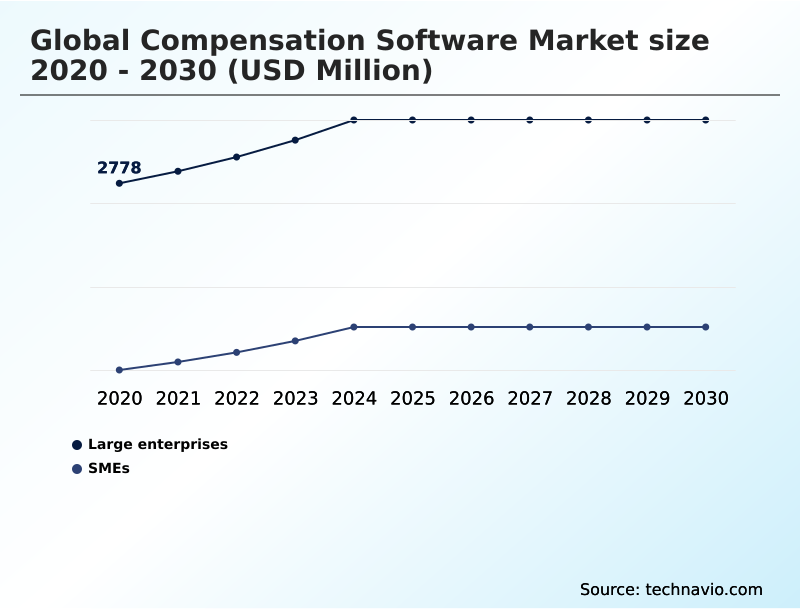
The Large enterprises segment was valued at USD 3.21 billion in 2024 and showed a gradual increase during the forecast period.
Regional Analysis
North America is estimated to contribute 35.3% to the growth of the global market during the forecast period.Technavio’s analysts have elaborately explained the regional trends and drivers that shape the market during the forecast period.
See How Compensation Software Market Demand is Rising in North America Get Free Sample
The market's geographic landscape is defined by varying maturity and regulatory pressures. North America leads in adoption, with organizations leveraging sophisticated total rewards communication and compensation planning tools to navigate stringent state-level pay transparency laws.
Firms in this region report a 35% faster audit completion time using automated systems. Europe follows closely, where compliance with cross-border data transfers and EU directives necessitates platforms with strong data governance.
Meanwhile, APAC is the fastest-growing region, where the focus is on standardizing variable pay and bonus management.
The adoption of cloud-based systems in this region has increased by over 50% in recent years as companies seek scalable solutions for managing a mobile workforce and complex localized benefits administration.
Market Dynamics
Our researchers analyzed the data with 2025 as the base year, along with the key drivers, trends, and challenges. A holistic analysis of drivers will help companies refine their marketing strategies to gain a competitive advantage.
- As organizations seek to optimize their human capital strategies, the effective use of technology becomes paramount. The central question is no longer just about managing payroll but how to automate bonus and incentive calculations to drive performance. For multinational corporations, a key consideration is choosing software for managing global pay equity, which requires robust tools for salary benchmarking and analysis.
- This ties into the broader challenge of linking performance ratings to compensation in a fair and transparent manner, a task that manual processes cannot handle at scale.
- The debate over cloud compensation software vs on-premise solutions continues, with cloud adoption growing due to its flexibility, though some sectors still prefer on-premise for its perceived security in managing executive deferred compensation plans. Modern platforms are now essential for tracking and administering long-term incentive programs effectively, as they provide clear visibility into vesting schedules and potential payouts.
- The ability of a system to streamline the total rewards statement process is a critical differentiator, helping employees understand the full value of their package. Furthermore, advanced software is a key tool to manage pay transparency reporting requirements, reducing compliance risks significantly.
- Organizations that successfully implement these solutions often see more than a 60% reduction in time spent on compensation cycle administration compared to those relying on spreadsheets. Effectively managing equity awards for startups and creating a competitive salary structure are additional functions that these systems facilitate, ensuring that talent acquisition and retention goals are met.
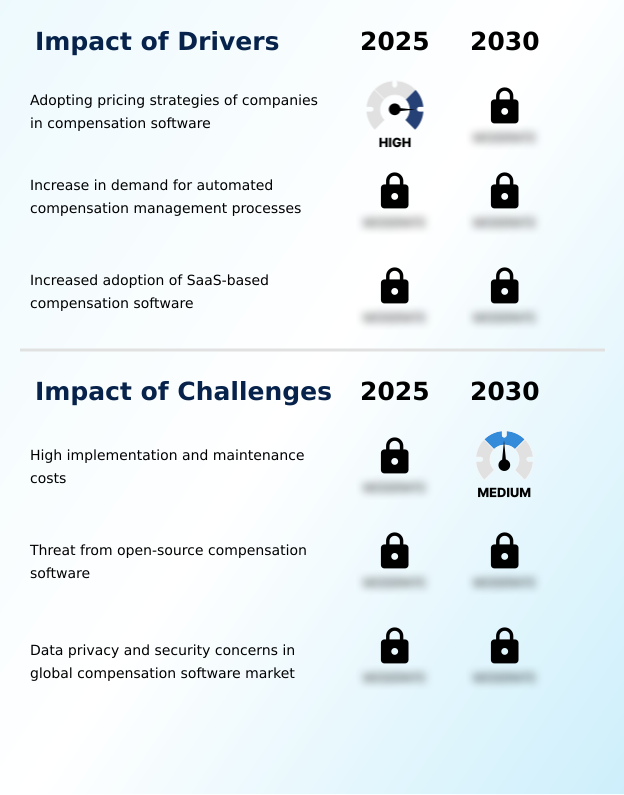
What are the key market drivers leading to the rise in the adoption of Compensation Software Industry?
- The adoption of flexible and evolving pricing strategies by compensation software vendors is a key driver for market growth.
- Market growth is significantly propelled by the increasing demand for automated compensation management, which addresses the inefficiencies and risks of manual processes.
- Automation streamlines workflows for base pay management and complex salary structure design, leading to a 90% reduction in calculation errors compared to spreadsheet-based methods.
- The widespread adoption of SaaS-based compensation models is another primary driver, as it lowers entry barriers for SMEs through flexible pay-per-employee pricing and eliminates the need for on-premise infrastructure.
- This accessibility has broadened the customer base by over 30% in emerging markets.
- Additionally, the ability of these cloud platforms to provide real-time budget simulation and facilitate seamless payroll system integration makes them indispensable for agile and data-driven financial planning, solidifying their role as a critical business tool.
What are the market trends shaping the Compensation Software Industry?
- A key market trend is the increasing demand for integrated Human Capital Management (HCM) solutions. This shift is driven by the organizational need to unify workforce data and streamline HR processes.
- Key market trends are reshaping compensation management from a back-office function to a strategic driver of talent strategy. The increasing demand for integrated HCM solutions is central to this shift, as organizations aim to eliminate data silos and create a unified view of workforce information.
- This integration enables a more holistic approach, where performance-linked rewards are directly tied to business outcomes. Systems with embedded pay equity auditing capabilities are becoming standard, with adopters reporting a 40% reduction in time spent on compliance analysis.
- Furthermore, the rise of digital HR technology is driving the adoption of platforms with advanced real-time analytics dashboards and employee self-service portals, which improve transparency and engagement. Companies utilizing these tools have seen a 15% increase in employee satisfaction scores related to compensation clarity and fairness.
What challenges does the Compensation Software Industry face during its growth?
- High implementation and maintenance costs represent a significant challenge, restraining broader adoption and affecting industry growth.
- Despite strong growth drivers, the market faces significant challenges that can restrain adoption, particularly concerning data governance and security. The highly sensitive nature of information stored in these systems, such as details for executive compensation modules and deferred compensation plans, makes them prime targets for cyberattacks.
- A single data breach can lead to severe financial penalties, with some regulatory fines exceeding those of other IT system breaches by up to 25%. Furthermore, high implementation costs and the complexities of migrating from legacy systems present a major barrier for many organizations.
- The need for continuous system maintenance and updates to comply with evolving regulations also adds to the total cost of ownership, which can be 15-20% higher than initial projections if not managed properly.
Exclusive Technavio Analysis on Customer Landscape
The compensation software market forecasting report includes the adoption lifecycle of the market, covering from the innovator’s stage to the laggard’s stage. It focuses on adoption rates in different regions based on penetration. Furthermore, the compensation software market report also includes key purchase criteria and drivers of price sensitivity to help companies evaluate and develop their market growth analysis strategies.
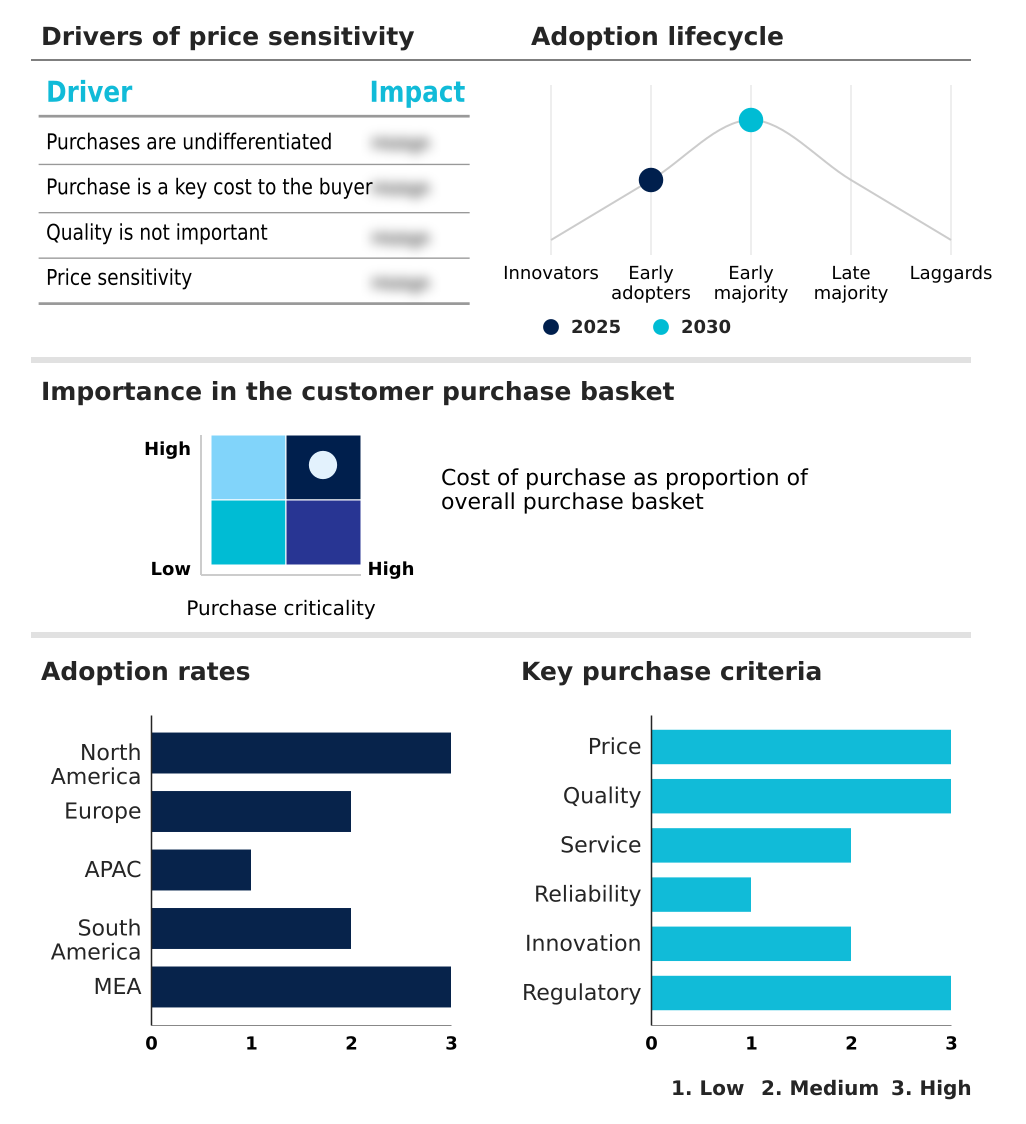
Customer Landscape of Compensation Software Industry
Competitive Landscape
Companies are implementing various strategies, such as strategic alliances, compensation software market forecast, partnerships, mergers and acquisitions, geographical expansion, and product/service launches, to enhance their presence in the industry.
Automatic Data Processing Inc. - Key offerings focus on automating salary planning, incentive management, and total rewards, providing data-driven tools for strategic compensation decisions and pay equity compliance.
The industry research and growth report includes detailed analyses of the competitive landscape of the market and information about key companies, including:
- Automatic Data Processing Inc.
- beqom SA
- BullseyeEngagement LLC
- Cegid Group
- ClearCompany LLC
- CompLogix
- CompUp
- Cornerstone OnDemand Inc.
- Decusoft Inc.
- Execupay Inc.
- Greytip Software Pvt. Ltd.
- HRSoft
- JSM Technologies Pvt. Ltd.
- Nitso Technologies Pvt. Ltd.
- Paycom Software Inc.
- Payscale Inc.
- SAP SE
- UKG Inc.
- Workday Inc.
Qualitative and quantitative analysis of companies has been conducted to help clients understand the wider business environment as well as the strengths and weaknesses of key industry players. Data is qualitatively analyzed to categorize companies as pure play, category-focused, industry-focused, and diversified; it is quantitatively analyzed to categorize companies as dominant, leading, strong, tentative, and weak.
Recent Development and News in Compensation software market
- In October 2024, Paycom Software Inc. announced a strategic partnership with a leading financial services firm to integrate its payroll and compensation modules, enhancing real-time data synchronization for incentive management.
- In January 2025, beqom SA completed a significant funding round to expand its AI-driven compensation planning and pay equity analysis capabilities, targeting further penetration into the North American market.
- In February 2025, Workday Inc. integrated a new suite of predictive analytics tools into its platform, designed to forecast the impact of salary adjustments on employee retention rates by simulating various budgetary scenarios.
- In March 2025, SAP SE introduced an update to its SuccessFactors suite that provides automated auditing tools to ensure adherence to the European Union's Pay Transparency Directive.
Dive into Technavio’s robust research methodology, blending expert interviews, extensive data synthesis, and validated models for unparalleled Compensation Software Market insights. See full methodology.
| Market Scope | |
|---|---|
| Page number | 292 |
| Base year | 2025 |
| Historic period | 2020-2024 |
| Forecast period | 2026-2030 |
| Growth momentum & CAGR | Accelerate at a CAGR of 6.9% |
| Market growth 2026-2030 | USD 2108.9 million |
| Market structure | Fragmented |
| YoY growth 2025-2026(%) | 6.0% |
| Key countries | US, Canada, Mexico, Germany, UK, France, Italy, The Netherlands, Spain, China, India, Japan, Australia, South Korea, Indonesia, Brazil, Argentina, Chile, South Africa, Saudi Arabia, UAE, Egypt and Nigeria |
| Competitive landscape | Leading Companies, Market Positioning of Companies, Competitive Strategies, and Industry Risks |
Research Analyst Overview
- The compensation software market has matured from an administrative function to a cornerstone of strategic human capital management. The evolution is marked by a definitive shift toward AI-powered compensation analytics and automated workflows, which are now critical for maintaining competitive and equitable pay structures.
- Platforms offering merit increase automation and sales incentive management are becoming standard as organizations seek to link pay directly to performance outcomes. A central trend influencing boardroom strategy is the use of AI-driven pay equity auditing to mitigate litigation risks and bolster ESG reporting credentials.
- This strategic alignment is further supported by solutions for total compensation management and robust payroll system integration, which provide a unified view of labor costs. Implementations focused on incentive management automation have demonstrated a 30% reduction in payout errors, highlighting the tangible ROI.
- As regulatory pressures mount, features supporting compliance reporting and pay structure design are no longer optional but essential for navigating the complexities of the modern global workforce.
What are the Key Data Covered in this Compensation Software Market Research and Growth Report?
-
What is the expected growth of the Compensation Software Market between 2026 and 2030?
-
USD 2.11 billion, at a CAGR of 6.9%
-
-
What segmentation does the market report cover?
-
The report is segmented by End-user (Large enterprises, and SMEs), Deployment (Cloud-based, and On-premises), Application (Base pay management, Incentive management, Equity management, and Others) and Geography (North America, Europe, APAC, South America, Middle East and Africa)
-
-
Which regions are analyzed in the report?
-
North America, Europe, APAC, South America and Middle East and Africa
-
-
What are the key growth drivers and market challenges?
-
Adopting pricing strategies of companies in compensation software, High implementation and maintenance costs
-
-
Who are the major players in the Compensation Software Market?
-
Automatic Data Processing Inc., beqom SA, BullseyeEngagement LLC, Cegid Group, ClearCompany LLC, CompLogix, CompUp, Cornerstone OnDemand Inc., Decusoft Inc., Execupay Inc., Greytip Software Pvt. Ltd., HRSoft, JSM Technologies Pvt. Ltd., Nitso Technologies Pvt. Ltd., Paycom Software Inc., Payscale Inc., SAP SE, UKG Inc. and Workday Inc.
-
Market Research Insights
- Market dynamics are shifting as organizations prioritize data-driven pay decisions and unified workforce data. The adoption of integrated HCM solutions has proven to reduce payroll processing errors by up to 20%, creating a strong business case for investment. This integration enables a holistic view, connecting performance management with compensation outcomes.
- Furthermore, the complexity of multi-country payroll has driven demand for platforms that offer centralized control with localized flexibility. Firms that leverage employee self-service portals and real-time analytics dashboards report a 15% improvement in talent retention for critical roles, as transparency in total rewards and performance-linked pay fosters employee trust and engagement.
- These platforms are becoming crucial for supporting skills-based work models and global business services.
We can help! Our analysts can customize this compensation software market research report to meet your requirements.
 RIA -
RIA -