

Composite Decking Market Size 2026-2030
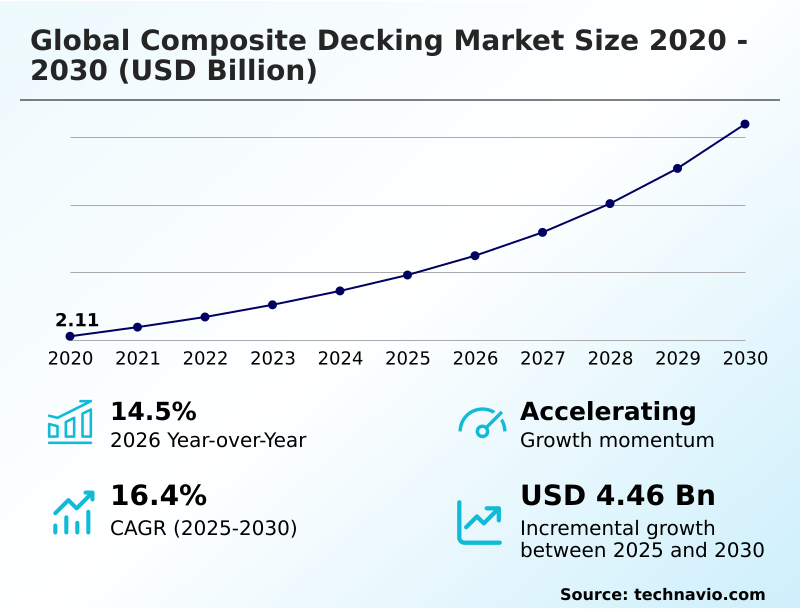
The composite decking market size is valued to increase by USD 4.46 billion, at a CAGR of 16.4% from 2025 to 2030. Accelerated global demand for durable and low-maintenance residential construction will drive the composite decking market.
Major Market Trends & Insights
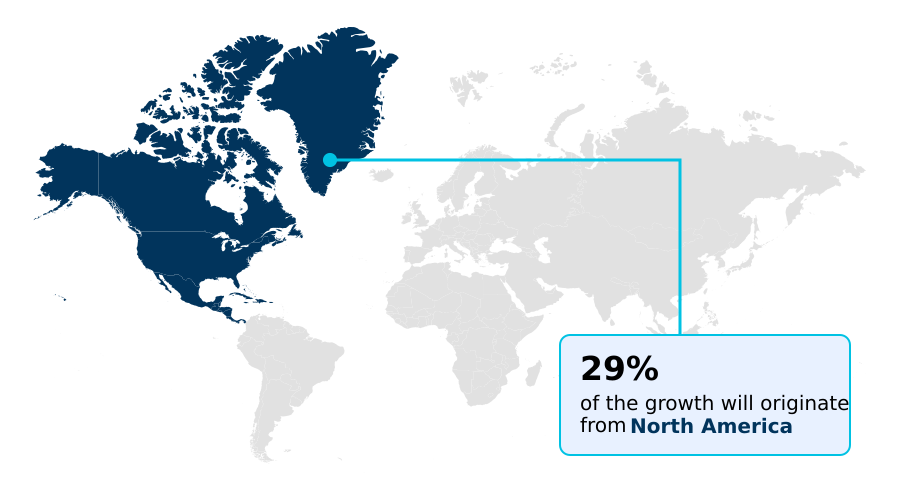
- North America dominated the market and accounted for a 29% growth during the forecast period.
- By Application - Residential segment was valued at USD 2.05 billion in 2024
- By Type - Polyethylene segment accounted for the largest market revenue share in 2024
Market Size & Forecast
- Market Opportunities: USD 6.27 billion
- Market Future Opportunities: USD 4.46 billion
- CAGR from 2025 to 2030 : 16.4%
Market Summary
- The composite decking market is undergoing a significant transformation, moving beyond being a simple alternative to wood to become a category of high-performance, engineered materials. This industrial shift is primarily driven by a collective move away from traditional timber decking, which requires intensive upkeep, toward engineered wood-plastic composites that offer superior resistance to rot, insect infestation, and ultraviolet degradation.
- The expansion of this sector is further supported by the burgeoning trend of outdoor living, where homeowners seek to extend their functional living space. The circular economy also plays a central role, as leading manufacturers utilize substantial quantities of recycled plastics and reclaimed wood fibers, appealing to a growing demographic of environmentally conscious consumers.
- For instance, a large-scale hospitality developer might select a specific composite material based on a lifecycle cost analysis showing a 30% reduction in maintenance expenses over a decade compared to hardwood, illustrating a shift in procurement strategy from initial cost to long-term value.
What will be the Size of the Composite Decking Market during the forecast period?
Get Key Insights on Market Forecast (PDF) Get Free Sample
How is the Composite Decking Market Segmented?
The composite decking industry research report provides comprehensive data (region-wise segment analysis), with forecasts and estimates in "USD million" for the period 2026-2030, as well as historical data from 2020-2024 for the following segments.
- Application
- Residential
- Non-residential
- Type
- Polyethylene
- Polypropylene
- Polyvinyl chloride
- Others
- Product
- Capped composite decking
- Uncapped composite decking
- Geography
- North America
- US
- Canada
- Mexico
- Europe
- Germany
- UK
- France
- APAC
- China
- Japan
- India
- South America
- Brazil
- Argentina
- Middle East and Africa
- Saudi Arabia
- UAE
- South Africa
- Rest of World (ROW)
- North America
By Application Insights
The residential segment is estimated to witness significant growth during the forecast period.
The residential segment is the primary engine for the composite decking market, driven by a profound shift in consumer lifestyles toward creating high-value, low-maintenance outdoor living spaces.
This market is characterized by a strong preference for capped polymer decking and advanced wood-plastic composite blends that offer superior resistance to environmental degradation.
In the residential renovation sector, demand is high for products featuring multi-tonal streaking and realistic embossing patterns, moving beyond basic utility to high-fidelity aesthetic realism.
Homeowners are also increasingly specifying materials with advanced functional attributes, as products with integrated heat-mitigating surfaces have shown a 20% higher adoption rate in sun-intensive regions. This focus on both form and function supports the segment's robust and continuous expansion.
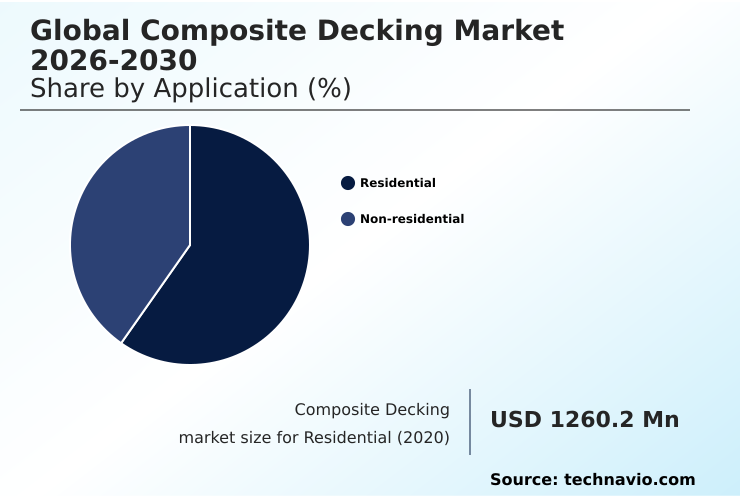
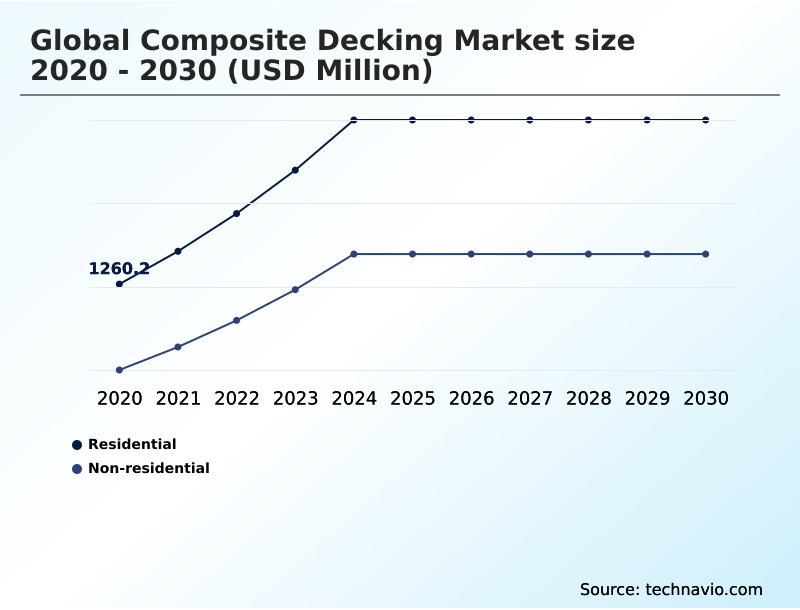
The Residential segment was valued at USD 2.05 billion in 2024 and showed a gradual increase during the forecast period.
Regional Analysis
North America is estimated to contribute 29% to the growth of the global market during the forecast period.Technavio’s analysts have elaborately explained the regional trends and drivers that shape the market during the forecast period.
See How Composite Decking Market Demand is Rising in North America Get Free Sample
The geographic landscape of the composite decking market is characterized by varied maturity and growth trajectories. While established markets exhibit consistent demand, certain emerging regions are experiencing growth rates exceeding 18%, driven by rapid urbanization and new construction.
In these areas, the adoption of green building certifications is a significant factor, with projects specifying materials based on lifecycle cost analysis. A focus on public works, including urban park infrastructure and coastal boardwalk construction, is creating new revenue streams.
In some developing urban centers, non-residential infrastructure projects now account for nearly 30% of composite material consumption.
Manufacturers are adapting by offering products compliant with regulations for wildland-urban interface materials and investing in take-back recycling programs to establish closed-loop recycling systems.
Market Dynamics
Our researchers analyzed the data with 2025 as the base year, along with the key drivers, trends, and challenges. A holistic analysis of drivers will help companies refine their marketing strategies to gain a competitive advantage.
- Selecting the right material in the global composite decking market 2026-2030 requires a detailed analysis of performance trade-offs. The debate over polyethylene vs polypropylene composite durability is central, as each polymer offers distinct advantages in different climates.
- Similarly, the choice between capped vs uncapped composite maintenance directly impacts the long-term lifecycle cost of composite materials, a crucial factor for both residential and commercial owners. For warmer regions, the use of heat-reflective technology for decking is becoming a standard specification, while in colder zones, the material's performance in freeze-thaw cycles is paramount.
- The exceptional thermoset shell scratch resistance is a key differentiator in the premium segment, just as the suitability of pvc decking for marine applications makes it a default choice for coastal projects. For public infrastructure, criteria such as slip resistance in wet conditions and the ability of composite decking for high-traffic areas are non-negotiable.
- The development of lightweight composites for rooftop terraces has opened new architectural possibilities, while the use of fire-rated composites for balconies is a critical safety consideration. Aesthetic realism in synthetic wood is achieved through advanced manufacturing, complemented by the clean finish of installation with hidden fastening systems.
- The industry's shift toward sustainability is evident in the emphasis on recycled content in sustainable building and the development of advanced recycling for decking materials. In fact, optimizing supply chains for recycled content can reduce raw material cost volatility by more than double compared to reliance on virgin polymers.
- The benefits of solid core decking, mold and mildew resistant decking, and composite decking color retention technology further showcase the industry's focus on creating durable, eco-friendly alternatives to timber decking that require minimal effort for outdoor spaces.
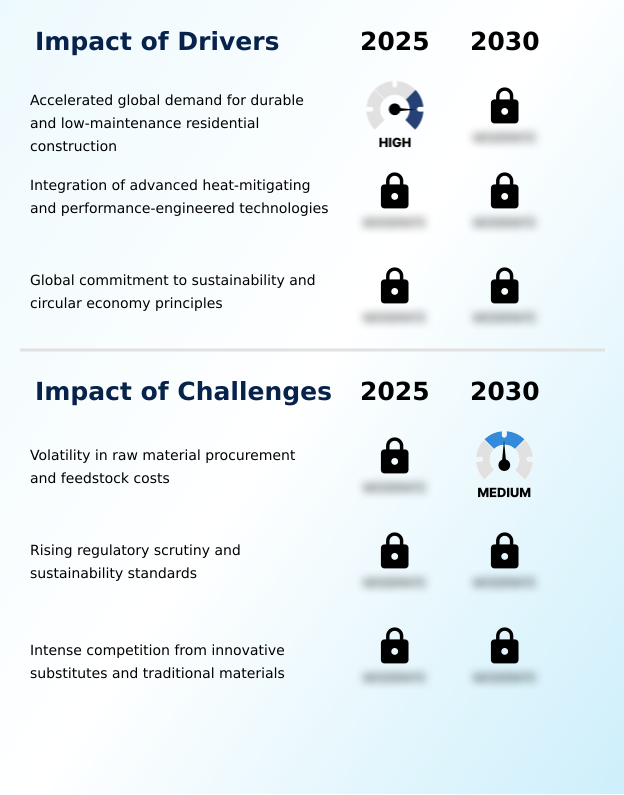
What are the key market drivers leading to the rise in the adoption of Composite Decking Industry?
- Accelerated global demand for durable, low-maintenance materials in residential construction is a key driver propelling the composite decking market forward.
- Market growth is fundamentally driven by the shift toward sustainable building materials and circular economy principles. The use of reclaimed wood fibers and post-consumer recycled plastic is a core value proposition, appealing to an eco-conscious consumer base.
- Leading firms utilizing advanced environmental product declarations report a 15% higher specification rate in architect-led projects. The development of bamboo-plastic composite and other wood-free composite material options expands the market's eco-friendly architectural design portfolio.
- In the commercial sector, the long-term property investment benefits are clear; for high-traffic public areas, composite materials reduce maintenance budgets by an average of 40% over their lifespan compared to traditional wood.
- This combination of ecological responsibility and proven durability continues to propel market expansion.
What are the market trends shaping the Composite Decking Industry?
- A key market trend is the evolution of material science, particularly the integration of infrared reflective technologies. These advancements enhance the thermal performance and durability of composite decking products.
- Key trends are reshaping performance standards, with material science at the forefront. The evolution from basic composites to advanced PVC decking with a co-extruded polymer shell is driving demand for superior scratch protection and enhanced fade and stain resistance. Innovations in thermoset shell technology and fused composite engineering are delivering surfaces with unprecedented durability.
- For instance, new formulations offer up to 50% greater resistance to thermal expansion and contraction compared to previous generations. Heat-mitigating surfaces, powered by infrared reflective pigments, are becoming a standard feature in premium lines, maintaining temperatures that are measurably cooler.
- This focus on technical excellence addresses rot and insect resistance while pushing the boundaries of what mineral-based composite materials can achieve in both aesthetics and longevity.
What challenges does the Composite Decking Industry face during its growth?
- Volatility in raw material procurement and feedstock costs presents a significant challenge to the stable growth and profitability of the composite decking industry.
- The primary market challenge is navigating the complexities of a circular supply chain management system amid volatile raw material costs. Reliance on recycled feedstock, while sustainable, introduces variability that can impact gross margins by up to 10% quarter-over-quarter if not managed with sophisticated sourcing strategies.
- Furthermore, the competitive pressure from both traditional wood and other weather-resistant outdoor flooring solutions requires continuous innovation. Companies must invest in developing new ultraviolet stabilizers and bio-based composite binders to stay ahead.
- The failure to offer advanced features like fire-rated building materials for modern architectural trends can lead to a significant loss of market share, as firms unable to meet evolving building codes face exclusion from lucrative projects within the luxury hospitality sector and high-density residential construction.
Exclusive Technavio Analysis on Customer Landscape
The composite decking market forecasting report includes the adoption lifecycle of the market, covering from the innovator’s stage to the laggard’s stage. It focuses on adoption rates in different regions based on penetration. Furthermore, the composite decking market report also includes key purchase criteria and drivers of price sensitivity to help companies evaluate and develop their market growth analysis strategies.
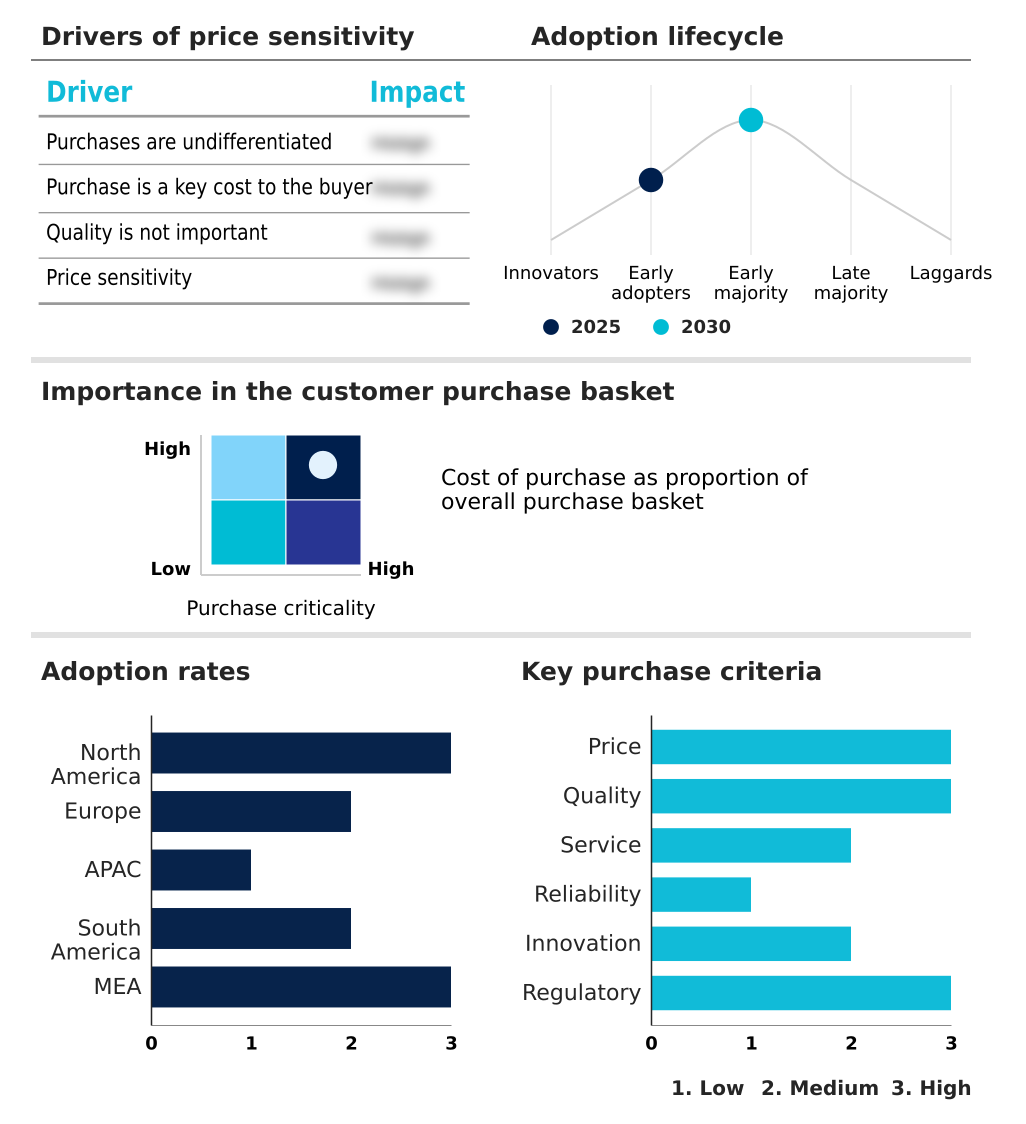
Customer Landscape of Composite Decking Industry
Competitive Landscape
Companies are implementing various strategies, such as strategic alliances, composite decking market forecast, partnerships, mergers and acquisitions, geographical expansion, and product/service launches, to enhance their presence in the industry.
Barrette Outdoor Living Inc. - This company manufactures a diverse range of composite decking and railing products, focusing on durable, low-maintenance solutions for the outdoor living products market.
The industry research and growth report includes detailed analyses of the competitive landscape of the market and information about key companies, including:
- Barrette Outdoor Living Inc.
- Cali Bamboo LLC
- CertainTeed
- Compagnie de Saint Gobain SA
- dasso Group
- Deckorators Inc.
- Envision Outdoor Living Products
- Eva Last Hong Kong Ltd.
- Fiberon LLC
- Lowes Co. Inc.
- MoistureShield
- NewTechWood America Inc.
- Novo-Tech GmbH and Co. KG
- Oakio Plastic Materials Co.
- Resysta International GmbH
- The AZEK Co. Inc.
- The Home Depot Inc.
- Trex Co. Inc.
- TruNorth Composites Inc.
- UPM Kymmene Corp.
Qualitative and quantitative analysis of companies has been conducted to help clients understand the wider business environment as well as the strengths and weaknesses of key industry players. Data is qualitatively analyzed to categorize companies as pure play, category-focused, industry-focused, and diversified; it is quantitatively analyzed to categorize companies as dominant, leading, strong, tentative, and weak.
Recent Development and News in Composite decking market
- In May, 2025, Talasey Ltd. announced the launch of Pioneer, a new high-definition composite decking range which utilizes PMMA technology to enhance visual clarity and UV resistance.
- In March, 2025, James Hardie Industries plc announced the completion of its strategic acquisition of The AZEK Company Inc., a move designed to integrate premium outdoor living products into its broader portfolio of exterior home solutions.
- In February, 2025, Trex Company Inc. announced a strategic expansion of its Trex Select product line by incorporating advanced heat-mitigating technology, previously reserved for its premium offerings, into the mid-priced market segment.
- In January, 2025, The AZEK Company Inc. announced a significant sustainability milestone, confirming it had successfully diverted over 600 million pounds of waste and scrap from landfills through its TimberTech brand recycling programs.
Dive into Technavio’s robust research methodology, blending expert interviews, extensive data synthesis, and validated models for unparalleled Composite Decking Market insights. See full methodology.
| Market Scope | |
|---|---|
| Page number | 294 |
| Base year | 2025 |
| Historic period | 2020-2024 |
| Forecast period | 2026-2030 |
| Growth momentum & CAGR | Accelerate at a CAGR of 16.4% |
| Market growth 2026-2030 | USD 4459.8 million |
| Market structure | Fragmented |
| YoY growth 2025-2026(%) | 14.5% |
| Key countries | US, Canada, Mexico, Germany, UK, France, Italy, Spain, The Netherlands, China, Japan, India, South Korea, Australia, Indonesia, Brazil, Argentina, Chile, Saudi Arabia, UAE, South Africa, Turkey and Israel |
| Competitive landscape | Leading Companies, Market Positioning of Companies, Competitive Strategies, and Industry Risks |
Research Analyst Overview
- The composite decking market has reached a mature stage of innovation where material science and sustainability are inextricably linked. The competitive landscape is now defined by a company's ability to engineer a wood-plastic composite blend that not only delivers high-fidelity aesthetic realism but also adheres to stringent environmental product declarations.
- This shift places significant emphasis on the entire supply chain, from sourcing post-consumer recycled plastic to developing closed-loop recycling systems. For executive boards, decisions are increasingly tied to ESG metrics, where the adoption of bio-based composite binders or achieving zero-waste manufacturing certifications can significantly impact brand value and investor confidence.
- The industry is pushing performance boundaries with advanced PVC decking formulations, which have demonstrated a 40% improvement in stain resistance in controlled tests. Innovations such as moisture-resistant composite decking and fiber-reinforced plastic are expanding applications into previously untenable environments.
- Ultimately, success hinges on balancing the technical properties of a co-extruded polymer shell with the ecological responsibility of managing post-industrial waste streams, a core challenge for the sector's next phase of growth.
What are the Key Data Covered in this Composite Decking Market Research and Growth Report?
-
What is the expected growth of the Composite Decking Market between 2026 and 2030?
-
USD 4.46 billion, at a CAGR of 16.4%
-
-
What segmentation does the market report cover?
-
The report is segmented by Application (Residential, and Non-residential), Type (Polyethylene, Polypropylene, Polyvinyl chloride, and Others), Product (Capped composite decking, and Uncapped composite decking) and Geography (North America, Europe, APAC, South America, Middle East and Africa)
-
-
Which regions are analyzed in the report?
-
North America, Europe, APAC, South America and Middle East and Africa
-
-
What are the key growth drivers and market challenges?
-
Accelerated global demand for durable and low-maintenance residential construction , Volatility in raw material procurement and feedstock costs
-
-
Who are the major players in the Composite Decking Market?
-
Barrette Outdoor Living Inc., Cali Bamboo LLC, CertainTeed, Compagnie de Saint Gobain SA, dasso Group, Deckorators Inc., Envision Outdoor Living Products, Eva Last Hong Kong Ltd., Fiberon LLC, Lowes Co. Inc., MoistureShield, NewTechWood America Inc., Novo-Tech GmbH and Co. KG, Oakio Plastic Materials Co., Resysta International GmbH, The AZEK Co. Inc., The Home Depot Inc., Trex Co. Inc., TruNorth Composites Inc. and UPM Kymmene Corp.
-
Market Research Insights
- Market dynamics are shaped by the accelerating demand for low-maintenance outdoor living solutions, primarily within the residential renovation sector. This has spurred innovation in durable outdoor infrastructure, with professional contractor programs reporting a 20% year-over-year increase in specifications for composite materials over traditional wood. The focus on eco-conscious outdoor living is reinforcing the value of climate-resilient construction.
- Moreover, the integration of ancillary features is becoming standard; installations featuring integrated deck lighting now comprise over 35% of high-end projects, a significant rise from previous years. These shifts underscore a market moving toward complete foundation-to-finish building solutions that prioritize longevity and aesthetic customization, including hidden fastening systems that improve both appearance and safety.
We can help! Our analysts can customize this composite decking market research report to meet your requirements.
 RIA -
RIA -