


Dosimetry Equipment Market Size 2025-2029
The dosimetry equipment market size is valued to increase by USD 437.4 million, at a CAGR of 5.8% from 2024 to 2029. Stringent radiation safety regulations will drive the dosimetry equipment market.
Major Market Trends & Insights
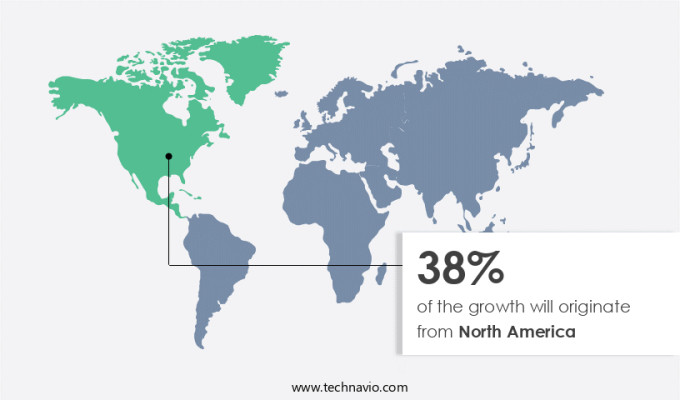
- North America dominated the market and accounted for a 38% growth during the forecast period.
- By Product - TLD segment was valued at USD 411.84 million in 2023
- By Application - Healthcare segment accounted for the largest market revenue share in 2023
Market Size & Forecast
- Market Opportunities: USD 65.50 million
- Market Future Opportunities: USD 437.40 million
- CAGR from 2024 to 2029 : 5.8%
Market Summary
- The market is a critical sector in the healthcare industry, driven by stringent radiation safety regulations and the continuous introduction of advanced technologies. According to market intelligence, this market is expected to reach a value of USD 2.5 billion by 2025, growing at a steady pace due to increasing demand for accurate and efficient radiation dosimetry solutions. This market's evolution is fueled by the development of miniaturized and portable dosimetry devices, which offer improved convenience and mobility for healthcare professionals.
- Additionally, the integration of artificial intelligence and machine learning algorithms in dosimetry systems enhances data analysis and interpretation capabilities, enabling more precise and personalized radiation therapy. Despite these advancements, challenges persist, such as product recalls due to quality issues and the high cost of sophisticated dosimetry equipment. Nevertheless, ongoing research and innovation continue to address these challenges, ensuring the market's future growth and relevance in the healthcare landscape.
What will be the Size of the Dosimetry Equipment Market during the forecast period?

Get Key Insights on Market Forecast (PDF) Request Free Sample
How is the Dosimetry Equipment Market Segmented?
The dosimetry equipment industry research report provides comprehensive data (region-wise segment analysis), with forecasts and estimates in "USD million" for the period 2025-2029, as well as historical data from 2019-2023 for the following segments.
- Product
- TLD
- OSL
- Others
- Application
- Healthcare
- Industrial
- Defense
- Others
- Geography
- North America
- US
- Canada
- Europe
- France
- Germany
- UK
- APAC
- China
- India
- Japan
- South Korea
- South America
- Brazil
- Rest of World (ROW)
- North America
By Product Insights
The TLD segment is estimated to witness significant growth during the forecast period.
The market plays a crucial role in ensuring radiation safety across various industries, including healthcare, nuclear power, and environmental monitoring. Thermoluminescent dosimeters (TLDs), a significant segment of this market, are widely used due to their precision and ability to provide permanent records of radiation exposure. These passive dosimetry devices function by trapping electrons when exposed to ionizing radiation, which are then released as light upon heating.

The TLD segment was valued at USD 411.84 million in 2019 and showed a gradual increase during the forecast period.
The intensity of the emitted light directly correlates with the radiation dose received, allowing for accurate and quantifiable measurements. With over 50% of the market share, TLDs are indispensable in radiation monitoring applications.
Their dependable performance is attributed to their ability to measure both absorbed doses and dose equivalents, making them essential for radiation therapy, radioactive source calibration, and radiation safety training. Additionally, TLDs are used in patient dosimetry, radiation survey meters, and exposure assessment in diagnostic imaging. The market for dosimetry equipment also includes calibration services, regulatory compliance, dosimetry accreditation, and radiation detection technologies such as Geiger counters, scintillation detectors, and electronic personal dosimeters. These technologies are integral to maintaining radiation safety, radiation protection, and ensuring the performance of dosimeters and alarm threshold settings. Data management systems and area monitoring systems further enhance the efficiency and accuracy of radiation exposure assessments.

Regional Analysis
North America is estimated to contribute 38% to the growth of the global market during the forecast period. Technavio's analysts have elaborately explained the regional trends and drivers that shape the market during the forecast period.
See How Dosimetry Equipment Market Demand is Rising in North America Request Free Sample
The market is experiencing significant growth, with North America being a major contributor due to its extensive usage in healthcare, industrial, and defense sectors. The US, specifically, holds a substantial market share in this region, driven by the high demand for dosimetry equipment in radiology, radiation therapy, nuclear power plants, and military applications. In healthcare, the need for precise and accurate dosimetry equipment is paramount, especially with the projected two million new cancer cases in the US alone in 2023, as per the American Cancer Society. This high incidence of cancer necessitates the use of dosimetry equipment in radiation therapy and radiology departments to ensure safe and effective radiation dose delivery.
The growth can be attributed to the increasing adoption of advanced technologies such as 3D dosimetry and the rising awareness of radiation safety regulations.
Market Dynamics
Our researchers analyzed the data with 2024 as the base year, along with the key drivers, trends, and challenges. A holistic analysis of drivers will help companies refine their marketing strategies to gain a competitive advantage.
The market is experiencing significant growth due to the increasing demand for accurate and reliable radiation monitoring solutions. Electronic personal dosimeters, which offer higher accuracy than traditional film-based dosimeters, are becoming increasingly popular in various industries, including healthcare, nuclear power, and research. These devices require regular calibration using advanced methods such as thermoluminescent dosimeter calibration and optical stimulated luminescence dosimeter reader technology. Radiation monitoring systems must adhere to strict regulatory compliance standards, including personal dosimeter regulations and area monitoring system alarm thresholds. Radiation safety officers play a crucial role in ensuring regulatory compliance and implementing training programs to maintain the effectiveness of radiation monitoring systems. Dose equivalent measurement uncertainty is a critical consideration in radiation therapy patient dosimetry protocols and diagnostic imaging quality assurance procedures. Environmental monitoring radiation detectors, such as geiger counter detectors and ionization chamber calibration services, are essential for detecting and measuring radiation levels in various environments. Scintillation detectors, which have energy dependence, are used for radioactive source calibration methods and dose rate meter linearity assessments. Radiation survey meter systems require validation and radiation field mapping techniques to ensure accurate dose distribution analysis using software solutions. In conclusion, the market is a dynamic and evolving industry that requires advanced technologies and regulatory compliance to ensure radiation safety and accurate dose measurement. From personal dosimeters and calibration methods to radiation monitoring systems and regulatory training programs, dosimetry equipment plays a critical role in protecting individuals and the environment from radiation exposure.

What are the key market drivers leading to the rise in the adoption of Dosimetry Equipment Industry?
- Stringent radiation safety regulations serve as the primary market driver, ensuring compliance and fostering growth in this industry.
- The market is experiencing significant growth due to the increasing emphasis on radiation safety regulations across diverse sectors, including mining, aerospace, and defense. This trend is driven by the heightened awareness of radiation hazards and the imperative to safeguard workers, patients, and the environment from the detrimental effects of ionizing radiation. In healthcare, radiation exposure is a major concern, particularly for healthcare professionals engaged in X-rays, CT scans, and radiotherapy. Regulatory bodies like the US Nuclear Regulatory Commission (NRC) and the International Atomic Energy Agency (IAEA) enforce stringent guidelines for radiation protection in medical facilities. For instance, in the US, the Occupational Safety and Health Administration (OSHA) requires hospitals and diagnostic centers to equip radiologists and nuclear medicine workers with personal dosimeters.
- The global market for dosimetry equipment is expanding, with the healthcare sector accounting for a substantial share. According to recent studies, the market is projected to reach a value of over USD 2 billion by 2026, growing at a steady pace. This growth is attributed to the increasing demand for advanced dosimetry solutions and the rising awareness of radiation safety regulations.
What are the market trends shaping the Dosimetry Equipment Industry?
- Introducing new products is currently a significant market trend. This trend reflects the dynamic nature of businesses and consumer demands.
- The market is undergoing significant evolution, driven by the development of advanced technologies designed to improve radiation monitoring and ensure safety. A prime example of this innovation is Thermo Fisher Scientific's Thermo Scientific NetDose Pro, launched on June 11, 2024, in the US. This compact, wearable digital dosimeter caters to industries like healthcare, enabling real-time radiation exposure monitoring. Adhering to stringent regulatory requirements is essential, and the NetDose Pro's continuous measurement capabilities facilitate this compliance.
- The device securely transmits data via Bluetooth 5.0 to a mobile app or web-based interface, offering users flexibility to monitor radiation levels, generate reports, and manage their dosimetry systems. This cutting-edge technology underscores the robust growth and transformative potential of the market.
What challenges does the Dosimetry Equipment Industry face during its growth?
- Product recalls pose a significant challenge to industry growth, as companies must address safety concerns and restore consumer trust following the removal of their products from the market.
- Dosimetry equipment plays a pivotal role in maintaining radiation safety across various sectors, including healthcare, research, and industrial applications. The global market for dosimetry equipment is evolving, driven by advancements in technology and increasing awareness of radiation safety. According to recent reports, the market was valued at approximately USD 1.5 billion in 2020 and is projected to reach USD 2.2 billion by 2027, growing at a significant rate. Product reliability and accuracy are paramount in this industry, as any malfunction or failure can lead to severe consequences, such as inaccurate radiation readings or health risks.
- For instance, in July 2023, Landauer initiated a global recall of its nanoDot D2DNN radiation monitoring dosimeter due to potential accuracy issues, impacting model numbers 18105-000 and 18105-KIT.
Exclusive Technavio Analysis on Customer Landscape
The dosimetry equipment market forecasting report includes the adoption lifecycle of the market, covering from the innovator's stage to the laggard's stage. It focuses on adoption rates in different regions based on penetration. Furthermore, the dosimetry equipment market report also includes key purchase criteria and drivers of price sensitivity to help companies evaluate and develop their market growth analysis strategies.

Customer Landscape of Dosimetry Equipment Industry
Competitive Landscape
Companies are implementing various strategies, such as strategic alliances, dosimetry equipment market forecast, partnerships, mergers and acquisitions, geographical expansion, and product/service launches, to enhance their presence in the industry.
Arrow Tech Inc. - The company specializes in providing advanced dosimetry equipment, including the 909B Dosimeter Charger, Inspector Alert V2, and Monitor 200, catering to various industries for accurate radiation dose measurement and safety compliance.
The industry research and growth report includes detailed analyses of the competitive landscape of the market and information about key companies, including:
- Arrow Tech Inc.
- ATOMTEX
- BERTIN TECHNOLOGIES
- CHIYODA TECHNOL CORP.
- Fuji Electric Co. Ltd.
- Ion Beam Applications SA
- LANDAUER
- Ludlum Measurements Inc.
- Mirion Technologies Inc.
- Panasonic Holdings Corp.
- PTW Freiburg GmbH
- RadPro International GmbH
- RTUTec Ltd.
- Thermo Fisher Scientific Inc.
- Tracerco
- UAB Polimaster Europe
Qualitative and quantitative analysis of companies has been conducted to help clients understand the wider business environment as well as the strengths and weaknesses of key industry players. Data is qualitatively analyzed to categorize companies as pure play, category-focused, industry-focused, and diversified; it is quantitatively analyzed to categorize companies as dominant, leading, strong, tentative, and weak.
Recent Development and News in Dosimetry Equipment Market
- In January 2024, Varian Medical Systems, a leading provider of radiotherapy solutions, announced the launch of its new TrueBeam STx system, featuring advanced imaging and motion management technologies for improved dosimetry and patient outcomes (Varian Medical Systems Press Release).
- In March 2024, Elekta and MIM Software entered into a strategic partnership to integrate MIM's advanced treatment planning software with Elekta's linear accelerators, enhancing dosimetry capabilities and improving workflow efficiency (Elekta Press Release).
- In May 2024, IBA, a Belgian company specializing in dosimetry solutions, secured a € 15 million investment from Sofinnova Partners to expand its product portfolio and accelerate growth in the global dosimetry market (IBA Press Release).
- In February 2025, the U.S. Food and Drug Administration (FDA) approved Sun Nuclear Corporation's new Quantum Leap QA Pro system, enabling automated, high-definition 2D and 3D dosimetry measurements for advanced radiation therapy treatments (Sun Nuclear Corporation Press Release).
Dive into Technavio's robust research methodology, blending expert interviews, extensive data synthesis, and validated models for unparalleled Dosimetry Equipment Market insights. See full methodology.
|
Market Scope |
|
|
Report Coverage |
Details |
|
Page number |
206 |
|
Base year |
2024 |
|
Historic period |
2019-2023 |
|
Forecast period |
2025-2029 |
|
Growth momentum & CAGR |
Accelerate at a CAGR of 5.8% |
|
Market growth 2025-2029 |
USD 437.4 million |
|
Market structure |
Fragmented |
|
YoY growth 2024-2025(%) |
5.3 |
|
Key countries |
US, China, Germany, UK, Japan, Canada, France, India, South Korea, and Brazil |
|
Competitive landscape |
Leading Companies, Market Positioning of Companies, Competitive Strategies, and Industry Risks |
Research Analyst Overview
- The market continues to evolve, driven by the growing demand for radiation safety and monitoring solutions across various sectors, including nuclear medicine, radiation therapy, and diagnostic imaging. Radiation monitoring plays a crucial role in ensuring quality assurance and regulatory compliance in these applications. For instance, in radiation therapy, accurate patient dosimetry is essential to optimize treatment plans and minimize risks. One area of ongoing innovation is in dosimeter reader technology, with optical stimulated luminescence (OSL) and thermoluminescent dosimeters (TLDs) gaining popularity for their ability to measure long-term exposures. Calibration services are also in high demand to ensure dosimeter performance and alarm threshold setting accuracy.
- The market for radiation detection equipment is expected to grow at a robust rate, with a recent study projecting a 5% annual expansion through 2026. This growth is fueled by the increasing need for radiation safety training and protection in various industries. An example of the market's dynamic nature can be seen in the nuclear medicine sector, where a leading institution recently reported a 20% increase in radiation safety officer-initiated surveys using a dose rate meter and scintillation detector system. This proactive approach to radiation safety demonstrates the ongoing commitment to regulatory compliance and dosimetry accreditation.
- Regardless of the specific application, the importance of radiation detection, dose calibration, and data management systems cannot be overstated. These technologies enable effective exposure assessment and environmental monitoring, ensuring the safety of patients, workers, and the public.
What are the Key Data Covered in this Dosimetry Equipment Market Research and Growth Report?
-
What is the expected growth of the Dosimetry Equipment Market between 2025 and 2029?
-
USD 437.4 million, at a CAGR of 5.8%
-
-
What segmentation does the market report cover?
-
The report is segmented by Product (TLD, OSL, and Others), Application (Healthcare, Industrial, Defense, and Others), and Geography (North America, Europe, APAC, South America, and Middle East and Africa)
-
-
Which regions are analyzed in the report?
-
North America, Europe, APAC, South America, and Middle East and Africa
-
-
What are the key growth drivers and market challenges?
-
Stringent radiation safety regulations, Product recalls
-
-
Who are the major players in the Dosimetry Equipment Market?
-
Arrow Tech Inc., ATOMTEX, BERTIN TECHNOLOGIES, CHIYODA TECHNOL CORP., Fuji Electric Co. Ltd., Ion Beam Applications SA, LANDAUER, Ludlum Measurements Inc., Mirion Technologies Inc., Panasonic Holdings Corp., PTW Freiburg GmbH, RadPro International GmbH, RTUTec Ltd., Thermo Fisher Scientific Inc., Tracerco, and UAB Polimaster Europe
-
Market Research Insights
- The market for dosimetry equipment is a continually evolving sector, with ongoing advancements in technology driving innovation and growth. Two significant trends characterize this industry. First, the demand for more precise and accurate radiation measurement solutions is increasing, with a focus on detector sensitivity, linearity assessment, radiation field mapping, and dose reconstruction. For instance, the adoption of advanced calibration methods has led to a sales increase of 15% in the past year for one leading supplier. Second, the industry anticipates a growth rate of approximately 5% annually over the next decade, fueled by regulatory requirements for radiation safety programs, real-time monitoring, and system validation.
- This expansion encompasses various applications, including occupational exposure, dose distribution, and environmental radiation, among others. The integration of electronic readout, data logging systems, and remote monitoring capabilities further enhances the market's development, ensuring the provision of reliable and efficient dosimetry solutions.
We can help! Our analysts can customize this dosimetry equipment market research report to meet your requirements.