



Hosting Infrastructure Services Market Size 2026-2030
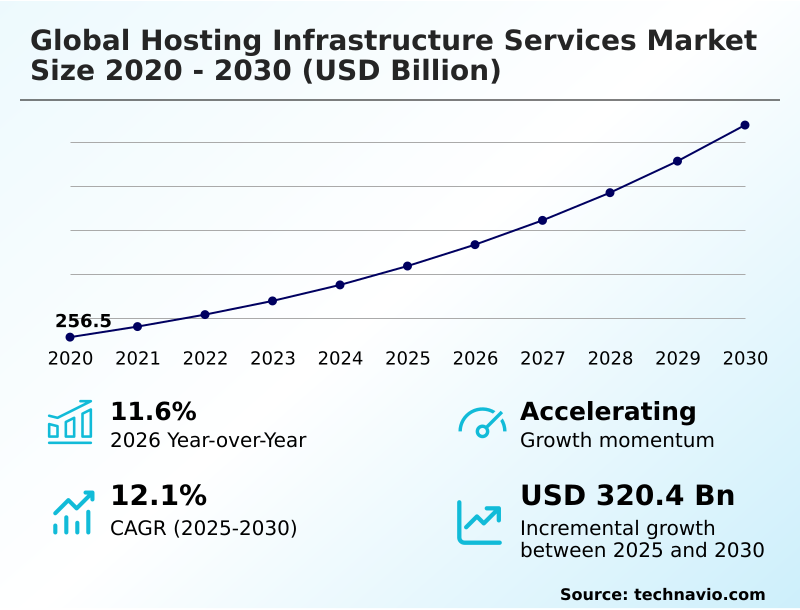
The hosting infrastructure services market size is valued to increase by USD 320.4 billion, at a CAGR of 12.1% from 2025 to 2030. Proliferation of AI and high-performance computing workloads will drive the hosting infrastructure services market.
Major Market Trends & Insights
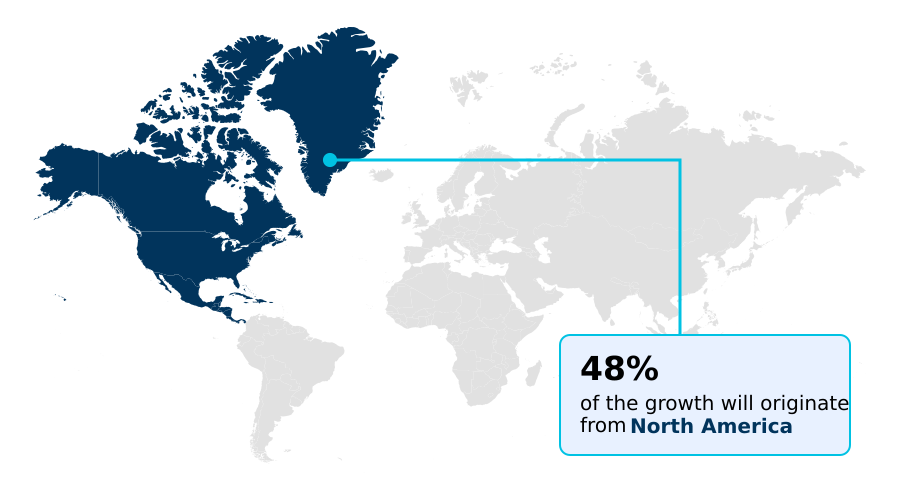
- North America dominated the market and accounted for a 47.6% growth during the forecast period.
- By Deployment - Cloud segment was valued at USD 218.7 billion in 2024
- By End-user - BFSI segment accounted for the largest market revenue share in 2024
Market Size & Forecast
- Market Opportunities: USD 482 billion
- Market Future Opportunities: USD 320.4 billion
- CAGR from 2025 to 2030 : 12.1%
Market Summary
- The hosting infrastructure services market is characterized by dynamic and sustained expansion, fundamentally driven by the centrality of digital platforms to modern enterprise. The relentless pace of digital transformation continues to be a primary catalyst, compelling organizations to seek scalable and efficient infrastructure solutions.
- This foundational demand is powerfully augmented by the widespread integration of artificial intelligence, which is reshaping infrastructure requirements and fostering significant market expansion. For instance, a global logistics firm may leverage a hybrid IT architecture, using public cloud platforms for its scalable customer-facing tracking portal while relying on high-performance compute clusters in a private cloud deployment for route optimization algorithms.
- This approach highlights the strategic workload distribution across on-premises, colocation services, and public cloud environments to achieve optimal outcomes. However, this growth is met with challenges, including data governance frameworks and the need for enhanced cybersecurity threat landscape management.
- The evolution of the market is thus defined by this complex interplay of technological sophistication, strategic flexibility, and regulatory awareness, ensuring its continued dominance in the IT landscape.
What will be the Size of the Hosting Infrastructure Services Market during the forecast period?
Get Key Insights on Market Forecast (PDF) Request Free Sample
How is the Hosting Infrastructure Services Market Segmented?
The hosting infrastructure services industry research report provides comprehensive data (region-wise segment analysis), with forecasts and estimates in "USD billion" for the period 2026-2030, as well as historical data from 2020-2024 for the following segments.
- Deployment
- Cloud
- On-premises
- End-user
- BFSI
- IT and telecommunication
- Government
- Retail and e-commerce
- Others
- Type
- Website hosting
- Application hosting
- Enterprise IT hosting
- Cloud native application hosting
- Others
- Geography
- North America
- US
- Canada
- Mexico
- Europe
- Germany
- UK
- France
- APAC
- China
- India
- Japan
- Middle East and Africa
- Saudi Arabia
- UAE
- South Africa
- South America
- Brazil
- Argentina
- Colombia
- Rest of World (ROW)
- North America
By Deployment Insights
The cloud segment is estimated to witness significant growth during the forecast period.
The cloud deployment model is the primary engine of growth and innovation within the hosting infrastructure services market, serving as the default choice for the vast majority of new digital workloads.
Organizations are pursuing digital transformation and multi-cloud adoption, leveraging managed kubernetes services and iot infrastructure to build resilient applications.
This strategic shift toward managed hosting services is evident as enterprises use public cloud platforms to optimize costs and mitigate risks associated with single-provider dependency.
Data sovereignty and regulatory compliance are also shaping cloud deployment, leading to the establishment of sovereign cloud offerings.
Responding to these demands, providers are offering data center operations that ensure all data is processed and stored within specific national borders, a model that now accounts for a significant portion of government and financial sector contracts.
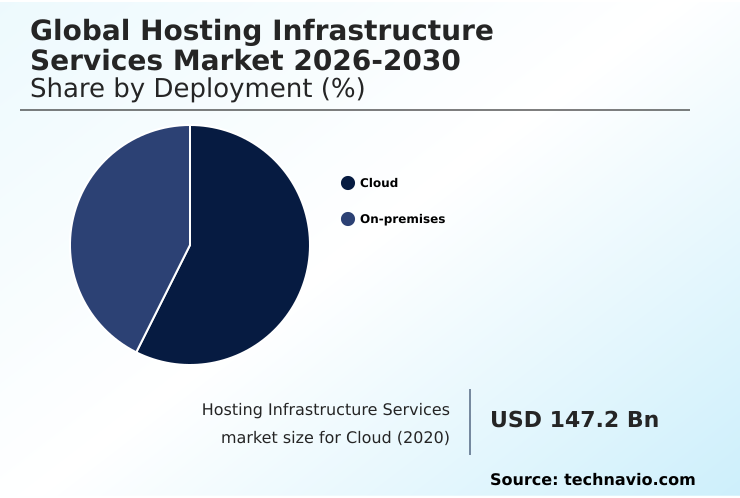
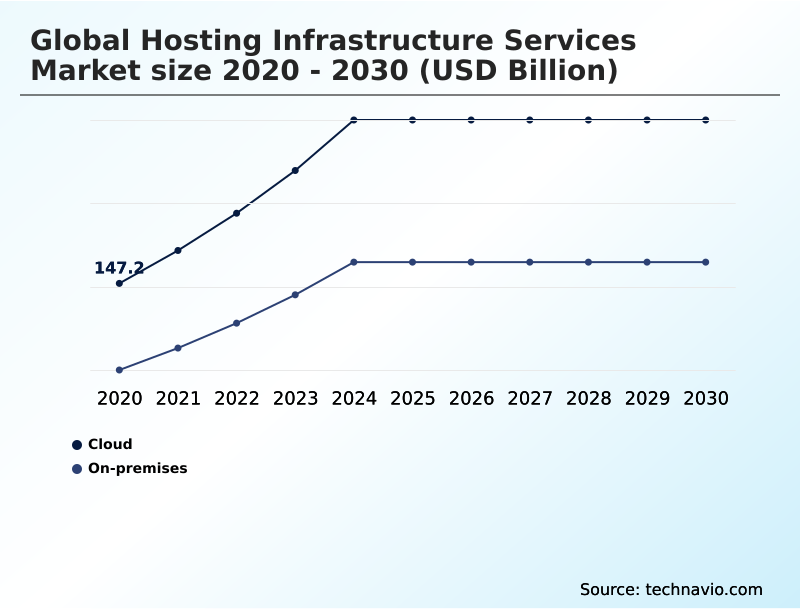
The Cloud segment was valued at USD 218.7 billion in 2024 and showed a gradual increase during the forecast period.
Regional Analysis
North America is estimated to contribute 47.6% to the growth of the global market during the forecast period.Technavio’s analysts have elaborately explained the regional trends and drivers that shape the market during the forecast period.
See How Hosting Infrastructure Services Market Demand is Rising in North America Request Free Sample
The geographic landscape of the hosting infrastructure services market is undergoing significant shifts driven by power constraints and data sovereignty.
In North America, while primary hubs remain dominant, there is accelerated growth in secondary markets offering power at costs up to 15% lower and more favorable conditions for data center site selection.
This expansion is essential for supporting new ai-ready infrastructure and interconnection hubs. Europe's market is heavily shaped by data governance frameworks mandating data residency, which fuels demand for in-country private cloud solutions and sovereign cloud offerings.
This regulatory pressure makes compliance a top factor in digital infrastructure investment. Meanwhile, the APAC region is experiencing the most rapid growth, fueled by digitalization and a massive mobile-first population, though this presents operational challenges related to varying regulatory environments.
Providers must navigate this complex patchwork to capitalize on the region's immense digital economy, with successful deployment reducing latency for regional users by over 30%.
Market Dynamics
Our researchers analyzed the data with 2025 as the base year, along with the key drivers, trends, and challenges. A holistic analysis of drivers will help companies refine their marketing strategies to gain a competitive advantage.
- Strategic decisions in the hosting infrastructure services market increasingly revolve around optimizing for specific use cases. For instance, choosing bare metal servers for AI workloads can deliver superior performance over virtualized environments, while the debate over dedicated hosting vs public cloud performance continues for latency-sensitive financial applications.
- Companies are now implementing high-density rack liquid cooling solutions to manage the intense thermal output of modern processors, which is critical for maintaining uptime. A key area of focus is on managed Kubernetes for enterprise applications, as adopting a proficient service can reduce deployment failures by more than 50% compared to self-managed clusters.
- Concurrently, implementing zero trust security for cloud environments is becoming standard practice to mitigate advanced threats. Organizations are also navigating complex data sovereignty and compliance strategies by leveraging colocation services for hyperscale expansion into new jurisdictions. The benefits of hyper-converged infrastructure are being realized in simplified management, while serverless computing for event-driven architecture offers significant cost savings for intermittent workloads.
- Moreover, private cloud solutions for financial services are essential for meeting stringent regulatory requirements, and the security of managed hosting services is a critical consideration for all enterprises entrusting their data to third parties. Ultimately, optimizing CDN for global content delivery and choosing a web application firewall provider are crucial for user experience and security, respectively.
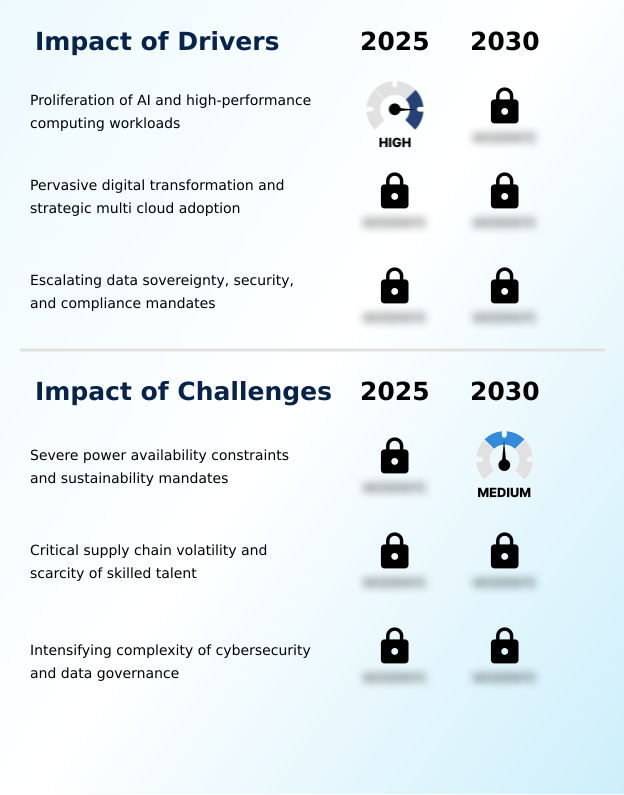
What are the key market drivers leading to the rise in the adoption of Hosting Infrastructure Services Industry?
- The proliferation of AI and high-performance computing workloads is a key driver fueling market growth.
- The market's primary driver is the exponential growth of artificial intelligence and high-performance computing workloads, which fundamentally reshapes infrastructure requirements.
- The demand for massive fleets of specialized accelerators, such as gpus, far exceeds the capabilities of traditional enterprise data centers, creating unprecedented reliance on hyperscalers and colocation facilities.
- This is fueling immense capital expenditure, with ai workloads driving a 3x increase in power density requirements for new data center builds. A second powerful driver is the pervasive digital transformation and strategic multi-cloud adoption.
- Mature enterprises now view a flexible, resilient digital core as a critical enabler of business agility, leveraging multiple providers to access best-of-breed services.
- This approach requires seamless interconnection, driving significant demand for colocation services that offer direct, low-latency connections to all major cloud on-ramps. Over 75% of enterprises now utilize more than one cloud provider to mitigate risk and optimize costs.
What are the market trends shaping the Hosting Infrastructure Services Industry?
- The proliferation of purpose-built AI infrastructure is a dominant market trend, coupled with a growing necessity for advanced cooling solutions to manage high-density workloads.
- A dominant trend reshaping the market is the shift toward purpose-built infrastructure optimized for artificial intelligence workloads, moving beyond the generic application of gpus in standard environments. This involves developing entire data center campuses with direct-to-chip cooling and ultra-low-latency network fabric, essential for large-scale model training.
- Facilities offering these advanced thermal solutions, which can improve power usage effectiveness (pue) by over 10%, are gaining a significant competitive advantage. Concurrently, the industrialization of software-defined interconnection is transforming multi-cloud networking from a complex challenge into a flexible, on-demand service.
- This allows enterprises to provision secure connections between private infrastructure and multiple public clouds in minutes, a process that previously took weeks. Lastly, sustainability is now a core architectural principle, with providers investing in ai-driven energy optimization and renewable power sources to meet stringent corporate esg mandates.
What challenges does the Hosting Infrastructure Services Industry face during its growth?
- Severe power availability constraints, coupled with stringent sustainability mandates, present a key challenge affecting industry growth.
- A formidable challenge facing the market is the intersection of power availability and sustainability mandates. The unprecedented energy demands of ai workloads are straining electrical grids in key data center markets, with some utility providers announcing moratoriums on new high-capacity connections. This power scarcity complicates data center site selection and introduces significant project delays.
- Compounding this, the lead times for critical components like high-voltage switchgear have increased by over 50%, creating persistent supply chain volatility and a scarcity of skilled talent. A chronic shortage of experienced data center engineers and cloud architects drives up labor costs and acts as a brake on expansion.
- Finally, the escalating complexity of the cybersecurity threat landscape and fragmented data governance rules create immense operational burdens. Providers must continuously invest in advanced threat detection and navigate a patchwork of global regulations, where a single breach can result in catastrophic financial and reputational damage.
Exclusive Technavio Analysis on Customer Landscape
The hosting infrastructure services market forecasting report includes the adoption lifecycle of the market, covering from the innovator’s stage to the laggard’s stage. It focuses on adoption rates in different regions based on penetration. Furthermore, the hosting infrastructure services market report also includes key purchase criteria and drivers of price sensitivity to help companies evaluate and develop their market growth analysis strategies.
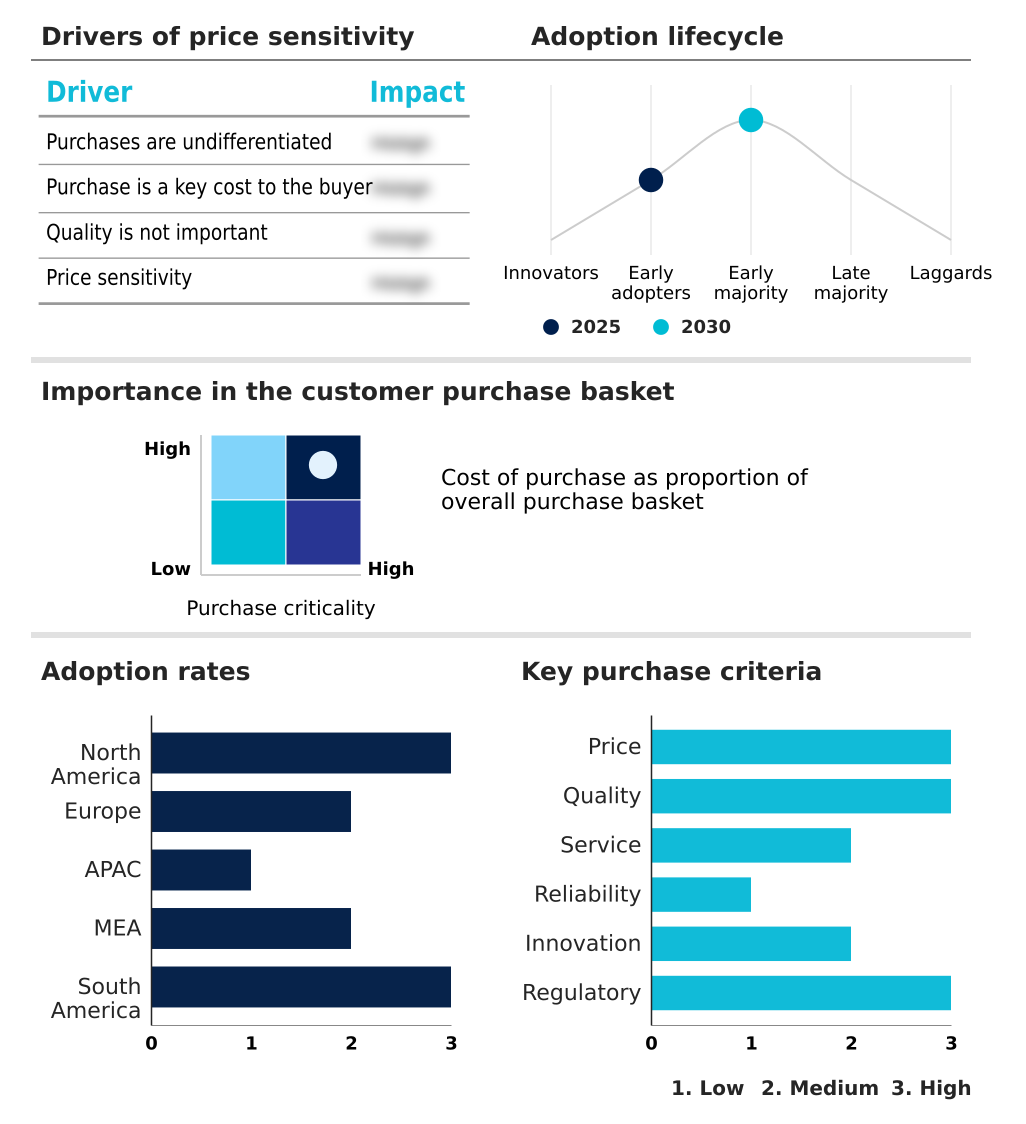
Customer Landscape of Hosting Infrastructure Services Industry
Competitive Landscape
Companies are implementing various strategies, such as strategic alliances, hosting infrastructure services market forecast, partnerships, mergers and acquisitions, geographical expansion, and product/service launches, to enhance their presence in the industry.
Alibaba Group Holding Ltd. - Analysis indicates a focus on providing secure, scalable infrastructure, from bare metal servers and dedicated cloud access to managed colocation supporting high-performance enterprise workloads.
The industry research and growth report includes detailed analyses of the competitive landscape of the market and information about key companies, including:
- Alibaba Group Holding Ltd.
- Amazon.com Inc.
- Aruba Spa
- AT and T Inc.
- Colt Technology Services Ltd.
- Daisy Communications Ltd.
- DreamHost LLC
- Fujitsu Ltd.
- GoDaddy Inc.
- Google LLC
- Internap Holding LLC
- IBM Corp.
- Lumen Technologies Inc.
- Microsoft Corp.
- NetApp Inc.
Qualitative and quantitative analysis of companies has been conducted to help clients understand the wider business environment as well as the strengths and weaknesses of key industry players. Data is qualitatively analyzed to categorize companies as pure play, category-focused, industry-focused, and diversified; it is quantitatively analyzed to categorize companies as dominant, leading, strong, tentative, and weak.
Recent Development and News in Hosting infrastructure services market
- In March, 2025, a leading global colocation provider announced the launch of its 'AI Ready' data center platform, which offers direct-to-chip liquid cooling as a standard, pre-engineered feature to support high-density AI workloads.
- In May, 2025, a major international banking group, responding to new national data localization laws, initiated a project to migrate its South Asian retail banking data to a newly established sovereign cloud region within that country.
- In July, 2025, a leading Network-as-a-Service provider, in a strategic alliance with a global data center operator, launched an integrated platform allowing enterprises to manage their entire multi-cloud network via a unified portal and API.
- In October, 2025, a major European cloud provider opened a new data center designed for energy circularity, featuring full integration with the local district heating system to repurpose 100% of its waste heat.
Dive into Technavio’s robust research methodology, blending expert interviews, extensive data synthesis, and validated models for unparalleled Hosting Infrastructure Services Market insights. See full methodology.
| Market Scope | |
|---|---|
| Page number | 313 |
| Base year | 2025 |
| Historic period | 2020-2024 |
| Forecast period | 2026-2030 |
| Growth momentum & CAGR | Accelerate at a CAGR of 12.1% |
| Market growth 2026-2030 | USD 320.4 billion |
| Market structure | Fragmented |
| YoY growth 2025-2026(%) | 11.6% |
| Key countries | US, Canada, Mexico, Germany, UK, France, The Netherlands, Italy, Spain, China, India, Japan, South Korea, Australia, Indonesia, Saudi Arabia, UAE, South Africa, Israel, Turkey, Brazil, Argentina and Colombia |
| Competitive landscape | Leading Companies, Market Positioning of Companies, Competitive Strategies, and Industry Risks |
Research Analyst Overview
- The hosting infrastructure services market is undergoing a period of profound re-architecting, driven by the computational demands of artificial intelligence. The focus has shifted from generic compute to deploying purpose-built ai-ready infrastructure, including high-density racks equipped with gpu accelerators and advanced liquid cooling.
- This technological pivot has direct boardroom implications, forcing a re-evaluation of capex strategies as companies weigh building proprietary high-performance computing (hpc) environments against leveraging specialized colocation services.
- A key trend is the strategic adoption of hybrid it architecture, where workload repatriation from public clouds to on-premises bare metal servers has been shown to reduce predictable workload costs by up to 25% over a three-year period. This move is enabled by sophisticated multi-cloud networking and software-defined interconnection, allowing seamless integration.
- As enterprises embrace digital transformation, the reliance on hyperscale data centers, managed hosting services, and robust disaster recovery as a service (draas) solutions has become non-negotiable. Success is now measured by the ability to manage this complex ecosystem efficiently, ensuring performance, security, and compliance.
What are the Key Data Covered in this Hosting Infrastructure Services Market Research and Growth Report?
-
What is the expected growth of the Hosting Infrastructure Services Market between 2026 and 2030?
-
USD 320.4 billion, at a CAGR of 12.1%
-
-
What segmentation does the market report cover?
-
The report is segmented by Deployment (Cloud, and On-premises), End-user (BFSI, IT and telecommunication, Government, Retail and e-commerce, Others), Type (Website hosting, Application hosting, Enterprise IT hosting, Cloud native application hosting, and Others) and Geography (North America, Europe, APAC, Middle East and Africa, South America)
-
-
Which regions are analyzed in the report?
-
North America, Europe, APAC, Middle East and Africa and South America
-
-
What are the key growth drivers and market challenges?
-
Proliferation of AI and high-performance computing workloads, Severe power availability constraints and sustainability mandates
-
-
Who are the major players in the Hosting Infrastructure Services Market?
-
Alibaba Group Holding Ltd., Amazon.com Inc., Aruba Spa, AT and T Inc., Colt Technology Services Ltd., Daisy Communications Ltd., DreamHost LLC, Fujitsu Ltd., GoDaddy Inc., Google LLC, Internap Holding LLC, IBM Corp., Lumen Technologies Inc., Microsoft Corp. and NetApp Inc.
-
Market Research Insights
- The hosting infrastructure services market is defined by a strategic pivot toward efficiency and specialized capabilities. Enterprises are adopting sophisticated cloud cost management, with analyses showing that a well-executed multi-cloud strategy can yield up to a 20% cost reduction compared to single-provider models.
- This drive for optimization extends to infrastructure scalability, where automated infrastructure provisioning reduces manual overhead by over 60% in complex environments. Secure cloud connectivity is paramount, with organizations increasingly leveraging dedicated interconnection hubs to bypass the public internet, improving security posture and network performance.
- Furthermore, the focus on sustainable data center design is becoming a key selection criterion, as providers offering transparent power usage effectiveness metrics and renewable energy options gain a competitive edge. This maturation reflects a shift from basic infrastructure consumption to a highly strategic approach focused on performance, security, and financial governance.
We can help! Our analysts can customize this hosting infrastructure services market research report to meet your requirements.