Mobile Broadband Infrastructure Market Analysis, Size, and Forecast 2025-2029: North America (US and Canada), Europe (France, Germany, Italy, and UK), APAC (China, India, Japan, and South Korea), and Rest of World (ROW)

Mobile Broadband Infrastructure Market Analysis, Size, and Forecast 2025-2029:
North America (US and Canada), Europe (France, Germany, Italy, and UK), APAC (China, India, Japan, and South Korea), and Rest of World (ROW)

Published: Jun 2025 222 Pages SKU: IRTNTR80166

Market Overview at a Glance

$43.40 B
Market Opportunity
10.7%
CAGR
9.5
YoY growth 2024-2025(%)

Mobile Broadband Infrastructure Market Size 2025-2029

The mobile broadband infrastructure market size is forecast to increase by USD 43.4 billion at a CAGR of 10.7% between 2024 and 2029.

  • The market experiences significant growth, driven by the robust expansion of mobile broadband infrastructure in emerging economies. This trend is fueled by the increasing demand for high-speed internet connectivity, particularly in regions with large populations and underdeveloped telecommunications networks. Moreover, substantial investments are being made in mobile broadband infrastructure to support the growing number of mobile devices and the rise of the Internet of Things (IoT). However, the high capital requirements for deploying mobile broadband infrastructure pose a significant challenge to market growth.
  • Additionally, the integration of advanced technologies such as 5G and the Internet of Things (IoT) into mobile broadband infrastructure is expected to create new revenue streams and drive innovation in the market. Companies seeking to capitalize on these opportunities must stay abreast of technological advancements and regulatory developments while managing the financial and operational risks associated with large-scale infrastructure projects. Public safety applications, such as video surveillance and emergency alerts, require ultra-fast broadband and system interoperability. Despite this hurdle, opportunities abound for companies that can effectively navigate the complex regulatory landscape and collaborate with local governments and telecom operators to deploy infrastructure at scale.

What will be the Size of the Mobile Broadband Infrastructure Market during the forecast period?
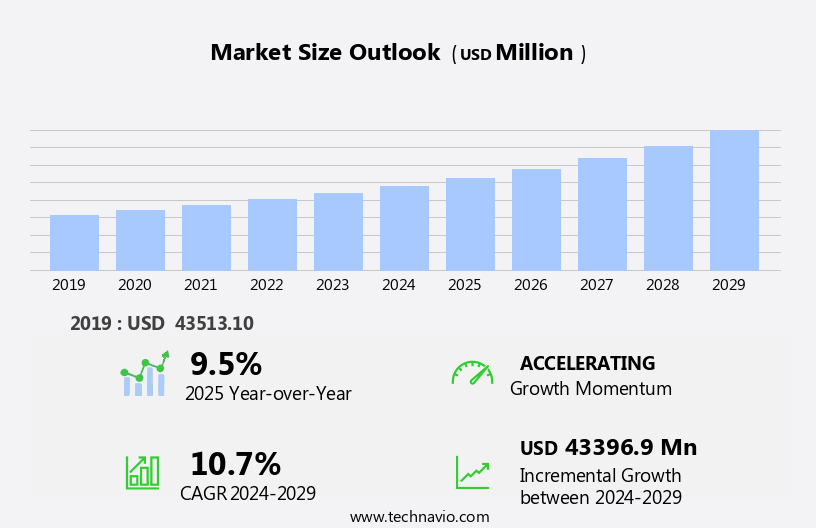
Mobile Broadband Infrastructure Market Size

 Explore in-depth regional segment analysis with market size data - historical 2019-2023 and forecasts 2025-2029 - in the full report.  
Request Free Sample

The mobile broadband market is experiencing significant growth, driven by the increasing demand for high-speed data access and next-generation technology. Commercial development in wireless broadband is accelerating, with corporate applications, public safety, media and entertainment, and digital transformation leading the charge. Global broadband services are increasingly relying on mobile infrastructure to provide real-time information to first responders and enable online commerce. Wireless technology is revolutionizing communication channels, allowing mobile device usage to soar in retail goods and hospital records management.

Network congestion and traffic management are becoming critical issues, necessitating advanced solutions for mobile connectivity. The mobile broadband market is poised to continue its expansion, transforming the way businesses operate and connect with their customers.

How is this Mobile Broadband Infrastructure Industry segmented?

The mobile broadband infrastructure industry research report provides comprehensive data (region-wise segment analysis), with forecasts and estimates in "USD million" for the period 2025-2029, as well as historical data from 2019-2023 for the following segments.

  • Component
    • Hardware
    • Software
  • End-user
    • Telecom operators
    • Government
    • Enterprises
  • Deployment
    • Offline
    • Online
  • Geography
    • North America
      • US
      • Canada
    • Europe
      • France
      • Germany
      • Italy
      • UK
    • APAC
      • China
      • India
      • Japan
      • South Korea
    • Rest of World (ROW)

By Component Insights

The hardware segment is estimated to witness significant growth during the forecast period. The market is witnessing significant growth, driven by the increasing demand for high-speed data access from various sectors. First responders and critical infrastructure operators require uninterrupted broadband connectivity for real-time information exchange and emergency response. Online learning relies on wireless technology for cost-effective digital education. Global broadband services, including high-speed internet and wireless broadband, cater to the needs of corporate applications, client engagement, and public safety education. Mobile device usage continues to rise, leading to an increase in demand for wireless technology and broadband coverage. The digital revolution is transforming industries, from retail goods and household sector to smart grid technologies and online commerce.

Internet service providers are investing in next-generation technology, like fiber optics and 5G networks, to offer cost-effective solutions and improve network performance. Fixed broadband services and wireless broadband services cater to diverse user needs, with the latter offering the advantage of mobility and flexibility. Traffic management and network congestion are key challenges, necessitating advancements in wireless technology and broadband coverage. The economic reductions from digital transformation and the emergence of the Gigabit Society have further fueled the demand for mobile broadband infrastructure. Media and entertainment, public safety, and digital education are major consumers of wireless broadband services.

The hardware segment, comprising base stations, antennas, routers, switches, and fiber optic cables, plays a crucial role in ensuring robust and reliable network performance. Recent developments include strategic partnerships and investments aimed at expanding network capabilities, such as Tillman Fiber Co.'s collaboration with T-Mobile to enhance its FTTP network in Florida.
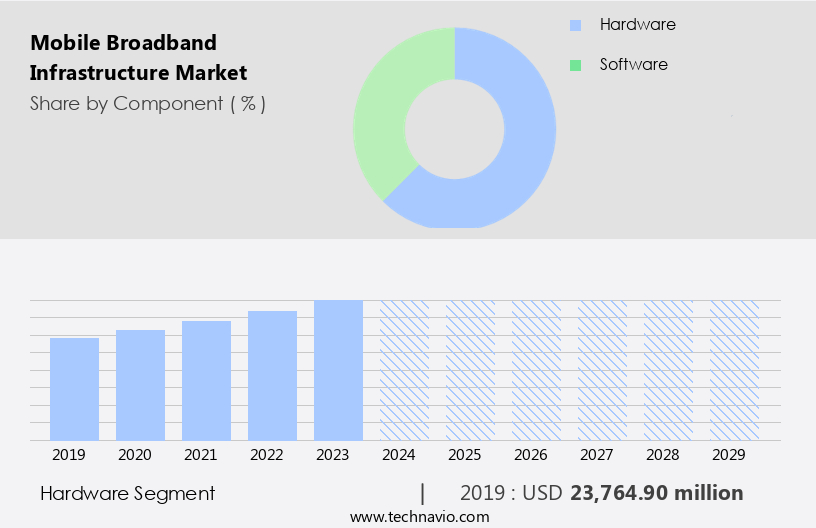
Mobile Broadband Infrastructure Market Size

 Download Free Sample Report

The Hardware segment was valued at USD 23.76 billion in 2019 and showed a gradual increase during the forecast period.

Regional Analysis

APAC is estimated to contribute 34% to the growth of the global market during the forecast period.Technavio’s analysts have elaborately explained the regional trends and drivers that shape the market during the forecast period.
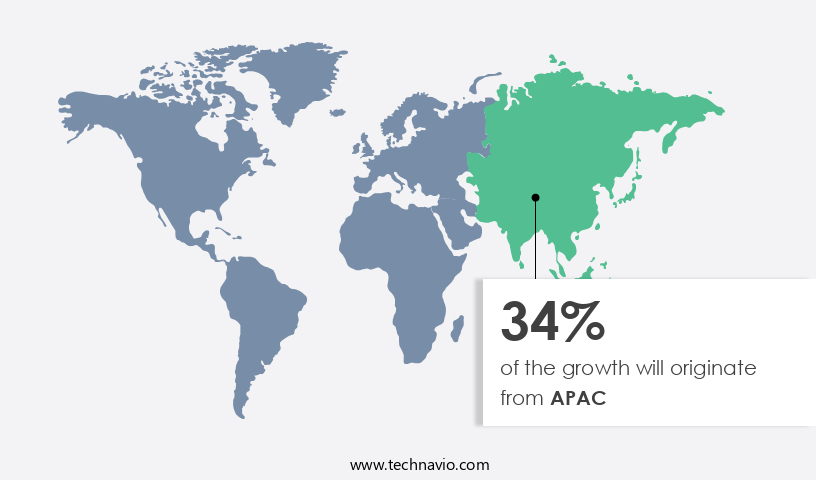
Mobile Broadband Infrastructure Market Share by Geography

View Free PDF Sample

In the dynamic APAC market, mobile broadband infrastructure is undergoing significant transformations, driven by advanced technologies bridging connectivity gaps in remote areas. Historically, rural communities faced challenges due to difficult geography and insufficient infrastructure. However, innovations such as fiber optics, wireless technology, and next-generation solutions are expanding broadband coverage, enabling access to essential services and digital channels for millions. The integration of broadband services into daily life has been pivotal in APAC, particularly in the Philippines. It has facilitated remote work, online learning, and access to critical infrastructure operators and public safety services. Furthermore, it has allowed for the adoption of advanced technologies like artificial intelligence and video surveillance in various sectors, including retail and public safety.

Broadband infrastructure expansion is crucial for fostering economic development by connecting more individuals to markets and networks. The digital revolution has brought about new opportunities in media and entertainment, online commerce, and digital education. Uninterrupted broadband connectivity is essential for businesses to engage clients and implement cost-effective solutions, while public safety and healthcare sectors rely on real-time information for critical decision-making. The mobile broadband market in APAC is experiencing a digital transformation, with ultra-fast broadband and wireless broadband services becoming increasingly popular. System interoperability and uninterrupted connectivity are key priorities for internet service providers to meet the growing demand for high-speed internet.

The gigabit society is taking shape, with the potential to revolutionize industries and improve communication channels for businesses and households alike.

Market Dynamics

Our researchers analyzed the data with 2024 as the base year, along with the key drivers, trends, and challenges. A holistic analysis of drivers will help companies refine their marketing strategies to gain a competitive advantage.

What are the Mobile Broadband Infrastructure market drivers leading to the rise in the adoption of Industry?

  • In emerging countries, the expansion of mobile broadband infrastructure serves as the primary catalyst for market growth. Mobile broadband infrastructure is experiencing significant growth in emerging markets, revolutionizing global connectivity and fostering economic and social progress. With urbanization and increasing smartphone usage, the need for dependable and high-speed internet is escalating. This demand has led to substantial investments in mobile broadband infrastructure, driven by collaborative efforts from both public and private sectors.
  • In Ghana, for instance, the Next-Gen Infrastructure Company (NGIC), backed by the government, joined forces with Radisys, a Jio subsidiary, Tech Mahindra, and Nokia to establish the necessary infrastructure for affordable 5G mobile broadband services. These initiatives aim to bridge the digital divide and stimulate economic growth. In several emerging economies, the expansion of 4G networks is paving the way for the future deployment of 5G technology, offering faster speeds and enhanced connectivity.

What are the Mobile Broadband Infrastructure market trends shaping the Industry?

  • The investment in mobile broadband infrastructure is a significant market trend that is on the rise. This growth is driven by the increasing demand for faster and more reliable internet connectivity on mobile devices. The market is experiencing significant growth due to increasing investments in advanced technologies and expanding network coverage. With the ongoing digital revolution, there is a surging demand for uninterrupted high-speed internet connectivity, particularly for digital education, healthcare, and business applications. This demand has led governments, telecom companies, and private investors to allocate substantial resources towards mobile broadband infrastructure development. For instance, in August 2024, Bharti Airtel and Reliance Jio invested an additional USD2 billion in 5G network equipment to enhance and expand their mobile broadband networks. Similarly, in January 2024, the Oklahoma broadband governing board approved USD374 million for broadband infrastructure projects.
  • These investments are driving the deployment of advanced technologies such as 5G and fiber optics, which offer faster, more reliable, and widespread internet access. Moreover, the need for efficient traffic management and network congestion mitigation is another crucial factor fueling the growth of the market. As the world becomes increasingly reliant on wireless broadband for various applications, it is essential to ensure seamless and uninterrupted connectivity. Overall, the market is poised for continued growth, driven by technological advancements, increasing demand, and significant investments.

How does Mobile Broadband Infrastructure market faces challenges during its growth?

  • The mobile broadband industry faces significant growth impediments due to the high capital requirements necessary for deploying and expanding infrastructure. The market faces significant financial hurdles due to the high capital requirements for deploying advanced technologies like 5G. Telecom operators and infrastructure providers face challenges in installing new base stations, upgrading existing networks, and acquiring spectrum, which can cost between USD20,000 and USD50,000 per base station and millions for spectrum licenses. These expenses pose a considerable barrier to growth and expansion in the market.
  • System interoperability and digital transformation further add to the financial burden. Recent research indicates that the market will experience steady growth, fueled by the increasing demand for high-speed connectivity in various sectors. Moreover, the shift towards the Gigabit Society, where media and entertainment, online commerce, public safety, and internet service providers rely on ultra-fast broadband, necessitates continuous investment in mobile broadband infrastructure.

Exclusive Customer Landscape

The mobile broadband infrastructure market forecasting report includes the adoption lifecycle of the market, covering from the innovator’s stage to the laggard’s stage. It focuses on adoption rates in different regions based on penetration. Furthermore, the mobile broadband infrastructure market report also includes key purchase criteria and drivers of price sensitivity to help companies evaluate and develop their market growth analysis strategies.
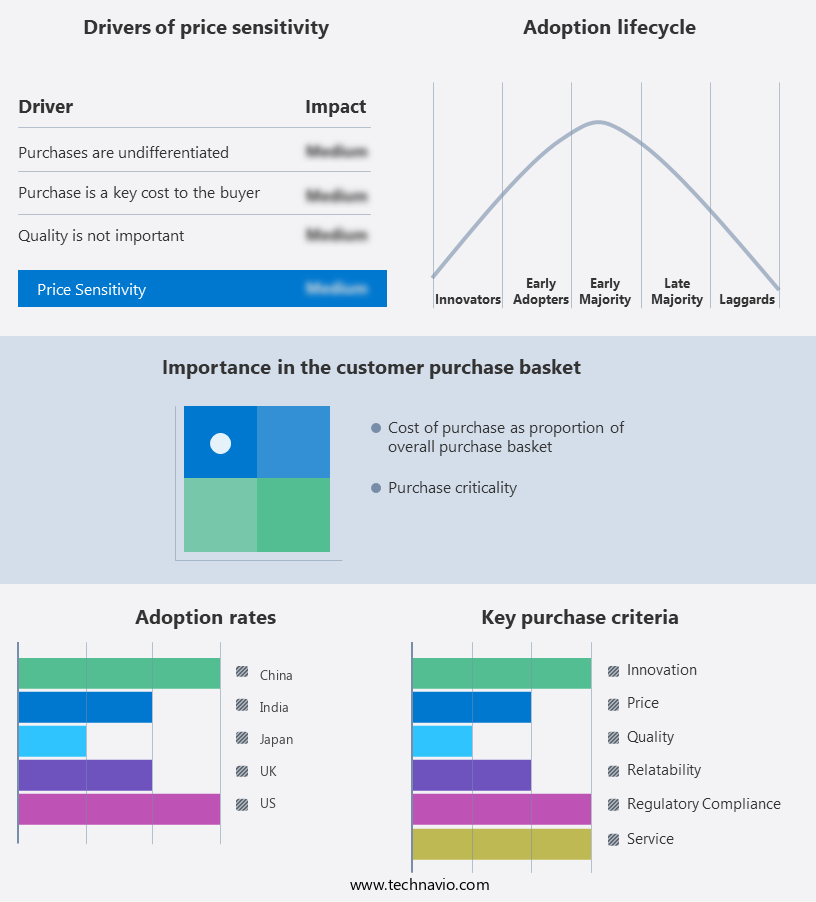
Mobile Broadband Infrastructure Market Share by Geography

 Customer Landscape

Key Companies & Market Insights

Companies are implementing various strategies, such as strategic alliances, mobile broadband infrastructure market forecast, partnerships, mergers and acquisitions, geographical expansion, and product/service launches, to enhance their presence in the industry.

Adtran Holdings Inc. - This company specializes in mobile broadband infrastructure, delivering cutting-edge solutions for 5G and LTE network deployments.

The industry research and growth report includes detailed analyses of the competitive landscape of the market and information about key companies, including:

  • Adtran Holdings Inc.
  • Arista Networks Inc.
  • AT and T Inc.
  • Bharti Airtel Ltd.
  • Charter Communications Inc.
  • China Mobile Ltd.
  • Cisco Systems Inc.
  • Deutsche Telekom AG
  • Hewlett Packard Enterprise Co.
  • HFCL Ltd.
  • Huawei Technologies Co. Ltd.
  • Intel Corp.
  • Lounea
  • Motorola Solutions Inc.
  • NEC Corp.
  • Nokia Corp.
  • Orange SA
  • PomeGran Inc
  • Qualcomm Inc.
  • Samsung Electronics Co. Ltd.
  • T Mobile US Inc.
  • Telefonaktiebolaget LM Ericsson
  • Telstra Corp. Ltd.
  • United Group B.V.
  • Verizon Communications Inc.
  • Vodafone Group Plc
  • ZTE Corp.

Qualitative and quantitative analysis of companies has been conducted to help clients understand the wider business environment as well as the strengths and weaknesses of key industry players. Data is qualitatively analyzed to categorize companies as pure play, category-focused, industry-focused, and diversified; it is quantitatively analyzed to categorize companies as dominant, leading, strong, tentative, and weak.

Recent Development and News in Mobile Broadband Infrastructure Market

  • In January 2024, Ericsson and Nokia, two leading mobile broadband infrastructure providers, announced a strategic partnership to develop and deploy 5G standalone (SA) networks in Europe. This collaboration aimed to enhance their combined market presence and accelerate the rollout of next-generation mobile broadband infrastructure (Bloomberg).
  • In March 2024, Qualcomm, a major semiconductor company, launched its new X65 5G modem-RF system, supporting millimeter wave (mmWave) and sub-6 GHz frequencies. This new product was designed to boost mobile broadband infrastructure capacity and improve user experiences (Qualcomm press release).
  • In May 2024, Huawei Technologies secured a significant contract with Vodafone Group to supply 5G radio access network (RAN) equipment for the UK telecom operator's 5G network expansion. The deal was valued at approximately €1.3 billion (Reuters).
  • In February 2025, the US Federal Communications Commission (FCC) approved T-Mobile US's merger with Sprint, creating a larger mobile broadband infrastructure provider in the US market. The combined company would have the resources to invest in 5G network expansion and infrastructure upgrades (FCC press release).

Research Analyst Overview

The market continues to evolve, driven by the increasing demand for uninterrupted high-speed internet connectivity across various sectors. First responders and critical infrastructure operators rely on mobile broadband for real-time information and communication, ensuring public safety and efficient response to emergencies. Online learning institutions utilize mobile broadband services to provide digital education to students, expanding access to knowledge. Commercial development and client engagement also benefit from mobile broadband, enabling businesses to offer cost-effective solutions and reach a wider audience. Corporate applications, such as video conferencing and data sharing, require high-speed data access for seamless collaboration. The digital revolution in the healthcare sector necessitates the use of fiber optics and hospital records management systems, which demand uninterrupted broadband connectivity.

Public safety applications, including emergency alerts and video surveillance, rely on wireless technology for effective implementation. The retail goods industry and household sector have embraced mobile broadband for online commerce and digital channels, contributing to the gigabit society. Next-generation technology, such as ultra-fast broadband and system interoperability, enables media and entertainment industries to deliver high-quality content to wireless subscribers. Network congestion and traffic management remain ongoing challenges for internet service providers, requiring continuous innovation and improvement to meet the demands of the ever-growing mobile broadband market. The digital transformation continues to unfold, with mobile connectivity playing a crucial role in shaping the future of communication channels and economic reductions.

Dive into Technavio’s robust research methodology, blending expert interviews, extensive data synthesis, and validated models for unparalleled Mobile Broadband Infrastructure Market insights. See full methodology.

Market Scope

Report Coverage

Details

Page number

222

Base year

2024

Historic period

2019-2023

Forecast period

2025-2029

Growth momentum & CAGR

Accelerate at a CAGR of 10.7%

Market growth 2025-2029

USD 43.4 billion

Market structure

Fragmented

YoY growth 2024-2025(%)

9.5

Key countries

US, China, Germany, Japan, Canada, UK, South Korea, France, India, and Italy

Competitive landscape

Leading Companies, Market Positioning of Companies, Competitive Strategies, and Industry Risks

Request Free Sample

What are the Key Data Covered in this Mobile Broadband Infrastructure Market Research and Growth Report?

  • CAGR of the Mobile Broadband Infrastructure industry during the forecast period
  • Detailed information on factors that will drive the growth and forecasting between 2025 and 2029
  • Precise estimation of the size of the market and its contribution of the industry in focus to the parent market
  • Accurate predictions about upcoming growth and trends and changes in consumer behaviour
  • Growth of the market across APAC, North America, Europe, Middle East and Africa, and South America
  • Thorough analysis of the market’s competitive landscape and detailed information about companies
  • Comprehensive analysis of factors that will challenge the mobile broadband infrastructure market growth of industry companies

We can help! Our analysts can customize this mobile broadband infrastructure market research report to meet your requirements.

Get in touch

1 Executive Summary

  • 1.1 Market overview
    • Executive Summary - Chart on Market Overview
    • Executive Summary - Data Table on Market Overview
    • Executive Summary - Chart on Global Market Characteristics
    • Executive Summary - Chart on Market by Geography
    • Executive Summary - Chart on Market Segmentation by Component
    • Executive Summary - Chart on Market Segmentation by End-user
    • Executive Summary - Chart on Market Segmentation by Deployment
    • Executive Summary - Chart on Incremental Growth
    • Executive Summary - Data Table on Incremental Growth
    • Executive Summary - Chart on Company Market Positioning

2 Technavio Analysis

  • 2.1 Analysis of price sensitivity, lifecycle, customer purchase basket, adoption rates, and purchase criteria
    • Analysis of price sensitivity, lifecycle, customer purchase basket, adoption rates, and purchase criteria
  • 2.2 Criticality of inputs and Factors of differentiation
    • Overview on criticality of inputs and factors of differentiation
  • 2.3 Factors of disruption
    • Overview on factors of disruption
  • 2.4 Impact of drivers and challenges
    • Impact of drivers and challenges in 2024 and 2029

3 Market Landscape

  • 3.1 Market ecosystem
    • Parent Market
    • Data Table on - Parent Market
  • 3.2 Market characteristics
    • Market characteristics analysis
  • 3.3 Value chain analysis
    • Value chain analysis

4 Market Sizing

  • 4.1 Market definition
    • Offerings of companies included in the market definition
  • 4.2 Market segment analysis
    • Market segments
  • 4.3 Market size 2024
    • 4.4 Market outlook: Forecast for 2024-2029
      • Chart on Global - Market size and forecast 2024-2029 ($ million)
      • Data Table on Global - Market size and forecast 2024-2029 ($ million)
      • Chart on Global Market: Year-over-year growth 2024-2029 (%)
      • Data Table on Global Market: Year-over-year growth 2024-2029 (%)

    5 Historic Market Size

    • 5.1 Global Mobile Broadband Infrastructure Market 2019 - 2023
      • Historic Market Size - Data Table on Global Mobile Broadband Infrastructure Market 2019 - 2023 ($ million)
    • 5.2 Component segment analysis 2019 - 2023
      • Historic Market Size - Component Segment 2019 - 2023 ($ million)
    • 5.3 End-user segment analysis 2019 - 2023
      • Historic Market Size - End-user Segment 2019 - 2023 ($ million)
    • 5.4 Deployment segment analysis 2019 - 2023
      • Historic Market Size - Deployment Segment 2019 - 2023 ($ million)
    • 5.5 Geography segment analysis 2019 - 2023
      • Historic Market Size - Geography Segment 2019 - 2023 ($ million)
    • 5.6 Country segment analysis 2019 - 2023
      • Historic Market Size - Country Segment 2019 - 2023 ($ million)

    6 Qualitative Analysis

    • 6.1 Impact of AI on global mobile broadband infrastructure market

      7 Five Forces Analysis

      • 7.1 Five forces summary
        • Five forces analysis - Comparison between 2024 and 2029
      • 7.2 Bargaining power of buyers
        • Bargaining power of buyers - Impact of key factors 2024 and 2029
      • 7.3 Bargaining power of suppliers
        • Bargaining power of suppliers - Impact of key factors in 2024 and 2029
      • 7.4 Threat of new entrants
        • Threat of new entrants - Impact of key factors in 2024 and 2029
      • 7.5 Threat of substitutes
        • Threat of substitutes - Impact of key factors in 2024 and 2029
      • 7.6 Threat of rivalry
        • Threat of rivalry - Impact of key factors in 2024 and 2029
      • 7.7 Market condition
        • Chart on Market condition - Five forces 2024 and 2029

      8 Market Segmentation by Component

      • 8.1 Market segments
        • Chart on Component - Market share 2024-2029 (%)
        • Data Table on Component - Market share 2024-2029 (%)
      • 8.2 Comparison by Component
        • Chart on Comparison by Component
        • Data Table on Comparison by Component
      • 8.3 Hardware - Market size and forecast 2024-2029
        • Chart on Hardware - Market size and forecast 2024-2029 ($ million)
        • Data Table on Hardware - Market size and forecast 2024-2029 ($ million)
        • Chart on Hardware - Year-over-year growth 2024-2029 (%)
        • Data Table on Hardware - Year-over-year growth 2024-2029 (%)
      • 8.4 Software - Market size and forecast 2024-2029
        • Chart on Software - Market size and forecast 2024-2029 ($ million)
        • Data Table on Software - Market size and forecast 2024-2029 ($ million)
        • Chart on Software - Year-over-year growth 2024-2029 (%)
        • Data Table on Software - Year-over-year growth 2024-2029 (%)
      • 8.5 Market opportunity by Component
        • Market opportunity by Component ($ million)
        • Data Table on Market opportunity by Component ($ million)

      9 Market Segmentation by End-user

      • 9.1 Market segments
        • Chart on End-user - Market share 2024-2029 (%)
        • Data Table on End-user - Market share 2024-2029 (%)
      • 9.2 Comparison by End-user
        • Chart on Comparison by End-user
        • Data Table on Comparison by End-user
      • 9.3 Telecom operators - Market size and forecast 2024-2029
        • Chart on Telecom operators - Market size and forecast 2024-2029 ($ million)
        • Data Table on Telecom operators - Market size and forecast 2024-2029 ($ million)
        • Chart on Telecom operators - Year-over-year growth 2024-2029 (%)
        • Data Table on Telecom operators - Year-over-year growth 2024-2029 (%)
      • 9.4 Government - Market size and forecast 2024-2029
        • Chart on Government - Market size and forecast 2024-2029 ($ million)
        • Data Table on Government - Market size and forecast 2024-2029 ($ million)
        • Chart on Government - Year-over-year growth 2024-2029 (%)
        • Data Table on Government - Year-over-year growth 2024-2029 (%)
      • 9.5 Enterprises - Market size and forecast 2024-2029
        • Chart on Enterprises - Market size and forecast 2024-2029 ($ million)
        • Data Table on Enterprises - Market size and forecast 2024-2029 ($ million)
        • Chart on Enterprises - Year-over-year growth 2024-2029 (%)
        • Data Table on Enterprises - Year-over-year growth 2024-2029 (%)
      • 9.6 Market opportunity by End-user
        • Market opportunity by End-user ($ million)
        • Data Table on Market opportunity by End-user ($ million)

      10 Market Segmentation by Deployment

      • 10.1 Market segments
        • Chart on Deployment - Market share 2024-2029 (%)
        • Data Table on Deployment - Market share 2024-2029 (%)
      • 10.2 Comparison by Deployment
        • Chart on Comparison by Deployment
        • Data Table on Comparison by Deployment
      • 10.3 Offline - Market size and forecast 2024-2029
        • Chart on Offline - Market size and forecast 2024-2029 ($ million)
        • Data Table on Offline - Market size and forecast 2024-2029 ($ million)
        • Chart on Offline - Year-over-year growth 2024-2029 (%)
        • Data Table on Offline - Year-over-year growth 2024-2029 (%)
      • 10.4 Online - Market size and forecast 2024-2029
        • Chart on Online - Market size and forecast 2024-2029 ($ million)
        • Data Table on Online - Market size and forecast 2024-2029 ($ million)
        • Chart on Online - Year-over-year growth 2024-2029 (%)
        • Data Table on Online - Year-over-year growth 2024-2029 (%)
      • 10.5 Market opportunity by Deployment
        • Market opportunity by Deployment ($ million)
        • Data Table on Market opportunity by Deployment ($ million)

      11 Customer Landscape

      • 11.1 Customer landscape overview
        • Analysis of price sensitivity, lifecycle, customer purchase basket, adoption rates, and purchase criteria

      12 Geographic Landscape

      • 12.1 Geographic segmentation
        • Chart on Market share by geography 2024-2029 (%)
        • Data Table on Market share by geography 2024-2029 (%)
      • 12.2 Geographic comparison
        • Chart on Geographic comparison
        • Data Table on Geographic comparison
      • 12.3 APAC - Market size and forecast 2024-2029
        • Chart on APAC - Market size and forecast 2024-2029 ($ million)
        • Data Table on APAC - Market size and forecast 2024-2029 ($ million)
        • Chart on APAC - Year-over-year growth 2024-2029 (%)
        • Data Table on APAC - Year-over-year growth 2024-2029 (%)
      • 12.4 North America - Market size and forecast 2024-2029
        • Chart on North America - Market size and forecast 2024-2029 ($ million)
        • Data Table on North America - Market size and forecast 2024-2029 ($ million)
        • Chart on North America - Year-over-year growth 2024-2029 (%)
        • Data Table on North America - Year-over-year growth 2024-2029 (%)
      • 12.5 Europe - Market size and forecast 2024-2029
        • Chart on Europe - Market size and forecast 2024-2029 ($ million)
        • Data Table on Europe - Market size and forecast 2024-2029 ($ million)
        • Chart on Europe - Year-over-year growth 2024-2029 (%)
        • Data Table on Europe - Year-over-year growth 2024-2029 (%)
      • 12.6 Middle East and Africa - Market size and forecast 2024-2029
        • Chart on Middle East and Africa - Market size and forecast 2024-2029 ($ million)
        • Data Table on Middle East and Africa - Market size and forecast 2024-2029 ($ million)
        • Chart on Middle East and Africa - Year-over-year growth 2024-2029 (%)
        • Data Table on Middle East and Africa - Year-over-year growth 2024-2029 (%)
      • 12.7 South America - Market size and forecast 2024-2029
        • Chart on South America - Market size and forecast 2024-2029 ($ million)
        • Data Table on South America - Market size and forecast 2024-2029 ($ million)
        • Chart on South America - Year-over-year growth 2024-2029 (%)
        • Data Table on South America - Year-over-year growth 2024-2029 (%)
      • 12.8 US - Market size and forecast 2024-2029
        • Chart on US - Market size and forecast 2024-2029 ($ million)
        • Data Table on US - Market size and forecast 2024-2029 ($ million)
        • Chart on US - Year-over-year growth 2024-2029 (%)
        • Data Table on US - Year-over-year growth 2024-2029 (%)
      • 12.9 China - Market size and forecast 2024-2029
        • Chart on China - Market size and forecast 2024-2029 ($ million)
        • Data Table on China - Market size and forecast 2024-2029 ($ million)
        • Chart on China - Year-over-year growth 2024-2029 (%)
        • Data Table on China - Year-over-year growth 2024-2029 (%)
      • 12.10 Germany - Market size and forecast 2024-2029
        • Chart on Germany - Market size and forecast 2024-2029 ($ million)
        • Data Table on Germany - Market size and forecast 2024-2029 ($ million)
        • Chart on Germany - Year-over-year growth 2024-2029 (%)
        • Data Table on Germany - Year-over-year growth 2024-2029 (%)
      • 12.11 Japan - Market size and forecast 2024-2029
        • Chart on Japan - Market size and forecast 2024-2029 ($ million)
        • Data Table on Japan - Market size and forecast 2024-2029 ($ million)
        • Chart on Japan - Year-over-year growth 2024-2029 (%)
        • Data Table on Japan - Year-over-year growth 2024-2029 (%)
      • 12.12 Canada - Market size and forecast 2024-2029
        • Chart on Canada - Market size and forecast 2024-2029 ($ million)
        • Data Table on Canada - Market size and forecast 2024-2029 ($ million)
        • Chart on Canada - Year-over-year growth 2024-2029 (%)
        • Data Table on Canada - Year-over-year growth 2024-2029 (%)
      • 12.13 UK - Market size and forecast 2024-2029
        • Chart on UK - Market size and forecast 2024-2029 ($ million)
        • Data Table on UK - Market size and forecast 2024-2029 ($ million)
        • Chart on UK - Year-over-year growth 2024-2029 (%)
        • Data Table on UK - Year-over-year growth 2024-2029 (%)
      • 12.14 South Korea - Market size and forecast 2024-2029
        • Chart on South Korea - Market size and forecast 2024-2029 ($ million)
        • Data Table on South Korea - Market size and forecast 2024-2029 ($ million)
        • Chart on South Korea - Year-over-year growth 2024-2029 (%)
        • Data Table on South Korea - Year-over-year growth 2024-2029 (%)
      • 12.15 France - Market size and forecast 2024-2029
        • Chart on France - Market size and forecast 2024-2029 ($ million)
        • Data Table on France - Market size and forecast 2024-2029 ($ million)
        • Chart on France - Year-over-year growth 2024-2029 (%)
        • Data Table on France - Year-over-year growth 2024-2029 (%)
      • 12.16 India - Market size and forecast 2024-2029
        • Chart on India - Market size and forecast 2024-2029 ($ million)
        • Data Table on India - Market size and forecast 2024-2029 ($ million)
        • Chart on India - Year-over-year growth 2024-2029 (%)
        • Data Table on India - Year-over-year growth 2024-2029 (%)
      • 12.17 Italy - Market size and forecast 2024-2029
        • Chart on Italy - Market size and forecast 2024-2029 ($ million)
        • Data Table on Italy - Market size and forecast 2024-2029 ($ million)
        • Chart on Italy - Year-over-year growth 2024-2029 (%)
        • Data Table on Italy - Year-over-year growth 2024-2029 (%)
      • 12.18 Market opportunity by geography
        • Market opportunity by geography ($ million)
        • Data Tables on Market opportunity by geography ($ million)

      13 Drivers, Challenges, and Opportunity/Restraints

      • 13.1 Market drivers
        • 13.2 Market challenges
          • 13.3 Impact of drivers and challenges
            • Impact of drivers and challenges in 2024 and 2029
          • 13.4 Market opportunities/restraints

            14 Competitive Landscape

            • 14.1 Overview
              • 14.2 Competitive Landscape
                • Overview on criticality of inputs and factors of differentiation
              • 14.3 Landscape disruption
                • Overview on factors of disruption
              • 14.4 Industry risks
                • Impact of key risks on business

              15 Competitive Analysis

              • 15.1 Companies profiled
                • Companies covered
              • 15.2 Company ranking index
                • Company ranking index
              • 15.3 Market positioning of companies
                • Matrix on companies position and classification
              • 15.4 AT and T Inc.
                • AT and T Inc. - Overview
                • AT and T Inc. - Business segments
                • AT and T Inc. - Key news
                • AT and T Inc. - Key offerings
                • AT and T Inc. - Segment focus
                • SWOT
              • 15.5 China Mobile Ltd.
                • China Mobile Ltd. - Overview
                • China Mobile Ltd. - Product / Service
                • China Mobile Ltd. - Key offerings
                • SWOT
              • 15.6 Deutsche Telekom AG
                • Deutsche Telekom AG - Overview
                • Deutsche Telekom AG - Business segments
                • Deutsche Telekom AG - Key offerings
                • Deutsche Telekom AG - Segment focus
                • SWOT
              • 15.7 Hewlett Packard Enterprise Co.
                • Hewlett Packard Enterprise Co. - Overview
                • Hewlett Packard Enterprise Co. - Business segments
                • Hewlett Packard Enterprise Co. - Key news
                • Hewlett Packard Enterprise Co. - Key offerings
                • Hewlett Packard Enterprise Co. - Segment focus
                • SWOT
              • 15.8 Huawei Technologies Co. Ltd.
                • Huawei Technologies Co. Ltd. - Overview
                • Huawei Technologies Co. Ltd. - Product / Service
                • Huawei Technologies Co. Ltd. - Key news
                • Huawei Technologies Co. Ltd. - Key offerings
                • SWOT
              • 15.9 Intel Corp.
                • Intel Corp. - Overview
                • Intel Corp. - Business segments
                • Intel Corp. - Key news
                • Intel Corp. - Key offerings
                • Intel Corp. - Segment focus
                • SWOT
              • 15.10 NEC Corp.
                • NEC Corp. - Overview
                • NEC Corp. - Business segments
                • NEC Corp. - Key news
                • NEC Corp. - Key offerings
                • NEC Corp. - Segment focus
                • SWOT
              • 15.11 Nokia Corp.
                • Nokia Corp. - Overview
                • Nokia Corp. - Business segments
                • Nokia Corp. - Key news
                • Nokia Corp. - Key offerings
                • Nokia Corp. - Segment focus
                • SWOT
              • 15.12 Orange SA
                • Orange SA - Overview
                • Orange SA - Product / Service
                • Orange SA - Key offerings
                • SWOT
              • 15.13 Qualcomm Inc.
                • Qualcomm Inc. - Overview
                • Qualcomm Inc. - Business segments
                • Qualcomm Inc. - Key news
                • Qualcomm Inc. - Key offerings
                • Qualcomm Inc. - Segment focus
                • SWOT
              • 15.14 Samsung Electronics Co. Ltd.
                • Samsung Electronics Co. Ltd. - Overview
                • Samsung Electronics Co. Ltd. - Business segments
                • Samsung Electronics Co. Ltd. - Key news
                • Samsung Electronics Co. Ltd. - Key offerings
                • Samsung Electronics Co. Ltd. - Segment focus
                • SWOT
              • 15.15 Telefonaktiebolaget LM Ericsson
                • Telefonaktiebolaget LM Ericsson - Overview
                • Telefonaktiebolaget LM Ericsson - Business segments
                • Telefonaktiebolaget LM Ericsson - Key news
                • Telefonaktiebolaget LM Ericsson - Key offerings
                • Telefonaktiebolaget LM Ericsson - Segment focus
                • SWOT
              • 15.16 Telstra Corp. Ltd.
                • Telstra Corp. Ltd. - Overview
                • Telstra Corp. Ltd. - Business segments
                • Telstra Corp. Ltd. - Key offerings
                • Telstra Corp. Ltd. - Segment focus
                • SWOT
              • 15.17 Verizon Communications Inc.
                • Verizon Communications Inc. - Overview
                • Verizon Communications Inc. - Business segments
                • Verizon Communications Inc. - Key news
                • Verizon Communications Inc. - Key offerings
                • Verizon Communications Inc. - Segment focus
                • SWOT
              • 15.18 Vodafone Group Plc
                • Vodafone Group Plc - Overview
                • Vodafone Group Plc - Business segments
                • Vodafone Group Plc - Key offerings
                • Vodafone Group Plc - Segment focus
                • SWOT

              16 Appendix

              • 16.1 Scope of the report
                • 16.2 Inclusions and exclusions checklist
                  • Inclusions checklist
                  • Exclusions checklist
                • 16.3 Currency conversion rates for US$
                  • Currency conversion rates for US$
                • 16.4 Research methodology
                  • Research methodology
                • 16.5 Data procurement
                  • Information sources
                • 16.6 Data validation
                  • Data validation
                • 16.7 Validation techniques employed for market sizing
                  • Validation techniques employed for market sizing
                • 16.8 Data synthesis
                  • Data synthesis
                • 16.9 360 degree market analysis
                  • 360 degree market analysis
                • 16.10 List of abbreviations
                  • List of abbreviations

                Research Methodology

                Technavio presents a detailed picture of the market by way of study, synthesis, and summation of data from multiple sources. The analysts have presented the various facets of the market with a particular focus on identifying the key industry influencers. The data thus presented is comprehensive, reliable, and the result of extensive research, both primary and secondary.

                INFORMATION SOURCES

                Primary sources

                • Manufacturers and suppliers
                • Channel partners
                • Industry experts
                • Strategic decision makers

                Secondary sources

                • Industry journals and periodicals
                • Government data
                • Financial reports of key industry players
                • Historical data
                • Press releases

                DATA ANALYSIS

                Data Synthesis

                • Collation of data
                • Estimation of key figures
                • Analysis of derived insights

                Data Validation

                • Triangulation with data models
                • Reference against proprietary databases
                • Corroboration with industry experts

                REPORT WRITING

                Qualitative

                • Market drivers
                • Market challenges
                • Market trends
                • Five forces analysis

                Quantitative

                • Market size and forecast
                • Market segmentation
                • Geographical insights
                • Competitive landscape

                Interested in this report?

                Get your sample now to see our research methodology and insights!

                Download Now

                Frequently Asked Questions

                Mobile Broadband Infrastructure market growth will increase by $ 43396.9 mn during 2025-2029 .

                The Mobile Broadband Infrastructure market is expected to grow at a CAGR of 10.7% during 2025-2029 .

                Mobile Broadband Infrastructure market is segmented by Component( Hardware, Software) End-user( Telecom operators, Government, Enterprises) Deployment( Offline, Online, Europe, Middle East and Africa, South America)

                Adtran Holdings Inc., Arista Networks Inc., AT and T Inc., Bharti Airtel Ltd., Charter Communications Inc., China Mobile Ltd., Cisco Systems Inc., Deutsche Telekom AG, Hewlett Packard Enterprise Co., HFCL Ltd., Huawei Technologies Co. Ltd., Intel Corp., Lounea, Motorola Solutions Inc., NEC Corp., Nokia Corp., Orange SA, PomeGran Inc, Qualcomm Inc., Samsung Electronics Co. Ltd., T Mobile US Inc., Telefonaktiebolaget LM Ericsson, Telstra Corp. Ltd., United Group B.V., Verizon Communications Inc., Vodafone Group Plc, ZTE Corp. are a few of the key vendors in the Mobile Broadband Infrastructure market.

                APAC will register the highest growth rate of 34% among the other regions. Therefore, the Mobile Broadband Infrastructure market in APAC is expected to garner significant business opportunities for the vendors during the forecast period.

                US, China, Germany, Japan, Canada, UK, South Korea, France, India, Italy

                • Robust expansion of mobile broadband infrastructure in emerging countriesThe robust growth of mobile broadband infrastructure in emerging countries is transforming the global connectivity landscape is the driving factor this market.
                • driving significant economic and social advancements. As these nations experience rapid urbanization and increasing smartphone penetration is the driving factor this market.
                • the demand for reliable and high-speed internet is surging. This has prompted substantial investments in mobile broadband infrastructure is the driving factor this market.
                • often fueled by both public and private sector initiatives aimed at bridging the digital divide and fostering economic development. In many emerging markets is the driving factor this market.
                • the expansion of 4G networks is laying the groundwork for the future rollout of 5G technology is the driving factor this market.
                • which promises even greater speeds and connectivity. In Ghana is the driving factor this market.
                • state-backed Next-Gen Infrastructure Company (NGIC) partnered with Radisys is the driving factor this market.
                • a subsidiary of Jio is the driving factor this market.
                • along with Tech Mahindra and Nokia is the driving factor this market.
                • to develop the infrastructure needed to provide affordable 5G mobile broadband services.In May 2024 is the driving factor this market.
                • Reliance Industries announced its plan to expand into Africa with a new telecommunications project. These initiatives are enhancing access to essential online services such as education is the driving factor this market.
                • healthcare is the driving factor this market.
                • and e-commerce and also stimulating local economies by creating jobs and enabling small and medium-sized enterprises to reach broader markets. The expansion of mobile broadband infrastructure in emerging countries also facilitates the development of smart cities is the driving factor this market.
                • where advanced connectivity supports innovative solutions for urban management is the driving factor this market.
                • public safety is the driving factor this market.
                • and environmental monitoring.The expansion of mobile broadband infrastructure in emerging countries is pivotal in shaping a more connected and inclusive future is the driving factor this market.
                • offering new opportunities for development and innovation on a global scale. Thus is the driving factor this market.
                • rapid development in emerging countries may fuel the growth of the global mobile broadband infrastructure market during the forecast period. is the driving factor this market.

                The Mobile Broadband Infrastructure market vendors should focus on grabbing business opportunities from the Hardware segment as it accounted for the largest market share in the base year.