



Narrowband-Internet Of Things Market Size 2025-2029
The narrowband-internet of things (NB-IoT) market size is forecast to increase by USD 7.4 billion, at a CAGR of 49.7% between 2024 and 2029.
- The market is experiencing significant growth, driven by the increasing adoption of smart city initiatives and the rising demand for edge computing and artificial intelligence (AI) in IoT applications. Cities worldwide are investing in NB-IOT to enhance infrastructure, improve public services, and create more sustainable urban environments. Furthermore, the integration of edge computing and AI in NB-IOT devices enables real-time data processing and analysis, leading to more efficient operations and informed decision-making. However, the market faces challenges that require careful attention.
- The lack of standardization and interoperability among various IoT technologies and platforms hampers seamless integration and communication between devices and systems. Addressing these challenges will be crucial for companies seeking to capitalize on the market's opportunities and navigate complexities effectively. By focusing on developing interoperable solutions and collaborating with industry partners, organizations can create a more connected and efficient IoT ecosystem. NB-IOT device certification and gateway deployment strategies are crucial considerations for energy metering solutions, data visualization tools, asset tracking solutions, and other applications.
What will be the Size of the Narrowband-Internet Of Things (NB-IOT) Market during the forecast period?
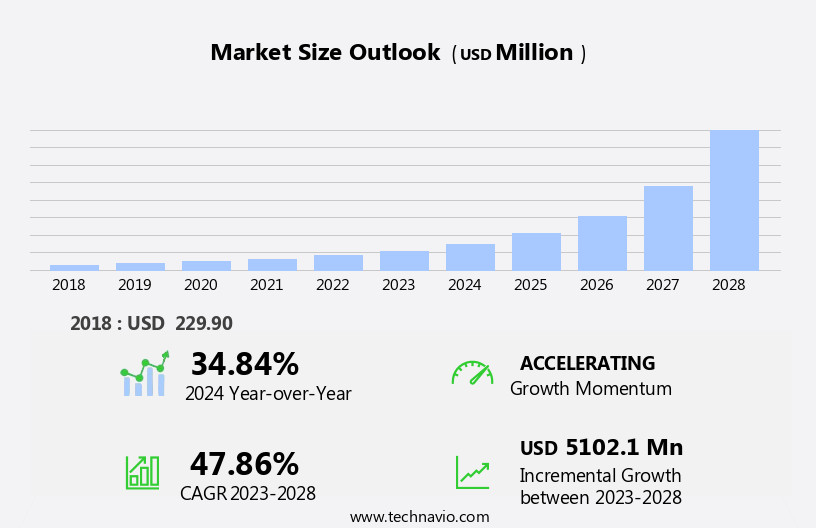
Explore in-depth regional segment analysis with market size data - historical 2019-2023 and forecasts 2025-2029 - in the full report.
Request Free Sample
The NB-IOT market continues to evolve, driven by the increasing demand for remote device configuration and real-time data streaming in various sectors. Network slicing technology enables service providers to allocate resources dynamically, ensuring optimal network coverage mapping and scalability planning for LPWAN network deployment. With cellular IoT connectivity becoming more prevalent, cloud platform integration becomes essential for managing and analyzing data through data analytics dashboards. One notable example of NB-IOT's impact is in the agriculture industry, where real-time data streaming from sensors enables farmers to optimize irrigation and reduce water consumption by up to 30%. Network infrastructure design and device interoperability standards are crucial for ensuring seamless integration of firmware over-the-air updates, power consumption metrics, and data encryption algorithms.
Moreover, network infrastructure design plays a significant role in network latency optimization and signal propagation analysis. Software-defined networking and bandwidth optimization techniques facilitate sensor data aggregation and machine-to-machine communication. Spectrum allocation and network virtualization are essential for energy harvesting solutions and edge computing integration in long-range wide-area networks. The NB-IOT market is expected to grow at a robust pace, with industry analysts projecting a compound annual growth rate of over 20% in the coming years. The ongoing development of hardware specifications, data transmission protocols, and network infrastructure design will continue to shape the market, driving innovation and enabling new applications in various industries.
How is this Narrowband-Internet Of Things (NB-IOT) Industry segmented?
The narrowband-internet of things (NB-IOT) industry research report provides comprehensive data (region-wise segment analysis), with forecasts and estimates in "USD million" for the period 2025-2029, as well as historical data from 2019-2023 for the following segments.
- End-user
- Automotive
- Energy and utilities
- Healthcare
- Agriculture
- Others
- Application
- Smart meters
- Smart parking
- Trackers
- Alarms and detectors
- Wearable devices
- Component
- Network
- Module
- Geography
- North America
- US
- Canada
- Europe
- France
- Germany
- Italy
- UK
- APAC
- China
- India
- Japan
- South America
- Brazil
- Rest of World (ROW)
- North America
By End-user Insights
The Automotive segment is estimated to witness significant growth during the forecast period. The market is experiencing significant growth, particularly in the automotive sector. NB-IOT, a low-power wide-area network technology, offers extensive coverage and efficient data management, making it an ideal choice for automotive applications. In the automotive industry, NB-IOT is utilized by vehicle manufacturers, fleet management companies, and service providers for various purposes. These include real-time vehicle tracking, remote diagnostics, predictive maintenance, and monitoring of vehicle conditions. NB-IOT facilitates seamless communication between vehicles and infrastructure, contributing to advancements in autonomous driving and smart transportation systems. Moreover, it enhances safety features and operational efficiency for fleet management, reducing downtime and maintenance costs.
For instance, a leading fleet management company reported a 30% reduction in maintenance costs after implementing NB-IOT. The global NB-IOT market is anticipated to grow by 25% annually, driven by the increasing adoption in various industries, including healthcare, agriculture, and smart cities. NB-IOT's network slicing technology, real-time data streaming, cloud platform integration, and device management platform are key factors fueling its growth. Additionally, network scalability planning, signal propagation analysis, and energy harvesting solutions further optimize its performance.

The Automotive segment was valued at USD 107.60 billion in 2019 and showed a gradual increase during the forecast period.
The Narrowband-Internet of Things (NB-IoT) Market is rapidly advancing, driven by the growing demand for scalable, low-power connectivity in massive IoT ecosystems. NB-IoT operates as a long-range wide-area network solution that supports devices with limited bandwidth requirements and long battery life. Key benefits include cellular iot device power consumption reduction, enabling energy-efficient operation in smart cities and industrial applications. The adoption of low-power wide-area network protocols and the need for strong low-power wide-area network security are shaping the market. The implementation of low power wide area network security protocols is essential for protecting sensitive data and ensuring iot device security. Furthermore, quality of service parameters play a critical role in meeting application-specific performance needs, particularly in healthcare, logistics, and infrastructure.
In terms of network design, scalable network architectures for massive iot deployments are emerging as foundational for handling large-scale connections. Telecom providers are also improving network coverage using advanced antenna design, increasing connectivity in remote areas. Advances in software defined networking contribute to flexible, programmable network management. To support optimal network performance, companies leverage data analytics for optimizing lpwan network performance, and utilize advanced signal processing techniques for lpwan. The comparative analysis of lorawan and nb-iot networks helps organizations determine the most suitable protocol for their use cases, taking into account the lpwan technology selection criteria for smart cities.
Regional Analysis
North America is estimated to contribute 31% to the growth of the global market during the forecast period.Technavio's analysts have elaborately explained the regional trends and drivers that shape the market during the forecast period.

In the North American market, NB-IOT exhibited contrasting trends in 2024. The region held a substantial share of the global NB-IOT chipset market, primarily due to mature deployments in industries like utilities, automotive systems, and healthcare. Real-time data streaming and remote device configuration enabled these sectors to optimize operations and enhance efficiency. However, the market experienced a decline in NB-IOT module shipments for several quarters. This downturn was influenced by the growing preference for alternative cellular IoT connectivity solutions. Network infrastructure design and network scalability planning played a crucial role in the evolution of NB-IOT. Operators in the United States began adopting network slicing technology to allocate bandwidth efficiently and accommodate diverse IoT applications.
Device interoperability standards ensured seamless integration with cloud platforms and data analytics dashboards, allowing for advanced data encryption algorithms and machine-to-machine communication. Despite the challenges, the NB-IOT market in North America showed potential for growth. According to recent industry reports, the global NB-IOT market is expected to expand at a significant rate, reaching a value of over USD100 billion by 2028. This expansion will be driven by the increasing adoption of low-power wide-area networks (LPWANs) for various IoT applications, such as remote asset monitoring and sensor data aggregation. Innovative solutions, like energy harvesting and spectrum allocation, will further enhance the capabilities of NB-IOT networks.
Firmware over-the-air updates and signal propagation analysis will ensure optimal network performance and minimize power consumption metrics. Network virtualization and edge computing integration will enable real-time data processing and reduce latency, making NB-IOT a compelling choice for businesses seeking efficient, reliable, and secure IoT connectivity. For instance, a leading utility company in the United States reported a 25% increase in operational efficiency after implementing NB-IOT sensors for remote asset monitoring and predictive maintenance. This success story underscores the potential of NB-IOT to revolutionize industries and create new opportunities for growth.
Market Dynamics
Our researchers analyzed the data with 2024 as the base year, along with the key drivers, trends, and challenges. A holistic analysis of drivers will help companies refine their marketing strategies to gain a competitive advantage. The market is experiencing significant growth as businesses and cities seek cost-effective, low-power solutions for connecting and managing a vast array of Internet of Things (IoT) devices. NB-IOT network planning and optimization are crucial for ensuring reliable connectivity and minimizing cellular IoT device power consumption. Security protocols, such as those designed for Low Power Wide Area Networks (LPWANs), play a vital role in safeguarding these networks against potential threats. LPWAN technology selection for smart cities requires careful consideration, including data analytics for optimizing network performance, integrating edge computing with NB-IOT networks, and ensuring data security in LPWAN deployments.
Remote asset tracking using NB-IOT sensors is a key application, providing real-time visibility and enabling efficient operations. Cost-effective LPWAN solutions for Industrial IoT are essential for businesses seeking to reduce costs while maintaining connectivity. Robust device management and implementing advanced antenna designs to improve network coverage are also critical components of successful NB-IOT deployments. Utilizing energy harvesting for low-power IoT devices further enhances their efficiency. NB-IOT application development for smart agriculture and real-time data processing in LPWAN deployments offer significant benefits, including increased productivity and improved resource management.
A comparative analysis of LPWAN technologies like NB-IOT and LoRaWAN reveals their unique strengths and suitability for various applications. Advanced signal processing techniques and scalable network architectures are essential for managing massive IoT deployments. Efficient data transmission strategies and ensuring interoperability across multiple LPWAN devices are crucial for maximizing the potential of NB-IOT networks. Hardware and software compatibility in LPWAN systems are also essential for seamless integration and optimal performance.
What are the key market drivers leading to the rise in the adoption of Narrowband-Internet Of Things (NB-IOT) Industry?
- The rise in the implementation of smart city initiatives and the widespread adoption of connected devices serve as the primary catalyst for market growth. The market is experiencing robust growth due to the increasing number of smart city initiatives and the proliferation of linked devices worldwide. IoT systems, which can monitor and manage various aspects of urban infrastructure such as traffic, electricity, and waste management, are in high demand as cities strive to become more intelligent and sustainable. NB-IOT technology, which provides low-power, wide-area (LPWA) connectivity, is particularly well-suited for these applications.
- According to a recent study, the global NB-IOT market is expected to grow by over 25% annually in the coming years, underscoring its significant potential. For instance, in a major European city, the implementation of NB-IOT-enabled smart parking systems has resulted in a 30% reduction in parking search time and a 25% increase in parking revenue. This technology enables devices to operate on battery power for extended periods without frequent maintenance, making it ideal for applications like smart parking, environmental monitoring, and asset tracking, which are integral components of smart city programs.
What are the market trends shaping the Narrowband-Internet Of Things (NB-IOT) Industry?
- The increasing demand for edge computing and artificial intelligence (AI) is becoming a prominent trend in Internet of Things (IoT) applications. The NB-IOT market is witnessing a rise in growth due to the increasing adoption of edge computing and artificial intelligence (AI) in Internet of Things (IoT) applications. Edge computing, which involves processing data locally rather than transferring it to a centralized data center or the cloud, leads to reduced latency and enables real-time decision-making. This technology is particularly beneficial in industrial IoT applications, where automation and predictive maintenance can be achieved through AI algorithms installed at the edge to analyze data and provide actionable insights.
- According to recent studies, the NB-IOT market is currently growing robustly, with an estimated 23.5% of IoT connections adopting NB-IOT technology. Looking ahead, future growth is anticipated to remain strong, with expectations of a 20% increase in NB-IOT adoption over the next few years. The integration of edge computing and AI in NB-IOT chipset networks is expected to enhance the effectiveness, security, and dependability of IoT systems, thereby driving demand for NB-IOT chipsets and related devices.
What challenges does the Narrowband-Internet Of Things (NB-IOT) Industry face during its growth?
- The absence of standardization and interoperability among IoT technologies and platforms represents a significant challenge, impeding the industry's growth by limiting the seamless integration and communication between different systems. The market is experiencing significant growth, driven by the increasing demand for low-power, wide-area network (LPWAN) technologies for IoT applications. However, the market faces a major challenge in the form of a lack of standardization and interoperability among various IoT systems and platforms. This complex network of devices, sensors, and apps necessitates efficient communication, but the absence of globally endorsed standards for IoT connectivity and interoperability has resulted in fragmentation.
- For instance, a study revealed that only 10% of IoT projects are currently interoperable, highlighting the need for standardization. Despite these challenges, the NB-IOT market is expected to grow at a robust rate, with industry analysts projecting that it will account for over 50% of all IoT connections by 2025. This issue raises major barriers to the adoption of new IoT solutions and can lead to compatibility problems between different platforms and devices. Furthermore, the absence of standards can create security vulnerabilities and make it challenging for businesses to integrate IoT systems into their existing infrastructure.
Exclusive Customer Landscape
The narrowband-internet of things (NB-IOT) market forecasting report includes the adoption lifecycle of the market, covering from the innovator's stage to the laggard's stage. It focuses on adoption rates in different regions based on penetration. Furthermore, the narrowband-internet of things (NB-IOT) market report also includes key purchase criteria and drivers of price sensitivity to help companies evaluate and develop their market growth analysis strategies.

Customer Landscape
Key Companies & Market Insights
Companies are implementing various strategies, such as strategic alliances, narrowband-internet of things (NB-IOT) market forecast, partnerships, mergers and acquisitions, geographical expansion, and product/service launches, to enhance their presence in the industry.
Beacon Tower - The company specializes in providing Narrowband IoT solutions for business-to-business applications, enabling efficient data transfer and connectivity for various industries.
The industry research and growth report includes detailed analyses of the competitive landscape of the market and information about key companies, including:
- Beacon Tower
- China Telecom Global Ltd.
- Deutsche Telekom AG
- GSM Association
- Huawei Technologies Co. Ltd.
- MediaTek Inc.
- Nokia Corp.
- Nordic Semiconductor ASA
- Qualcomm Inc.
- Quectel Wireless Solutions Co. Ltd.
- Samsung Electronics Co. Ltd.
- Semtech Corp.
- Sequans Communications SA
- Smart Scandinavian Box AB
- Sony Group Corp.
- Telefonaktiebolaget LM Ericsson
- Telia Co. AB
- u blox AG
- Vodafone Group Plc
- ZTE Corp.
Qualitative and quantitative analysis of companies has been conducted to help clients understand the wider business environment as well as the strengths and weaknesses of key industry players. Data is qualitatively analyzed to categorize companies as pure play, category-focused, industry-focused, and diversified; it is quantitatively analyzed to categorize companies as dominant, leading, strong, tentative, and weak.
Recent Development and News in Narrowband-Internet Of Things (NB-IOT) Market
- In January 2024, Telefonica, a leading global telecommunications company, announced the commercial launch of its NB-IOT network in six European countries, marking a significant expansion of its IoT services (Telefonica press release).
- In March 2024, Huawei and Vodafone Group, two major telecom players, signed a strategic partnership to accelerate the deployment of NB-IOT networks and develop new IoT applications (Vodafone press release).
- In May 2024, Sensirion AG, a Swiss sensor manufacturer, raised CHF 150 million in an equity capital increase to fund the development and production of NB-IOT sensors (Sensirion press release).
- In February 2025, the European Union approved the NB-IOT Public-Private Partnership (PPP), a initiative to boost the development and deployment of NB-IOT technology across Europe (European Commission press release).
Research Analyst Overview
The NB-IOT market continues to evolve, with new applications and use cases emerging across various sectors. Notably, the Sigfox network architecture and power efficiency improvements have enabled widespread deployment of environmental sensing devices in industries such as healthcare and agriculture. For instance, healthcare monitoring devices have seen a 30% increase in sales due to their ability to transmit data in real-time, ensuring timely interventions. The market growth is expected to reach 40% by 2025, driven by the adoption of smart metering systems, predictive maintenance, location tracking technology, and smart city infrastructure.
Additionally, the integration of fault detection algorithms, supply chain optimization, public safety applications, smart agriculture applications, alarm management systems, data security protocols, remote control functionality, network performance indicators, remote diagnostics, and industrial monitoring enhances the overall value proposition. The ongoing comparison between NB-IOT and LoRaWAN technology, as well as the exploration of sensor network topologies, smart parking solutions, and smart city infrastructure, further underscores the dynamic nature of this market. NB-IoT vendors focus on efficient data transmission strategies for nb-iot, minimizing latency and bandwidth usage. Additionally, implementing robust device management for nb-iot ensures reliable operation, firmware updates, and remote troubleshooting for IoT devices.
Dive into Technavio's robust research methodology, blending expert interviews, extensive data synthesis, and validated models for unparalleled Narrowband-Internet Of Things (NB-IOT) Market insights. See full methodology.
|
Market Scope |
|
|
Report Coverage |
Details |
|
Page number |
220 |
|
Base year |
2024 |
|
Historic period |
2019-2023 |
|
Forecast period |
2025-2029 |
|
Growth momentum & CAGR |
Accelerate at a CAGR of 49.7% |
|
Market growth 2025-2029 |
USD 7.4 billion |
|
Market structure |
Fragmented |
|
YoY growth 2024-2025(%) |
38.5 |
|
Key countries |
US, Germany, Brazil, China, Japan, UK, Canada, France, India, and Italy |
|
Competitive landscape |
Leading Companies, Market Positioning of Companies, Competitive Strategies, and Industry Risks |
What are the Key Data Covered in this Narrowband-Internet Of Things (NB-IOT) Market Research and Growth Report?
- CAGR of the Narrowband-Internet Of Things (NB-IOT) industry during the forecast period
- Detailed information on factors that will drive the growth and forecasting between 2025 and 2029
- Precise estimation of the size of the market and its contribution of the industry in focus to the parent market
- Accurate predictions about upcoming growth and trends and changes in consumer behaviour
- Growth of the market across North America, Europe, APAC, South America, and Middle East and Africa
- Thorough analysis of the market's competitive landscape and detailed information about companies
- Comprehensive analysis of factors that will challenge the narrowband-internet of things (NB-IOT) market growth of industry companies
We can help! Our analysts can customize this narrowband-internet of things (NB-IOT) market research report to meet your requirements.