


Playroom Furniture Market Size 2025-2029
The playroom furniture market size is forecast to increase by USD 1.51 billion, at a CAGR of 5.9% between 2024 and 2029.
- The market is witnessing significant growth, driven by the increasing emphasis on holistic child development. Parents are investing in high-quality, functional, and safe playroom furniture to create stimulating environments for their children's physical, cognitive, and emotional growth. This trend is expected to continue as the demand for educational toys and interactive toys and furniture increases. However, the market faces challenges related to regulatory compliance. Strict regulations governing children's products, particularly those containing hazardous materials, pose a significant challenge for manufacturers and retailers.
- Ensuring full compliance with these regulations can be time-consuming and costly, requiring substantial resources for testing and certification. Non-compliance can lead to recalls, reputational damage, and legal action. Companies must prioritize regulatory compliance to maintain market presence and protect their brand reputation.
What will be the Size of the Playroom Furniture Market during the forecast period?

Explore in-depth regional segment analysis with market size data - historical 2019-2023 and forecasts 2025-2029 - in the full report.
Request Free Sample
The market continues to evolve, shaped by shifting consumer preferences and product innovation. Specialty toy stores cater to niche markets, offering an array of developmental toys, role-playing toys, and educational toys. Dress-up clothes and assembly instructions add to the immersive play experience. Recycled materials and eco-friendly materials are gaining traction, aligning with consumer values. Retail channels and distribution networks adapt to meet the demands of online shoppers, while brick-and-mortar stores optimize space for interactive games and playroom organization. Playroom decoration trends reflect a focus on sensory toys, foam play equipment, and theme-based play. Brand loyalty is fostered through high-quality products and engaging customer experiences.
Design trends prioritize age appropriateness and cognitive development, with color schemes and material composition catering to various age groups. Playroom flooring solutions prioritize safety and ease of cleaning and maintenance. Outdoor play and early learning toys expand the market, with climbing structures and activity centers encouraging physical activity and social interaction. Supply chain management and purchasing behavior remain crucial factors, with consumers seeking affordable, convenient, and customizable options. Playroom design continues to evolve, with tables and chairs, building blocks, and art supplies contributing to a well-rounded play environment. Safety standards ensure a focus on child development and overall well-being.
How is this Playroom Furniture Industry segmented?
The playroom furniture industry research report provides comprehensive data (region-wise segment analysis), with forecasts and estimates in "USD million" for the period 2025-2029, as well as historical data from 2019-2023 for the following segments.
- Material
- Wood
- Polymer
- Metal
- Others
- Distribution Channel
- Offline
- Online
- Geography
- North America
- US
- Canada
- Europe
- France
- Germany
- Italy
- UK
- APAC
- China
- India
- Japan
- South America
- Brazil
- Rest of World (ROW)
- North America
.
By Material Insights
The wood segment is estimated to witness significant growth during the forecast period.
The toddler toys and soft play segment in the market prioritizes product innovation to cater to evolving consumer preferences. Multi-purpose play items, such as tables and chairs, are popular due to their versatility and space optimization. Age appropriateness is crucial, with preschool toys and developmental toys being essential for cognitive development and physical activity. Online retailers and specialty toy stores dominate sales channels, offering convenience and a wide range of options. Role-playing toys, including dress-up clothes and activity centers, foster imaginative play and social interaction. Consumer demand for eco-friendly materials, such as recycled plastics and natural fabrics, is on the rise.
Playroom decoration trends favor theme-based designs, incorporating sensory toys, foam play equipment, and color schemes that stimulate children's senses and creativity. Brand loyalty is strong, with parents investing in high-quality, durable products. Playroom design encompasses safety standards, ergonomic design, and easy cleaning and maintenance. Playroom furniture is increasingly being manufactured using eco-friendly materials and sustainable practices. The market is diverse, catering to various age groups, gender targeting, and themed decor preferences. Supply chain management is crucial for efficient distribution networks, ensuring timely delivery and quality control. Retail channels include department stores, brick-and-mortar stores, and online platforms. The market for playroom furniture is continually evolving, with a focus on innovative design trends, educational value, and interactive games.
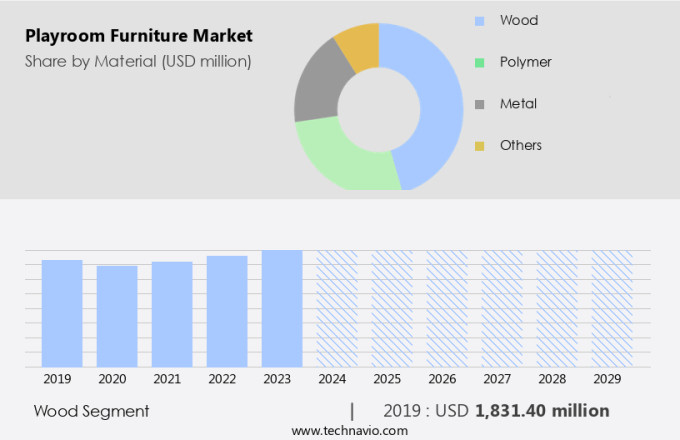
The Wood segment was valued at USD 1.83 billion in 2019 and showed a gradual increase during the forecast period.
Regional Analysis
North America is estimated to contribute 33% to the growth of the global market during the forecast period.Technavio's analysts have elaborately explained the regional trends and drivers that shape the market during the forecast period.

In North America, particularly in the US and Canada, the market for playroom furniture experiences significant growth. Factors driving this trend include increasing disposable incomes and a focus on child safety and development-centric designs. The US median household income reached an all-time high of USD80,610 in 2023, marking a 4.0% increase from the previous year. This income growth fuels consumer spending on premium playroom furniture, as parents prioritize creating safe, engaging environments for their children. The retail landscape in North America is undergoing transformation, with e-commerce sales experiencing substantial growth. According to the US Census Bureau, e-commerce sales for the third quarter of 2024 amounted to USD300 billion, representing a 15.1% year-over-year increase.
This shift towards online shopping has led to an uptick in sales for playroom furniture, as consumers seek convenience and a wider selection of products. Playroom furniture caters to various age groups and preferences, including toddlers, preschoolers, and older children. Soft play, role-playing, developmental, multi-purpose, and educational toys are popular choices, often accompanied by storage solutions like bins and shelves. Consumer preferences lean towards colorful, imaginative designs that foster social interaction and cognitive development. Specialty toy stores and online retailers offer a diverse range of playroom furniture, catering to niche markets and unique requirements. Brick-and-mortar stores and department stores also remain significant retail channels, providing customers with the opportunity to touch and feel the products before making a purchase.
Product innovation continues to shape the market, with an emphasis on eco-friendly materials, theme-based play, and interactive games. Safety standards are rigorously enforced, ensuring that all furniture adheres to age appropriateness and quality control regulations. Design trends favor minimalist, space-optimizing solutions that blend seamlessly with playroom decoration. Playroom flooring, foam play equipment, sensory toys, and building blocks are popular choices for indoor play areas. Outdoor play solutions cater to physical activity and social interaction, with climbing structures, swings, and slides being popular options. Cleaning and maintenance are essential considerations, with many manufacturers providing assembly instructions and recycled materials to minimize environmental impact.
Brand loyalty is strong, with consumers often returning to trusted brands for future purchases. In conclusion, the North American market for playroom furniture is thriving, driven by increasing disposable incomes, a shift towards e-commerce, and a focus on child development and safety. The retail landscape is diverse, with brick-and-mortar stores, online retailers, and specialty toy stores catering to various consumer preferences and requirements. Product innovation, safety standards, and design trends continue to shape the market, ensuring that playroom furniture remains a priority investment for families.
Market Dynamics
Our researchers analyzed the data with 2024 as the base year, along with the key drivers, trends, and challenges. A holistic analysis of drivers will help companies refine their marketing strategies to gain a competitive advantage.
What are the key market drivers leading to the rise in the adoption of Playroom Furniture Industry?
- The growing emphasis on holistic child development is the primary market trend, prioritizing the comprehensive growth and well-being of children.
- The market is experiencing notable growth due to the heightened priority given to children's holistic development. Parents and educators are recognizing the importance of creating stimulating environments that foster physical, cognitive, and emotional growth. As a result, there is a growing demand for furniture that encourages interaction, engagement, and creativity. Ergonomically designed seating and multi-functional furniture pieces are particularly popular, as they cater to both play and learning activities. These items ensure proper posture, enhance focus, and minimize discomfort, which is essential for developing bodies. The emphasis on ergonomics enables children to engage in activities for extended periods without experiencing physical strain.
- This trend is driven by the understanding that a child's environment significantly impacts their development. By investing in furniture that meets their needs, parents and educators can create spaces that promote growth and learning. The market for playroom furniture is expected to continue growing as the importance of creating immersive and harmonious spaces for children becomes increasingly recognized.
What are the market trends shaping the Playroom Furniture Industry?
- The trend in the market is toward new product launches. As a professional, I can provide you with up-to-date information on upcoming product introductions.
- The market is experiencing a period of innovation, with companies introducing new products to cater to modern family preferences. Ubique Group, for instance, recently collaborated with Walmart to launch the Buzz and Bloom collection. This exclusive line of kids furniture comprises 27 unique pieces, combining imaginative design and practical functionality. The collection's focus on transforming spaces into playful and creative environments aligns with consumer trends. Companies are increasingly emphasizing multi-purpose play, age appropriateness, and role-playing toys, all while ensuring storage solutions for developmental and preschool toys.
- Color schemes and storage bins are essential considerations, ensuring organization and visual appeal. Online retailers play a significant role in making these products accessible to families, offering convenience and a wide range of options. In conclusion, the market continues to evolve, driven by consumer preferences and the need for harmonious, immersive, and thematic designs that foster imaginative play.
What challenges does the Playroom Furniture Industry face during its growth?
- Compliance with regulatory requirements poses a significant challenge to the industry's growth trajectory. It is essential for businesses to adhere to these regulations to ensure they operate legally and ethically, but the complexities and costs of doing so can hinder expansion efforts. Companies must balance the need for growth with the need for regulatory compliance, implementing robust systems and processes to meet requirements while continuing to innovate and compete in their respective markets.
- The market faces intricate regulatory compliance, necessitating adherence to stringent safety standards and regulations. For children's folding chairs and stools, the US Consumer Product Safety Commission enforces the Safety Standard for Children's Folding Chairs and Stools (16 CFR Part 1232) and the Consumer Product Safety Improvement Act of 2008 (CPSIA). These regulations apply to seating furniture with a seat height of 15 inches or less, designed for unassisted use by children. Compliance involves rigorous structural, performance, and labeling requirements. Moreover, market dynamics in the playroom furniture sector are influenced by various factors. Specialty toy stores continue to be significant retail channels for these products, while distribution networks expand to cater to diverse consumer preferences.
- Brand loyalty and design trends shape consumer behavior, with theme-based play, foam play equipment, sensory toys, and playroom flooring gaining popularity. Eco-friendly materials, such as recycled ones, are increasingly sought after, reflecting a growing emphasis on sustainability. Overall, navigating regulatory compliance and keeping up with market trends are essential for market success in the playroom furniture industry.
Exclusive Customer Landscape
The playroom furniture market forecasting report includes the adoption lifecycle of the market, covering from the innovator's stage to the laggard's stage. It focuses on adoption rates in different regions based on penetration. Furthermore, the playroom furniture market report also includes key purchase criteria and drivers of price sensitivity to help companies evaluate and develop their market growth analysis strategies.
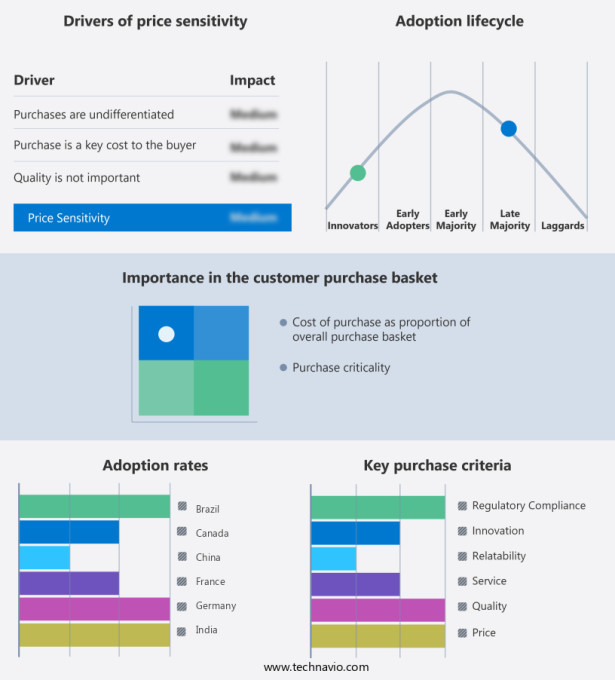
Customer Landscape
Key Companies & Market Insights
Companies are implementing various strategies, such as strategic alliances, playroom furniture market forecast, partnerships, mergers and acquisitions, geographical expansion, and product/service launches, to enhance their presence in the industry.
Crate and Barrel - This company specializes in innovative playroom furniture, harmoniously blending functionality and aesthetics.
The industry research and growth report includes detailed analyses of the competitive landscape of the market and information about key companies, including:
- Crate and Barrel
- Delta Children Products Corp.
- ECR4Kids
- Guidecraft
- Inter IKEA Holding BV
- KidKraft
- LIFETIME Kidsrooms
- Little Tikes
- Melissa and Doug
- Pkolino LLC
- Restoration Hardware Inc.
- South Shore Industries Ltd.
- Step2 Co. LLC
- Teamson US
- Williams Sonoma Inc.
Qualitative and quantitative analysis of companies has been conducted to help clients understand the wider business environment as well as the strengths and weaknesses of key industry players. Data is qualitatively analyzed to categorize companies as pure play, category-focused, industry-focused, and diversified; it is quantitatively analyzed to categorize companies as dominant, leading, strong, tentative, and weak.
Recent Development and News in Playroom Furniture Market
- In February 2024, Ikea, the global leader in furniture retail, introduced a new line of playroom furniture, the "Småland Collection," designed with input from child psychologists to promote creativity and learning (Ikea Press Release, 2024). This launch marked a significant investment in the market, underscoring its growing importance in the home furnishings sector.
- In May 2025, Wayfair, an online furniture retailer, partnered with Lego to offer co-branded furniture collections, merging the worlds of furniture and toys (Wayfair Press Release, 2025). This strategic collaboration aimed to attract families with young children and expand Wayfair's product offerings.
- In August 2024, Pottery Barn Kids, a subsidiary of Williams-Sonoma, raised USD50 million in funding to expand its playroom furniture line and improve its e-commerce capabilities (SEC Filing, 2024). This investment demonstrated a commitment to digital transformation and growth in the competitive the market.
- In October 2025, the European Union passed new regulations on phthalates in children's toys and furniture, driving demand for phthalate-free playroom furniture solutions (European Commission, 2025). This policy change created opportunities for manufacturers to differentiate themselves with safer, eco-friendly products, making sustainability a key trend in the market.
Research Analyst Overview
- The market is experiencing dynamic trends, with a focus on lead-free materials and developmental stages. Promotional campaigns are increasingly incorporating virtual reality play and interactive panels to boost brand awareness. Modular playsets with anti-microbial properties offer value for money and cater to multi-sensory play needs. Customer service and product certifications are essential for customer satisfaction, as evidenced by positive consumer reviews. Safety features, such as fire retardant materials and UV protection, are non-negotiable in this market. Gross motor skills development is a key consideration, with child-sized furniture and customizable playsets catering to this need.
- Augmented reality play and fine motor skills development are emerging trends, as are social-emotional learning and language development. Marketing strategies are evolving to prioritize price point, playroom lighting, and return policies. Interactive play panels and safety features are important differentiators, as are warranty claims and customer service. Brands that prioritize these trends and offer high-quality, customizable playsets are likely to succeed in this competitive market.
Dive into Technavio's robust research methodology, blending expert interviews, extensive data synthesis, and validated models for unparalleled Playroom Furniture Market insights. See full methodology.
|
Market Scope |
|
|
Report Coverage |
Details |
|
Page number |
200 |
|
Base year |
2024 |
|
Historic period |
2019-2023 |
|
Forecast period |
2025-2029 |
|
Growth momentum & CAGR |
Accelerate at a CAGR of 5.9% |
|
Market growth 2025-2029 |
USD 1514.8 million |
|
Market structure |
Fragmented |
|
YoY growth 2024-2025(%) |
5.8 |
|
Key countries |
US, Germany, China, Canada, France, India, UK, Brazil, Italy, and Japan |
|
Competitive landscape |
Leading Companies, Market Positioning of Companies, Competitive Strategies, and Industry Risks |
What are the Key Data Covered in this Playroom Furniture Market Research and Growth Report?
- CAGR of the Playroom Furniture industry during the forecast period
- Detailed information on factors that will drive the growth and forecasting between 2025 and 2029
- Precise estimation of the size of the market and its contribution of the industry in focus to the parent market
- Accurate predictions about upcoming growth and trends and changes in consumer behaviour
- Growth of the market across North America, Europe, APAC, South America, and Middle East and Africa
- Thorough analysis of the market's competitive landscape and detailed information about companies
- Comprehensive analysis of factors that will challenge the playroom furniture market growth of industry companies
We can help! Our analysts can customize this playroom furniture market research report to meet your requirements.