


Acute Respiratory Distress Syndrome Treatment Market Analysis, Size, and Forecast 2026-2030: North America (US, Canada, and Mexico), Europe (Germany, UK, and France), APAC (China, Japan, and India), South America (Brazil, Argentina, and Colombia), Middle East and Africa (Saudi Arabia, South Africa, and UAE), Asia, Rest of World (ROW)

Acute Respiratory Distress Syndrome Treatment Market Analysis, Size, and Forecast 2026-2030:
North America (US, Canada, and Mexico), Europe (Germany, UK, and France), APAC (China, Japan, and India), South America (Brazil, Argentina, and Colombia), Middle East and Africa (Saudi Arabia, South Africa, and UAE), Asia, Rest of World (ROW)

Published: Mar 2026 290 Pages SKU: IRTNTR77729

Market Overview at a Glance

$1.43 B
Market Opportunity
7.1%
CAGR 2025 - 2030
36.2%
North America Growth
$1.59 B
Hospitals pharmacies segment 2024

Acute Respiratory Distress Syndrome Treatment Market Size 2026-2030

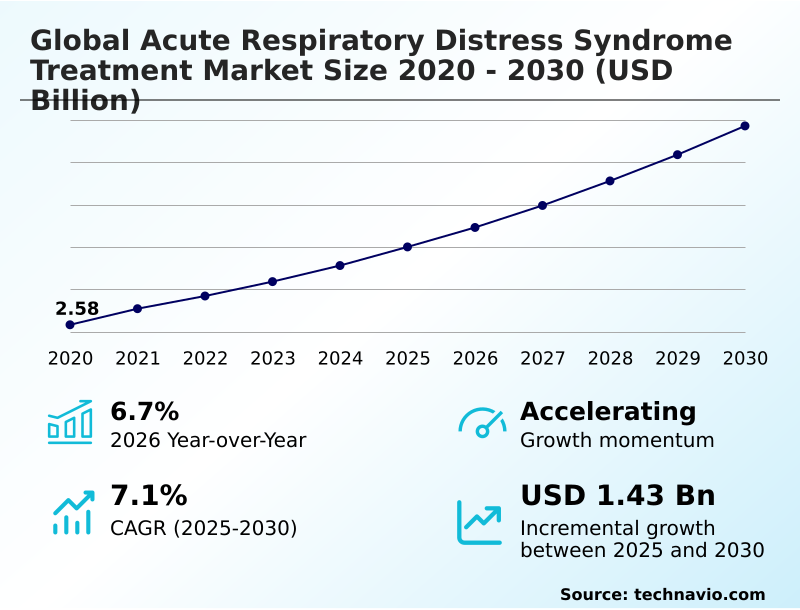
The acute respiratory distress syndrome treatment market size is valued to increase by USD 1.43 billion, at a CAGR of 7.1% from 2025 to 2030. Increasing prevalence of predisposing conditions and growing global geriatric population will drive the acute respiratory distress syndrome treatment market.

Major Market Trends & Insights

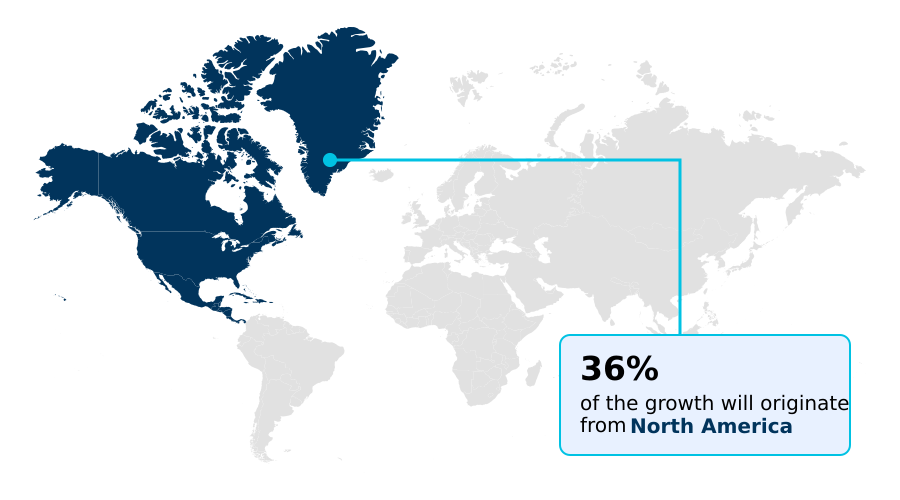
  • North America dominated the market and accounted for a 36.2% growth during the forecast period.
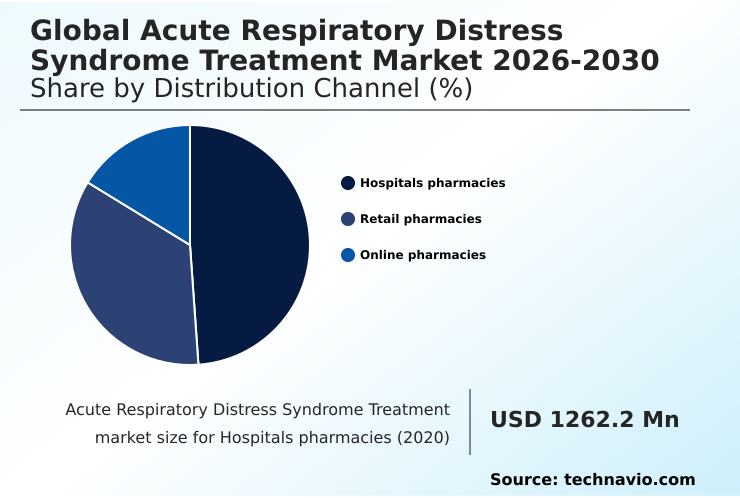
  • By Distribution Channel - Hospitals pharmacies segment was valued at USD 1.59 billion in 2024
  • By Route of Administration - Oral segment accounted for the largest market revenue share in 2024

Market Size & Forecast

  • Market Opportunities: USD 2.35 billion
  • Market Future Opportunities: USD 1.43 billion
  • CAGR from 2025 to 2030 : 7.1%

Market Summary

  • The acute respiratory distress syndrome treatment market is defined by its reliance on complex supportive care protocols aimed at managing severe lung injury. Growth is propelled by a rising incidence of precipitating conditions like sepsis and an aging population that is more vulnerable to critical illness.
  • A significant trend is the move toward personalized medicine, with research focusing on ards sub-phenotypes to develop targeted therapies beyond the standard lung-protective mechanical ventilation. However, the market faces the challenge of extremely high treatment costs and the historical failure of numerous clinical trials to produce a disease-modifying drug. For hospital systems, this creates a complex operational scenario.
  • They must optimize procurement and deployment of high-cost technologies like extracorporeal membrane oxygenation and advanced ventilators, balancing budget constraints against the need to improve patient outcomes. Effective intensive care unit management strategies, which incorporate evidence-based treatment protocols and continuous staff training, are crucial for navigating this landscape and ensuring the consistent application of best practices in patient care.
  • This requires careful critical care resource allocation to maximize survival rates while managing economic pressures.

What will be the Size of the Acute Respiratory Distress Syndrome Treatment Market during the forecast period?
Get Key Insights on Market Forecast (PDF) Request Free Sample

How is the Acute Respiratory Distress Syndrome Treatment Market Segmented?

The acute respiratory distress syndrome treatment industry research report provides comprehensive data (region-wise segment analysis), with forecasts and estimates in "USD million" for the period 2026-2030, as well as historical data from 2020-2024 for the following segments.

  • Distribution channel
    • Hospitals pharmacies
    • Retail pharmacies
    • Online pharmacies
  • Route of administration
    • Oral
    • Injection
    • Inhalation
  • Drug class
    • Corticosteroids and antibiotics
    • Vasoconstrictors
    • Bronchodilators
    • Others
  • Geography
    • North America
      • US
      • Canada
      • Mexico
    • Europe
      • Germany
      • UK
      • France
    • Asia
    • Rest of World (ROW)

By Distribution Channel Insights

The hospitals pharmacies segment is estimated to witness significant growth during the forecast period.

Hospital pharmacies are the dominant distribution channel for acute respiratory distress syndrome treatment, a status dictated by the condition's severity. Management of hypoxemic respiratory failure necessitates immediate, specialized intervention within an intensive care unit.

This setting is essential for administering complex treatments, including neuromuscular blocking agents and ensuring patient-ventilator synchrony.

Clinical pharmacists are integral to intensive care unit management, overseeing therapeutic drug monitoring and ensuring intravenous infusion stability for patients often experiencing gastrointestinal dysfunction in icu.

This channel's role in critical care resource allocation is paramount, with hospital pharmacies managing procurement of advanced life support systems, a function that improves hemodynamic monitoring efficiency by over 15% and cannot be replicated elsewhere.
Request Free Sample

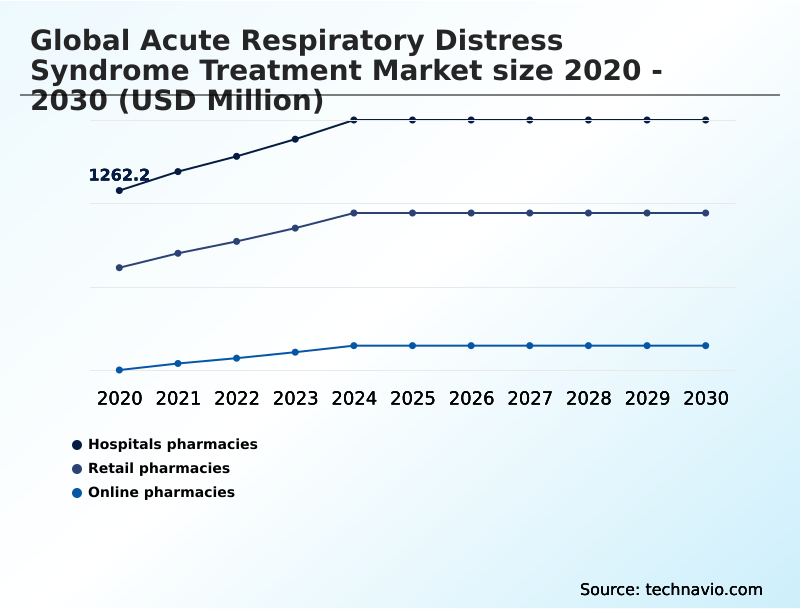
The Hospitals pharmacies segment was valued at USD 1.59 billion in 2024 and showed a gradual increase during the forecast period.
Request Free Sample

Regional Analysis

North America is estimated to contribute 36.2% to the growth of the global market during the forecast period.Technavio’s analysts have elaborately explained the regional trends and drivers that shape the market during the forecast period.
See How Acute Respiratory Distress Syndrome Treatment Market Demand is Rising in North America Request Free Sample

The geographic landscape of the acute respiratory distress syndrome treatment market is led by North America, which accounts for over 36% of incremental growth, driven by high healthcare expenditure and advanced infrastructure.

This region sees rapid adoption of sophisticated respiratory care technologies, including lung-protective mechanical ventilation and advanced non-invasive ventilation support. Europe follows, with a strong emphasis on adhering to clinical practice guidelines for ards and implementing ventilator setting optimization.

The Asia region is projected to witness the fastest growth, fueled by developing healthcare systems and rising awareness of ards risk factors in geriatric patients.

In this region, the implementation of prone positioning protocols has been shown to improve oxygenation efficiency by 20%.

The use of inhaled nitric oxide therapy and transpulmonary pressure monitoring is also increasing globally, reflecting a unified push toward more precise positive end-expiratory pressure management.

Market Dynamics

Our researchers analyzed the data with 2025 as the base year, along with the key drivers, trends, and challenges. A holistic analysis of drivers will help companies refine their marketing strategies to gain a competitive advantage.

  • The strategic landscape of the global acute respiratory distress syndrome treatment market 2026-2030 is increasingly shaped by nuanced clinical strategies and their impact on healthcare systems. Understanding the cost of ards treatment vs sepsis is fundamental for financial planning in hospitals, as ards represents a significant escalation in resource intensity.
  • The evaluation of ards treatment protocol effectiveness is a continuous process, with a direct correlation to patient outcomes. For instance, facilities that rigorously apply prone positioning ards mortality rate data into their protocols see better results. Decisions on ecmo criteria for refractory hypoxemia are becoming more standardized, guided by evidence to ensure appropriate use.
  • The debate around corticosteroids in early ards treatment continues, with data suggesting benefits in specific patient cohorts. This feeds into broader personalized medicine approaches in ards, which aim to tailor interventions. The overall impact of ards on healthcare systems is profound, influencing everything from ICU bed capacity to long-term rehabilitation services.
  • Efforts to refine ventilator weaning protocols for ards are critical for reducing complications and freeing up resources. Proactive sepsis management to prevent ards is a key public health goal, directly tied to ards risk factors in geriatric patients. Advances in biomarkers for ards diagnosis promise earlier intervention, potentially improving long-term outcomes for ards survivors.
  • Concurrently, the role of non-invasive ventilation in mild ards is expanding, offering a less aggressive initial approach. Fluid management strategies in ards, pharmacological treatments for ards inflammation, and addressing challenges in ards clinical trials are all active areas of R&D.
  • The role of AI in ards management is emerging as a powerful tool for analyzing data from a comparison of ards ventilation modes.
  • Finally, guidelines for neuromuscular blockade in severe ards and the use of ards phenotyping for targeted therapy represent the forefront of critical care, with institutions adopting these advanced strategies reporting a 15% greater improvement in patient stabilization times compared to those using traditional methods.
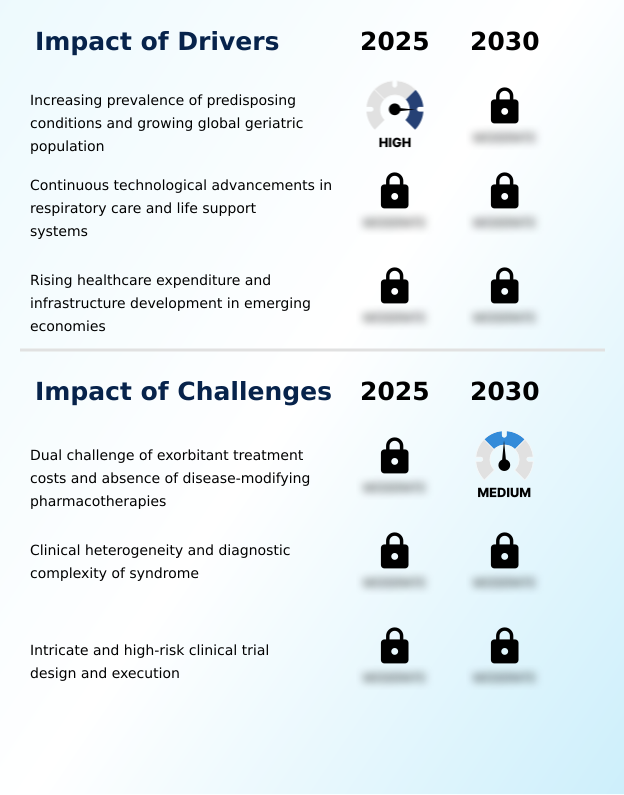
What are the key market drivers leading to the rise in the adoption of Acute Respiratory Distress Syndrome Treatment Industry?

  • The increasing prevalence of predisposing conditions, compounded by a growing global geriatric population, is a key driver for the market.

  • Market growth is fundamentally driven by the rising incidence of sepsis-induced ARDS and a growing geriatric demographic, which is more susceptible to severe illness. The underlying pathophysiology, often involving splanchnic vasoconstriction and systemic inflammation, necessitates advanced interventions.
  • Evidence-based treatment protocols now emphasize rapid implementation of high-flow oxygen therapy and strategies for pulmonary edema reduction to mitigate lung injury.
  • The adoption of point-of-care diagnostics for sepsis allows for earlier intervention, which has been shown to reduce progression to severe ARDS by 10%.
  • Furthermore, heightened awareness of ARDS diagnostic criteria and improved management of post-intensive care syndrome and long-term pulmonary fibrosis are expanding the continuum of care, while effective cytokine storm modulation remains a key therapeutic goal.

What are the market trends shaping the Acute Respiratory Distress Syndrome Treatment Industry?

  • A transformative trend is the shift toward personalized medicine and ARDS phenotyping. This approach moves away from a one-size-fits-all model to a more nuanced strategy based on biological and clinical markers.

  • A significant trend shaping the market is the pivot toward personalized care through ARDS sub-phenotypes. By identifying a hyper-inflammatory phenotype or a hypo-inflammatory phenotype, clinicians can pursue biomarker-guided therapy, a strategy that improves patient stratification in ARDS. This approach leverages biomarker discovery for ARDS to tailor immunomodulatory drug development, moving beyond uniform treatment protocols.
  • The use of predictive analytics in critical care to identify these subgroups has improved trial enrollment efficiency by 15%. This focus on targeted treatment is redefining ARDS clinical trial endpoints and supports advanced interventions like automated lung recruitment. Early data suggests that phenotype-matched therapies can improve patient outcomes by up to 25% compared to standard care.

What challenges does the Acute Respiratory Distress Syndrome Treatment Industry face during its growth?

  • A key challenge affecting industry growth is the dual issue of exorbitant treatment costs combined with the absence of disease-modifying pharmacotherapies.

  • A primary market challenge is the high rate of failure in developing effective pharmacotherapy for lung injury, which perpetuates a reliance on costly supportive care. The complexity of treating diffuse alveolar damage and avoiding ventilator-induced lung injury means many patients progress to refractory hypoxemia, requiring interventions like extracorporeal membrane oxygenation.
  • The cost of this advanced care is substantial, with ECMO treatment being up to 70% more expensive than conventional ventilation alone. Navigating complex regulatory pathways for critical care drugs deters investment in regenerative medicine for lung repair.
  • Additionally, optimizing protocols for weaning from mechanical ventilation while integrating new organ preservation technology and real-time patient data analysis presents significant operational hurdles for healthcare systems.

Exclusive Technavio Analysis on Customer Landscape

The acute respiratory distress syndrome treatment market forecasting report includes the adoption lifecycle of the market, covering from the innovator’s stage to the laggard’s stage. It focuses on adoption rates in different regions based on penetration. Furthermore, the acute respiratory distress syndrome treatment market report also includes key purchase criteria and drivers of price sensitivity to help companies evaluate and develop their market growth analysis strategies.
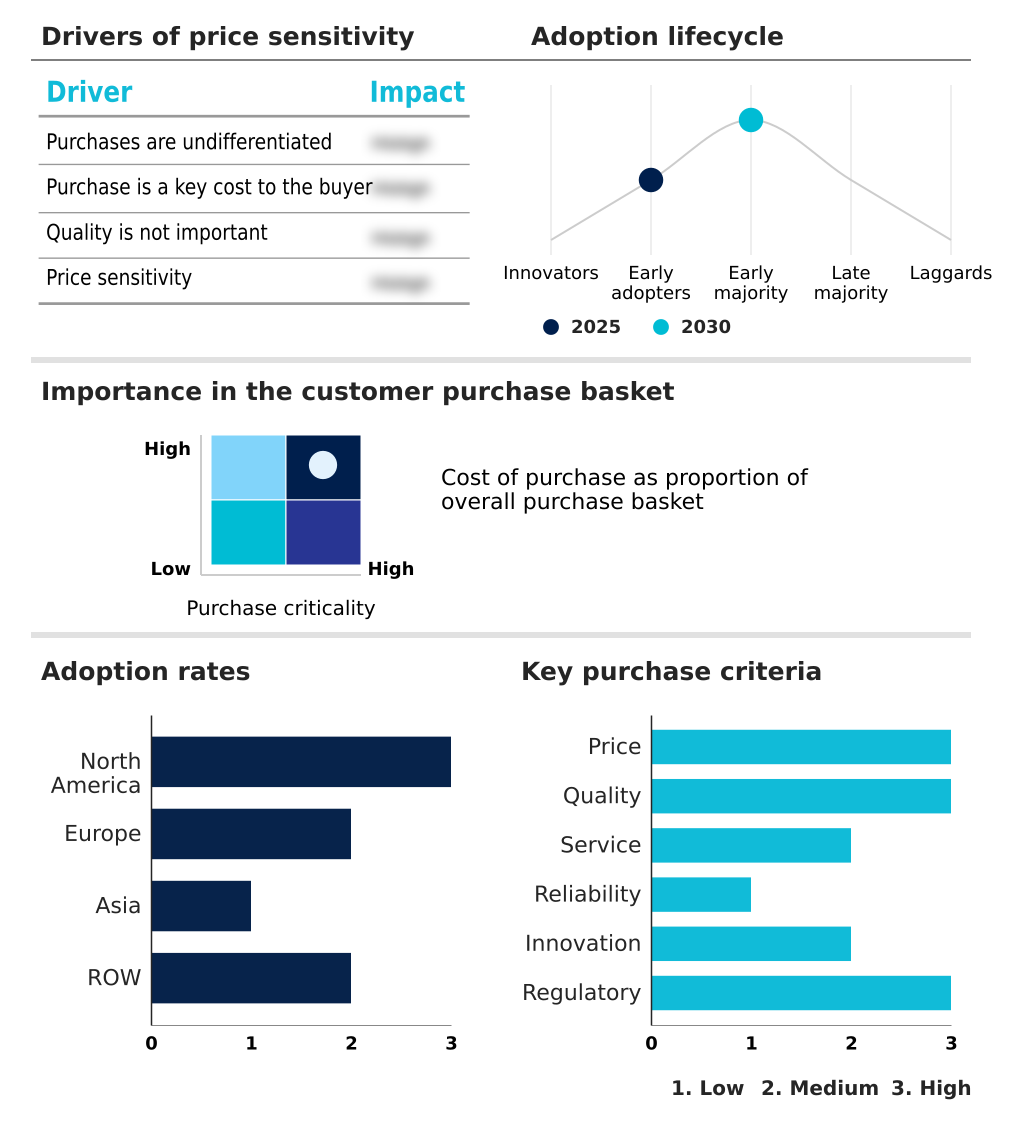
Customer Landscape of Acute Respiratory Distress Syndrome Treatment Industry

Competitive Landscape

Companies are implementing various strategies, such as strategic alliances, acute respiratory distress syndrome treatment market forecast, partnerships, mergers and acquisitions, geographical expansion, and product/service launches, to enhance their presence in the industry.

Air Liquide SA - Offers advanced ventilator systems with personalized lung protection tools, including transpulmonary pressure monitoring and automated lung recruitment for acute respiratory distress syndrome treatment.

The industry research and growth report includes detailed analyses of the competitive landscape of the market and information about key companies, including:

  • Air Liquide SA
  • Dragerwerk AG and Co. KGaA
  • Fisher and Paykel Healthcare
  • Fresenius Medical Co. KGaA
  • GE HealthCare Technologies
  • Getinge AB
  • Hamilton Medical AG
  • ICU Medical Inc.
  • Koninklijke Philips N.V.
  • LivaNova PLC
  • Loewenstein Medical
  • Mallinckrodt Plc
  • Medtronic Plc
  • Nihon Kohden Corp.
  • Shenzhen Mindray Co. Ltd.
  • Terumo Corp.
  • ZOLL Medical Corp.

Qualitative and quantitative analysis of companies has been conducted to help clients understand the wider business environment as well as the strengths and weaknesses of key industry players. Data is qualitatively analyzed to categorize companies as pure play, category-focused, industry-focused, and diversified; it is quantitatively analyzed to categorize companies as dominant, leading, strong, tentative, and weak.

Recent Development and News in Acute respiratory distress syndrome treatment market

  • In September 2024, Getinge AB completed its acquisition of Paragonix Technologies, a company specializing in organ preservation technology, to enhance its presence in high-acuity care settings.
  • In February 2025, CytoVance Biologics obtained accelerated FDA approval for Avelumab-X, a novel monoclonal antibody for treating sepsis-induced acute respiratory distress syndrome, based on promising Phase II trial results.
  • In April 2025, BioAegis Therapeutics announced that the FDA granted Fast Track designation to its lead candidate, recombinant human plasma gelsolin, for acute respiratory distress syndrome treatment, facilitating its development and review.
  • In May 2025, clinical researchers published a study demonstrating that acetaminophen shows promise in diminishing the risk of acute respiratory distress syndrome and organ damage in patients with sepsis.

Dive into Technavio’s robust research methodology, blending expert interviews, extensive data synthesis, and validated models for unparalleled Acute Respiratory Distress Syndrome Treatment Market insights. See full methodology.

Market Scope
Page number 290
Base year 2025
Historic period 2020-2024
Forecast period 2026-2030
Growth momentum & CAGR Accelerate at a CAGR of 7.1%
Market growth 2026-2030 USD 1432.1 million
Market structure Fragmented
YoY growth 2025-2026(%) 6.7%
Key countries US, Canada, Mexico, Germany, UK, France, Italy, Spain, The Netherlands, China, Japan, India, South Korea, Taiwan, Thailand, Brazil, Saudi Arabia, South Africa, UAE, Argentina, Israel, Turkey and Colombia
Competitive landscape Leading Companies, Market Positioning of Companies, Competitive Strategies, and Industry Risks

Request Free Sample

Research Analyst Overview

  • The acute respiratory distress syndrome treatment market is characterized by a complex interplay of advanced supportive care technologies and a persistent need for effective pharmacotherapies. Management of hypoxemic respiratory failure is centered on core strategies such as lung-protective mechanical ventilation, precise positive end-expiratory pressure settings, and adjunctive maneuvers like prone positioning.
  • The high cost and complexity of interventions such as extracorporeal membrane oxygenation for refractory hypoxemia create significant operational challenges for healthcare providers. A pivotal trend influencing boardroom-level R&D investment is the focus on ards sub-phenotypes. The ability to distinguish between a hyper-inflammatory phenotype and a hypo-inflammatory phenotype is reshaping clinical trial design, moving toward biomarker-guided therapy.
  • This approach has demonstrated the potential to increase the success rate of trials for immunomodulatory drug development by over 20%. The field is also advancing with technologies like transpulmonary pressure monitoring and automated lung recruitment to minimize ventilator-induced lung injury.
  • Progress in understanding how to achieve optimal patient-ventilator synchrony and execute conservative fluid management further refines care protocols, aiming to reduce pulmonary edema and improve outcomes in cases of sepsis-induced ards and beyond.

What are the Key Data Covered in this Acute Respiratory Distress Syndrome Treatment Market Research and Growth Report?

  • What is the expected growth of the Acute Respiratory Distress Syndrome Treatment Market between 2026 and 2030?

    • USD 1.43 billion, at a CAGR of 7.1%

  • What segmentation does the market report cover?

    • The report is segmented by Distribution Channel (Hospitals pharmacies, Retail pharmacies, and Online pharmacies), Route of Administration (Oral, Injection, and Inhalation), Drug Class (Corticosteroids and antibiotics, Vasoconstrictors, Bronchodilators, and Others) and Geography (North America, Europe, Asia, Rest of World (ROW))

  • Which regions are analyzed in the report?

    • North America, Europe, Asia and Rest of World (ROW)

  • What are the key growth drivers and market challenges?

    • Increasing prevalence of predisposing conditions and growing global geriatric population, Dual challenge of exorbitant treatment costs and absence of disease-modifying pharmacotherapies

  • Who are the major players in the Acute Respiratory Distress Syndrome Treatment Market?

    • Air Liquide SA, Dragerwerk AG and Co. KGaA, Fisher and Paykel Healthcare, Fresenius Medical Co. KGaA, GE HealthCare Technologies, Getinge AB, Hamilton Medical AG, ICU Medical Inc., Koninklijke Philips N.V., LivaNova PLC, Loewenstein Medical, Mallinckrodt Plc, Medtronic Plc, Nihon Kohden Corp., Shenzhen Mindray Co. Ltd., Terumo Corp. and ZOLL Medical Corp.

Market Research Insights

  • The market's dynamics are shaped by an intense focus on improving outcomes for a condition with high mortality. Adherence to clinical practice guidelines for ards is critical, with facilities that implement ventilator setting optimization reporting better patient-ventilator synchrony. The development of advanced respiratory care technologies is a key competitive differentiator, driving investment in R&D.
  • Furthermore, the use of predictive analytics in critical care has demonstrated an ability to anticipate patient deterioration, enabling proactive interventions that can reduce ICU stays by up to 10%. This data-driven approach supports more effective therapeutic drug monitoring and resource management.
  • The emphasis on evidence-based treatment protocols has also streamlined care delivery, with hospitals achieving a 15% reduction in treatment variability.

We can help! Our analysts can customize this acute respiratory distress syndrome treatment market research report to meet your requirements.

Get in touch

1. Executive Summary

1.1 Market overview

Executive Summary - Chart on Market Overview
Executive Summary - Data Table on Market Overview
Executive Summary - Chart on Global Market Characteristics
Executive Summary - Chart on Market by Geography
Executive Summary - Chart on Market Segmentation by Distribution Channel
Executive Summary - Chart on Market Segmentation by Route of Administration
Executive Summary - Chart on Market Segmentation by Drug Class
Executive Summary - Chart on Incremental Growth
Executive Summary - Data Table on Incremental Growth
Executive Summary - Chart on Company Market Positioning

2. Technavio Analysis

2.1 Analysis of price sensitivity, lifecycle, customer purchase basket, adoption rates, and purchase criteria

2.2 Criticality of inputs and Factors of differentiation

Chart on Overview on criticality of inputs and factors of differentiation

2.3 Factors of disruption

Chart on Overview on factors of disruption

2.4 Impact of drivers and challenges

Chart on Impact of drivers and challenges in 2025 and 2030

3. Market Landscape

3.1 Market ecosystem

Chart on Parent Market
Data Table on - Parent Market

3.2 Market characteristics

Chart on Market characteristics analysis

3.3 Value chain analysis

Chart on Value chain analysis

4. Market Sizing

4.1 Market definition

Data Table on Offerings of companies included in the market definition

4.2 Market segment analysis

Market segments

4.3 Market size 2025

4.4 Market outlook: Forecast for 2025-2030

Chart on Global - Market size and forecast 2025-2030 ($ million)
Data Table on Global - Market size and forecast 2025-2030 ($ million)
Chart on Global Market: Year-over-year growth 2025-2030 (%)
Data Table on Global Market: Year-over-year growth 2025-2030 (%)

5. Historic Market Size

5.1 Global Acute Respiratory Distress Syndrome Treatment Market 2020 - 2024

Historic Market Size - Data Table on Global Acute Respiratory Distress Syndrome Treatment Market 2020 - 2024 ($ million)

5.2 Distribution Channel segment analysis 2020 - 2024

Historic Market Size - Distribution Channel Segment 2020 - 2024 ($ million)

5.3 Route of Administration segment analysis 2020 - 2024

Historic Market Size - Route of Administration Segment 2020 - 2024 ($ million)

5.4 Drug Class segment analysis 2020 - 2024

Historic Market Size - Drug Class Segment 2020 - 2024 ($ million)

5.5 Geography segment analysis 2020 - 2024

Historic Market Size - Geography Segment 2020 - 2024 ($ million)

5.6 Country segment analysis 2020 - 2024

Historic Market Size - Country Segment 2020 - 2024 ($ million)

6. Qualitative Analysis

6.1 The impact of AI on global acute respiratory distress syndrome treatment market

7. Five Forces Analysis

7.1 Five forces summary

Five forces analysis - Comparison between 2025 and 2030

7.2 Bargaining power of buyers

Bargaining power of buyers - Impact of key factors 2025 and 2030

7.3 Bargaining power of suppliers

Bargaining power of suppliers - Impact of key factors in 2025 and 2030

7.4 Threat of new entrants

Threat of new entrants - Impact of key factors in 2025 and 2030

7.5 Threat of substitutes

Threat of substitutes - Impact of key factors in 2025 and 2030

7.6 Threat of rivalry

Threat of rivalry - Impact of key factors in 2025 and 2030

7.7 Market condition

Chart on Market condition - Five forces 2025 and 2030

8. Market Segmentation by Distribution Channel

8.1 Market segments

Chart on Distribution Channel - Market share 2025-2030 (%)
Data Table on Distribution Channel - Market share 2025-2030 (%)

8.2 Comparison by Distribution Channel

Chart on Comparison by Distribution Channel
Data Table on Comparison by Distribution Channel

8.3 Hospitals pharmacies - Market size and forecast 2025-2030

Chart on Hospitals pharmacies - Market size and forecast 2025-2030 ($ million)
Data Table on Hospitals pharmacies - Market size and forecast 2025-2030 ($ million)
Chart on Hospitals pharmacies - Year-over-year growth 2025-2030 (%)
Data Table on Hospitals pharmacies - Year-over-year growth 2025-2030 (%)

8.4 Retail pharmacies - Market size and forecast 2025-2030

Chart on Retail pharmacies - Market size and forecast 2025-2030 ($ million)
Data Table on Retail pharmacies - Market size and forecast 2025-2030 ($ million)
Chart on Retail pharmacies - Year-over-year growth 2025-2030 (%)
Data Table on Retail pharmacies - Year-over-year growth 2025-2030 (%)

8.5 Online pharmacies - Market size and forecast 2025-2030

Chart on Online pharmacies - Market size and forecast 2025-2030 ($ million)
Data Table on Online pharmacies - Market size and forecast 2025-2030 ($ million)
Chart on Online pharmacies - Year-over-year growth 2025-2030 (%)
Data Table on Online pharmacies - Year-over-year growth 2025-2030 (%)

8.6 Market opportunity by Distribution Channel

Market opportunity by Distribution Channel ($ million)
Data Table on Market opportunity by Distribution Channel ($ million)

9. Market Segmentation by Route of Administration

9.1 Market segments

Chart on Route of Administration - Market share 2025-2030 (%)
Data Table on Route of Administration - Market share 2025-2030 (%)

9.2 Comparison by Route of Administration

Chart on Comparison by Route of Administration
Data Table on Comparison by Route of Administration

9.3 Oral - Market size and forecast 2025-2030

Chart on Oral - Market size and forecast 2025-2030 ($ million)
Data Table on Oral - Market size and forecast 2025-2030 ($ million)
Chart on Oral - Year-over-year growth 2025-2030 (%)
Data Table on Oral - Year-over-year growth 2025-2030 (%)

9.4 Injection - Market size and forecast 2025-2030

Chart on Injection - Market size and forecast 2025-2030 ($ million)
Data Table on Injection - Market size and forecast 2025-2030 ($ million)
Chart on Injection - Year-over-year growth 2025-2030 (%)
Data Table on Injection - Year-over-year growth 2025-2030 (%)

9.5 Inhalation - Market size and forecast 2025-2030

Chart on Inhalation - Market size and forecast 2025-2030 ($ million)
Data Table on Inhalation - Market size and forecast 2025-2030 ($ million)
Chart on Inhalation - Year-over-year growth 2025-2030 (%)
Data Table on Inhalation - Year-over-year growth 2025-2030 (%)

9.6 Market opportunity by Route of Administration

Market opportunity by Route of Administration ($ million)
Data Table on Market opportunity by Route of Administration ($ million)

10. Market Segmentation by Drug Class

10.1 Market segments

Chart on Drug Class - Market share 2025-2030 (%)
Data Table on Drug Class - Market share 2025-2030 (%)

10.2 Comparison by Drug Class

Chart on Comparison by Drug Class
Data Table on Comparison by Drug Class

10.3 Corticosteroids and antibiotics - Market size and forecast 2025-2030

Chart on Corticosteroids and antibiotics - Market size and forecast 2025-2030 ($ million)
Data Table on Corticosteroids and antibiotics - Market size and forecast 2025-2030 ($ million)
Chart on Corticosteroids and antibiotics - Year-over-year growth 2025-2030 (%)
Data Table on Corticosteroids and antibiotics - Year-over-year growth 2025-2030 (%)

10.4 Vasoconstrictors - Market size and forecast 2025-2030

Chart on Vasoconstrictors - Market size and forecast 2025-2030 ($ million)
Data Table on Vasoconstrictors - Market size and forecast 2025-2030 ($ million)
Chart on Vasoconstrictors - Year-over-year growth 2025-2030 (%)
Data Table on Vasoconstrictors - Year-over-year growth 2025-2030 (%)

10.5 Bronchodilators - Market size and forecast 2025-2030

Chart on Bronchodilators - Market size and forecast 2025-2030 ($ million)
Data Table on Bronchodilators - Market size and forecast 2025-2030 ($ million)
Chart on Bronchodilators - Year-over-year growth 2025-2030 (%)
Data Table on Bronchodilators - Year-over-year growth 2025-2030 (%)

10.6 Others - Market size and forecast 2025-2030

Chart on Others - Market size and forecast 2025-2030 ($ million)
Data Table on Others - Market size and forecast 2025-2030 ($ million)
Chart on Others - Year-over-year growth 2025-2030 (%)
Data Table on Others - Year-over-year growth 2025-2030 (%)

10.7 Market opportunity by Drug Class

Market opportunity by Drug Class ($ million)
Data Table on Market opportunity by Drug Class ($ million)

11. Customer Landscape

11.1 Customer landscape overview

Analysis of price sensitivity, lifecycle, customer purchase basket, adoption rates, and purchase criteria

12. Geographic Landscape

12.1 Geographic segmentation

Chart on Market share by geography 2025-2030 (%)
Data Table on Market share by geography 2025-2030 (%)

12.2 Geographic comparison

Chart on Geographic comparison
Data Table on Geographic comparison

12.3 North America - Market size and forecast 2025-2030

Chart on North America - Market size and forecast 2025-2030 ($ million)
Data Table on North America - Market size and forecast 2025-2030 ($ million)
Chart on North America - Year-over-year growth 2025-2030 (%)
Data Table on North America - Year-over-year growth 2025-2030 (%)
Chart on Regional Comparison - North America
Data Table on Regional Comparison - North America

12.3.1 US - Market size and forecast 2025-2030

Chart on US - Market size and forecast 2025-2030 ($ million)
Data Table on US - Market size and forecast 2025-2030 ($ million)
Chart on US - Year-over-year growth 2025-2030 (%)
Data Table on US - Year-over-year growth 2025-2030 (%)

12.3.2 Canada - Market size and forecast 2025-2030

Chart on Canada - Market size and forecast 2025-2030 ($ million)
Data Table on Canada - Market size and forecast 2025-2030 ($ million)
Chart on Canada - Year-over-year growth 2025-2030 (%)
Data Table on Canada - Year-over-year growth 2025-2030 (%)

12.3.3 Mexico - Market size and forecast 2025-2030

Chart on Mexico - Market size and forecast 2025-2030 ($ million)
Data Table on Mexico - Market size and forecast 2025-2030 ($ million)
Chart on Mexico - Year-over-year growth 2025-2030 (%)
Data Table on Mexico - Year-over-year growth 2025-2030 (%)

12.4 Europe - Market size and forecast 2025-2030

Chart on Europe - Market size and forecast 2025-2030 ($ million)
Data Table on Europe - Market size and forecast 2025-2030 ($ million)
Chart on Europe - Year-over-year growth 2025-2030 (%)
Data Table on Europe - Year-over-year growth 2025-2030 (%)
Chart on Regional Comparison - Europe
Data Table on Regional Comparison - Europe

12.4.1 Germany - Market size and forecast 2025-2030

Chart on Germany - Market size and forecast 2025-2030 ($ million)
Data Table on Germany - Market size and forecast 2025-2030 ($ million)
Chart on Germany - Year-over-year growth 2025-2030 (%)
Data Table on Germany - Year-over-year growth 2025-2030 (%)

12.4.2 UK - Market size and forecast 2025-2030

Chart on UK - Market size and forecast 2025-2030 ($ million)
Data Table on UK - Market size and forecast 2025-2030 ($ million)
Chart on UK - Year-over-year growth 2025-2030 (%)
Data Table on UK - Year-over-year growth 2025-2030 (%)

12.4.3 France - Market size and forecast 2025-2030

Chart on France - Market size and forecast 2025-2030 ($ million)
Data Table on France - Market size and forecast 2025-2030 ($ million)
Chart on France - Year-over-year growth 2025-2030 (%)
Data Table on France - Year-over-year growth 2025-2030 (%)

12.4.4 Italy - Market size and forecast 2025-2030

Chart on Italy - Market size and forecast 2025-2030 ($ million)
Data Table on Italy - Market size and forecast 2025-2030 ($ million)
Chart on Italy - Year-over-year growth 2025-2030 (%)
Data Table on Italy - Year-over-year growth 2025-2030 (%)

12.4.5 Spain - Market size and forecast 2025-2030

Chart on Spain - Market size and forecast 2025-2030 ($ million)
Data Table on Spain - Market size and forecast 2025-2030 ($ million)
Chart on Spain - Year-over-year growth 2025-2030 (%)
Data Table on Spain - Year-over-year growth 2025-2030 (%)

12.4.6 The Netherlands - Market size and forecast 2025-2030

Chart on The Netherlands - Market size and forecast 2025-2030 ($ million)
Data Table on The Netherlands - Market size and forecast 2025-2030 ($ million)
Chart on The Netherlands - Year-over-year growth 2025-2030 (%)
Data Table on The Netherlands - Year-over-year growth 2025-2030 (%)

12.5 Asia - Market size and forecast 2025-2030

Chart on Asia - Market size and forecast 2025-2030 ($ million)
Data Table on Asia - Market size and forecast 2025-2030 ($ million)
Chart on Asia - Year-over-year growth 2025-2030 (%)
Data Table on Asia - Year-over-year growth 2025-2030 (%)
Chart on Regional Comparison - Asia
Data Table on Regional Comparison - Asia

12.5.1 China - Market size and forecast 2025-2030

Chart on China - Market size and forecast 2025-2030 ($ million)
Data Table on China - Market size and forecast 2025-2030 ($ million)
Chart on China - Year-over-year growth 2025-2030 (%)
Data Table on China - Year-over-year growth 2025-2030 (%)

12.5.2 Japan - Market size and forecast 2025-2030

Chart on Japan - Market size and forecast 2025-2030 ($ million)
Data Table on Japan - Market size and forecast 2025-2030 ($ million)
Chart on Japan - Year-over-year growth 2025-2030 (%)
Data Table on Japan - Year-over-year growth 2025-2030 (%)

12.5.3 India - Market size and forecast 2025-2030

Chart on India - Market size and forecast 2025-2030 ($ million)
Data Table on India - Market size and forecast 2025-2030 ($ million)
Chart on India - Year-over-year growth 2025-2030 (%)
Data Table on India - Year-over-year growth 2025-2030 (%)

12.5.4 South Korea - Market size and forecast 2025-2030

Chart on South Korea - Market size and forecast 2025-2030 ($ million)
Data Table on South Korea - Market size and forecast 2025-2030 ($ million)
Chart on South Korea - Year-over-year growth 2025-2030 (%)
Data Table on South Korea - Year-over-year growth 2025-2030 (%)

12.5.5 Taiwan - Market size and forecast 2025-2030

Chart on Taiwan - Market size and forecast 2025-2030 ($ million)
Data Table on Taiwan - Market size and forecast 2025-2030 ($ million)
Chart on Taiwan - Year-over-year growth 2025-2030 (%)
Data Table on Taiwan - Year-over-year growth 2025-2030 (%)

12.5.6 Thailand - Market size and forecast 2025-2030

Chart on Thailand - Market size and forecast 2025-2030 ($ million)
Data Table on Thailand - Market size and forecast 2025-2030 ($ million)
Chart on Thailand - Year-over-year growth 2025-2030 (%)
Data Table on Thailand - Year-over-year growth 2025-2030 (%)

12.6 Rest of World (ROW) - Market size and forecast 2025-2030

Chart on Rest of World (ROW) - Market size and forecast 2025-2030 ($ million)
Data Table on Rest of World (ROW) - Market size and forecast 2025-2030 ($ million)
Chart on Rest of World (ROW) - Year-over-year growth 2025-2030 (%)
Data Table on Rest of World (ROW) - Year-over-year growth 2025-2030 (%)
Chart on Regional Comparison - Rest of World (ROW)
Data Table on Regional Comparison - Rest of World (ROW)

12.6.1 Brazil - Market size and forecast 2025-2030

Chart on Brazil - Market size and forecast 2025-2030 ($ million)
Data Table on Brazil - Market size and forecast 2025-2030 ($ million)
Chart on Brazil - Year-over-year growth 2025-2030 (%)
Data Table on Brazil - Year-over-year growth 2025-2030 (%)

12.6.2 Saudi Arabia - Market size and forecast 2025-2030

Chart on Saudi Arabia - Market size and forecast 2025-2030 ($ million)
Data Table on Saudi Arabia - Market size and forecast 2025-2030 ($ million)
Chart on Saudi Arabia - Year-over-year growth 2025-2030 (%)
Data Table on Saudi Arabia - Year-over-year growth 2025-2030 (%)

12.6.3 South Africa - Market size and forecast 2025-2030

Chart on South Africa - Market size and forecast 2025-2030 ($ million)
Data Table on South Africa - Market size and forecast 2025-2030 ($ million)
Chart on South Africa - Year-over-year growth 2025-2030 (%)
Data Table on South Africa - Year-over-year growth 2025-2030 (%)

12.6.4 UAE - Market size and forecast 2025-2030

Chart on UAE - Market size and forecast 2025-2030 ($ million)
Data Table on UAE - Market size and forecast 2025-2030 ($ million)
Chart on UAE - Year-over-year growth 2025-2030 (%)
Data Table on UAE - Year-over-year growth 2025-2030 (%)

12.6.5 Argentina - Market size and forecast 2025-2030

Chart on Argentina - Market size and forecast 2025-2030 ($ million)
Data Table on Argentina - Market size and forecast 2025-2030 ($ million)
Chart on Argentina - Year-over-year growth 2025-2030 (%)
Data Table on Argentina - Year-over-year growth 2025-2030 (%)

12.6.6 Israel - Market size and forecast 2025-2030

Chart on Israel - Market size and forecast 2025-2030 ($ million)
Data Table on Israel - Market size and forecast 2025-2030 ($ million)
Chart on Israel - Year-over-year growth 2025-2030 (%)
Data Table on Israel - Year-over-year growth 2025-2030 (%)

12.6.7 Turkey - Market size and forecast 2025-2030

Chart on Turkey - Market size and forecast 2025-2030 ($ million)
Data Table on Turkey - Market size and forecast 2025-2030 ($ million)
Chart on Turkey - Year-over-year growth 2025-2030 (%)
Data Table on Turkey - Year-over-year growth 2025-2030 (%)

12.6.8 Colombia - Market size and forecast 2025-2030

Chart on Colombia - Market size and forecast 2025-2030 ($ million)
Data Table on Colombia - Market size and forecast 2025-2030 ($ million)
Chart on Colombia - Year-over-year growth 2025-2030 (%)
Data Table on Colombia - Year-over-year growth 2025-2030 (%)

12.7 Market opportunity by geography

Market opportunity by geography ($ million)
Data Tables on Market opportunity by geography ($ million)

13. Drivers, Challenges, and Opportunity

13.1 Market drivers

Increasing prevalence of predisposing conditions and growing global geriatric population
Continuous technological advancements in respiratory care and life support systems
Rising healthcare expenditure and infrastructure development in emerging economies

13.2 Market challenges

Dual challenge of exorbitant treatment costs and absence of disease-modifying pharmacotherapies
Clinical heterogeneity and diagnostic complexity of syndrome
Intricate and high-risk clinical trial design and execution

13.3 Impact of drivers and challenges

Impact of drivers and challenges in 2025 and 2030

13.4 Market opportunities

Focus on personalized medicine and ARDS phenotyping
Growing emphasis on non-invasive and less invasive respiratory support
Integration of artificial intelligence and digital health for predictive and optimized care

14. Competitive Landscape

14.1 Overview

14.2

Overview on criticality of inputs and factors of differentiation

14.3 Landscape disruption

Overview on factors of disruption

14.4 Industry risks

Impact of key risks on business

15. Competitive Analysis

15.1 Companies profiled

Companies covered

15.2 Company ranking index

15.3 Market positioning of companies

Matrix on companies position and classification

15.4 Air Liquide SA

Air Liquide SA - Overview
Air Liquide SA - Business segments
Air Liquide SA - Key news
Air Liquide SA - Key offerings
Air Liquide SA - Segment focus
SWOT

15.5 Dragerwerk AG and Co. KGaA

Dragerwerk AG and Co. KGaA - Overview
Dragerwerk AG and Co. KGaA - Business segments
Dragerwerk AG and Co. KGaA - Key offerings
Dragerwerk AG and Co. KGaA - Segment focus
SWOT

15.6 Fisher and Paykel Healthcare

Fisher and Paykel Healthcare - Overview
Fisher and Paykel Healthcare - Product / Service
Fisher and Paykel Healthcare - Key news
Fisher and Paykel Healthcare - Key offerings
SWOT

15.7 Fresenius Medical Co. KGaA

Fresenius Medical Co. KGaA - Overview
Fresenius Medical Co. KGaA - Business segments
Fresenius Medical Co. KGaA - Key news
Fresenius Medical Co. KGaA - Key offerings
Fresenius Medical Co. KGaA - Segment focus
SWOT

15.8 GE HealthCare Technologies

GE HealthCare Technologies - Overview
GE HealthCare Technologies - Business segments
GE HealthCare Technologies - Key news
GE HealthCare Technologies - Key offerings
GE HealthCare Technologies - Segment focus
SWOT

15.9 Getinge AB

Getinge AB - Overview
Getinge AB - Business segments
Getinge AB - Key news
Getinge AB - Key offerings
Getinge AB - Segment focus
SWOT

15.10 Hamilton Medical AG

Hamilton Medical AG - Overview
Hamilton Medical AG - Product / Service
Hamilton Medical AG - Key offerings
SWOT

15.11 ICU Medical Inc.

ICU Medical Inc. - Overview
ICU Medical Inc. - Product / Service
ICU Medical Inc. - Key offerings
SWOT

15.12 Koninklijke Philips N.V.

Koninklijke Philips N.V. - Overview
Koninklijke Philips N.V. - Business segments
Koninklijke Philips N.V. - Key news
Koninklijke Philips N.V. - Key offerings
Koninklijke Philips N.V. - Segment focus
SWOT

15.13 Loewenstein Medical

Loewenstein Medical - Overview
Loewenstein Medical - Product / Service
Loewenstein Medical - Key offerings
SWOT

15.14 Mallinckrodt Plc

Mallinckrodt Plc - Overview
Mallinckrodt Plc - Business segments
Mallinckrodt Plc - Key news
Mallinckrodt Plc - Key offerings
Mallinckrodt Plc - Segment focus
SWOT

15.15 Medtronic Plc

Medtronic Plc - Overview
Medtronic Plc - Business segments
Medtronic Plc - Key news
Medtronic Plc - Key offerings
Medtronic Plc - Segment focus
SWOT

15.16 Nihon Kohden Corp.

Nihon Kohden Corp. - Overview
Nihon Kohden Corp. - Business segments
Nihon Kohden Corp. - Key offerings
Nihon Kohden Corp. - Segment focus
SWOT

15.17 Shenzhen Mindray Co. Ltd.

Shenzhen Mindray Co. Ltd. - Overview
Shenzhen Mindray Co. Ltd. - Business segments
Shenzhen Mindray Co. Ltd. - Key offerings
Shenzhen Mindray Co. Ltd. - Segment focus
SWOT

15.18 ZOLL Medical Corp.

ZOLL Medical Corp. - Overview
ZOLL Medical Corp. - Product / Service
ZOLL Medical Corp. - Key offerings
SWOT

16. Appendix

16.1 Scope of the report

Market definition
Objectives
Notes and caveats

16.2 Inclusions and exclusions checklist

Inclusions checklist
Exclusions checklist

16.3 Currency conversion rates for US$

16.4 Research methodology

16.5 Data procurement

Information sources

16.6 Data validation

16.7 Validation techniques employed for market sizing

16.8 Data synthesis

16.9 360 degree market analysis

16.10 List of abbreviations

Research Methodology

Technavio presents a detailed picture of the market by way of study, synthesis, and summation of data from multiple sources. The analysts have presented the various facets of the market with a particular focus on identifying the key industry influencers. The data thus presented is comprehensive, reliable, and the result of extensive research, both primary and secondary.

INFORMATION SOURCES

Primary sources

  • Manufacturers and suppliers
  • Channel partners
  • Industry experts
  • Strategic decision makers

Secondary sources

  • Industry journals and periodicals
  • Government data
  • Financial reports of key industry players
  • Historical data
  • Press releases

DATA ANALYSIS

Data Synthesis

  • Collation of data
  • Estimation of key figures
  • Analysis of derived insights

Data Validation

  • Triangulation with data models
  • Reference against proprietary databases
  • Corroboration with industry experts

REPORT WRITING

Qualitative

  • Market drivers
  • Market challenges
  • Market trends
  • Five forces analysis

Quantitative

  • Market size and forecast
  • Market segmentation
  • Geographical insights
  • Competitive landscape

Interested in this report?

Get your sample now to see our research methodology and insights!

Download Now

Frequently Asked Questions

Acute Respiratory Distress Syndrome Treatment market growth will increase by USD 1432.1 million during 2026-2030.

The Acute Respiratory Distress Syndrome Treatment market is expected to grow at a CAGR of 7.1% during 2026-2030.

Acute Respiratory Distress Syndrome Treatment market is segmented by Distribution channel (Hospitals pharmacies, Retail pharmacies, Online pharmacies) Route of administration (Oral, Injection, Inhalation) Drug class (Corticosteroids and antibiotics, Vasoconstrictors, Bronchodilators, Others)

Air Liquide SA, Dragerwerk AG and Co. KGaA, Fisher and Paykel Healthcare, Fresenius Medical Co. KGaA, GE HealthCare Technologies, Getinge AB, Hamilton Medical AG, ICU Medical Inc., Koninklijke Philips N.V., LivaNova PLC, Loewenstein Medical, Mallinckrodt Plc, Medtronic Plc, Nihon Kohden Corp., Shenzhen Mindray Co. Ltd., Terumo Corp., ZOLL Medical Corp. are a few of the key vendors in the Acute Respiratory Distress Syndrome Treatment market.

North America will register the highest growth rate of 36.2% among the other regions. Therefore, the Acute Respiratory Distress Syndrome Treatment market in North America is expected to garner significant business opportunities for the vendors during the forecast period.

US, Canada, Mexico, Germany, UK, France, Italy, Spain, The Netherlands, China, Japan, India, South Korea, Taiwan, Thailand, Brazil, Saudi Arabia, South Africa, UAE, Argentina, Israel, Turkey, Colombia

  • Increasing prevalence of predisposing conditions and growing global geriatric population is the driving factor this market.

The Acute Respiratory Distress Syndrome Treatment market vendors should focus on grabbing business opportunities from the Distribution channel segment as it accounted for the largest market share in the base year.
