

Airport Handling Services Market Size 2026-2030
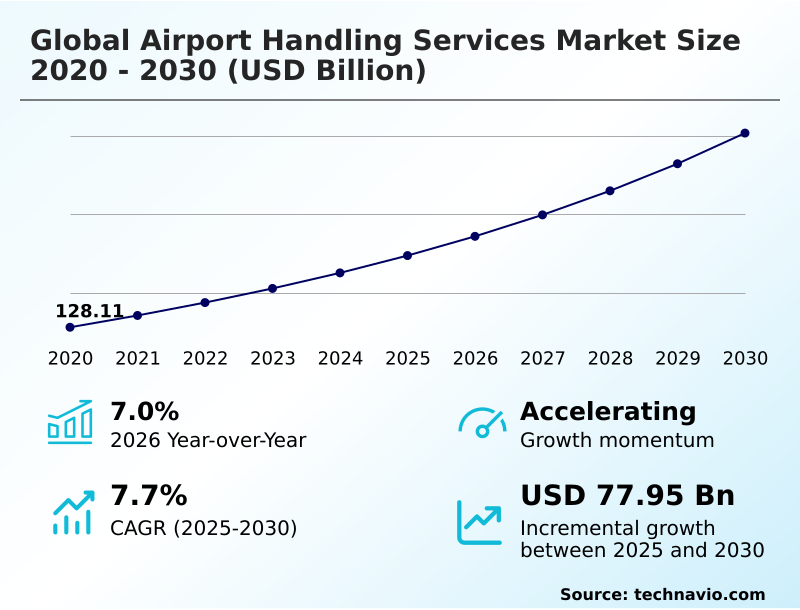
The airport handling services market size is valued to increase by USD 77.95 billion, at a CAGR of 7.7% from 2025 to 2030. Surge in global passenger traffic and infrastructure expansion will drive the airport handling services market.
Major Market Trends & Insights
- APAC dominated the market and accounted for a 51.5% growth during the forecast period.
- By Type - International segment was valued at USD 103.40 billion in 2024
- By Service - GSHS segment accounted for the largest market revenue share in 2024
Market Size & Forecast
- Market Opportunities: USD 123.57 billion
- Market Future Opportunities: USD 77.95 billion
- CAGR from 2025 to 2030 : 7.7%
Market Summary
- The airport handling services market is undergoing a significant transformation, driven by the dual pressures of surging passenger volumes and the imperative for operational efficiency. Key trends include the widespread adoption of automation and digitalization, from autonomous baggage tugs and robotic loading systems to the integration of biometric identity management for a seamless passenger journey.
- For instance, a major international hub can leverage predictive analytics for maintenance to forecast ground support equipment needs, reallocating resources in real-time to prevent delays during peak travel seasons, thereby improving on-time performance. This shift toward smart, data-driven airside operations is critical.
- However, the industry grapples with persistent challenges, including a systemic labor shortage, high capital expenditure for electric ground support equipment (eGSE), and stringent regulatory mandates for decarbonization. Service providers must balance investments in turn-key ground handling solutions with the need for cost-effective, reliable service delivery.
- The integration of advanced baggage handling systems (BHS) and ground coordination software is becoming a key differentiator, enabling handlers to manage high-density traffic while meeting net-zero carbon emission goals and ensuring apron safety management.
What will be the Size of the Airport Handling Services Market during the forecast period?
Get Key Insights on Market Forecast (PDF) Get Free Sample
How is the Airport Handling Services Market Segmented?
The airport handling services industry research report provides comprehensive data (region-wise segment analysis), with forecasts and estimates in "USD million" for the period 2026-2030, as well as historical data from 2020-2024 for the following segments.
- Type
- International
- Domestic
- Service
- GSHS
- CHS
- Service type
- Aircraft handling
- Passenger handling
- Cargo and mail handling
- Baggage handling
- Others
- Geography
- APAC
- China
- Japan
- India
- Europe
- Germany
- UK
- France
- North America
- US
- Canada
- Mexico
- Middle East and Africa
- UAE
- Saudi Arabia
- Turkey
- South America
- Brazil
- Argentina
- Rest of World (ROW)
- APAC
By Type Insights
The international segment is estimated to witness significant growth during the forecast period.
The international segment requires a sophisticated operational framework to manage diverse aircraft types and high-volume passenger flows, with a focus on baggage processing automation.
Services extend beyond domestic operations, including specialized customs facilitation, high-fidelity security screening for cargo, and complex passenger management, often necessitating longer turnaround times.
Service providers adhere to stringent international safety standards, utilizing centralized load control systems and ensuring efficient potable water replenishment and in-flight catering logistics. The adoption of advanced baggage handling systems (BHS) and automated check-in and boarding gates is critical.
Handlers are leveraging digital fleet management platforms to improve airside logistics efficiency, as demonstrated by systems achieving a 15% reduction in baggage mishandling rates through enhanced tracking and high-resolution operational insights.
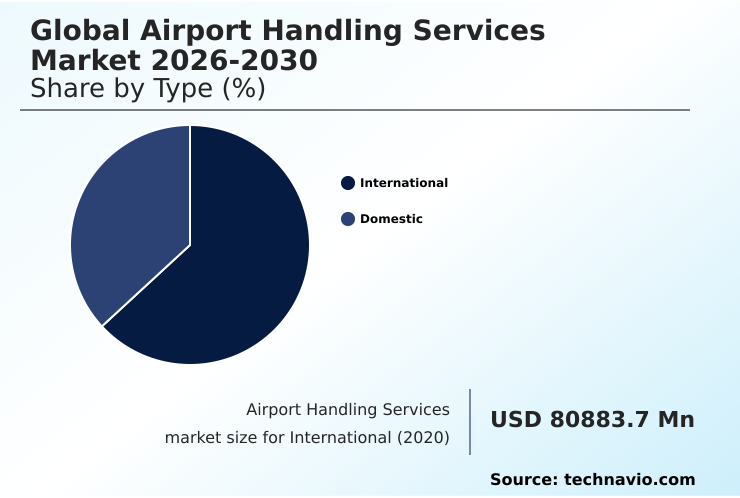
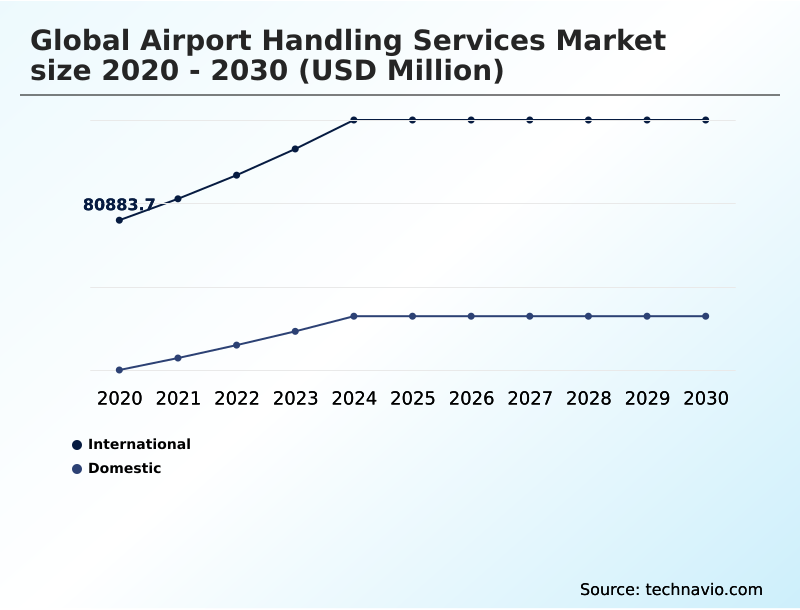
The International segment was valued at USD 103.40 billion in 2024 and showed a gradual increase during the forecast period.
Regional Analysis
APAC is estimated to contribute 51.5% to the growth of the global market during the forecast period.Technavio’s analysts have elaborately explained the regional trends and drivers that shape the market during the forecast period.
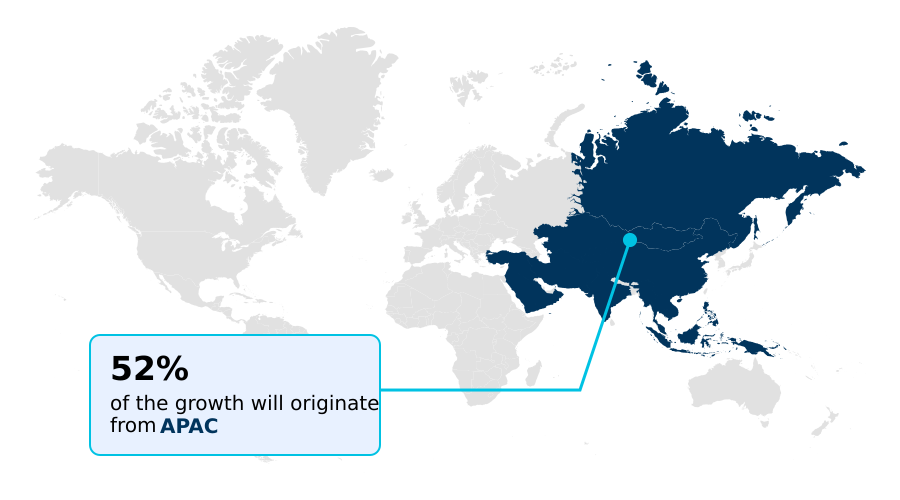
See How Airport Handling Services Market Demand is Rising in APAC Get Free Sample
The geographic landscape is characterized by varying rates of technological adoption and infrastructure investment.
In APAC, growth is outpacing other regions, with a strong focus on building sustainable airport infrastructure to manage high-density traffic, with growth in the region projected to outpace North America by over 60%.
European hubs prioritize meeting net-zero carbon emission goals, driving demand for advanced airside operations and landside operations. In North America, modernization efforts center on ramp handling optimization and specialized aircraft de-icing procedures.
Across all regions, the demand for turn-key ground handling solutions that integrate passenger assistance solutions, fixed-base operator (FBO) services, and multi-modal passenger logistics integration is growing.
The use of real-time sensor data coordination is enhancing on-time performance ratings, with leading airports reporting a 5% improvement in turnaround efficiency. This global emphasis on integrated passenger service systems underscores a market-wide shift toward smarter, more connected airport ecosystems.
Market Dynamics
Our researchers analyzed the data with 2025 as the base year, along with the key drivers, trends, and challenges. A holistic analysis of drivers will help companies refine their marketing strategies to gain a competitive advantage.
- Strategic decision-making in the airport handling services market is increasingly centered on technology adoption to address operational complexities. Evaluating the benefits of electric ground support vehicles is now a boardroom-level discussion, driven by both sustainability in airside vehicle fleets and long-term operating cost reductions.
- The cost analysis of advanced handling equipment is a critical factor, as the capital intensity of modernizing ground fleets remains high. Many operators are exploring how integrating AI into ground support equipment can yield a higher return on investment.
- For instance, the role of predictive analytics in maintenance has proven to reduce critical equipment downtime by up to 25% compared to reactive models. The challenges of autonomous baggage systems are being met with innovations in robotic systems in baggage factory models, aiming for flawless execution. Simultaneously, improving baggage reconciliation with technology is crucial for customer satisfaction.
- In passenger-facing services, biometric technology in passenger handling is balanced against data privacy in biometric airport systems, while enhancing passenger flow with self-service is a key goal. For cargo, optimizing cargo handling for e-commerce and deploying advanced security screening for air cargo are top priorities.
- Handlers must navigate this landscape while managing the impact of labor shortages on ramp handling, developing effective workforce retention strategies for handlers, and ensuring regulatory compliance for ground handlers, especially concerning decarbonization mandates for airport operations. Ultimately, reducing aircraft turnaround with automation is the unifying objective that ties these strategic threads together.
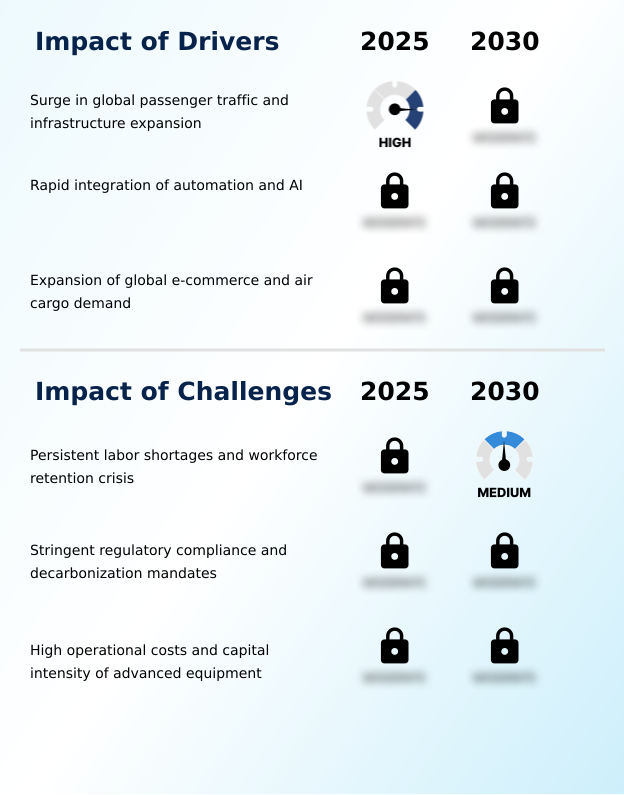
What are the key market drivers leading to the rise in the adoption of Airport Handling Services Industry?
- The surge in global passenger traffic, coupled with extensive airport infrastructure expansion, serves as a key driver for market growth.
- Market growth is significantly driven by the expansion of global trade and the need for rapid, reliable logistics.
- The rise of cross-border e-commerce logistics has intensified the demand for efficient air cargo security screening and automated warehouse solutions, which can increase cargo processing speeds by up to 30%.
- This requires sophisticated unit load device (ULD) management and specialized handling for temperature-controlled cargo shipments. To support this, investments in smart cargo hub development are increasing, focused on achieving end-to-end supply chain visibility.
- On the passenger side, the need for aircraft turnaround time optimization is fueling the adoption of autonomous baggage tugs and robotic loading systems.
- These technologies, alongside reliable aircraft ground power units (GPU), are crucial for managing high-density traffic, with automated systems capable of improving gate efficiency by 10%.
What are the market trends shaping the Airport Handling Services Industry?
- A significant market trend is the transition toward electric and autonomous ground support equipment. This shift is driven by sustainability goals and the need for greater operational efficiency.
- Key market trends are centered on digitalization and automation to create a more efficient and data-driven airport environment. The adoption of digital twin technology is enabling high-fidelity digital twin simulation of airside operations, which has been shown to improve resource planning accuracy by up to 20%.
- This is complemented by the widespread implementation of biometric identity management and contactless passenger processing to deliver a seamless passenger journey design. The use of passenger flow analytics helps optimize terminal layouts, reducing congestion by 15% at peak times. Furthermore, predictive analytics for maintenance, supported by telematics for fleet management, is critical for cost reduction through automation.
- AI-enabled operational control tower platforms are integrating these data streams, offering a holistic view of ground activities and facilitating AI-driven resource allocation for tasks like passenger boarding bridge automation, ultimately enhancing overall airport throughput.
What challenges does the Airport Handling Services Industry face during its growth?
- Persistent labor shortages and a severe workforce retention crisis present a key challenge affecting the industry's growth trajectory.
- The market faces significant challenges related to high operational costs, stringent regulations, and workforce pressures. The push for decarbonization of ground operations necessitates substantial investment in electric ground support equipment (eGSE) and sustainable aviation fuel (SAF) handling infrastructure. This, combined with the need for regulatory compliance management, strains financial resources.
- To offset costs and improve efficiency, operators are turning to technology. The deployment of autonomous ground vehicle (AGV) systems and computer vision for aircraft inspection helps enhance apron safety management and reduce reliance on manual labor. For instance, advanced baggage reconciliation technology has been shown to lower mishandling rates by 25%.
- However, implementing robotic induction systems and ensuring autonomous vehicle navigation require high upfront capital, creating barriers for smaller operators and impacting overall operational resilience planning.
Exclusive Technavio Analysis on Customer Landscape
The airport handling services market forecasting report includes the adoption lifecycle of the market, covering from the innovator’s stage to the laggard’s stage. It focuses on adoption rates in different regions based on penetration. Furthermore, the airport handling services market report also includes key purchase criteria and drivers of price sensitivity to help companies evaluate and develop their market growth analysis strategies.
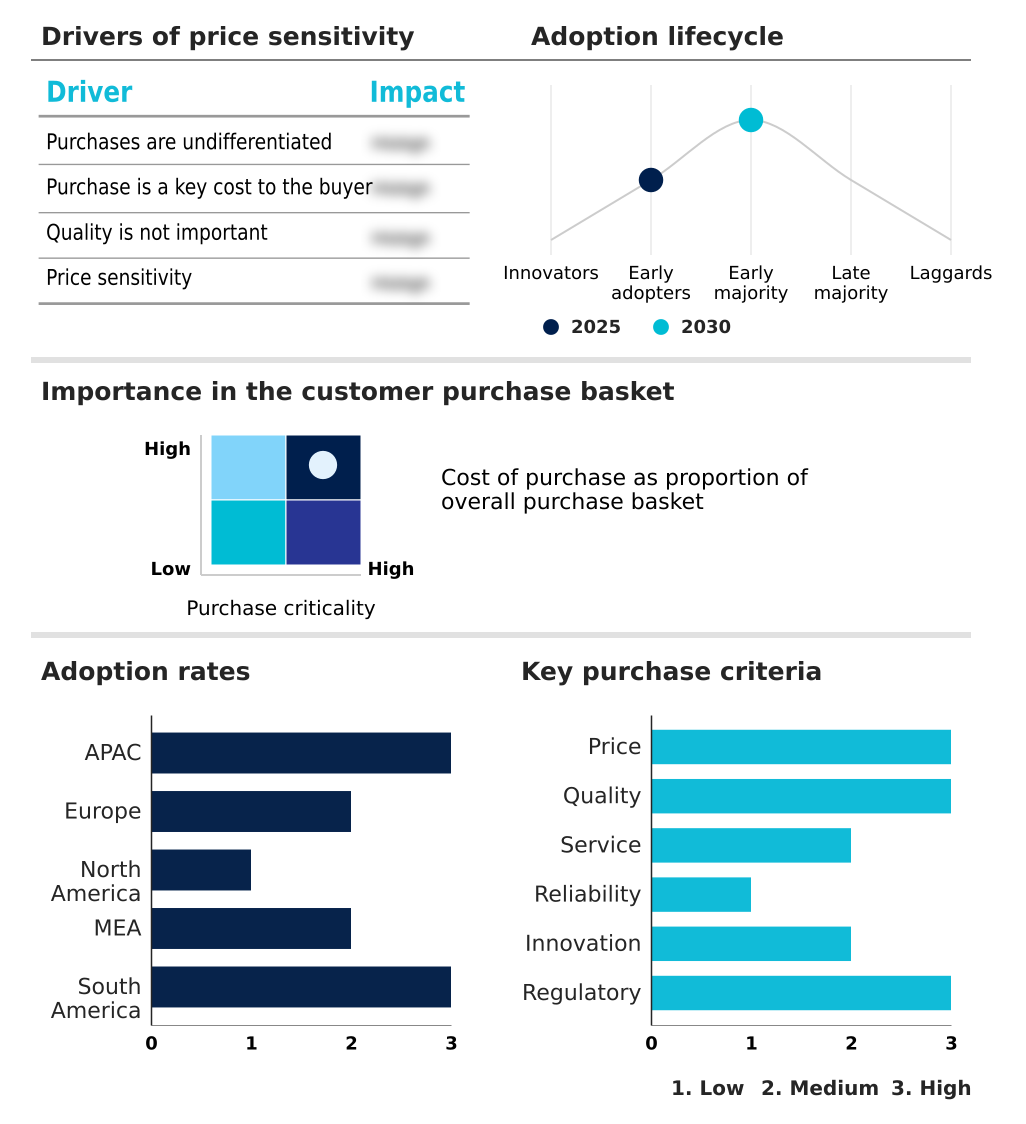
Customer Landscape of Airport Handling Services Industry
Competitive Landscape
Companies are implementing various strategies, such as strategic alliances, airport handling services market forecast, partnerships, mergers and acquisitions, geographical expansion, and product/service launches, to enhance their presence in the industry.
Acciona SA - Delivers a comprehensive suite of cargo handling and ground operations, focusing on integrated infrastructure and service management within the global aviation sector.
The industry research and growth report includes detailed analyses of the competitive landscape of the market and information about key companies, including:
- Acciona SA
- AHS Handling Services GmbH
- Air General Inc.
- Alliance Ground International
- Ana Holdings Inc.
- Avia Solutions Group PLC
- Aviapartner Group
- dnata
- Flughafen Nuernberg GmbH
- Fraport AG
- Japan Airlines Co. Ltd.
- Menzies Aviation Ltd.
- Prime Flight Aviation Services
- Qatar Aviation Services
- Signature Aviation
- Swissport International AG
- The Emirates Group
- Universal Weather and Aviation
Qualitative and quantitative analysis of companies has been conducted to help clients understand the wider business environment as well as the strengths and weaknesses of key industry players. Data is qualitatively analyzed to categorize companies as pure play, category-focused, industry-focused, and diversified; it is quantitatively analyzed to categorize companies as dominant, leading, strong, tentative, and weak.
Recent Development and News in Airport handling services market
- In January 2025, Air India awarded 14 new cargo and ground handling contracts to SATS Ltd. and its subsidiary, Worldwide Flight Services (WFS), to consolidate logistics and passenger services across major global hubs including Chicago and London Heathrow.
- In January 2025, Belo Horizonte (BH) Airport in Brazil advanced its sustainability initiatives by acquiring a fleet of 100% electric vehicles for runway and apron monitoring, supporting its goal of reducing airline operational costs and achieving zero direct emissions.
- In March 2025, the European Commission introduced its first comprehensive ground handling safety regulations, integrating these services into the EASA framework and mandating standardized management systems to enhance operational safety across the European Union.
- In April 2025, dnata committed over USD 110 million to launch advanced cargo facilities in the Netherlands, Iraq, and the United Arab Emirates, with the new Amsterdam facility featuring automated storage and retrieval systems to enhance logistical capabilities.
Dive into Technavio’s robust research methodology, blending expert interviews, extensive data synthesis, and validated models for unparalleled Airport Handling Services Market insights. See full methodology.
| Market Scope | |
|---|---|
| Page number | 292 |
| Base year | 2025 |
| Historic period | 2020-2024 |
| Forecast period | 2026-2030 |
| Growth momentum & CAGR | Accelerate at a CAGR of 7.7% |
| Market growth 2026-2030 | USD 77950.1 million |
| Market structure | Fragmented |
| YoY growth 2025-2026(%) | 7.0% |
| Key countries | China, Japan, India, South Korea, Australia, Indonesia, Germany, UK, France, Italy, Spain, The Netherlands, US, Canada, Mexico, UAE, Saudi Arabia, Turkey, South Africa, Israel, Brazil, Argentina and Chile |
| Competitive landscape | Leading Companies, Market Positioning of Companies, Competitive Strategies, and Industry Risks |
Research Analyst Overview
- The airport handling services market is defined by a strategic imperative to modernize through technology, addressing both operational demands and sustainability mandates. The integration of AI-driven resource allocation and predictive analytics for maintenance is becoming standard, enabling handlers to optimize complex airside operations and landside operations.
- A key area of focus is the deployment of electric ground support equipment (eGSE) to meet decarbonization goals, a decision that directly impacts capital expenditure budgets and corporate ESG strategy. The use of computer vision for aircraft inspection is reducing manual inspection times by over 40% in pilot programs, showcasing the tangible efficiency gains from automation.
- This technological shift encompasses everything from ramp handling optimization and baggage processing automation to specialized functions like aircraft de-icing procedures and aviation fueling services. Leading firms are providing turn-key ground handling solutions that incorporate advanced ground coordination software, telematics for fleet management, and robust apron safety management protocols to deliver value in a competitive environment.
What are the Key Data Covered in this Airport Handling Services Market Research and Growth Report?
-
What is the expected growth of the Airport Handling Services Market between 2026 and 2030?
-
USD 77.95 billion, at a CAGR of 7.7%
-
-
What segmentation does the market report cover?
-
The report is segmented by Type (International, and Domestic), Service (GSHS, and CHS), Service Type (Aircraft handling, Passenger handling, Cargo and mail handling, Baggage handling, and Others) and Geography (APAC, Europe, North America, Middle East and Africa, South America)
-
-
Which regions are analyzed in the report?
-
APAC, Europe, North America, Middle East and Africa and South America
-
-
What are the key growth drivers and market challenges?
-
Surge in global passenger traffic and infrastructure expansion, Persistent labor shortages and workforce retention crisis
-
-
Who are the major players in the Airport Handling Services Market?
-
Acciona SA, AHS Handling Services GmbH, Air General Inc., Alliance Ground International, Ana Holdings Inc., Avia Solutions Group PLC, Aviapartner Group, dnata, Flughafen Nuernberg GmbH, Fraport AG, Japan Airlines Co. Ltd., Menzies Aviation Ltd., Prime Flight Aviation Services, Qatar Aviation Services, Signature Aviation, Swissport International AG, The Emirates Group and Universal Weather and Aviation
-
Market Research Insights
- The market's dynamism is driven by a strategic pivot toward automation and data-centric operations to enhance efficiency and manage costs. The implementation of predictive maintenance scheduling for GSE has demonstrated an ability to reduce unexpected equipment downtime by over 20%, directly improving operational resilience.
- Simultaneously, the focus on seamless passenger journey design is leading to broader adoption of automated check-in and boarding gates, which have been shown to increase passenger throughput by up to 15% during peak hours. This drive for efficiency extends to cargo, where end-to-end supply chain visibility is paramount.
- Firms are also focused on cost reduction through automation in landside and airside logistics, with investments in workforce productivity tools aimed at mitigating the impact of labor shortages and enhancing on-time performance ratings across the board.
We can help! Our analysts can customize this airport handling services market research report to meet your requirements.
 RIA -
RIA -