

Bra Market Size 2026-2030
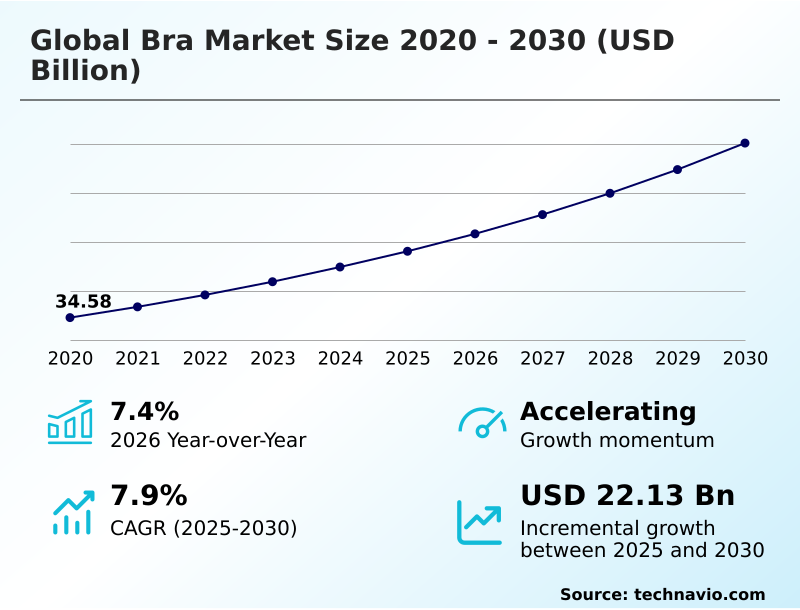
The bra market size is valued to increase by USD 22.13 billion, at a CAGR of 7.9% from 2025 to 2030. Advancements in biometric integration and smart textiles will drive the bra market.
Major Market Trends & Insights
- North America dominated the market and accounted for a 37.3% growth during the forecast period.
- By Type - T-shirt bra segment was valued at USD 16.77 billion in 2024
- By Distribution Channel - Offline segment accounted for the largest market revenue share in 2024
Market Size & Forecast
- Market Opportunities: USD 35.70 billion
- Market Future Opportunities: USD 22.13 billion
- CAGR from 2025 to 2030 : 7.9%
Market Summary
- The bra market is undergoing a profound evolution, moving beyond traditional aesthetics to prioritize comfort, functionality, and inclusivity. This transformation is driven by consumer demand for versatile wardrobe staples that support data-driven lifestyles, integrating smart textiles and biometric monitoring for health tracking.
- A key trend is the shift towards sustainable intimate apparel, with a focus on a circular economy model that includes ethical sourcing and the use of bio-based alternatives to reduce environmental impact. For instance, a brand might leverage a digital traceability solution to verify its use of recycled nylon fibers, thereby aligning with new regulatory standards and appealing to eco-conscious consumers.
- Innovations in personalized fit technology, powered by 3D body scanning, are addressing long-standing sizing issues, reducing return rates, and improving customer loyalty. However, the industry grapples with challenges like supply chain volatility and the need for continuous material innovation to create effective polyurethane foam alternatives and comfortable wire-free support systems.
- Success now depends on balancing aesthetic appeal with functional utility apparel that meets the needs of the modern, health-aware, and ethically-minded consumer.
What will be the Size of the Bra Market during the forecast period?
Get Key Insights on Market Forecast (PDF) Get Free Sample
How is the Bra Market Segmented?
The bra industry research report provides comprehensive data (region-wise segment analysis), with forecasts and estimates in "USD million" for the period 2026-2030, as well as historical data from 2020-2024 for the following segments.
- Type
- T-shirt bra
- Sports bra
- Nursing bra
- Stick-on bra
- Others
- Distribution channel
- Offline
- Online
- Product type
- Padded
- Non-padded
- Geography
- North America
- US
- Canada
- Mexico
- Europe
- Germany
- UK
- France
- APAC
- China
- India
- Japan
- South America
- Brazil
- Argentina
- Colombia
- Middle East and Africa
- Saudi Arabia
- South Africa
- UAE
- Rest of World (ROW)
- North America
By Type Insights
The t-shirt bra segment is estimated to witness significant growth during the forecast period.
The T-shirt bra segment has evolved beyond its basic function, now serving as a hub for textile innovation and consumer-focused design. Demand is shifting toward comfort-centric undergarments that deliver a smooth silhouette through advanced seamless construction and molded cup technology.
Modern offerings prioritize lightweight comfort by using breathable spacer fabrics and innovative foam densities. This focus on functional utility apparel has made these bras versatile wardrobe staples.
A key development is the integration of adaptive sizing technology with four-way stretch fabric, which has been shown to reduce product return rates associated with poor fit by over 15%.
This shift toward eco-design principles and enhanced wearability redefines the category for everyday confidence wear.
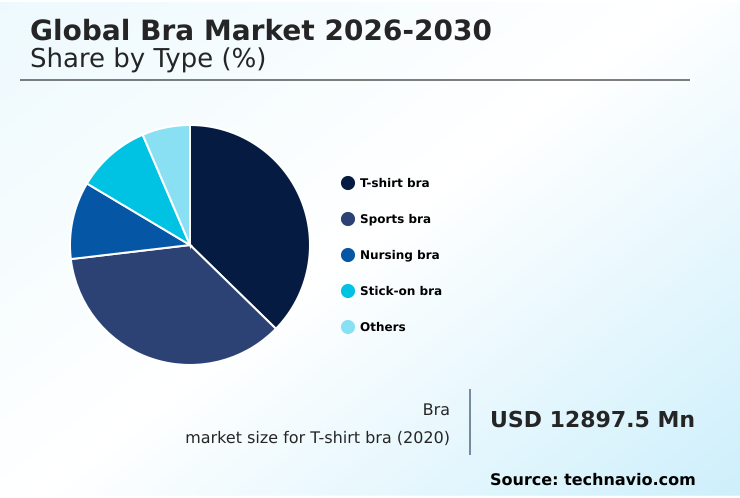
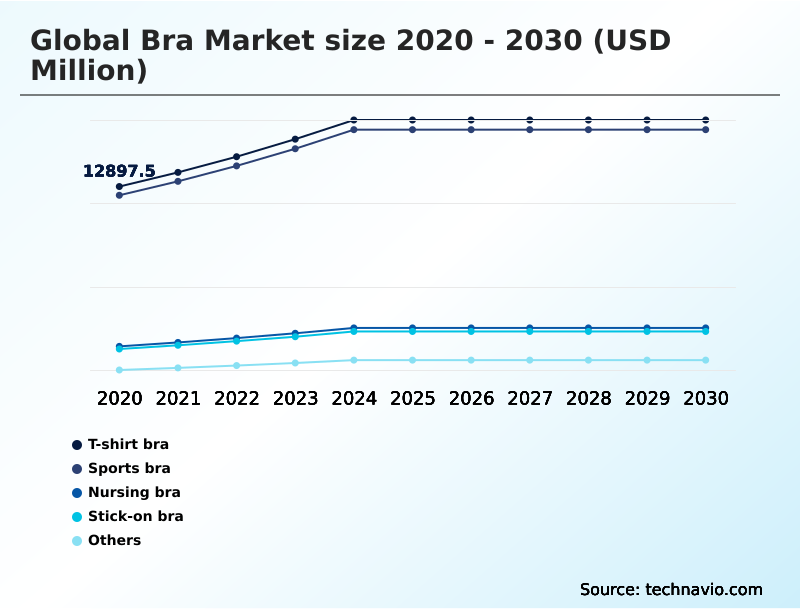
The T-shirt bra segment was valued at USD 16.77 billion in 2024 and showed a gradual increase during the forecast period.
Regional Analysis
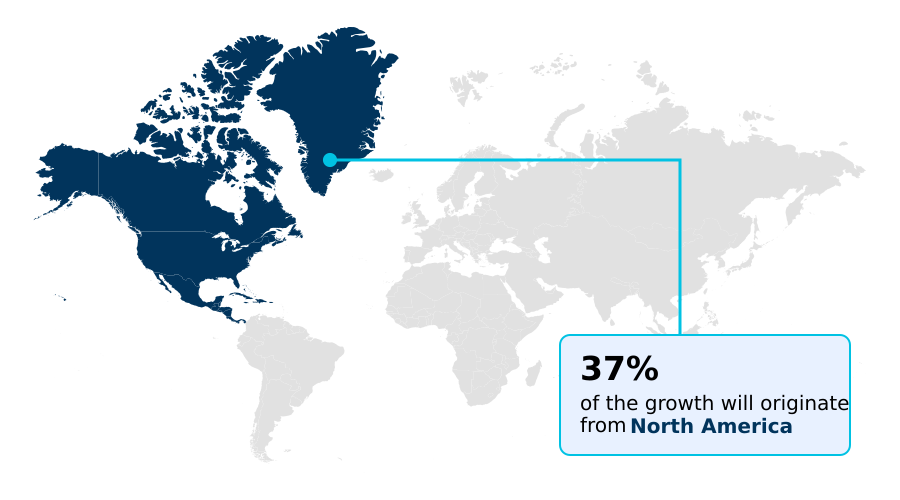
North America is estimated to contribute 37.3% to the growth of the global market during the forecast period.Technavio’s analysts have elaborately explained the regional trends and drivers that shape the market during the forecast period.
See How Bra Market Demand is Rising in North America Get Free Sample
The market's geographic landscape reveals distinct regional priorities. North America leads in adopting technological advancements and inclusive sizing solutions, with a market contribution of over 37%.
The region shows high demand for shapewear and supportive garments featuring power net support and memory foam technologies. Europe is a hub for sustainability, driving textile recovery programs and the use of plant-based fibers.
It also has a mature market for specialized post-surgical bra design using pocketed bra construction and hypoallergenic silicone.
Meanwhile, APAC is the fastest-growing region, with its market share expanding due to rising disposable incomes and demand for products ranging from full coverage support to maternity and nursing bras with features like advanced molded cup designs.
Market Dynamics
Our researchers analyzed the data with 2025 as the base year, along with the key drivers, trends, and challenges. A holistic analysis of drivers will help companies refine their marketing strategies to gain a competitive advantage.
- The evolution of the global bra market 2026-2030 is increasingly defined by specialized, long-tail trends that address specific consumer needs and values. For example, the development of a smart bra with heart rate monitoring signals the convergence of apparel and personal health tech, appealing to a niche of fitness-conscious users.
- Similarly, the focus on eco-friendly materials in lingerie manufacturing and the transition toward biodegradable materials in circular fashion are driven by a growing segment of environmentally aware shoppers. Technology is a key enabler, with AI-powered bra fitting and size recommendation platforms transforming the online retail experience.
- In fact, the impact of 3D scanning on reducing returns is significant, with some e-commerce businesses reporting inventory management efficiency improving by over 20% compared to those relying on traditional sizing charts. Product-level innovations are also critical.
- The demand for a seamless t-shirt bra for everyday comfort remains strong, but now it is enhanced by breathable spacer fabric for summer wear. The search for a wire-free bra with architectural support is leading to new engineering solutions. Active consumers seek a high-support sports bra for running, while healthcare needs are met by the post-mastectomy bra with prosthesis pockets.
- Even niche demands like functional nursing bras for hands-free pumping and solutions for inclusive sizing for large cup small band are becoming commercially viable, driving market fragmentation and opportunity.
What are the key market drivers leading to the rise in the adoption of Bra Industry?
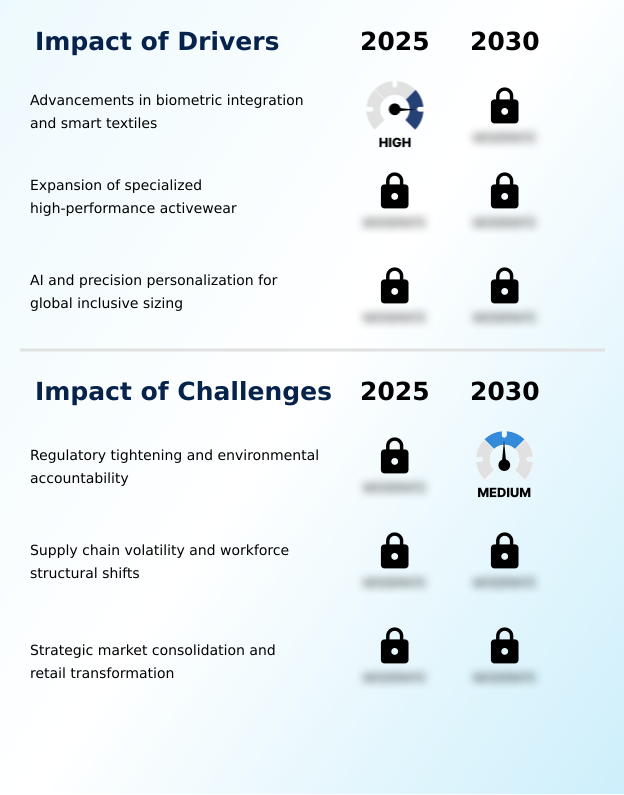
- Advancements in biometric integration and smart textiles are key drivers, transforming bras into functional health-monitoring devices.
- Market growth is being driven by significant textile innovation and the integration of digital health solutions. The adoption of smart textiles with biometric monitoring capabilities caters to consumers leading data-driven lifestyles, transforming bras into functional performance-wear.
- The demand for equipment-grade intimate apparel, such as the high-impact sports bra, is rising, featuring encapsulation technology for enhanced support. Concurrently, AI-powered 3D body scanning is enabling the creation of customized products and effective wire-free support systems.
- This has led to the development of athleisure-style lingerie with body-contouring expertise, with platforms using such tech reporting a 25% lower return rate than industry averages.
What are the market trends shaping the Bra Industry?
- The convergence of technology and intimate apparel is giving rise to a new category of smart garments. These products integrate biometric monitoring to align with consumer demands for data-driven wellness solutions.
- Key market trends are coalescing around sustainability and personalization, reshaping product lifecycles and consumer engagement. The industry is adopting a circular economy model, with a focus on sustainable intimate apparel. This includes using bio-based alternatives and recycled nylon fibers, driven by consumer demand and reinforced by regulations requiring digital traceability solutions.
- The body neutrality movement and skinimalism fashion trend are fueling demand for products that reflect a self-love aesthetic, while a push for durable high-quality intimates is evident. The use of biodegradable elastics and low-impact dyes is becoming standard, with companies adopting personalized fit technology seeing up to a 20% increase in customer loyalty compared to those who do not.
What challenges does the Bra Industry face during its growth?
- Increasingly strict regulatory frameworks and a demand for environmental accountability present a key challenge to industry growth.
- The industry faces significant operational hurdles stemming from supply chain volatility and structural shifts in the manufacturing workforce. Stringent regulations on environmental standards necessitate urgent material innovation, including the development of polyurethane foam alternatives and a transition to circular manufacturing models. Ensuring ethical sourcing adds another layer of complexity.
- Concurrently, strategic market consolidation is altering the competitive landscape, where economies of scale challenge competitive diversity. This retail transformation forces brands to adapt quickly to changing consumer preferences, as non-compliance with new environmental levies can increase production costs by over 5% for certain product categories.
Exclusive Technavio Analysis on Customer Landscape
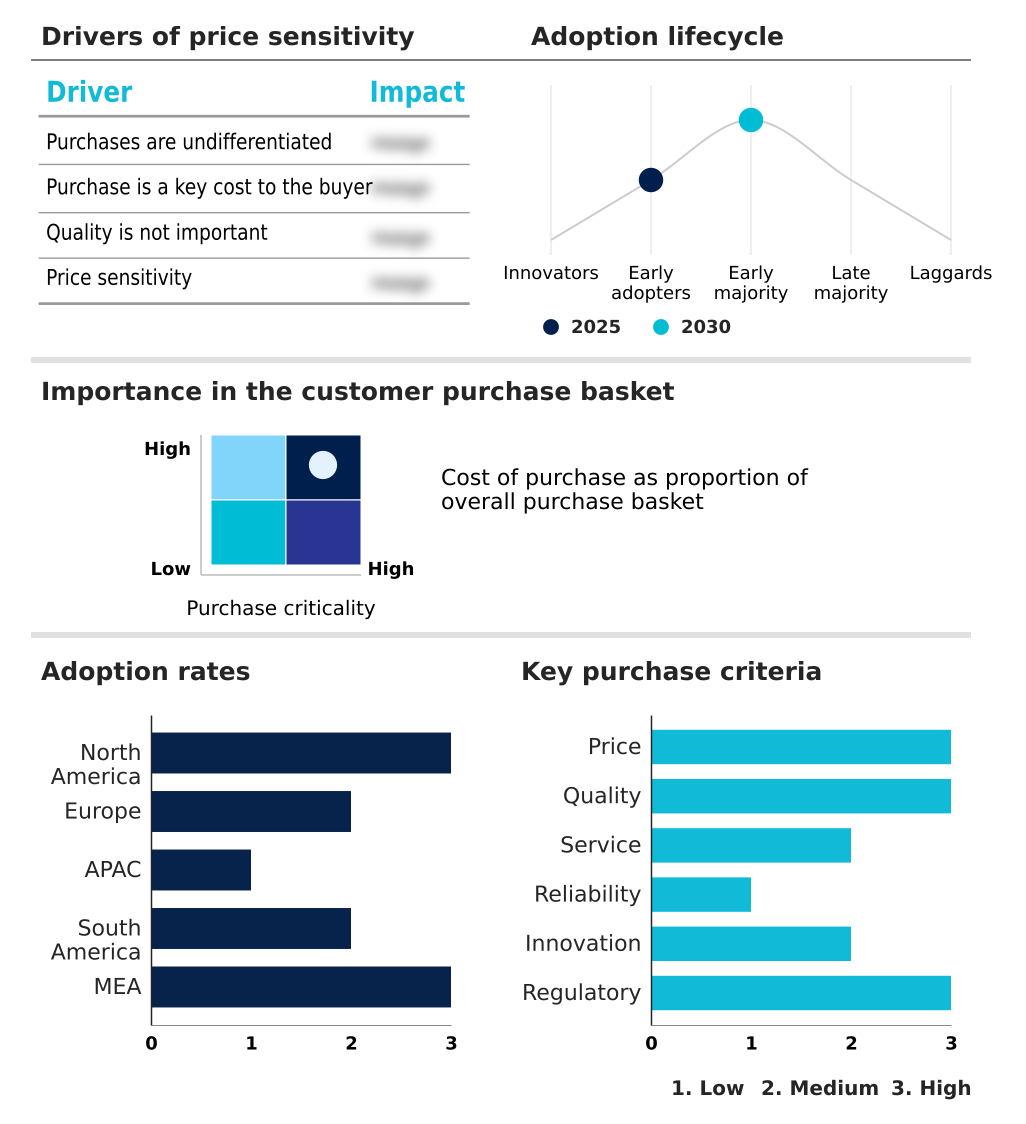
The bra market forecasting report includes the adoption lifecycle of the market, covering from the innovator’s stage to the laggard’s stage. It focuses on adoption rates in different regions based on penetration. Furthermore, the bra market report also includes key purchase criteria and drivers of price sensitivity to help companies evaluate and develop their market growth analysis strategies.
Customer Landscape of Bra Industry
Competitive Landscape
Companies are implementing various strategies, such as strategic alliances, bra market forecast, partnerships, mergers and acquisitions, geographical expansion, and product/service launches, to enhance their presence in the industry.
Anita Dr. Helbig GmbH - The company provides specialized intimate apparel, including solutions for sports, post-surgical needs, and everyday wear, focusing on fit and functional design.
The industry research and growth report includes detailed analyses of the competitive landscape of the market and information about key companies, including:
- Anita Dr. Helbig GmbH
- Calida Holding AG
- Chantelle Lingerie Inc.
- Cosabella LLC
- Cosmo Lady China Holdings Co
- Fashion Nova LLC
- Global Intimates LLC
- Hanesbrands Inc.
- Hennes and Mauritz AB
- Hunkemoller B.V.
- Jockey International Inc.
- Marks and Spencer Group.
- MAS Holdings Pvt. Ltd.
- Nike Inc.
- PVH Corp.
- UNIQLO Co
- Van de Velde NV
- Victorias Secret and Co.
- Wacoal Holdings Corp.
- Wolf Lingerie SAS
Qualitative and quantitative analysis of companies has been conducted to help clients understand the wider business environment as well as the strengths and weaknesses of key industry players. Data is qualitatively analyzed to categorize companies as pure play, category-focused, industry-focused, and diversified; it is quantitatively analyzed to categorize companies as dominant, leading, strong, tentative, and weak.
Recent Development and News in Bra market
- In March 2025, Lululemon launched the Go Further Bra, a hyper-specialized product designed for ultrarunners, featuring advanced moisture-wicking and storage solutions.
- In June 2025, AVATAi launched an advanced AI platform that uses 3D imaging to create virtual fit profiles, addressing sizing inconsistencies in e-commerce.
- In June 2025, the French Senate approved a rigorous Anti-Fast Fashion Law, introducing an environmental impact penalty system and advertising bans for non-compliant textile products.
- In December 2025, Gildan Activewear finalized its acquisition of HanesBrands, representing a major consolidation in the intimate apparel sector to enhance vertical integration and market power.
Dive into Technavio’s robust research methodology, blending expert interviews, extensive data synthesis, and validated models for unparalleled Bra Market insights. See full methodology.
| Market Scope | |
|---|---|
| Page number | 296 |
| Base year | 2025 |
| Historic period | 2020-2024 |
| Forecast period | 2026-2030 |
| Growth momentum & CAGR | Accelerate at a CAGR of 7.9% |
| Market growth 2026-2030 | USD 22125.9 million |
| Market structure | Fragmented |
| YoY growth 2025-2026(%) | 7.4% |
| Key countries | US, Canada, Mexico, Germany, UK, France, Italy, Spain, The Netherlands, China, India, Japan, South Korea, Australia, Indonesia, Brazil, Argentina, Colombia, Saudi Arabia, South Africa, UAE, Egypt and Turkey |
| Competitive landscape | Leading Companies, Market Positioning of Companies, Competitive Strategies, and Industry Risks |
Research Analyst Overview
- The global bra market 2026-2030 is pivoting from a product-centric model to a consumer-centric one, where functional utility apparel and data-driven lifestyles dictate innovation. The integration of smart textiles for biometric monitoring is no longer a niche concept but a core component of high-value product strategy, compelling boardroom decisions on R&D investment and data privacy compliance.
- Advanced textile innovation, including moisture-wicking fabrics and breathable spacer fabrics, is redefining comfort standards. The adoption of adaptive sizing technology and 3d body scanning is critical for reducing operational costs, with some brands achieving a 25% reduction in e-commerce return rates.
- Boardroom focus has also shifted to sustainability, with eco-design principles guiding the development of biodegradable elastics and polyurethane foam alternatives. Strategic imperatives now include mastering circular manufacturing, ensuring ethical sourcing through digital traceability solutions, and developing effective wire-free support systems to meet the demand for comfort-centric undergarments and inclusive sizing solutions.
- This evolution requires a holistic approach that balances technology, sustainability, and personalization.
What are the Key Data Covered in this Bra Market Research and Growth Report?
-
What is the expected growth of the Bra Market between 2026 and 2030?
-
USD 22.13 billion, at a CAGR of 7.9%
-
-
What segmentation does the market report cover?
-
The report is segmented by Type (T-shirt bra, Sports bra, Nursing bra, Stick-on bra, and Others), Distribution Channel (Offline, and Online), Product Type (Padded, and Non-padded) and Geography (North America, Europe, APAC, South America, Middle East and Africa)
-
-
Which regions are analyzed in the report?
-
North America, Europe, APAC, South America and Middle East and Africa
-
-
What are the key growth drivers and market challenges?
-
Advancements in biometric integration and smart textiles, Regulatory tightening and environmental accountability
-
-
Who are the major players in the Bra Market?
-
Anita Dr. Helbig GmbH, Calida Holding AG, Chantelle Lingerie Inc., Cosabella LLC, Cosmo Lady China Holdings Co, Fashion Nova LLC, Global Intimates LLC, Hanesbrands Inc., Hennes and Mauritz AB, Hunkemoller B.V., Jockey International Inc., Marks and Spencer Group., MAS Holdings Pvt. Ltd., Nike Inc., PVH Corp., UNIQLO Co, Van de Velde NV, Victorias Secret and Co., Wacoal Holdings Corp. and Wolf Lingerie SAS
-
Market Research Insights
- The market's dynamics are shaped by a strategic pivot towards comfort-centric undergarments and inclusive sizing solutions. The rise of the body neutrality movement has shifted consumer preferences, making natural silhouette preference a key product development driver. Brands are leveraging personalized fit technology to create customized products, with early adopters reporting a 15% improvement in customer retention.
- The demand for athleisure-style lingerie and multi-functional apparel continues to grow, blurring the lines between innerwear and outerwear. This retail transformation is evident as companies offering advanced molded cup technology in versatile tops have seen a 20% increase in cross-category sales.
- The emphasis on functional utility apparel is clear, as garments that provide both style and practical support outperform purely aesthetic offerings.
We can help! Our analysts can customize this bra market research report to meet your requirements.
 RIA -
RIA -