


Business Intelligence (BI) Market Size 2026-2030
The business intelligence (bi) market size is valued to increase by USD 19.31 billion, at a CAGR of 10.4% from 2025 to 2030. Integration of generative AI and agentic workflows will drive the business intelligence (bi) market.
Major Market Trends & Insights
- North America dominated the market and accounted for a 33.5% growth during the forecast period.
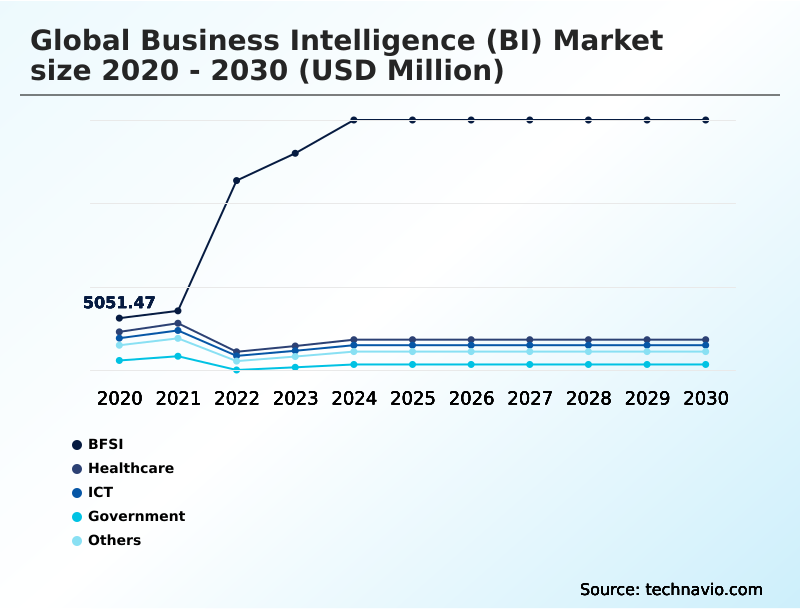
- By End-user - BFSI segment was valued at USD 12.62 billion in 2024
- By Deployment - Cloud segment accounted for the largest market revenue share in 2024
Market Size & Forecast
- Market Opportunities: USD 28.30 billion
- Market Future Opportunities: USD 19.31 billion
- CAGR from 2025 to 2030 : 10.4%
Market Summary
- The business intelligence (bi) market is undergoing a significant transformation, moving beyond static reporting to dynamic, AI-driven ecosystems. This evolution is defined by the integration of agentic analytics and autonomous reasoning, enabling platforms to provide proactive insights rather than reactive data visualizations.
- Key drivers include the demand for real-time data connectivity and the infusion of generative AI into conversational interfaces, which democratizes data analysis for non-technical users.
- For instance, in supply chain management, a translytical task flow allows a manager to query inventory levels using natural language, receive an AI-generated summary identifying a potential stockout, and authorize a replenishment order directly from the dashboard. This seamless integration of analysis and action is becoming the new standard.
- However, the market faces challenges related to data sovereignty across multi-cloud environments and ensuring semantic inconsistency does not undermine trust. Successful adoption hinges on establishing a robust business data fabric that guarantees data quality and governance, turning a unified analytics platform into a truly strategic asset for enterprise-wide decision-making and operational efficiency.
What will be the Size of the Business Intelligence (BI) Market during the forecast period?
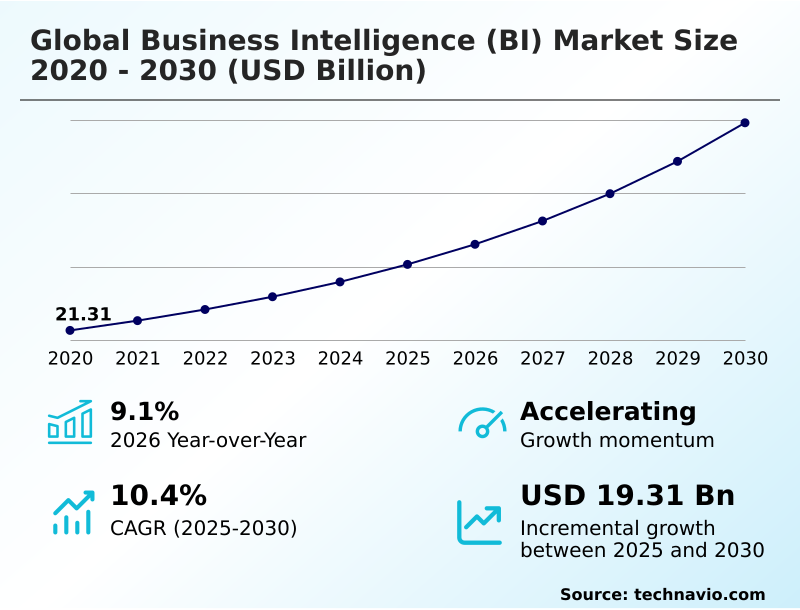
Get Key Insights on Market Forecast (PDF) Get Free Sample
How is the Business Intelligence (BI) Market Segmented?
The business intelligence (bi) industry research report provides comprehensive data (region-wise segment analysis), with forecasts and estimates in "USD million" for the period 2026-2030, as well as historical data from 2020-2024 for the following segments.
- End-user
- BFSI
- Healthcare
- ICT
- Government
- Others
- Deployment
- Cloud
- On-premises
- Type
- Traditional BI
- Cloud BI
- Mobile BI
- Social BI
- Geography
- North America
- US
- Canada
- Mexico
- APAC
- China
- Japan
- India
- Europe
- Germany
- UK
- France
- Middle East and Africa
- Saudi Arabia
- UAE
- South Africa
- South America
- Brazil
- Argentina
- Colombia
- Rest of World (ROW)
- North America
By End-user Insights
The bfsi segment is estimated to witness significant growth during the forecast period.
The BFSI segment's use of business intelligence (BI) is shifting toward proactive risk management and hyper-personalized financial products.
Financial institutions now utilize advanced analytics to navigate complex regulatory environments, with some achieving a 40% reduction in compliance reporting times through automated data lineage tracking.
The adoption of a robust business data fabric, supported by data fabric architectures, enables the analysis of unstructured collaborative information for sentiment analysis on investment products.
Firms are implementing retrieval augmented generation for customer service bots and using embedded analytics within mobile banking apps.
While traditional BI remains crucial for standardized reporting, hybrid-cloud strategies are becoming common, balancing the security of on-premises data with the scalability of automated machine learning models in the cloud.
This dual approach supports both long-term on-premises support for legacy systems and agile development.
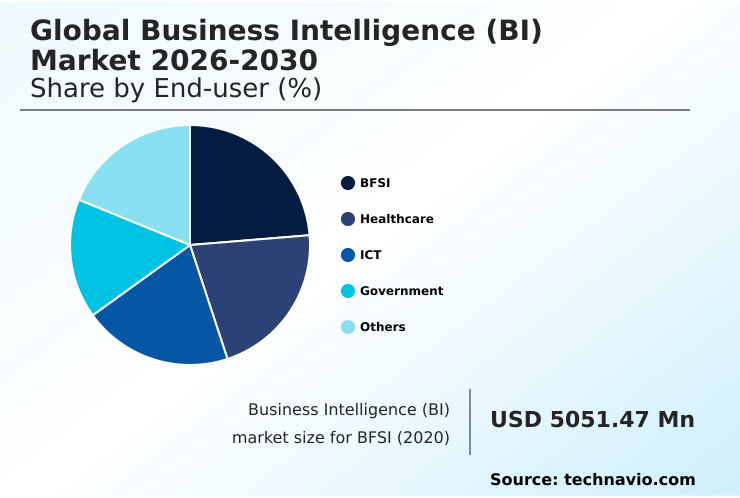
The BFSI segment was valued at USD 12.62 billion in 2024 and showed a gradual increase during the forecast period.
Regional Analysis
North America is estimated to contribute 33.5% to the growth of the global market during the forecast period.Technavio’s analysts have elaborately explained the regional trends and drivers that shape the market during the forecast period.
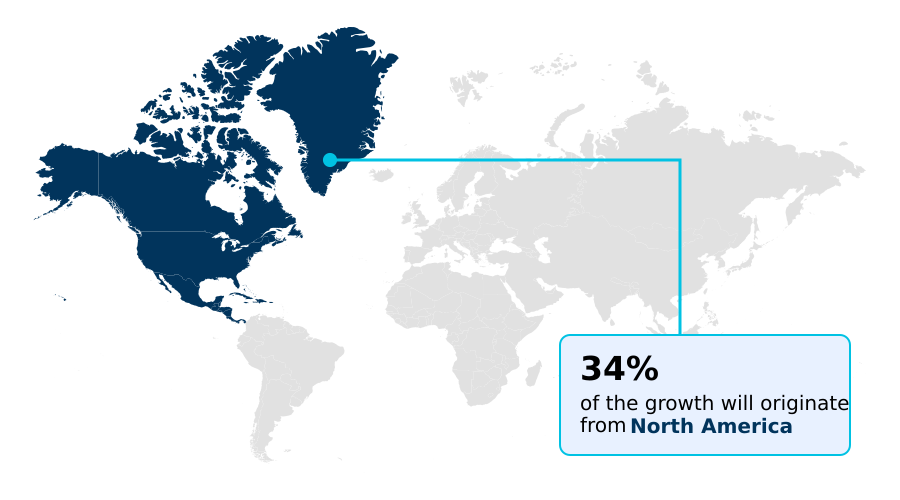
See How Business Intelligence (BI) Market Demand is Rising in North America Get Free Sample
The geographic landscape of the business intelligence (BI) market is led by North America, which accounts for 33.5% of the incremental growth, driven by mature adoption of cloud-native analytics.
Enterprises in this region are pioneering direct-lake data processing to eliminate data duplication. In contrast, the APAC market is characterized by rapid adoption of mobile-first analytics, where the integration of mobile BI is critical.
European firms prioritize data sovereignty and compliance, driving demand for solutions with strong governance.
Across regions, specific tools are gaining traction; geospatial point maps and sankey charts are being used to visualize complex supply chains, while translytical task flows are enabling operational actions directly from dashboards.
In retail, the omniconsumer model is optimized through real-time stock alignment analytics. Furthermore, smart city initiatives are leveraging ambient sensing and edge computing to process data locally, enhancing urban management efficiency.
Market Dynamics
Our researchers analyzed the data with 2025 as the base year, along with the key drivers, trends, and challenges. A holistic analysis of drivers will help companies refine their marketing strategies to gain a competitive advantage.
- The business intelligence (BI) market is rapidly advancing beyond standard reporting, with specialized applications driving significant value across industries. In logistics, generative AI for logistics route optimization is delivering efficiency gains more than double that of legacy planning systems. For technology firms, real-time analytics for network optimization is critical for managing 5G network performance and customer experience.
- The healthcare sector is leveraging prescriptive analytics for patient outcome prediction, enabling proactive clinical interventions. In finance, open finance analytics for customer segmentation is reshaping product development, while continuous intelligence for dynamic risk modeling enhances portfolio stability.
- Platform modernization is also key; enterprise-grade on-premises analytics modernization ensures stability for regulated industries, while AI-assisted low-code business intelligence development accelerates custom application deployment. Security is being hardened through secure OAuth-based authentication for legacy integration, and governance is being standardized with rule-based semantic model authoring for governance.
- Advanced visualization techniques, like geospatial point map visualization for supply chains, are becoming standard. Key platform capabilities now include automated discovery tools for data fabric, AI agents with retrieval augmented generation, and automated observability for IT operations risk, creating a more intelligent and resilient analytics ecosystem.
- The integration of BI metrics into Google Workspace and the use of social BI sentiment analysis for brand reputation further extend the reach of data-driven insights.
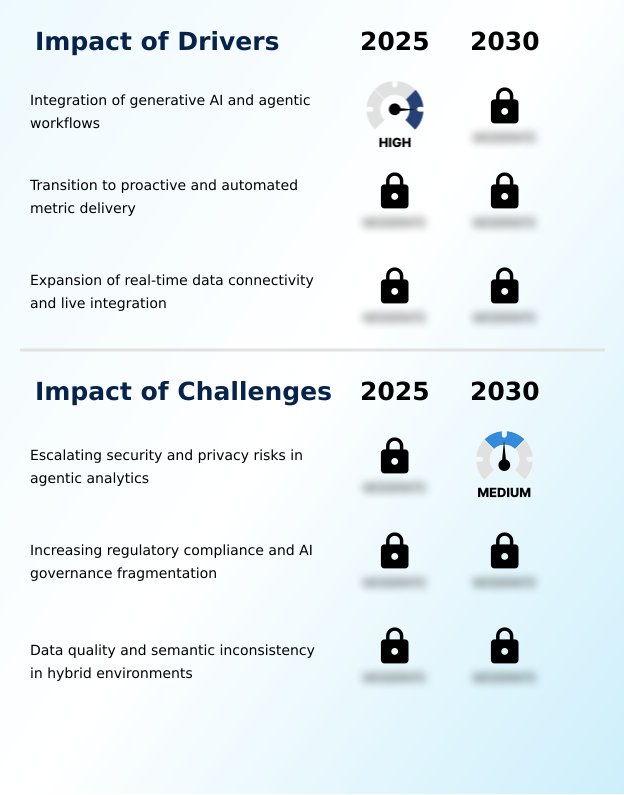
What are the key market drivers leading to the rise in the adoption of Business Intelligence (BI) Industry?
- The primary market driver is the integration of generative AI and agentic workflows, transforming traditional dashboards into interactive, conversational analysis platforms.
- Growth in the business intelligence (BI) market is primarily driven by the integration of advanced AI capabilities and the demand for real-time analysis.
- The development of sophisticated semantic models is enabling more accurate conversational reporting, allowing organizations to achieve a single source of truth. This shift improves operational efficiency by over 25% in data-intensive departments.
- The demand for real-time data connectivity with live data sources is fueling the adoption of the business data fabric, which simplifies data management and enhances data quality management.
- This architecture supports translytical task flows and continuous intelligence, allowing for immediate action on insights. Automated metric delivery and the use of automated discovery tools ensure that relevant information is pushed to users proactively.
- Together, these drivers are pushing the industry toward a more agile and responsive unified analytics platform that serves the entire organization.
What are the market trends shaping the Business Intelligence (BI) Industry?
- The market is evolving toward agentic analytics and autonomous reasoning, where intelligent systems transition from presenting data to proactively solving complex business problems.
- Key trends in the business intelligence (BI) market are centered on automation and accessibility, fundamentally changing how organizations interact with data. The evolution toward agentic analytics and autonomous reasoning is enabling platforms to perform multi-step workflows, moving beyond simple data presentation to proactive problem-solving.
- This is complemented by the push for pervasive and embedded insights, where conversational interfaces allow users to query data using natural language narratives. Such innovations have been shown to reduce ad-hoc reporting requests by up to 60%.
- The institutionalized data trust is being established through automated data governance and the introduction of a data product trust score, which provides clear data lineage. Conversational analytics, supported by automated data stewardship, ensures that insights are not only accessible but also reliable, fostering a culture of data-driven decision-making across the enterprise.
What challenges does the Business Intelligence (BI) Industry face during its growth?
- A key market challenge is the escalation of security and privacy risks associated with agentic analytics, which expands the potential for unauthorized data exposure.
- The primary challenges in the business intelligence (BI) market revolve around security, governance, and data quality. The rise of secure agentic systems introduces new vulnerabilities, necessitating stronger security protocols like OAuth-based authentication. Navigating AI governance fragmentation is a significant hurdle, as non-compliance with varying international transparency and accountability standards can result in penalties of up to 4% of global revenue.
- Ensuring data quality across multi-cloud environments is complicated by semantic inconsistency and data drift, which can undermine user trust. Addressing data sovereignty and data residency requirements adds further complexity.
- Organizations are adopting cloud BI, social BI, and other tools, but must first implement automated anomaly detection and robust governance to ensure the reliability of insights derived from these platforms, thus preventing flawed decision-making.
Exclusive Technavio Analysis on Customer Landscape
The business intelligence (bi) market forecasting report includes the adoption lifecycle of the market, covering from the innovator’s stage to the laggard’s stage. It focuses on adoption rates in different regions based on penetration. Furthermore, the business intelligence (bi) market report also includes key purchase criteria and drivers of price sensitivity to help companies evaluate and develop their market growth analysis strategies.
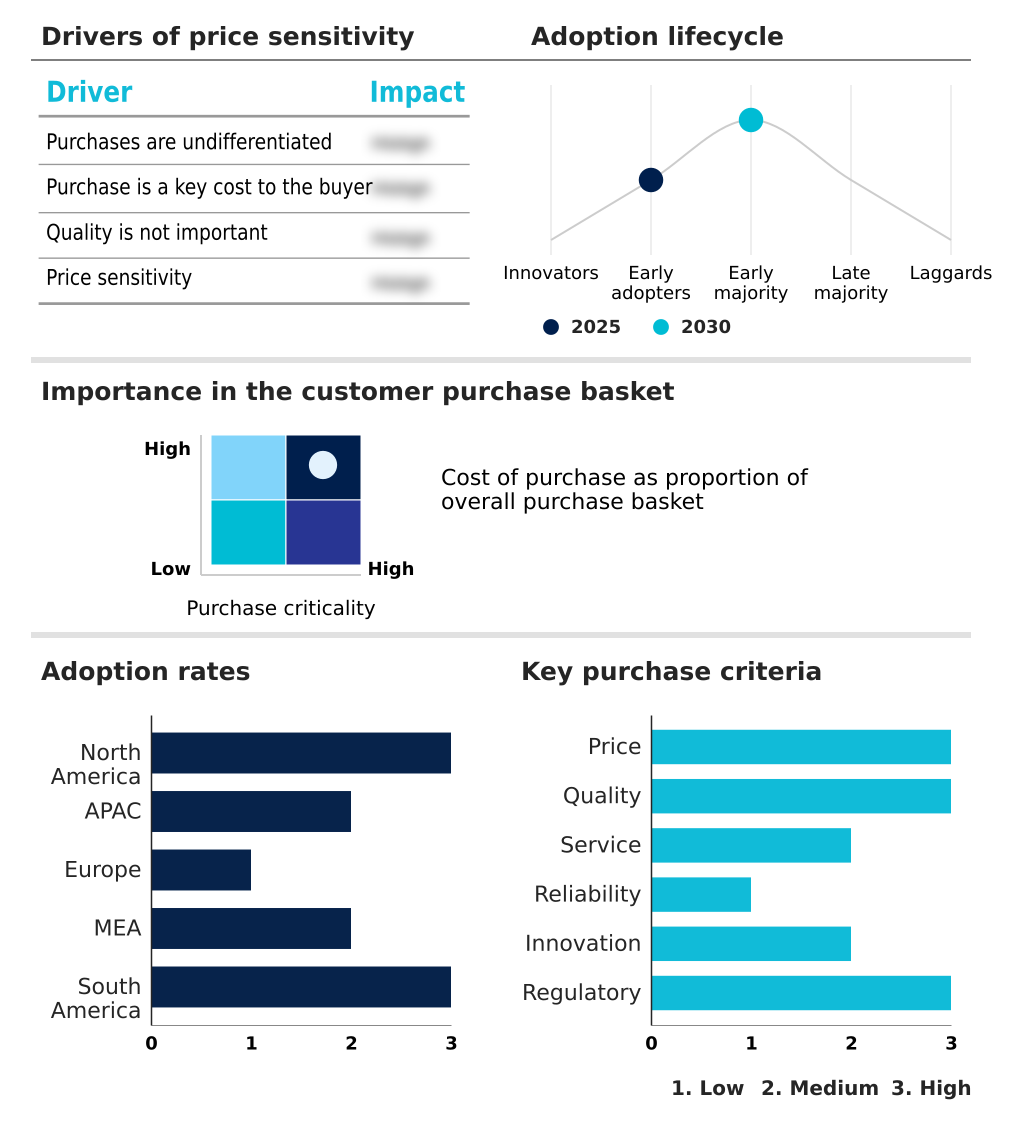
Customer Landscape of Business Intelligence (BI) Industry
Competitive Landscape
Companies are implementing various strategies, such as strategic alliances, business intelligence (bi) market forecast, partnerships, mergers and acquisitions, geographical expansion, and product/service launches, to enhance their presence in the industry.
Alteryx Inc. - Offerings include interactive dashboards, business reporting, and data visualization across large-scale cloud datasets, delivered via a highly reliable, scalable, and low-cost infrastructure platform.
The industry research and growth report includes detailed analyses of the competitive landscape of the market and information about key companies, including:
- Alteryx Inc.
- Amazon Web Services Inc.
- Domo Inc.
- GoodData Corp.
- Google LLC
- IBM Corp.
- Idera Inc.
- Infor Inc.
- Microsoft Corp.
- Oracle Corp.
- QlikTech International AB
- Salesforce Inc.
- SAP SE
- SAS Institute Inc.
- Sisense Ltd.
- Teradata Corp.
- ThoughtSpot Inc.
- TIBCO Software Inc.
- Zoho Corp. Pvt. Ltd.
Qualitative and quantitative analysis of companies has been conducted to help clients understand the wider business environment as well as the strengths and weaknesses of key industry players. Data is qualitatively analyzed to categorize companies as pure play, category-focused, industry-focused, and diversified; it is quantitatively analyzed to categorize companies as dominant, leading, strong, tentative, and weak.
Recent Development and News in Business intelligence (bi) market
- In March, 2025, Salesforce Inc. launched Tableau 2025.2, integrating Tableau Pulse metrics directly into Google Workspace applications to embed data-driven insights within daily productivity tools.
- In April, 2025, Databricks Ventures made a strategic investment in Omni to enhance integration with the Databricks Data Intelligence Platform, improving analytics performance on data lakehouses for ICT firms.
- In November, 2025, IBM Corp. announced the general availability of IBM Cognos Analytics 12.1.x, providing enterprise-grade stability and advanced reporting for organizations requiring long-term on-premises support.
- In December, 2025, Salesforce Inc. announced the Tableau 2026 release, which featured the full integration of Tableau Pulse into the mobile experience to deliver personalized metrics and automated insights to mobile devices.
Dive into Technavio’s robust research methodology, blending expert interviews, extensive data synthesis, and validated models for unparalleled Business Intelligence (BI) Market insights. See full methodology.
| Market Scope | |
|---|---|
| Page number | 305 |
| Base year | 2025 |
| Historic period | 2020-2024 |
| Forecast period | 2026-2030 |
| Growth momentum & CAGR | Accelerate at a CAGR of 10.4% |
| Market growth 2026-2030 | USD 19312.7 million |
| Market structure | Fragmented |
| YoY growth 2025-2026(%) | 9.1% |
| Key countries | US, Canada, Mexico, China, Japan, India, Australia, South Korea, Indonesia, Germany, UK, France, Italy, Spain, The Netherlands, Saudi Arabia, UAE, South Africa, Qatar, Egypt, Brazil, Argentina and Colombia |
| Competitive landscape | Leading Companies, Market Positioning of Companies, Competitive Strategies, and Industry Risks |
Research Analyst Overview
- The business intelligence (BI) market is defined by a fundamental shift toward automated, predictive ecosystems built on a unified analytics platform. The integration of agentic analytics with conversational interfaces, powered by retrieval augmented generation, is making sophisticated analysis accessible to non-technical users.
- This trend is underpinned by the move to a comprehensive business data fabric, a key boardroom topic as it directly impacts enterprise-wide risk posture and has been shown to reduce data processing times by over 30%.
- Core technologies like direct-lake data processing and advanced semantic models are enabling translytical task flows where users can act on insights within a single environment. The market is also seeing broader adoption of cloud BI, mobile BI, and social BI, supported by robust data fabric architectures that handle real-time data connectivity from live data sources.
- Governance is evolving with automated data stewardship and features like the data product trust score, ensuring transparency and accountability standards are met across multi-cloud environments while managing challenges like data sovereignty. From predictive maintenance in manufacturing to real-time stock alignment in retail, BI is becoming an active participant in operational execution.
What are the Key Data Covered in this Business Intelligence (BI) Market Research and Growth Report?
-
What is the expected growth of the Business Intelligence (BI) Market between 2026 and 2030?
-
USD 19.31 billion, at a CAGR of 10.4%
-
-
What segmentation does the market report cover?
-
The report is segmented by End-user (BFSI, Healthcare, ICT, Government, and Others), Deployment (Cloud, and On-premises), Type (Traditional BI, Cloud BI, Mobile BI, and Social BI) and Geography (North America, APAC, Europe, Middle East and Africa, South America)
-
-
Which regions are analyzed in the report?
-
North America, APAC, Europe, Middle East and Africa and South America
-
-
What are the key growth drivers and market challenges?
-
Integration of generative AI and agentic workflows, Escalating security and privacy risks in agentic analytics
-
-
Who are the major players in the Business Intelligence (BI) Market?
-
Alteryx Inc., Amazon Web Services Inc., Domo Inc., GoodData Corp., Google LLC, IBM Corp., Idera Inc., Infor Inc., Microsoft Corp., Oracle Corp., QlikTech International AB, Salesforce Inc., SAP SE, SAS Institute Inc., Sisense Ltd., Teradata Corp., ThoughtSpot Inc., TIBCO Software Inc. and Zoho Corp. Pvt. Ltd.
-
Market Research Insights
- The business intelligence (BI) market's dynamics are shaped by a strategic shift toward proactive and automated intelligence. Organizations leveraging proactive metric delivery have seen critical issue response times improve by up to 50%, a direct result of moving away from manual dashboard monitoring.
- The implementation of institutionalized data trust through automated data governance is critical, with early adopters reporting a 30% reduction in data-related errors and enhanced compliance. Real-time data integration capabilities are no longer optional; they are essential for maintaining a competitive edge.
- The focus is on creating a single source of truth through better data quality management, which underpins all advanced analytical functions. This push towards pervasive and embedded insights ensures that decision-making is data-informed at every level of an organization, fostering a more agile and responsive operational model.
We can help! Our analysts can customize this business intelligence (bi) market research report to meet your requirements.
 RIA -
RIA -