

Chemical Mechanical Planarization (CMP) Equipment Market Size 2026-2030
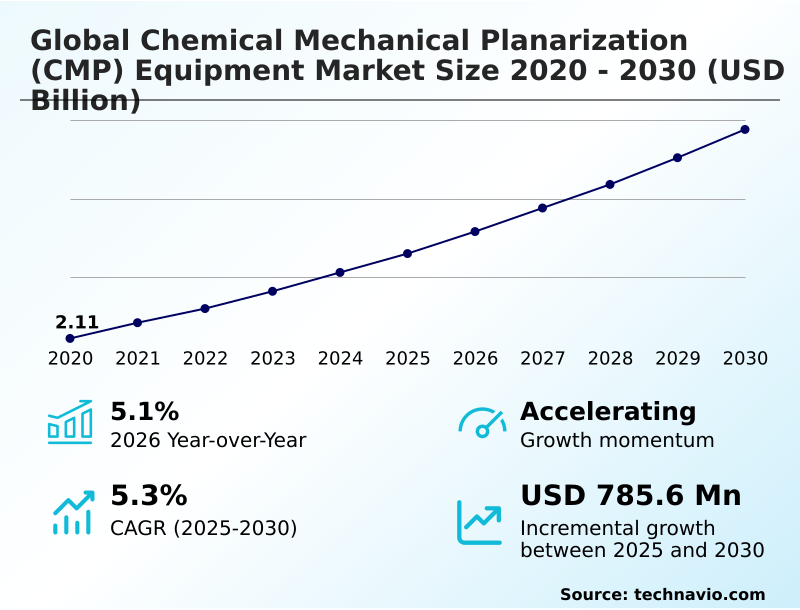
The chemical mechanical planarization (cmp) equipment market size is valued to increase by USD 785.6 million, at a CAGR of 5.3% from 2025 to 2030. Gate-all-around transistor architectures and 2-nanometer node transition will drive the chemical mechanical planarization (cmp) equipment market.
Major Market Trends & Insights
- APAC dominated the market and accounted for a 39.1% growth during the forecast period.
- By Application - Foundries segment was valued at USD 1.67 billion in 2024
- By Type - 300mm segment accounted for the largest market revenue share in 2024
Market Size & Forecast
- Market Opportunities: USD 1.33 billion
- Market Future Opportunities: USD 785.6 million
- CAGR from 2025 to 2030 : 5.3%
Market Summary
- The chemical mechanical planarization (CMP) equipment market is undergoing a critical evolution, driven by the semiconductor industry's relentless push toward smaller, more complex chip architectures. Demand is shaped by the need for atomic-level surface precision in fabricating advanced logic and memory devices. Key applications involve preparing wafer surfaces for multi-layer interconnects and ensuring the flawless construction of 3D device structures.
- A core trend is the integration of advanced metrology and process control systems directly into polishing platforms, enabling real-time adjustments that significantly reduce defects. For instance, in a high-volume manufacturing environment, integrated platforms can reduce wafer-level defectivity by up to 20% compared to conventional systems, directly improving production yields.
- This technological pivot from simple mechanical polishing to data-driven surface engineering is fundamental. However, the industry grapples with the technical challenges of planarizing new materials and complex topographies associated with gate-all-around transistors and advanced packaging, demanding continuous innovation in both equipment and consumable technologies like specialized slurries and pads.
- The market's trajectory is tied to the industry's ability to balance performance advancements with manufacturing cost-efficiency and sustainability mandates.
What will be the Size of the Chemical Mechanical Planarization (CMP) Equipment Market during the forecast period?
Get Key Insights on Market Forecast (PDF) Get Free Sample
How is the Chemical Mechanical Planarization (CMP) Equipment Market Segmented?
The chemical mechanical planarization (cmp) equipment industry research report provides comprehensive data (region-wise segment analysis), with forecasts and estimates in "USD million" for the period 2026-2030, as well as historical data from 2020-2024 for the following segments.
- Application
- Foundries
- IDMs
- Type
- 300mm
- 200mm
- 150mm
- Product type
- CMP equipment
- CMP consumables
- Geography
- APAC
- China
- South Korea
- Japan
- North America
- US
- Canada
- Mexico
- Europe
- Germany
- France
- UK
- South America
- Brazil
- Argentina
- Middle East and Africa
- Israel
- UAE
- Saudi Arabia
- Rest of World (ROW)
- APAC
By Application Insights
The foundries segment is estimated to witness significant growth during the forecast period.
The foundries segment is pivotal, driven by fabless semiconductor companies outsourcing chip fabrication. This segment's expansion relies on achieving nanometer-scale planarization for advanced process nodes, where through-silicon via (TSV) technology is crucial.
Operations require multi-platen polishing systems equipped with in situ metrology and real-time endpoint detection to ensure wafer surface uniformity. Effective multi-zone pressure control and the use of advanced colloidal silica slurry are standard for optimizing these processes.
Predictive maintenance protocols are essential, reducing equipment downtime by over 25% and ensuring the necessary chemical etching synergy for complex architectures.
The evolution toward advanced nodes intensifies the need for precise nanoparticle slurry composition to manage shallow trench isolation (STI), cobalt interconnects, and inter-layer dielectric (ILD) polishing, defining the sector’s high-precision manufacturing landscape.
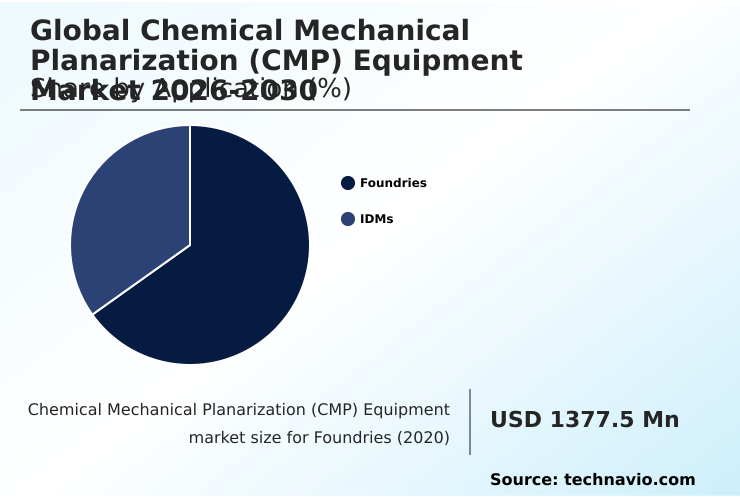
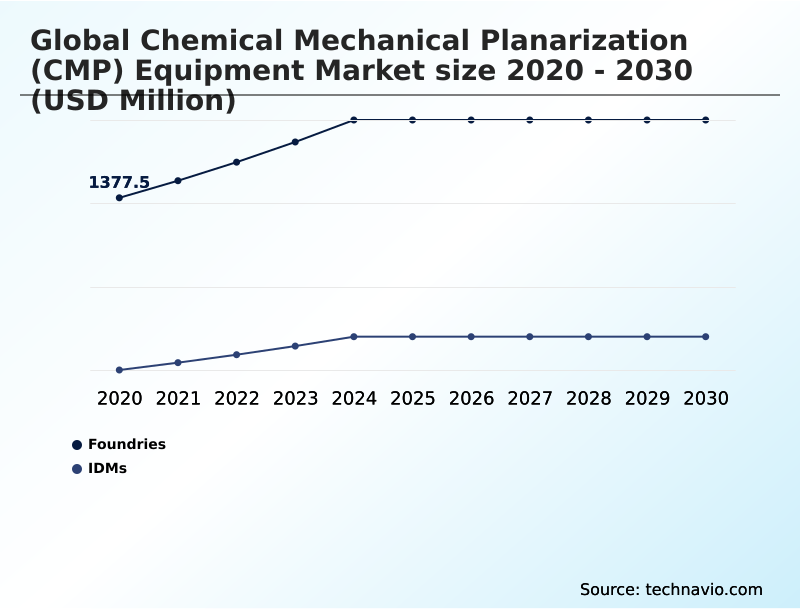
The Foundries segment was valued at USD 1.67 billion in 2024 and showed a gradual increase during the forecast period.
Regional Analysis
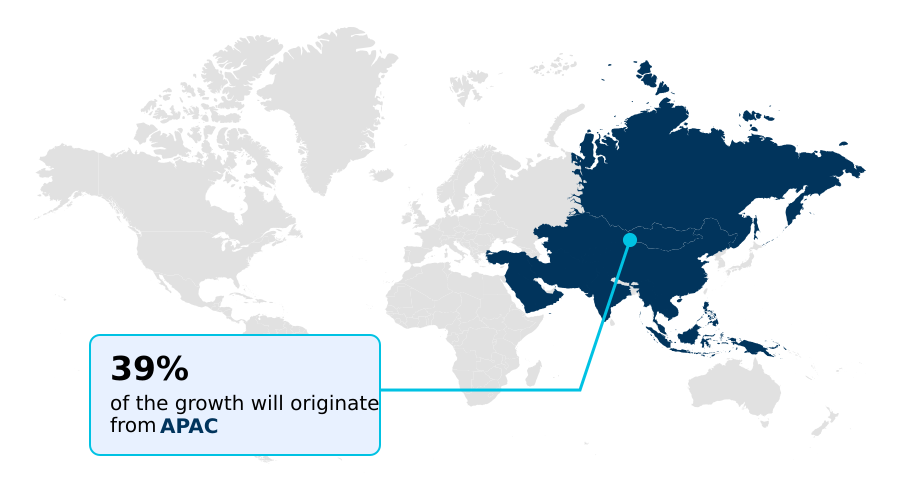
APAC is estimated to contribute 39.1% to the growth of the global market during the forecast period.Technavio’s analysts have elaborately explained the regional trends and drivers that shape the market during the forecast period.
See How Chemical Mechanical Planarization (CMP) Equipment Market Demand is Rising in APAC Get Free Sample
The APAC region leads the global chemical mechanical planarization (CMP) equipment market, contributing over 39% of the incremental growth, driven by its dense concentration of advanced foundries.
Regional leadership is sustained by the high-volume production of devices requiring sophisticated fan-out wafer-level packaging (FOWLP) and advanced wafer thinning systems.
Key manufacturing hubs in the region are rapidly adopting high-numerical aperture EUV lithography, which demands exceptional atomic-scale flatness and precise copper interconnects, all facilitated by tools with advanced endpoint detection.
In contrast, North America and Europe, which account for a combined 46% of market opportunity, are focusing on government-backed initiatives to onshore critical semiconductor wafer processing. This strategic shift is creating demand for CMP technologies that address ultra-low topography variation.
Advanced semiconductor manufacturing metrology shows that new systems can achieve a 20% tighter tolerance on surface roughness measurement, which is essential for next-generation oxide layer planarization and tungsten CMP processes.
Market Dynamics
Our researchers analyzed the data with 2025 as the base year, along with the key drivers, trends, and challenges. A holistic analysis of drivers will help companies refine their marketing strategies to gain a competitive advantage.
- Strategic decisions in the semiconductor industry are increasingly influenced by the total cost of ownership for CMP platforms, especially for leading-edge applications. The deployment of CMP equipment for 300mm wafer fabrication remains the industry standard, but the focus is now on optimizing the CMP process for gate-all-around architectures.
- Innovations in hybrid bonding planarization techniques are critical for advanced packaging, which also drives demand for specialized slurry solutions for silicon carbide polishing. To enhance yield, fabs are implementing real-time monitoring in CMP systems, specifically to address challenges like reducing defects in TSV planarization.
- Success depends on sophisticated endpoint detection for multi-material stacks and the use of high-selectivity slurry for 3D NAND. As the industry advances, CMP consumables for sub-2nm nodes must meet stringent quality standards, aligning with complex advanced packaging CMP requirements. This has spurred R&D in low-abrasion polishing for advanced nodes and metrology integration in CMP tools.
- Furthermore, throughput optimization in single-wafer polishers is a key performance indicator. While new equipment is essential, the market for CMP equipment refurbishment and upgrades is also growing. On the sustainability front, the implementation of sustainable slurry recycling systems is becoming a priority, alongside innovations in polishing pad design for ultra-low topography.
- Ultimately, achieving precise CMP process control for AI accelerators defines competitive advantage, which is significantly more capital-intensive than processes for mature nodes. This landscape also shows how CMP for heterogeneous integration and addressing planarization challenges in FOWLP are shaping future investments.
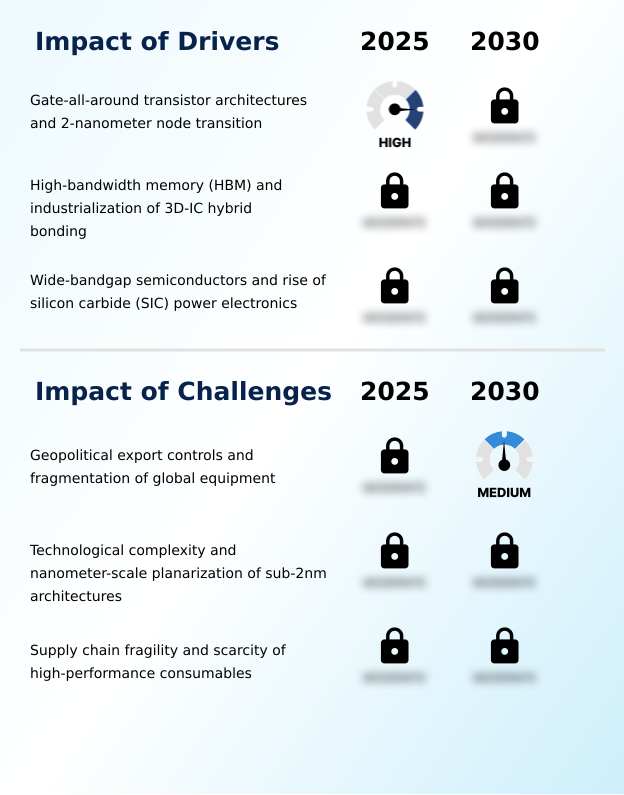
What are the key market drivers leading to the rise in the adoption of Chemical Mechanical Planarization (CMP) Equipment Industry?
- The transition to gate-all-around (GAA) transistor architectures and the push toward the 2-nanometer process node are primary market drivers.
- Market drivers are centered on the industry-wide transition to advanced transistor designs and materials. The adoption of gate-all-around (GAA) transistor technology, characterized by complex nanosheet and nanowire designs, necessitates a higher number of precision polishing steps.
- This transition has boosted demand for advanced single-wafer polishers capable of handling new sacrificial materials and selective liners with a 20% improvement in material removal rate control. The expansion of high-bandwidth memory (HBM) and 3D NAND structures also fuels demand.
- Furthermore, the growing use of silicon carbide (SiC) power electronics creates a need for specialized CMP processes.
- Effective interconnect planarization is managed through sophisticated process control software that enables dynamic polishing pressure optimization and precise edge profile control, improving final device yield by up to 5%.
What are the market trends shaping the Chemical Mechanical Planarization (CMP) Equipment Industry?
- The market is increasingly shaped by the proliferation of 3D integration and hybrid bonding techniques in advanced packaging nodes. This shift drives demand for CMP solutions capable of delivering atomic-scale surface precision.
- A primary trend reshaping the chemical mechanical planarization (CMP) equipment market is the move toward heterogeneous 3D integration, which depends on flawless 3D-IC hybrid bonding. This requires sophisticated multi-material polishing techniques to achieve perfect metal-to-metal and dielectric-to-dielectric bonding.
- Innovations in low-abrasive slurry management and polishing pad conditioners are critical for improving planarization efficiency, with advanced systems demonstrating a 15% reduction in consumable usage. The adoption of automated material handling in back-end-of-line processing has also improved throughput by over 10%.
- As processes become more complex, managing wafer defectivity is paramount, leading to advancements in post-CMP cleaning and the exploration of new methods like abrasive-free polishing and electro-chemical mechanical deposition to meet stringent surface quality requirements.
What challenges does the Chemical Mechanical Planarization (CMP) Equipment Industry face during its growth?
- Market growth faces significant headwinds from geopolitical export controls and the resulting fragmentation of the global equipment supply chain.
- The chemical mechanical planarization (CMP) equipment market faces significant challenges from supply chain complexities and technological hurdles. The dependency on a limited number of suppliers for high-performance consumables and critical wafer fab equipment creates vulnerabilities. For instance, shortages in fixed-abrasive pads have led to production delays of up to four weeks for some manufacturers.
- Additionally, achieving uniform slurry distribution uniformity across 300mm wafers for sub-2nm architectures is a persistent technical problem. The need for advanced integrated cleaning modules, slurry delivery systems, and energy-intensive dry vacuum pumps and plasma abatement systems adds to the high capital cost.
- Optimizing consumable lifetime monitoring, wafer carrier design, and platen temperature control remains a key focus to mitigate these operational and financial pressures, which can increase the cost of ownership by 10-15%.
Exclusive Technavio Analysis on Customer Landscape
The chemical mechanical planarization (cmp) equipment market forecasting report includes the adoption lifecycle of the market, covering from the innovator’s stage to the laggard’s stage. It focuses on adoption rates in different regions based on penetration. Furthermore, the chemical mechanical planarization (cmp) equipment market report also includes key purchase criteria and drivers of price sensitivity to help companies evaluate and develop their market growth analysis strategies.
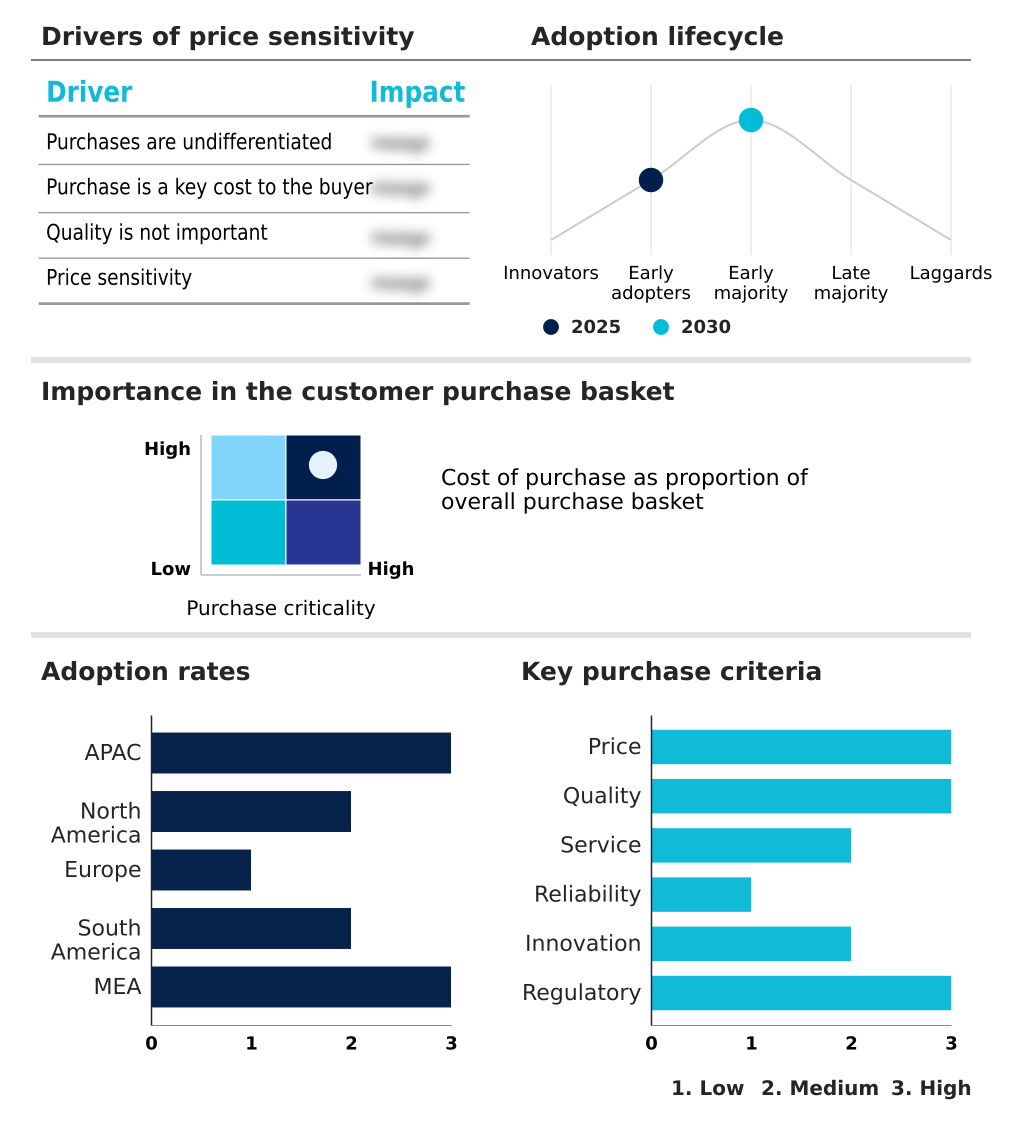
Customer Landscape of Chemical Mechanical Planarization (CMP) Equipment Industry
Competitive Landscape
Companies are implementing various strategies, such as strategic alliances, chemical mechanical planarization (cmp) equipment market forecast, partnerships, mergers and acquisitions, geographical expansion, and product/service launches, to enhance their presence in the industry.
3M Co. - Offerings include specialized chemical mechanical planarization (CMP) equipment, encompassing advanced polishing pads, slurries, and consumables tailored for high-precision semiconductor wafer processing.
The industry research and growth report includes detailed analyses of the competitive landscape of the market and information about key companies, including:
- 3M Co.
- Alps Alpine Co. Ltd.
- AP and S International GmbH
- Applied Materials Inc.
- Axus Technology
- BASF SE
- DISCO Corp.
- Dow Chemical Co.
- DuPont de Nemours Inc.
- Ebara Corp.
- Entegris Inc.
- Entrepix Inc.
- Kemet International Ltd.
- Lapmaster Wolters
- Logitech Ltd.
- Merck KGaA
- Musashino Denshi Inc.
- Nachi Fujikoshi Corp.
- SpeedFam Co. Ltd.
- Tokyo Seimitsu Co. Ltd.
Qualitative and quantitative analysis of companies has been conducted to help clients understand the wider business environment as well as the strengths and weaknesses of key industry players. Data is qualitatively analyzed to categorize companies as pure play, category-focused, industry-focused, and diversified; it is quantitatively analyzed to categorize companies as dominant, leading, strong, tentative, and weak.
Recent Development and News in Chemical mechanical planarization (cmp) equipment market
- In October 2024, Ebara Corp. launched its F-REX300XA model, a next-generation CMP system specifically engineered to support high-volume manufacturing of devices using hybrid bonding technology, enhancing throughput for advanced packaging applications.
- In January 2025, Applied Materials Inc. announced a strategic collaboration with a leading logic foundry to accelerate the development and commercialization of gate-all-around (GAA) process flows for the upcoming 2-nanometer node, focusing on integrated materials solutions.
- In March 2025, DuPont de Nemours Inc. introduced a new series of high-selectivity slurries designed to address the complex multi-layer stacks in 3D NAND memory, enabling finer defect control and improved planarization efficiency.
- In May 2025, Entegris Inc. received a key patent for its innovative slurry filtration system that improves particle removal efficiency by 15%, addressing critical microcontamination challenges in sub-3nm semiconductor manufacturing processes.
Dive into Technavio’s robust research methodology, blending expert interviews, extensive data synthesis, and validated models for unparalleled Chemical Mechanical Planarization (CMP) Equipment Market insights. See full methodology.
| Market Scope | |
|---|---|
| Page number | 284 |
| Base year | 2025 |
| Historic period | 2020-2024 |
| Forecast period | 2026-2030 |
| Growth momentum & CAGR | Accelerate at a CAGR of 5.3% |
| Market growth 2026-2030 | USD 785.6 million |
| Market structure | Fragmented |
| YoY growth 2025-2026(%) | 5.1% |
| Key countries | China, South Korea, Japan, India, Australia, Indonesia, US, Canada, Mexico, Germany, France, UK, Italy, Spain, The Netherlands, Brazil, Argentina, Chile, Israel, UAE, Saudi Arabia, South Africa and Turkey |
| Competitive landscape | Leading Companies, Market Positioning of Companies, Competitive Strategies, and Industry Risks |
Research Analyst Overview
- The chemical mechanical planarization (CMP) equipment market is fundamentally shaped by the pursuit of atomic-scale flatness, a requirement for manufacturing next-generation semiconductors. The industry's pivot to gate-all-around (GAA) transistor structures and sub-2nm architectures necessitates innovations in nanometer-scale planarization.
- This shift drives demand for multi-platen polishing systems with integrated cleaning modules, advanced endpoint detection, and in situ metrology for real-time process feedback. Key boardroom decisions now center on investments in technologies that support 3D-IC hybrid bonding and high-bandwidth memory (HBM) production, which depend on flawless metal-to-metal and dielectric-to-dielectric bonding.
- Consequently, the use of specialized high-performance consumables, including sacrificial materials and selective liners for multi-material polishing, is non-negotiable. Systems supporting through-silicon via (TSV) and fan-out wafer-level packaging (FOWLP) for back-end-of-line processing are critical. The introduction of nanosheet and nanowire designs requires superior multi-zone pressure control and wafer surface uniformity, achieved with advanced colloidal silica slurry and polishing pad conditioners.
- For instance, adoption of new wafer thinning systems for silicon carbide (SiC) power electronics and 3D NAND structures has been shown to reduce process variability by 30%.
- This landscape is further defined by high-numerical aperture EUV lithography requirements, a focus on low-abrasive slurry management, and the use of cryogenic cleaning technologies, dry vacuum pumps, and plasma abatement systems to improve sustainability in semiconductor wafer processing.
What are the Key Data Covered in this Chemical Mechanical Planarization (CMP) Equipment Market Research and Growth Report?
-
What is the expected growth of the Chemical Mechanical Planarization (CMP) Equipment Market between 2026 and 2030?
-
USD 785.6 million, at a CAGR of 5.3%
-
-
What segmentation does the market report cover?
-
The report is segmented by Application (Foundries, and IDMs), Type (300mm, 200mm, and 150mm), Product Type (CMP equipment, and CMP consumables) and Geography (APAC, North America, Europe, South America, Middle East and Africa)
-
-
Which regions are analyzed in the report?
-
APAC, North America, Europe, South America and Middle East and Africa
-
-
What are the key growth drivers and market challenges?
-
Gate-all-around transistor architectures and 2-nanometer node transition, Geopolitical export controls and fragmentation of global equipment
-
-
Who are the major players in the Chemical Mechanical Planarization (CMP) Equipment Market?
-
3M Co., Alps Alpine Co. Ltd., AP and S International GmbH, Applied Materials Inc., Axus Technology, BASF SE, DISCO Corp., Dow Chemical Co., DuPont de Nemours Inc., Ebara Corp., Entegris Inc., Entrepix Inc., Kemet International Ltd., Lapmaster Wolters, Logitech Ltd., Merck KGaA, Musashino Denshi Inc., Nachi Fujikoshi Corp., SpeedFam Co. Ltd. and Tokyo Seimitsu Co. Ltd.
-
Market Research Insights
- The chemical mechanical planarization (CMP) equipment market is defined by a dynamic interplay of technological advancement and operational efficiency. The adoption of single-wafer polishers is accelerating, with facilities reporting a 15% improvement in process uniformity compared to older batch systems. Innovations in process control software are central, enabling real-time adjustments to polishing pressure optimization and material removal rate.
- This has led to a significant reduction in wafer defectivity, with some fabs achieving a 10% decrease in scrap rate. The focus on interconnect planarization for advanced nodes drives demand for sophisticated edge profile control.
- As a result, the integration of automated material handling and predictive maintenance protocols is becoming standard, contributing to higher overall equipment effectiveness and supporting the industry's complex manufacturing requirements.
We can help! Our analysts can customize this chemical mechanical planarization (cmp) equipment market research report to meet your requirements.
 RIA -
RIA -