

Colorants Market Size 2026-2030
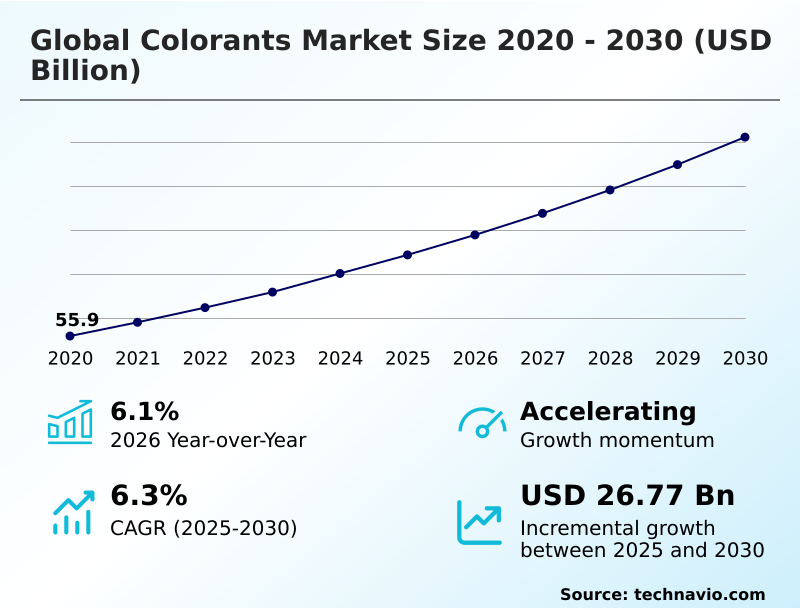
The colorants market size is valued to increase by USD 26.77 billion, at a CAGR of 6.3% from 2025 to 2030. Robust expansion in global packaging sector will drive the colorants market.
Major Market Trends & Insights
- APAC dominated the market and accounted for a 39.2% growth during the forecast period.
- By Type - Pigment segment was valued at USD 31.12 billion in 2024
- By End-user - Paints and coatings segment accounted for the largest market revenue share in 2024
Market Size & Forecast
- Market Opportunities: USD 45.21 billion
- Market Future Opportunities: USD 26.77 billion
- CAGR from 2025 to 2030 : 6.3%
Market Summary
- The colorants market is a dynamic and essential industry, providing the foundational materials for visual appeal and functional properties across countless sectors. Growth is driven by expanding end-use markets like packaging and construction, where color is critical for branding, safety, and aesthetics. Key trends are reshaping the competitive landscape, most notably the significant pivot towards sustainability.
- This shift promotes the adoption of natural colorants and bio-based colorants over traditional synthetic options, particularly in food and cosmetics. Simultaneously, technological advancement continues to push performance boundaries with the development of high performance pigments and specialty dyes that offer superior durability and unique visual effects.
- For instance, an automotive supplier must navigate these dual pressures by investing in R&D for a new line of water-borne colorants. The goal is to develop a colorant formulation that provides the brilliant finish of legacy solvent-borne colorants while complying with stringent VOC emission standards.
- This requires balancing performance attributes like lightfastness and weather resistance with the technical challenges of pigment dispersion in aqueous systems. Intense market competition and raw material price volatility add further complexity, compelling manufacturers to focus on innovation and operational efficiency to maintain margins.
What will be the Size of the Colorants Market during the forecast period?
Get Key Insights on Market Forecast (PDF) Get Free Sample
How is the Colorants Market Segmented?
The colorants industry research report provides comprehensive data (region-wise segment analysis), with forecasts and estimates in "USD million" for the period 2026-2030, as well as historical data from 2020-2024 for the following segments.
- Type
- Pigment
- Dyes
- Color concentrates
- Others
- End-user
- Paints and coatings
- Textile
- Personal care
- Food
- Others
- Product type
- Solvent‑borne colorants
- Water‑borne colorants
- Natural and bio‑based colorants
- Geography
- APAC
- China
- India
- Japan
- North America
- US
- Canada
- Mexico
- Europe
- Germany
- France
- Italy
- South America
- Brazil
- Argentina
- Middle East and Africa
- Saudi Arabia
- UAE
- South Africa
- Rest of World (ROW)
- APAC
By Type Insights
The pigment segment is estimated to witness significant growth during the forecast period.
The pigment segment is defined by materials that provide color through insoluble particulate matter. These materials, including both organic pigments and inorganic options like titanium dioxide pigments, are foundational to achieving desired aesthetics and functionality.
Success depends on achieving optimal pigment dispersion within a medium to ensure consistent chromaticity and opacity. The market also includes advanced forms like color concentrates and functional pyrogenic materials that modify surface properties.
High standards for performance, such as lightfastness and color fastness, are critical, with advanced color matching technologies ensuring that over 98% of production batches meet precise specifications.
This focus on quality and performance underscores the segment's role in delivering value beyond basic coloration.
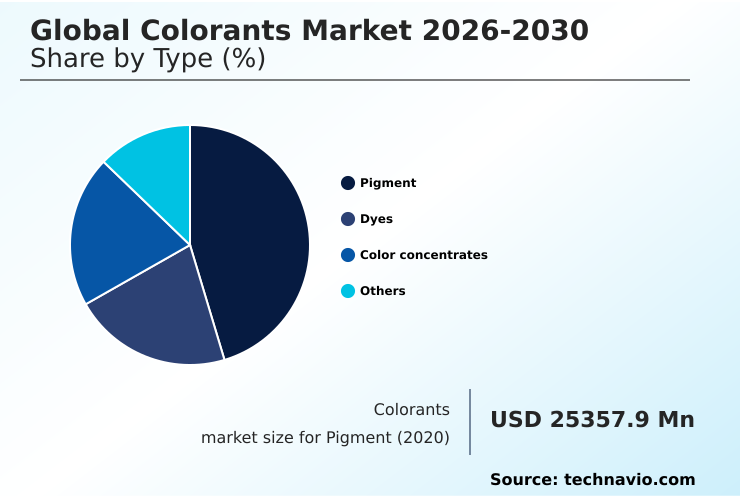
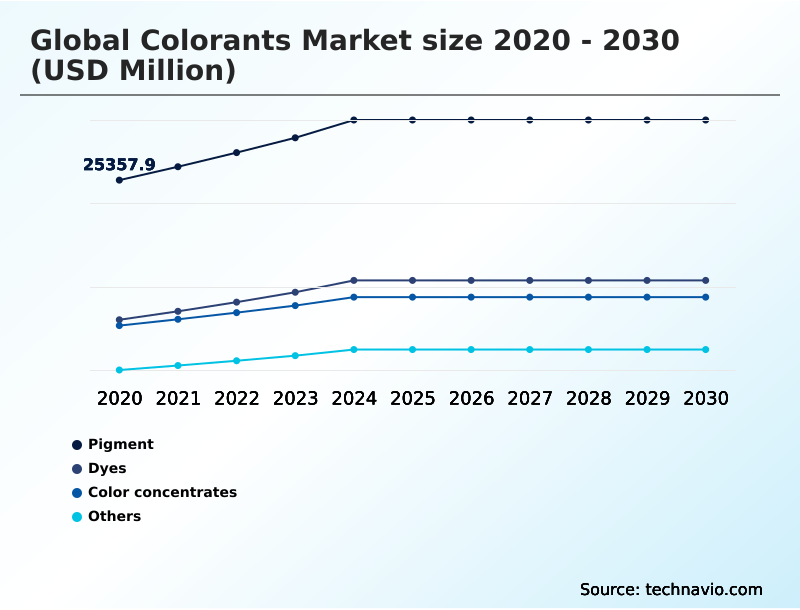
The Pigment segment was valued at USD 31.12 billion in 2024 and showed a gradual increase during the forecast period.
Regional Analysis
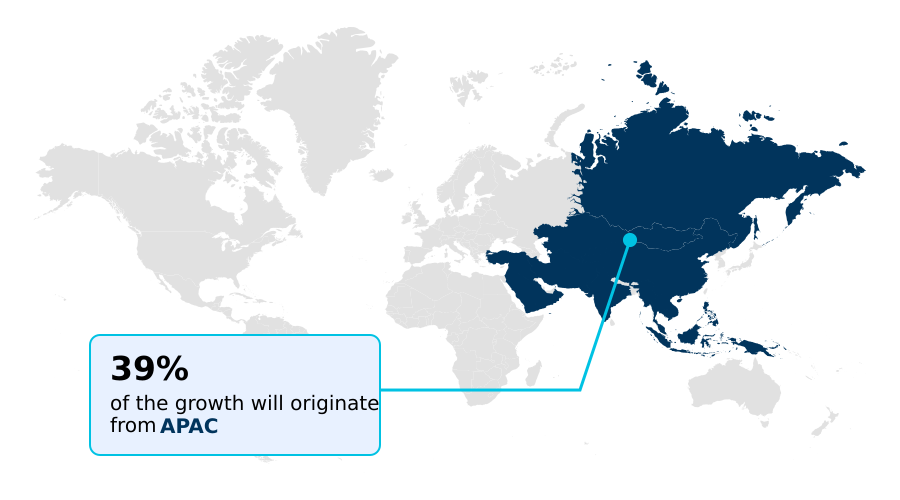
APAC is estimated to contribute 39.2% to the growth of the global market during the forecast period.Technavio’s analysts have elaborately explained the regional trends and drivers that shape the market during the forecast period.
See How Colorants Market Demand is Rising in APAC Get Free Sample
The geographic landscape of the colorants market is defined by regional specialization and regulatory divergence. APAC leads in production volume, contributing over 39% of incremental growth, driven by its manufacturing prowess in textiles and plastics.
Europe remains a hub for innovation in high-value products like pearlescent pigments and metallic effect pigments for industrial coatings, governed by stringent REACH regulations that increase colorant formulation complexity.
North America demonstrates strong demand for specialty applications, including FDA-approved food grade colorants and cosmetic colorants, where compliance can represent up to 15% of development costs.
South America is emerging as a key source for natural colorants, capitalizing on its biodiversity to serve global clean-label trends.
Market Dynamics
Our researchers analyzed the data with 2025 as the base year, along with the key drivers, trends, and challenges. A holistic analysis of drivers will help companies refine their marketing strategies to gain a competitive advantage.
- The modern colorants market is defined by specialization, with manufacturers developing highly tailored solutions for specific industrial needs. The demand for high performance pigments for automotive coatings continues to push innovation toward materials offering superior durability and complex finishes. Simultaneously, consumer-facing industries are driving change.
- The widespread call for clean-label products fuels the development of natural colorants for food and beverage applications, while the fashion industry seeks eco-friendly dyes for the textile industry to meet sustainability mandates. Navigating regulatory compliance for cosmetic pigments remains a critical and resource-intensive activity for suppliers in the personal care space.
- In packaging, there is a strong focus on both aesthetics and circularity, leading to advanced masterbatch solutions for plastic packaging and bio-based colorants for sustainable packaging. The construction sector demands robust products, such as uv stable pigments for architectural coatings and infrared reflective pigments for cool roofing, which enhance building longevity and energy efficiency.
- Formulators of water-borne dispersions for printing inks are focused on achieving performance parity with traditional systems. This contrasts with legacy applications like solvent-borne dyes for leather finishing, where performance often still outweighs environmental concerns. The push to eliminate harmful substances is evident in the creation of heavy metal free inorganic pigments.
- For advanced manufacturing, thermally stable pigments for polymer processing and color concentrates for engineering plastics are essential. The market also sees innovation in lightfast dyes for technical textiles, low-voc colorants for industrial coatings, and food contact compliant masterbatches. Technology-driven applications require high purity pigments for electronic displays and special effect pigments for consumer electronics.
- The evolution toward a circular economy is further supported by new digital textile printing dye formulations that reduce waste and research into biodegradable colorants for single-use plastics, where adoption of such solutions can reduce landfill contributions from packaging by over 30% compared to non-degradable alternatives.
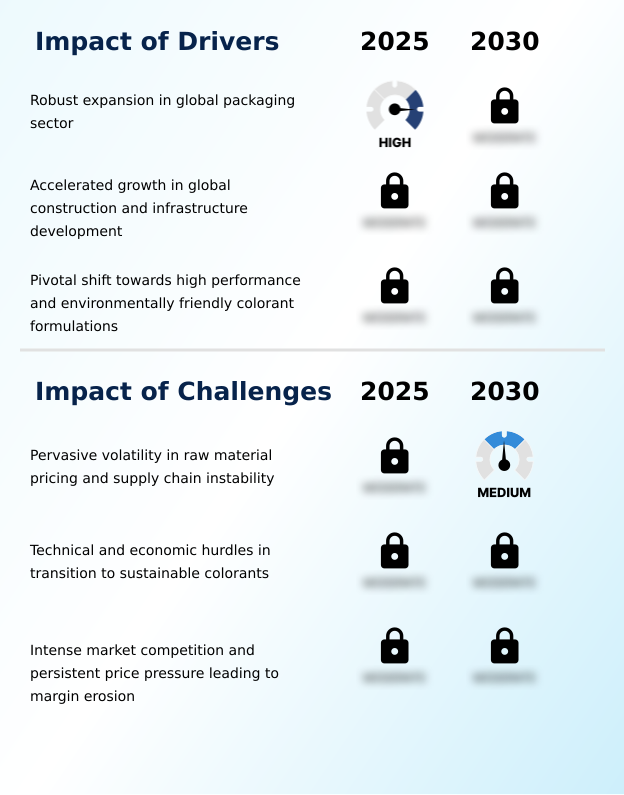
What are the key market drivers leading to the rise in the adoption of Colorants Industry?
- The robust expansion of the global packaging sector serves as a primary driver for market growth, fueling demand for a diverse palette of colorants used for branding and product differentiation.
- Growth in the market is propelled by robust expansion in end-use industries. The global construction boom fuels demand for architectural coatings, where durable iron oxide pigments and carbon black pigments are essential.
- The automotive sector's demand for finishes with complex effects and superior durability drives innovation in high performance pigments with controlled pigment particle size for flawless automotive coatings.
- The plastics industry relies heavily on masterbatches for efficient and consistent coloration, with formulations engineered for high thermal stability during processing.
- In textiles, reactive dyes remain crucial for achieving vibrant, lasting colors on natural fibers, with advancements improving substrate adhesion rates by over 15%, thereby reducing processing waste and cost.
What are the market trends shaping the Colorants Industry?
- The ascendancy of natural colorants represents a significant market trend. This structural shift is driven by increasing consumer demand for sustainable and clean-label products across multiple industries.
- The global colorants market is increasingly shaped by the push for sustainability and technological innovation. The adoption of natural colorants and bio-based colorants is accelerating, particularly in consumer-facing sectors, with some formulations achieving a 25% improvement in uv stability through advanced microencapsulation.
- Concurrently, demand for high-performance materials drives the development of specialty dyes and nano colorants that offer superior tinting strength and unique properties. The shift from solvent-based systems to water-borne colorants now accounts for a majority of the architectural coatings market.
- This evolution is also seen in textile dyeing and the formulation of digital printing inks, where technologies that reduce water usage by up to 90% are gaining traction, enhancing both efficiency and weather resistance.
What challenges does the Colorants Industry face during its growth?
- Pervasive volatility in raw material pricing and persistent supply chain instability present a key challenge to the industry's growth trajectory and profitability.
- Navigating the market involves significant challenges, primarily related to regulatory compliance and operational costs. The use of certain azo dyes is increasingly restricted, forcing reformulation efforts that can increase R&D expenses by 20-30%. In the textile industry, the application of disperse dyes, vat dyes, and acid dyes generates significant wastewater, making effluent treatment a major operational cost.
- The persistence of solvent-borne colorants in niche applications poses ongoing environmental concerns. Technical hurdles include managing dye solubility and preventing color migration in complex applications, which requires sophisticated color management systems and quality control, adding layers of complexity to production processes for many manufacturers.
Exclusive Technavio Analysis on Customer Landscape
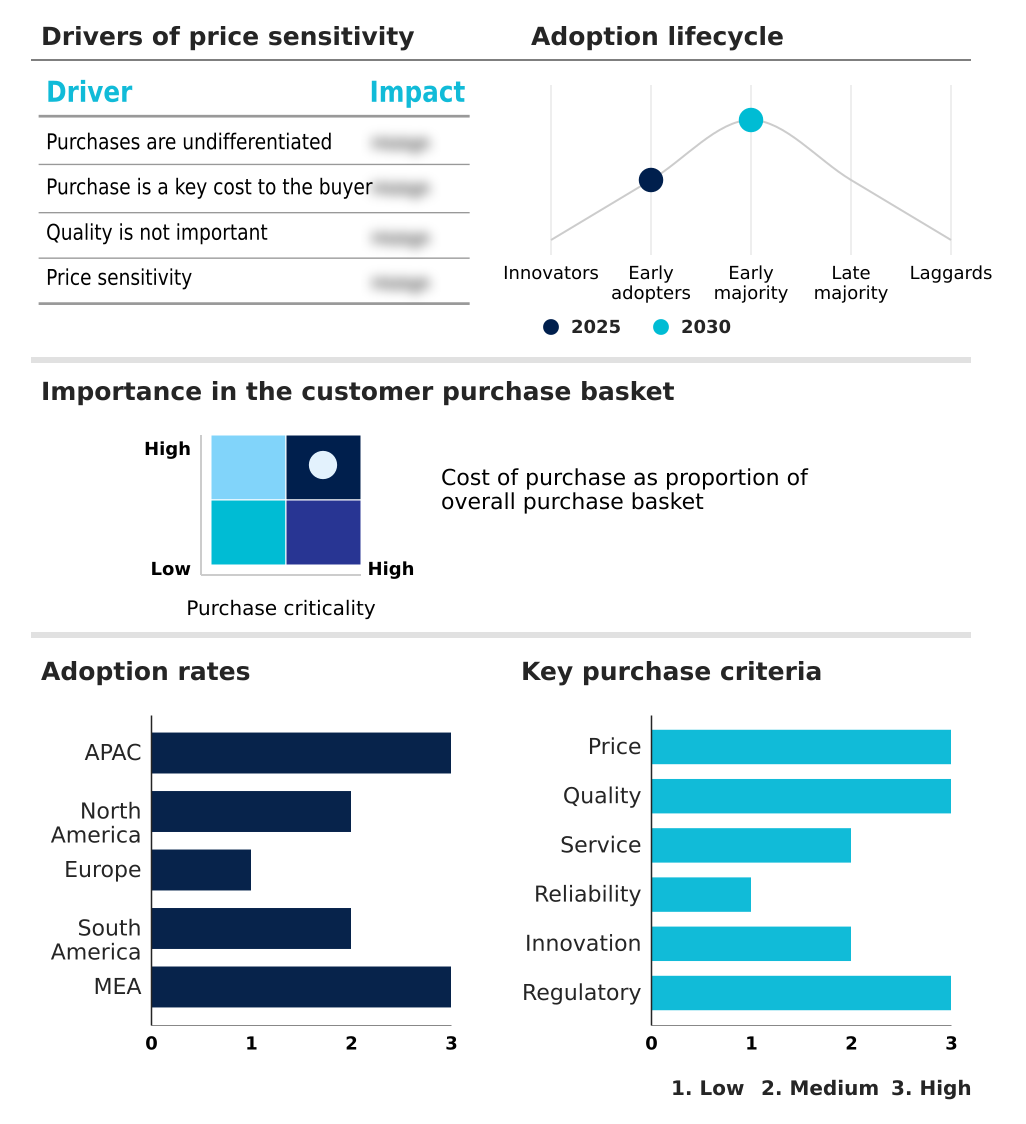
The colorants market forecasting report includes the adoption lifecycle of the market, covering from the innovator’s stage to the laggard’s stage. It focuses on adoption rates in different regions based on penetration. Furthermore, the colorants market report also includes key purchase criteria and drivers of price sensitivity to help companies evaluate and develop their market growth analysis strategies.
Customer Landscape of Colorants Industry
Competitive Landscape
Companies are implementing various strategies, such as strategic alliances, colorants market forecast, partnerships, mergers and acquisitions, geographical expansion, and product/service launches, to enhance their presence in the industry.
Ampacet Corp. - The market provides advanced color solutions, from high-performance pigments to specialty dyes, enabling product differentiation and functional enhancement across diverse industrial applications.
The industry research and growth report includes detailed analyses of the competitive landscape of the market and information about key companies, including:
- Ampacet Corp.
- Archroma Management
- Atul Ltd.
- Avient Corp.
- BASF SE
- Cabot Corp.
- ChromaScape LLC
- DIC Corp.
- DuPont de Nemours Inc.
- DyStar Group
- Flint Group
- Heubach Group
- Holland Colours NV
- Kiri Industries Ltd.
- Kronos Worldwide Inc.
- Lanxess AG
- LyondellBasell Industries NV
- Sensient Technologies Corp.
- Sudarshan Chemical Industries
- Vibrantz Technologies
Qualitative and quantitative analysis of companies has been conducted to help clients understand the wider business environment as well as the strengths and weaknesses of key industry players. Data is qualitatively analyzed to categorize companies as pure play, category-focused, industry-focused, and diversified; it is quantitatively analyzed to categorize companies as dominant, leading, strong, tentative, and weak.
Recent Development and News in Colorants market
- In October 2024, Avient Corp. launched its Colorant Chromatics Metallic Effect Pre-Colored Sulfone Formulations, developed with BASF to offer a sustainable alternative to painting high-performance polymers.
- In November 2024, Avient Corp. introduced its Colorant Chromatics Transcend Biocompatible PEEK Pre-Colored Compounds and Colorants, designed specifically for the rigorous demands of healthcare and medical applications.
- In February 2025, Sudarshan Chemical Industries Ltd. launched a new range of high-performance organic pigments for the coatings, plastics, and inks sectors, engineered for enhanced color strength and weather resistance.
- In March 2025, Dohler North America acquired Premier Juices to strengthen its portfolio of natural, fruit-based ingredients and colorants for the clean-label food and beverage market.
Dive into Technavio’s robust research methodology, blending expert interviews, extensive data synthesis, and validated models for unparalleled Colorants Market insights. See full methodology.
| Market Scope | |
|---|---|
| Page number | 334 |
| Base year | 2025 |
| Historic period | 2020-2024 |
| Forecast period | 2026-2030 |
| Growth momentum & CAGR | Accelerate at a CAGR of 6.3% |
| Market growth 2026-2030 | USD 26774.0 million |
| Market structure | Fragmented |
| YoY growth 2025-2026(%) | 6.1% |
| Key countries | China, India, Japan, South Korea, Australia, Indonesia, US, Canada, Mexico, Germany, France, Italy, UK, Spain, The Netherlands, Brazil, Argentina, Chile, Saudi Arabia, UAE, South Africa, Egypt and Nigeria |
| Competitive landscape | Leading Companies, Market Positioning of Companies, Competitive Strategies, and Industry Risks |
Research Analyst Overview
- The colorants market is evolving beyond simple coloration toward providing functional and sustainable material solutions. Boardroom-level strategy is now heavily influenced by the need to balance performance with stringent global regulations.
- The development of high performance pigments and specialty dyes is critical for penetrating high-value sectors, while the shift to water-borne colorants and bio-based colorants is a direct response to environmental pressures. Manufacturers must master complex colorant formulation techniques involving organic pigments, inorganic pigments, and even nano colorants to meet diverse application needs.
- The efficient use of masterbatches and color concentrates is key to operational excellence in plastics, where companies that optimize these systems see an average 15% reduction in material waste. The portfolio spans from commodity iron oxide pigments and carbon black pigments to advanced pearlescent pigments.
- It includes various dye classes like reactive dyes and disperse dyes, with pressure to replace certain azo dyes. This complex landscape requires continuous investment in technology, from pigment dispersion methods to the creation of novel metallic effect pigments and the use of pyrogenic materials.
What are the Key Data Covered in this Colorants Market Research and Growth Report?
-
What is the expected growth of the Colorants Market between 2026 and 2030?
-
USD 26.77 billion, at a CAGR of 6.3%
-
-
What segmentation does the market report cover?
-
The report is segmented by Type (Pigment, Dyes, Color concentrates, and Others), End-user (Paints and coatings, Textile, Personal care, Food, and Others), Product Type (Solvent‑borne colorants, Water‑borne colorants, and Natural and bio‑based colorants) and Geography (APAC, North America, Europe, South America, Middle East and Africa)
-
-
Which regions are analyzed in the report?
-
APAC, North America, Europe, South America and Middle East and Africa
-
-
What are the key growth drivers and market challenges?
-
Robust expansion in global packaging sector, Pervasive volatility in raw material pricing and supply chain instability
-
-
Who are the major players in the Colorants Market?
-
Ampacet Corp., Archroma Management, Atul Ltd., Avient Corp., BASF SE, Cabot Corp., ChromaScape LLC, DIC Corp., DuPont de Nemours Inc., DyStar Group, Flint Group, Heubach Group, Holland Colours NV, Kiri Industries Ltd., Kronos Worldwide Inc., Lanxess AG, LyondellBasell Industries NV, Sensient Technologies Corp., Sudarshan Chemical Industries and Vibrantz Technologies
-
Market Research Insights
- Market dynamics are increasingly shaped by performance requirements and regional manufacturing trends. Buyers prioritize quality, with purchasing decisions only neutrally sensitive to price, focusing instead on attributes like lightfastness and substrate adhesion. The push for sustainable solutions drives innovation in effluent treatment processes, where advanced systems can reduce water contamination by over 85%.
- In plastics, achieving high thermal stability during processing is a critical differentiator. Geographically, companies aligning with APAC demand see a 40% higher growth potential compared to those focused on mature markets. This reflects the region's dominance in textile dyeing and plastics coloration.
- Advanced color management systems are crucial for maintaining brand consistency across these global supply chains, ensuring precise color matching for everything from architectural coatings to cosmetic colorants.
We can help! Our analysts can customize this colorants market research report to meet your requirements.
 RIA -
RIA -