

Commercial Rotisserie Equipment Market Size 2025-2029
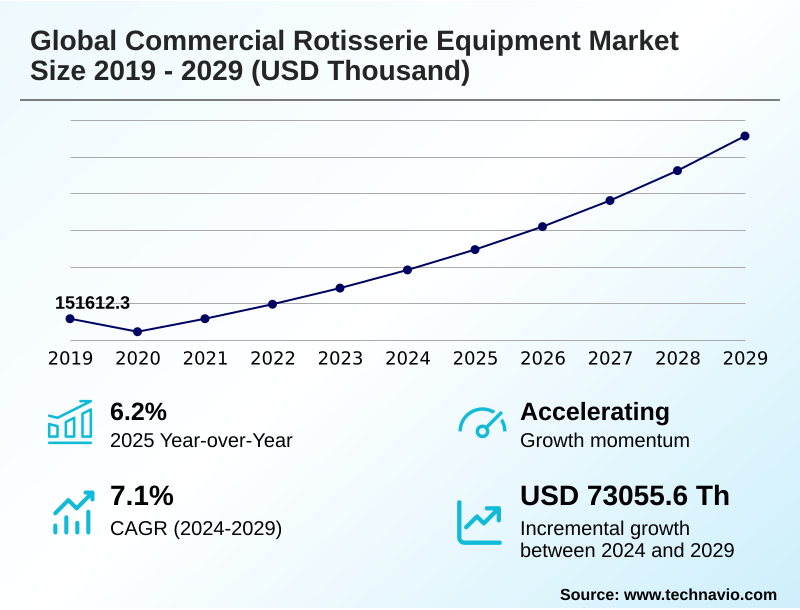
The commercial rotisserie equipment market size is valued to increase by USD 73.06 million, at a CAGR of 7.1% from 2024 to 2029. High profit margins in sale of rotisserie chicken will drive the commercial rotisserie equipment market.
Major Market Trends & Insights
- North America dominated the market and accounted for a 40.1% growth during the forecast period.
- By Source of Heat - Gas segment was valued at USD 111.41 million in 2023
- By End-user - QSRs segment accounted for the largest market revenue share in 2023
Market Size & Forecast
- Market Opportunities:
- Market Future Opportunities: USD 73.06 million
- CAGR from 2024 to 2029 : 7.1%
Market Summary
- The commercial rotisserie equipment market is characterized by a strong emphasis on operational efficiency and product quality, driven by high profit margins from offerings like rotisserie chicken. Foodservice establishments from quick-service restaurants to supermarkets leverage this equipment not only for its cooking capabilities but also as a powerful front-of-house merchandising tool in open-kitchen concepts.
- Key trends include the adoption of technologies that improve performance and reduce operational overhead, such as infrared burners for even cooking and self-cleaning mechanisms to save labor. For instance, a supermarket chain implementing units with programmable cooking cycles can ensure product consistency across all its locations, a critical factor for brand integrity.
- However, the market faces headwinds from a broader dietary shift toward plant-based alternatives, which may temper demand for meat-centric appliances. Manufacturers are responding by innovating with more versatile and energy-efficient models designed to meet evolving end-user requirements and maintain a competitive edge in a dynamic culinary landscape.
- The focus remains on delivering a strong return on investment through enhanced productivity, reduced waste, and superior food quality, ensuring the rotisserie remains a profitable asset in commercial kitchens.
What will be the Size of the Commercial Rotisserie Equipment Market during the forecast period?
Get Key Insights on Market Forecast (PDF) Get Free Sample
How is the Commercial Rotisserie Equipment Market Segmented?
The commercial rotisserie equipment industry research report provides comprehensive data (region-wise segment analysis), with forecasts and estimates in "USD thousand" for the period 2025-2029, as well as historical data from 2019-2023 for the following segments.
- Source of heat
- Gas
- Electric
- End-user
- QSRs
- Hotels
- Food courts
- Capacity
- Medium
- Small
- Large
- Geography
- North America
- US
- Canada
- Mexico
- Europe
- Germany
- UK
- France
- APAC
- China
- Japan
- India
- South America
- Brazil
- Argentina
- Middle East and Africa
- Saudi Arabia
- UAE
- South Africa
- Rest of World (ROW)
- North America
By Source of Heat Insights
The gas segment is estimated to witness significant growth during the forecast period.
The gas-powered segment is defined by equipment using gas burners for consistent temperature control, essential for high-volume foodservice operations. This equipment enables rapid heat generation, supporting peak service hours and high-throughput kitchens that demand reliable performance and food preparation consistency.
Gas rotisseries, including floor-standing rotisserie models, are designed for continuous operation and feature durable equipment construction. Operators favor these systems for their cost-effectiveness where gas infrastructure is prevalent, allowing for efficient management of fuel expenses.
The market is also driven by the adoption of equipment offering high-capacity stacking, which enhances kitchen workflow optimization and supports a strong return on investment analysis.
The segment's market share, accounting for over 66% of installations, underscores its dominance in commercial kitchen environments prioritizing both performance and premium food presentation.
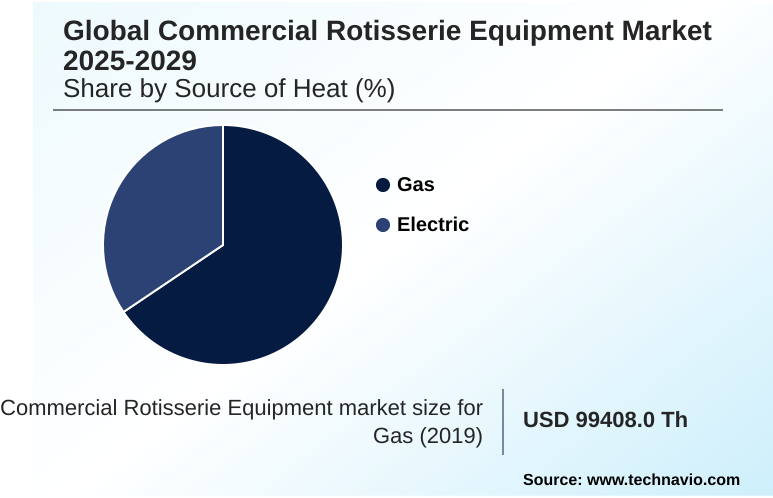
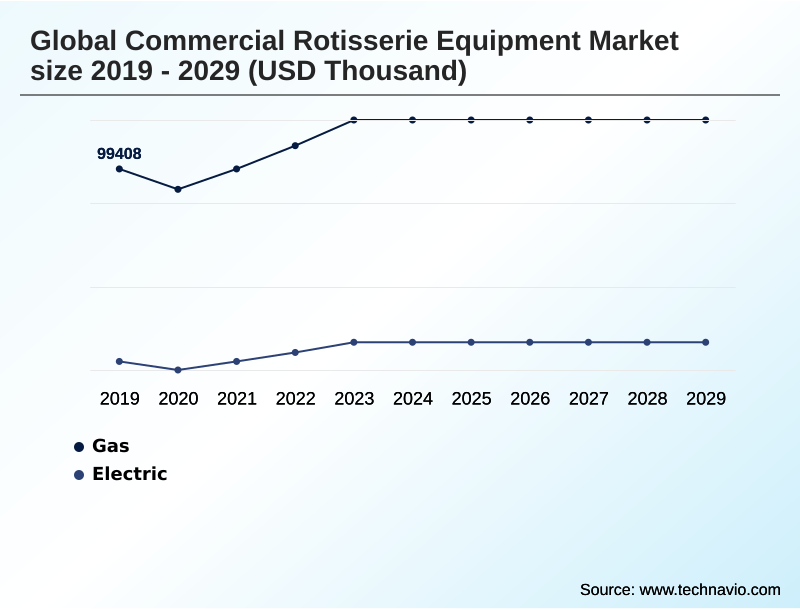
The Gas segment was valued at USD 111.41 million in 2023 and showed a gradual increase during the forecast period.
Regional Analysis
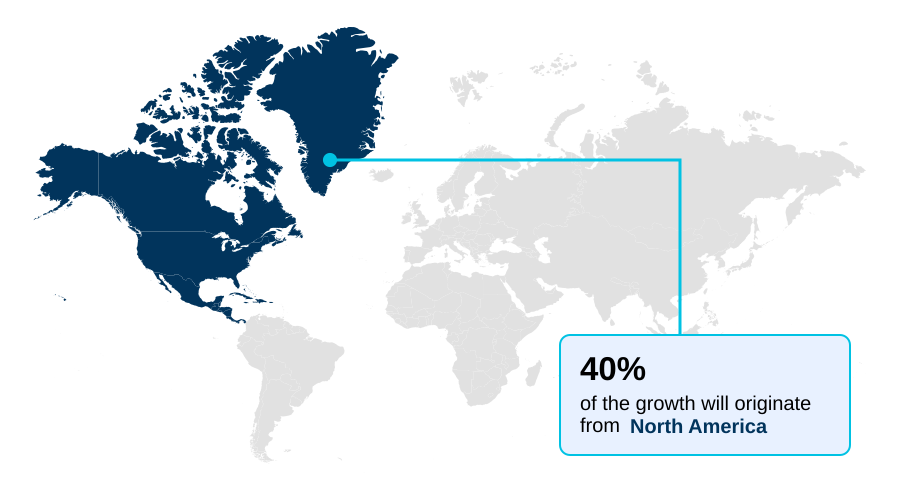
North America is estimated to contribute 40.1% to the growth of the global market during the forecast period.Technavio’s analysts have elaborately explained the regional trends and drivers that shape the market during the forecast period.
See How Commercial Rotisserie Equipment Market Demand is Rising in North America Get Free Sample
The geographic landscape of the market is led by North America, which accounts for approximately 40% of the market's incremental growth, driven by strong consumer demand for ready-to-eat meal solutions in supermarkets and a mature foodservice sector.
The region prioritizes ventless operation technology and ENERGY STAR certification to mitigate high labor and energy costs. In Europe, the focus shifts toward front-of-house display cooking and premium food presentation, with an emphasis on equipment hygiene standards.
The APAC region is the fastest-growing market, fueled by urbanization and the expansion of modern retail.
In dense urban centers across Europe and APAC, the adoption of compact equipment footprint and countertop rotisserie models can reduce installation costs by over 30% by avoiding extensive ventilation work, showcasing how regional needs influence technological adoption and enhance customer engagement through in-store bakery programs and food product merchandising.
Market Dynamics
Our researchers analyzed the data with 2024 as the base year, along with the key drivers, trends, and challenges. A holistic analysis of drivers will help companies refine their marketing strategies to gain a competitive advantage.
- Strategic decisions in the commercial rotisserie equipment market involve a detailed evaluation of various factors to maximize profitability and operational efficiency. When considering gas vs electric rotisserie operating cost, businesses must analyze local utility prices and infrastructure. For establishments with limited area, such as urban cafes or food trucks, the countertop rotisserie for small spaces becomes a critical asset.
- The technical benefits of infrared rotisserie burners, known for faster and more even cooking, must be weighed against their initial investment. A major consideration for high-volume operators is the impact of self-cleaning on labor; establishments with automated systems report nearly double the equipment uptime during peak hours compared to manual cleaning protocols.
- For food courts and non-traditional locations, the ventless rotisserie for food courts is often the only viable option, eliminating the need for costly ventilation hoods. Supermarkets, on the other hand, prioritize the high-capacity rotisserie for supermarkets to meet constant demand. Evaluating the return on investment rotisserie programs is essential for all end-users.
- This involves analyzing the commercial rotisserie equipment cleaning procedure, its effect on downtime, and how equipment for open kitchens can drive sales through visual merchandising. The efficiency gained from a pass-through rotisserie workflow, particularly in busy kitchens, can be significant.
- Selecting the right rotisserie for hotel buffets requires balancing capacity with aesthetic appeal, while stacked rotisserie for high volume is ideal for central commissaries. Ultimately, maintaining consistent rotisserie product quality is paramount, and the benefits of NSF certified rotisserie hygiene and automating rotisserie cooking cycles contribute directly to this goal, enabling operators to offer diverse menus and optimize for profitability.
What are the key market drivers leading to the rise in the adoption of Commercial Rotisserie Equipment Industry?
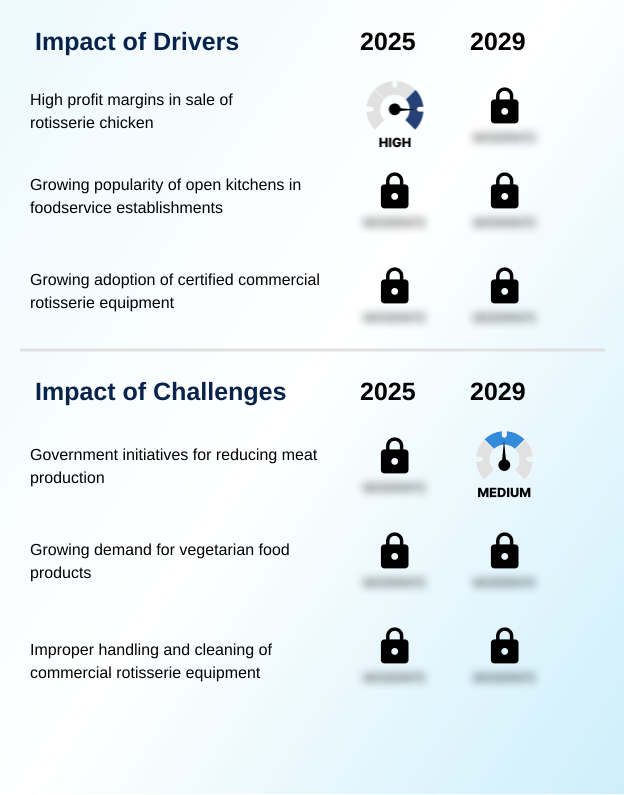
- High profit margins associated with the sale of rotisserie chicken serve as a key driver for the commercial rotisserie equipment market.
- Market growth is primarily fueled by the strong profitability of rotisserie products and the equipment's role as a visual merchandising tool.
- High-volume food production from a single unit offers an attractive return on investment, a key factor in capital expenditure planning. In open-kitchen settings, front-of-house merchandising using visually appealing equipment can increase sales of rotisserie items by as much as 25%.
- This direct impact on revenue encourages investment in models with pass-through door models and those that facilitate culinary menu diversification.
- Furthermore, the growing adoption of certified equipment ensures safety and efficiency, with features like uniform heat distribution and spit rotation mechanism guaranteeing a consistent product.
- This demand is supported by a robust after-sales service network, providing end-user training programs and ensuring equipment reliability.
What are the market trends shaping the Commercial Rotisserie Equipment Industry?
- The growing adoption of commercial rotisserie equipment featuring infrared burners is an upcoming market trend. This technology is recognized for enhancing heat transfer efficiency and ensuring consistent product quality.
- Key trends are reshaping the market, driven by the need for greater efficiency and reduced labor. The adoption of equipment with automated cleaning systems is a significant development, with some models reducing daily cleaning time by over 75%. Innovations in heat application, such as infrared cooking burners, are improving energy efficiency and can decrease pre-heating times by up to 40%.
- Manufacturers are also securing intellectual property, with patented cooking process technologies delivering unparalleled food preparation consistency. These trends reflect a move toward smarter, more autonomous kitchen solutions that incorporate advanced features like sealed heating elements, high-capacity stacking, precise temperature regulation, and AGA certification compliance. The integration of such technologies helps foodservice operators enhance kitchen safety compliance and lower operational costs.
What challenges does the Commercial Rotisserie Equipment Industry face during its growth?
- Government initiatives aimed at reducing meat production present a significant challenge to the growth of the commercial rotisserie equipment industry.
- The market faces notable challenges from shifting consumer preferences and operational complexities. The growing demand for plant-based diets is reducing the equipment utilization rate in some foodservice establishments by over 30% as menus diversify away from meat. This trend poses a long-term risk to a market centered on meat preparation. Operationally, improper handling and cleaning lead to significant inefficiencies.
- For instance, grease and food buildup can increase energy consumption by up to 20% due to poor heat transfer from the energy-efficient heating. This directly impacts the total cost of ownership and undermines the benefits of advanced systems. These challenges compel operators to focus on preventive maintenance scheduling and proper staff training to maintain both performance and food safety compliance.
Exclusive Technavio Analysis on Customer Landscape
The commercial rotisserie equipment market forecasting report includes the adoption lifecycle of the market, covering from the innovator’s stage to the laggard’s stage. It focuses on adoption rates in different regions based on penetration. Furthermore, the commercial rotisserie equipment market report also includes key purchase criteria and drivers of price sensitivity to help companies evaluate and develop their market growth analysis strategies.
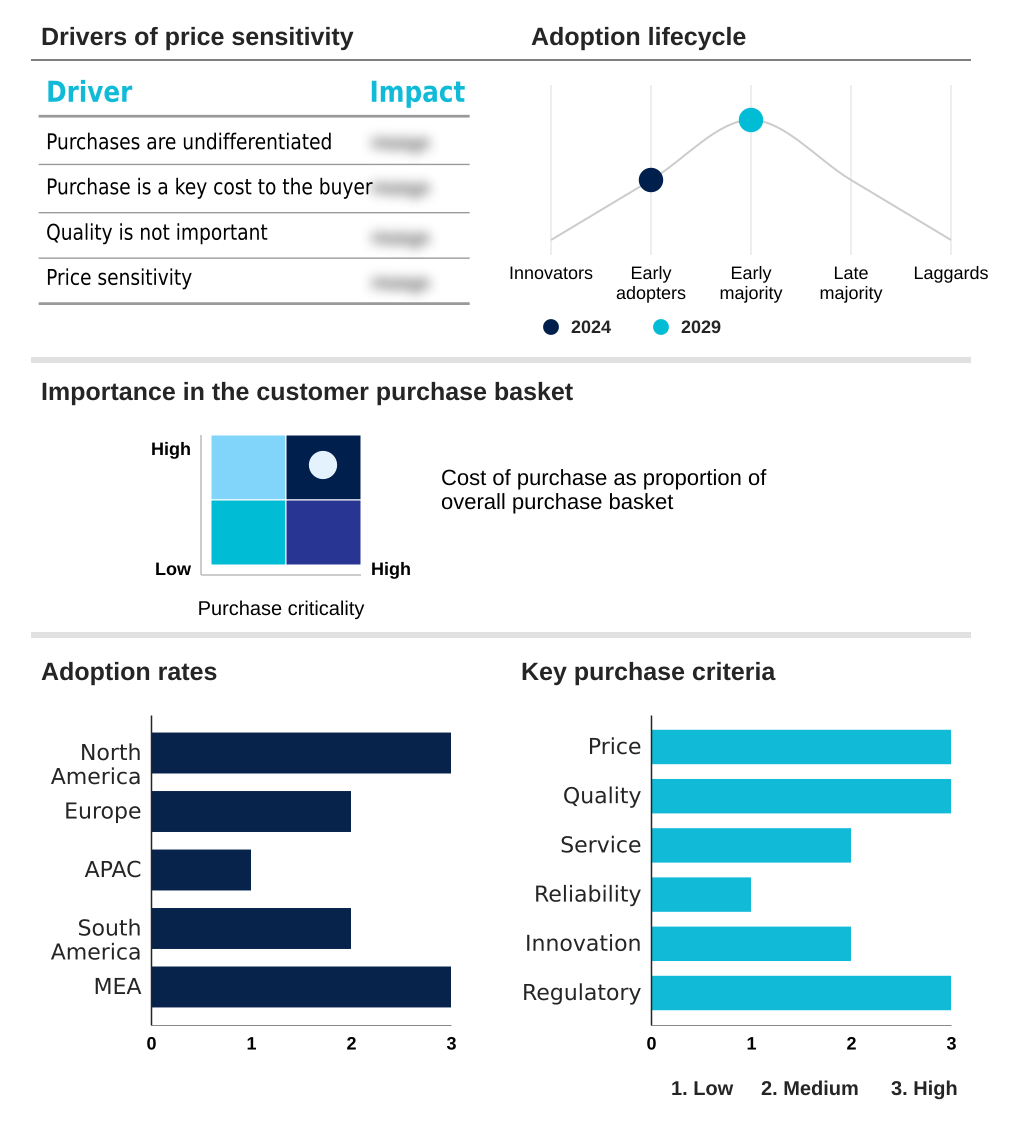
Customer Landscape of Commercial Rotisserie Equipment Industry
Competitive Landscape
Companies are implementing various strategies, such as strategic alliances, commercial rotisserie equipment market forecast, partnerships, mergers and acquisitions, geographical expansion, and product/service launches, to enhance their presence in the industry.
ALPINA BELGIUM - Offerings include commercial rotisserie equipment manufactured from AISI 304 stainless steel, engineered for high-volume cooking applications in professional foodservice environments.
The industry research and growth report includes detailed analyses of the competitive landscape of the market and information about key companies, including:
- ALPINA BELGIUM
- Alto Shaam Inc.
- American Range Corp.
- Attias Oven Corp.
- Bidvest Group Ltd.
- CB srl
- Diamond Europe SA
- Dimark Commercial Pty. Ltd.
- DOREGRILL SAS
- Equipex LLC
- Fri-Jado BV
- Hardt Equipment
- Henny Penny Corp.
- Hickory Industries Inc.
- Illinois Tool Works Inc.
- J and R Manufacturing LLC
- ROLLER GRILL INTERNATIONAL SAS
- Rotisol SA
- The Middleby Corp.
- The Vollrath Co. LLC
Qualitative and quantitative analysis of companies has been conducted to help clients understand the wider business environment as well as the strengths and weaknesses of key industry players. Data is qualitatively analyzed to categorize companies as pure play, category-focused, industry-focused, and diversified; it is quantitatively analyzed to categorize companies as dominant, leading, strong, tentative, and weak.
Recent Development and News in Commercial rotisserie equipment market
- In September 2024, Henny Penny Corp. announced a new patent for an AI-driven temperature and humidity control system designed to optimize cooking cycles, reportedly reducing energy consumption by up to 15% for various proteins.
- In November 2024, Alto-Shaam Inc. launched its new Prodigi line of ventless rotisserie ovens, which incorporates its patented automated cleaning technology, aiming to reduce associated labor costs for end-users.
- In January 2025, Rotisol SA entered into a strategic partnership with a major global luxury hotel group to become the exclusive supplier of display rotisseries for all new hotel openings across the APAC region.
- In April 2025, The Middleby Corp. completed the acquisition of a leading manufacturer of automated food handling systems to integrate robotics into its large-scale rotisserie production lines for industrial food processors.
Dive into Technavio’s robust research methodology, blending expert interviews, extensive data synthesis, and validated models for unparalleled Commercial Rotisserie Equipment Market insights. See full methodology.
| Market Scope | |
|---|---|
| Page number | 294 |
| Base year | 2024 |
| Historic period | 2019-2023 |
| Forecast period | 2025-2029 |
| Growth momentum & CAGR | Accelerate at a CAGR of 7.1% |
| Market growth 2025-2029 | USD 73055.6 thousand |
| Market structure | Fragmented |
| YoY growth 2024-2025(%) | 6.2% |
| Key countries | US, Canada, Mexico, Germany, UK, France, Italy, Spain, The Netherlands, China, Japan, India, South Korea, Australia, Indonesia, Brazil, Argentina, Chile, Saudi Arabia, UAE, South Africa, Egypt and Nigeria |
| Competitive landscape | Leading Companies, Market Positioning of Companies, Competitive Strategies, and Industry Risks |
Research Analyst Overview
- The commercial rotisserie equipment market is evolving beyond basic cooking functions, with a clear focus on integrated systems that enhance operational efficiency and product consistency. Innovations in radiant heat technology and cross-flow convection heating are enabling more precise temperature regulation, which is critical for food preparation workflow.
- Boardroom decisions increasingly center on capital investments in equipment that offers a quantifiable return through automation and data. For example, the adoption of programmable logic controllers and digital touchscreen controls connected to a remote monitoring capability allows for centralized oversight of multi-unit operations. This directly addresses the challenge of maintaining brand standards across a franchise network.
- Equipment featuring a patented cooking methodology can reduce product variance by over 30%, a compelling metric for large-scale operators. Advanced features like automated grease collection, multi-spit roasting systems, and ventless operation technology are becoming standard expectations.
- Compliance with NSF International standards and ENERGY STAR certification is also a key purchasing driver, influencing long-term operational costs and aligning with corporate sustainability mandates. The market's direction is toward intelligent, connected, and highly automated cooking platforms.
What are the Key Data Covered in this Commercial Rotisserie Equipment Market Research and Growth Report?
-
What is the expected growth of the Commercial Rotisserie Equipment Market between 2025 and 2029?
-
USD 73.06 million, at a CAGR of 7.1%
-
-
What segmentation does the market report cover?
-
The report is segmented by Source of Heat (Gas, Electric), End-user (QSRs, Hotels, Food courts), Capacity (Medium, Small, Large) and Geography (North America, Europe, APAC, South America, Middle East and Africa)
-
-
Which regions are analyzed in the report?
-
North America, Europe, APAC, South America and Middle East and Africa
-
-
What are the key growth drivers and market challenges?
-
High profit margins in sale of rotisserie chicken, Government initiatives for reducing meat production
-
-
Who are the major players in the Commercial Rotisserie Equipment Market?
-
ALPINA BELGIUM, Alto Shaam Inc., American Range Corp., Attias Oven Corp., Bidvest Group Ltd., CB srl, Diamond Europe SA, Dimark Commercial Pty. Ltd., DOREGRILL SAS, Equipex LLC, Fri-Jado BV, Hardt Equipment, Henny Penny Corp., Hickory Industries Inc., Illinois Tool Works Inc., J and R Manufacturing LLC, ROLLER GRILL INTERNATIONAL SAS, Rotisol SA, The Middleby Corp. and The Vollrath Co. LLC
-
Market Research Insights
- Market dynamics are shaped by the pursuit of operational efficiency and enhanced profitability. Foodservice operators are increasingly adopting equipment that offers a high return on investment, with features like automated cooking cycles improving product consistency by over 20%. The emphasis on total cost of ownership is driving demand for durable equipment construction and solutions that simplify kitchen workflow optimization.
- For example, the integration of a data management platform for remote recipe management can streamline multi-unit operations, a key factor in brand standard enforcement. Furthermore, self-cleaning functions can reduce daily sanitation labor by up to 45 minutes, directly impacting operational simplicity and costs.
- This focus on measurable outcomes reflects a sophisticated approach to capital expenditure planning, where long-term value outweighs initial purchase price.
We can help! Our analysts can customize this commercial rotisserie equipment market research report to meet your requirements.
 RIA -
RIA -