



Copper Products Market Size 2025-2029
The copper products market size is forecast to increase by USD 86.4 billion, at a CAGR of 6.7% between 2024 and 2029.
- The market is experiencing significant growth, driven by key trends such as the increasing emphasis on copper product recycling and advancements in copper alloys. These factors contribute to the market's expansion, despite fluctuations in copper prices. The use of copper alloys in various industries, including construction, automotive, and electrical, continues to increase due to their superior properties, such as conductivity, durability, and resistance to corrosion. Renewable energy technologies, including wind turbines and solar panels, also heavily rely on copper. Moreover, the recycling of copper products is gaining traction as a sustainable solution to reduce the environmental impact of mining and production. These trends are expected to shape the future of the market, offering opportunities for growth and innovation.
What will be the Size of the Copper Products Market During the Forecast Period?

- The market encompasses a diverse range of applications, including wires and cables for electrification in various sectors, electrical components such as dynamos, transformers, motors, electromagnets, switches, and communication cables. Copper's unique properties as an electricity and heat conductor make it an essential component in residential electrical circuits, as well as In the manufacturing of electronic devices and machinery. The market's growth is driven by increasing demand for electrification and the proliferation of electronic devices.
- The circular economy and sustainability efforts have also influenced the copper industry, with recycling and the use of copper alloys like cupronickel and sterling silver gaining importance. Investors and policymakers recognize copper's role as a critical resource for the transition to a low-carbon economy, further fueling market expansion. Overall, the market is expected to continue growing, underpinned by its versatility and indispensable role in numerous industries.
How is this Copper Products Industry segmented and which is the largest segment?
The copper products industry research report provides comprehensive data (region-wise segment analysis), with forecasts and estimates in "USD billion" for the period 2025-2029, as well as historical data from 2019-2023 for the following segments.
- Product
- Copper wire
- Copper pipes and tubes
- Copper foil
- Copper sheet
- Others
- Application
- Building and construction
- Electrical and electronic products
- Industrial machinery
- Transportation
- Others
- Geography
- APAC
- China
- India
- Japan
- South Korea
- North America
- Canada
- US
- Europe
- Germany
- UK
- South America
- Brazil
- Middle East and Africa
- APAC
By Product Insights
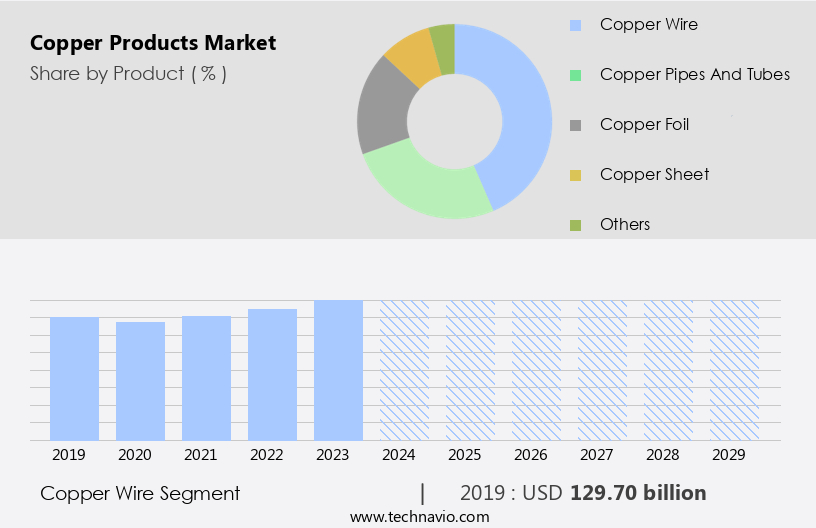
- The copper wire segment is estimated to witness significant growth during the forecast period.
Copper wire plays a vital role in various sectors, including residential, commercial, and industrial applications. In residential buildings, it ensures the safe and efficient distribution of power for lighting systems and electrical wiring. In commercial settings, copper wire provides electrical connectivity for lighting fixtures, power outlets, HVAC systems, security systems, and communication networks. Industrial applications include powering machinery, motors, and control systems in manufacturing plants, factories, warehouses, and industrial facilities. Copper's advantages include flexibility and ease of installation. It is also a superior conductor of electricity and heat, making it essential in power generation, transmission, and renewable energy sectors, such as wind turbines and solar panels.
Copper's recyclability aligns with sustainability efforts and circular economy initiatives. Copper's applications extend to electrical devices, wires and cables, dynamos, transformers, motors, electromagnets, switches, communication cables, and housing demand projects like hotels and electric vehicles. Copper's thermal and electrical conductivity is crucial for power plants, generators, transmission lines, and infrastructure investment in transportation equipment and household appliances.
Get a glance at the Copper Products Industry report of share of various segments Request Free Sample
The copper wire segment was valued at USD 129.70 billion in 2019 and showed a gradual increase during the forecast period.
Regional Analysis
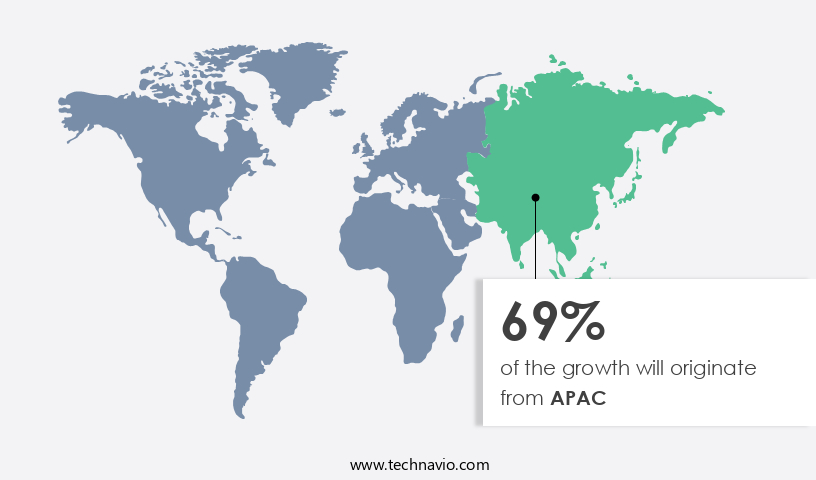
- APAC is estimated to contribute 69% to the growth of the global market during the forecast period.
Technavio's analysts have elaborately explained the regional trends and drivers that shape the market during the forecast period.
For more insights on the market share of various regions, Request Free Sample
The market in Asia Pacific (APAC) is characterized by its sizeable consumption and production, fueled by factors such as industrialization, urbanization, and infrastructure development. China, as the leading consumer and producer in APAC, exerts a significant impact on the regional market. The country's industrialization and urbanization have resulted in a surging demand for copper wire in various sectors, including construction, power transmission, automotive, and electronics. Infrastructure projects like China's Belt and Road Initiative further boost copper wire consumption in APAC. Copper's versatile applications in power generation, transmission, electrical wiring, and electronic devices, as well as its high thermal and electrical conductivity, make it an essential metal for numerous manufacturing sectors, renewable energy, and transportation equipment.
The copper market in APAC is influenced by policymakers and investors' sustainability efforts and environmental concerns, leading to increased recycling of primary and secondary copper from natural resources, postconsumer, and postindustrial sources.
Market Dynamics
Our researchers analyzed the data with 2024 as the base year, along with the key drivers, trends, and challenges. A holistic analysis of drivers will help companies refine their marketing strategies to gain a competitive advantage.
What are the key market drivers leading to the rise In the adoption of Copper Products Industry?
Growing advancements in copper alloys is the key driver of the market.
- Copper alloys have experienced significant growth In their applications due to technological advancements In their formulation and manufacturing processes. These innovations have improved copper alloys' performance, durability, and conductivity, making them essential in high-performance industries. For example, copper-nickel alloys have gained popularity in marine and offshore industries due to their superior corrosion resistance in harsh environments. They are extensively used in desalination plants, seawater piping, and shipbuilding. In the realm of additive manufacturing, advancements such as 3D printing have enabled the creation of complex copper alloy components with superior mechanical properties and precision. This expansion in applicability extends to the aerospace, automotive, and electronics sectors.
- Copper alloys' versatility is further focused by their use in various sectors, including power generation, transmission, and renewable energy. They are integral components in wind turbines, solar panels, and hydroelectric power plants, as well as in electrical wiring, power plants, and generators. Additionally, copper alloys' thermal and electrical conductivity make them a preferred choice for building materials, heat conductors, and electricity conductors. The circular economy and sustainability efforts have also fueled the demand for copper alloys from postconsumer and postindustrial sources. Investors and policymakers recognize the importance of copper alloys in various industries, from manufacturing sectors and machinery to transportation equipment, household appliances, and communication cables.
What are the market trends shaping the Copper Products Industry?
Emphasis on copper product recycling is the upcoming market trend.
- Copper product recycling is a growing trend In the global market due to increasing sustainability and environmental concerns. With copper being a finite resource and the extraction process having significant environmental impacts, recycling copper products is a crucial step toward resource conservation and minimizing waste. The benefits of copper product recycling include the reduction of energy consumption, conservation of natural resources, and the mitigation of environmental impacts associated with mining. The market is driven by this trend, as investors and policymakers seek sustainable solutions for the production and use of copper. Copper, as a valuable and limited metal, is essential for various applications such as wires and cables, dynamos, transformers, motors, electromagnets, switches, communication cables, residential electrical circuits, foils, stators, rotors, shaft heads, hollow wires, and housing demand.
- Copper is used in various sectors, including electric vehicles, manufacturing, machinery, renewable energy, wind turbines, solar panels, and circular economy. Copper's high thermal and electrical conductivity makes it an ideal material for power generation, transmission, and electrical wiring. Copper products are used in various industries, including transportation equipment, household appliances, and electrical equipment, such as circuit boards, copper cable, thermocouples, and temperature monitoring devices. Copper pipes and fittings are also widely used in building construction and infrastructure investment. The recycling of copper products from postconsumer and postindustrial sources is a critical aspect of sustainability efforts and reducing the environmental impact of copper production.
What challenges does the Copper Products Industry face during its growth?
Fluctuations in copper prices is a key challenge affecting the industry growth.
- Copper products play a vital role in various industries, including the mining of metals, power generation, and electronic devices. However, The market faces challenges due to fluctuating copper prices. The price of copper is influenced by factors such as supply and demand dynamics, economic conditions, geopolitical events, and investor sentiment. These price fluctuations can significantly impact the cost of copper wire and its demand in different sectors. For instance, the construction industry uses copper extensively for electrical wiring in buildings, infrastructure projects, and power transmission systems. When copper prices rise, the cost of copper products increases, leading to higher construction costs and potential project delays or modifications.
- Copper is also essential In the manufacturing sectors for machinery, renewable energy, and electrical equipment. In the automotive industry, copper is used in electric vehicles, motors, and electromagnets. In the electronics sector, copper is used in circuit boards, wires, and cables. Moreover, sustainability efforts and circular economy initiatives have increased the demand for recycled copper from postconsumer and postindustrial sources. Recycling copper reduces the need for mining new copper ores and concentrates, minimizing the environmental impact of copper production. The use of recycled copper in various applications, including electrical wiring, power generation, and manufacturing sectors, contributes to sustainability and environmental concerns.
Exclusive Customer Landscape
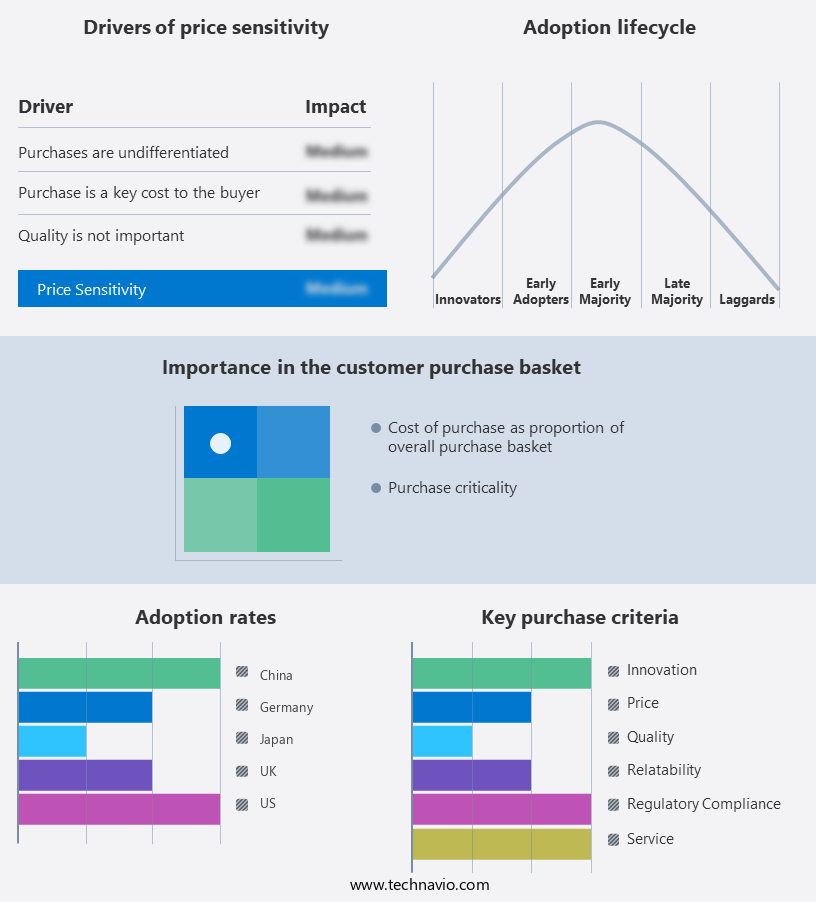
The copper products market forecasting report includes the adoption lifecycle of the market, covering from the innovator's stage to the laggard's stage. It focuses on adoption rates in different regions based on penetration. Furthermore, the copper products market report also includes key purchase criteria and drivers of price sensitivity to help companies evaluate and develop their market growth analysis strategies.
Customer Landscape
Key Companies & Market Insights
Companies are implementing various strategies, such as strategic alliances, copper products market forecast, partnerships, mergers and acquisitions, geographical expansion, and product/service launches, to enhance their presence In the industry.
Aurubis AG - The company offers copper products such as wires, bars, and profiles, catering to various industrial applications.
The industry research and growth report includes detailed analyses of the competitive landscape of the market and information about key companies, including:
- Aviva Metals Inc.
- Baroda Extrusion Ltd.
- Bhagyanagar India Ltd.
- Elcowire Group AB
- Gupta Metal Industries
- Hindalco Industries Ltd.
- Hindustan Copper Ltd.
- Indian Copper
- Indigo Metalloys Pvt. Ltd.
- KGHM Polska Miedz SA
- KME Germany GmbH
- Kobe Steel Ltd.
- Madhav Copper Ltd.
- Mehta Tubes LTD.
- Mitsubishi Materials Corp.
- Nexans SA
- RAJSHREE METALS
- Rio Tinto Ltd.
- Shanghai Metal Corp.
Qualitative and quantitative analysis of companies has been conducted to help clients understand the wider business environment as well as the strengths and weaknesses of key industry players. Data is qualitatively analyzed to categorize companies as pure play, category-focused, industry-focused, and diversified; it is quantitatively analyzed to categorize companies as dominant, leading, strong, tentative, and weak.
Research Analyst Overview
Copper, a valuable non-ferrous metal known for its excellent electrical and thermal conductivity, plays a crucial role in various industries and applications. The global demand for copper products continues to grow, driven by the increasing adoption of renewable energy sources, urbanization, and advancements in technology. Electric vehicles (EVs) are one of the significant contributors to the rising demand for copper. The metal is extensively used in EV batteries, wiring, and motors. Moreover, the increasing shift towards sustainable energy sources, such as wind turbines and solar panels, is also driving the demand for copper In the renewable energy sector. Copper's unique properties make it an essential component in various electrical and electronic devices.
From wires and cables to transformers, dynamos, electromagnets, switches, and communication cables, copper is indispensable In the manufacturing sectors. In residential electrical circuits, copper is used for its high electrical conductivity, ensuring efficient power distribution. Furthermore, copper's thermal conductivity makes it an ideal material for various applications, including heat exchangers, thermal insulation, and temperature monitoring devices such as thermocouples. Copper's high electrical conductivity and resistance to corrosion also make it a preferred choice for use in power plants, generators, and transmission lines. The circular economy and sustainability efforts are gaining momentum, leading to an increased focus on recycling copper from postconsumer and postindustrial sources.
Natural resources, including copper ores and concentrates, continue to be the primary sources of copper. However, smelting and refining processes are used to extract and purify copper from these sources. The manufacturing sectors, including machinery, construction, and transportation equipment, are significant consumers of copper. Copper pipes and fittings are commonly used in plumbing and infrastructure development. In commercial buildings and architectural applications, copper is used as a building material and in metal alloys such as sterling silver, cupronickel, and thermocouples. The increasing urbanization and housing demand, particularly in developing economies, are expected to drive the demand for copper products.
|
Market Scope |
|
|
Report Coverage |
Details |
|
Page number |
222 |
|
Base year |
2024 |
|
Historic period |
2019-2023 |
|
Forecast period |
2025-2029 |
|
Growth momentum & CAGR |
Accelerate at a CAGR of 6.7% |
|
Market Growth 2025-2029 |
USD 86.4 billion |
|
Market structure |
Fragmented |
|
YoY growth 2024-2025(%) |
6.3 |
|
Key countries |
China, US, Japan, India, South Korea, Australia, Canada, Germany, UK, and Brazil |
|
Competitive landscape |
Leading Companies, Market Positioning of Companies, Competitive Strategies, and Industry Risks |
What are the Key Data Covered in this Copper Products Market Research and Growth Report?
- CAGR of the Copper Products industry during the forecast period
- Detailed information on factors that will drive the market growth and forecasting between 2025 and 2029
- Precise estimation of the size of the market and its contribution of the industry in focus to the parent market
- Accurate predictions about upcoming growth and trends and changes in consumer behaviour
- Growth of the market across APAC, North America, Europe, South America, and Middle East and Africa
- Thorough analysis of the market's competitive landscape and detailed information about companies
- Comprehensive analysis of factors that will challenge the copper products market growth of industry companies
We can help! Our analysts can customize this copper products market research report to meet your requirements.
 RIA -
RIA - 
