


Furniture Market Size 2026-2030
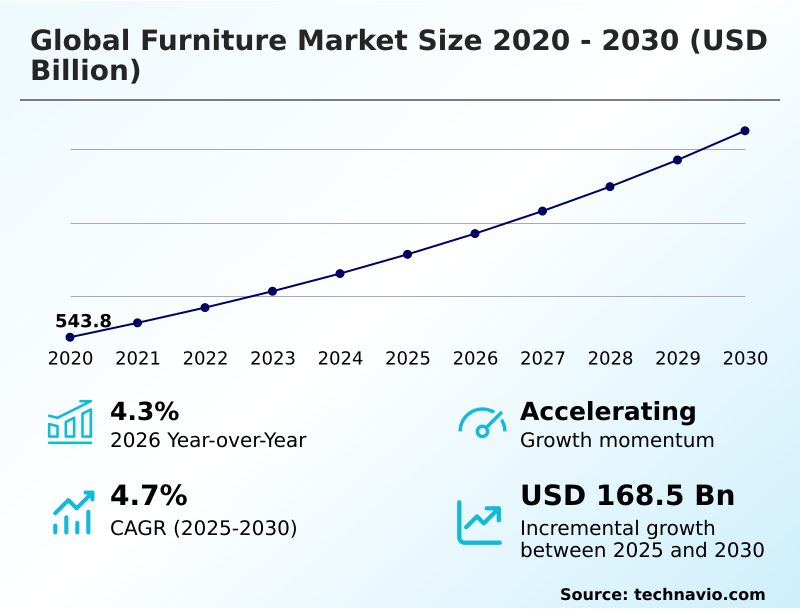
The furniture market size is valued to increase by USD 168.5 billion, at a CAGR of 4.7% from 2025 to 2030. Global urbanization and expansion of real estate sector will drive the furniture market.
Major Market Trends & Insights
- APAC dominated the market and accounted for a 46.1% growth during the forecast period.
- By Product - Home segment was valued at USD 494.2 billion in 2024
- By Distribution Channel - Offline segment accounted for the largest market revenue share in 2024
Market Size & Forecast
- Market Opportunities: USD 281.5 billion
- Market Future Opportunities: USD 168.5 billion
- CAGR from 2025 to 2030 : 4.7%
Market Summary
- The furniture market is undergoing a significant transformation, moving beyond its traditional role of providing functional items to becoming an integral part of lifestyle expression and smart living environments. This evolution is driven by a confluence of factors, including the global expansion of the real estate sector and the growing aspirational consumer purchasing power of the middle class.
- Key trends such as the ascendancy of sustainability are compelling a shift toward circular economy models, with a focus on sustainable material sourcing and end-of-life product management. Simultaneously, the integration of technology is creating new product categories, with smart furniture integration becoming a key differentiator.
- For instance, a commercial real estate developer might partner with a manufacturer to outfit a new smart office building with desks that monitor usage to optimize space, demonstrating a direct link between product innovation and operational efficiency.
- However, the industry grapples with challenges like intense market fragmentation and supply chain volatility, which exert downward pressure on margins and require sophisticated supply chain risk mitigation strategies and agile on-demand manufacturing capabilities to navigate successfully. The market's future will be defined by how effectively companies balance design innovation with resilient, transparent, and sustainable operations.
What will be the Size of the Furniture Market during the forecast period?
Get Key Insights on Market Forecast (PDF) Get Free Sample
How is the Furniture Market Segmented?
The furniture industry research report provides comprehensive data (region-wise segment analysis), with forecasts and estimates in "USD billion" for the period 2026-2030, as well as historical data from 2020-2024 for the following segments.
- Product
- Home
- Office
- Others
- Distribution channel
- Offline
- Online
- Application
- Commercial
- Residential
- Geography
- APAC
- China
- Japan
- India
- Europe
- Germany
- UK
- France
- North America
- US
- Canada
- Mexico
- South America
- Brazil
- Argentina
- Middle East and Africa
- Saudi Arabia
- UAE
- Turkey
- Rest of World (ROW)
- APAC
By Product Insights
The home segment is estimated to witness significant growth during the forecast period.
The home segment is the most substantial portion of the furniture market, driven by a deep-seated home-centric lifestyle shift and significant home renovation market growth.
The widespread adoption of hybrid work model adoption has redefined domestic spaces, fueling demand for products integrating ergonomic design principles. In response to increasing urban density and small-space living solutions, consumers are prioritizing modular furniture systems and clever space-saving mechanisms.
The market has seen a surge in personalization at scale, supported by 3D product modeling and innovations in upholstery fabric technology and composite wood materials.
An effective omnichannel retail strategy is now essential, as consumer journeys blend digital discovery with physical evaluation, with firms leveraging design for disassembly principles seeing a 15% increase in customer loyalty for their sustainable offerings.
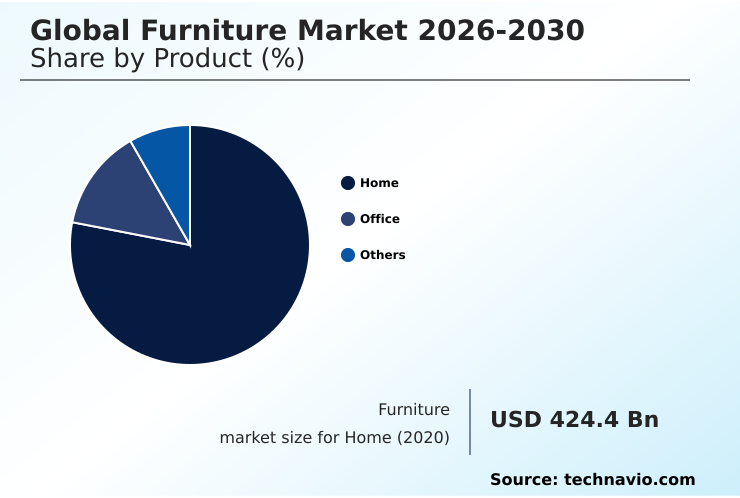
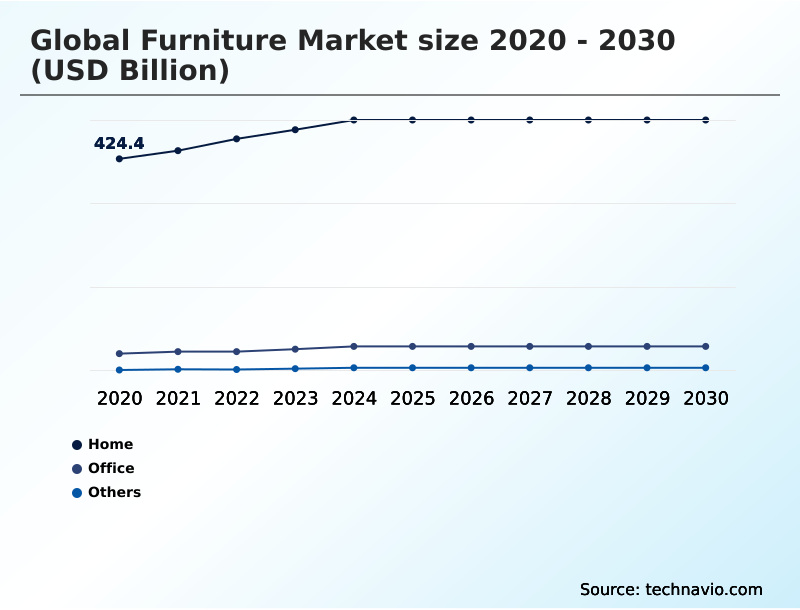
The Home segment was valued at USD 494.2 billion in 2024 and showed a gradual increase during the forecast period.
Regional Analysis
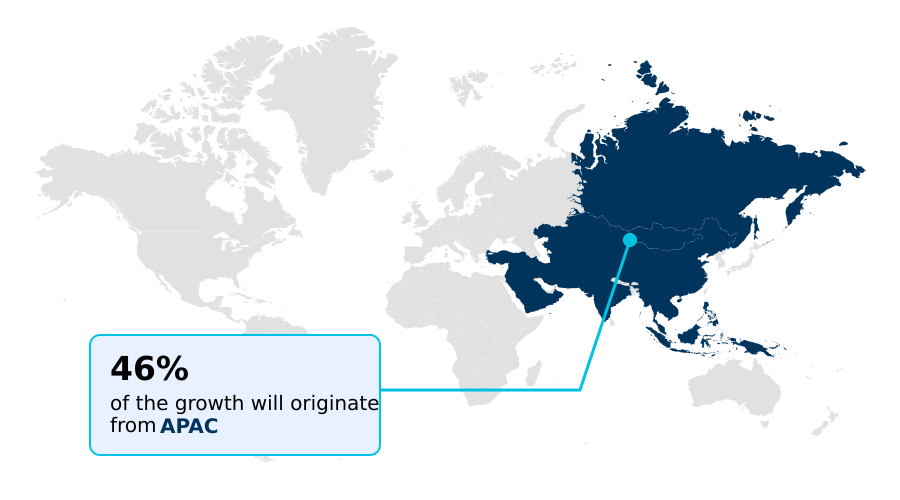
APAC is estimated to contribute 46.1% to the growth of the global market during the forecast period.Technavio’s analysts have elaborately explained the regional trends and drivers that shape the market during the forecast period.
See How Furniture Market Demand is Rising in APAC Get Free Sample
The geographic landscape is dominated by APAC, which accounts for 46% of the market's incremental growth, significantly outpacing North America's 19%. This growth is driven by high urban living density and a rapid accelerated replacement cycle.
In these regions, digital brand engagement is paramount, with manufacturers leveraging advanced inventory management systems and product lifecycle management to serve diverse consumer needs. Production hubs are adopting automated robotic assembly and advanced CNC routing technology to scale output.
Meanwhile, in mature markets like Europe, there is a focus on sustainable models, including furniture rental services and subscription-based models, which leverage superior woodworking joinery techniques, metal frame fabrication, and durable powder coating finishing to ensure longevity and support design for disassembly principles.
Market Dynamics
Our researchers analyzed the data with 2025 as the base year, along with the key drivers, trends, and challenges. A holistic analysis of drivers will help companies refine their marketing strategies to gain a competitive advantage.
- The modern furniture market is increasingly defined by specific consumer needs and technological advancements. The demand for multifunctional furniture for small apartments reflects a global trend towards urban densification, where maximizing space is paramount. Consumers are also more conscious of the materials in their homes, driving interest in sustainable outdoor furniture materials and low-VOC furniture for healthy homes.
- The widespread shift to remote work has made ergonomic home office chair benefits a critical purchasing factor. Personalization is at the forefront, with consumers seeking out modular sofa configuration options and researching custom wardrobe design and cost.
- Technology is a key enabler, with augmented reality for furniture shopping helping to bridge the online-offline gap and smart bed sleep tracking technology introducing new wellness functionalities. The industry is also seeing a strategic battle between on-demand manufacturing vs mass production models, with the former supported by the rise of online furniture direct-to-consumer brands.
- This shift highlights last-mile delivery challenges for furniture but offers greater customization. From a B2B perspective, understanding BIFMA standards for office seating is crucial for commercial sales, just as offering rental furniture services for businesses is becoming a viable alternative to ownership.
- The debate over a comparison of wood vs composite materials continues, with a growing appreciation for the benefits of FSC certified wood furniture and the creative potential of using reclaimed wood in furniture making.
- The entire ecosystem is wrestling with the impact of tariffs on furniture prices while simultaneously exploring the role of AI in furniture customization, striving to optimizing furniture supply chain logistics. Ultimately, the principles of the circular economy in furniture design are becoming a core strategic pillar for long-term viability.
- Firms that master on-demand models have reported up to a 20% reduction in unsold inventory compared to traditional mass-production approaches.
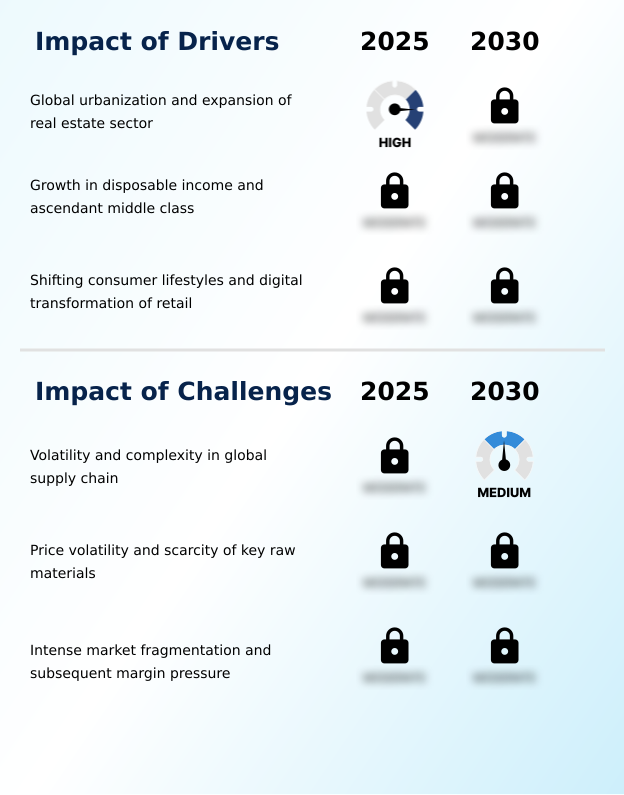
What are the key market drivers leading to the rise in the adoption of Furniture Industry?
- A primary catalyst for the market is the trend of global urbanization, which, coupled with the expansion of the real estate sector, creates foundational demand for furniture.
- Evolving consumer spending patterns and strong interior design influence amplified by social commerce integration are key drivers. The significant e-commerce market penetration, which accounts for over 20% of sales, has normalized digital purchasing behaviors.
- This shift is supported by technologies like augmented reality visualization, which has been shown to improve conversion rates by up to 40%. Customer co-creation tools are empowering consumers to design their own pieces, fueling on-demand manufacturing and custom furniture configuration.
- This move toward just-in-time production and efficient direct-to-consumer fulfillment, optimized through flat-pack logistics, allows brands to reduce inventory costs by over 15% while delivering personalized products, merging digital convenience with experiential retail concepts and smart furniture integration.
What are the market trends shaping the Furniture Industry?
- The ascendancy of sustainability and the adoption of circular economy principles represent a defining trend, fundamentally reshaping the industry's approach to the entire product lifecycle.
- The ascendancy of circular economy models is reshaping the furniture market, driven by millennial purchasing behavior and gen-z aesthetic preferences that prioritize environmental stewardship. Aspirational consumer purchasing is now tied to ethical production certification and full material traceability.
- This trend manifests in a demand for products featuring sustainable material sourcing, such as FSC certified timber and innovative reclaimed wood processing techniques. Manufacturers are gaining a competitive edge by adopting low-VOC finishes and non-toxic adhesives, with some achieving a 25% premium on certified eco-friendly lines.
- Furthermore, an emphasis on end-of-life product management and the use of durable materials like phenolic resin surfaces is extending product lifecycles, reducing waste by over 30% in certain product categories.
What challenges does the Furniture Industry face during its growth?
- A persistent challenge facing the market is the inherent volatility and complexity of the global supply chain, which exposes participants to significant disruption risks and cost fluctuations.
- Despite the ongoing real estate sector expansion and a market-wide premiumization trend, the industry faces significant supply chain complexities. B2B procurement processes, particularly for hospitality contract furnishing and products meeting healthcare furniture standards, demand rigorous supply chain transparency and adherence to metrics like BIFMA testing standards for contract-grade durability.
- However, global disruptions have increased lead times by as much as 50% for some components. Effective supply chain risk mitigation strategies are crucial. The final stage is also a hurdle, with last-mile delivery optimization being a primary focus to manage costs.
- Firms are leveraging digital merchandising tools and mass customization platforms to improve demand forecasting, but a strong brand narrative development is essential to justify longer waits or higher prices.
Exclusive Technavio Analysis on Customer Landscape
The furniture market forecasting report includes the adoption lifecycle of the market, covering from the innovator’s stage to the laggard’s stage. It focuses on adoption rates in different regions based on penetration. Furthermore, the furniture market report also includes key purchase criteria and drivers of price sensitivity to help companies evaluate and develop their market growth analysis strategies.
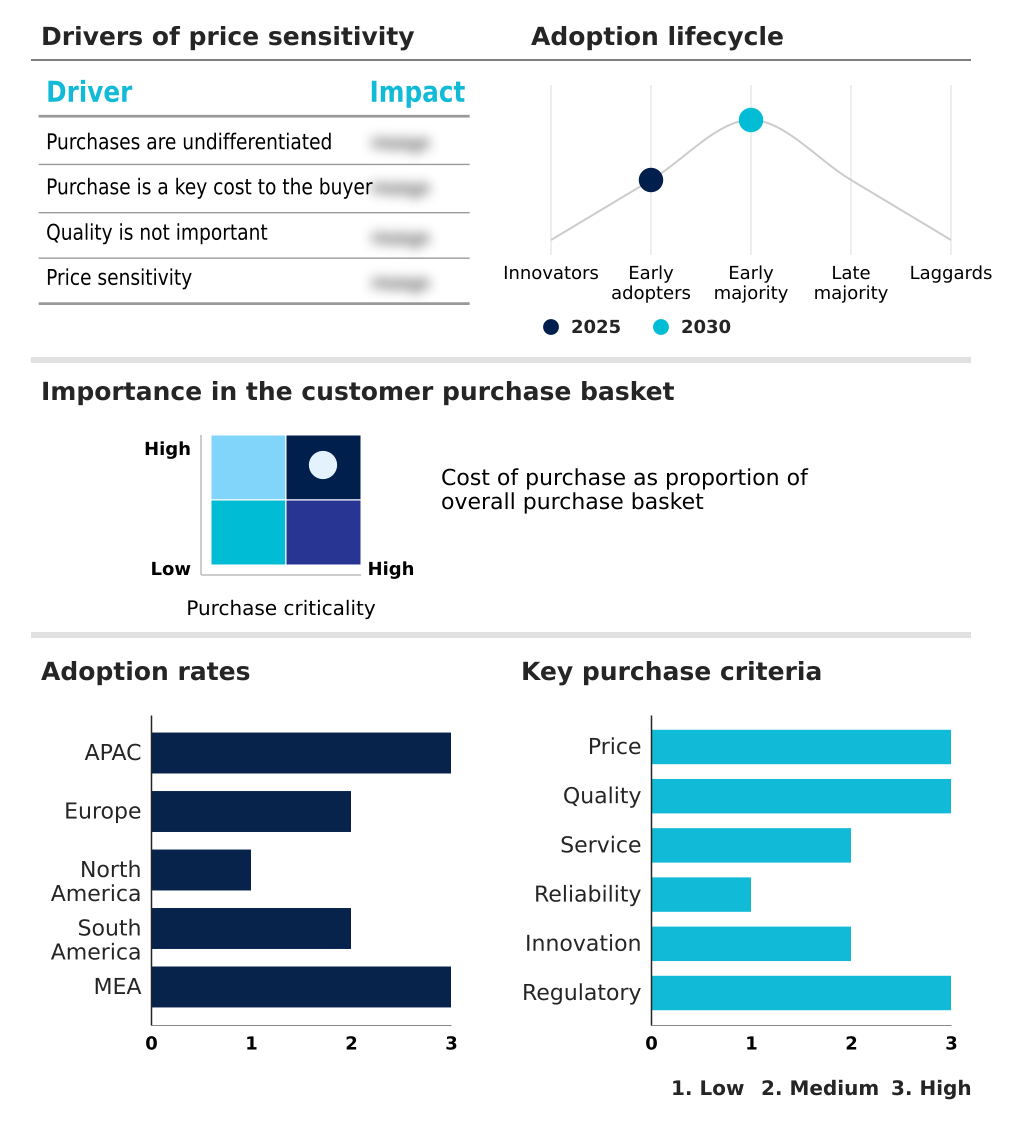
Customer Landscape of Furniture Industry
Competitive Landscape
Companies are implementing various strategies, such as strategic alliances, furniture market forecast, partnerships, mergers and acquisitions, geographical expansion, and product/service launches, to enhance their presence in the industry.
Ashley Furniture Industries - Offers a comprehensive portfolio of upholstered and wood furniture products, catering to both residential and commercial contract markets with a focus on contemporary design and quality craftsmanship.
The industry research and growth report includes detailed analyses of the competitive landscape of the market and information about key companies, including:
- Ashley Furniture Industries
- Bassett Furniture Industries
- Bernhardt Furniture Co.
- Flexsteel Industries Inc.
- Godrej and Boyce Manufacturing
- Haworth Inc.
- HNI Corp.
- Hooker Furnishings Corp.
- Inter IKEA Holding BV
- Kinnarps AB
- KOKUYO Co. Ltd.
- LaZBoy Inc.
- MillerKnoll Inc.
- Nowy Styl
- Restoration Hardware Inc.
- Scavolini S.p.a.
- Sleep Number Corp.
- Steelcase Inc.
- Wayfair Inc.
- Williams Sonoma Inc.
Qualitative and quantitative analysis of companies has been conducted to help clients understand the wider business environment as well as the strengths and weaknesses of key industry players. Data is qualitatively analyzed to categorize companies as pure play, category-focused, industry-focused, and diversified; it is quantitatively analyzed to categorize companies as dominant, leading, strong, tentative, and weak.
Recent Development and News in Furniture market
- In October 2024, Steelcase Inc. announced it had achieved a Platinum rating from EcoVadis for its sustainability performance, placing it in the top 1% of companies assessed globally. This milestone was the result of a multi-year strategy focused on decarbonizing its operations, achieving over 95% material circularity in its top product lines, and ensuring full supply chain transparency.
- In December 2024, Hooker Furnishings Corp. revealed a significant investment to expand its domestic upholstery manufacturing capacity in Virginia and North Carolina. The expansion includes advanced robotics and CNC machinery to enhance production efficiency and reduce lead times for its custom-crafted furniture lines, supporting a broader reshoring trend in the industry.
- In February 2025, Wayfair Inc. launched a proprietary, AI-driven logistics platform named 'FinalMile AI' to optimize its large-parcel delivery network across North America. The system aims to reduce transit times by 20% and cut delivery-related damages by 30% through predictive routing and intelligent package handling protocols.
- In May 2025, Williams-Sonoma Inc., through its West Elm brand, introduced a comprehensive furniture take-back and refurbishment program called 'Renew'. The initiative allows customers to trade in used West Elm furniture for store credit, with the items being resold, refurbished, or responsibly recycled, directly supporting the company's circular economy goals.
Dive into Technavio’s robust research methodology, blending expert interviews, extensive data synthesis, and validated models for unparalleled Furniture Market insights. See full methodology.
| Market Scope | |
|---|---|
| Page number | 288 |
| Base year | 2025 |
| Historic period | 2020-2024 |
| Forecast period | 2026-2030 |
| Growth momentum & CAGR | Accelerate at a CAGR of 4.7% |
| Market growth 2026-2030 | USD 168.5 billion |
| Market structure | Fragmented |
| YoY growth 2025-2026(%) | 4.3% |
| Key countries | China, Japan, India, South Korea, Australia, Indonesia, Germany, UK, France, Italy, Spain, The Netherlands, US, Canada, Mexico, Brazil, Argentina, Chile, Saudi Arabia, UAE, Turkey, South Africa and Israel |
| Competitive landscape | Leading Companies, Market Positioning of Companies, Competitive Strategies, and Industry Risks |
Research Analyst Overview
- The furniture market's competitive landscape is being reshaped by the convergence of technology and sustainability. Boardroom decisions are increasingly focused on implementing circular economy models and ensuring supply chain transparency, which have become critical for brand reputation.
- Core to this is sustainable material sourcing using materials like FSC certified timber and reclaimed wood processing, complemented by the use of low-VOC finishes and non-toxic adhesives. On the production floor, on-demand manufacturing and just-in-time production are powered by CNC routing technology and automated robotic assembly.
- Firms are leveraging mass customization platforms and 3D product modeling to enable custom furniture configuration at scale. This requires robust product lifecycle management and advanced inventory management systems for success. The shift to digital is supported by augmented reality visualization and other digital merchandising tools, which are essential for an effective omnichannel retail strategy.
- A key challenge remains in direct-to-consumer fulfillment, where last-mile delivery optimization for products designed with flat-pack logistics is crucial. Products must meet high standards for contract-grade durability, often validated by BIFMA testing standards.
- The integration of smart furniture integration and ergonomic design principles into everything from office chairs to modular furniture systems with space-saving mechanisms reflects a move towards higher-value offerings. This strategic pivot towards technology-driven, sustainable production has enabled leading firms to reduce material waste by 15%, directly impacting bottom-line profitability.
What are the Key Data Covered in this Furniture Market Research and Growth Report?
-
What is the expected growth of the Furniture Market between 2026 and 2030?
-
USD 168.5 billion, at a CAGR of 4.7%
-
-
What segmentation does the market report cover?
-
The report is segmented by Product (Home, Office, and Others), Distribution Channel (Offline, and Online), Application (Commercial, and Residential) and Geography (APAC, Europe, North America, South America, Middle East and Africa)
-
-
Which regions are analyzed in the report?
-
APAC, Europe, North America, South America and Middle East and Africa
-
-
What are the key growth drivers and market challenges?
-
Global urbanization and expansion of real estate sector, Volatility and complexity in global supply chain
-
-
Who are the major players in the Furniture Market?
-
Ashley Furniture Industries, Bassett Furniture Industries, Bernhardt Furniture Co., Flexsteel Industries Inc., Godrej and Boyce Manufacturing, Haworth Inc., HNI Corp., Hooker Furnishings Corp., Inter IKEA Holding BV, Kinnarps AB, KOKUYO Co. Ltd., LaZBoy Inc., MillerKnoll Inc., Nowy Styl, Restoration Hardware Inc., Scavolini S.p.a., Sleep Number Corp., Steelcase Inc., Wayfair Inc. and Williams Sonoma Inc.
-
Market Research Insights
- The furniture market is shaped by dynamic shifts in consumer behavior and retail models. A pronounced home-centric lifestyle shift, accelerated by hybrid work model adoption, has structurally altered demand. This is reflected in the online retail channel's market share, which grew from approximately 15% to over 21% in just four years, demonstrating the power of e-commerce market penetration.
- This premiumization trend is further driven by rising disposable incomes, enabling aspirational consumer purchasing. Experiential retail concepts are being used to bridge the gap between digital and physical, with stores featuring AR tools improving customer engagement by over 30%.
- Successful brand narrative development now hinges on sustainability and personalization, catering to new consumer spending patterns and the powerful interior design influence seen across digital platforms.
We can help! Our analysts can customize this furniture market research report to meet your requirements.
 RIA -
RIA -