

Grinding Machinery Market Size 2026-2030
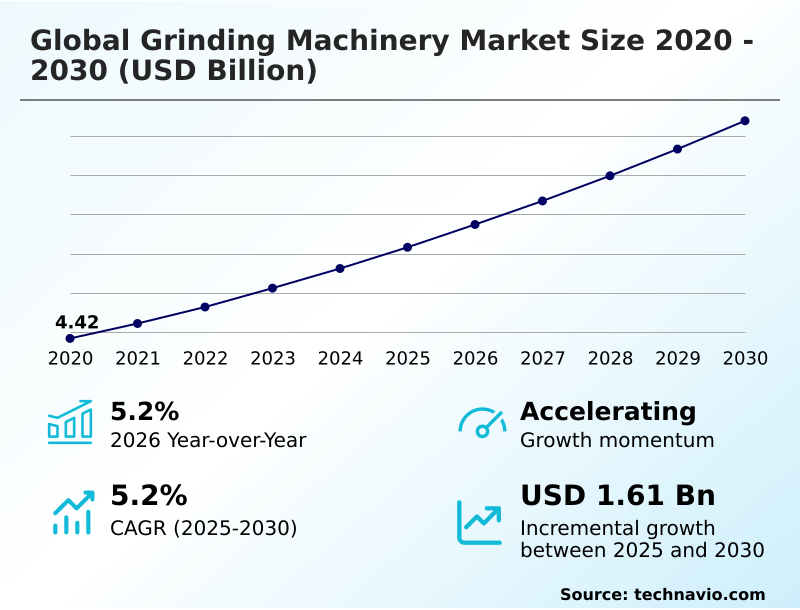
The grinding machinery market size is valued to increase by USD 1.61 billion, at a CAGR of 5.2% from 2025 to 2030. Expansion of precision manufacturing requirements will drive the grinding machinery market.
Major Market Trends & Insights
- APAC dominated the market and accounted for a 42.7% growth during the forecast period.
- By Type - CNC grinding machine segment was valued at USD 4.38 billion in 2024
- By Application - Automotive segment accounted for the largest market revenue share in 2024
Market Size & Forecast
- Market Opportunities: USD 2.77 billion
- Market Future Opportunities: USD 1.61 billion
- CAGR from 2025 to 2030 : 5.2%
Market Summary
- The Grinding Machinery Market exhibits consistent operational expansion as manufacturers across high-stakes industries prioritize exact dimensional tolerances and superior component reliability. Facilities increasingly integrate automated finishing platforms into their production lines to support the fabrication of critical aerospace and automotive assemblies.
- For instance, the transition toward electric vehicle manufacturing requires specialized gear finishing processes, prompting tier-one suppliers to overhaul their factory floors with modernized equipment. This strategic upgrade minimizes friction within electric drivetrains, which translates to a measurable business advantage where energy transfer efficiency is improved by 14% compared to legacy machining techniques.
- The rising necessity for complex, miniaturized components in semiconductor equipment acts as a primary driver, because tighter engineering specifications compel operators to invest in specialized multi-axis solutions. Conversely, the substantial capital requirements associated with procuring and commissioning these advanced systems pose a severe challenge, as extensive upfront expenditures delay modernization cycles for mid-sized fabrication enterprises.
- Ultimately, continuous technological integration empowers organizations to overcome operational limitations and fulfill strict international quality mandates.
What will be the Size of the Grinding Machinery Market during the forecast period?
Get Key Insights on Market Forecast (PDF) Get Free Sample
How is the Grinding Machinery Market Segmented?
The grinding machinery industry research report provides comprehensive data (region-wise segment analysis), with forecasts and estimates in "USD million" for the period 2026-2030, as well as historical data from 2020-2024 for the following segments.
- Type
- CNC grinding machine
- Conventional grinding machine
- Application
- Automotive
- Industrial machinery
- Precision machinery
- Others
- Distribution channel
- Online
- Offline
- Geography
- APAC
- China
- Japan
- India
- South Korea
- Australia
- Indonesia
- Europe
- Germany
- Italy
- UK
- France
- Spain
- The Netherlands
- North America
- US
- Canada
- Mexico
- South America
- Brazil
- Argentina
- Chile
- Middle East and Africa
- Saudi Arabia
- UAE
- Turkey
- South Africa
- Israel
- APAC
By Type Insights
The cnc grinding machine segment is estimated to witness significant growth during the forecast period.
The computer numerical control segment dictates the trajectory of the Grinding Machinery environment by facilitating intricate high precision automated centerless processing across critical supply chains.
Manufacturers rapidly transition to these automated platforms because they drastically limit geometric variation, thereby ensuring reliable multi axis programmable surface finishing. By leveraging advanced programmable logic controllers and optimized spindle speed, facilities maintain exact dimensional standards during prolonged operations.
This structural shift allows operators to implement efficient swarf removal mechanisms and precise coolant delivery, which collectively lower thermal distortion on sensitive components.
Integration of specialized truing tools and superabrasive wheels supports rigorous micro-machining requirements for demanding aerospace and medical applications. Consequently, adoption of sophisticated programmable architectures drives measurable business impact, as component rejection rates are lowered by 18% during high-volume production cycles.
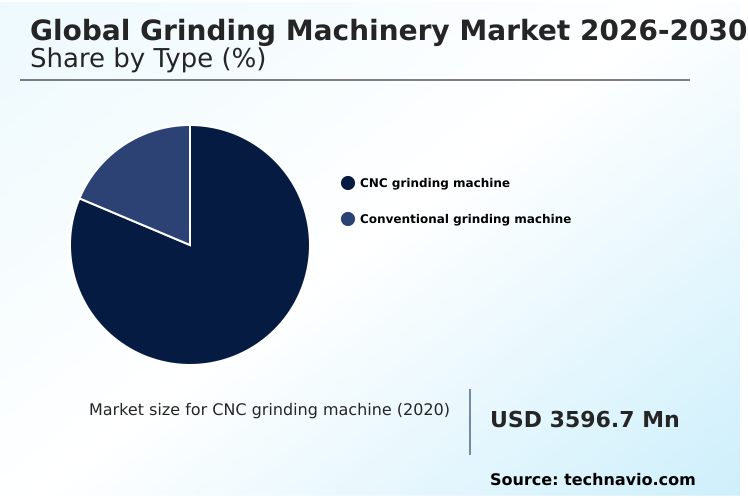
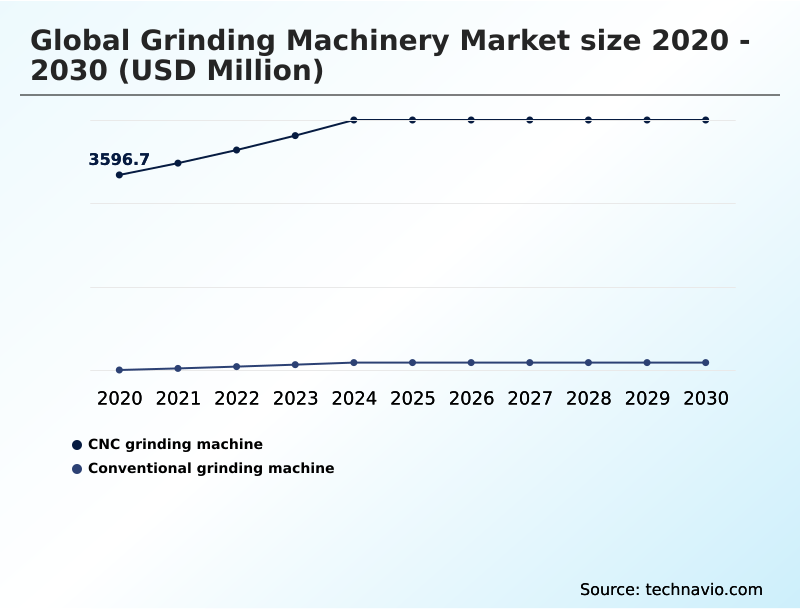
The CNC grinding machine segment was valued at USD 4.38 billion in 2024 and showed a gradual increase during the forecast period.
Regional Analysis
APAC is estimated to contribute 42.7% to the growth of the global market during the forecast period.Technavio’s analysts have elaborately explained the regional trends and drivers that shape the market during the forecast period.
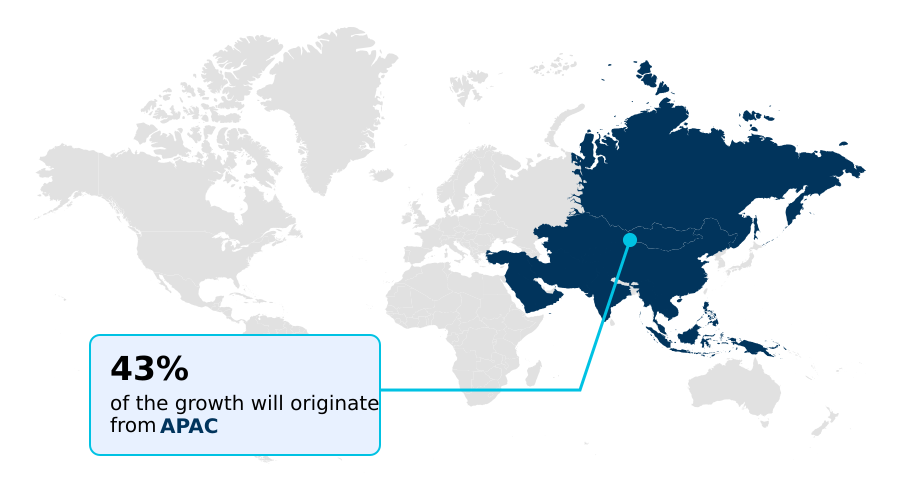
See How Grinding Machinery Market Demand is Rising in APAC Get Free Sample
The geographic distribution of the Grinding Machinery environment highlights distinct operational priorities between APAC and Europe. Operators in APAC rapidly scale their production facilities, focusing on high-volume tool sharpening and aggressive feed rate capabilities to satisfy surging automotive sector demands.
Conversely, European manufacturers prioritize ultra-precise kinematic control and digital metrology, emphasizing strict regulatory compliance and sustainable resource consumption.
Because European facilities mandate superior thermal stability for aerospace components, their deployment of advanced vibration damping mechanisms results in defect rates being reduced by 16% compared to standard configurations.
Meanwhile, APAC enterprises heavily adopt automated servo drives and robust linear guideways, achieving a 25% improvement in daily throughput efficiency.
By integrating sophisticated chatter suppression technologies, manufacturers in both regions successfully extend overall equipment lifespan by up to 20%, ensuring maximum return on capital.
These divergent regional strategies illustrate how distinct supply chain pressures dictate targeted technological investments across the industrial spectrum.
Market Dynamics
Our researchers analyzed the data with 2025 as the base year, along with the key drivers, trends, and challenges. A holistic analysis of drivers will help companies refine their marketing strategies to gain a competitive advantage.
- Strategic resource allocation within the Grinding Machinery sector increasingly favors technologies that eliminate manual variability and support continuous production parameters. As supply chain volatility persists, manufacturing leaders prioritize equipment that guarantees absolute repeatability without requiring constant operator oversight.
- A critical evolution is the widespread adoption of high precision automated centerless processing, which allows operators to seamlessly process large batches of cylindrical components while mitigating workflow bottlenecks. In parallel, the transition toward complex aerospace and medical components necessitates advanced multi axis programmable surface finishing, providing the exact surface integrity required for mission-critical parts.
- To maintain strict tolerances during extended operations, facilities heavily invest in technologies that ensure thermal stability in cylindrical grinding, effectively preventing the microscopic material distortions caused by continuous friction. The integration of advanced diagnostics further enhances output quality, with organizations relying on in process gauging for dimensional accuracy to detect anomalies instantaneously.
- This proactive approach yields a scrap reduction output that is nearly 40% superior to post-production inspection methods, directly protecting profit margins. Furthermore, the deployment of robotic loading for continuous micro machining enables lights-out manufacturing capabilities, empowering facilities to maintain tight production schedules irrespective of labor availability.
- By aligning these sophisticated finishing capabilities with broader enterprise resource planning, industrial stakeholders establish highly resilient manufacturing ecosystems capable of adapting to shifting global demands.
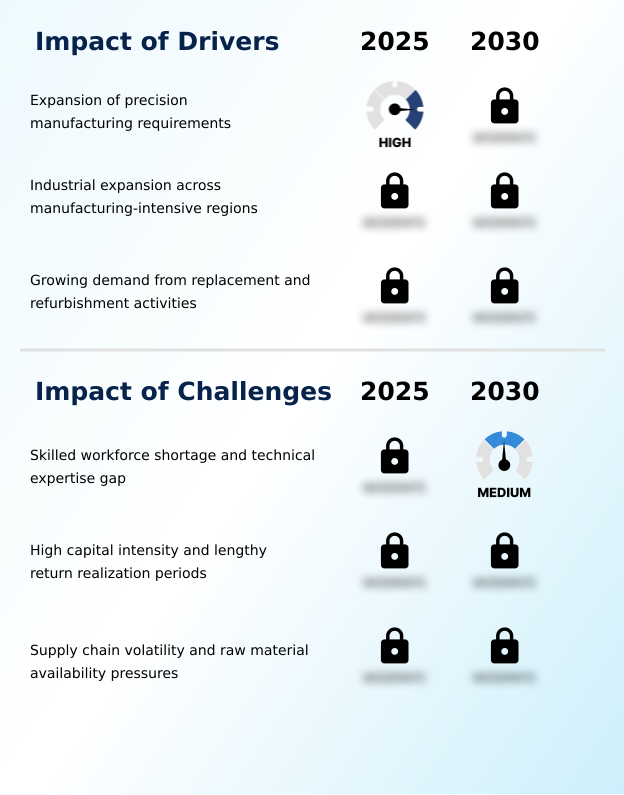
What are the key market drivers leading to the rise in the adoption of Grinding Machinery Industry?
- The rapid expansion of precision manufacturing requirements across critical sectors acts as the primary driver propelling widespread adoption of advanced material finishing technologies.
- The escalating demand for miniaturized components across the electronics and automotive sectors fundamentally propels continuous technological upgrades within the Grinding Machinery environment.
- Operations managers heavily prioritize centerless processing and advanced cylindrical grinding platforms because these methods flawlessly handle high-volume production runs.
- Because maintaining a tight tolerance is absolutely critical for modern drivetrains, manufacturers utilize comprehensive sensor integration to monitor mechanical forces in real time.
- The widespread adoption of in-process gauging directly ensures that material deviations are corrected instantaneously, driving a measurable effect where post-production defect rates are lowered by 18%.
- Furthermore, optimized wheel dressing systems and highly efficient coolant filtration networks extend tool longevity, allowing facilities to drastically reduce their consumable expenditures while simultaneously supporting uninterrupted manufacturing cycles.
What are the market trends shaping the Grinding Machinery Industry?
- The growing convergence of grinding systems with automated production cells serves as a critical trend shaping industrial modernization. This structural integration allows manufacturing facilities to achieve continuous workflow synchronization and minimize manual intervention.
- The integration of self-optimizing control architectures is rapidly redefining how the Grinding Machinery ecosystem functions across high-stakes industrial operations. Manufacturers aggressively pivot toward these intelligent systems because they facilitate uninterrupted abrasive machining without requiring constant manual calibration. By linking advanced spindle technology with synchronized multi-axis coordination, facilities can easily process intricate component geometry at unprecedented speeds.
- This technological shift directly impacts the aerospace and medical sectors, where uncompromising surface finishing and exact dimensional accuracy are mandatory for product certification. As enterprises elevate their precision engineering standards, the deployment of these automated platforms ensures that overall machine setup downtime is reduced by 25% compared to legacy mechanical adjustments.
- Ultimately, this structural evolution enables business leaders to achieve agile, resilient production environments capable of meeting dynamic supply chain demands.
What challenges does the Grinding Machinery Industry face during its growth?
- A persistent shortage of skilled workforce personnel alongside a widening technical expertise gap presents a significant challenge to consistent production efficiency across the industrial landscape.
- The severe scarcity of specialized technical personnel poses a critical operational constraint across the Grinding Machinery landscape. Advanced fabrication techniques such as creep feed, sophisticated plunge grinding, and complex profile grinding require deep engineering expertise to configure correctly. Because older operators are retiring, facilities struggle to maintain essential process consistency when utilizing high-end rotary table configurations and sensitive hydrostatic bearings.
- This widening knowledge gap directly causes improper machine calibration, which ultimately compromises the surface integrity of high-value aerospace and energy components. Consequently, manufacturers experience frequent workflow interruptions, resulting in overall machine utilization being reduced by 15% against optimal production targets.
- To mitigate these disruptions, organizations are forced to allocate substantial capital toward extended operator training programs, heavily straining immediate operational budgets.
Exclusive Technavio Analysis on Customer Landscape
The grinding machinery market forecasting report includes the adoption lifecycle of the market, covering from the innovator’s stage to the laggard’s stage. It focuses on adoption rates in different regions based on penetration. Furthermore, the grinding machinery market report also includes key purchase criteria and drivers of price sensitivity to help companies evaluate and develop their market growth analysis strategies.
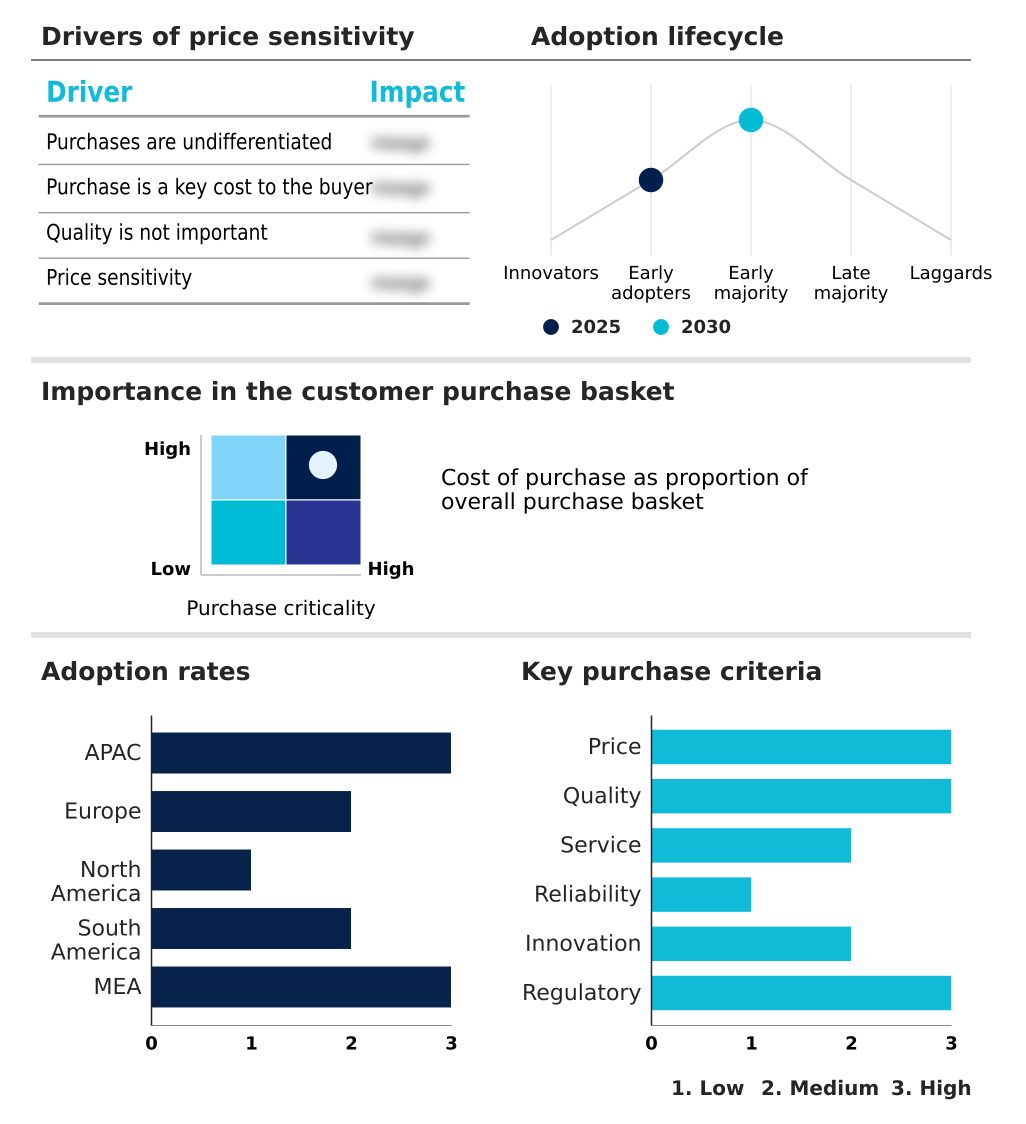
Customer Landscape of Grinding Machinery Industry
Competitive Landscape
Companies are implementing various strategies, such as strategic alliances, grinding machinery market forecast, partnerships, mergers and acquisitions, geographical expansion, and product/service launches, to enhance their presence in the industry.
ANCA Pty Ltd. - The entity provides advanced computer numerical control tool and cutter equipment specifically designed to enhance operational precision and support the manufacturing of highly intricate cutting components across industrial workflows.
The industry research and growth report includes detailed analyses of the competitive landscape of the market and information about key companies, including:
- ANCA Pty Ltd.
- DMG MORI CO. LTD.
- EMAG GmbH and Co. KG
- FIVES SAS
- Gleason Corp.
- Hardinge Inc.
- KAPP NILES GmbH and Co. KG
- Kent Industrial USA Inc.
- KLINGELNBERG GmbH
- Makino Inc.
- Okamoto Machine Tool Works Ltd.
- Okuma Corp.
- Palmary Machinery Co. Ltd.
- Precision Surfacing Solutions
- Reishauer AG
- Rollomatic SA
- SHIGIYA Machinery Works Ltd.
- Toyo Advanced Technologies
- VOLLMER WERKE Maschinenfabrik
- WALDRICH SIEGEN Werkzeugmaschinen
Qualitative and quantitative analysis of companies has been conducted to help clients understand the wider business environment as well as the strengths and weaknesses of key industry players. Data is qualitatively analyzed to categorize companies as pure play, category-focused, industry-focused, and diversified; it is quantitatively analyzed to categorize companies as dominant, leading, strong, tentative, and weak.
Recent Development and News in Grinding machinery market
- In the Industrial Machinery and Supplies and Components industry, the integration of edge computing into heavy equipment controls has enabled real-time process adjustments, directly impacting Grinding Machinery demand by requiring modernized digital interfaces for seamless production floors.
- The shift toward sustainable manufacturing practices has accelerated the deployment of minimum quantity lubrication systems across metalworking facilities, directly impacting Grinding Machinery demand by necessitating equipment upgrades that consume 40% less fluid while maintaining cooling efficiency.
- The rapid expansion of electric vehicle drivetrain production has forced automotive suppliers to adopt high-precision gear manufacturing standards, directly impacting Grinding Machinery demand by pulling investments into automated systems capable of achieving sub-micron surface finishes.
- Stringent occupational safety regulations regarding airborne particulate exposure have compelled fabrication facilities to upgrade their material extraction infrastructures, directly impacting Grinding Machinery demand by accelerating the replacement of older tools with fully enclosed machining centers.
Dive into Technavio’s robust research methodology, blending expert interviews, extensive data synthesis, and validated models for unparalleled Grinding Machinery Market insights. See full methodology.
| Market Scope | |
|---|---|
| Page number | 293 |
| Base year | 2025 |
| Historic period | 2020-2024 |
| Forecast period | 2026-2030 |
| Growth momentum & CAGR | Accelerate at a CAGR of 5.2% |
| Market growth 2026-2030 | USD 1614.0 million |
| Market structure | Fragmented |
| YoY growth 2025-2026(%) | 5.2% |
| Key countries | China, Japan, India, South Korea, Australia, Indonesia, Germany, Italy, UK, France, Spain, The Netherlands, US, Canada, Mexico, Brazil, Argentina, Chile, Saudi Arabia, UAE, Turkey, South Africa and Israel |
| Competitive landscape | Leading Companies, Market Positioning of Companies, Competitive Strategies, and Industry Risks |
Research Analyst Overview
- The Grinding Machinery landscape reflects a fundamental pivot toward highly integrated, digitally optimized manufacturing environments. As industrial specifications become increasingly demanding, operators abandon conventional material removal methods in favor of intelligent abrasive machining platforms. This transition ensures that critical components achieve flawless surface finishing, directly supporting the rigorous quality mandates of the aerospace and defense sectors.
- By deploying advanced spindle technology alongside seamless multi-axis coordination, factory floors maintain strict dimensional accuracy even when processing robust superalloys. Because fluid management dictates operational consistency, modern facilities integrate closed-loop coolant filtration networks that minimize thermal drift and extend tooling longevity. Consequently, companies leveraging these synchronized systems have secured a 28% reduction in component processing time against traditional batch workflows.
- The continuous evolution of automated wheel dressing mechanisms further eliminates manual intervention, allowing cylindrical grinding operations to run uninterrupted. Ultimately, this structural commitment to technological refinement empowers business leaders to stabilize long-term capital budgets while drastically elevating the baseline reliability of their engineering outputs.
What are the Key Data Covered in this Grinding Machinery Market Research and Growth Report?
-
What is the expected growth of the Grinding Machinery Market between 2026 and 2030?
-
USD 1.61 billion, at a CAGR of 5.2%
-
-
What segmentation does the market report cover?
-
The report is segmented by Type (CNC grinding machine, and Conventional grinding machine), Application (Automotive, Industrial machinery, Precision machinery, and Others), Distribution Channel (Online, and Offline) and Geography (APAC, Europe, North America, South America, Middle East and Africa)
-
-
Which regions are analyzed in the report?
-
APAC, Europe, North America, South America and Middle East and Africa
-
-
What are the key growth drivers and market challenges?
-
Expansion of precision manufacturing requirements, Skilled workforce shortage and technical expertise gap
-
-
Who are the major players in the Grinding Machinery Market?
-
ANCA Pty Ltd., DMG MORI CO. LTD., EMAG GmbH and Co. KG, FIVES SAS, Gleason Corp., Hardinge Inc., KAPP NILES GmbH and Co. KG, Kent Industrial USA Inc., KLINGELNBERG GmbH, Makino Inc., Okamoto Machine Tool Works Ltd., Okuma Corp., Palmary Machinery Co. Ltd., Precision Surfacing Solutions, Reishauer AG, Rollomatic SA, SHIGIYA Machinery Works Ltd., Toyo Advanced Technologies, VOLLMER WERKE Maschinenfabrik and WALDRICH SIEGEN Werkzeugmaschinen
-
Market Research Insights
- The Grinding Machinery ecosystem undergoes rapid modernization as operators emphasize precision engineering to support highly complex component geometry. Organizations aggressively deploy comprehensive automation infrastructure to optimize high-volume manufacturing environments. By incorporating advanced predictive maintenance protocols, facilities detect mechanical anomalies early, ensuring that unexpected equipment downtime is reduced by 22%.
- Furthermore, the seamless addition of robotic loading arms accelerates material handling operations, allowing production floors to increase throughput capacity by 30% against conventional manual workflows. As manufacturers embrace sophisticated sensor integration across their fleets, real-time quality monitoring becomes standard practice, ultimately improving overall equipment effectiveness and standardizing part compliance across interconnected global supply chains.
We can help! Our analysts can customize this grinding machinery market research report to meet your requirements.
 RIA -