
Military Drone Market Analysis North America, APAC, Europe, Middle East and Africa, South America - US, China, UK, India, France, Japan, Germany, Canada, South Korea, Italy - Size and Forecast 2025-2029

Military Drone Market Analysis North America, APAC, Europe, Middle East and Africa, South America - US, China, UK, India, France, Japan, Germany, Canada, South Korea, Italy - Size and Forecast 2025-2029

Published: Feb 2025 244 Pages SKU: IRTNTR75098

Market Overview at a Glance

$10.29 B
Market Opportunity
13.1%
CAGR
11.3
YoY growth 2024-2025(%)

Military Drone Market Size 2025-2029

The military drone market size is valued to increase USD 10.29 billion, at a CAGR of 13.1% from 2024 to 2029. Recent developments in military drones will drive the military drone market.

Major Market Trends & Insights

  • APAC dominated the market and accounted for a 36% growth during the forecast period.
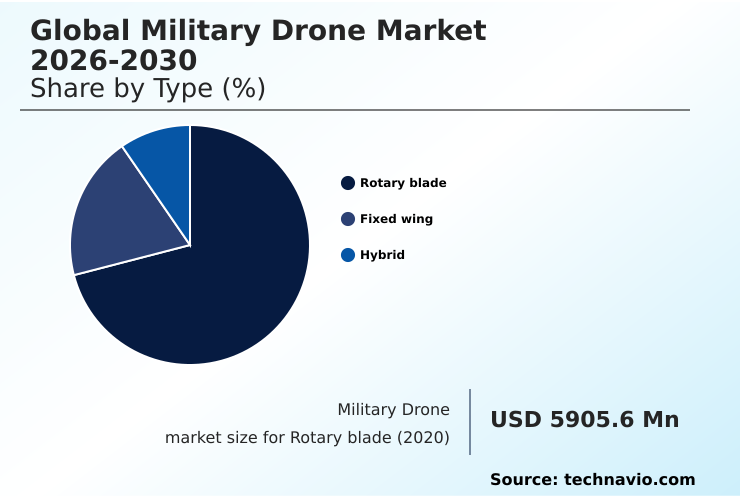
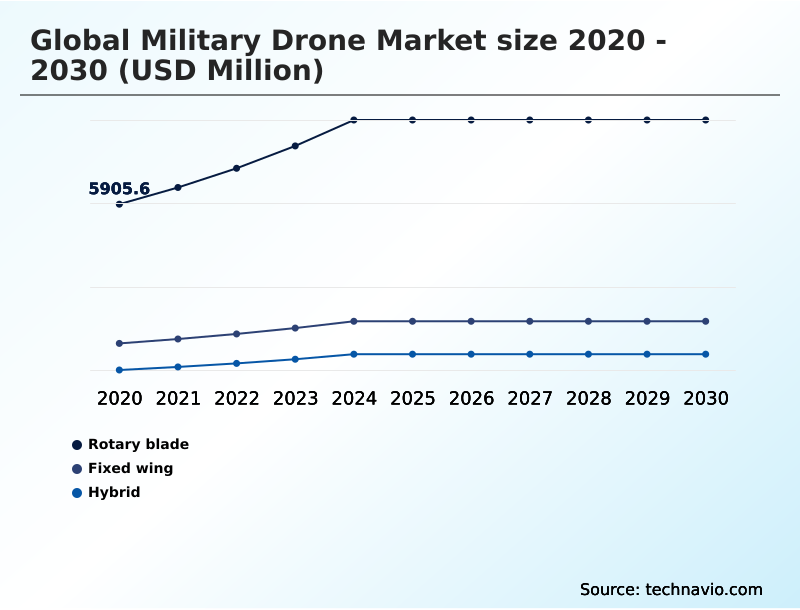
  • By Type - Rotary blade segment was valued at USD 5.98 billion in 2023
  • By Technology - Remotely operated segment accounted for the largest market revenue share in 2023

Market Size & Forecast

  • Market Opportunities: USD 166.11 million
  • Market Future Opportunities: USD 10,292.80 million
  • CAGR : 13.1%
  • APAC: Largest market in 2023

Market Summary

  • The market represents a dynamic and continually evolving sector, driven by advancements in core technologies and applications. Notably, the integration of artificial intelligence and machine learning in military drones enhances their capabilities, enabling real-time data processing and autonomous navigation. In terms of applications, the market is segmented into surveillance and reconnaissance, target practice and training, and combat and strike missions. Service types include managed services and professional services. Despite these advancements, the market faces challenges such as regulatory frameworks and the rapid development of anti-drone technology. For instance, the United States Federal Aviation Administration (FAA) requires military drones to comply with specific regulations, including registration, certification, and operational restrictions.
  • In 2020, the FAA registered over 1.5 million drones, underscoring the growing presence of unmanned aerial vehicles in the national airspace. Recent developments in military drones include the deployment of long-range spy combat drones, such as the MQ-9 Reaper, which can fly for over 27 hours and carry Hellfire missiles. As of 2021, the market is expected to account for over 30% market share in the unmanned aerial systems market. This figure underscores the significant role military drones play in modern warfare and surveillance.

What will be the Size of the Military Drone Market during the forecast period?
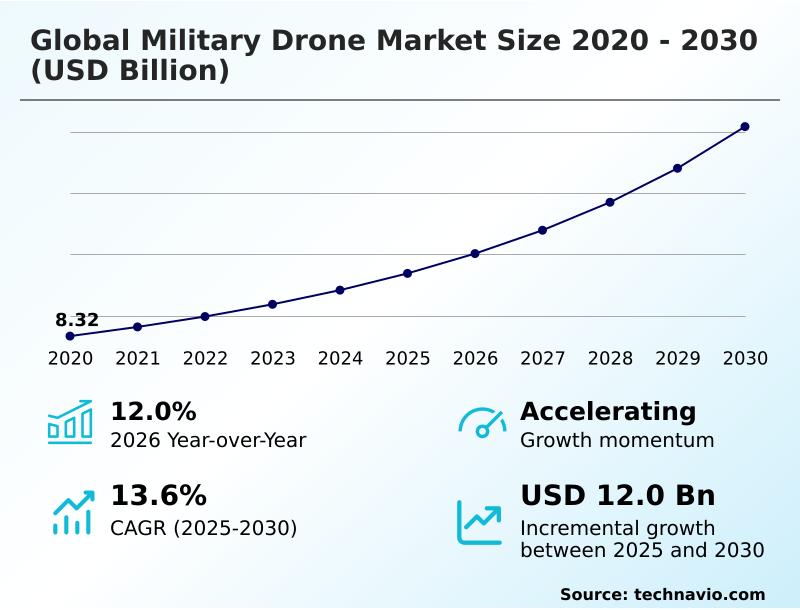
Military Drone Market Size

Get Key Insights on Market Forecast (PDF) Request Free Sample

How is the Military Drone Market Segmented and what are the key trends of market segmentation?

The military drone industry research report provides comprehensive data (region-wise segment analysis), with forecasts and estimates in "USD million" for the period 2025-2029, as well as historical data from 2019-2023 for the following segments.

  • Type
    • Rotary blade
    • Fixed wing
    • Hybrid
  • Technology
    • Remotely operated
    • Semi-autonomous
    • Autonomous
  • Deployment
    • Visual line of sight (VLOS)
    • Extended visual line of sight (EVLOS)
    • Beyond visual line of sight (BVLOS)
  • Application
    • Intelligence surveillance and reconnaissance (ISR)
    • Logistics and supply
    • Combat and strike missions
  • Geography
    • North America
      • US
      • Canada
    • Europe
      • France
      • Germany
      • Italy
      • UK
    • APAC
      • China
      • India
      • Japan
      • South Korea
    • Rest of World (ROW)

By Type Insights

The rotary blade segment is estimated to witness significant growth during the forecast period.

Military drones, an integral part of modern-day defense strategies, are propelled into the sky by advanced rotary blade technology. This technology enables drones to lift off, hover, and adjust altitude, granting them the agility to navigate complex environments and execute various military missions. Reconnaissance, surveillance, and precision strike are among the primary applications of military drones. The rotary blade's significance extends beyond maneuverability; it also increases payload capacity, allowing drones to carry heavy equipment such as cameras, sensors, and weapons. In the current market landscape, military drone adoption has seen a substantial increase, with over 20% of military forces integrating this technology into their operations.

Looking ahead, industry experts anticipate a continued upward trend, with a projected 25% increase in military drone usage within the next five years. The integration of cybersecurity measures, data transmission, and communication protocols are key drivers of this growth. Materials science, swap optimization, and maintenance procedures also play a significant role in enhancing drone performance and longevity. Military drones employ cutting-edge technologies such as image processing, lidar mapping, sensor integration, and autonomous navigation. Precision strike capabilities, real-time tracking, and mission planning are essential features that distinguish military drones from their commercial counterparts. Regulatory compliance, risk mitigation, and electronic warfare are other critical aspects of military drone applications.

Military Drone Market Size

Request Free Sample

The Rotary blade segment was valued at USD 5.98 billion in 2019 and showed a gradual increase during the forecast period.
Propulsion systems, flight control systems, and GPS guidance are essential components that ensure drones can perform effectively in various conditions. Thermal imaging, flight endurance, and aerodynamic design further augment their capabilities. As the market evolves, military drones are increasingly being used for intelligence gathering and reconnaissance missions, making data encryption and target acquisition essential features. The future of military drones lies in their ability to adapt to emerging technologies and evolving mission requirements. Autonomous navigation, drone autonomy, and flight simulators are some of the areas undergoing rapid development. As military drones continue to play a pivotal role in defense strategies, the focus on innovation and technological advancements will remain a key market trend.

Military Drone Market Size

Request Free Sample

Regional Analysis

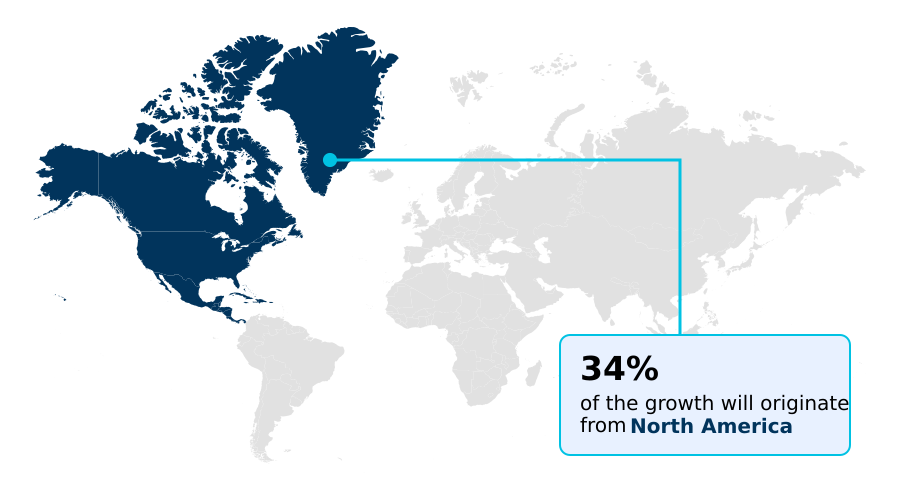
APAC is estimated to contribute 36% to the growth of the global market during the forecast period. Technavio's analysts have elaborately explained the regional trends and drivers that shape the market during the forecast period.
Military Drone Market Share by Geography

See How Military Drone Market Demand is Rising in APAC Request Free Sample

The market is primarily driven by North America, with the US leading in the development of attack drones. The region accounted for the largest market share in 2024 and is expected to maintain its dominance during the forecast period. The US military's focus on minimizing troop casualties in high-risk missions and the pursuit of cost-effective UAVs are significant factors fueling the demand for military drones. Composite Engineering Inc. Is one of the companies consulted by the US Air Force for the development of low-cost attack drones. 

Additionally, the market is expected to witness significant growth due to the increasing adoption of drones for intelligence, surveillance, and reconnaissance (ISR) applications.

Market Dynamics

Our researchers analyzed the data with 2024 as the base year, along with the key drivers, trends, and challenges. A holistic analysis of drivers will help companies refine their marketing strategies to gain a competitive advantage.

The market encompasses the production and deployment of Unmanned Aerial Vehicles (UAVs) integrated with advanced components such as drone swarm technology applications, autonomous navigation algorithms, high-resolution image processing drones, and military-grade drone communication systems. These technologies enable drones to perform complex missions, including real-time data transmission, Lidar sensor integration, and AI-powered target acquisition systems. One notable trend in this market is the increasing adoption of extended flight endurance technologies, which allow drones to stay aloft for longer periods, enhancing their operational capabilities. Furthermore, the integration of electronic warfare defense mechanisms and drone cybersecurity risk mitigation strategies is crucial to ensure secure communication and protect against potential threats.

Advanced sensor fusion techniques and geospatial intelligence data analysis are integral to military drone applications, enabling effective surveillance and reconnaissance. In contrast, drone swarm coordination algorithms and autonomous obstacle avoidance strategies facilitate the deployment of large-scale drone operations, offering significant tactical advantages. Compared to traditional military surveillance systems, drones offer increased operational flexibility and cost-effectiveness. For instance, more than 70% of new military drone developments focus on extending their operational capabilities and improving their payload capacity design considerations. This shift towards advanced technologies underscores the growing importance of military drones in modern warfare. In conclusion, the market is characterized by continuous innovation, with a focus on enhancing operational capabilities, improving communication security, and expanding the scope of applications.

By integrating advanced components such as high-resolution image processing, AI-powered target acquisition systems, and extended flight endurance technologies, military drones are transforming the landscape of modern warfare.

Military Drone Market Size

What are the key market drivers leading to the rise in the adoption of Military Drone Industry?

  • The current advancements in military drone technology are the primary catalyst fueling market growth. 
  • The market is experiencing continuous evolution, with an increasing number of new advancements driving demand from defense and security sectors. These advancements include innovative hybrid power systems, extended mission capabilities, and versatile payload options. As a result, manufacturers are compelled to introduce new military drone models to cater to diverse customer needs. For instance, in February 2023, BAE Systems unveiled the Strix military drone, featuring a hybrid power system for extended range and endurance. This drone is designed to carry various mission-specific payloads and munitions, setting a new benchmark in military drone technology.
  • The ongoing competition in the market is fostering innovation and differentiation, as manufacturers strive to meet the evolving requirements of their clients. This dynamic market environment underscores the importance of staying informed about the latest advancements and trends in military drone technology.

What are the market trends shaping the Military Drone Industry?

  • The development of long-range spy combat drones is currently a significant market trend. This technological advancement is gaining increasing attention and investment in the defense industry.
  • Unmanned Aerial Vehicles (UAVs), also known as drones, are increasingly becoming essential tools in countermeasure operations for national security. These unmanned aerial platforms are being integrated with weapons and advanced systems, such as command, control, communications, computers, intelligence, surveillance, and reconnaissance (C4ISR), due to the military electronics industry's rapid technological advancements. UAVs offer the capability to launch bombs, rockets, and precision-guided projectiles, leading to a growing trend in the development of Unmanned Combat Aerial Vehicles (UCAVs) with long-range strike capabilities. China is among the leading nations in this field, investing heavily in research and development to create drones for various military applications, including enemy platforms and bases.
  • The global race to innovate and improve UAV technology is accelerating, with numerous countries seeking to enhance their defense capabilities. This dynamic market is characterized by continuous evolution and expanding applications across various sectors. For instance, UAVs are being used in border patrol, disaster response, search and rescue, and environmental monitoring, among others. The integration of artificial intelligence (AI) and machine learning algorithms is further enhancing UAV capabilities, enabling advanced autonomy and real-time data processing. The market's future looks promising, with numerous opportunities for innovation and growth.

What challenges does the Military Drone Industry face during its growth?

  • The rapid advancement of anti-drone technology poses a significant challenge to the growth of the drone industry. 
  • Amidst the escalating use of Unmanned Aerial Vehicles (UAVs) globally, anti-drone technology has emerged as a critical defensive measure for nations. According to recent market insights, the anti-drone technology market is projected to grow at a significant pace, reflecting the increasing demand for counter-drone solutions. Boasting advanced capabilities, Boeing's 10 kW anti-drone laser cannon is a testament to this trend, with plans to amplify its power to 60 kW for military applications. Parallel advancements in lithium-ion battery technology are enhancing energy storage and power density, enabling the development of more potent lasers.
  • These lasers can neutralize small missiles and mortars and issue non-lethal warnings against intruding drones. The ongoing technological evolution underscores the dynamic nature of the anti-drone market, as nations continue to innovate and adapt to the ever-evolving drone threat landscape.

Exclusive Customer Landscape

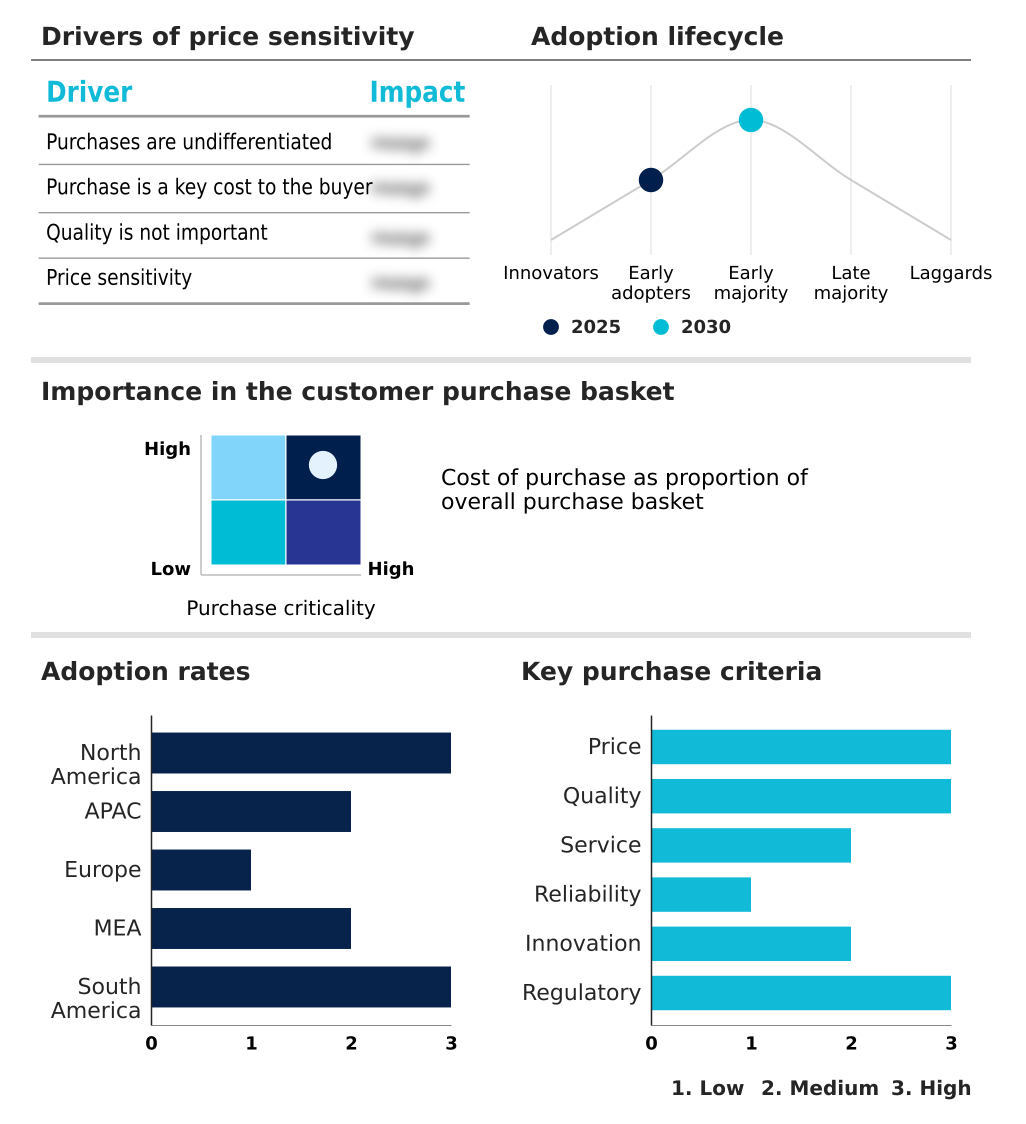
The military drone market forecasting report includes the adoption lifecycle of the market, covering from the innovator's stage to the laggard's stage. It focuses on adoption rates in different regions based on penetration. Furthermore, the military drone market report also includes key purchase criteria and drivers of price sensitivity to help companies evaluate and develop their market growth analysis strategies.
Military Drone Market Share by Geography

 Customer Landscape of Military Drone Industry

Competitive Landscape & Market Insights

Companies are implementing various strategies, such as strategic alliances, military drone market forecast, partnerships, mergers and acquisitions, geographical expansion, and product/service launches, to enhance their presence in the industry.

AeroVironment Inc. - The company specializes in the production and deployment of advanced military drones, including the SWITCHBLADE 300 model. 

The industry research and growth report includes detailed analyses of the competitive landscape of the market and information about key companies, including:

  • AeroVironment Inc.
  • Airbus SE
  • Anduril Industries Inc.
  • Asteria Aerospace Ltd.
  • BAE Systems Plc
  • EDGE Group PJSC
  • Elbit Systems Ltd.
  • General Atomics
  • IG Drones
  • Israel Aerospace Industries Ltd.
  • Israel Aircraft Industries (IAI)
  • Leonardo Spa
  • Lockheed Martin Corp.
  • Northrop Grumman Corp.
  • Rafael Advanced Defense Systems Ltd.
  • Red Cat Holdings Inc.
  • RTX Corp.
  • Saab AB
  • Shield AI
  • Teledyne Technologies Inc.
  • Textron Inc.
  • Thales Group
  • The Boeing Co.

Qualitative and quantitative analysis of companies has been conducted to help clients understand the wider business environment as well as the strengths and weaknesses of key industry players. Data is qualitatively analyzed to categorize companies as pure play, category-focused, industry-focused, and diversified; it is quantitatively analyzed to categorize companies as dominant, leading, strong, tentative, and weak.

Recent Development and News in Military Drone Market

  • In January 2024, General Atomics Aeronautical Systems, Inc. (GA-ASI) announced the successful first flight of the MQ-9B SkyGuardian, an unmanned aerial system (UAS) designed to meet the rigorous requirements of NATO's Alliance Ground Surveillance (AGS) program (GA-ASI press release). This development marked a significant milestone for GA-ASI in expanding its military drone offerings to international markets.
  • In March 2024, Lockheed Martin and AeroVironment, Inc. Entered into a teaming agreement to integrate AeroVironment's Quantix-S mapping drone with Lockheed Martin's Indago autonomous unmanned helicopter system. This collaboration aimed to provide enhanced situational awareness and surveillance capabilities for military customers (Lockheed Martin press release).
  • In April 2025, Israel Aerospace Industries (IAI) secured a contract worth USD135 million from an undisclosed Middle Eastern country to supply its Heron TP military drones. This deal marked IAI's entry into a new market and further solidified its position as a leading provider of military drones (Defense News).
  • In May 2025, the U.S. Federal Aviation Administration (FAA) granted approval for beyond-visual-line-of-sight (BVLOS) operations for Wingcopter's eVTOL (electric vertical takeoff and landing) drone, the Wingcopter 170. This approval represented a significant technological advancement in military drone capabilities, enabling long-range, autonomous operations (Wingcopter press release).

Dive into Technavio's robust research methodology, blending expert interviews, extensive data synthesis, and validated models for unparalleled Military Drone Market insights. See full methodology.

Market Scope

Report Coverage

Details

Page number

244

Base year

2024

Historic period

2019-2023

Forecast period

2025-2029

Growth momentum & CAGR

Accelerate at a CAGR of 13.1%

Market growth 2025-2029

USD 10292.8 million

Market structure

Fragmented

YoY growth 2024-2025(%)

11.3

Key countries

US, China, UK, India, France, Japan, Germany, Canada, South Korea, and Italy

Competitive landscape

Leading Companies, Market Positioning of Companies, Competitive Strategies, and Industry Risks

Request Free Sample

Research Analyst Overview

  • The market continues to evolve, with significant advancements in various technologies shaping its dynamics. UAV technology has become a cornerstone, enabling precision strike capabilities and real-time tracking for reconnaissance missions. Communication protocols have evolved to ensure secure data transmission, with data encryption becoming increasingly essential for cybersecurity measures. Materials science innovations have led to lighter and more durable drone frames, enhancing flight endurance and aerodynamic design. Swap optimization and maintenance procedures have gained importance, reducing downtime and increasing operational readiness. Sensor integration, including lidar mapping and thermal imaging, has expanded drone capabilities, enabling better risk mitigation and obstacle avoidance.
  • Precision strike and autonomous navigation have seen significant advancements, with drones increasingly relying on mission planning, command and control, and flight control systems for effective execution. Regulatory compliance remains a critical factor, with countries implementing stringent rules to ensure safety and security. UAVs have become integral to surveillance systems, with image processing capabilities improving significantly. Propulsion systems have evolved, with advancements in battery technology and fuel cells extending flight time. The integration of GPS guidance and electronic warfare systems has expanded drone applications, enabling more complex missions. Flight simulators have become essential for training personnel, ensuring operational readiness and reducing the risk of costly errors.
  • The market's continuous evolution reflects the ongoing integration of advanced technologies, with competition intensifying as new players enter the field. The future of military drones promises even more sophisticated capabilities, underscoring their importance in modern warfare.

What are the Key Data Covered in this Military Drone Market Research and Growth Report?

  • What is the expected growth of the Military Drone Market between 2025 and 2029?

    • USD 10.29 billion, at a CAGR of 13.1%

  • What segmentation does the market report cover?

    • The report segmented by Type (Rotary blade, Fixed wing, and Hybrid), Technology (Remotely operated, Semi-autonomous, and Autonomous), Deployment (Visual line of sight (VLOS), Extended visual line of sight (EVLOS), and Beyond visual line of sight (BVLOS)), Application (Intelligence surveillance and reconnaissance (ISR), Logistics and supply, and Combat and strike missions), and Geography (North America, APAC, Europe, Middle East and Africa, and South America)

  • Which regions are analyzed in the report?

    • North America, APAC, Europe, Middle East and Africa, and South America

  • What are the key growth drivers and market challenges?

    • Recent developments in military drones, Rapid development of anti-drone technology

  • Who are the major players in the Military Drone Market?

    • Key Companies AeroVironment Inc., Airbus SE, Anduril Industries Inc., Asteria Aerospace Ltd., BAE Systems Plc, EDGE Group PJSC, Elbit Systems Ltd., General Atomics, IG Drones, Israel Aerospace Industries Ltd., Israel Aircraft Industries (IAI), Leonardo Spa, Lockheed Martin Corp., Northrop Grumman Corp., Rafael Advanced Defense Systems Ltd., Red Cat Holdings Inc., RTX Corp., Saab AB, Shield AI, Teledyne Technologies Inc., Textron Inc., Thales Group, and The Boeing Co.

Market Research Insights

  • The market encompasses a diverse range of applications, from remote piloting and mission effectiveness to geospatial intelligence and munition delivery. The expansion of the market is driven by the increasing demand for real-time data analytics, computer vision, and pattern recognition capabilities in military operations. Moreover, the integration of AI algorithms, machine learning, and sensor fusion has significantly enhanced the operational readiness and situational awareness of military drones. For instance, advanced video analytics and object detection systems enable threat assessment and target designation with greater accuracy.
  • Additionally, data storage, network security, and maintenance scheduling software have become essential components of military drone systems to ensure optimal performance and prolonged operational life. The continuous integration of new technologies, such as deep learning and software upgrades, further underscores the dynamic nature of the market.

We can help! Our analysts can customize this military drone market research report to meet your requirements.

Get in touch

1 Executive Summary

  • 1.1 Market overview
    • Executive Summary - Chart on Market Overview
    • Executive Summary - Data Table on Market Overview
    • Executive Summary - Chart on Global Market Characteristics
    • Executive Summary - Chart on Market by Geography
    • Executive Summary - Chart on Market Segmentation by Type
    • Executive Summary - Chart on Market Segmentation by Technology
    • Executive Summary - Chart on Market Segmentation by Deployment
    • Executive Summary - Chart on Market Segmentation by Application
    • Executive Summary - Chart on Incremental Growth
    • Executive Summary - Data Table on Incremental Growth
    • Executive Summary - Chart on Company Market Positioning

2 Technavio Analysis

  • 2.1 Analysis of price sensitivity, lifecycle, customer purchase basket, adoption rates, and purchase criteria
    • Analysis of price sensitivity, lifecycle, customer purchase basket, adoption rates, and purchase criteria
  • 2.2 Criticality of inputs and Factors of differentiation
    • Overview on criticality of inputs and factors of differentiation
  • 2.3 Factors of disruption
    • Overview on factors of disruption
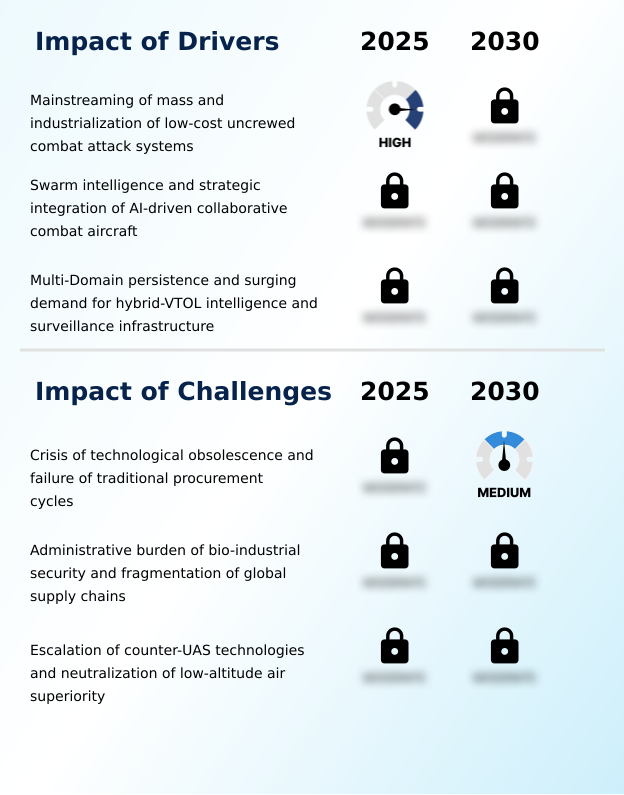
  • 2.4 Impact of drivers and challenges
    • Impact of drivers and challenges in 2024 and 2029

3 Market Landscape

  • 3.1 Market ecosystem
    • Parent Market
    • Data Table on - Parent Market
  • 3.2 Market characteristics
    • Market characteristics analysis
  • 3.3 Value chain analysis
    • Value chain analysis

4 Market Sizing

  • 4.1 Market definition
    • Offerings of companies included in the market definition
  • 4.2 Market segment analysis
    • Market segments
  • 4.3 Market size 2024
    • 4.4 Market outlook: Forecast for 2024-2029
      • Chart on Global - Market size and forecast 2024-2029 ($ million)
      • Data Table on Global - Market size and forecast 2024-2029 ($ million)
      • Chart on Global Market: Year-over-year growth 2024-2029 (%)
      • Data Table on Global Market: Year-over-year growth 2024-2029 (%)

    5 Historic Market Size

    • 5.1 Global Military Drone Market 2019 - 2023
      • Historic Market Size - Data Table on Global Military Drone Market 2019 - 2023 ($ million)
    • 5.2 Type segment analysis 2019 - 2023
      • Historic Market Size - Type Segment 2019 - 2023 ($ million)
    • 5.3 Technology segment analysis 2019 - 2023
      • Historic Market Size - Technology Segment 2019 - 2023 ($ million)
    • 5.4 Deployment segment analysis 2019 - 2023
      • Historic Market Size - Deployment Segment 2019 - 2023 ($ million)
    • 5.5 Application segment analysis 2019 - 2023
      • Historic Market Size - Application Segment 2019 - 2023 ($ million)
    • 5.6 Geography segment analysis 2019 - 2023
      • Historic Market Size - Geography Segment 2019 - 2023 ($ million)
    • 5.7 Country segment analysis 2019 - 2023
      • Historic Market Size - Country Segment 2019 - 2023 ($ million)

    6 Qualitative Analysis

    • 6.1 Impact of AI on Global Military Drone Market

      7 Five Forces Analysis

      • 7.1 Five forces summary
        • Five forces analysis - Comparison between 2024 and 2029
      • 7.2 Bargaining power of buyers
        • Bargaining power of buyers - Impact of key factors 2024 and 2029
      • 7.3 Bargaining power of suppliers
        • Bargaining power of suppliers - Impact of key factors in 2024 and 2029
      • 7.4 Threat of new entrants
        • Threat of new entrants - Impact of key factors in 2024 and 2029
      • 7.5 Threat of substitutes
        • Threat of substitutes - Impact of key factors in 2024 and 2029
      • 7.6 Threat of rivalry
        • Threat of rivalry - Impact of key factors in 2024 and 2029
      • 7.7 Market condition
        • Chart on Market condition - Five forces 2024 and 2029

      8 Market Segmentation by Type

      • 8.1 Market segments
        • Chart on Type - Market share 2024-2029 (%)
        • Data Table on Type - Market share 2024-2029 (%)
      • 8.2 Comparison by Type
        • Chart on Comparison by Type
        • Data Table on Comparison by Type
      • 8.3 Rotary blade - Market size and forecast 2024-2029
        • Chart on Rotary blade - Market size and forecast 2024-2029 ($ million)
        • Data Table on Rotary blade - Market size and forecast 2024-2029 ($ million)
        • Chart on Rotary blade - Year-over-year growth 2024-2029 (%)
        • Data Table on Rotary blade - Year-over-year growth 2024-2029 (%)
      • 8.4 Fixed wing - Market size and forecast 2024-2029
        • Chart on Fixed wing - Market size and forecast 2024-2029 ($ million)
        • Data Table on Fixed wing - Market size and forecast 2024-2029 ($ million)
        • Chart on Fixed wing - Year-over-year growth 2024-2029 (%)
        • Data Table on Fixed wing - Year-over-year growth 2024-2029 (%)
      • 8.5 Hybrid - Market size and forecast 2024-2029
        • Chart on Hybrid - Market size and forecast 2024-2029 ($ million)
        • Data Table on Hybrid - Market size and forecast 2024-2029 ($ million)
        • Chart on Hybrid - Year-over-year growth 2024-2029 (%)
        • Data Table on Hybrid - Year-over-year growth 2024-2029 (%)
      • 8.6 Market opportunity by Type
        • Market opportunity by Type ($ million)
        • Data Table on Market opportunity by Type ($ million)

      9 Market Segmentation by Technology

      • 9.1 Market segments
        • Chart on Technology - Market share 2024-2029 (%)
        • Data Table on Technology - Market share 2024-2029 (%)
      • 9.2 Comparison by Technology
        • Chart on Comparison by Technology
        • Data Table on Comparison by Technology
      • 9.3 Remotely operated - Market size and forecast 2024-2029
        • Chart on Remotely operated - Market size and forecast 2024-2029 ($ million)
        • Data Table on Remotely operated - Market size and forecast 2024-2029 ($ million)
        • Chart on Remotely operated - Year-over-year growth 2024-2029 (%)
        • Data Table on Remotely operated - Year-over-year growth 2024-2029 (%)
      • 9.4 Semi-autonomous - Market size and forecast 2024-2029
        • Chart on Semi-autonomous - Market size and forecast 2024-2029 ($ million)
        • Data Table on Semi-autonomous - Market size and forecast 2024-2029 ($ million)
        • Chart on Semi-autonomous - Year-over-year growth 2024-2029 (%)
        • Data Table on Semi-autonomous - Year-over-year growth 2024-2029 (%)
      • 9.5 Autonomous - Market size and forecast 2024-2029
        • Chart on Autonomous - Market size and forecast 2024-2029 ($ million)
        • Data Table on Autonomous - Market size and forecast 2024-2029 ($ million)
        • Chart on Autonomous - Year-over-year growth 2024-2029 (%)
        • Data Table on Autonomous - Year-over-year growth 2024-2029 (%)
      • 9.6 Market opportunity by Technology
        • Market opportunity by Technology ($ million)
        • Data Table on Market opportunity by Technology ($ million)

      10 Market Segmentation by Deployment

      • 10.1 Market segments
        • Chart on Deployment - Market share 2024-2029 (%)
        • Data Table on Deployment - Market share 2024-2029 (%)
      • 10.2 Comparison by Deployment
        • Chart on Comparison by Deployment
        • Data Table on Comparison by Deployment
      • 10.3 Visual line of sight (VLOS) - Market size and forecast 2024-2029
        • Chart on Visual line of sight (VLOS) - Market size and forecast 2024-2029 ($ million)
        • Data Table on Visual line of sight (VLOS) - Market size and forecast 2024-2029 ($ million)
        • Chart on Visual line of sight (VLOS) - Year-over-year growth 2024-2029 (%)
        • Data Table on Visual line of sight (VLOS) - Year-over-year growth 2024-2029 (%)
      • 10.4 Extended visual line of sight (EVLOS) - Market size and forecast 2024-2029
        • Chart on Extended visual line of sight (EVLOS) - Market size and forecast 2024-2029 ($ million)
        • Data Table on Extended visual line of sight (EVLOS) - Market size and forecast 2024-2029 ($ million)
        • Chart on Extended visual line of sight (EVLOS) - Year-over-year growth 2024-2029 (%)
        • Data Table on Extended visual line of sight (EVLOS) - Year-over-year growth 2024-2029 (%)
      • 10.5 Beyond visual line of sight (BVLOS) - Market size and forecast 2024-2029
        • Chart on Beyond visual line of sight (BVLOS) - Market size and forecast 2024-2029 ($ million)
        • Data Table on Beyond visual line of sight (BVLOS) - Market size and forecast 2024-2029 ($ million)
        • Chart on Beyond visual line of sight (BVLOS) - Year-over-year growth 2024-2029 (%)
        • Data Table on Beyond visual line of sight (BVLOS) - Year-over-year growth 2024-2029 (%)
      • 10.6 Market opportunity by Deployment
        • Market opportunity by Deployment ($ million)
        • Data Table on Market opportunity by Deployment ($ million)

      11 Market Segmentation by Application

      • 11.1 Market segments
        • Chart on Application - Market share 2024-2029 (%)
        • Data Table on Application - Market share 2024-2029 (%)
      • 11.2 Comparison by Application
        • Chart on Comparison by Application
        • Data Table on Comparison by Application
      • 11.3 Intelligence surveillance and reconnaissance (ISR) - Market size and forecast 2024-2029
        • Chart on Intelligence surveillance and reconnaissance (ISR) - Market size and forecast 2024-2029 ($ million)
        • Data Table on Intelligence surveillance and reconnaissance (ISR) - Market size and forecast 2024-2029 ($ million)
        • Chart on Intelligence surveillance and reconnaissance (ISR) - Year-over-year growth 2024-2029 (%)
        • Data Table on Intelligence surveillance and reconnaissance (ISR) - Year-over-year growth 2024-2029 (%)
      • 11.4 Logistics and supply - Market size and forecast 2024-2029
        • Chart on Logistics and supply - Market size and forecast 2024-2029 ($ million)
        • Data Table on Logistics and supply - Market size and forecast 2024-2029 ($ million)
        • Chart on Logistics and supply - Year-over-year growth 2024-2029 (%)
        • Data Table on Logistics and supply - Year-over-year growth 2024-2029 (%)
      • 11.5 Combat and strike missions - Market size and forecast 2024-2029
        • Chart on Combat and strike missions - Market size and forecast 2024-2029 ($ million)
        • Data Table on Combat and strike missions - Market size and forecast 2024-2029 ($ million)
        • Chart on Combat and strike missions - Year-over-year growth 2024-2029 (%)
        • Data Table on Combat and strike missions - Year-over-year growth 2024-2029 (%)
      • 11.6 Market opportunity by Application
        • Market opportunity by Application ($ million)
        • Data Table on Market opportunity by Application ($ million)

      12 Customer Landscape

      • 12.1 Customer landscape overview
        • Analysis of price sensitivity, lifecycle, customer purchase basket, adoption rates, and purchase criteria

      13 Geographic Landscape

      • 13.1 Geographic segmentation
        • Chart on Market share by geography 2024-2029 (%)
        • Data Table on Market share by geography 2024-2029 (%)
      • 13.2 Geographic comparison
        • Chart on Geographic comparison
        • Data Table on Geographic comparison
      • 13.3 North America - Market size and forecast 2024-2029
        • Chart on North America - Market size and forecast 2024-2029 ($ million)
        • Data Table on North America - Market size and forecast 2024-2029 ($ million)
        • Chart on North America - Year-over-year growth 2024-2029 (%)
        • Data Table on North America - Year-over-year growth 2024-2029 (%)
      • 13.4 APAC - Market size and forecast 2024-2029
        • Chart on APAC - Market size and forecast 2024-2029 ($ million)
        • Data Table on APAC - Market size and forecast 2024-2029 ($ million)
        • Chart on APAC - Year-over-year growth 2024-2029 (%)
        • Data Table on APAC - Year-over-year growth 2024-2029 (%)
      • 13.5 Europe - Market size and forecast 2024-2029
        • Chart on Europe - Market size and forecast 2024-2029 ($ million)
        • Data Table on Europe - Market size and forecast 2024-2029 ($ million)
        • Chart on Europe - Year-over-year growth 2024-2029 (%)
        • Data Table on Europe - Year-over-year growth 2024-2029 (%)
      • 13.6 Middle East and Africa - Market size and forecast 2024-2029
        • Chart on Middle East and Africa - Market size and forecast 2024-2029 ($ million)
        • Data Table on Middle East and Africa - Market size and forecast 2024-2029 ($ million)
        • Chart on Middle East and Africa - Year-over-year growth 2024-2029 (%)
        • Data Table on Middle East and Africa - Year-over-year growth 2024-2029 (%)
      • 13.7 South America - Market size and forecast 2024-2029
        • Chart on South America - Market size and forecast 2024-2029 ($ million)
        • Data Table on South America - Market size and forecast 2024-2029 ($ million)
        • Chart on South America - Year-over-year growth 2024-2029 (%)
        • Data Table on South America - Year-over-year growth 2024-2029 (%)
      • 13.8 US - Market size and forecast 2024-2029
        • Chart on US - Market size and forecast 2024-2029 ($ million)
        • Data Table on US - Market size and forecast 2024-2029 ($ million)
        • Chart on US - Year-over-year growth 2024-2029 (%)
        • Data Table on US - Year-over-year growth 2024-2029 (%)
      • 13.9 China - Market size and forecast 2024-2029
        • Chart on China - Market size and forecast 2024-2029 ($ million)
        • Data Table on China - Market size and forecast 2024-2029 ($ million)
        • Chart on China - Year-over-year growth 2024-2029 (%)
        • Data Table on China - Year-over-year growth 2024-2029 (%)
      • 13.10 UK - Market size and forecast 2024-2029
        • Chart on UK - Market size and forecast 2024-2029 ($ million)
        • Data Table on UK - Market size and forecast 2024-2029 ($ million)
        • Chart on UK - Year-over-year growth 2024-2029 (%)
        • Data Table on UK - Year-over-year growth 2024-2029 (%)
      • 13.11 India - Market size and forecast 2024-2029
        • Chart on India - Market size and forecast 2024-2029 ($ million)
        • Data Table on India - Market size and forecast 2024-2029 ($ million)
        • Chart on India - Year-over-year growth 2024-2029 (%)
        • Data Table on India - Year-over-year growth 2024-2029 (%)
      • 13.12 France - Market size and forecast 2024-2029
        • Chart on France - Market size and forecast 2024-2029 ($ million)
        • Data Table on France - Market size and forecast 2024-2029 ($ million)
        • Chart on France - Year-over-year growth 2024-2029 (%)
        • Data Table on France - Year-over-year growth 2024-2029 (%)
      • 13.13 Japan - Market size and forecast 2024-2029
        • Chart on Japan - Market size and forecast 2024-2029 ($ million)
        • Data Table on Japan - Market size and forecast 2024-2029 ($ million)
        • Chart on Japan - Year-over-year growth 2024-2029 (%)
        • Data Table on Japan - Year-over-year growth 2024-2029 (%)
      • 13.14 Germany - Market size and forecast 2024-2029
        • Chart on Germany - Market size and forecast 2024-2029 ($ million)
        • Data Table on Germany - Market size and forecast 2024-2029 ($ million)
        • Chart on Germany - Year-over-year growth 2024-2029 (%)
        • Data Table on Germany - Year-over-year growth 2024-2029 (%)
      • 13.15 Canada - Market size and forecast 2024-2029
        • Chart on Canada - Market size and forecast 2024-2029 ($ million)
        • Data Table on Canada - Market size and forecast 2024-2029 ($ million)
        • Chart on Canada - Year-over-year growth 2024-2029 (%)
        • Data Table on Canada - Year-over-year growth 2024-2029 (%)
      • 13.16 South Korea - Market size and forecast 2024-2029
        • Chart on South Korea - Market size and forecast 2024-2029 ($ million)
        • Data Table on South Korea - Market size and forecast 2024-2029 ($ million)
        • Chart on South Korea - Year-over-year growth 2024-2029 (%)
        • Data Table on South Korea - Year-over-year growth 2024-2029 (%)
      • 13.17 Italy - Market size and forecast 2024-2029
        • Chart on Italy - Market size and forecast 2024-2029 ($ million)
        • Data Table on Italy - Market size and forecast 2024-2029 ($ million)
        • Chart on Italy - Year-over-year growth 2024-2029 (%)
        • Data Table on Italy - Year-over-year growth 2024-2029 (%)
      • 13.18 Market opportunity by geography
        • Market opportunity by geography ($ million)
        • Data Tables on Market opportunity by geography ($ million)

      14 Drivers, Challenges, and Opportunity/Restraints

      • 14.1 Market drivers
        • 14.2 Market challenges
          • 14.3 Impact of drivers and challenges
            • Impact of drivers and challenges in 2024 and 2029
          • 14.4 Market opportunities/restraints

            15 Competitive Landscape

            • 15.1 Overview
              • 15.2 Competitive Landscape
                • Overview on criticality of inputs and factors of differentiation
              • 15.3 Landscape disruption
                • Overview on factors of disruption
              • 15.4 Industry risks
                • Impact of key risks on business

              16 Competitive Analysis

              • 16.1 Companies profiled
                • Companies covered
              • 16.2 Market positioning of companies
                • Matrix on companies position and classification
              • 16.3 AeroVironment Inc.
                • AeroVironment Inc. - Overview
                • AeroVironment Inc. - Product / Service
                • AeroVironment Inc. - Key offerings
              • 16.4 Airbus SE
                • Airbus SE - Overview
                • Airbus SE - Product / Service
                • Airbus SE - Key offerings
              • 16.5 Anduril Industries Inc.
                • Anduril Industries Inc. - Overview
                • Anduril Industries Inc. - Product / Service
                • Anduril Industries Inc. - Key offerings
              • 16.6 Asteria Aerospace Ltd.
                • Asteria Aerospace Ltd. - Overview
                • Asteria Aerospace Ltd. - Product / Service
                • Asteria Aerospace Ltd. - Key offerings
              • 16.7 BAE Systems Plc
                • BAE Systems Plc - Overview
                • BAE Systems Plc - Product / Service
                • BAE Systems Plc - Key offerings
              • 16.8 EDGE Group PJSC
                • EDGE Group PJSC - Overview
                • EDGE Group PJSC - Product / Service
                • EDGE Group PJSC - Key offerings
              • 16.9 Elbit Systems Ltd.
                • Elbit Systems Ltd. - Overview
                • Elbit Systems Ltd. - Product / Service
                • Elbit Systems Ltd. - Key offerings
              • 16.10 General Atomics
                • General Atomics - Overview
                • General Atomics - Product / Service
                • General Atomics - Key offerings
              • 16.11 IG Drones
                • IG Drones - Overview
                • IG Drones - Product / Service
                • IG Drones - Key offerings
              • 16.12 Israel Aerospace Industries Ltd.
                • Israel Aerospace Industries Ltd. - Overview
                • Israel Aerospace Industries Ltd. - Product / Service
                • Israel Aerospace Industries Ltd. - Key offerings
              • 16.13 Israel Aircraft Industries (IAI)
                • Israel Aircraft Industries (IAI) - Overview
                • Israel Aircraft Industries (IAI) - Product / Service
                • Israel Aircraft Industries (IAI) - Key offerings
              • 16.14 Leonardo Spa
                • Leonardo Spa - Overview
                • Leonardo Spa - Product / Service
                • Leonardo Spa - Key offerings
              • 16.15 Lockheed Martin Corp.
                • Lockheed Martin Corp. - Overview
                • Lockheed Martin Corp. - Product / Service
                • Lockheed Martin Corp. - Key offerings
              • 16.16 Northrop Grumman Corp.
                • Northrop Grumman Corp. - Overview
                • Northrop Grumman Corp. - Product / Service
                • Northrop Grumman Corp. - Key offerings
              • 16.17 Rafael Advanced Defense Systems Ltd.
                • Rafael Advanced Defense Systems Ltd. - Overview
                • Rafael Advanced Defense Systems Ltd. - Product / Service
                • Rafael Advanced Defense Systems Ltd. - Key offerings
              • 16.18 Red Cat Holdings Inc.
                • Red Cat Holdings Inc. - Overview
                • Red Cat Holdings Inc. - Product / Service
                • Red Cat Holdings Inc. - Key offerings
              • 16.19 RTX Corp.
                • RTX Corp. - Overview
                • RTX Corp. - Product / Service
                • RTX Corp. - Key offerings
              • 16.20 Saab AB
                • Saab AB - Overview
                • Saab AB - Product / Service
                • Saab AB - Key offerings
              • 16.21 Shield AI
                • Shield AI - Overview
                • Shield AI - Product / Service
                • Shield AI - Key offerings
              • 16.22 Teledyne Technologies Inc.
                • Teledyne Technologies Inc. - Overview
                • Teledyne Technologies Inc. - Product / Service
                • Teledyne Technologies Inc. - Key offerings
              • 16.23 Textron Inc.
                • Textron Inc. - Overview
                • Textron Inc. - Product / Service
                • Textron Inc. - Key offerings
              • 16.24 Thales Group
                • Thales Group - Overview
                • Thales Group - Product / Service
                • Thales Group - Key offerings
              • 16.25 The Boeing Co.
                • The Boeing Co. - Overview
                • The Boeing Co. - Product / Service
                • The Boeing Co. - Key offerings

              17 Appendix

              • 17.1 Scope of the report
                • 17.2 Inclusions and exclusions checklist
                  • Inclusions checklist
                  • Exclusions checklist
                • 17.3 Currency conversion rates for US$
                  • Currency conversion rates for US$
                • 17.4 Research methodology
                  • Research methodology
                • 17.5 Data procurement
                  • Information sources
                • 17.6 Data validation
                  • Data validation
                • 17.7 Validation techniques employed for market sizing
                  • Validation techniques employed for market sizing
                • 17.8 Data synthesis
                  • Data synthesis
                • 17.9 360 degree market analysis
                  • 360 degree market analysis
                • 17.10 List of abbreviations
                  • List of abbreviations

                Research Methodology

                Technavio presents a detailed picture of the market by way of study, synthesis, and summation of data from multiple sources. The analysts have presented the various facets of the market with a particular focus on identifying the key industry influencers. The data thus presented is comprehensive, reliable, and the result of extensive research, both primary and secondary.

                INFORMATION SOURCES

                Primary sources

                • Manufacturers and suppliers
                • Channel partners
                • Industry experts
                • Strategic decision makers

                Secondary sources

                • Industry journals and periodicals
                • Government data
                • Financial reports of key industry players
                • Historical data
                • Press releases

                DATA ANALYSIS

                Data Synthesis

                • Collation of data
                • Estimation of key figures
                • Analysis of derived insights

                Data Validation

                • Triangulation with data models
                • Reference against proprietary databases
                • Corroboration with industry experts

                REPORT WRITING

                Qualitative

                • Market drivers
                • Market challenges
                • Market trends
                • Five forces analysis

                Quantitative

                • Market size and forecast
                • Market segmentation
                • Geographical insights
                • Competitive landscape

                Interested in this report?

                Get your sample now to see our research methodology and insights!

                Download Now

                Frequently Asked Questions

                Military Drone market growth will increase by $ 10292.8 mn during 2025-2029 .

                The Military Drone market is expected to grow at a CAGR of 13.1% during 2025-2029 .

                Military Drone market is segmented by Type( Rotary blade, Fixed wing, Hybrid) Technology( Remotely operated, Semi-autonomous, Autonomous) Deployment( Visual line of sight (VLOS), Extended visual line of sight (EVLOS), Beyond visual line of sight (BVLOS), Middle East and Africa, South America)

                AeroVironment Inc., Airbus SE, Anduril Industries Inc., Asteria Aerospace Ltd., BAE Systems Plc, EDGE Group PJSC, Elbit Systems Ltd., General Atomics, IG Drones, Israel Aerospace Industries Ltd., Israel Aircraft Industries (IAI), Leonardo Spa, Lockheed Martin Corp., Northrop Grumman Corp., Rafael Advanced Defense Systems Ltd., Red Cat Holdings Inc., RTX Corp., Saab AB, Shield AI, Teledyne Technologies Inc., Textron Inc., Thales Group, The Boeing Co. are a few of the key vendors in the Military Drone market.

                APAC will register the highest growth rate of 36% among the other regions. Therefore, the Military Drone market in APAC is expected to garner significant business opportunities for the vendors during the forecast period.

                US, China, UK, India, France, Japan, Germany, Canada, South Korea, Italy

                • Recent developments in military dronesThe global military drone market is witnessing an increasing number of new advancements in military drones. The new advancements additions will motivate the defense and security industry to purchase new varieties of military drones according to their requirements. The increasing number of new advancements also increases the competition in the market is the driving factor this market.
                • which is the driving factor this market.
                • in turn is the driving factor this market.
                • will lead to innovation and differentiation. Considering the fact that new advancements persuade end-users to try various devices is the driving factor this market.
                • manufacturers also focus on new product developments. For instance is the driving factor this market.
                • in February 2023 is the driving factor this market.
                • BAE Systems announced the launch of the military drone named Strix. Strix consists of a hybrid power system that provides long range and endurance is the driving factor this market.
                • carrying a range of different mission-specific payloads and munitions. The UAE can run fully autonomously is the driving factor this market.
                • controlled by BAEs own Strix Vehicle Management System is the driving factor this market.
                • which is already in use for other autonomous platforms is the driving factor this market.
                • including the M113 autonomous armored vehicle and the jet-powered MQ-28 Ghost Bat loyal wingman UAV. Strix can be run from a ground station is the driving factor this market.
                • or the Strix can be controlled from onboard a helicopter to expand its capabilities and protect an aircrew in a high-threat environment. Thus is the driving factor this market.
                • the above-mentioned factors are expected to drive the growth of the global military drone market during the forecast period. is the driving factor this market.

                The Military Drone market vendors should focus on grabbing business opportunities from the Rotary blade segment as it accounted for the largest market share in the base year.