

Ports And Terminal Operations Market Size 2026-2030
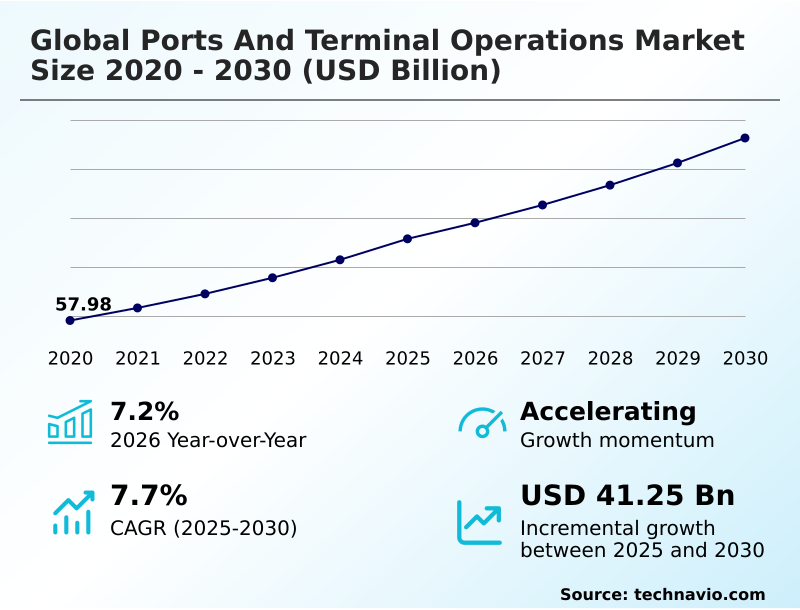
The ports and terminal operations market size is valued to increase by USD 41.25 billion, at a CAGR of 7.7% from 2025 to 2030. Growing adoption of containerization will drive the ports and terminal operations market.
Major Market Trends & Insights
- APAC dominated the market and accounted for a 66.4% growth during the forecast period.
- By Application - Food transportation segment was valued at USD 22.97 billion in 2024
- By Service Type - Stevedoring segment accounted for the largest market revenue share in 2024
Market Size & Forecast
- Market Opportunities: USD 74.66 billion
- Market Future Opportunities: USD 41.25 billion
- CAGR from 2025 to 2030 : 7.7%
Market Summary
- The ports and terminal operations market is undergoing a significant transformation, driven by the dual imperatives of technological integration and environmental sustainability. As the backbone of international trade, these facilities are evolving from simple transit points into sophisticated logistics hubs powered by automation and data analytics.
- A key driver is the relentless push for efficiency, compelling operators to adopt advanced technologies like AI and IoT to optimize everything from vessel berthing to yard management.
- For instance, a terminal operator can leverage a digital twin of its facility to simulate different cargo flow scenarios, identifying and mitigating potential bottlenecks before they occur, which significantly reduces vessel idle times and fuel consumption. This shift toward smart, connected ecosystems is not merely a trend but a strategic necessity.
- However, this evolution is constrained by challenges such as the high capital expenditure required for infrastructure modernization and the complexities of integrating new digital platforms with legacy systems. The increasing size of container vessels further strains existing capacity, making congestion a persistent operational risk that demands innovative management solutions to ensure the fluid movement of global commerce.
What will be the Size of the Ports And Terminal Operations Market during the forecast period?
Get Key Insights on Market Forecast (PDF) Get Free Sample
How is the Ports And Terminal Operations Market Segmented?
The ports and terminal operations industry research report provides comprehensive data (region-wise segment analysis), with forecasts and estimates in "USD million" for the period 2026-2030, as well as historical data from 2020-2024 for the following segments.
- Application
- Food transportation
- Steel transportation
- Coal transportation
- Others
- Service type
- Stevedoring
- Cargo handling and transportation
- Others
- Technology
- Automation and robotics
- Port management software
- Smart ports
- Geography
- APAC
- China
- South Korea
- Japan
- Europe
- The Netherlands
- Germany
- UK
- North America
- US
- Canada
- Mexico
- Middle East and Africa
- UAE
- Saudi Arabia
- South Africa
- South America
- Brazil
- Argentina
- Rest of World (ROW)
- APAC
By Application Insights
The food transportation segment is estimated to witness significant growth during the forecast period.
The food transportation segment is critical within the global ports and terminal operations market, where cold chain logistics and specialized infrastructure are paramount.
Efficient cargo handling efficiency and stevedoring of perishable goods are vital, using refrigerated containers to prevent spoilage and ensure supply chain visibility.
Terminal operators are investing in automated stacking cranes and advanced port management software to enhance vessel turnaround times, with some achieving a 15% reduction in cargo spoilage through improved resource allocation.
This focus on sustainable port operations and asset utilization is key for managing breakbulk cargo and ensuring food security. The intricate logistics synchronization required for these operations underscores the need for continuous maritime infrastructure development to support global trade.
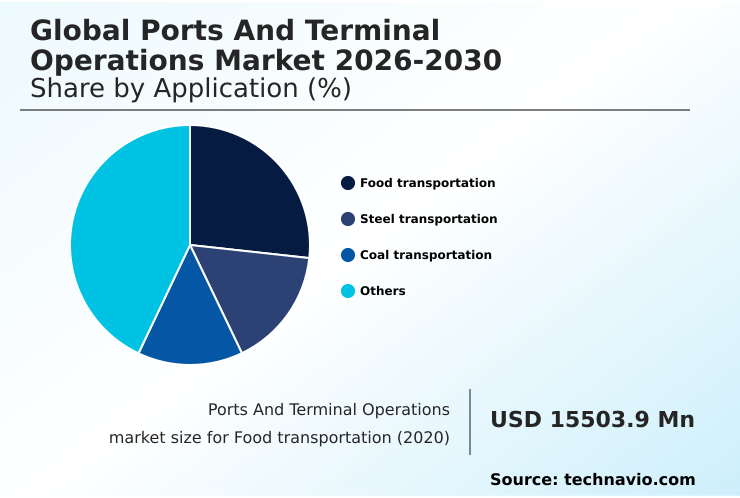
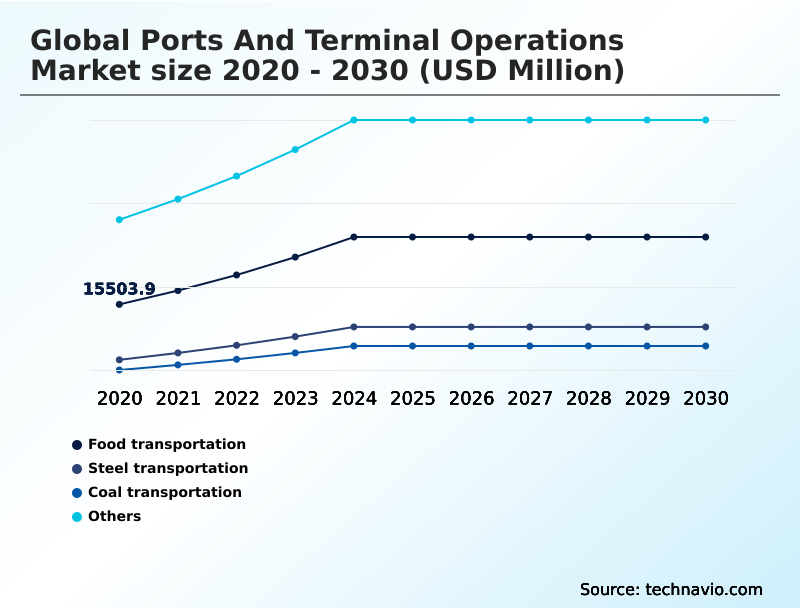
The Food transportation segment was valued at USD 22.97 billion in 2024 and showed a gradual increase during the forecast period.
Regional Analysis
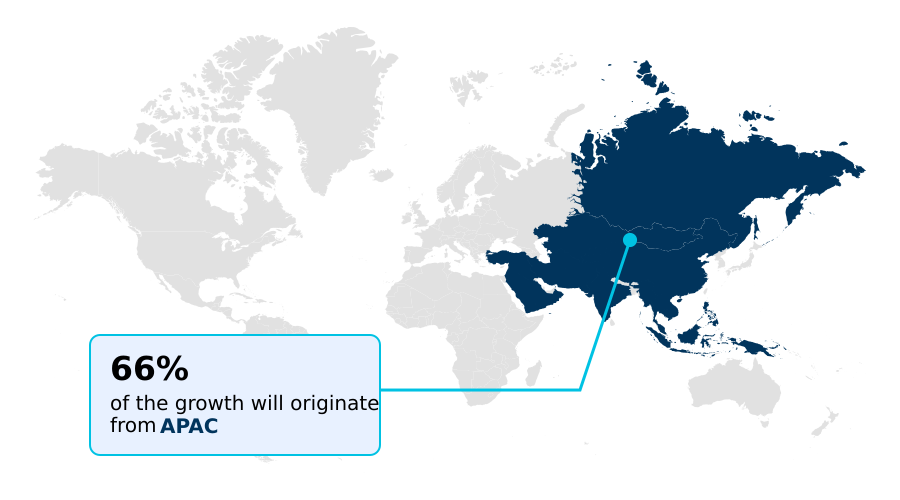
APAC is estimated to contribute 66.4% to the growth of the global market during the forecast period.Technavio’s analysts have elaborately explained the regional trends and drivers that shape the market during the forecast period.
See How Ports And Terminal Operations Market Demand is Rising in APAC Get Free Sample
The geographic landscape is dominated by the APAC region, which accounts for over 66% of the market’s incremental growth, driven by manufacturing and trade volumes in countries like China. North America follows, contributing approximately 10% to the growth.
Ports in these regions are focused on enhancing intermodal connectivity and implementing shore power solutions to meet sustainability targets.
The expansion of facilities in emerging markets is crucial for strengthening global supply chains and facilitating the movement of Ro-Ro cargo services.
This requires continuous investment in dredging programs and the deployment of maritime single window systems to streamline operations and improve gate automation and predictive maintenance, ultimately supporting global economic stability.
Market Dynamics
Our researchers analyzed the data with 2025 as the base year, along with the key drivers, trends, and challenges. A holistic analysis of drivers will help companies refine their marketing strategies to gain a competitive advantage.
- Strategic decision-making in the global ports and terminal operations market is increasingly focused on the ROI of shore power infrastructure investment and the overall impact of automation on terminal throughput. Operators are closely evaluating the cost-benefit of automated stacking cranes and other technologies to enhance vessel turnaround times with technology.
- A key area of analysis is the role of blockchain in cargo traceability, which promises to revolutionize how goods are tracked and documented. As terminals evolve, understanding the challenges in green hydrogen bunkering and developing effective decarbonization strategies for port operations become critical.
- The implementation of a maritime single window offers significant benefits, but integrating terminal operating systems with port community systems remains a complex task. Terminals that successfully navigate these challenges, such as by leveraging a digital twin for port congestion simulation, are reporting efficiency gains nearly double those of competitors.
- Other important considerations include improving hinterland connectivity for ports, weighing breakbulk vs. containerized cargo handling methods, and establishing robust security protocols for smart port ecosystems. The ongoing liner industry consolidation impact forces a re-evaluation of supply chain resilience through port diversification and highlights the need for advanced stevedoring efficiency.
- Finally, optimizing yard management with AI and investing in RTLS for asset tracking in terminals are becoming standard practice for competitive advantage.
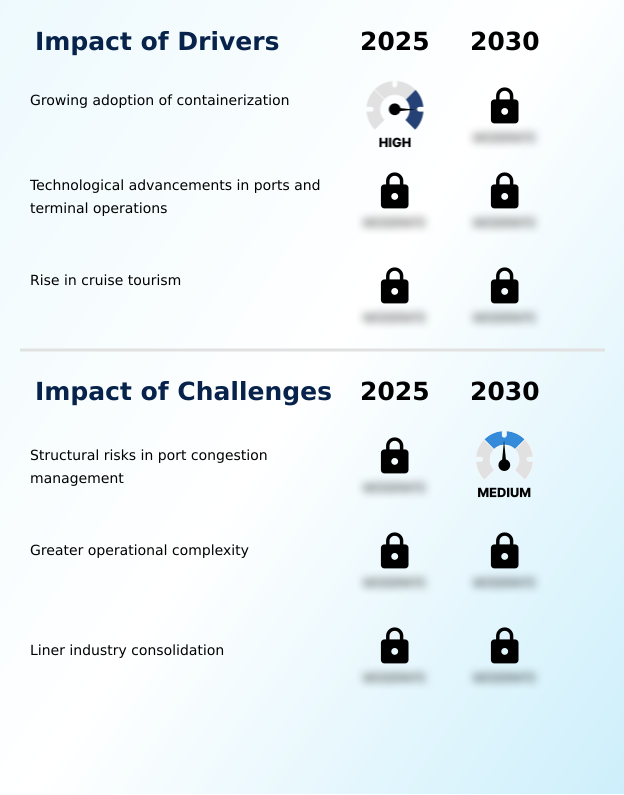
What are the key market drivers leading to the rise in the adoption of Ports And Terminal Operations Industry?
- The growing adoption of containerization is a key driver for the global ports and terminal operations market, enhancing cargo handling efficiency and enabling economies of scale.
- The growing adoption of containerization is a primary driver, enabling economies of scale with mega-vessels that increase cargo capacity by over 30%.
- This trend necessitates significant port-led development and investment in advanced quay cranes and automated guided vehicles (AGVs) to maintain efficiency. Technological advancements are transforming terminals into smart logistics hubs, where automation and robotics improve safety and accuracy.
- The use of terminal operating systems (TOS) with AI-driven planning software boosts inventory management and operational flow.
- This synergy between physical infrastructure and digital tools supports green shipping corridors and enhances multimodal transport integration, ultimately strengthening the backbone of global trade.
What are the market trends shaping the Ports And Terminal Operations Industry?
- The emergence of real-time location systems (RTLS) represents a significant upcoming trend. This technology is set to enhance operational visibility and efficiency across terminal operations.
- The emergence of real-time location systems (RTLS) and smart contracts is redefining cargo traceability within the global ports and terminal operations market. These technologies enhance port congestion mitigation by providing precise data for berth optimization and yard planning.
- The integration of blockchain technology into port community systems ensures secure and transparent data exchange, with pilot programs demonstrating a 40% reduction in documentation processing times. This shift toward digital twin technology allows operators to simulate and refine workflows, improving demurrage cost reduction efforts.
- As terminals advance toward becoming fully connected ecosystems, these trends are foundational for achieving superior terminal throughput and operational resilience against supply chain disruptions, reinforcing the importance of cybersecurity in ports.
What challenges does the Ports And Terminal Operations Industry face during its growth?
- Structural risks associated with port congestion management pose a key challenge to the growth of the ports and terminal operations industry, impacting supply chain reliability.
- Managing structural risks in port congestion remains a formidable challenge, intensified by vessel bunching and strained hinterland connectivity. The operational complexity of coordinating drayage trucks, rail, and massive crane operations is increasing, with disruptions in one area causing cascading delays. Liner industry consolidation adds another layer of pressure, impacting long-term planning for transshipment hubs.
- Integrating new zero-emission port equipment with legacy systems can delay projects by up to 20%, impacting decarbonization goals. The landlord port model and the need for a skilled workforce to manage sophisticated systems for dry bulk handling and liquid bulk handling present ongoing hurdles for operators aiming to maintain seamless service delivery.
Exclusive Technavio Analysis on Customer Landscape
The ports and terminal operations market forecasting report includes the adoption lifecycle of the market, covering from the innovator’s stage to the laggard’s stage. It focuses on adoption rates in different regions based on penetration. Furthermore, the ports and terminal operations market report also includes key purchase criteria and drivers of price sensitivity to help companies evaluate and develop their market growth analysis strategies.
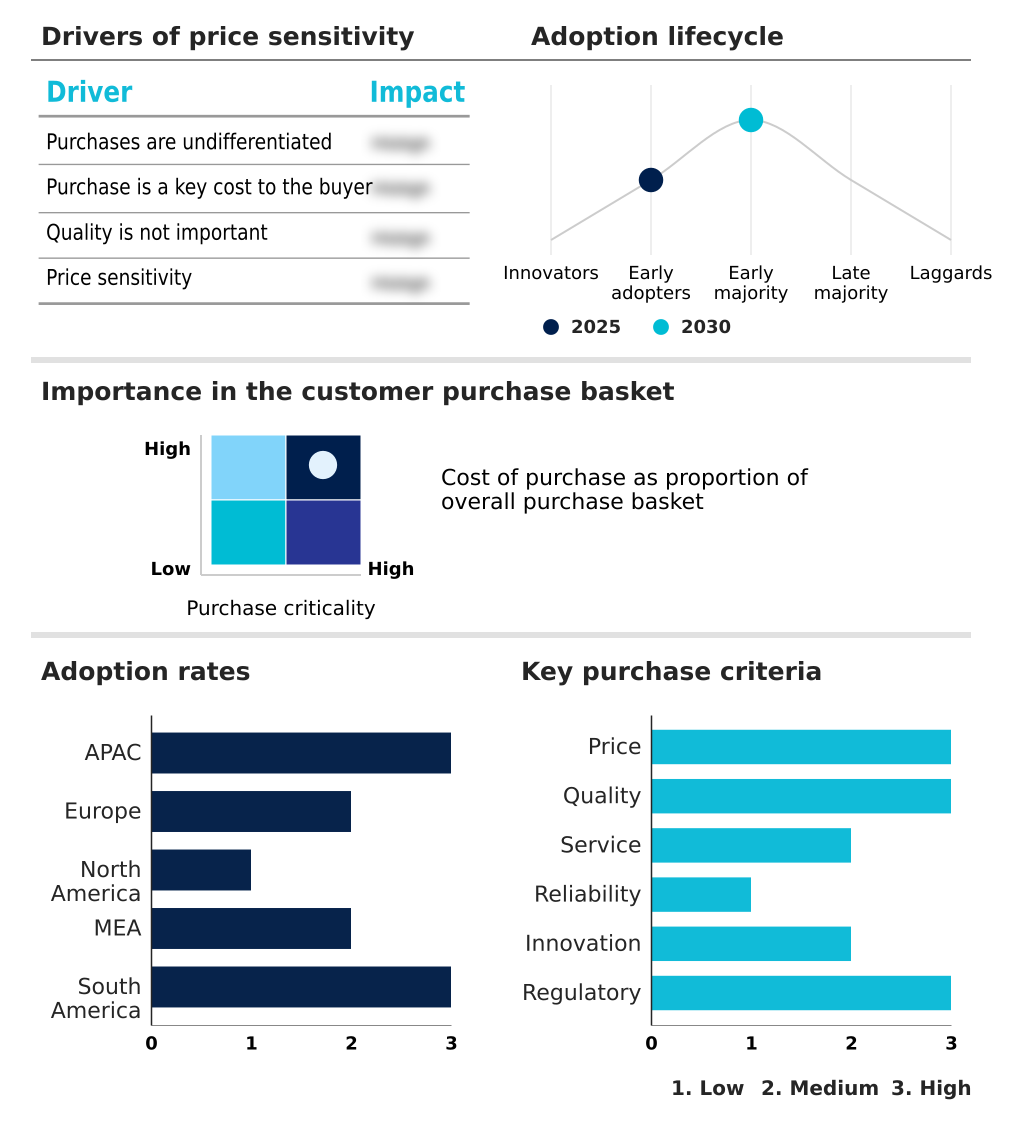
Customer Landscape of Ports And Terminal Operations Industry
Competitive Landscape
Companies are implementing various strategies, such as strategic alliances, ports and terminal operations market forecast, partnerships, mergers and acquisitions, geographical expansion, and product/service launches, to enhance their presence in the industry.
AP Moller Maersk AS - Offerings include integrated port services, container terminal management, and comprehensive end-to-end maritime logistics support designed to enhance operational efficiency across the supply chain.
The industry research and growth report includes detailed analyses of the competitive landscape of the market and information about key companies, including:
- AP Moller Maersk AS
- APM Terminals
- Asian Terminals Inc.
- Copenhagen Malmo Port
- COSCO Shipping Ports Ltd.
- DP World
- EUROKAI GmbH and Co. KGaA
- Gulftainer Co. Ltd.
- Hutchison Ports
- ICTS Inc.
- Ports America
- PSA International Pte Ltd.
- PT Pelabuhan Indonesia
- SAAM S.A.
- Shanghai Port Co. Ltd.
- Terminal Investment Ltd. Sarl
- Yilport Holding Inc.
- Yusen Terminals LLC
Qualitative and quantitative analysis of companies has been conducted to help clients understand the wider business environment as well as the strengths and weaknesses of key industry players. Data is qualitatively analyzed to categorize companies as pure play, category-focused, industry-focused, and diversified; it is quantitatively analyzed to categorize companies as dominant, leading, strong, tentative, and weak.
Recent Development and News in Ports and terminal operations market
- In May, 2025, APM Terminals announced a project for hydrogen-based shore power at the Port of Rotterdam to reduce the carbon impact of vessels at berth.
- In July, 2025, DP World inaugurated a fully automated wing at its Dubai facility that employs machine learning for optimized scheduling of container movements.
- In October, 2025, COSCO Shipping Ports Ltd. integrated an autonomous terminal management system at the port of Chancay in Peru to enhance operational efficiency.
- In November, 2025, PSA International Pte Ltd. deployed a fleet of zero-emission yard cranes in Singapore as part of its ongoing decarbonization strategy.
Dive into Technavio’s robust research methodology, blending expert interviews, extensive data synthesis, and validated models for unparalleled Ports And Terminal Operations Market insights. See full methodology.
| Market Scope | |
|---|---|
| Page number | 298 |
| Base year | 2025 |
| Historic period | 2020-2024 |
| Forecast period | 2026-2030 |
| Growth momentum & CAGR | Accelerate at a CAGR of 7.7% |
| Market growth 2026-2030 | USD 41254.5 million |
| Market structure | Fragmented |
| YoY growth 2025-2026(%) | 7.2% |
| Key countries | China, Singapore, South Korea, Japan, India, Indonesia, The Netherlands, Germany, UK, Spain, France, Italy, US, Canada, Mexico, UAE, Saudi Arabia, South Africa, Egypt, Qatar, Brazil, Argentina and Chile |
| Competitive landscape | Leading Companies, Market Positioning of Companies, Competitive Strategies, and Industry Risks |
Research Analyst Overview
- The ports and terminal operations market is advancing through a period of intense technological adoption and strategic modernization. At the core of this evolution is the integration of terminal operating systems (TOS) and port management software, which are fundamental to orchestrating complex logistics.
- The deployment of automated guided vehicles (AGVs) and advancements in automation and robotics are redefining physical workflows, while digital twin technology offers powerful simulation capabilities for berth optimization and planning. For boardroom consideration, investments in these technologies directly influence long-term capital expenditure and competitive positioning; for example, the adoption of automated gate systems reduces truck processing times by over 40%.
- This drive for efficiency is coupled with a strong focus on decarbonization, pushing the adoption of shore power and other green solutions. The emphasis on enhancing intermodal connectivity and leveraging port community systems is crucial for creating seamless supply chains.
- Ultimately, success hinges on an operator’s ability to manage hinterland connectivity and innovate within an increasingly digital and interconnected global trade network.
What are the Key Data Covered in this Ports And Terminal Operations Market Research and Growth Report?
-
What is the expected growth of the Ports And Terminal Operations Market between 2026 and 2030?
-
USD 41.25 billion, at a CAGR of 7.7%
-
-
What segmentation does the market report cover?
-
The report is segmented by Application (Food transportation, Steel transportation, Coal transportation, and Others), Service Type (Stevedoring, Cargo handling and transportation, and Others), Technology (Automation and robotics, Port management software, and Smart ports) and Geography (APAC, Europe, North America, Middle East and Africa, South America)
-
-
Which regions are analyzed in the report?
-
APAC, Europe, North America, Middle East and Africa and South America
-
-
What are the key growth drivers and market challenges?
-
Growing adoption of containerization, Structural risks in port congestion management
-
-
Who are the major players in the Ports And Terminal Operations Market?
-
AP Moller Maersk AS, APM Terminals, Asian Terminals Inc., Copenhagen Malmo Port, COSCO Shipping Ports Ltd., DP World, EUROKAI GmbH and Co. KGaA, Gulftainer Co. Ltd., Hutchison Ports, ICTS Inc., Ports America, PSA International Pte Ltd., PT Pelabuhan Indonesia, SAAM S.A., Shanghai Port Co. Ltd., Terminal Investment Ltd. Sarl, Yilport Holding Inc. and Yusen Terminals LLC
-
Market Research Insights
- The market is characterized by a dynamic shift toward data-driven efficiency and operational resilience. The integration of advanced analytics platforms for logistics synchronization is enabling terminals to achieve significant performance gains. For instance, the use of predictive maintenance schedules for key equipment has been shown to reduce unexpected downtime by up to 20%, directly improving asset utilization.
- Furthermore, terminals that have implemented comprehensive gate automation systems report a 30% faster truck turnaround time, a critical factor in mitigating port congestion. These advancements underscore a strategic focus on optimizing cargo handling efficiency and strengthening supply chain visibility, which are becoming key differentiators in a competitive landscape.
- The ability to leverage technology for tangible cost reductions and enhanced reliability is defining the future of port operations.
We can help! Our analysts can customize this ports and terminal operations market research report to meet your requirements.
 RIA -
RIA -