

US Shapewear Market Size 2026-2030
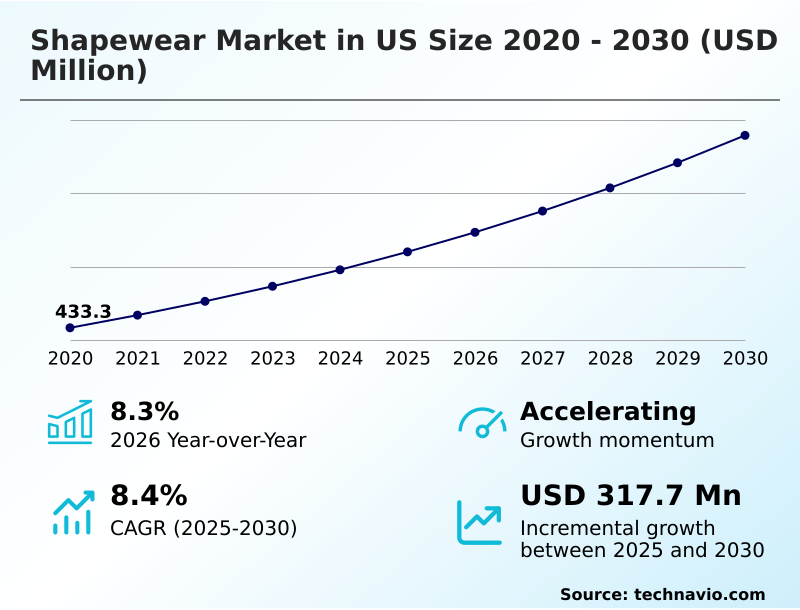
The us shapewear market size is valued to increase by USD 317.7 million, at a CAGR of 8.4% from 2025 to 2030. Technological advancements in fabric engineering and material innovation will drive the us shapewear market.
Major Market Trends & Insights
- By Product - Bottom Wear segment was valued at USD 345.5 million in 2024
- By End-user - Female segment accounted for the largest market revenue share in 2024
Market Size & Forecast
- Market Opportunities: USD 524.8 million
- Market Future Opportunities: USD 317.7 million
- CAGR from 2025 to 2030 : 8.4%
Market Summary
- The shapewear market in US is evolving beyond traditional foundation garments into a sophisticated category defined by technological progress and cultural shifts. Innovations in fabric engineering and material innovation have introduced high-performance compression garments that offer both body sculpting and comfort. The integration of seamless knitting technology allows for a smooth silhouette enhancement, eliminating visible lines under clothing.
- This evolution is coupled with the body positivity movement, which has shifted marketing narratives from correction to confidence, expanding the consumer base. The rise of direct-to-consumer business models has further democratized the market, enabling niche brands to address specific needs like posture correction or postpartum support.
- For instance, a common business scenario involves leveraging consumer data to refine designs for tummy control briefs, resulting in products that better meet demand for both aesthetic and functional benefits, thereby increasing customer loyalty and reducing returns. The market is now a blend of fashion, wellness, and technology, catering to a diverse audience seeking functional and empowering apparel solutions.
What will be the Size of the US Shapewear Market during the forecast period?
Get Key Insights on Market Forecast (PDF) Get Free Sample
How is the US Shapewear Market Segmented?
The us shapewear industry research report provides comprehensive data (region-wise segment analysis), with forecasts and estimates in "USD million" for the period 2026-2030, as well as historical data from 2020-2024 for the following segments.
- Product
- Bottom Wear
- Top Wear
- End-user
- Female
- Male
- Distribution channel
- Offline
- Online
- Geography
- North America
- US
- North America
By Product Insights
The bottom wear segment is estimated to witness significant growth during the forecast period.
The bottom wear segment is foundational to the shapewear market in US, driven by the body positivity movement and a focus on inclusive sizing models.
Advances in fabric engineering and material innovation are critical, with brands leveraging antimicrobial finishes for enhanced hygiene and comfort.
The offline retail experience remains vital for this category, allowing consumers to assess fit and material quality directly, which is crucial for compression garments designed for silhouette enhancement. As athleisure integration continues, these products are increasingly worn as outerwear.
This has led to an emphasis on ergonomic benefits and post-pregnancy recovery features, with some brands reporting that garments designed with these attributes show a 20% lower return rate, validating the investment in specialized direct-to-consumer business models and online fit recommendation tools.
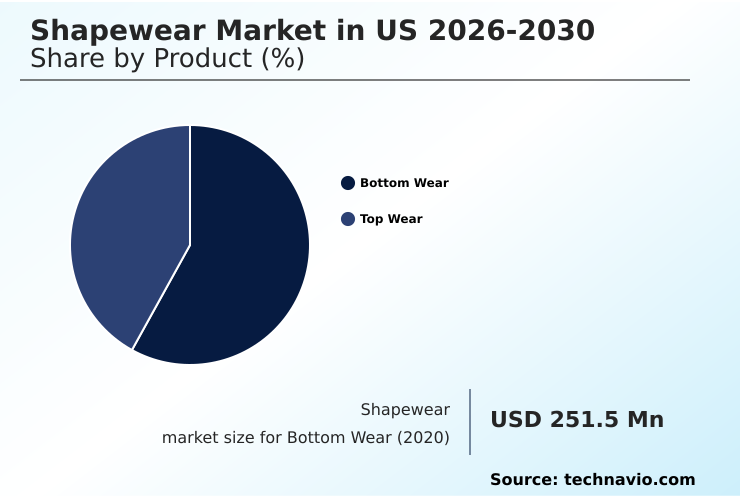
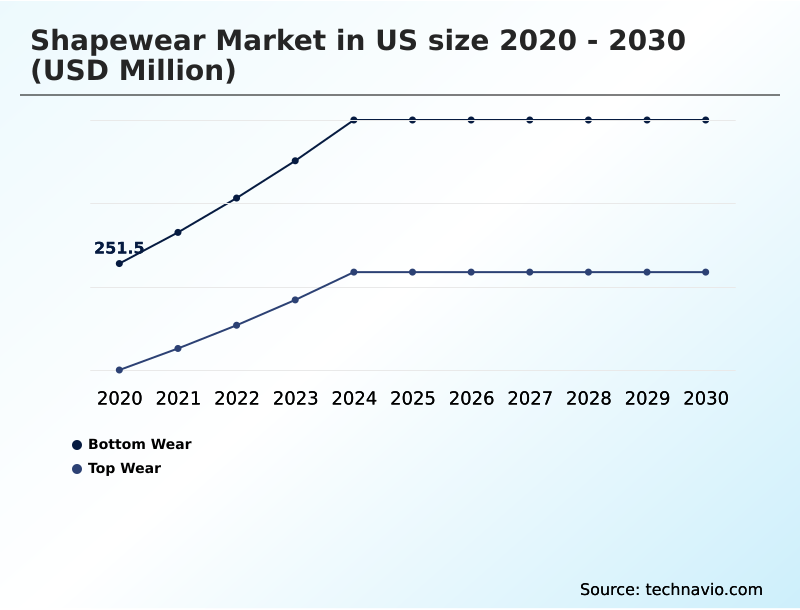
The Bottom Wear segment was valued at USD 345.5 million in 2024 and showed a gradual increase during the forecast period.
Market Dynamics
Our researchers analyzed the data with 2025 as the base year, along with the key drivers, trends, and challenges. A holistic analysis of drivers will help companies refine their marketing strategies to gain a competitive advantage.
- Consumers navigating the shapewear market are increasingly sophisticated, seeking specific solutions beyond general compression. Inquiries around the best shapewear for tummy and waist or shapewear to smooth back and bra bulges highlight a need for targeted performance. The dialogue has expanded to include functional shapewear with health benefits, such as shapewear for posture correction and back support.
- A key consideration is finding comfortable shapewear for plus-size women, which has pushed brands to prioritize inclusivity. The rise of men's compression undershirts for slimming indicates a broadening demographic. Athleisure shaping leggings for gym and daily wear blur the lines between categories, while demand for breathable shapewear for summer and hot weather drives material innovation.
- Understanding the benefits of seamless knitting in shapewear is crucial, as is comparing shapewear materials like nylon vs elastane. Consumers are also making values-based choices, seeking sustainable shapewear using recycled materials and eco-friendly and biodegradable shapewear options. The decision process involves choosing the right compression level for shapewear, sometimes using products with adjustable compression levels.
- Technical curiosity leads to questions about how 3D body scanning creates custom shapewear and the role of smart textiles in performance shapewear. For specialized needs, postpartum recovery belly bandit alternatives and bodysuit shapewear that stays in place are key search topics.
- Brands that effectively address these detailed needs see customer loyalty metrics improve at a rate twice as fast as those with generic offerings, proving the value of targeted product education and development.
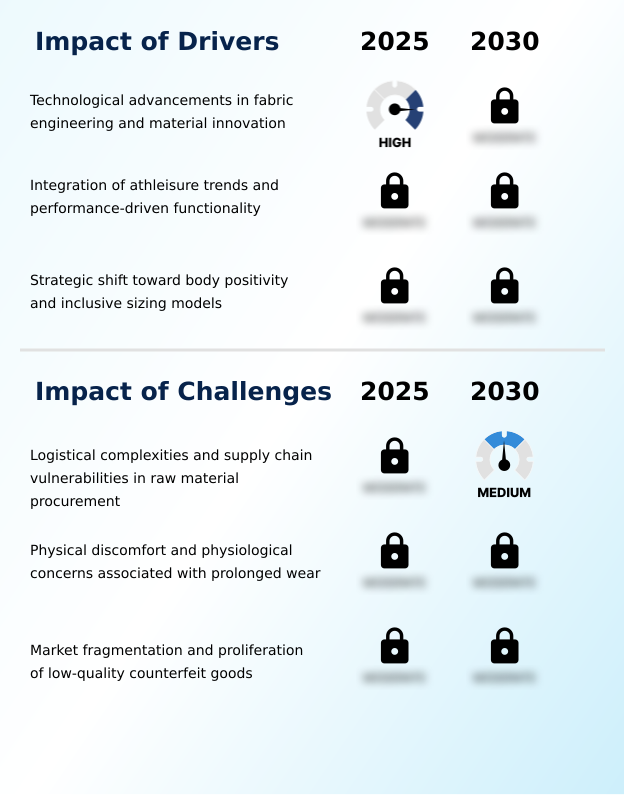
What are the key market drivers leading to the rise in the adoption of US Shapewear Industry?
- Technological advancements in fabric engineering and material innovation are the key drivers propelling market growth.
- Market growth is fundamentally propelled by material science and lifestyle integration. The development of a wellness-oriented functional garment is a key driver, featuring innovations like phase-change materials and biosensing capabilities.
- This technology allows for garments with targeted compression zones for posture correction. The convergence of fashion and fitness is evident in the rise of high-compression shorts and shaping leggings worn as outerwear.
- These trends are enabled by advancements like 3D body scanning and on-demand manufacturing, which facilitate personalized body sculpting. Consequently, products such as seamless shapewear bodysuits and waist-slimming briefs now offer enhanced abdominal contouring.
- This focus on performance and customization has expanded the market to include specialized items like waist trainers and tummy control briefs, with data showing that garments offering dual aesthetic and ergonomic benefits command a 20% price premium.
What are the market trends shaping the US Shapewear Industry?
- A key market trend is the strategic implementation of sustainable and biodegradable textile solutions. This shift reflects growing consumer demand for environmentally responsible apparel.
- Prevailing market trends center on ecological responsibility and technological integration. The adoption of sustainable materials, including recycled nylon fabrics and organic cotton blends, is a primary focus, with some brands achieving a 40% reduction in water usage. The development of biodegradable textiles is also gaining traction, aligning with consumer demand for circular fashion.
- Concurrently, advancements in smart textiles are creating new product categories, such as performance compression garments with encapsulated micro-nutrients. The industry is witnessing a move towards high-performance elastane and moisture-wicking nylon fabrics. These materials are used in athletic shaping wear and specialized items like maternity shapewear and post-surgical compression wear.
- Seamless knitting technology is now standard for premium offerings, improving both comfort and aesthetics in medical compression wear and postpartum compression garments.
What challenges does the US Shapewear Industry face during its growth?
- Logistical complexities and supply chain vulnerabilities in raw material procurement represent a key challenge affecting industry growth.
- The market faces challenges from supply chain volatility and intense fragmentation. The reliance on specialized materials sourced from global hubs creates vulnerabilities, with recent disruptions causing material costs to rise by up to 25% for some manufacturers. This instability pressures brands to balance quality with cost, particularly in a market where counterfeit goods can dilute brand equity.
- The proliferation of low-quality imitations of foundation garments, shaping camisoles, and smoothing tank tops negatively impacts consumer trust. To counter this, brands must clearly communicate the value of superior materials, such as those used in shaping briefs and control slips that offer durability and performance. Market fragmentation also impacts segments like male shapewear, where establishing brand loyalty is critical.
- Adherence to circular fashion principles, utilizing reclaimed ocean plastics and bamboo-derived fibers, presents both a logistical challenge and a competitive differentiator.
Exclusive Technavio Analysis on Customer Landscape
The us shapewear market forecasting report includes the adoption lifecycle of the market, covering from the innovator’s stage to the laggard’s stage. It focuses on adoption rates in different regions based on penetration. Furthermore, the us shapewear market report also includes key purchase criteria and drivers of price sensitivity to help companies evaluate and develop their market growth analysis strategies.
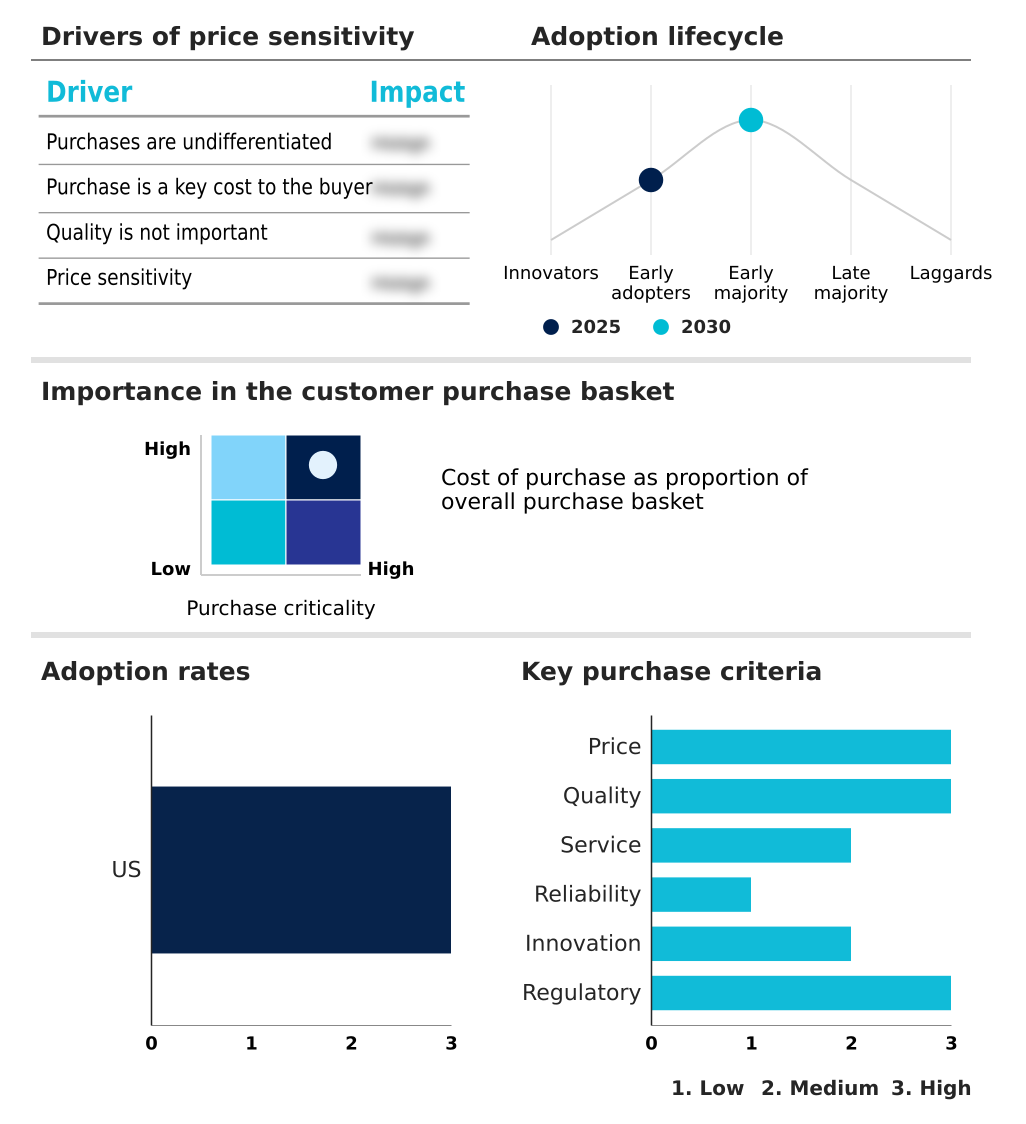
Customer Landscape of US Shapewear Industry
Competitive Landscape
Companies are implementing various strategies, such as strategic alliances, us shapewear market forecast, partnerships, mergers and acquisitions, geographical expansion, and product/service launches, to enhance their presence in the industry.
2XU Pty Ltd. - Analysis indicates a focus on performance-driven compression tights, recovery leggings, and advanced shaping garments engineered for athletic use and muscle support.
The industry research and growth report includes detailed analyses of the competitive landscape of the market and information about key companies, including:
- 2XU Pty Ltd.
- Anita Dr. Helbig GmbH
- Ann Chery
- Annette International Inc
- Belly Bandit Inc
- Body Hush LLC
- Cifra SRL
- CPS Shapers Ltd.
- Design Veronique
- EC3D Sports Inc
- Honeylove Sculptwear Inc.
- Jockey International Inc.
- Modenik Lifestyle Pvt. Ltd.
- Nike Inc.
- Preethi Shapewear
- PUMA SE
- Shapellx
- Shapermint
- Under Armour Inc.
- Wacoal Holdings Corp
Qualitative and quantitative analysis of companies has been conducted to help clients understand the wider business environment as well as the strengths and weaknesses of key industry players. Data is qualitatively analyzed to categorize companies as pure play, category-focused, industry-focused, and diversified; it is quantitatively analyzed to categorize companies as dominant, leading, strong, tentative, and weak.
Recent Development and News in Us shapewear market
- In August 2025, Wacoal Holdings Corp acquired a majority stake in a startup specializing in adaptive intimates, signaling a strategic entry into the market for consumers with specific physical needs.
- In June 2025, Spanx launched an innovative line of eco-friendly shapewear crafted from recycled materials, designed to appeal to the growing segment of environmentally conscious consumers.
- In April 2025, SKIMS introduced a comprehensive men's shapewear collection, marking a significant and strategic expansion into the male segment with products designed for masculine body shapes.
- In March 2025, Under Armour Inc. announced the launch of its IntelliForm line, integrating bio-sensing technology to provide wearers with real-time feedback on posture and muscle engagement.
Dive into Technavio’s robust research methodology, blending expert interviews, extensive data synthesis, and validated models for unparalleled US Shapewear Market insights. See full methodology.
| Market Scope | |
|---|---|
| Page number | 171 |
| Base year | 2025 |
| Historic period | 2020-2024 |
| Forecast period | 2026-2030 |
| Growth momentum & CAGR | Accelerate at a CAGR of 8.4% |
| Market growth 2026-2030 | USD 317.7 million |
| Market structure | Fragmented |
| YoY growth 2025-2026(%) | 8.3% |
| Key countries | US |
| Competitive landscape | Leading Companies, Market Positioning of Companies, Competitive Strategies, and Industry Risks |
Research Analyst Overview
- The shapewear market in US reflects a significant evolution, driven by advanced fabric engineering and material innovation. The industry is moving beyond basic compression garments toward a wellness-oriented functional garment paradigm, incorporating high-performance elastane and moisture-wicking nylon. Key advancements include seamless knitting technology, smart textiles with biosensing capabilities, and phase-change materials for thermal comfort.
- The body positivity movement has catalyzed a shift to inclusive sizing models, expanding the plus-size segment and introducing male shapewear. A primary boardroom-level focus is the adoption of circular fashion principles, utilizing recycled nylon fabrics, post-industrial waste, and biodegradable textiles. This requires investment in R&D for technologies like 3D body scanning and on-demand manufacturing to offer bespoke sizing solutions.
- Firms leveraging these innovations have demonstrated an ability to reduce inventory holding costs by up to 25%. The integration of features like targeted compression zones, antimicrobial finishes, and encapsulated micro-nutrients for silhouette enhancement underscores a market where performance, sustainability, and personalization dictate competitive advantage.
What are the Key Data Covered in this US Shapewear Market Research and Growth Report?
-
What is the expected growth of the US Shapewear Market between 2026 and 2030?
-
USD 317.7 million, at a CAGR of 8.4%
-
-
What segmentation does the market report cover?
-
The report is segmented by Product (Bottom Wear, and Top Wear), End-user (Female, and Male), Distribution Channel (Offline, and Online) and Geography (North America)
-
-
Which regions are analyzed in the report?
-
North America
-
-
What are the key growth drivers and market challenges?
-
Technological advancements in fabric engineering and material innovation, Logistical complexities and supply chain vulnerabilities in raw material procurement
-
-
Who are the major players in the US Shapewear Market?
-
2XU Pty Ltd., Anita Dr. Helbig GmbH, Ann Chery, Annette International Inc, Belly Bandit Inc, Body Hush LLC, Cifra SRL, CPS Shapers Ltd., Design Veronique, EC3D Sports Inc, Honeylove Sculptwear Inc., Jockey International Inc., Modenik Lifestyle Pvt. Ltd., Nike Inc., Preethi Shapewear, PUMA SE, Shapellx, Shapermint, Under Armour Inc. and Wacoal Holdings Corp
-
Market Research Insights
- Market dynamics are increasingly shaped by a focus on hyper-personalization and niche applications. The adoption of online fit recommendation tools has proven to enhance user experience, with some direct-to-consumer platforms reporting a 25% improvement in size selection accuracy.
- This shift toward digital solutions is complemented by the growing demand for specialized products like post-operative garments and maternity shapewear, which cater to specific wellness needs. The availability of virtual try-on technologies further reduces purchasing friction for items such as waist-slimming briefs and seamless shapewear bodysuits.
- Consequently, brands offering lenient and clear return policies have seen customer retention rates increase by over 15%, underscoring the importance of a customer-centric approach in a competitive digital landscape.
We can help! Our analysts can customize this us shapewear market research report to meet your requirements.
 RIA -
RIA -