

Women Apparel Market Analysis APAC, North America, Europe, Middle East and Africa, South America - US, China, Japan, India, Canada, South Korea, UK, Germany, Australia, France - Size and Forecast 2025-2029

Women Apparel Market Analysis APAC, North America, Europe, Middle East and Africa, South America - US, China, Japan, India, Canada, South Korea, UK, Germany, Australia, France - Size and Forecast 2025-2029

Published: Jan 2025 208 Pages SKU: IRTNTR71389

Market Overview at a Glance

$207.7 B
Market Opportunity
5%
CAGR
3.6
YoY growth 2024-2025(%)

Women Apparel Market Size 2025-2029

The women apparel market size is forecast to increase by USD 207.7 billion, at a CAGR of 5% between 2024 and 2029.

  • The market is characterized by two significant trends: the increasing demand for premium apparel and the adoption of technology to enhance consumer shopping experiences. The trend towards premiumization is driven by consumers seeking high-quality, well-designed clothing, leading to the success of well-positioned brands. This shift offers an opportunity for companies to differentiate themselves in the market and attract price-sensitive consumers willing to pay a premium for superior quality and style. However, the market also faces challenges, most notably the prevalence of counterfeit products.
  • The availability of these illegitimate offerings undermines the credibility of authentic brands and poses a significant threat to their market share. Companies must invest in robust brand protection strategies, including digital monitoring and collaboration with law enforcement agencies, to mitigate the impact of counterfeit goods on their businesses. Effective brand protection not only safeguards market share but also maintains consumer trust and loyalty.

What will be the Size of the Women Apparel Market during the forecast period?
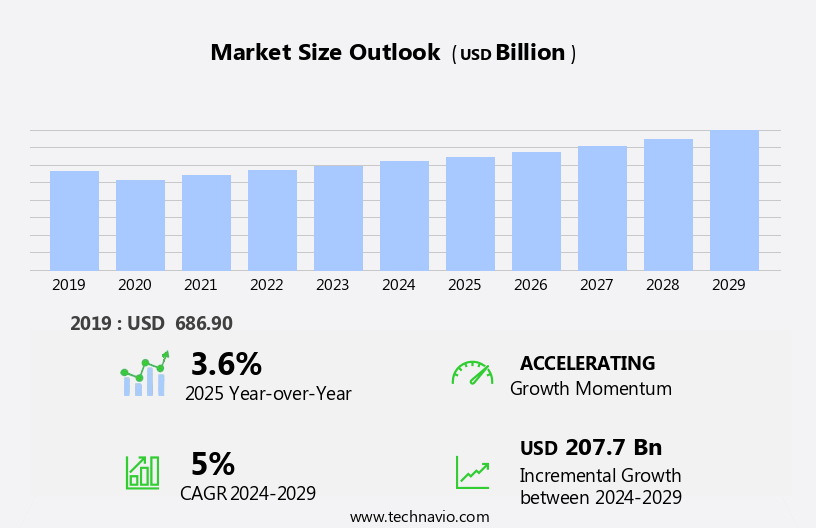
Women Apparel Market Size

Explore in-depth regional segment analysis with market size data - historical 2019-2023 and forecasts 2025-2029 - in the full report.  
Request Free Sample

The women's apparel market continues to evolve, with dynamic trends and patterns unfolding across various sectors. E-commerce platforms have revolutionized the retail landscape, enabling seamless access to a wide range of offerings from casual wear to formal attire. Slow fashion, with its emphasis on sustainability and ethical sourcing, has gained traction, influencing pricing strategies and supply chain management. Fit and flare, low waisted, and high waisted styles have cycled in and out of favor, while trend forecasting shapes the direction of boat neck, crew neck, scoop neck, and round neck designs. Bridal wear and evening wear segments maintain their distinct identities, with intricate pattern making and quality control ensuring a perfect fit.

Customer segmentation, including maternity wear, plus-size clothing, petite clothing, and business wear, caters to diverse needs. Ethical sourcing and sustainable practices have become essential, shaping the future of the industry. Woven fabrics, a staple in women's apparel, are subject to ongoing innovation and adaptation. The interplay of these elements creates a vibrant and ever-changing market landscape, with athletic wear, casual wear, and formal attire all adapting to shifting consumer preferences and market dynamics.

How is this Women Apparel Industry segmented?

The women apparel industry research report provides comprehensive data (region-wise segment analysis), with forecasts and estimates in "USD billion" for the period 2025-2029, as well as historical data from 2019-2023 for the following segments.

  • Distribution Channel
    • Offline
    • Online
  • Product
    • Tops and dresses
    • Bottom wear
    • Intimates and sleepwear
    • Coats jackets and suits
    • Others
  • Geography
    • North America
      • US
      • Canada
    • Europe
      • France
      • Germany
      • UK
    • APAC
      • Australia
      • China
      • India
      • Japan
      • South Korea
    • Rest of World (ROW)

By Distribution Channel Insights

The offline segment is estimated to witness significant growth during the forecast period.

The market encompasses various segments, including maternity wear, casual wear, formal wear, athletic wear, and more. Maternity wear and plus-size clothing cater to specific customer needs, while petite clothing addresses the requirements of smaller-sized women. Fit and flare, empire waist, and mid-waisted styles continue to trend, with boat necks and crew necks popular choices for tops. Scoop necks, round necks, and V-necks are also common. Trend forecasting plays a crucial role in the market, influencing the production of various styles and fabrics, such as woven and knitted. Quality control and ethical sourcing are essential considerations for brands, ensuring the production of high-quality, sustainable clothing.

Pricing strategies vary, with specialty stores charging premium prices for exclusive designs and fast fashion retailers offering affordable options. E-commerce platforms have significantly impacted the market, enabling consumers to shop from the comfort of their homes. Slow and fast fashion and sustainable practices are gaining popularity, emphasizing the importance of ethical manufacturing and reducing waste. Supply chain management is crucial for efficient production and distribution, with wholesale and retail channels catering to different customer segments. Formal wear, including business attire and evening gowns, remains a significant market segment. Bridal wear is another niche market, requiring specific attention to detail and customization. Pattern making and customization are essential for personal styling, with short sleeve, long sleeve, three-quarter sleeve, and full-length options available. Overall, the market is diverse and dynamic, catering to various customer needs and preferences.
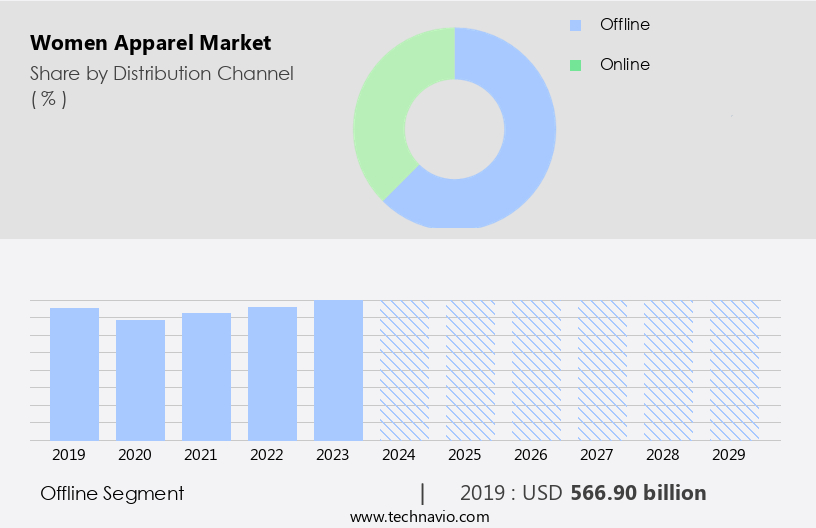
Women Apparel Market Size

Request Free Sample

The Offline segment was valued at USD 566.90 billion in 2019 and showed a gradual increase during the forecast period.

Regional Analysis

APAC is estimated to contribute 47% to the growth of the global market during the forecast period.Technavio's analysts have elaborately explained the regional trends and drivers that shape the market during the forecast period.
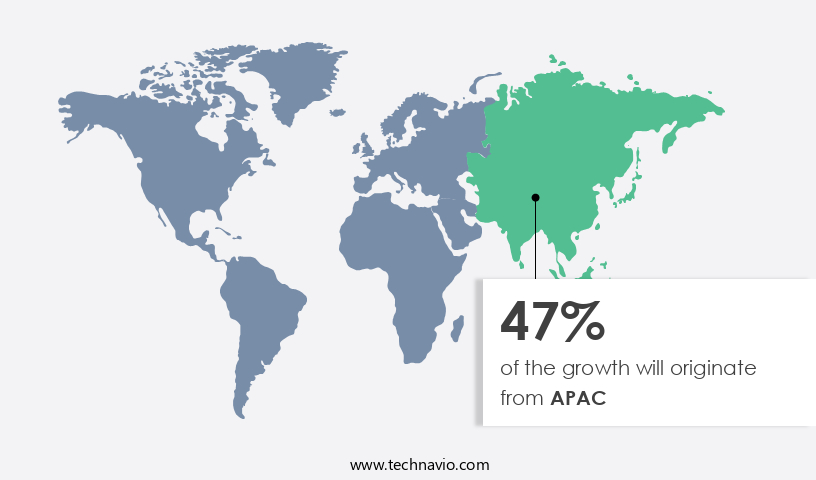
Women Apparel Market Share by Geography

 Request Free Sample

The market in the Asia Pacific region is experiencing significant growth, driven by various factors including a large population, increasing income levels, and changing consumer buying behaviors. Countries like China and Japan have emerged as popular destinations for international companies due to their large consumer bases. To cater to price-conscious consumers, many companies have introduced low-priced brands. The rise in the working women population has led to an increase in spending power, enabling women to invest more in apparel. companies are focusing on providing customized products to suit local tastes and preferences, with offerings ranging from maternity wear and casual wear to formal wear and bridal wear.

Trend forecasting plays a crucial role in the market, with athletic wear and ethical sourcing gaining popularity. Supply chain management and quality control are essential aspects of the industry, with woven fabrics being a key component. Customer segmentation, including plus-size clothing and petite clothing, is also a focus area. The market is fragmented, with companies adopting various pricing strategies and distribution channels, including wholesale and retail, to reach consumers. Pattern making, fit and flare, mid-waisted, empire waist, and various sleeve lengths are among the styles that continue to evolve in the market.

Market Dynamics

Our researchers analyzed the data with 2024 as the base year, along with the key drivers, trends, and challenges. A holistic analysis of drivers will help companies refine their marketing strategies to gain a competitive advantage.

In the dynamic and ever-evolving the market, trends and consumer preferences continually shape the landscape. From classic denim jeans and versatile leggings to stylish blouses and elegant dresses, the market caters to diverse tastes and lifestyles. Sustainable fabrics like organic cotton and recycled polyester are increasingly popular, reflecting growing environmental consciousness. Fashion-forward designs incorporate elements of athleisure, boho chic, and minimalist aesthetics. Technology integration, such as temperature-regulating and moisture-wicking fabrics, enhances comfort and functionality. Accessories like scarves, belts, and handbags complement outfits, adding a personal touch. The market's vibrant and inclusive nature embraces body positivity and diverse sizes, ensuring every woman feels confident and beautiful in her wardrobe.

What are the key market drivers leading to the rise in the adoption of Women Apparel Industry?

  • Premiumization, driven by strategically placed brands, serves as the primary catalyst for market growth. The global women's apparel market offers a vast selection of products, with a growing preference towards premium and high-end brands. Consumers are increasingly drawn to these brands due to their perceived quality, style, and status. Brands such as GAP, Hennes and Mauritz, Zara, Kering, and LVMH, which have strong brand recognition, cater to affluent customers willing to pay higher prices for superior quality. Trend forecasting plays a significant role in the women's apparel market, with casual wear, wide-leg pants, boat necks, mid-waisted styles, and athletic wear being current trends. Quality control is a crucial factor in maintaining customer loyalty and ensuring the longevity of these premium brands.
  • Pricing strategies are essential in the women's apparel market, with premium brands charging significantly more than non-branded regular apparel. While the cost may be higher, customers believe they are investing in a product that offers superior quality and style. Additionally, trend-conscious consumers seek out the latest fashion trends, driving demand for high-quality, on-trend apparel. The market for women's apparel is dynamic and ever-evolving, with a focus on delivering innovative, stylish, and high-quality products to meet the demands of modern consumers.

What are the market trends shaping the Women Apparel Industry?

  • Virtual reality technology is increasingly being adopted to enhance the shopping experience for consumers, representing a significant market trend. This innovative approach allows customers to engage with products in a more immersive and interactive way, providing a more personalized and engaging shopping experience.
  • The women's apparel market is experiencing significant growth due to the integration of technology into shopping experiences. E-commerce platforms are leading this transformation by offering virtual fitting rooms, such as Rakuten Fits Me, which enable customers to visualize how an apparel item would look on them based on their individual body measurements. This innovative technology enhances the consumer shopping experience by allowing for accurate fit assessments, saving time, and eliminating the need for physical trial rooms. Moreover, the trend towards slow fashion is influencing the market, with consumers increasingly preferring ethically sourced and sustainably produced clothing. Woven fabrics, including cotton, linen, and silk, are popular choices due to their breathability and durability.
  • Supply chain management and ethical sourcing are becoming crucial factors in customer segmentation, with consumers willing to pay a premium for transparency and sustainability. The women's apparel market also includes various categories, such as fit and flare, low waisted, and high waisted styles, catering to diverse customer preferences. Bridal wear is another significant segment, with a focus on unique and customized designs for special occasions. Overall, the women's apparel market is dynamic, with a growing emphasis on technology, sustainability, and customer experience.

What challenges does the Women Apparel Industry face during its growth?

  • The proliferation of counterfeit women's apparel poses a significant challenge to the industry's growth, undermining brand reputation and consumer trust. 
  • The women's apparel market faces fragmentation due to the prevalence of counterfeit products, which negatively impact market dynamics. These imitations, often sold under false branding, offer lower prices than authentic products, making them attractive to budget-conscious consumers. However, the quality and durability of counterfeit items are inferior to those of established brands, posing a challenge for market leaders in achieving optimal market penetration. Furthermore, the proliferation of counterfeit products can blur the lines between authentic and fake, potentially leading to consumer confusion.
  • Despite these challenges, key players in the women's apparel industry continue to focus on innovation, quality, and personalized offerings to differentiate themselves and cater to various segments, such as crew necks, round necks, straight leg, plus-size clothing, petite clothing, and business wear, through both wholesale and retail distribution channels. Fast fashion trends continue to influence personal styling, with consumers seeking affordable yet trendy options.

Exclusive Customer Landscape

The women apparel market forecasting report includes the adoption lifecycle of the market, covering from the innovator's stage to the laggard's stage. It focuses on adoption rates in different regions based on penetration. Furthermore, the women apparel market report also includes key purchase criteria and drivers of price sensitivity to help companies evaluate and develop their market growth analysis strategies.
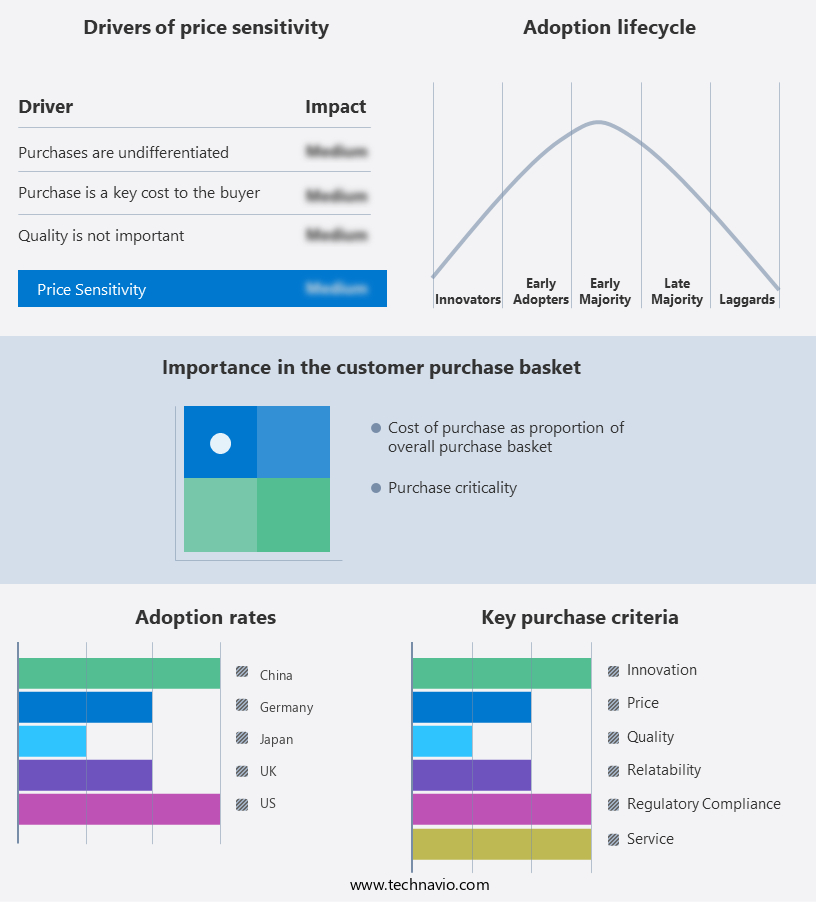
Women Apparel Market Share by Geography

 Customer Landscape

Key Companies & Market Insights

Companies are implementing various strategies, such as strategic alliances, women apparel market forecast, partnerships, mergers and acquisitions, geographical expansion, and product/service launches, to enhance their presence in the industry.

Adidas AG - This company specializes in women's apparel, featuring athletic wear like performance leggings, sports bras, and hoodies. The collection caters to active lifestyles and casual wear, prioritizing comfort and style. Designed with innovative materials and modern cuts, these pieces elevate functionality and fashion.

The industry research and growth report includes detailed analyses of the competitive landscape of the market and information about key companies, including:

  • Adidas AG
  • Benetton Group Srl
  • Burberry Group Plc
  • Chanel Ltd.
  • Dolce and Gabbana S.r.l.
  • Gianni Versace Srl
  • Giorgio Armani SpA
  • Hennes and Mauritz AB
  • Hermes International SA
  • Kering SA
  • LVMH Moet Hennessy Louis Vuitton SE
  • Nike Inc.
  • Prada Spa
  • PUMA SE
  • PVH Corp.
  • Ralph Lauren Corp.
  • The Gap Inc.
  • UNIQLO India Pvt. Ltd.
  • Zara

Qualitative and quantitative analysis of companies has been conducted to help clients understand the wider business environment as well as the strengths and weaknesses of key industry players. Data is qualitatively analyzed to categorize companies as pure play, category-focused, industry-focused, and diversified; it is quantitatively analyzed to categorize companies as dominant, leading, strong, tentative, and weak.

Recent Development and News in Women Apparel Market

  • In January 2024, H&M, a leading global fashion retailer, introduced its new size-inclusive line, "H&M+," exclusively for women in select markets. This expansion aims to cater to the growing demand for size diversity in the apparel industry (H&M Press Release).
  • In March 2024, Victoria's Secret, a prominent lingerie brand, announced a strategic partnership with Telfar, a gender-neutral fashion label, to co-create a limited-edition collection. This collaboration marked a significant shift towards inclusivity and diversity in the women's apparel market (Victoria's Secret Press Release).
  • In May 2024, American Eagle Outfitters, Inc. Completed the acquisition of Reformation, a popular sustainable women's apparel brand. This acquisition strengthened American Eagle's market position by expanding its offerings in the eco-conscious segment (American Eagle Outfitters SEC Filing).
  • In April 2025, the European Union passed the Sustainable and Circular Textiles Regulation, mandating that all new textiles placed on the EU market from 2027 must be recycled or reused. This regulatory development is expected to significantly impact the women's apparel market, driving demand for sustainable and circular textile solutions (European Parliament Press Release).

Research Analyst Overview

  • In the dynamic women's apparel market, various trends and strategies shape consumer behavior. Garment construction innovations, such as sustainable fashion practices and size inclusivity, cater to evolving customer preferences. Influencer marketing and brand ambassadors leverage social media platforms to reach consumers, while in-store promotions and fashion shows engage shoppers. Consumer behavior analysis informs inventory management and product lifecycle management. Fair trade and ethical labor practices gain importance, with industry events showcasing the latest trends. Fashion design collaborations with celebrities and fashion blogs fuel buzz.
  • E-commerce marketing, including email campaigns and pay-per-click advertising, expand reach. Secondhand marketplaces, consignment shops, and vintage clothing offer affordability and sustainability. Competitor analysis, textile production optimization, and returns processing streamline operations. Data analytics and supply chain optimization ensure efficient and effective business strategies. Public relations and fashion magazines maintain brand image and awareness.

Dive into Technavio's robust research methodology, blending expert interviews, extensive data synthesis, and validated models for unparalleled Women Apparel Market insights. See full methodology.

Market Scope

Report Coverage

Details

Page number

208

Base year

2024

Historic period

2019-2023

Forecast period

2025-2029

Growth momentum & CAGR

Accelerate at a CAGR of 5%

Market growth 2025-2029

USD 207.7 billion

Market structure

Fragmented

YoY growth 2024-2025(%)

3.6

Key countries

US, China, Japan, India, Canada, South Korea, UK, Germany, Australia, and France

Competitive landscape

Leading Companies, Market Positioning of Companies, Competitive Strategies, and Industry Risks

Request Free Sample

What are the Key Data Covered in this Women Apparel Market Research and Growth Report?

  • CAGR of the Women Apparel industry during the forecast period
  • Detailed information on factors that will drive the growth and forecasting between 2025 and 2029
  • Precise estimation of the size of the market and its contribution of the industry in focus to the parent market
  • Accurate predictions about upcoming growth and trends and changes in consumer behaviour
  • Growth of the market across APAC, North America, Europe, Middle East and Africa, and South America
  • Thorough analysis of the market's competitive landscape and detailed information about companies
  • Comprehensive analysis of factors that will challenge the women apparel market growth of industry companies

We can help! Our analysts can customize this women apparel market research report to meet your requirements.

Get in touch

1 Executive Summary

  • 1.1 Market overview
    • Executive Summary - Chart on Market Overview
    • Executive Summary - Data Table on Market Overview
    • Executive Summary - Chart on Global Market Characteristics
    • Executive Summary - Chart on Market by Geography
    • Executive Summary - Chart on Market Segmentation by Distribution Channel
    • Executive Summary - Chart on Market Segmentation by Product
    • Executive Summary - Chart on Incremental Growth
    • Executive Summary - Data Table on Incremental Growth
    • Executive Summary - Chart on Company Market Positioning

2 Technavio Analysis

  • 2.1 Analysis of price sensitivity, lifecycle, customer purchase basket, adoption rates, and purchase criteria
    • Analysis of price sensitivity, lifecycle, customer purchase basket, adoption rates, and purchase criteria
  • 2.2 Criticality of inputs and Factors of differentiation
    • Overview on criticality of inputs and factors of differentiation
  • 2.3 Factors of disruption
    • Overview on factors of disruption
  • 2.4 Impact of drivers and challenges
    • Impact of drivers and challenges in 2024 and 2029

3 Market Landscape

  • 3.1 Market ecosystem
    • Parent Market
    • Data Table on - Parent Market
  • 3.2 Market characteristics
    • Market characteristics analysis
  • 3.3 Value chain analysis
    • Value chain analysis

4 Market Sizing

  • 4.1 Market definition
    • Offerings of companies included in the market definition
  • 4.2 Market segment analysis
    • Market segments
  • 4.3 Market size 2024
    • 4.4 Market outlook: Forecast for 2024-2029
      • Chart on Global - Market size and forecast 2024-2029 ($ billion)
      • Data Table on Global - Market size and forecast 2024-2029 ($ billion)
      • Chart on Global Market: Year-over-year growth 2024-2029 (%)
      • Data Table on Global Market: Year-over-year growth 2024-2029 (%)

    5 Historic Market Size

    • 5.1 Global Women Apparel Market 2019 - 2023
      • Historic Market Size - Data Table on Global Women Apparel Market 2019 - 2023 ($ billion)
    • 5.2 Distribution Channel segment analysis 2019 - 2023
      • Historic Market Size - Distribution Channel Segment 2019 - 2023 ($ billion)
    • 5.3 Product segment analysis 2019 - 2023
      • Historic Market Size - Product Segment 2019 - 2023 ($ billion)
    • 5.4 Geography segment analysis 2019 - 2023
      • Historic Market Size - Geography Segment 2019 - 2023 ($ billion)
    • 5.5 Country segment analysis 2019 - 2023
      • Historic Market Size - Country Segment 2019 - 2023 ($ billion)

    6 Qualitative Analysis

    • 6.1 Impact of AI on Global Women Apparel Market

      7 Five Forces Analysis

      • 7.1 Five forces summary
        • Five forces analysis - Comparison between 2024 and 2029
      • 7.2 Bargaining power of buyers
        • Bargaining power of buyers - Impact of key factors 2024 and 2029
      • 7.3 Bargaining power of suppliers
        • Bargaining power of suppliers - Impact of key factors in 2024 and 2029
      • 7.4 Threat of new entrants
        • Threat of new entrants - Impact of key factors in 2024 and 2029
      • 7.5 Threat of substitutes
        • Threat of substitutes - Impact of key factors in 2024 and 2029
      • 7.6 Threat of rivalry
        • Threat of rivalry - Impact of key factors in 2024 and 2029
      • 7.7 Market condition
        • Chart on Market condition - Five forces 2024 and 2029

      8 Market Segmentation by Distribution Channel

      • 8.1 Market segments
        • Chart on Distribution Channel - Market share 2024-2029 (%)
        • Data Table on Distribution Channel - Market share 2024-2029 (%)
      • 8.2 Comparison by Distribution Channel
        • Chart on Comparison by Distribution Channel
        • Data Table on Comparison by Distribution Channel
      • 8.3 Offline - Market size and forecast 2024-2029
        • Chart on Offline - Market size and forecast 2024-2029 ($ billion)
        • Data Table on Offline - Market size and forecast 2024-2029 ($ billion)
        • Chart on Offline - Year-over-year growth 2024-2029 (%)
        • Data Table on Offline - Year-over-year growth 2024-2029 (%)
      • 8.4 Online - Market size and forecast 2024-2029
        • Chart on Online - Market size and forecast 2024-2029 ($ billion)
        • Data Table on Online - Market size and forecast 2024-2029 ($ billion)
        • Chart on Online - Year-over-year growth 2024-2029 (%)
        • Data Table on Online - Year-over-year growth 2024-2029 (%)
      • 8.5 Market opportunity by Distribution Channel
        • Market opportunity by Distribution Channel ($ billion)
        • Data Table on Market opportunity by Distribution Channel ($ billion)

      9 Market Segmentation by Product

      • 9.1 Market segments
        • Chart on Product - Market share 2024-2029 (%)
        • Data Table on Product - Market share 2024-2029 (%)
      • 9.2 Comparison by Product
        • Chart on Comparison by Product
        • Data Table on Comparison by Product
      • 9.3 Tops and dresses - Market size and forecast 2024-2029
        • Chart on Tops and dresses - Market size and forecast 2024-2029 ($ billion)
        • Data Table on Tops and dresses - Market size and forecast 2024-2029 ($ billion)
        • Chart on Tops and dresses - Year-over-year growth 2024-2029 (%)
        • Data Table on Tops and dresses - Year-over-year growth 2024-2029 (%)
      • 9.4 Bottom wear - Market size and forecast 2024-2029
        • Chart on Bottom wear - Market size and forecast 2024-2029 ($ billion)
        • Data Table on Bottom wear - Market size and forecast 2024-2029 ($ billion)
        • Chart on Bottom wear - Year-over-year growth 2024-2029 (%)
        • Data Table on Bottom wear - Year-over-year growth 2024-2029 (%)
      • 9.5 Intimates and sleepwear - Market size and forecast 2024-2029
        • Chart on Intimates and sleepwear - Market size and forecast 2024-2029 ($ billion)
        • Data Table on Intimates and sleepwear - Market size and forecast 2024-2029 ($ billion)
        • Chart on Intimates and sleepwear - Year-over-year growth 2024-2029 (%)
        • Data Table on Intimates and sleepwear - Year-over-year growth 2024-2029 (%)
      • 9.6 Coats jackets and suits - Market size and forecast 2024-2029
        • Chart on Coats jackets and suits - Market size and forecast 2024-2029 ($ billion)
        • Data Table on Coats jackets and suits - Market size and forecast 2024-2029 ($ billion)
        • Chart on Coats jackets and suits - Year-over-year growth 2024-2029 (%)
        • Data Table on Coats jackets and suits - Year-over-year growth 2024-2029 (%)
      • 9.7 Others - Market size and forecast 2024-2029
        • Chart on Others - Market size and forecast 2024-2029 ($ billion)
        • Data Table on Others - Market size and forecast 2024-2029 ($ billion)
        • Chart on Others - Year-over-year growth 2024-2029 (%)
        • Data Table on Others - Year-over-year growth 2024-2029 (%)
      • 9.8 Market opportunity by Product
        • Market opportunity by Product ($ billion)
        • Data Table on Market opportunity by Product ($ billion)

      10 Customer Landscape

      • 10.1 Customer landscape overview
        • Analysis of price sensitivity, lifecycle, customer purchase basket, adoption rates, and purchase criteria

      11 Geographic Landscape

      • 11.1 Geographic segmentation
        • Chart on Market share by geography 2024-2029 (%)
        • Data Table on Market share by geography 2024-2029 (%)
      • 11.2 Geographic comparison
        • Chart on Geographic comparison
        • Data Table on Geographic comparison
      • 11.3 APAC - Market size and forecast 2024-2029
        • Chart on APAC - Market size and forecast 2024-2029 ($ billion)
        • Data Table on APAC - Market size and forecast 2024-2029 ($ billion)
        • Chart on APAC - Year-over-year growth 2024-2029 (%)
        • Data Table on APAC - Year-over-year growth 2024-2029 (%)
      • 11.4 North America - Market size and forecast 2024-2029
        • Chart on North America - Market size and forecast 2024-2029 ($ billion)
        • Data Table on North America - Market size and forecast 2024-2029 ($ billion)
        • Chart on North America - Year-over-year growth 2024-2029 (%)
        • Data Table on North America - Year-over-year growth 2024-2029 (%)
      • 11.5 Europe - Market size and forecast 2024-2029
        • Chart on Europe - Market size and forecast 2024-2029 ($ billion)
        • Data Table on Europe - Market size and forecast 2024-2029 ($ billion)
        • Chart on Europe - Year-over-year growth 2024-2029 (%)
        • Data Table on Europe - Year-over-year growth 2024-2029 (%)
      • 11.6 Middle East and Africa - Market size and forecast 2024-2029
        • Chart on Middle East and Africa - Market size and forecast 2024-2029 ($ billion)
        • Data Table on Middle East and Africa - Market size and forecast 2024-2029 ($ billion)
        • Chart on Middle East and Africa - Year-over-year growth 2024-2029 (%)
        • Data Table on Middle East and Africa - Year-over-year growth 2024-2029 (%)
      • 11.7 South America - Market size and forecast 2024-2029
        • Chart on South America - Market size and forecast 2024-2029 ($ billion)
        • Data Table on South America - Market size and forecast 2024-2029 ($ billion)
        • Chart on South America - Year-over-year growth 2024-2029 (%)
        • Data Table on South America - Year-over-year growth 2024-2029 (%)
      • 11.8 US - Market size and forecast 2024-2029
        • Chart on US - Market size and forecast 2024-2029 ($ billion)
        • Data Table on US - Market size and forecast 2024-2029 ($ billion)
        • Chart on US - Year-over-year growth 2024-2029 (%)
        • Data Table on US - Year-over-year growth 2024-2029 (%)
      • 11.9 China - Market size and forecast 2024-2029
        • Chart on China - Market size and forecast 2024-2029 ($ billion)
        • Data Table on China - Market size and forecast 2024-2029 ($ billion)
        • Chart on China - Year-over-year growth 2024-2029 (%)
        • Data Table on China - Year-over-year growth 2024-2029 (%)
      • 11.10 Japan - Market size and forecast 2024-2029
        • Chart on Japan - Market size and forecast 2024-2029 ($ billion)
        • Data Table on Japan - Market size and forecast 2024-2029 ($ billion)
        • Chart on Japan - Year-over-year growth 2024-2029 (%)
        • Data Table on Japan - Year-over-year growth 2024-2029 (%)
      • 11.11 India - Market size and forecast 2024-2029
        • Chart on India - Market size and forecast 2024-2029 ($ billion)
        • Data Table on India - Market size and forecast 2024-2029 ($ billion)
        • Chart on India - Year-over-year growth 2024-2029 (%)
        • Data Table on India - Year-over-year growth 2024-2029 (%)
      • 11.12 Canada - Market size and forecast 2024-2029
        • Chart on Canada - Market size and forecast 2024-2029 ($ billion)
        • Data Table on Canada - Market size and forecast 2024-2029 ($ billion)
        • Chart on Canada - Year-over-year growth 2024-2029 (%)
        • Data Table on Canada - Year-over-year growth 2024-2029 (%)
      • 11.13 Germany - Market size and forecast 2024-2029
        • Chart on Germany - Market size and forecast 2024-2029 ($ billion)
        • Data Table on Germany - Market size and forecast 2024-2029 ($ billion)
        • Chart on Germany - Year-over-year growth 2024-2029 (%)
        • Data Table on Germany - Year-over-year growth 2024-2029 (%)
      • 11.14 South Korea - Market size and forecast 2024-2029
        • Chart on South Korea - Market size and forecast 2024-2029 ($ billion)
        • Data Table on South Korea - Market size and forecast 2024-2029 ($ billion)
        • Chart on South Korea - Year-over-year growth 2024-2029 (%)
        • Data Table on South Korea - Year-over-year growth 2024-2029 (%)
      • 11.15 UK - Market size and forecast 2024-2029
        • Chart on UK - Market size and forecast 2024-2029 ($ billion)
        • Data Table on UK - Market size and forecast 2024-2029 ($ billion)
        • Chart on UK - Year-over-year growth 2024-2029 (%)
        • Data Table on UK - Year-over-year growth 2024-2029 (%)
      • 11.16 Australia - Market size and forecast 2024-2029
        • Chart on Australia - Market size and forecast 2024-2029 ($ billion)
        • Data Table on Australia - Market size and forecast 2024-2029 ($ billion)
        • Chart on Australia - Year-over-year growth 2024-2029 (%)
        • Data Table on Australia - Year-over-year growth 2024-2029 (%)
      • 11.17 France - Market size and forecast 2024-2029
        • Chart on France - Market size and forecast 2024-2029 ($ billion)
        • Data Table on France - Market size and forecast 2024-2029 ($ billion)
        • Chart on France - Year-over-year growth 2024-2029 (%)
        • Data Table on France - Year-over-year growth 2024-2029 (%)
      • 11.18 Market opportunity by geography
        • Market opportunity by geography ($ billion)
        • Data Tables on Market opportunity by geography ($ billion)

      12 Drivers, Challenges, and Opportunity/Restraints

      • 12.1 Market drivers
        • 12.2 Market challenges
          • 12.3 Impact of drivers and challenges
            • Impact of drivers and challenges in 2024 and 2029
          • 12.4 Market opportunities/restraints

            13 Competitive Landscape

            • 13.1 Overview
              • 13.2 Competitive Landscape
                • Overview on criticality of inputs and factors of differentiation
              • 13.3 Landscape disruption
                • Overview on factors of disruption
              • 13.4 Industry risks
                • Impact of key risks on business

              14 Competitive Analysis

              • 14.1 Companies profiled
                • Companies covered
              • 14.2 Company ranking index
                • Company ranking index
              • 14.3 Market positioning of companies
                • Matrix on companies position and classification
              • 14.4 Adidas AG
                • Adidas AG - Overview
                • Adidas AG - Business segments
                • Adidas AG - Key news
                • Adidas AG - Key offerings
                • Adidas AG - Segment focus
                • SWOT
              • 14.5 Benetton Group Srl
                • Benetton Group Srl - Overview
                • Benetton Group Srl - Product / Service
                • Benetton Group Srl - Key offerings
                • SWOT
              • 14.6 Burberry Group Plc
                • Burberry Group Plc - Overview
                • Burberry Group Plc - Business segments
                • Burberry Group Plc - Key news
                • Burberry Group Plc - Key offerings
                • Burberry Group Plc - Segment focus
                • SWOT
              • 14.7 Chanel Ltd.
                • Chanel Ltd. - Overview
                • Chanel Ltd. - Product / Service
                • Chanel Ltd. - Key offerings
                • SWOT
              • 14.8 Dolce and Gabbana S.r.l.
                • Dolce and Gabbana S.r.l. - Overview
                • Dolce and Gabbana S.r.l. - Product / Service
                • Dolce and Gabbana S.r.l. - Key offerings
                • SWOT
              • 14.9 Gianni Versace Srl
                • Gianni Versace Srl - Overview
                • Gianni Versace Srl - Product / Service
                • Gianni Versace Srl - Key offerings
                • SWOT
              • 14.10 Giorgio Armani SpA
                • Giorgio Armani SpA - Overview
                • Giorgio Armani SpA - Product / Service
                • Giorgio Armani SpA - Key offerings
                • SWOT
              • 14.11 Hennes and Mauritz AB
                • Hennes and Mauritz AB - Overview
                • Hennes and Mauritz AB - Product / Service
                • Hennes and Mauritz AB - Key news
                • Hennes and Mauritz AB - Key offerings
                • SWOT
              • 14.12 Kering SA
                • Kering SA - Overview
                • Kering SA - Business segments
                • Kering SA - Key news
                • Kering SA - Key offerings
                • Kering SA - Segment focus
                • SWOT
              • 14.13 LVMH Moet Hennessy Louis Vuitton SE
                • LVMH Moet Hennessy Louis Vuitton SE - Overview
                • LVMH Moet Hennessy Louis Vuitton SE - Business segments
                • LVMH Moet Hennessy Louis Vuitton SE - Key news
                • LVMH Moet Hennessy Louis Vuitton SE - Key offerings
                • LVMH Moet Hennessy Louis Vuitton SE - Segment focus
                • SWOT
              • 14.14 Prada Spa
                • Prada Spa - Overview
                • Prada Spa - Product / Service
                • Prada Spa - Key offerings
                • SWOT
              • 14.15 PVH Corp.
                • PVH Corp. - Overview
                • PVH Corp. - Business segments
                • PVH Corp. - Key offerings
                • PVH Corp. - Segment focus
                • SWOT
              • 14.16 The Gap Inc.
                • The Gap Inc. - Overview
                • The Gap Inc. - Business segments
                • The Gap Inc. - Key news
                • The Gap Inc. - Key offerings
                • The Gap Inc. - Segment focus
                • SWOT
              • 14.17 UNIQLO India Pvt. Ltd.
                • UNIQLO India Pvt. Ltd. - Overview
                • UNIQLO India Pvt. Ltd. - Product / Service
                • UNIQLO India Pvt. Ltd. - Key offerings
                • SWOT
              • 14.18 Zara
                • Zara - Overview
                • Zara - Product / Service
                • Zara - Key offerings
                • SWOT

              15 Appendix

              • 15.1 Scope of the report
                • 15.2 Inclusions and exclusions checklist
                  • Inclusions checklist
                  • Exclusions checklist
                • 15.3 Currency conversion rates for US$
                  • Currency conversion rates for US$
                • 15.4 Research methodology
                  • Research methodology
                • 15.5 Data procurement
                  • Information sources
                • 15.6 Data validation
                  • Data validation
                • 15.7 Validation techniques employed for market sizing
                  • Validation techniques employed for market sizing
                • 15.8 Data synthesis
                  • Data synthesis
                • 15.9 360 degree market analysis
                  • 360 degree market analysis
                • 15.10 List of abbreviations
                  • List of abbreviations

                Research Methodology

                Technavio presents a detailed picture of the market by way of study, synthesis, and summation of data from multiple sources. The analysts have presented the various facets of the market with a particular focus on identifying the key industry influencers. The data thus presented is comprehensive, reliable, and the result of extensive research, both primary and secondary.

                INFORMATION SOURCES

                Primary sources

                • Manufacturers and suppliers
                • Channel partners
                • Industry experts
                • Strategic decision makers

                Secondary sources

                • Industry journals and periodicals
                • Government data
                • Financial reports of key industry players
                • Historical data
                • Press releases

                DATA ANALYSIS

                Data Synthesis

                • Collation of data
                • Estimation of key figures
                • Analysis of derived insights

                Data Validation

                • Triangulation with data models
                • Reference against proprietary databases
                • Corroboration with industry experts

                REPORT WRITING

                Qualitative

                • Market drivers
                • Market challenges
                • Market trends
                • Five forces analysis

                Quantitative

                • Market size and forecast
                • Market segmentation
                • Geographical insights
                • Competitive landscape

                Interested in this report?

                Get your sample now to see our research methodology and insights!

                Download Now

                Frequently Asked Questions

                Women Apparel market growth will increase by $ 207.7 bn during 2025-2029 .

                The Women Apparel market is expected to grow at a CAGR of 5% during 2025-2029 .

                Women Apparel market is segmented by Distribution Channel( Offline, Online, Intimates and sleepwear, Coats, jackets) Product( Tops and dresses, Bottom wear, Intimates and sleepwear, Coats jackets and suits, Others)

                Adidas AG, Benetton Group Srl, Burberry Group Plc, Chanel Ltd., Dolce and Gabbana S.r.l., Gianni Versace Srl, Giorgio Armani SpA, Hennes and Mauritz AB, Hermes International SA, Kering SA, LVMH Moet Hennessy Louis Vuitton SE, Nike Inc., Prada Spa, PUMA SE, PVH Corp., Ralph Lauren Corp., The Gap Inc., UNIQLO India Pvt. Ltd., Zara are a few of the key vendors in the Women Apparel market.

                APAC will register the highest growth rate of 47% among the other regions. Therefore, the Women Apparel market in APAC is expected to garner significant business opportunities for the vendors during the forecast period.

                US, China, Japan, India, Canada, South Korea, UK, Germany, Australia, France

                • Premiumization through well-positioned brandsA wide variety of products of different qualities are available in the global women apparel market; however is the driving factor this market.
                • currently is the driving factor this market.
                • the consumer inclination toward premium and high-end brands is high. High-end brands usually symbolize quality is the driving factor this market.
                • style is the driving factor this market.
                • and status to most people. As such is the driving factor this market.
                • customers opt for brands that are well-positioned in the market and do not hesitate to pay an additional price for these brands.Premium brands is the driving factor this market.
                • such as GAP is the driving factor this market.
                • Hennes and Mauritz is the driving factor this market.
                • Zara is the driving factor this market.
                • Kering is the driving factor this market.
                • and LVMH (which enjoy strong brand recognition among customers) is the driving factor this market.
                • are positioned for affluent customers who can afford high-priced and superior-quality products. In line with this is the driving factor this market.
                • the price of premium women apparel is quite high when compared with non-branded regular women apparel. This is a key factor for companies that cater to the premium and aspirational customer segments.Presently is the driving factor this market.
                • the premium women apparel segment is the driving factor this market.
                • which includes tops is the driving factor this market.
                • dresses is the driving factor this market.
                • coats is the driving factor this market.
                • jackets is the driving factor this market.
                • jeans is the driving factor this market.
                • and suits is the driving factor this market.
                • is growing and is expected to witness further growth during the forecast period. Manufacturers operating in this space have started focusing on expanding their presence in the luxury segment to cover the full spectrum of women apparel is the driving factor this market.
                • from tops to bottom wear. These factors are driving growth of the global women apparel market during the forecast period. is the driving factor this market.

                The Women Apparel market vendors should focus on grabbing business opportunities from the Offline segment as it accounted for the largest market share in the base year.