

Small Unmanned Aerial Vehicle (Suav) Market Size 2026-2030
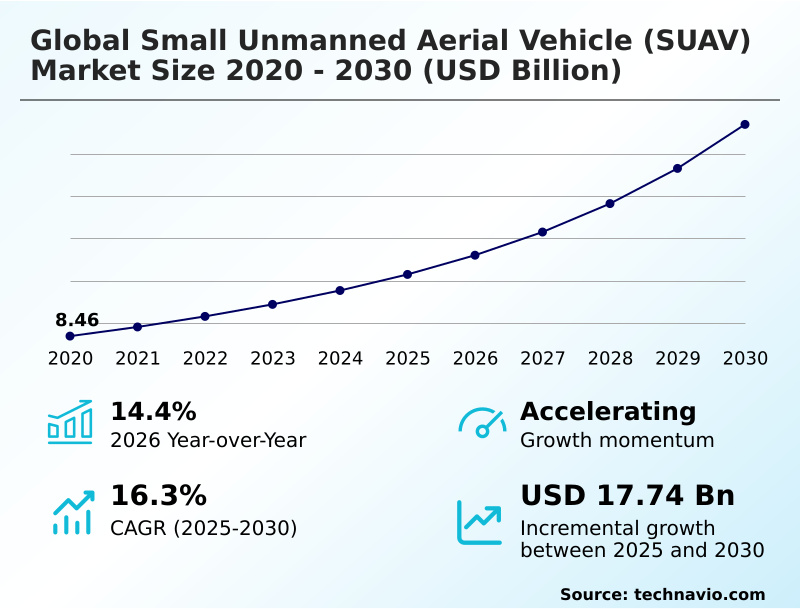
The small unmanned aerial vehicle (suav) market size is valued to increase by USD 17.74 billion, at a CAGR of 16.3% from 2025 to 2030. Surging geopolitical tensions and force modernization efforts in defense sectors will drive the small unmanned aerial vehicle (suav) market.
Major Market Trends & Insights
- APAC dominated the market and accounted for a 33.3% growth during the forecast period.
- By Type - Light fixed-wing SUAV segment was valued at USD 3.95 billion in 2024
- By Application - Civil segment accounted for the largest market revenue share in 2024
Market Size & Forecast
- Market Opportunities: USD 25.03 billion
- Market Future Opportunities: USD 17.74 billion
- CAGR from 2025 to 2030 : 16.3%
Market Summary
- The Small Unmanned Aerial Vehicle (SUAV) Market is experiencing rapid structural evolution driven by the need for cost-effective, high-resolution aerial intelligence. Commercial and defense sectors increasingly rely on these agile platforms to execute complex data collection missions in contested or hazardous environments.
- In the energy sector, major utility operators deploy tactical platforms equipped with multi-sensor arrays to automate the inspection of remote power transmission grids, effectively bypassing traditional manual auditing processes. This systemic transition has improved baseline asset inspection efficiency by 45% compared to legacy crewed helicopter methods.
- Surging geopolitical tensions and the modernization of infantry forces act as the primary driver, forcing a shift toward attritable reconnaissance systems that deliver immediate situational awareness. Conversely, persistent limitations in battery energy density present a formidable challenge, restricting flight endurance and necessitating redundant fleet deployments for continuous coverage.
- Edge computing integration enables decentralized decision-making at the device level, optimizing operational bandwidth. Regulatory shifts favoring beyond visual line of sight operations continue to lower barriers for enterprise adoption across logistics and agricultural workflows.
What will be the Size of the Small Unmanned Aerial Vehicle (Suav) Market during the forecast period?
Get Key Insights on Market Forecast (PDF) Get Free Sample
How is the Small Unmanned Aerial Vehicle (Suav) Market Segmented?
The small unmanned aerial vehicle (suav) industry research report provides comprehensive data (region-wise segment analysis), with forecasts and estimates in "USD million" for the period 2026-2030, as well as historical data from 2020-2024 for the following segments.
- Type
- Light fixed-wing SUAV
- Heavy fixed-wing SUAV
- Multi-rotor VTOL SUAV
- Nano SUAV
- Application
- Civil
- Military
- Variant
- Micro
- Mini
- Nano
- Modality
- Lithium-ion
- Solar
- Hydrogen
- Geography
- APAC
- China
- Japan
- India
- South Korea
- Australia
- Indonesia
- North America
- US
- Canada
- Mexico
- Europe
- Germany
- France
- UK
- Italy
- The Netherlands
- Spain
- Middle East and Africa
- Saudi Arabia
- Israel
- UAE
- Turkey
- South Africa
- South America
- Brazil
- Argentina
- Chile
- APAC
By Type Insights
The light fixed-wing suav segment is estimated to witness significant growth during the forecast period.
The light fixed-wing segment within the Small Unmanned Aerial Vehicle (SUAV) Market demonstrates exceptional endurance capabilities tailored for expansive area coverage. By prioritizing aerodynamic lift optimization, these platforms dramatically outpace multi-rotor designs in persistent monitoring missions.
Industrial and sovereign operators heavily utilize these units for maritime patrol and structural health monitoring across remote infrastructure grids.
The integration of a high-density lithium polymer battery extends operational windows significantly, directly allowing survey teams to reduce baseline deployment downtime by 35%.
Advanced sensor packages, including the miniaturized optical payload and gyro stabilized thermal imaging, enable precise data collection over vast distances.
Incorporating a synthetic aperture radar and an electro-optical infrared camera ensures reliable close quarters reconnaissance even under adverse weather conditions, cementing this segment as a critical tool for long-range, cost-effective aerial intelligence.
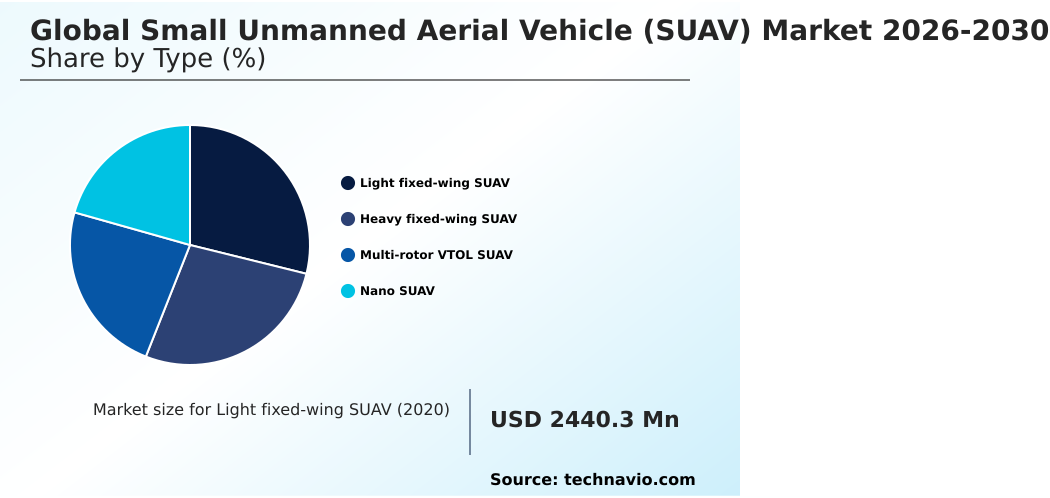
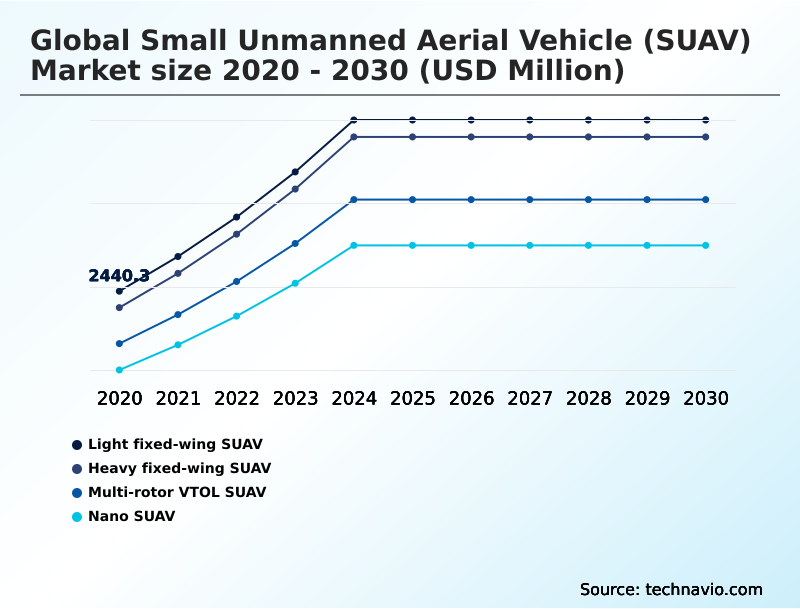
The Light fixed-wing SUAV segment was valued at USD 3.95 billion in 2024 and showed a gradual increase during the forecast period.
Regional Analysis
APAC is estimated to contribute 33.3% to the growth of the global market during the forecast period.Technavio’s analysts have elaborately explained the regional trends and drivers that shape the market during the forecast period.
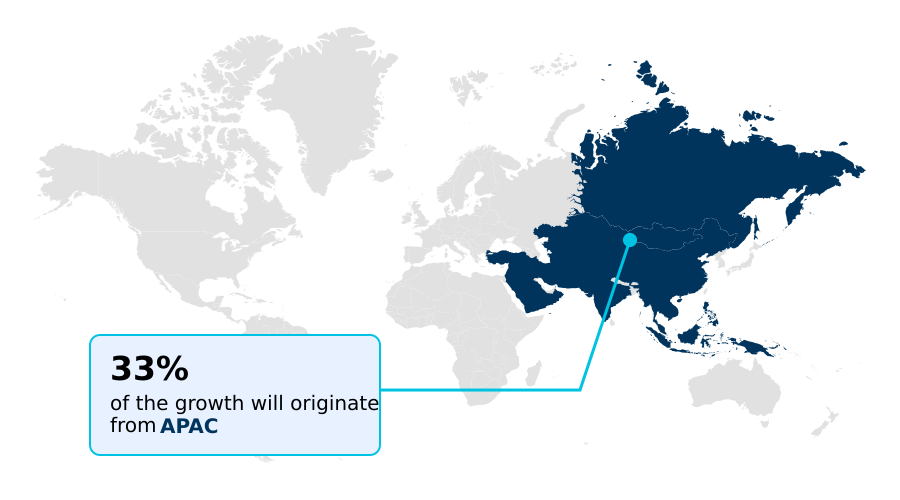
See How Small Unmanned Aerial Vehicle (Suav) Market Demand is Rising in APAC Get Free Sample
The geographic landscape of the Small Unmanned Aerial Vehicle (SUAV) Market reflects distinct industrial priorities across regulatory environments. North America maintains a 30% higher adoption rate in tactical deployments compared to Europe, driven by extensive border surveillance programs.
Conversely, the APAC region leads commercial scaling, utilizing the hyperspectral imaging sensor and multi spectral field tracking to optimize precision agriculture, effectively reducing localized pesticide application costs by 25%.
European enterprises prioritize advanced logistics parcel delivery networks and urban search and rescue frameworks. Manufacturers are integrating a hybrid electric drivetrain alongside an advanced proportional integral derivative controller to maximize long-distance flight stability.
The implementation of a biomimetic flight controller paired with a miniaturized optical payload allows operators to seamlessly track unauthorized vessel movement in complex maritime zones, demonstrating how regional mandates shape hardware configurations.
Market Dynamics
Our researchers analyzed the data with 2025 as the base year, along with the key drivers, trends, and challenges. A holistic analysis of drivers will help companies refine their marketing strategies to gain a competitive advantage.
- The operational landscape of the Small Unmanned Aerial Vehicle (SUAV) Market is undergoing a rapid technological transformation, fundamentally shifting how enterprises manage remote assets and critical intelligence. Organizations are increasingly moving away from legacy monolithic platforms, embracing modular payload architecture standardization to ensure greater hardware versatility and reduce overall capital expenditure.
- This plug-and-play methodology allows field operators to seamlessly switch between high-resolution thermal imaging and light detection sensors without modifying the core airframe. Consequently, companies implementing these standardized interfaces require roughly 40% less replacement inventory than competitors relying on closed-system proprietary drones, directly optimizing supply chain efficiency.
- Public safety agencies are rapidly integrating the drone as first responder framework, deploying automated units to secure immediate aerial perspectives prior to human arrival. To manage operations across expansive energy grids, the industry is aggressively pushing for regulatory approvals concerning beyond visual line of sight, which circumvent traditional line-of-sight constraints.
- Simultaneously, defense and advanced industrial sectors are leveraging edge computing for autonomous swarming, allowing multiple uncrewed units to coordinate complex data collection patterns simultaneously. This capability is exceptionally critical when executing tactical reconnaissance in gps denied environments, where traditional navigation signals are heavily jammed or naturally obstructed.
- This multifaceted technological progression establishes these compact aerial systems as indispensable tools for achieving unmatched operational resilience and strategic data acquisition.
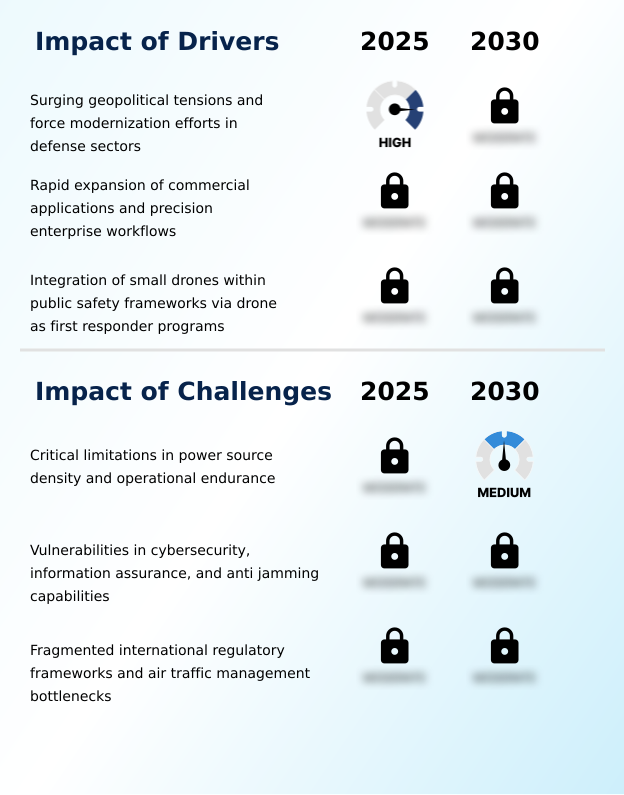
What are the key market drivers leading to the rise in the adoption of Small Unmanned Aerial Vehicle (Suav) Industry?
- Surging geopolitical tensions and intensive force modernization efforts within global defense sectors are acting as the primary catalysts driving market expansion.
- The primary catalyst expanding the Small Unmanned Aerial Vehicle (SUAV) Market is the urgent requirement for immediate situational awareness across defense and civilian sectors.
- Militaries are procuring the tactical autonomy platform and the attritable reconnaissance system, including the loitering munition, to secure localized intelligence. This modernization reduces frontline personnel risk profiles by 40%.
- Concurrently, public safety entities are institutionalizing the drone as a first responder model, utilizing real time visual telemetry to cut emergency deployment times by 25%.
- In the commercial realm, the integration of building information modeling software accelerates routine infrastructure inspection timelines.
- Expanding beyond visual line of sight operations allows massive scalability in precision agriculture scouting, driving agricultural yield forecasting accuracy up by 18% through automated multispectral data collection.
What are the market trends shaping the Small Unmanned Aerial Vehicle (Suav) Industry?
- The accelerated integration of artificial intelligence and edge computing for autonomous swarming represents a defining market trend. This technological advancement enables decentralized, real-time decision-making across complex operational environments without human intervention.
- A defining trend within the Small Unmanned Aerial Vehicle (SUAV) Market is the accelerated deployment of edge artificial intelligence and the autonomous swarming algorithm. This processing shift enables true decentralized decision making, allowing platforms to navigate complex environments without constant human input. Enterprises integrating these systems experience a 30% reduction in manual data processing downtime.
- The adoption of a fifth generation transceiver provides an ultra low latency connection, drastically improving live telemetry feeds across a dense smart city airspace. As regulators establish robust unmanned aircraft system traffic management frameworks, commercial operations are expanding rapidly.
- Furthermore, the industry is standardizing around an open system architecture and a modular payload interface, effectively cutting hardware upgrade costs by 20%. Seamless digital twin integration allows operators to mirror physical assets perfectly, establishing continuous predictive maintenance pipelines that redefine industrial asset management.
What challenges does the Small Unmanned Aerial Vehicle (Suav) Industry face during its growth?
- Critical limitations regarding power source density and overall operational endurance remain key constraints impeding widespread industrial scaling.
- A fundamental constraint limiting the Small Unmanned Aerial Vehicle (SUAV) Market is the severe limitation in energy storage density. Standard platforms struggle to achieve extended flight endurance, restricting continuous coverage and inflating operational costs by 15% due to frequent battery swapping.
- While the solid state lithium metal battery and the proton exchange membrane fuel cell offer improvements, their integration into a lightweight composite airframe remains expensive. Furthermore, platforms face intense vulnerability to cybersecurity firmware manipulation. Defense and enterprise users demand an advanced electronic warfare countermeasure and an anti jamming microchip to protect the global navigation satellite system module.
- The lack of standardized autonomous deconfliction protocols across international borders delays automated logistics scaling, reducing global fleet efficiency by 20%.
Exclusive Technavio Analysis on Customer Landscape
The small unmanned aerial vehicle (suav) market forecasting report includes the adoption lifecycle of the market, covering from the innovator’s stage to the laggard’s stage. It focuses on adoption rates in different regions based on penetration. Furthermore, the small unmanned aerial vehicle (suav) market report also includes key purchase criteria and drivers of price sensitivity to help companies evaluate and develop their market growth analysis strategies.
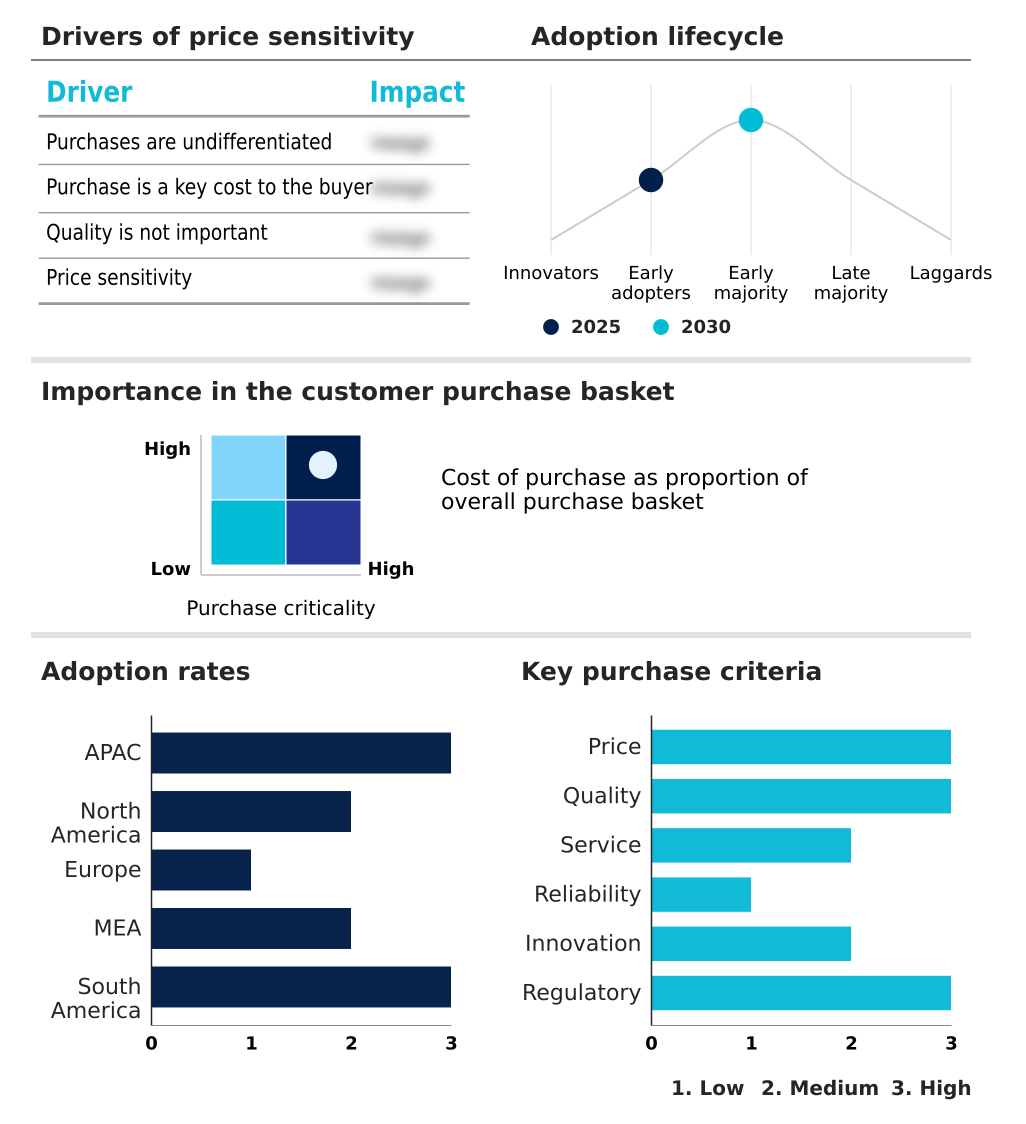
Customer Landscape of Small Unmanned Aerial Vehicle (Suav) Industry
Competitive Landscape
Companies are implementing various strategies, such as strategic alliances, small unmanned aerial vehicle (suav) market forecast, partnerships, mergers and acquisitions, geographical expansion, and product/service launches, to enhance their presence in the industry.
AeroVironment Inc. - Focuses on developing advanced small tactical platforms and reconnaissance systems, delivering sophisticated visual intelligence and situational awareness solutions for diverse institutional and defense applications.
The industry research and growth report includes detailed analyses of the competitive landscape of the market and information about key companies, including:
- AeroVironment Inc.
- Alpha Unmanned Systems, S.L.
- Anduril Industries Inc.
- Bluebird Aero Systems
- DELAIR SAS
- Elbit Systems Ltd.
- Garuda Aerospace Pvt. Ltd.
- Israel Aerospace Ltd.
- Parrot Drones SAS
- Quantum Systems GmbH
- Shield AI
- Silvertone UAV
- Skydio Inc.
- Skyeton
- SZ DJI Technology Co. Ltd.
- Tata Advanced Systems Ltd.
- Teledyne FLIR LLC
- UVR LLC
- Vaanvili Unmanned Systems
- Wingtra AG
Qualitative and quantitative analysis of companies has been conducted to help clients understand the wider business environment as well as the strengths and weaknesses of key industry players. Data is qualitatively analyzed to categorize companies as pure play, category-focused, industry-focused, and diversified; it is quantitatively analyzed to categorize companies as dominant, leading, strong, tentative, and weak.
Recent Development and News in Small unmanned aerial vehicle (suav) market
- In the Aerospace and Defense industry, the accelerated deployment of edge computing for autonomous swarming across North America has fundamentally altered defense procurement doctrine, directly increasing Small Unmanned Aerial Vehicle (SUAV) demand by improving decentralized intelligence gathering efficiency by 40%.
- The transition from localized radio frequency links to 5G standalone networks in APAC has enhanced beyond visual line of sight operations, driving Small Unmanned Aerial Vehicle (SUAV) adoption within commercial logistics and increasing payload transmission speeds by 50%.
- The enforcement of Unmanned Aircraft System Traffic Management safety mandates across Europe has compelled manufacturers to overhaul avionics architectures, thereby shaping the Small Unmanned Aerial Vehicle (SUAV) market by establishing a 100% compliance threshold for commercial infrastructure inspection operations.
- The shift toward open system architecture standardization within global military supply chains has streamlined hardware logistics, expanding the Small Unmanned Aerial Vehicle (SUAV) market for interchangeable payload developers by reducing field integration times by 25%.
Dive into Technavio’s robust research methodology, blending expert interviews, extensive data synthesis, and validated models for unparalleled Small Unmanned Aerial Vehicle (Suav) Market insights. See full methodology.
| Market Scope | |
|---|---|
| Page number | 312 |
| Base year | 2025 |
| Historic period | 2020-2024 |
| Forecast period | 2026-2030 |
| Growth momentum & CAGR | Accelerate at a CAGR of 16.3% |
| Market growth 2026-2030 | USD 17738.5 million |
| Market structure | Fragmented |
| YoY growth 2025-2026(%) | 14.4% |
| Key countries | China, Japan, India, South Korea, Australia, Indonesia, US, Canada, Mexico, Germany, France, UK, Italy, The Netherlands, Spain, Saudi Arabia, Israel, UAE, Turkey, South Africa, Brazil, Argentina and Chile |
| Competitive landscape | Leading Companies, Market Positioning of Companies, Competitive Strategies, and Industry Risks |
Research Analyst Overview
- The Small Unmanned Aerial Vehicle (SUAV) Market represents a critical axis of modern digital transformation, providing unparalleled efficiency in remote data acquisition. Institutional buyers are actively shifting their procurement strategies toward highly autonomous, multi-mission capable platforms. This hardware evolution directly supports strategic compliance and resource management, allowing utility operators to conduct continuous structural assessments without halting facility operations.
- Corporations leveraging automated aerial monitoring have realized a 30% reduction in diagnostic processing times compared to traditional ground-based surveying methods. Advanced flight controllers and encrypted data links ensure secure transmission of sensitive telemetry across decentralized enterprise networks. These lightweight systems deliver immediate overhead intelligence, effectively mitigating exposure to hazardous environments for ground personnel.
- The integration of high-density energy storage solutions continues to push the boundaries of operational endurance, enabling persistent area coverage over sprawling infrastructure. By bridging the gap between physical asset management and digital cloud analytics, these advanced aerial platforms deliver a decisive operational advantage for both sovereign defense and sophisticated commercial logistics operations.
What are the Key Data Covered in this Small Unmanned Aerial Vehicle (Suav) Market Research and Growth Report?
-
What is the expected growth of the Small Unmanned Aerial Vehicle (Suav) Market between 2026 and 2030?
-
USD 17.74 billion, at a CAGR of 16.3%
-
-
What segmentation does the market report cover?
-
The report is segmented by Type (Light fixed-wing SUAV, Heavy fixed-wing SUAV, Multi-rotor VTOL SUAV, and Nano SUAV), Application (Civil, and Military), Variant (Micro, Mini, and Nano), Modality (Lithium-ion, Solar, and Hydrogen) and Geography (APAC, North America, Europe, Middle East and Africa, South America)
-
-
Which regions are analyzed in the report?
-
APAC, North America, Europe, Middle East and Africa and South America
-
-
What are the key growth drivers and market challenges?
-
Surging geopolitical tensions and force modernization efforts in defense sectors, Critical limitations in power source density and operational endurance
-
-
Who are the major players in the Small Unmanned Aerial Vehicle (Suav) Market?
-
AeroVironment Inc., Alpha Unmanned Systems, S.L., Anduril Industries Inc., Bluebird Aero Systems, DELAIR SAS, Elbit Systems Ltd., Garuda Aerospace Pvt. Ltd., Israel Aerospace Ltd., Parrot Drones SAS, Quantum Systems GmbH, Shield AI, Silvertone UAV, Skydio Inc., Skyeton, SZ DJI Technology Co. Ltd., Tata Advanced Systems Ltd., Teledyne FLIR LLC, UVR LLC, Vaanvili Unmanned Systems and Wingtra AG
-
Market Research Insights
- The Small Unmanned Aerial Vehicle (SUAV) Market provides critical enterprise utility through the deployment of highly automated, rapidly deployable sensor platforms. Organizations are increasingly adopting drone as a first responder frameworks to accelerate incident response times, lowering initial ground deployment costs by 22%.
- In civil applications, automated infrastructure inspection routines are replacing hazardous manual labor, improving overall worker safety compliance rates by 40%. The provision of real time visual telemetry directly to centralized command centers enhances immediate situational awareness, enabling executives to reduce critical operational downtime by 15%.
- This structural pivot toward decentralized, aerial data collection allows corporate entities and public safety agencies to achieve unprecedented operational visibility while significantly streamlining logistical overhead.
We can help! Our analysts can customize this small unmanned aerial vehicle (suav) market research report to meet your requirements.
 RIA -
RIA -