

US Cannabis Market Size 2026-2030
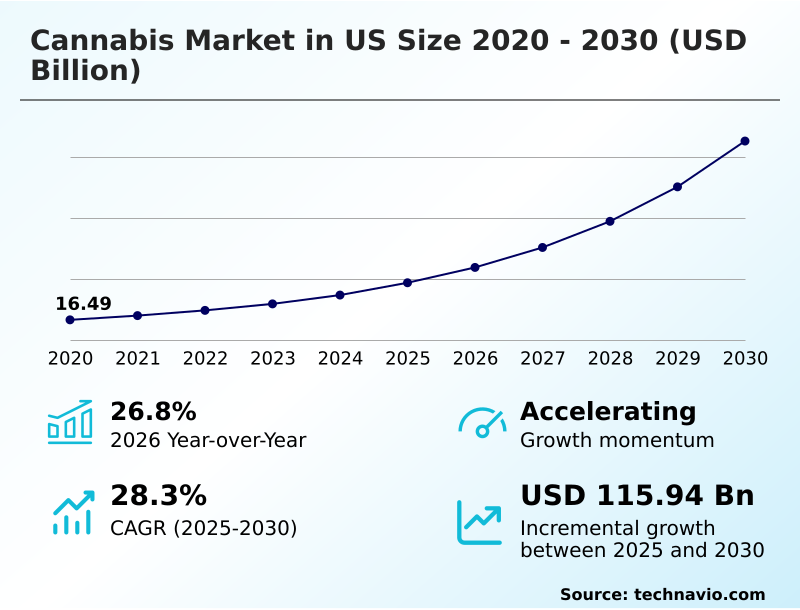
The us cannabis market size is valued to increase by USD 115.94 billion, at a CAGR of 28.3% from 2025 to 2030. Expanding grassroots legislative legalization initiatives accelerate retail consumer access growth nationwide will drive the us cannabis market.
Major Market Trends & Insights
- By Derivative Type - CBD segment was valued at USD 23.40 billion in 2024
- By Product - Medical segment accounted for the largest market revenue share in 2024
Market Size & Forecast
- Market Opportunities: USD 146.28 billion
- Market Future Opportunities: USD 115.94 billion
- CAGR from 2025 to 2030 : 28.3%
Market Summary
- The Cannabis Market in US 2026-2030 demonstrates structural maturity through rapid regulatory expansion and the localization of retail infrastructure. As state-level jurisdictions transition to regulated commercial frameworks, operators aggressively localize cultivation and extraction capabilities to meet localized demand. Expanding grassroots legislative legalization initiatives directly trigger consumer access growth by shifting purchasing behavior away from unregulated channels into monitored retail dispensaries.
- This transition causes regional municipalities to secure new streams of localized tax revenues. However, persistent federal prohibition regimes severely limit interstate commerce, forcing companies to build entirely redundant cultivation facilities within each state boundary. This structural limitation prevents cross-border economies of scale and increases operational overhead.
- To mitigate these geographical restrictions, multi-state operators are deploying standardized indoor greenhouse automation and integrated compliance tracking systems to optimize localized production. By standardizing compliance protocols across isolated facilities, vertically integrated enterprises achieve a 25% improvement in processing efficiency compared to decentralized legacy operations.
- Optimizing operational footprint enables operators to offset revenue stagnation in highly competitive territories while navigating fragmented regulatory parameters.
What will be the Size of the US Cannabis Market during the forecast period?
Get Key Insights on Market Forecast (PDF) Get Free Sample
How is the US Cannabis Market Segmented?
The us cannabis industry research report provides comprehensive data (region-wise segment analysis), with forecasts and estimates in "USD million" for the period 2026-2030, as well as historical data from 2020-2024 for the following segments.
- Derivative type
- CBD
- THC
- Balanced THC and CBD
- Product
- Medical
- Recreational
- Source
- Marijuana
- Hemp
- Geography
- North America
- US
- North America
By Derivative Type Insights
The cbd segment is estimated to witness significant growth during the forecast period.
The non-psychoactive wellness sector operates through highly regulated supply networks focusing heavily on functional consumer formulations. Cultivators utilize advanced synthetic pesticide remediation and specialized closed loop extraction equipment to achieve superior purity metrics.
Enterprises relying on a strict heavy metal testing protocol and meticulous trichome preservation technique observe a 15% reduction in compliance failure rates compared to traditional agricultural methodologies.
Implementing a standardized operational procedure across the processing framework directly enhances finished product packaging efficiency. A robust agricultural safety protocol ensures material integrity before retail distribution. These rigorous processing protocols facilitate broader clinical patient access to non-intoxicating therapeutic variants.
As cultivation shifts toward pharmaceutical precision, processors prioritizing integrated quality control mechanisms report 20% higher batch consistency, driving operational stability across complex state-level botanical supply chains.
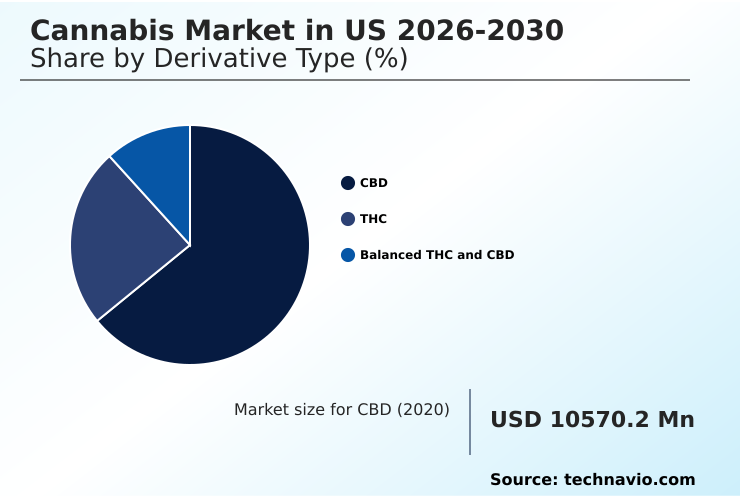
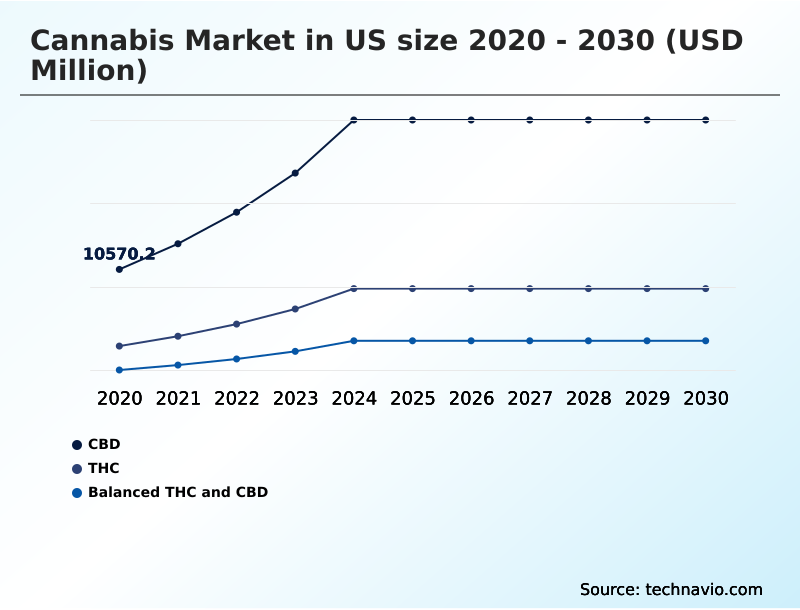
The CBD segment was valued at USD 23.40 billion in 2024 and showed a gradual increase during the forecast period.
Market Dynamics
Our researchers analyzed the data with 2025 as the base year, along with the key drivers, trends, and challenges. A holistic analysis of drivers will help companies refine their marketing strategies to gain a competitive advantage.
- The commercial expansion of botanical therapeutics requires a highly sophisticated approach to agricultural optimization and compliance management. Enterprises are increasingly focusing on botanical formulation optimization operational efficiency to streamline product development cycles across fragmented regulatory landscapes.
- The integration of advanced precision microdosing hardware adoption rates directly correlates with enhanced consumer trust and clinical reliability, particularly in medical dispensaries requiring exact therapeutic measurements. To support scalable production, facilities are tracking indoor greenhouse automation yield improvement, recording a 35% higher biomass output per square foot compared to conventional outdoor agricultural methods.
- This operational shift mitigates weather-related crop losses and stabilizes raw material supply chains. Furthermore, extraction laboratories evaluate supercritical fluid extraction efficiency metrics to maximize the retrieval of target compounds while eliminating residual solvents. This refinement process is critical for producing high-purity concentrates and specialized wellness products.
- The clinical validation of these products is increasingly dependent on transdermal delivery mechanism bioavailability clinical studies, which provide empirical data supporting alternative administration routes for chronic symptom management. By investing in these precision technologies, multi-state operators systematically reduce processing bottlenecks and lower overhead costs.
- The continuous refinement of cultivation protocols and extraction methodologies ensures that enterprises can navigate complex state-level compliance mandates while maintaining consistent product safety profiles across isolated commercial territories.
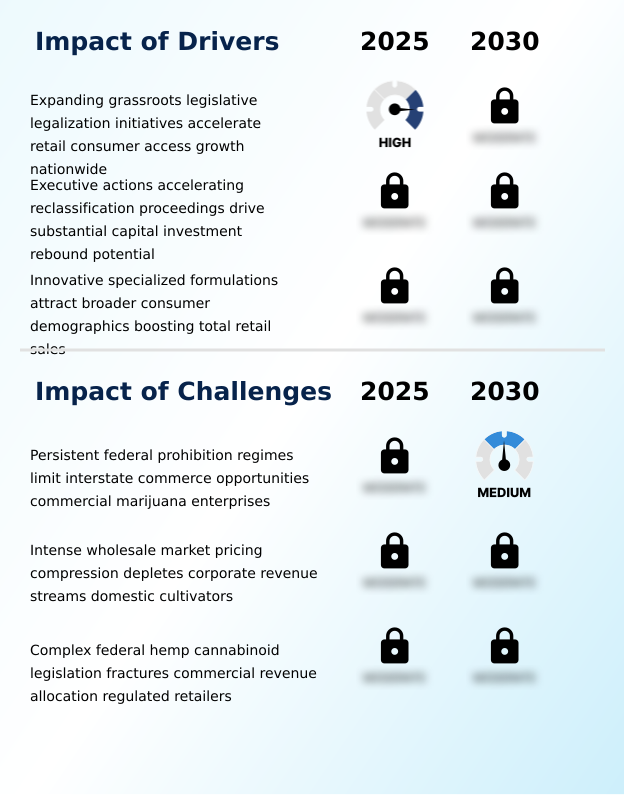
What are the key market drivers leading to the rise in the adoption of US Cannabis Industry?
- Expanding grassroots legislative legalization initiatives accelerate retail consumer access and drive widespread operational growth nationwide.
- The necessity for controlled substance compliance and standardized dosing consistency drives the rapid adoption of high performance liquid chromatography and gas chromatography mass spectrometry. Operators demand specialized high cannabidiol genetics and botanical medicine integration to meet stringent medical safety profiles.
- Implementing an automated climate control and advanced hydroponic cultivation system increases cultivation yield maximization by 35%. This technological shift occurs because manual agricultural processes cannot satisfy the rigorous regulatory testing parameter required for phytocannabinoid therapeutic application.
- By adopting industrial hemp processing automation, facilities reduce processing bottlenecks by 20%, lowering long-term operating costs. These precision tools directly enable large-scale enterprises to maintain flawless regulatory records, significantly accelerating product time-to-market across structurally isolated state jurisdictions.
What are the market trends shaping the US Cannabis Industry?
- Strategic private placement financing transactions systematically restructure high-cost corporate debt requirements within the industry. This financial optimization strategy preserves balance sheet liquidity while extending operational payment timelines.
- The adoption of supercritical fluid extraction and decarboxylation processing radically transforms raw material refinement. Advanced cannabinoid biosynthesis and terpene profiling enable operators to meet strict pharmaceutical grade quality standards. Facilities utilizing nanoemulsification technology and molecular bioavailability enhancement achieve a 40% improvement in formulation absorption rates.
- This shift toward high-efficiency processing is driven by the necessity for supply chain traceability and robust retail dispensary infrastructure. By implementing indoor agricultural optimization, enterprises improve energy utilization by 25%, directly lowering overhead costs. These technological upgrades allow manufacturers to standardize production batches, enhancing overall product reliability.
- As operations scale, the strategic deployment of precision refining methodologies ensures that multi-state operators can consistently deliver complex therapeutic formulations, completely stabilizing product output across highly regulated distribution channels.
What challenges does the US Cannabis Industry face during its growth?
- Persistent federal prohibition regimes severely limit interstate commerce opportunities for commercial botanical enterprises.
- Navigating fragmented regulatory frameworks complicates the deployment of a unified structural distribution network and integrated compliance tracking. Enterprises struggle to scale precision microdosing hardware and indoor greenhouse automation due to conflicting state-level mandates. Adapting botanical formulation optimization and full spectrum lipid extraction across isolated facilities causes a 30% increase in capital expenditure requirements.
- The lack of standardized regulatory testing parameter criteria forces companies to build redundant extraction facilities, reducing overall asset utilization by 25%. Creating an alternative consumption format requires a sophisticated seed to sale compliance software to track localized inventory effectively.
- These operational redundancies directly suppress corporate profitability, forcing operators to execute aggressive cultivation yield maximization strategies just to offset the massive overhead generated by strict geographic quarantine restrictions.
Exclusive Technavio Analysis on Customer Landscape
The us cannabis market forecasting report includes the adoption lifecycle of the market, covering from the innovator’s stage to the laggard’s stage. It focuses on adoption rates in different regions based on penetration. Furthermore, the us cannabis market report also includes key purchase criteria and drivers of price sensitivity to help companies evaluate and develop their market growth analysis strategies.
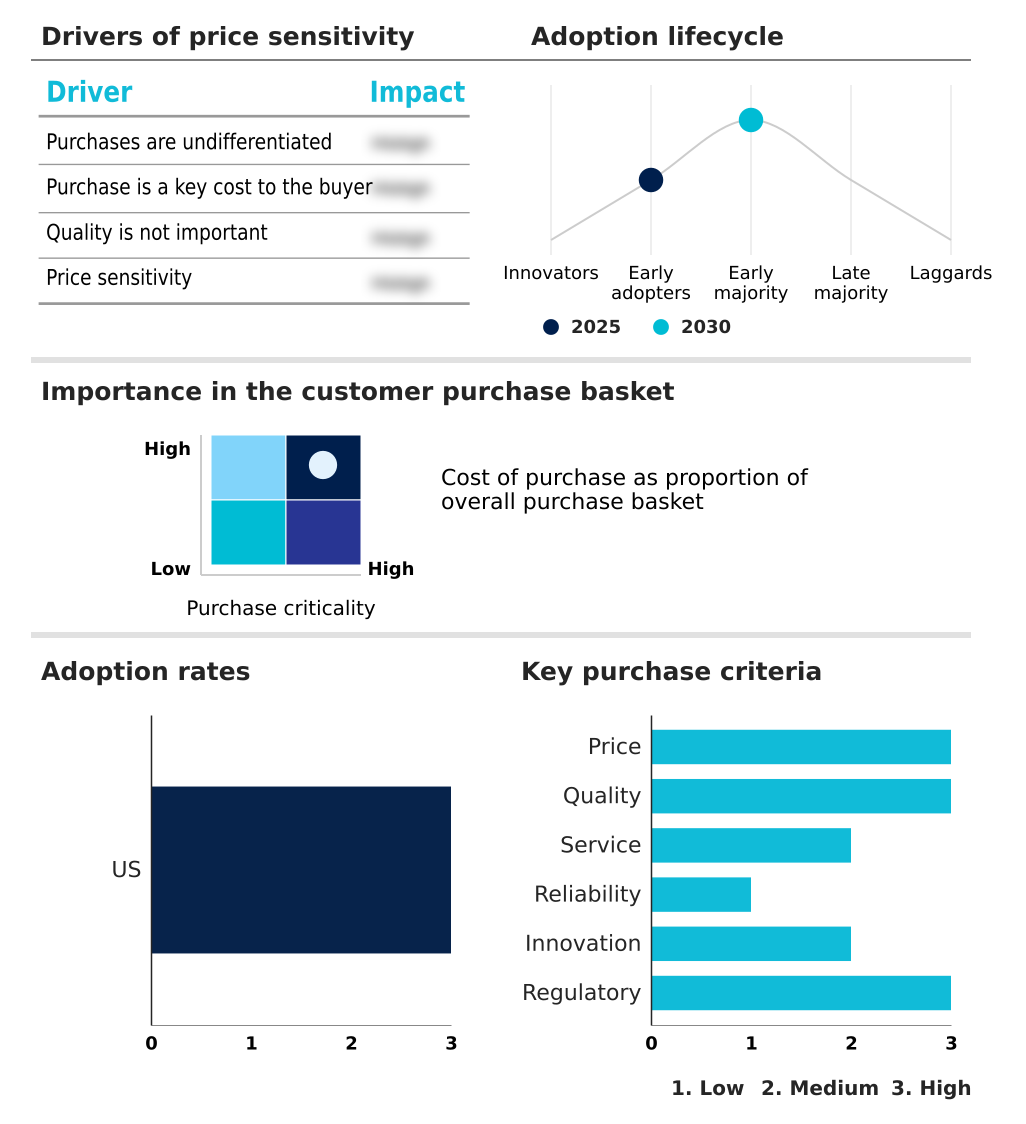
Customer Landscape of US Cannabis Industry
Competitive Landscape
Companies are implementing various strategies, such as strategic alliances, us cannabis market forecast, partnerships, mergers and acquisitions, geographical expansion, and product/service launches, to enhance their presence in the industry.
Aurora Cannabis Inc. - The enterprise delivers medical and adult-use botanical products, including cultivated flower, concentrates, and wellness formulations, distributed through regulated retail channels to registered patients and recreational consumers.
The industry research and growth report includes detailed analyses of the competitive landscape of the market and information about key companies, including:
- Aurora Cannabis Inc.
- Blum Holdings Inc.
- Canopy Growth Corp.
- Charlottes Web Holdings Inc.
- Cresco Labs Inc.
- Cronos Group Inc.
- Curaleaf Holdings Inc.
- Folium Biosciences
- Green Roads Inc.
- Green Thumb Industries Inc.
- High Tide Inc.
- Jazz Pharmaceuticals Plc
- Medical Marijuana Inc.
- Pure Spectrum CBD
- SNDL Inc.
- TerrAscend Corp.
- The Cannabist Co Inc.
- Tilray Brands Inc.
- Trulieve Cannabis Corp.
- Verano Holdings LLC
Qualitative and quantitative analysis of companies has been conducted to help clients understand the wider business environment as well as the strengths and weaknesses of key industry players. Data is qualitatively analyzed to categorize companies as pure play, category-focused, industry-focused, and diversified; it is quantitatively analyzed to categorize companies as dominant, leading, strong, tentative, and weak.
Recent Development and News in Us cannabis market
- In the Personal Care Products industry, the widespread adoption of clean-beauty formulation standards eliminated harmful synthetic additives in topical treatments, directly impacting Cannabis demand by accelerating the transition toward organic, plant-based therapeutic salves.
- The implementation of stringent supply chain traceability mandates for botanical ingredients forced manufacturers to adopt blockchain-enabled verification systems, enhancing raw material transparency and operational compliance within the therapeutic botanical sector.
- Advancements in nanoemulsification technology for high-end skincare serums improved transdermal absorption efficiency by 40%, accelerating the development of highly bioavailable infused topical formulations and specialized cosmetic therapies.
- The expansion of specialized retail distribution networks for premium wellness goods decentralized consumer access points, prompting a 25% increase in shelf-space allocation for alternative botanical wellness therapies across national pharmacy chains.
Dive into Technavio’s robust research methodology, blending expert interviews, extensive data synthesis, and validated models for unparalleled US Cannabis Market insights. See full methodology.
| Market Scope | |
|---|---|
| Page number | 179 |
| Base year | 2025 |
| Historic period | 2020-2024 |
| Forecast period | 2026-2030 |
| Growth momentum & CAGR | Accelerate at a CAGR of 28.3% |
| Market growth 2026-2030 | USD 115938.2 million |
| Market structure | Fragmented |
| YoY growth 2025-2026(%) | 26.8% |
| Key countries | US |
| Competitive landscape | Leading Companies, Market Positioning of Companies, Competitive Strategies, and Industry Risks |
Research Analyst Overview
- The commercial botanical sector requires rigorous supply chain modernization to navigate fragmented state-level compliance mandates. A pivotal boardroom priority is the integration of advanced cannabinoid biosynthesis and specialized terpene profiling to ensure consistent botanical standardization. Facilities upgrading their decarboxylation processing and full spectrum lipid extraction systems report a 30% reduction in processing time, directly enhancing supply chain throughput.
- The deployment of a sophisticated seed to sale compliance software framework allows executives to monitor inventory movement precisely, minimizing inventory shrinkage and regulatory friction. Cultivators leveraging a high performance liquid chromatography and gas chromatography mass spectrometry validate product purity, establishing critical trust across clinical channels.
- By prioritizing precision therapeutic cannabinoid ratio stabilization, enterprise manufacturers mitigate batch variability and secure consistent product efficacy. This strategic pivot toward pharmaceutical-grade manufacturing standardization empowers multi-state operators to defend operating margins against intense wholesale pricing compression while navigating a complex web of isolated regulatory frameworks.
What are the Key Data Covered in this US Cannabis Market Research and Growth Report?
-
What is the expected growth of the US Cannabis Market between 2026 and 2030?
-
USD 115.94 billion, at a CAGR of 28.3%
-
-
What segmentation does the market report cover?
-
The report is segmented by Derivative Type (CBD, THC, and Balanced THC and CBD), Product (Medical, and Recreational), Source (Marijuana, and Hemp) and Geography (North America)
-
-
Which regions are analyzed in the report?
-
North America
-
-
What are the key growth drivers and market challenges?
-
Expanding grassroots legislative legalization initiatives accelerate retail consumer access growth nationwide, Persistent federal prohibition regimes limit interstate commerce opportunities commercial marijuana enterprises
-
-
Who are the major players in the US Cannabis Market?
-
Aurora Cannabis Inc., Blum Holdings Inc., Canopy Growth Corp., Charlottes Web Holdings Inc., Cresco Labs Inc., Cronos Group Inc., Curaleaf Holdings Inc., Folium Biosciences, Green Roads Inc., Green Thumb Industries Inc., High Tide Inc., Jazz Pharmaceuticals Plc, Medical Marijuana Inc., Pure Spectrum CBD, SNDL Inc., TerrAscend Corp., The Cannabist Co Inc., Tilray Brands Inc., Trulieve Cannabis Corp. and Verano Holdings LLC
-
Market Research Insights
- The Cannabis Market in US 2026-2030 functions through complex, highly regulated retail dispensary infrastructure frameworks. Operators adopting standardized dosing consistency and pharmaceutical grade quality standards achieve a 30% reduction in laboratory testing failure rates. Integrating specialized compliance tracking software improves supply chain traceability by 40%, enabling faster regulatory approvals across fragmented state jurisdictions.
- The implementation of rigorous controlled substance compliance protocols directly mitigates legal friction, increasing overall supply chain throughput. By optimizing indoor agricultural optimization systems, cultivators lower energy consumption by 22%, directly improving operating margins despite severe pricing compression.
- These strategic operational adjustments demonstrate how localized infrastructure investments and precision agricultural technologies stabilize production workflows and offset heavy regulatory compliance burdens across the sector.
We can help! Our analysts can customize this us cannabis market research report to meet your requirements.
 RIA -