
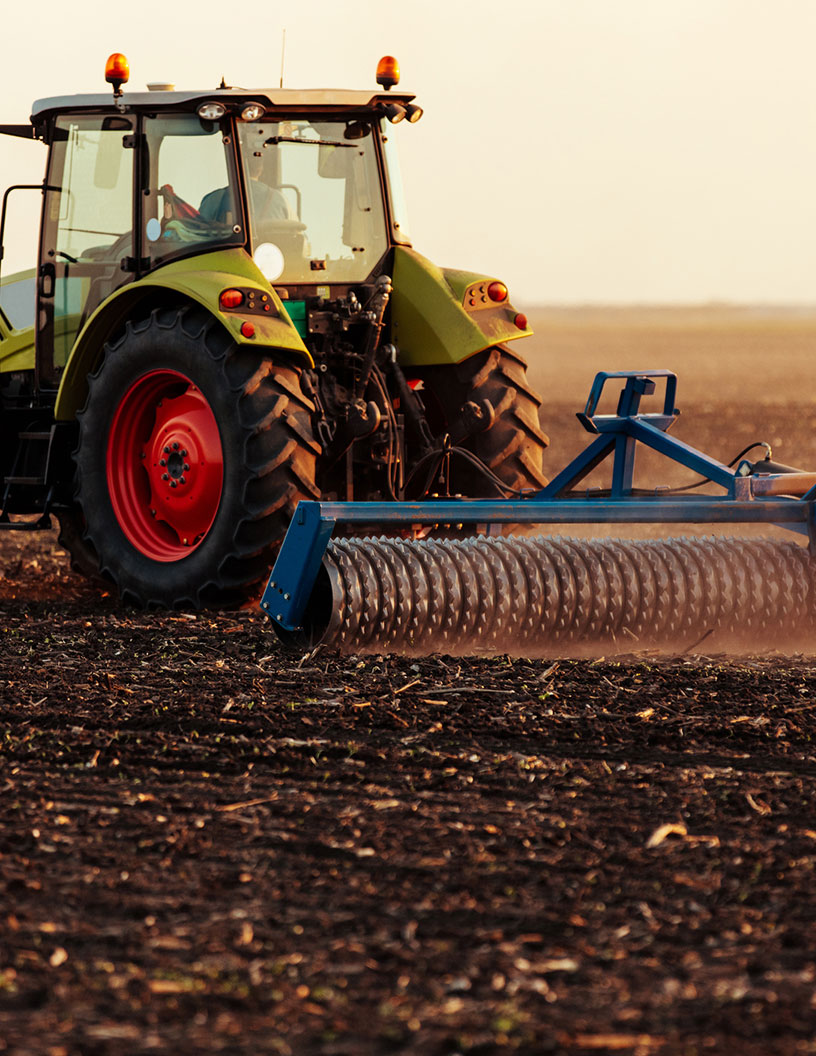


Agricultural Rollers Market Size 2024-2028
The agricultural rollers market size is forecast to increase by USD 348.3 million, at a CAGR of 1.69% between 2023 and 2028.
- The market is witnessing significant growth due to the rising demand for efficient residue management in soil. This trend is driven by the increasing awareness of the benefits of proper soil treatment and management for enhancing crop productivity. Additionally, there is a growing inclination toward agricultural folding rollers due to their ability to reduce soil compaction and improve soil structure. However, potential risks associated with rolling agricultural fields, such as the possibility of damaging crops or causing soil erosion, remain a challenge for market growth. Producers must carefully consider these factors to optimize the use of agricultural rollers and maximize the benefits of their operations. Overall, the market rollers are expected to continue its growth trajectory, driven by the need for efficient and effective soil management solutions.
What will be the size of the Agricultural Rollers Market During the Forecast Period?

- The market encompasses a range of implements used for soil residue management and seedbed preparation In the farming sector. This market includes both hydraulic and non-hydraulic product offerings, with hydraulic rollers offering greater versatility and control, while non-hydraulic rollers are more cost-effective and require less maintenance. Agricultural rollers are utilized in various crop cultivation methods, including cereals and grassland, and are essential for efficient farming operations. These rollers are commonly used for rolling agricultural fields to improve soil management practices, enhance farm efficiency, and minimize soil compaction. They are available in various designs, such as smooth rollers, Cambridge rollers, and ring rollers, catering to diverse farming needs.
- Pre-used models are also prevalent In the market, offering an affordable alternative for farmers. The agricultural machinery sector continues to evolve, with rollers playing a crucial role In the farming process. Draft animals and tractors have been largely replaced by these modern implements, which offer superior performance and productivity. The market's size and direction are influenced by factors such as farm workers' expertise, land management practices, and crop cultivation methods. Overall, agricultural rollers remain an integral component of the farming sector, contributing to the efficient management of soil and crop residue.
How is this Agricultural Rollers Industry segmented and which is the largest segment?
The agricultural rollers industry research report provides comprehensive data (region-wise segment analysis), with forecasts and estimates in "USD million" for the period 2024-2028, as well as historical data from 2018-2022 for the following segments.
- Product
- Hydraulic
- Non-hydraulic
- Distribution Channel
- Offline
- Online
- Geography
- Europe
- Germany
- France
- APAC
- China
- Japan
- North America
- US
- South America
- Middle East and Africa
- Europe
By Product Insights
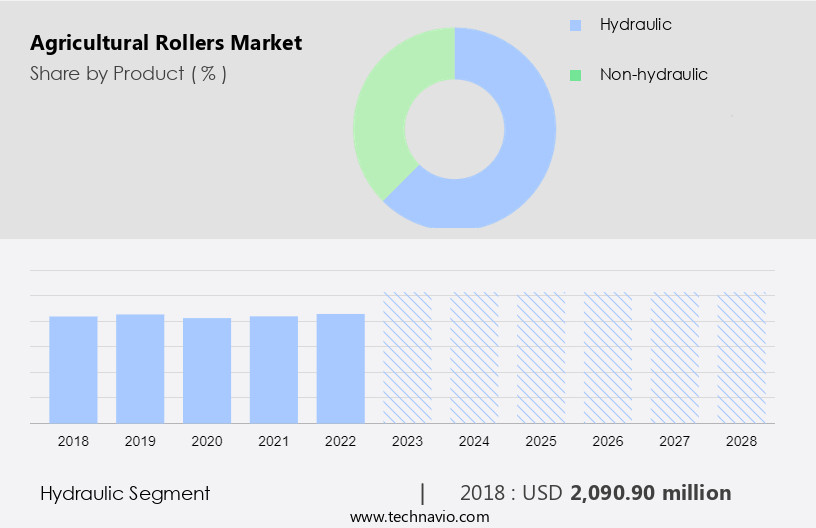
- The hydraulic segment is estimated to witness significant growth during the forecast period.
Hydraulic agricultural rollers offer operators enhanced control and efficiency compared to non-hydraulic rollers. Equipped with an electrical switch, these rollers activate the hydraulic circuit, enabling the operator to modify the rolling and traveling speed in the field automatically. This functionality significantly reduces the time required for adjustments compared to non-hydraulic models. Additionally, hydraulic rollers ensure improved soil management practices, including seedbed preparation, soil leveling, and residue management, leading to increased farm efficiency. Their simple operation and four-wheel drive system facilitate smooth rolling, packing, and smoothing of soil surfaces, contributing to better agricultural produce quality. Hydraulic systems enable mechanical methods to optimize farming operations, including conservation agriculture, soil health, water conservation, biodiversity preservation, and climate variability mitigation.
Get a glance at the Agricultural Rollers Industry report of share of various segments Request Free Sample
The hydraulic segment was valued at USD 2.1 billion in 2018 and showed a gradual increase during the forecast period.
Regional Analysis
- APAC is estimated to contribute 50% to the growth of the global market during the forecast period.
Technavio's analysts have elaborately explained the regional trends and drivers that shape the market during the forecast period.

For more insights on the market share of various regions, Request Free Sample
Another region offering significant growth opportunities to companies is Europe. The market is primarily driven by government subsidies that promote agricultural mechanization and farming among the younger generation. Key European countries, including Germany, France, Spain, Italy, and the UK, are significant markets for agricultural rollers. The European Union (EU) offers funding support for young farmers, enabling them to commence farming operations and receive assistance for up to five years. This initiative boosts the adoption of agricultural machinery, including rollers, for soil management practices such as seedbed preparation, soil compaction, and residue management.
Agricultural rollers, available in both hydraulic and non-hydraulic product ranges, contribute to farming efficiency by leveling, packing, and smoothing soil surfaces. This enhances soil health, water conservation, and biodiversity preservation, crucial for agricultural produce cultivation In the face of climate variability and water scarcity. The agricultural machinery sector continues to evolve, with manufacturers focusing on user-friendly features and precision agriculture to cater to smallholder farmers and large-scale farming operations.
Market Dynamics
Our researchers analyzed the data with 2023 as the base year, along with the key drivers, trends, and challenges. A holistic analysis of drivers will help companies refine their marketing strategies to gain a competitive advantage.
What are the key market drivers leading to the rise In the adoption of Agricultural Rollers Industry?
Rising demand for efficient residue management of soil is the key driver of the market.
- In the agricultural sector, soil residue management is a vital practice for effective seedbed preparation. Agricultural rollers, available in both hydraulic and non-hydraulic product ranges, play a significant role in this process. These rollers aid in smoothing soil surfaces, leveling, and packing, ensuring optimal growing conditions for various agricultural produce, including cereals and grassland. Hydraulic Agricultural Rollers and Non-Hydraulic Agricultural Rollers, such as Agricultural folding rollers, Cambridge rollers, smooth rollers, and ring rollers, are essential implements for farming operations. They help manage crop residue, reduce soil compaction, and improve overall soil health. Online and offline distribution channels cater to the demand for these agricultural machinery products.
- Farmers can choose from pre-used models or invest in new hydraulic and non-hydraulic rollers. The agricultural machinery sector continues to evolve, with an emphasis on user-friendly features, precision agriculture, and carbon sequestration. Government support, agricultural cooperatives, and investment programs encourage the adoption of smart farming practices, including agricultural rollers, to enhance farm efficiency, promote water conservation, and preserve biodiversity. Smallholder farmers and large-scale land development projects alike benefit from these initiatives, contributing to food security objectives and rural development.
What are the market trends shaping the Agricultural Rollers Industry?
Growing inclination toward agricultural folding rollers is the upcoming market trend.
- Agricultural rollers are essential implements In the farming sector for soil residue management and seedbed preparation. Manufacturers offer both hydraulic and non-hydraulic product ranges to cater to various farming operations. Hydraulic agricultural rollers enable farmers to fold and unfold the equipment without leaving the tractor cab, while non-hydraulic rollers require the operator to drive in reverse to unfold the roller. Both types of agricultural rollers, including Agricultural Cereals and Agricultural Grassland rollers, contribute significantly to soil management practices such as leveling, packing, and smoothing soil surfaces. These practices enhance farm efficiency and promote better crop growth. The agricultural machinery sector continues to evolve, with a focus on user-friendly features, conservation agriculture, soil health, water conservation, biodiversity preservation, and climate variability.
- Investment programs and agricultural cooperatives support smallholder farmers and land development projects, further driving the demand for agricultural rollers. Distribution channels include online and offline methods, with hydraulic systems and mechanical methods employed for rolling agricultural fields. Pre-used models are also available for purchase. The market dynamics are influenced by farming practices, precision agriculture, carbon sequestration, government support, irrigation infrastructure, and agricultural mechanization initiatives.
What challenges does the Agricultural Rollers Industry face during its growth?
Potential risks associated with rolling agricultural fields is a key challenge affecting the industry growth.
- In the farming sector, proper soil residue management is crucial for seedbed preparation and optimal crop growth. Agricultural rollers play a significant role in this process, offering both hydraulic and non-hydraulic options. Hydraulic rollers, utilizing hydraulic systems, provide more power and versatility, while non-hydraulic rollers, such as Agricultural folding rollers, Cambridge rollers, and Ring rollers, rely on mechanical methods for leveling, packing, and smoothing soil surfaces. Proper rolling agricultural fields is essential for soil management practices, enhancing farm efficiency and ensuring a good yield of agricultural cereals and agricultural grassland. However, if not executed correctly, rolling can negatively impact soil health and plant growth, particularly during dry conditions.
- Rolling fields with insufficient crop residue increases the risk of runoff and erosion, potentially affecting profitability. Moreover, the use may pose risks to farmworkers due to the attached stalks. Distribution channels include both online and offline platforms, catering to various farming operations. The agricultural machinery sector offers a range of pre-used models, making it accessible to smallholder farmers and land development projects. Government support, agricultural cooperatives, and investment programs are crucial in promoting agricultural mechanization initiatives, rural development, and poverty alleviation, contributing to food security objectives.
Exclusive Customer Landscape
The market forecasting report includes the adoption lifecycle of the market, covering from the innovator's stage to the laggard's stage. It focuses on adoption rates in different regions based on penetration. Furthermore, the market report also includes key purchase criteria and drivers of price sensitivity to help companies evaluate and develop their market growth analysis strategies.

Customer Landscape
Key Companies & Market Insights
Companies are implementing various strategies, such as strategic alliances, the market forecast, partnerships, mergers and acquisitions, geographical expansion, and product/service launches, to enhance their presence In the industry.
The industry research and growth report includes detailed analyses of the competitive landscape of the market and information about key companies, including:
- Ag Shield Manufacturing Ltd.
- Alamo Group Inc.
- AMAZONEN-WERKE H. DREYER SE and Co. KG
- BACH RUN FARMS LTD.
- BCS America LLC
- Crescent Foundry Company Pvt. Ltd.
- DALBO A S
- Degelman Industries LP
- Flaman
- Fleming Agri Products Ltd.
- Hilltop Manufacturing Ltd.
- HORSCH Maschinen GmbH
- Husqvarna AB
- Mahindra and Mahindra Ltd.
- Mandako Agri Marketing Inc.
- Remlinger Manufacturing
- Rite Way Mfg. Co. Ltd.
- Summers Manufacturing Inc.
- Walter Watson Ltd.
- Wessex International
Qualitative and quantitative analysis of companies has been conducted to help clients understand the wider business environment as well as the strengths and weaknesses of key industry players. Data is qualitatively analyzed to categorize companies as pure play, category-focused, industry-focused, and diversified; it is quantitatively analyzed to categorize companies as dominant, leading, strong, tentative, and weak.
Research Analyst Overview
The market encompasses a broad range of implements used In the farming sector for soil residue management and seedbed preparation. These rollers come in two primary categories: hydraulic and non-hydraulic. Hydraulic rollers rely on hydraulic systems for their operation, while non-hydraulic rollers use mechanical methods. Both types of rollers play a crucial role in agricultural operations. They are employed for various purposes, including leveling, packing, smoothing soil surfaces, and managing crop residue. The farming sector's efficiency relies heavily on these implements, as they contribute to optimal farming practices and improved soil health. Soil management practices have gained significant attention in recent years due to the importance of farmland conservation, water conservation, and biodiversity preservation.
Further, it contributes to these objectives by reducing soil compaction, improving soil structure, and promoting water infiltration. The market caters to diverse farming operations, from large commercial farms to smallholder farmers. Pre-used models are also available In the market, offering an affordable alternative for farmers with limited budgets. Distribution channels include both online and offline platforms. Agricultural machinery manufacturers prioritize user-friendly features and durability to cater to the farming sector's unique requirements. The agricultural machinery sector is subject to various market dynamics, including climate variability, water scarcity, and government support. Precision agriculture, carbon sequestration, and crop rotation are some farming practices that have gained traction in response to these challenges.
In addition, investment programs and agricultural mechanization initiatives have been instrumental in rural development and poverty alleviation. Land development projects and irrigation infrastructure have also contributed to food security objectives in many regions. These are essential tools for managing various types of agricultural produce, including cereals and grassland. They are used in conjunction with draft animals, tractors, and other farming implements. The market is diverse, with various types of rollers, including smooth rollers, Cambridge rollers, and ring rollers. Each type offers unique benefits and is suited to specific farming applications.
|
Market Scope |
|
|
Report Coverage |
Details |
|
Page number |
165 |
|
Base year |
2023 |
|
Historic period |
2018-2022 |
|
Forecast period |
2024-2028 |
|
Growth momentum & CAGR |
Accelerate at a CAGR of 1.69% |
|
Market Growth 2024-2028 |
USD 348.3 million |
|
Market structure |
Fragmented |
|
YoY growth 2023-2024(%) |
1.66 |
|
Key countries |
US, Germany, China, France, and Japan |
|
Competitive landscape |
Leading Companies, Market Positioning of Companies, Competitive Strategies, and Industry Risks |
What are the Key Data Covered in this Agricultural Rollers Market Research and Growth Report?
- CAGR of the Agricultural Rollers industry during the forecast period
- Detailed information on factors that will drive the market growth and forecasting between 2024 and 2028
- Precise estimation of the size of the market and its contribution of the industry in focus to the parent market
- Accurate predictions about upcoming growth and trends and changes in consumer behaviour
- Growth of the market across Europe, APAC, North America, South America, and Middle East and Africa
- Thorough analysis of the market's competitive landscape and detailed information about companies
- Comprehensive analysis of factors that will challenge the agricultural rollers market growth of industry companies
We can help! Our analysts can customize this agricultural rollers market research report to meet your requirements.