
Airport Robots Market Analysis North America, Europe, APAC, South America, Middle East and Africa - US, China, Germany, UK, France - Size and Forecast 2024-2028

Airport Robots Market Analysis North America, Europe, APAC, South America, Middle East and Africa - US, China, Germany, UK, France - Size and Forecast 2024-2028

Published: Mar 2024 155 Pages SKU: IRTNTR77546

Market Overview at a Glance

$2.02 B
Market Opportunity
14.46%
CAGR
12.53
YoY growth 2023-2024(%)

Airport Robots Market Size 2024-2028

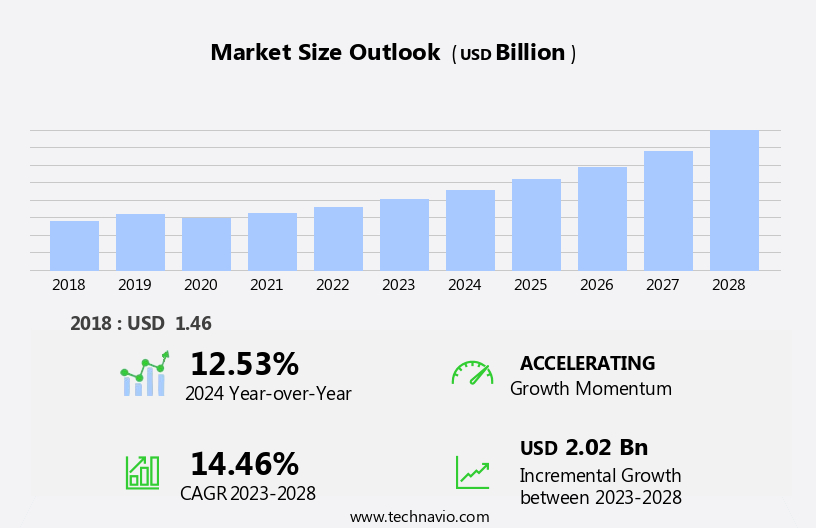
The airport robots market size is forecast to increase by USD 2.02 billion at a CAGR of 14.46% between 2023 and 2028.

  • The airport robotics market is experiencing significant growth due to several key trends. The increasing integration of Internet of Things (IoT) technology in robots is enhancing airport operations by automating tasks such as baggage handling and passenger assistance. Moreover, the growth in air passenger traffic necessitates the adoption of advanced technologies to manage the rising demand for efficient and seamless airport experiences. However, the high initial investment and increasing IT complexity in robotics implementation pose challenges to market growth. Despite these challenges, the potential benefits of robotics in airports, such as improved operational efficiency and enhanced passenger experience, make it a promising market for technology investors and innovators.
  • What will be the Size of the Airport Robots Market During the Forecast Period?
    Airport Robots Market Size

     Request Free Sample

  • The market is experiencing significant growth due to increasing demand for advanced security solutions In the aviation industry. Robots are increasingly being integrated into airport operations to enhance security measures and improve efficiency. These robots utilize various technologies such as facial recognition systems, sensors, and cameras to detect potential threats, including conventional explosives, weapons, chemical agents, and contraband. The security segment is the primary driver of the market, as airports implement robust precautions against terrorism and other security threats. Advanced systems, including autonomous robots, are undergoing extensive testing to streamline processes such as active interrogation and airline bookings. Chatbots are also being adopted to handle queries and provide information to passengers.
  • Overall, the market is expected to continue expanding as airports seek to optimize operations and ensure the safety and security of travelers.
  • How is this Airport Robots Industry segmented and which is the largest segment?

    The airport robots industry research report provides comprehensive data (region-wise segment analysis), with forecasts and estimates in "USD billion" for the period 2024-2028, as well as historical data from 2018-2022 for the following segments.

    • Type
      • Non-humanoid
      • Humanoid
    • Application
      • Terminal
      • Landslide
    • Geography
      • North America
        • US
      • Europe
        • Germany
        • UK
        • France
      • APAC
        • China
      • South America
        • Middle East and Africa

        By Type Insights

        • The non-humanoid segment is estimated to witness significant growth during the forecast period.

        Non-humanoid robots, distinct from their humanoid counterparts, serve specific functions in airport environments primarily focused on cleaning applications. These robots prioritize functionality over human likeness, featuring designs that may bear only a few similarities to humans. Autonomous cleaning robots are programmed to operate at designated times and navigate airport terminals using advanced sensors and AI, effectively addressing hard-to-reach areas. Their implementation offers several benefits, including improved airport operations and enhanced traveler experience. These robots contribute to the growing trend of automation and smart technologies In the airport industry, optimizing passenger flow and ensuring health and safety.
        Airport Robots Market Size

        Get a glance at the  Airport Robots Industry report of share of various segments Request Free Sample

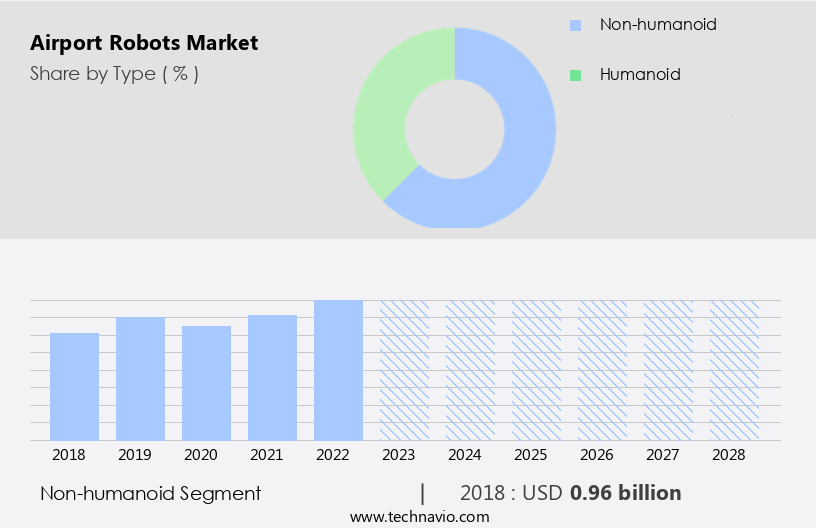
        The Non-humanoid segment was valued at USD 0.96 billion in 2018 and showed a gradual increase during the forecast period.

        Regional Analysis

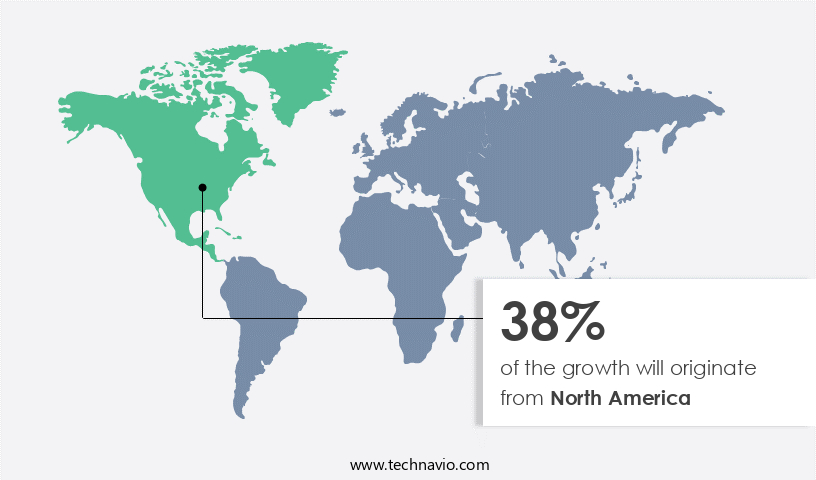
        • North America is estimated to contribute 38% to the growth of the global market during the forecast period.

        Technavio’s analysts have elaborately explained the regional trends and drivers that shape the market during the forecast period.
        Airport Robots Market Share by Geography

        For more insights on the market share of various regions, Request Free Sample

        The North American the market is driven by the maturing aviation industry and the significant presence of key players In the region's aircraft manufacturing supply chain. The US, in particular, is a major contributor due to its large domestic air travel market and the need to upgrade aging airport infrastructure. By 2023, US airports required approximately USD128 billion in investments for upgrades, leading to the construction of new terminals and increased demand for airport robots. Advanced systems, including facial recognition, sensors, and cameras, are being integrated into airports for enhanced security, passenger flow, and customer experience. These systems can detect suspicious persons, contraband, and illicit materials, ensuring the safety and security of air passengers.

        Airport robots are also used for passenger guidance, boarding pass scanning, airport baggage systems, and cleaning. Key applications include business travel, leisure travel, and entertainment solutions. Market leaders are focusing on business strategies such as expansion plans and decision-making processes to cater to the increasing demand for airport robots.

        Market Dynamics

        Our  researchers analyzed the data with 2023 as the base year, along with the key drivers, trends, and challenges. A holistic analysis of drivers will help companies refine their marketing strategies to gain a competitive advantage.

        What are the key market drivers leading to the rise In the adoption of Airport Robots Industry?

        Growth in air passenger traffic is the key driver of the market.

      • The market is witnessing significant growth due to the increasing demand for advanced security systems and improved passenger experience at airports. Airports in major economies such as the US, China, India, and South Korea are investing heavily in airport robots to enhance security measures and streamline operations. For instance, Incheon Airport in South Korea uses Airstar robots for internal security checks, while Kansai Airports in Japan deploys Secom Robots for passenger guidance and cleaning. Advanced systems, including facial recognition systems, sensors, and cameras, are being integrated into airport robots for active interrogation of suspicious persons and detection of contraband, conventional explosives, weapons, chemical agents, abandoned objects, and illicit material.
      • These systems help airport authorities ensure the safety and security of air passengers, business travelers, and leisure travelers. Moreover, airport robots are being used for passenger guidance, boarding pass scanning, airport baggage systems, and terminal information. They provide real-time flight information, weather conditions, and departure gates to passengers, enhancing their overall airport experience. OEMs are also focusing on developing AI-enabled robots for contactless deliveries, passenger flow management, and customer experience solutions, including chatbots for airline bookings and queries. The airport security segment is expected to dominate the market due to the increasing threat of terrorism and the need for advanced security measures.
      • Airport robots play a crucial role in airport security by providing real-time threat detection and response, enabling security officials to take quick and effective action. The market is witnessing business strategies such as business expansion plans and decision-making processes aimed at consolidating market positions and increasing market share. Leading players In the market include LG Electronics Inc, Vistara, and others. The use of advanced technologies such as smart technologies and automation is also driving market growth. In conclusion, the market is expected to grow significantly due to the increasing demand for advanced security systems and improved passenger experience at airports.
      • Airport robots are being used for various applications, including passenger guidance, baggage handling, and security checks, and are expected to play a crucial role In the future of airport operations.
      • What are the market trends shaping the Airport Robots Industry?

        IoT integration in robots is the upcoming market trend.

      • IoT technology is revolutionizing the airport industry by enabling seamless connectivity between various devices and objects, including robots. Airport robots, such as the Airstar robot at Incheon Airport and Secom Robot at Kansai International, are being equipped with IoT technology to enhance their functionality and user experience. These advanced systems incorporate facial recognition systems, sensors, and cameras to identify suspicious persons, contraband, and abandoned objects. Airport robots are being deployed for various applications, including passenger guidance, airport baggage systems, and cleaning. They facilitate boarding pass scanning, terminal information, and real-time flight information, improving the overall airport experience for air passengers, whether they are on business or leisure travel.
      • OEMs are investing in raw materials and health and safety measures to produce these robots, which are becoming increasingly essential for airport security. The airport security segment is a significant focus area for the deployment of airport robots, as they help in detecting conventional explosives, weapons, chemical agents, and illicit material. Advanced systems are being developed to test the autonomous capabilities of these robots, ensuring that they can operate efficiently and effectively In the airport environment. Airports Authority and Internal Security Forces are collaborating with leading players, such as Stanley Robotics and Ottonomy, to implement these systems. The use of chatbots, contactless deliveries, and AI-enabled robots is becoming more prevalent, as airports strive to provide a superior customer experience.
      • Market consolidation is expected as companies seek to expand their business strategies and offerings. For instance, LG Electronics Inc. Has partnered with Vistara to provide AI-enabled robots for passenger assistance at airports. The integration of airport robots with smart technologies and automation is a key trend, as airports aim to improve passenger flow and airport terminal efficiency, while managing air passenger traffic. In conclusion, the integration of IoT technology in airport robots is transforming the airport industry by automating various applications, improving passenger experience, and enhancing airport security. The deployment of these robots is expected to continue growing, as airports seek to leverage smart technologies to optimize their operations and provide a more efficient and secure airport experience for travelers.
      • What challenges does the Airport Robots Industry face during its growth?

        High initial investment and increasing IT complexity in robotics is a key challenge affecting the industry growth.

      • The market is witnessing significant growth due to the integration of advanced systems and technologies to enhance airport operations and improve passenger experience. Airports in various regions, such as Incheon Airport in South Korea and Kansai International Airport in Japan, have deployed robots for passenger guidance, baggage handling, and internal security. Secom Robot's Airstar robot and Stanley Robotics' autonomous baggage tugs are some of the leading solutions In the market. Facial recognition systems, sensors, and cameras are essential components of advanced airport security systems. These technologies help in detecting suspicious persons, abandoned objects, illicit material, and contraband, ensuring the safety and security of air passengers.
      • Kansai Airports' Internal Security Force and the Airports Authority of India's Security are some of the entities that use these advanced systems to prevent terrorism and other security threats. The market caters to various segments, including passenger guidance, airport security, cleaning, entertainment solutions, and airline bookings. OEMs are the primary suppliers of these robots, and raw materials, such as sensors, cameras, and AI-enabled technologies, are critical inputs In their production. Health and safety concerns and business expansion plans are the primary drivers of the market. Leading players, such as LG Electronics Inc and Vistara, are adopting business strategies to increase their market share and offer innovative solutions to airports.
      • For instance, ADR Ventures' Ottonomy provides contactless delivery services at Rome Fiumicino Airport, and Aeroporti di Roma offers terminal information, weather conditions, real-time flight information, and departure gates through its chatbot. The market is expected to continue its growth trajectory due to the increasing passenger traffic and the need for smart technologies and automation In the transport infrastructure. Coimbatore Airport and Bengaluru International Airport are some of the airports that have recently adopted AI-enabled robots to improve passenger experience and streamline operations. Market consolidation is also a trend In the market, with companies focusing on expanding their offerings and collaborating with other players to offer comprehensive solutions to airports.
      • Exclusive Customer Landscape

        The airport robots market forecasting report includes the adoption lifecycle of the market, covering from the innovator’s stage to the laggard’s stage. It focuses on adoption rates in different regions based on penetration. Furthermore, the airport robots market report also includes key purchase criteria and drivers of price sensitivity to help companies evaluate and develop their market growth analysis strategies.
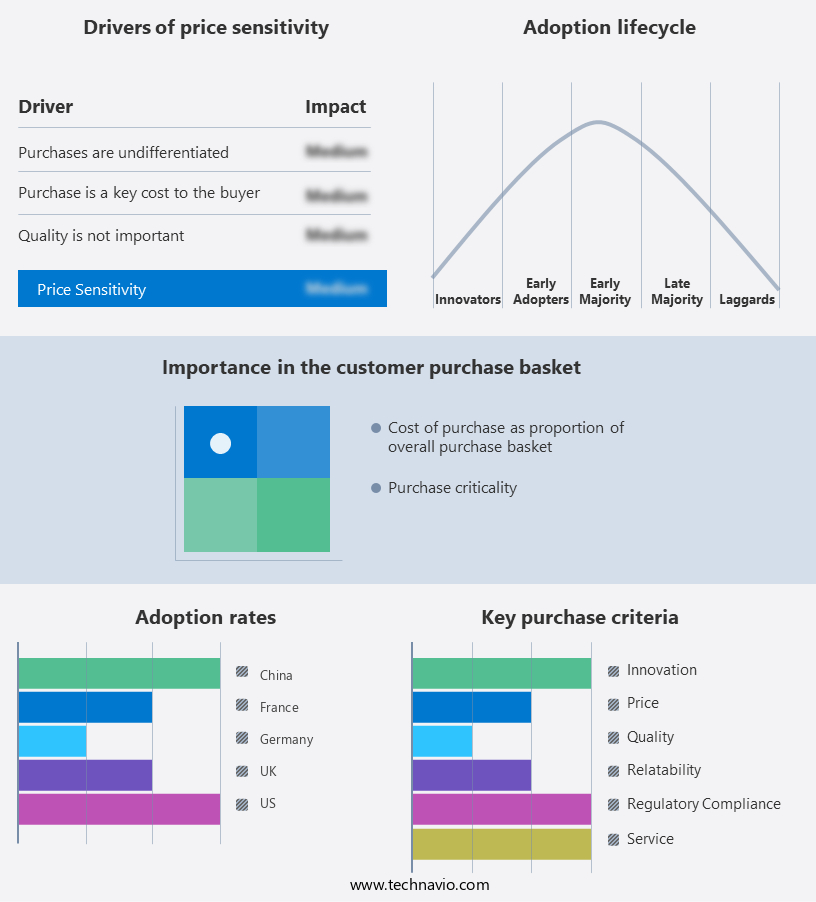
        Airport Robots Market Share by Geography

         Customer Landscape

        Key Companies & Market Insights

        Companies are implementing various strategies, such as strategic alliances, airport robots market forecast, partnerships, mergers and acquisitions, geographical expansion, and product/service launches, to enhance their presence In the industry.

        ABB Ltd. - Airport robots are integral solutions enhancing operational efficiency and passenger experience at transportation hubs. These advanced technologies encompass automated baggage handling systems, which streamline the process of loading passenger bags onto conveyor belts, containers, and ultimately, aircraft. By integrating robotics, airports can minimize human intervention, reduce errors, and expedite baggage handling. This not only leads to time savings but also ensures a more seamless travel experience for passengers.

        The industry research and growth report includes detailed analyses of the competitive landscape of the market and information about key companies, including:

        • ABB Ltd.
        • Artiligent Solutions Pvt Ltd
        • Avidbots Corp.
        • Cyberdyne Inc.
        • ECA Group
        • Elenium Automation Pty Ltd.
        • Hitachi Ltd.
        • Knightscope Inc.
        • LG Electronics Inc.
        • OMRON Corp.
        • SITA
        • Stanley Robotics
        • SoftBank Group Corp.
        • Vanderlande Industries BV
        • YUJIN ROBOT Co. Ltd.
        • Yape Srl

        Qualitative and quantitative analysis of companies has been conducted to help clients understand the wider business environment as well as the strengths and weaknesses of key industry players. Data is qualitatively analyzed to categorize companies as pure play, category-focused, industry-focused, and diversified; it is quantitatively analyzed to categorize companies as dominant, leading, strong, tentative, and weak.

        Research Analyst Overview

        The airport robot market is witnessing significant growth due to the increasing adoption of advanced technologies In the transportation infrastructure sector. Robots are being integrated into airports to enhance security measures, improve passenger experience, and optimize operational efficiency. Airports worldwide are investing in robotic solutions to strengthen their security systems. These robots are equipped with sensors, cameras, and facial recognition systems to identify suspicious persons, abandoned objects, and potential threats such as contraband, illicit material, and weapons. Advanced systems are also being developed to detect conventional explosives and chemical agents. The integration of robots in airport security is a response to the growing threat of terrorism and the need for enhanced precautions.

        Security officials are leveraging these technologies to streamline the screening process and improve the overall safety of airports. The testing of autonomous robots is also gaining momentum, with several airports experimenting with their use in passenger flow management and terminal information provision. Robots are also being used to optimize airport operations and enhance the passenger experience. For instance, they are being deployed for passenger guidance, boarding pass scanning, and airport baggage system management. Robots are also being used for cleaning and entertainment solutions, such as chatbots for airline bookings and queries. The airport robot market is witnessing consolidation, with leading players focusing on business expansion plans and strategic partnerships.

        OEMs are collaborating with airports to provide customized solutions, while some are investing in research and development to create advanced robotic systems. The decision-making process for the adoption of robots in airports involves a thorough evaluation of client products, health and safety considerations, and the potential impact on business strategies. Airports are also exploring the use of robots for contactless deliveries and real-time flight information, as well as for managing weather conditions and departure gates. The use of robots in airports is not limited to developed countries. Airports in emerging markets, such as Coimbatore Airport in India and Bengaluru International Airport in Bangalore, are also investing In these technologies to improve their operations and enhance the passenger experience.

        The integration of AI-enabled robots in airports is expected to revolutionize the way airports operate, with smart technologies and automation becoming increasingly prevalent. The market is expected to grow at a robust pace In the coming years, driven by the need for enhanced security, improved operational efficiency, and a better passenger experience.

        Market Scope

        Report Coverage

        Details

        Page number

        155

        Base year

        2023

        Historic period

        2018-2022

        Forecast period

        2024-2028

        Growth momentum & CAGR

        Accelerate at a CAGR of 14.46%

        Market growth 2024-2028

        USD 2.02 billion

        Market structure

        Fragmented

        YoY growth 2023-2024(%)

        12.53

        Key countries

        US, China, Germany, UK, and France

        Competitive landscape

        Leading Companies, Market Positioning of Companies, Competitive Strategies, and Industry Risks

        Request Free Sample

        What are the Key Data Covered in this Airport Robots Market Research and Growth Report?

        • CAGR of the Airport Robots industry during the forecast period
        • Detailed information on factors that will drive the growth and forecasting between 2024 and 2028
        • Precise estimation of the size of the market and its contribution of the industry in focus to the parent market
        • Accurate predictions about upcoming growth and trends and changes in consumer behaviour
        • Growth of the market across North America, Europe, APAC, South America, and Middle East and Africa
        • Thorough analysis of the market’s competitive landscape and detailed information about companies
        • Comprehensive analysis of factors that will challenge the airport robots market growth of industry companies

        We can help! Our analysts can customize this airport robots market research report to meet your requirements.

        Get in touch


        1 Executive Summary

        • 1.1 Market overview
          • Exhibit 01: Executive Summary – Chart on Market Overview
          • Exhibit 02: Executive Summary – Data Table on Market Overview
          • Exhibit 03: Executive Summary – Chart on Global Market Characteristics
          • Exhibit 04: Executive Summary – Chart on Market by Geography
          • Exhibit 05: Executive Summary – Chart on Market Segmentation by Type
          • Exhibit 06: Executive Summary – Chart on Market Segmentation by Application
          • Exhibit 07: Executive Summary – Chart on Incremental Growth
          • Exhibit 08: Executive Summary – Data Table on Incremental Growth
          • Exhibit 09: Executive Summary – Chart on Vendor Market Positioning

        2 Market Landscape

        • 2.1 Market ecosystem
          • Exhibit 10: Parent market
          • Exhibit 11: Market Characteristics

        3 Market Sizing

        • 3.1 Market definition
          • Exhibit 12: Offerings of vendors included in the market definition
        • 3.2 Market segment analysis
          • Exhibit 13: Market segments
        • 3.3 Market size 2023
          • 3.4 Market outlook: Forecast for 2023-2028
            • Exhibit 14: Chart on Global - Market size and forecast 2023-2028 ($ billion)
            • Exhibit 15: Data Table on Global - Market size and forecast 2023-2028 ($ billion)
            • Exhibit 16: Chart on Global Market: Year-over-year growth 2023-2028 (%)
            • Exhibit 17: Data Table on Global Market: Year-over-year growth 2023-2028 (%)

          4 Historic Market Size

          • 4.1 Global airport robots market 2018 - 2022
            • Exhibit 18: Historic Market Size – Data Table on global airport robots market 2018 - 2022 ($ billion)
          • 4.2 Type Segment Analysis 2018 - 2022
            • Exhibit 19: Historic Market Size – Type Segment 2018 - 2022 ($ billion)
          • 4.3 Application Segment Analysis 2018 - 2022
            • Exhibit 20: Historic Market Size – Application Segment 2018 - 2022 ($ billion)
          • 4.4 Geography Segment Analysis 2018 - 2022
            • Exhibit 21: Historic Market Size – Geography Segment 2018 - 2022 ($ billion)
          • 4.5 Country Segment Analysis 2018 - 2022
            • Exhibit 22: Historic Market Size – Country Segment 2018 - 2022 ($ billion)

          5 Five Forces Analysis

          • 5.1 Five forces summary
            • Exhibit 23: Five forces analysis - Comparison between 2023 and 2028
          • 5.2 Bargaining power of buyers
            • Exhibit 24: Chart on Bargaining power of buyers – Impact of key factors 2023 and 2028
          • 5.3 Bargaining power of suppliers
            • Exhibit 25: Bargaining power of suppliers – Impact of key factors in 2023 and 2028
          • 5.4 Threat of new entrants
            • Exhibit 26: Threat of new entrants – Impact of key factors in 2023 and 2028
          • 5.5 Threat of substitutes
            • Exhibit 27: Threat of substitutes – Impact of key factors in 2023 and 2028
          • 5.6 Threat of rivalry
            • Exhibit 28: Threat of rivalry – Impact of key factors in 2023 and 2028
          • 5.7 Market condition
            • Exhibit 29: Chart on Market condition - Five forces 2023 and 2028

          6 Market Segmentation by Type

          • 6.1 Market segments
            • Exhibit 30: Chart on Type - Market share 2023-2028 (%)
            • Exhibit 31: Data Table on Type - Market share 2023-2028 (%)
          • 6.2 Comparison by Type
            • Exhibit 32: Chart on Comparison by Type
            • Exhibit 33: Data Table on Comparison by Type
          • 6.3 Non-humanoid - Market size and forecast 2023-2028
            • Exhibit 34: Chart on Non-humanoid - Market size and forecast 2023-2028 ($ billion)
            • Exhibit 35: Data Table on Non-humanoid - Market size and forecast 2023-2028 ($ billion)
            • Exhibit 36: Chart on Non-humanoid - Year-over-year growth 2023-2028 (%)
            • Exhibit 37: Data Table on Non-humanoid - Year-over-year growth 2023-2028 (%)
          • 6.4 Humanoid - Market size and forecast 2023-2028
            • Exhibit 38: Chart on Humanoid - Market size and forecast 2023-2028 ($ billion)
            • Exhibit 39: Data Table on Humanoid - Market size and forecast 2023-2028 ($ billion)
            • Exhibit 40: Chart on Humanoid - Year-over-year growth 2023-2028 (%)
            • Exhibit 41: Data Table on Humanoid - Year-over-year growth 2023-2028 (%)
          • 6.5 Market opportunity by Type
            • Exhibit 42: Market opportunity by Type ($ billion)
            • Exhibit 43: Data Table on Market opportunity by Type ($ billion)

          7 Market Segmentation by Application

          • 7.1 Market segments
            • Exhibit 44: Chart on Application - Market share 2023-2028 (%)
            • Exhibit 45: Data Table on Application - Market share 2023-2028 (%)
          • 7.2 Comparison by Application
            • Exhibit 46: Chart on Comparison by Application
            • Exhibit 47: Data Table on Comparison by Application
          • 7.3 Terminal - Market size and forecast 2023-2028
            • Exhibit 48: Chart on Terminal - Market size and forecast 2023-2028 ($ billion)
            • Exhibit 49: Data Table on Terminal - Market size and forecast 2023-2028 ($ billion)
            • Exhibit 50: Chart on Terminal - Year-over-year growth 2023-2028 (%)
            • Exhibit 51: Data Table on Terminal - Year-over-year growth 2023-2028 (%)
          • 7.4 Landslide - Market size and forecast 2023-2028
            • Exhibit 52: Chart on Landslide - Market size and forecast 2023-2028 ($ billion)
            • Exhibit 53: Data Table on Landslide - Market size and forecast 2023-2028 ($ billion)
            • Exhibit 54: Chart on Landslide - Year-over-year growth 2023-2028 (%)
            • Exhibit 55: Data Table on Landslide - Year-over-year growth 2023-2028 (%)
          • 7.5 Market opportunity by Application
            • Exhibit 56: Market opportunity by Application ($ billion)
            • Exhibit 57: Data Table on Market opportunity by Application ($ billion)

          8 Customer Landscape

          • 8.1 Customer landscape overview
            • Exhibit 58: Analysis of price sensitivity, lifecycle, customer purchase basket, adoption rates, and purchase criteria

          9 Geographic Landscape

          • 9.1 Geographic segmentation
            • Exhibit 59: Chart on Market share by geography 2023-2028 (%)
            • Exhibit 60: Data Table on Market share by geography 2023-2028 (%)
          • 9.2 Geographic comparison
            • Exhibit 61: Chart on Geographic comparison
            • Exhibit 62: Data Table on Geographic comparison
          • 9.3 North America - Market size and forecast 2023-2028
            • Exhibit 63: Chart on North America - Market size and forecast 2023-2028 ($ billion)
            • Exhibit 64: Data Table on North America - Market size and forecast 2023-2028 ($ billion)
            • Exhibit 65: Chart on North America - Year-over-year growth 2023-2028 (%)
            • Exhibit 66: Data Table on North America - Year-over-year growth 2023-2028 (%)
          • 9.4 Europe - Market size and forecast 2023-2028
            • Exhibit 67: Chart on Europe - Market size and forecast 2023-2028 ($ billion)
            • Exhibit 68: Data Table on Europe - Market size and forecast 2023-2028 ($ billion)
            • Exhibit 69: Chart on Europe - Year-over-year growth 2023-2028 (%)
            • Exhibit 70: Data Table on Europe - Year-over-year growth 2023-2028 (%)
          • 9.5 APAC - Market size and forecast 2023-2028
            • Exhibit 71: Chart on APAC - Market size and forecast 2023-2028 ($ billion)
            • Exhibit 72: Data Table on APAC - Market size and forecast 2023-2028 ($ billion)
            • Exhibit 73: Chart on APAC - Year-over-year growth 2023-2028 (%)
            • Exhibit 74: Data Table on APAC - Year-over-year growth 2023-2028 (%)
          • 9.6 South America - Market size and forecast 2023-2028
            • Exhibit 75: Chart on South America - Market size and forecast 2023-2028 ($ billion)
            • Exhibit 76: Data Table on South America - Market size and forecast 2023-2028 ($ billion)
            • Exhibit 77: Chart on South America - Year-over-year growth 2023-2028 (%)
            • Exhibit 78: Data Table on South America - Year-over-year growth 2023-2028 (%)
          • 9.7 Middle East and Africa - Market size and forecast 2023-2028
            • Exhibit 79: Chart on Middle East and Africa - Market size and forecast 2023-2028 ($ billion)
            • Exhibit 80: Data Table on Middle East and Africa - Market size and forecast 2023-2028 ($ billion)
            • Exhibit 81: Chart on Middle East and Africa - Year-over-year growth 2023-2028 (%)
            • Exhibit 82: Data Table on Middle East and Africa - Year-over-year growth 2023-2028 (%)
          • 9.8 US - Market size and forecast 2023-2028
            • Exhibit 83: Chart on US - Market size and forecast 2023-2028 ($ billion)
            • Exhibit 84: Data Table on US - Market size and forecast 2023-2028 ($ billion)
            • Exhibit 85: Chart on US - Year-over-year growth 2023-2028 (%)
            • Exhibit 86: Data Table on US - Year-over-year growth 2023-2028 (%)
          • 9.9 Germany - Market size and forecast 2023-2028
            • Exhibit 87: Chart on Germany - Market size and forecast 2023-2028 ($ billion)
            • Exhibit 88: Data Table on Germany - Market size and forecast 2023-2028 ($ billion)
            • Exhibit 89: Chart on Germany - Year-over-year growth 2023-2028 (%)
            • Exhibit 90: Data Table on Germany - Year-over-year growth 2023-2028 (%)
          • 9.10 UK - Market size and forecast 2023-2028
            • Exhibit 91: Chart on UK - Market size and forecast 2023-2028 ($ billion)
            • Exhibit 92: Data Table on UK - Market size and forecast 2023-2028 ($ billion)
            • Exhibit 93: Chart on UK - Year-over-year growth 2023-2028 (%)
            • Exhibit 94: Data Table on UK - Year-over-year growth 2023-2028 (%)
          • 9.11 France - Market size and forecast 2023-2028
            • Exhibit 95: Chart on France - Market size and forecast 2023-2028 ($ billion)
            • Exhibit 96: Data Table on France - Market size and forecast 2023-2028 ($ billion)
            • Exhibit 97: Chart on France - Year-over-year growth 2023-2028 (%)
            • Exhibit 98: Data Table on France - Year-over-year growth 2023-2028 (%)
          • 9.12 China - Market size and forecast 2023-2028
            • Exhibit 99: Chart on China - Market size and forecast 2023-2028 ($ billion)
            • Exhibit 100: Data Table on China - Market size and forecast 2023-2028 ($ billion)
            • Exhibit 101: Chart on China - Year-over-year growth 2023-2028 (%)
            • Exhibit 102: Data Table on China - Year-over-year growth 2023-2028 (%)
          • 9.13 Market opportunity by geography
            • Exhibit 103: Market opportunity by geography ($ billion)
            • Exhibit 104: Data Tables on Market opportunity by geography ($ billion)

          10 Drivers, Challenges, and Trends

          • 10.1 Market drivers
            • 10.2 Market challenges
              • 10.3 Impact of drivers and challenges
                • Exhibit 105: Impact of drivers and challenges in 2023 and 2028
              • 10.4 Market trends

                11 Vendor Landscape

                • 11.1 Overview
                  • 11.2 Vendor landscape
                    • Exhibit 106: Overview on Criticality of inputs and Factors of differentiation
                  • 11.3 Landscape disruption
                    • Exhibit 107: Overview on factors of disruption
                  • 11.4 Industry risks
                    • Exhibit 108: Impact of key risks on business

                  12 Vendor Analysis

                  • 12.1 Vendors covered
                    • Exhibit 109: Vendors covered
                  • 12.2 Market positioning of vendors
                    • Exhibit 110: Matrix on vendor position and classification
                  • 12.3 ABB Ltd.
                    • Exhibit 111: ABB Ltd. - Overview
                    • Exhibit 112: ABB Ltd. - Business segments
                    • Exhibit 113: ABB Ltd. - Key news
                    • Exhibit 114: ABB Ltd. - Key offerings
                    • Exhibit 115: ABB Ltd. - Segment focus
                  • 12.4 Artiligent Solutions Pvt Ltd
                    • Exhibit 116: Artiligent Solutions Pvt Ltd - Overview
                    • Exhibit 117: Artiligent Solutions Pvt Ltd - Product / Service
                    • Exhibit 118: Artiligent Solutions Pvt Ltd - Key offerings
                  • 12.5 Avidbots Corp.
                    • Exhibit 119: Avidbots Corp. - Overview
                    • Exhibit 120: Avidbots Corp. - Product / Service
                    • Exhibit 121: Avidbots Corp. - Key offerings
                  • 12.6 Cyberdyne Inc.
                    • Exhibit 122: Cyberdyne Inc. - Overview
                    • Exhibit 123: Cyberdyne Inc. - Product / Service
                    • Exhibit 124: Cyberdyne Inc. - Key offerings
                  • 12.7 ECA Group
                    • Exhibit 125: ECA Group - Overview
                    • Exhibit 126: ECA Group - Product / Service
                    • Exhibit 127: ECA Group - Key offerings
                  • 12.8 Elenium Automation Pty Ltd.
                    • Exhibit 128: Elenium Automation Pty Ltd. - Overview
                    • Exhibit 129: Elenium Automation Pty Ltd. - Product / Service
                    • Exhibit 130: Elenium Automation Pty Ltd. - Key news
                    • Exhibit 131: Elenium Automation Pty Ltd. - Key offerings
                  • 12.9 Hitachi Ltd.
                    • Exhibit 132: Hitachi Ltd. - Overview
                    • Exhibit 133: Hitachi Ltd. - Business segments
                    • Exhibit 134: Hitachi Ltd. - Key news
                    • Exhibit 135: Hitachi Ltd. - Key offerings
                    • Exhibit 136: Hitachi Ltd. - Segment focus
                  • 12.10 Knightscope Inc.
                    • Exhibit 137: Knightscope Inc. - Overview
                    • Exhibit 138: Knightscope Inc. - Product / Service
                    • Exhibit 139: Knightscope Inc. - Key news
                    • Exhibit 140: Knightscope Inc. - Key offerings
                  • 12.11 LG Electronics Inc.
                    • Exhibit 141: LG Electronics Inc. - Overview
                    • Exhibit 142: LG Electronics Inc. - Product / Service
                    • Exhibit 143: LG Electronics Inc. - Key offerings
                  • 12.12 OMRON Corp.
                    • Exhibit 144: OMRON Corp. - Overview
                    • Exhibit 145: OMRON Corp. - Business segments
                    • Exhibit 146: OMRON Corp. - Key news
                    • Exhibit 147: OMRON Corp. - Key offerings
                    • Exhibit 148: OMRON Corp. - Segment focus
                  • 12.13 SITA
                    • Exhibit 149: SITA - Overview
                    • Exhibit 150: SITA - Product / Service
                    • Exhibit 151: SITA - Key offerings
                  • 12.14 SoftBank Group Corp.
                    • Exhibit 152: SoftBank Group Corp. - Overview
                    • Exhibit 153: SoftBank Group Corp. - Business segments
                    • Exhibit 154: SoftBank Group Corp. - Key offerings
                    • Exhibit 155: SoftBank Group Corp. - Segment focus
                  • 12.15 Stanley Robotics
                    • Exhibit 156: Stanley Robotics - Overview
                    • Exhibit 157: Stanley Robotics - Product / Service
                    • Exhibit 158: Stanley Robotics - Key offerings
                  • 12.16 Vanderlande Industries BV
                    • Exhibit 159: Vanderlande Industries BV - Overview
                    • Exhibit 160: Vanderlande Industries BV - Product / Service
                    • Exhibit 161: Vanderlande Industries BV - Key news
                    • Exhibit 162: Vanderlande Industries BV - Key offerings
                  • 12.17 Yape Srl
                    • Exhibit 163: Yape Srl - Overview
                    • Exhibit 164: Yape Srl - Product / Service
                    • Exhibit 165: Yape Srl - Key offerings

                  13 Appendix

                  • 13.1 Scope of the report
                    • 13.2 Inclusions and exclusions checklist
                      • Exhibit 166: Inclusions checklist
                      • Exhibit 167: Exclusions checklist
                    • 13.3 Currency conversion rates for US$
                      • Exhibit 168: Currency conversion rates for US$
                    • 13.4 Research methodology
                      • Exhibit 169: Research methodology
                      • Exhibit 170: Validation techniques employed for market sizing
                      • Exhibit 171: Information sources
                    • 13.5 List of abbreviations
                      • Exhibit 172: List of abbreviations

                    Research Methodology

                    Technavio presents a detailed picture of the market by way of study, synthesis, and summation of data from multiple sources. The analysts have presented the various facets of the market with a particular focus on identifying the key industry influencers. The data thus presented is comprehensive, reliable, and the result of extensive research, both primary and secondary.

                    INFORMATION SOURCES

                    Primary sources

                    • Manufacturers and suppliers
                    • Channel partners
                    • Industry experts
                    • Strategic decision makers

                    Secondary sources

                    • Industry journals and periodicals
                    • Government data
                    • Financial reports of key industry players
                    • Historical data
                    • Press releases

                    DATA ANALYSIS

                    Data Synthesis

                    • Collation of data
                    • Estimation of key figures
                    • Analysis of derived insights

                    Data Validation

                    • Triangulation with data models
                    • Reference against proprietary databases
                    • Corroboration with industry experts

                    REPORT WRITING

                    Qualitative

                    • Market drivers
                    • Market challenges
                    • Market trends
                    • Five forces analysis

                    Quantitative

                    • Market size and forecast
                    • Market segmentation
                    • Geographical insights
                    • Competitive landscape

                    Interested in this report?

                    Get your sample now to see our research methodology and insights!

                    Download Now

                    Frequently Asked Questions

                    Airport Robots market growth will increase by $ 2.02 bn during 2024-2028 .

                    The Airport Robots market is expected to grow at a CAGR of 14.46% during 2024-2028 .

                    Airport Robots market is segmented by Type( Non-humanoid, Humanoid) Application( Terminal, Landslide)

                    ABB Ltd., Artiligent Solutions Pvt Ltd, Avidbots Corp., Cyberdyne Inc., ECA Group, Elenium Automation Pty Ltd., Hitachi Ltd., Knightscope Inc., LG Electronics Inc., OMRON Corp., SITA, Stanley Robotics, SoftBank Group Corp., Vanderlande Industries BV, YUJIN ROBOT Co. Ltd., Yape Srl are a few of the key vendors in the Airport Robots market.

                    North America will register the highest growth rate of 38% among the other regions. Therefore, the Airport Robots market in North America is expected to garner significant business opportunities for the vendors during the forecast period.

                    US, China, Germany, UK, France

                    • Growth in air passenger trafficEconomic development has raised the demand for air travel in the past five years. This has led airline operators to significantly invest in modernizing and increasing their ground handling fleets to meet the growing demand. The increasing preference of airlines to introduce point-to-point travel has also increased passenger traffic since travelers can enjoy better connectivity is the driving factor this market.
                    • less traveling time is the driving factor this market.
                    • and more comfort. The growing increase in passenger volume is directly correlated with the increase in luggage. In nations such as India is the driving factor this market.
                    • China is the driving factor this market.
                    • Indonesia is the driving factor this market.
                    • and the US and small tourist sites is the driving factor this market.
                    • the demand for air travel is rising. Business and leisure travel will expand due to improved air service during the forecast period is the driving factor this market.
                    • reflecting further regional economic growth. Compared with 2020 is the driving factor this market.
                    • air passenger traffic increased by almost 58% in 2022; however is the driving factor this market.
                    • it is still less compared with the pre-pandemic level. As the airline industry is highly competitive and is always focused on improving its brand name and attracting more passengers is the driving factor this market.
                    • handling baggage becomes a vital task. Any damage to passengers baggage during handling can result in a bad image for airlines. Hence is the driving factor this market.
                    • airlines and their service providers adopt various advanced systems and vehicles. Moreover is the driving factor this market.
                    • the timely delivery of baggage from the terminal to the aircraft baggage loading point is essential. Any delay in transit can lead to a delay in airline operations is the driving factor this market.
                    • which can result in significant losses for the aircraft. Robots with AI help automate the baggage picking and loading process. This reduces the risk of human error and damage to the baggage. As more passengers travel by air is the driving factor this market.
                    • airports need efficient ways to improvise airport tasks. Airport robots facilitate guiding passengers between terminals and aircraft. The increasing demand for air travel necessitates investments in robotics is the driving factor this market.
                    • propelling the growth of the global airport robots market during the forecast period. is the driving factor this market.

                    The Airport Robots market vendors should focus on grabbing business opportunities from the Non-humanoid segment as it accounted for the largest market share in the base year.