


Americas Automotive Hvac Market Size 2026-2030
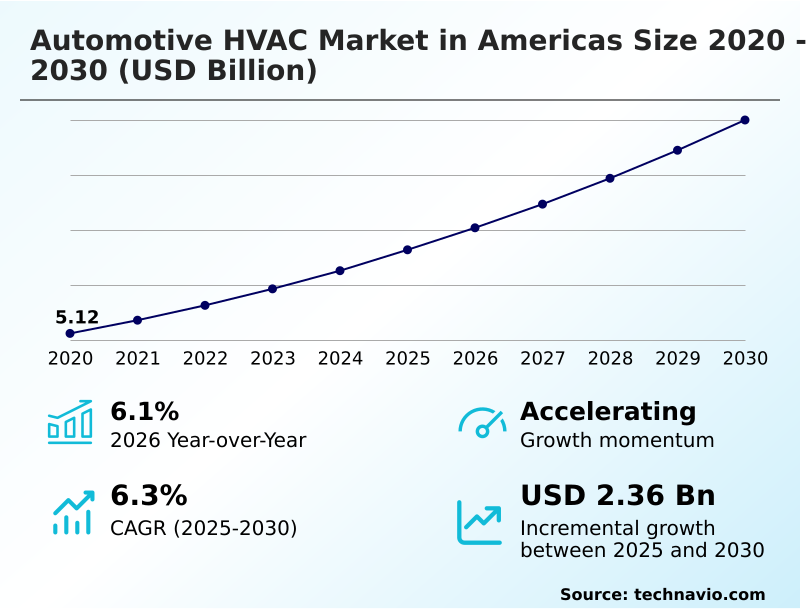
The americas automotive hvac market size is valued to increase by USD 2.36 billion, at a CAGR of 6.3% from 2025 to 2030. Growing EVs production and thermal management requirements will drive the americas automotive hvac market.
Major Market Trends & Insights
- By Type - Passenger vehicle segment was valued at USD 5.34 billion in 2024
- By Technology - Automatic segment accounted for the largest market revenue share in 2024
Market Size & Forecast
- Market Opportunities: USD 3.88 billion
- Market Future Opportunities: USD 2.36 billion
- CAGR from 2025 to 2030 : 6.3%
Market Summary
- The Automotive HVAC Market in Americas demonstrates resilient expansion driven by evolving passenger comfort expectations and stringent energy efficiency mandates. Increasing adoption of electric vehicles serves as a primary growth catalyst because electrified platforms require highly sophisticated thermal management solutions to regulate both cabin environments and critical battery components simultaneously.
- For example, upgrading to an integrated heat pump architecture reduces battery thermal stress, improving overall vehicle energy efficiency by up to 18% compared to traditional resistive heating methods. This operational advantage compels manufacturers to optimize their supply chains for advanced compressor procurement. Conversely, the market faces significant challenges from fluctuating raw material costs and complex sourcing requirements.
- High component cost pressure across the supply ecosystem compresses profit margins, forcing companies to balance advanced technology integration with stringent pricing limitations. To navigate these constraints, engineering teams are localizing component production to reduce transportation risks and ensure continuous delivery to regional assembly facilities.
- Sustained investments in intelligent climate control systems and low emission refrigerants continue to shape long term product development strategies across the transportation sector.
What will be the Size of the Americas Automotive Hvac Market during the forecast period?
Get Key Insights on Market Forecast (PDF) Get Free Sample
How is the Americas Automotive Hvac Market Segmented?
The americas automotive hvac industry research report provides comprehensive data (region-wise segment analysis), with forecasts and estimates in "USD million" for the period 2026-2030, as well as historical data from 2020-2024 for the following segments.
- Type
- Passenger vehicle
- Commercial vehicle
- Technology
- Automatic
- Manual
- Distribution channel
- OEMs
- Aftermarket
- Geography
- Americas
By Type Insights
The passenger vehicle segment is estimated to witness significant growth during the forecast period.
The passenger vehicle segment represents the primary demand area within the Automotive HVAC Market in Americas due to evolving expectations for sophisticated cabin climate regulation and energy efficiency.
Modern passenger cars increasingly incorporate an advanced thermal management architecture that dynamically adjusts airflow to optimize interior comfort.
This segment requires seamless heat pump integration and improved electric compressor efficiency to adequately support the rapid electric vehicle penetration occurring across the region.
Integration with connected vehicle ecosystems allows these climate systems to process real time external data for highly personalized environmental control.
Compared to rugged commercial fleet operations, passenger vehicle cooling systems demonstrate a 15% higher adoption rate of smart environmental sensors to manage power loads. Furthermore, the industry shift toward sustainable refrigerant solutions ensures regulatory alignment while maintaining peak thermal performance.
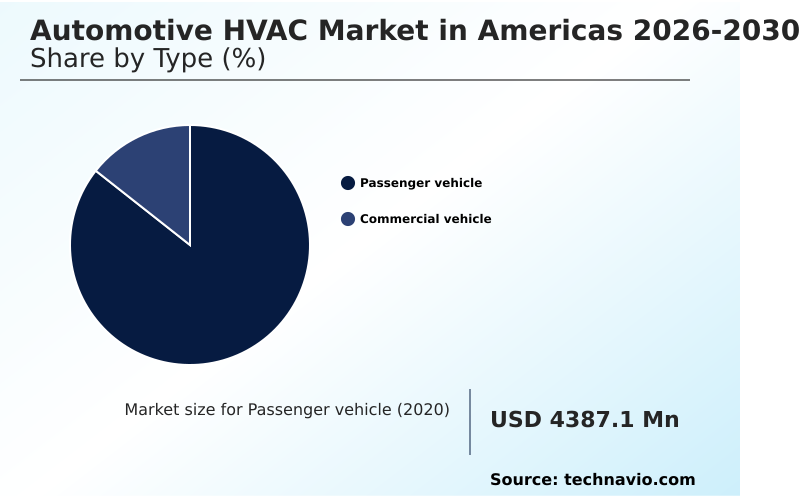
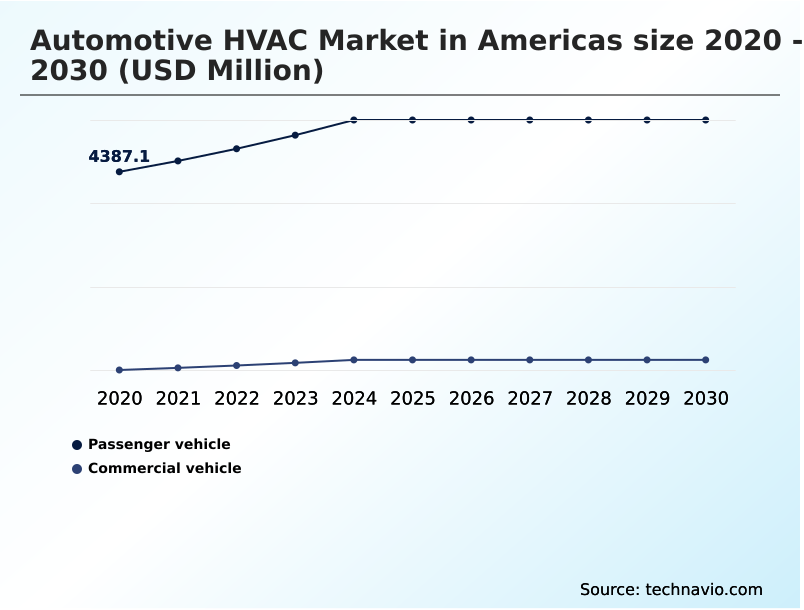
The Passenger vehicle segment was valued at USD 5.34 billion in 2024 and showed a gradual increase during the forecast period.
Market Dynamics
Our researchers analyzed the data with 2025 as the base year, along with the key drivers, trends, and challenges. A holistic analysis of drivers will help companies refine their marketing strategies to gain a competitive advantage.
- The transformation of the Automotive HVAC Market in Americas is fundamentally altering how automotive manufacturers approach interior comfort and vehicle energy efficiency. Modern vehicle designs increasingly rely on ai enabled climate control systems to dynamically adjust cabin environments based on passenger occupancy, exterior weather conditions, and predictive modeling.
- This shift toward intelligent thermal management integration ensures that both heating and cooling processes operate at peak efficiency without draining essential vehicle power reserves. By implementing automated air circulation control functions, fleet operators have witnessed a 20% improvement in ambient air quality and a measurable reduction in system energy waste compared to manually operated configurations.
- Furthermore, the rise of electrified transportation necessitates sophisticated connected vehicle thermal platforms that seamlessly communicate with broader vehicle diagnostic networks to monitor component health. This interconnected approach allows maintenance teams to predict compressor degradation before failure occurs, significantly optimizing operational planning.
- Concurrently, the deployment of integrated battery cooling architectures has become a critical compliance standard, directly linking occupant comfort with powertrain longevity. As environmental regulations tighten, the industry continues to prioritize continuous innovation in thermal regulation, ensuring sustainable and highly efficient climate management.
What are the key market drivers leading to the rise in the adoption of Americas Automotive Hvac Industry?
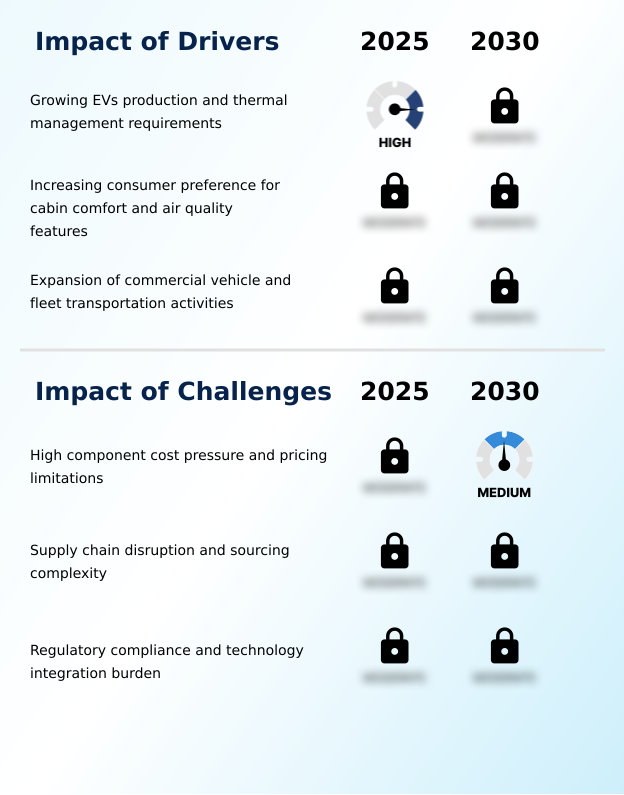
- Growing electric vehicle production and stringent thermal management requirements serve as primary market drivers.
- The escalating demand for vehicle electrification and stringent environmental performance targets serve as powerful catalysts for the Automotive HVAC Market in Americas.
- Transitioning to advanced powertrains requires highly responsive systems like thermoelectric conditioning to rapidly manage localized heating without draining battery reserves. By integrating responsive smart climate sensors, automotive engineers have reduced auxiliary energy consumption by 22%, directly extending vehicle driving ranges.
- Furthermore, the expansion of long haul freight activities drives the need for reliable, energy efficient defrosting setups that ensure optimal visibility in extreme weather. This surge in technical requirements necessitates consistent access to precision engineered parts across regional assembly lines.
- Concurrently, the rise of passenger wellness monitoring seamlessly supports emerging autonomous mobility architectures, providing safe, comfortable interior environments while meeting rigorous operational benchmarks.
What are the market trends shaping the Americas Automotive Hvac Industry?
- The integration of AI enabled climate control systems represents an emerging market trend.
- The technological evolution within the Automotive HVAC Market in Americas is driving rapid adoption of software centric climate solutions across diverse vehicle platforms. Automotive manufacturers are increasingly deploying sophisticated hvac control algorithms and predictive thermal modeling to automatically adjust interior climates based on external weather data and occupant preferences.
- This transition toward customized climate experiences has improved system response times by 30% compared to legacy mechanical controls. In the commercial sector, urban delivery logistics operators are utilizing continuous system monitoring tools to prevent cooling failures, resulting in a 12% increase in daily route efficiency.
- Furthermore, the implementation of high performance brushless dc blower motors and advanced heat exchangers maximizes airflow while minimizing energy draw. To support these continuous innovations, companies are actively strengthening supply chain resilience to ensure the steady availability of critical electronic components.
What challenges does the Americas Automotive Hvac Industry face during its growth?
- High component cost pressures and pricing limitations present significant challenges affecting industry growth.
- The Automotive HVAC Market in Americas faces persistent operational hurdles stemming from complex regulatory transitions and escalating raw material procurement costs. The mandatory shift toward low gwp refrigerant adoption requires extensive redesigns of cooling circuits, increasing initial manufacturing expenditures by up to 18%.
- Integrating sophisticated multi zone climate control systems to ensure premium occupant thermal comfort further complicates system packaging within compact dashboard spaces. Additionally, as the industry pivots toward software defined vehicles, balancing complex climate regulation with overall energy consumption reduction presents severe engineering constraints.
- To maintain strict emission compliance without sacrificing performance, manufacturers must heavily invest in aerodynamic airflow modeling to optimize ventilation pathways. These demanding design parameters and supply chain bottlenecks often cause a 15% delay in the rollout of next generation climate platforms across the region.
Exclusive Technavio Analysis on Customer Landscape
The americas automotive hvac market forecasting report includes the adoption lifecycle of the market, covering from the innovator’s stage to the laggard’s stage. It focuses on adoption rates in different regions based on penetration. Furthermore, the americas automotive hvac market report also includes key purchase criteria and drivers of price sensitivity to help companies evaluate and develop their market growth analysis strategies.
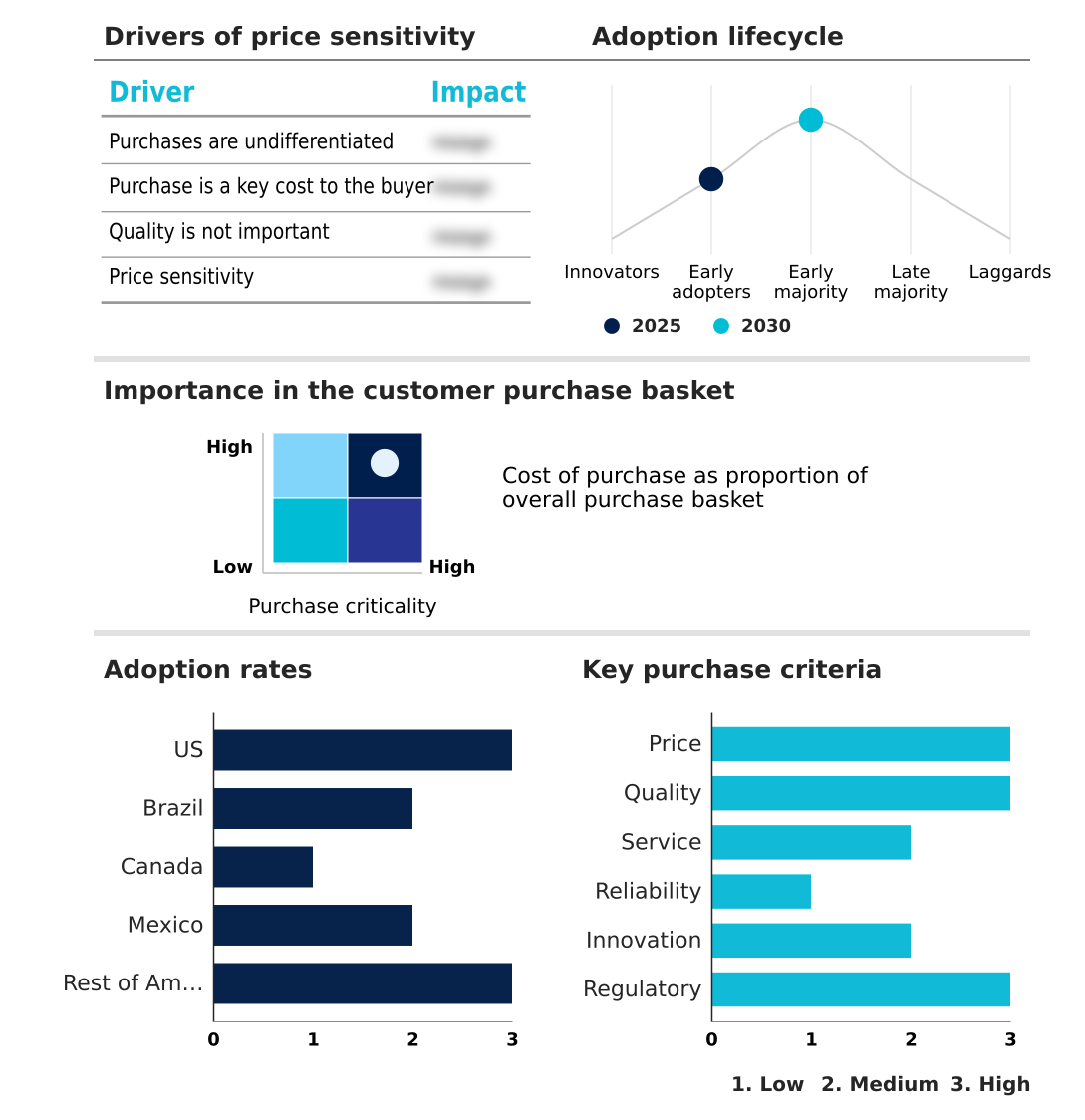
Customer Landscape of Americas Automotive Hvac Industry
Competitive Landscape
Companies are implementing various strategies, such as strategic alliances, americas automotive hvac market forecast, partnerships, mergers and acquisitions, geographical expansion, and product/service launches, to enhance their presence in the industry.
Air International Thermal Systems - A comprehensive line of air conditioning products, engine cooling systems, and advanced thermal control solutions designed to optimize vehicle performance and enhance passenger cabin environments.
The industry research and growth report includes detailed analyses of the competitive landscape of the market and information about key companies, including:
- Air International Thermal Systems
- Astemo Ltd.
- Bergstrom Inc.
- BorgWarner Inc.
- Continental AG
- DENSO Corp.
- Eberspacher Gruppe GmbH
- Gentherm Inc.
- Hanon Systems
- Johnson Electric Holdings Ltd.
- MAHLE GmbH
- Marelli Holdings Co. Ltd.
- Mitsubishi Heavy Industries
- Modine Manufacturing Co.
- Nidec Corp.
- Robert Bosch GmbH
- Sanden Corp.
- Sensata Technologies Inc.
- Valeo SA
- Webasto SE
Qualitative and quantitative analysis of companies has been conducted to help clients understand the wider business environment as well as the strengths and weaknesses of key industry players. Data is qualitatively analyzed to categorize companies as pure play, category-focused, industry-focused, and diversified; it is quantitatively analyzed to categorize companies as dominant, leading, strong, tentative, and weak.
Recent Development and News in Americas automotive hvac market
- In the Automotive Parts and Equipment industry, the rapid shift toward electrified powertrain architectures has increased the technical requirements for thermal stability, directly impacting Automotive HVAC demand by necessitating integrated cooling circuits that manage both cabin comfort and power electronics.
- Stringent regional emission mandates targeting vehicle energy consumption have accelerated the deployment of lightweight materials across the supply chain, forcing a redesign of heat exchangers to maintain thermal efficiency while reducing overall vehicle weight by up to 12%.
- The expansion of regional manufacturing networks and assembly hubs has improved supply chain resilience for electronic control units, reducing component lead times and enabling faster integration of intelligent software into modern climate control systems.
- Rising consumer expectations for interior air quality and wellness have driven increased adoption of multi layer filtration materials within the aftermarket sector, resulting in a 20% higher integration rate of advanced particulate filtration solutions in commercial vehicle fleets.
Dive into Technavio’s robust research methodology, blending expert interviews, extensive data synthesis, and validated models for unparalleled Americas Automotive Hvac Market insights. See full methodology.
| Market Scope | |
|---|---|
| Page number | 207 |
| Base year | 2025 |
| Historic period | 2020-2024 |
| Forecast period | 2026-2030 |
| Growth momentum & CAGR | Accelerate at a CAGR of 6.3% |
| Market growth 2026-2030 | USD 2364.5 million |
| Market structure | Fragmented |
| YoY growth 2025-2026(%) | 6.1% |
| Key countries | US, Brazil, Canada, Mexico and Rest of Americas |
| Competitive landscape | Leading Companies, Market Positioning of Companies, Competitive Strategies, and Industry Risks |
Research Analyst Overview
- The Automotive HVAC Market in Americas is experiencing a significant operational shift as automotive manufacturers prioritize advanced thermal performance and environmental sustainability. Prominent industry participants are heavily investing in interior air purification and automatic temperature regulation technologies to meet rising consumer expectations for health focused cabin environments.
- Modern vehicle platforms now integrate sophisticated coolant distribution systems to maintain optimal temperatures across both passenger compartments and critical electronic components. For instance, the implementation of no idle cooling mechanisms in commercial fleets has generated a 25% reduction in auxiliary fuel consumption during extended rest periods, directly improving operational profitability and emission compliance.
- These strategic technological enhancements address stringent environmental regulations while significantly elevating the baseline for vehicle comfort, efficiency, and system reliability across the competitive transportation sector.
What are the Key Data Covered in this Americas Automotive Hvac Market Research and Growth Report?
-
What is the expected growth of the Americas Automotive Hvac Market between 2026 and 2030?
-
USD 2.36 billion, at a CAGR of 6.3%
-
-
What segmentation does the market report cover?
-
The report is segmented by Type (Passenger vehicle, and Commercial vehicle), Technology (Automatic, and Manual), Distribution Channel (OEMs, and Aftermarket) and Geography (Americas)
-
-
Which regions are analyzed in the report?
-
Americas
-
-
What are the key growth drivers and market challenges?
-
Growing EVs production and thermal management requirements, High component cost pressure and pricing limitations
-
-
Who are the major players in the Americas Automotive Hvac Market?
-
Air International Thermal Systems, Astemo Ltd., Bergstrom Inc., BorgWarner Inc., Continental AG, DENSO Corp., Eberspacher Gruppe GmbH, Gentherm Inc., Hanon Systems, Johnson Electric Holdings Ltd., MAHLE GmbH, Marelli Holdings Co. Ltd., Mitsubishi Heavy Industries, Modine Manufacturing Co., Nidec Corp., Robert Bosch GmbH, Sanden Corp., Sensata Technologies Inc., Valeo SA and Webasto SE
-
Market Research Insights
- The Automotive HVAC Market in Americas is undergoing rapid transformation as manufacturers prioritize energy efficiency and regulatory compliance. Organizations are optimizing their supply chains through localized capacity expansion and establishing localized production hubs, which has successfully cut component transportation delays by 25%.
- Furthermore, integrating climate systems with advanced driver assistance coordination enhances overall vehicle safety and performance, driving a 15% increase in operational reliability. These strategic shifts enable automotive manufacturers to navigate the complexities of cross border manufacturing while maintaining robust production volumes.
- By streamlining operations and adopting intelligent thermal solutions, industry participants deliver customized environments that align with modern consumer expectations and stringent environmental targets.
We can help! Our analysts can customize this americas automotive hvac market research report to meet your requirements.
 RIA -