
Americas Immunochemistry Market Analysis Americas - Size and Forecast 2024-2028

Americas Immunochemistry Market Analysis Americas - Size and Forecast 2024-2028

Published: May 2024 160 Pages SKU: IRTNTR77896

Market Overview at a Glance

$3.62 B
Market Opportunity
6.98%
CAGR
6.42
YoY growth 2023-2024(%)

Americas Immunochemistry Market Size 2024-2028 

The Americas immunochemistry market size is forecast to increase by USD 3.62 billion at a CAGR of 6.98% between 2023 and 2028.

  • The market is witnessing significant growth due to several key factors. The region's aging population is a major driver, as the increasing prevalence of chronic diseases among the elderly population necessitates frequent diagnostic tests. Additionally, the market is witnessing a rise in new product launches, which is expanding the product portfolio and catering to the diverse needs of customers. The market is experiencing significant growth as artificial intelligence is increasingly used to analyze biomarkers, enabling faster and more accurate diagnostic results. However, the lack of trained professionals In the field poses a challenge, as it may hinder the accurate execution of immunochemistry tests and affect market growth. Overall, the market is expected to experience strong growth In the coming years, driven by these trends and challenges.

What will be the size of the Americas Immunochemistry Market during the forecast period?
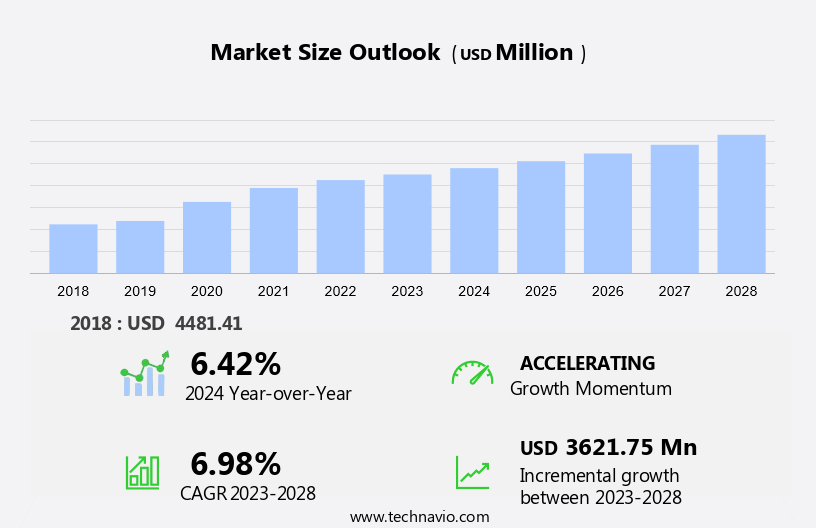
Immunochemistry Market in Americas Size

 Request Free Sample

  • The Immunochemistry market In the Americas is experiencing significant growth due to the increasing prevalence of chronic illnesses, particularly cancer diseases and cardiovascular disorders, In the geriatric population. Immunochemistry products, including IHC (Immunohistochemistry) and related diagnostic tools, play a crucial role in disease diagnosis and personalized medicine. Healthcare professionals rely on these technologies to improve diagnostic accuracy and enhance patient care. Automation, digital imaging, and machine learning are driving innovation In the Immunochemistry market. IHC protocols are being optimized to reduce manual labor and increase throughput. RNA and transcriptome sequencing are also gaining traction, offering new opportunities for mutation-specific immunochemistry tests.
  • The market is being shaped by advancements in clinical diagnostics, with a focus on non-small-cell lung cancer and other cancer types. Mass spectrometric detection and antibody-based assays are key technologies enabling the development of multiplexed IHC tests. As the demand for early and accurate disease diagnosis continues to grow, the market is expected to expand further.

How is this market segmented and which is the largest segment?

The market research report provides comprehensive data (region-wise segment analysis), with forecasts and estimates in "USD million" for the period 2024-2028, as well as historical data from 2018-2022 for the following segments.

  • Product
    • Consumables
    • Equipment
  • Application
    • Infectious disease
    • Cardiology
    • Oncology
    • Autoimmune disease
    • Nephrology and others
  • Geography
    • Americas

By Product Insights

  • The consumables segment is estimated to witness significant growth during the forecast period.

The Immunochemistry Market In the Americas focuses on the consumption of essential products for performing immunochemical assays, diagnostics, and research activities. Key consumables include immunoassay, antibodies, and enzymes. Immunoassay kits, such as ELISA, offer ready-to-use components for detecting proteins, hormones, or antibodies in samples. Antibodies, including monoclonal and polyclonal, target specific antigens or proteins for use as primary or secondary reagents. Substrates and enzymes, like chromogenic, fluorogenic, or chemiluminescent, amplify and detect signals in immunochemical assays. This market caters to various applications, including cancer diagnostics, chronic diseases, neurological disorders, autoimmune conditions, and cardiovascular disorders. Healthcare professionals in hospitals and diagnostic laboratories utilize immunochemistry products for disease diagnosis, personalized medicine, and research.

Technological advancements, such as automation, digital imaging, RNA sequencing, transcriptome sequencing, companion diagnostics, and machine learning, enhance the market's growth.
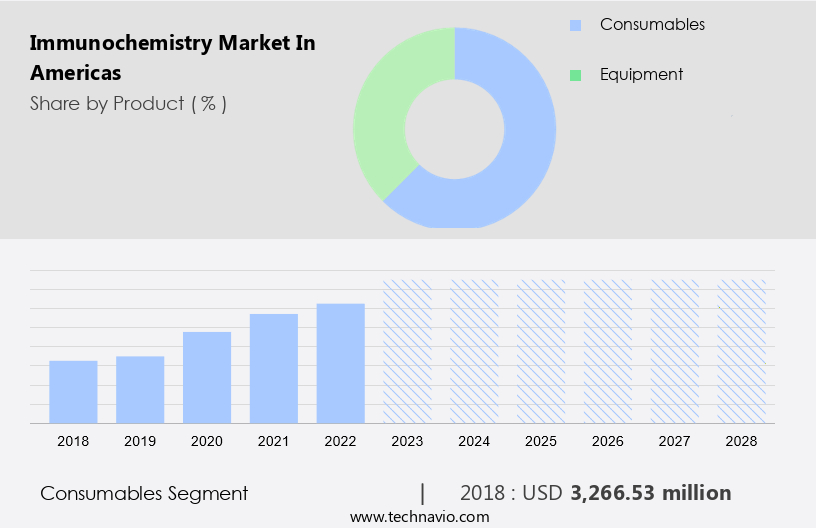
Immunochemistry Market in Americas Size

Get a glance at the market share of various segments Request Free Sample

The Consumables segment was valued at  USD 3.26 billion in 2018 and showed a gradual increase during the forecast period.

Market Dynamics

Our researchers analyzed the data with 2023 as the base year, along with the key drivers, trends, and challenges. A holistic analysis of drivers will help companies refine their marketing strategies to gain a competitive advantage.

What are the key market drivers leading to the rise in adoption of Americas Immunochemistry Market?

The growing geriatric population is the key driver of the market.

  • The aging population is witnessing a significant increase, leading to a corresponding rise In the prevalence of chronic diseases, cancer, neurological disorders, autoimmune conditions, and infectious diseases. Immunochemistry assays are essential for diagnosing and managing these conditions, particularly in elderly individuals who are more susceptible. According to the Population Reference Bureau, the elderly population in Americas is projected to grow by 47% from 58 million in 2022 to 82 million in 2050. Immunochemistry products, including Immunohistochemistry (IHC) and clinical diagnostics, play a pivotal role in disease diagnosis. Advanced technologies such as digital imaging, RNA sequencing, and transcriptome sequencing are revolutionizing diagnostic accuracy.
  • Companion diagnostics, machine learning, and IHC protocols are enabling personalized medicine and improving treatment outcomes. Diseases such as cardiovascular disorders, non-small-cell lung cancer, diabetes mellitus, and chronic conditions continue to drive demand for immunochemistry-based diagnostic tools. Monoclonal antibodies, antibody fragments, and antibody-drug conjugates are key components of these tests. Mass spectrometric detection and multiplexed IHC are also gaining popularity due to their ability to provide multiple diagnostic results from a single sample. Immunochemistry products are essential diagnostic facilities for hospitals and diagnostic laboratories.

What are the market trends shaping the Americas Immunochemistry Market?

Rising new product launches is the upcoming trend In the market.

  • The market is experiencing significant growth due to the introduction of innovative products that cater to the needs of healthcare professionals and researchers. These new launches include advanced technologies, improved instrumentation, and sophisticated assays, enhancing diagnostic accuracy in various medical specialties. The market is witnessing a focus on chronic conditions such as cancer, cardiovascular disorders, chronic diseases, neurological disorders, autoimmune conditions, and infectious diseases.
  • Technological advancements in areas like automation, digital imaging, RNA sequencing, transcriptome sequencing, and companion diagnostics are revolutionizing disease diagnosis and personalized medicine. Furthermore, machine learning and IHC protocols are streamlining the diagnostic process, while multiplexed IHC and mass spectrometric detection offer increased sensitivity and specificity. Monoclonal antibodies, antibody fragments, and antibody-drug conjugates are essential components of these advanced solutions. Overall, the market is poised for expansion, driven by the evolving needs of healthcare facilities and diagnostic laboratories.

What challenges does Americas Immunochemistry Market face during the growth?

Lack of trained professionals is a key challenge affecting the market growth.

  • Immunochemistry plays a crucial role in disease diagnosis, particularly in identifying cancer, chronic diseases, neurological disorders, and autoimmune conditions. Healthcare professionals rely on immunochemistry products, such as Immunohistochemistry (IHC) and clinical diagnostics, for diagnostic accuracy. The geriatric population and the rise of chronic conditions, including cardiovascular disorders, diabetes mellitus, and infectious diseases, necessitate advanced diagnostic tools. Automation, digital imaging, RNA sequencing, and transcriptome sequencing are transforming the diagnostics landscape. Companion diagnostics, which combine immunochemistry with other technologies, offer personalized medicine solutions for non-small-cell lung cancer and other mutation-specific diseases. Machine learning and IHC protocols enhance disease diagnosis, enabling multiplexed IHC and mass spectrometric detection.
  • Monoclonal antibodies, antibody fragments, and antibody-drug conjugates are essential components of immunochemistry products. Hospitals & Diagnostic Laboratories benefit from these advancements, ensuring timely and accurate diagnosis for their patients. Challenges, such as limited availability of trained specialists, high costs, and resource constraints, persist In diagnostic facilities. However, innovations in technology and the increasing adoption of automation and digital solutions are addressing these challenges, making immunochemistry a vital component of the healthcare industry.

Exclusive Americas Immunochemistry Market Customer Landscape

The market forecasting report includes the adoption lifecycle of the market, covering from the innovator's stage to the laggard's stage. It focuses on adoption rates in different regions based on penetration. Furthermore, the report also includes key purchase criteria and drivers of price sensitivity to help companies evaluate and develop their market growth analysis strategies.
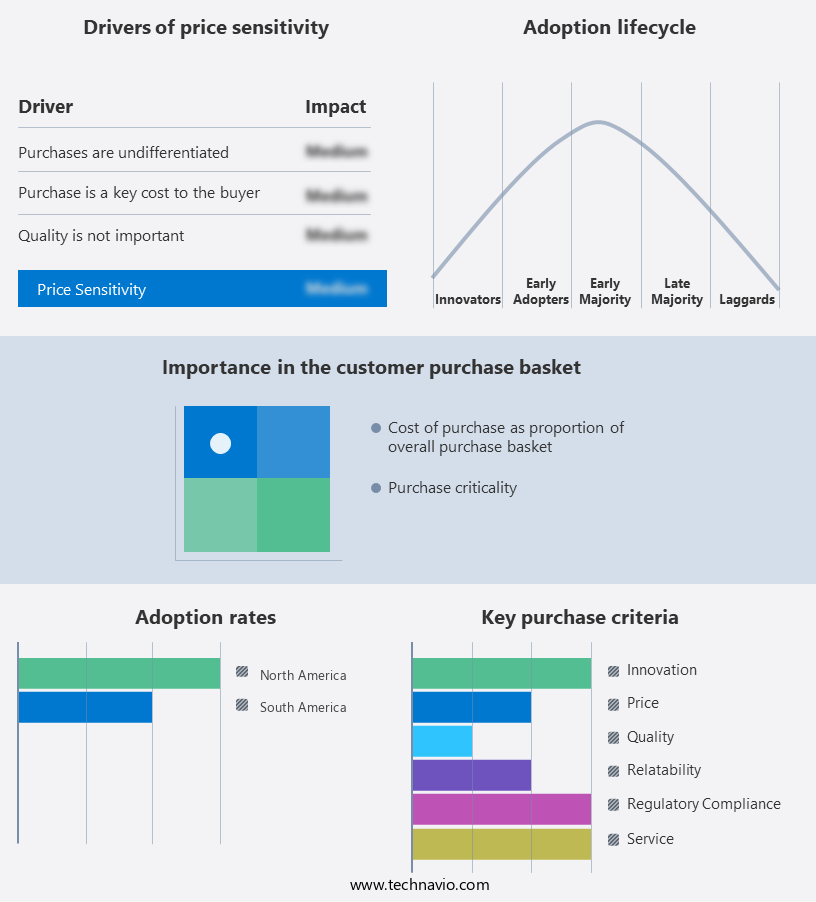
Immunochemistry Market in Americas Share by Geography

 Customer Landscape

Key Companies & Market Insights

Companies are implementing various strategies, such as strategic alliances, market forecast partnerships, mergers and acquisitions, geographical expansion, and product/service launches, to enhance their presence In the market.

The market research and growth report includes detailed analyses of the competitive landscape of the market and information about key companies, including:

  • Abbott Laboratories
  • Agilent Technologies Inc.
  • Becton Dickinson and Co.
  • Bio Rad Laboratories Inc.
  • Bio Techne Corp.
  • bioMerieux SA
  • Danaher Corp.
  • DiaSorin SpA
  • Enzo Biochem Inc.
  • F. Hoffmann La Roche Ltd.
  • Fujirebio Holdings Inc.
  • Grifols SA
  • Hologic Inc.
  • Merck and Co. Inc.
  • Mindray Bio medical Electronics Co. Ltd.
  • PerkinElmer Inc.
  • Quanterix Corp.
  • Randox Laboratories Ltd.
  • Siemens AG
  • Sysmex Corp.
  • Thermo Fisher Scientific Inc.
  • Tosoh Corp.

Qualitative and quantitative analysis of companies has been conducted to help clients understand the wider business environment as well as the strengths and weaknesses of key market players. Data is qualitatively analyzed to categorize companies as pure play, category-focused, industry-focused, and diversified; it is quantitatively analyzed to categorize companies as dominant, leading, strong, tentative, and weak.

Research Analyst Overview

The market is witnessing significant growth due to the increasing prevalence of chronic diseases, cancer, and neurological disorders. The geriatric population, with its higher susceptibility to various health conditions, is a key driver for the market's expansion. Healthcare professionals are increasingly relying on immunochemistry products to enhance diagnostic accuracy and improve patient outcomes. Automation and digital imaging are transforming the landscape of immunochemistry. RNA sequencing and transcriptome sequencing are revolutionizing disease diagnosis, enabling a deeper understanding of the molecular mechanisms underlying various conditions. Companion diagnostics, which facilitate personalized medicine, are gaining popularity in clinical diagnostics.

Immunochemistry products, including IHC (Immunohistochemistry) and immunohistochemistry kits, are essential tools for hospitals and diagnostic laboratories. IHC protocols are continually evolving, with multiplexed IHC and mass spectrometric detection techniques offering improved sensitivity and specificity. Cardiovascular disorders, cancer, and chronic illnesses are major areas of application for immunochemistry. Non-small-cell lung cancer, for instance, is a significant focus due to the development of mutation-specific immunochemistry tests. Diagnostic facilities are increasingly adopting these advanced tests to provide accurate and timely diagnoses. Machine learning algorithms are being integrated into immunochemistry workflows to streamline processes and enhance diagnostic accuracy. The use of monoclonal antibodies, antibody fragments, and antibody-drug conjugates is on the rise, reflecting the growing importance of immunochemistry in disease diagnosis and treatment. Chronic conditions such as diabetes mellitus, autoimmune diseases, and nephrological diseases are other significant applications for immunochemistry. Infectious diseases are also a growing area of interest, with immunochemistry playing a crucial role in disease detection and monitoring. 

Market Scope

Report Coverage

Details

Page number

160

Base year

2023

Historic period

2018-2022

Forecast period

2024-2028

Growth momentum & CAGR

Accelerate at a CAGR of 6.98%

Market Growth 2024-2028

USD 3.62 billion

Market structure

Fragmented

YoY growth 2023-2024(%)

6.42

Competitive landscape

Leading Companies, Market Positioning of Companies, Competitive Strategies, and Industry Risks

Request Free Sample

What are the Key Data Covered in this Market Report?

  • CAGR of the market during the forecast period
  • Detailed information on factors that will drive the market growth and forecasting between 2024 and 2028
  • Precise estimation of the size of the market  and its contribution of the market in focus to the parent market
  • Accurate predictions about upcoming market growth and trends and changes in consumer behaviour
  • Growth of the market across the Americas
  • A thorough analysis of the market's competitive landscape and detailed information about companies
  • Comprehensive analysis of factors that will challenge the growth of market companies

We can help! Our analysts can customize this market research report to meet your requirements Get in touch

1 Executive Summary

  • 1.1 Market overview
    • Exhibit 01: Executive Summary – Chart on Market Overview
    • Exhibit 02: Executive Summary – Data Table on Market Overview
    • Exhibit 03: Executive Summary – Chart on Country Market Characteristics
    • Exhibit 04: Executive Summary – Chart on Market by Geography
    • Exhibit 05: Executive Summary – Chart on Market Segmentation by Product
    • Exhibit 06: Executive Summary – Chart on Market Segmentation by Application
    • Exhibit 07: Executive Summary – Chart on Incremental Growth
    • Exhibit 08: Executive Summary – Data Table on Incremental Growth
    • Exhibit 09: Executive Summary – Chart on Vendor Market Positioning

2 Market Landscape

  • 2.1 Market ecosystem
    • Exhibit 10: Parent market
    • Exhibit 11: Market Characteristics

3 Market Sizing

  • 3.1 Market definition
    • Exhibit 12: Offerings of vendors included in the market definition
  • 3.2 Market segment analysis
    • Exhibit 13: Market segments
  • 3.3 Market size 2023
    • 3.4 Market outlook: Forecast for 2023-2028
      • Exhibit 14: Chart on Americas - Market size and forecast 2023-2028 ($ million)
      • Exhibit 15: Data Table on Regional - Market size and forecast 2023-2028 ($ million)
      • Exhibit 16: Chart on Americas: Year-over-year growth 2023-2028 (%)
      • Exhibit 17: Data Table on Regional - Market size and forecast 2023-2028 ($ million)

    4 Historic Market Size

    • 4.1 Immunochemistry market in Americas 2018 - 2022
      • Exhibit 18: Historic Market Size – Data Table on immunochemistry market in Americas 2018 - 2022 ($ million)
    • 4.2 Product Segment Analysis 2018 - 2022
      • Exhibit 19: Historic Market Size – Product Segment 2018 - 2022 ($ million)
    • 4.3 Application Segment Analysis 2018 - 2022
      • Exhibit 20: Historic Market Size – Application Segment 2018 - 2022 ($ million)
    • 4.4 Geography Segment Analysis 2018 - 2022
      • Exhibit 21: Historic Market Size – Geography Segment 2018 - 2022 ($ million)

    5 Five Forces Analysis

    • 5.1 Five forces summary
      • Exhibit 22: Five forces analysis - Comparison between 2023 and 2028
    • 5.2 Bargaining power of buyers
      • Exhibit 23: Chart on Bargaining power of buyers – Impact of key factors 2023 and 2028
    • 5.3 Bargaining power of suppliers
      • Exhibit 24: Bargaining power of suppliers – Impact of key factors in 2023 and 2028
    • 5.4 Threat of new entrants
      • Exhibit 25: Threat of new entrants – Impact of key factors in 2023 and 2028
    • 5.5 Threat of substitutes
      • Exhibit 26: Threat of substitutes – Impact of key factors in 2023 and 2028
    • 5.6 Threat of rivalry
      • Exhibit 27: Threat of rivalry – Impact of key factors in 2023 and 2028
    • 5.7 Market condition
      • Exhibit 28: Chart on Market condition - Five forces 2023 and 2028

    6 Market Segmentation by Product

    • 6.1 Market segments
      • Exhibit 29: Chart on Product - Market share 2023-2028 (%)
      • Exhibit 30: Data Table on Product - Market share 2023-2028 (%)
    • 6.2 Comparison by Product
      • Exhibit 31: Chart on Comparison by Product
      • Exhibit 32: Data Table on Comparison by Product
    • 6.3 Consumables - Market size and forecast 2023-2028
      • Exhibit 33: Chart on Consumables - Market size and forecast 2023-2028 ($ million)
      • Exhibit 34: Data Table on Consumables - Market size and forecast 2023-2028 ($ million)
      • Exhibit 35: Chart on Consumables - Year-over-year growth 2023-2028 (%)
      • Exhibit 36: Data Table on Consumables - Year-over-year growth 2023-2028 (%)
    • 6.4 Equipment - Market size and forecast 2023-2028
      • Exhibit 37: Chart on Equipment - Market size and forecast 2023-2028 ($ million)
      • Exhibit 38: Data Table on Equipment - Market size and forecast 2023-2028 ($ million)
      • Exhibit 39: Chart on Equipment - Year-over-year growth 2023-2028 (%)
      • Exhibit 40: Data Table on Equipment - Year-over-year growth 2023-2028 (%)
    • 6.5 Market opportunity by Product
      • Exhibit 41: Market opportunity by Product ($ million)
      • Exhibit 42: Data Table on Market opportunity by Product ($ million)

    7 Market Segmentation by Application

    • 7.1 Market segments
      • Exhibit 43: Chart on Application - Market share 2023-2028 (%)
      • Exhibit 44: Data Table on Application - Market share 2023-2028 (%)
    • 7.2 Comparison by Application
      • Exhibit 45: Chart on Comparison by Application
      • Exhibit 46: Data Table on Comparison by Application
    • 7.3 Infectious disease - Market size and forecast 2023-2028
      • Exhibit 47: Chart on Infectious disease - Market size and forecast 2023-2028 ($ million)
      • Exhibit 48: Data Table on Infectious disease - Market size and forecast 2023-2028 ($ million)
      • Exhibit 49: Chart on Infectious disease - Year-over-year growth 2023-2028 (%)
      • Exhibit 50: Data Table on Infectious disease - Year-over-year growth 2023-2028 (%)
    • 7.4 Cardiology - Market size and forecast 2023-2028
      • Exhibit 51: Chart on Cardiology - Market size and forecast 2023-2028 ($ million)
      • Exhibit 52: Data Table on Cardiology - Market size and forecast 2023-2028 ($ million)
      • Exhibit 53: Chart on Cardiology - Year-over-year growth 2023-2028 (%)
      • Exhibit 54: Data Table on Cardiology - Year-over-year growth 2023-2028 (%)
    • 7.5 Oncology - Market size and forecast 2023-2028
      • Exhibit 55: Chart on Oncology - Market size and forecast 2023-2028 ($ million)
      • Exhibit 56: Data Table on Oncology - Market size and forecast 2023-2028 ($ million)
      • Exhibit 57: Chart on Oncology - Year-over-year growth 2023-2028 (%)
      • Exhibit 58: Data Table on Oncology - Year-over-year growth 2023-2028 (%)
    • 7.6 Autoimmune disease - Market size and forecast 2023-2028
      • Exhibit 59: Chart on Autoimmune disease - Market size and forecast 2023-2028 ($ million)
      • Exhibit 60: Data Table on Autoimmune disease - Market size and forecast 2023-2028 ($ million)
      • Exhibit 61: Chart on Autoimmune disease - Year-over-year growth 2023-2028 (%)
      • Exhibit 62: Data Table on Autoimmune disease - Year-over-year growth 2023-2028 (%)
    • 7.7 Nephrology and others - Market size and forecast 2023-2028
      • Exhibit 63: Chart on Nephrology and others - Market size and forecast 2023-2028 ($ million)
      • Exhibit 64: Data Table on Nephrology and others - Market size and forecast 2023-2028 ($ million)
      • Exhibit 65: Chart on Nephrology and others - Year-over-year growth 2023-2028 (%)
      • Exhibit 66: Data Table on Nephrology and others - Year-over-year growth 2023-2028 (%)
    • 7.8 Market opportunity by Application
      • Exhibit 67: Market opportunity by Application ($ million)
      • Exhibit 68: Data Table on Market opportunity by Application ($ million)

    8 Customer Landscape

    • 8.1 Customer landscape overview
      • Exhibit 69: Analysis of price sensitivity, lifecycle, customer purchase basket, adoption rates, and purchase criteria

    9 Geographic Landscape

    • 9.1 Geographic segmentation
      • Exhibit 70: Chart on Market share by geography - 2023-2028 (%)
      • Exhibit 71: Data Table on Market share by geography - 2023-2028 (%)
    • 9.2 Geographic comparison
      • Exhibit 72: Chart on Geographic comparison
      • Exhibit 73: Data Table on Geographic comparison
    • 9.3 North America - Market size and forecast 2023-2028
      • Exhibit 74: Chart on North America - Market size and forecast 2023-2028 ($ million)
      • Exhibit 75: Data Table on North America - Market size and forecast 2023-2028 ($ million)
      • Exhibit 76: Chart on North America - Year-over-year growth 2023-2028 (%)
      • Exhibit 77: Data Table on North America - Year-over-year growth 2023-2028 (%)
    • 9.4 South America - Market size and forecast 2023-2028
      • Exhibit 78: Chart on South America - Market size and forecast 2023-2028 ($ million)
      • Exhibit 79: Data Table on South America - Market size and forecast 2023-2028 ($ million)
      • Exhibit 80: Chart on South America - Year-over-year growth 2023-2028 (%)
      • Exhibit 81: Data Table on South America - Year-over-year growth 2023-2028 (%)
    • 9.5 Market opportunity by geography
      • Exhibit 82: Market opportunity by geography ($ million)
      • Exhibit 83: Data Table on Market opportunity by geography ($ million)

    10 Drivers, Challenges, and Trends

    • 10.1 Market drivers
      • 10.2 Market challenges
        • 10.3 Impact of drivers and challenges
          • Exhibit 84: Impact of drivers and challenges in 2023 and 2028
        • 10.4 Market trends

          11 Vendor Landscape

          • 11.1 Overview
            • 11.2 Vendor landscape
              • Exhibit 85: Overview on Criticality of inputs and Factors of differentiation
            • 11.3 Landscape disruption
              • Exhibit 86: Overview on factors of disruption
            • 11.4 Industry risks
              • Exhibit 87: Impact of key risks on business

            12 Vendor Analysis

            • 12.1 Vendors covered
              • Exhibit 88: Vendors covered
            • 12.2 Market positioning of vendors
              • Exhibit 89: Matrix on vendor position and classification
            • 12.3 Abbott Laboratories
              • Exhibit 90: Abbott Laboratories - Overview
              • Exhibit 91: Abbott Laboratories - Business segments
              • Exhibit 92: Abbott Laboratories - Key news
              • Exhibit 93: Abbott Laboratories - Key offerings
              • Exhibit 94: Abbott Laboratories - Segment focus
            • 12.4 Agilent Technologies Inc.
              • Exhibit 95: Agilent Technologies Inc. - Overview
              • Exhibit 96: Agilent Technologies Inc. - Business segments
              • Exhibit 97: Agilent Technologies Inc. - Key news
              • Exhibit 98: Agilent Technologies Inc. - Key offerings
              • Exhibit 99: Agilent Technologies Inc. - Segment focus
            • 12.5 Becton Dickinson and Co.
              • Exhibit 100: Becton Dickinson and Co. - Overview
              • Exhibit 101: Becton Dickinson and Co. - Business segments
              • Exhibit 102: Becton Dickinson and Co. - Key offerings
              • Exhibit 103: Becton Dickinson and Co. - Segment focus
            • 12.6 Bio Rad Laboratories Inc.
              • Exhibit 104: Bio Rad Laboratories Inc. - Overview
              • Exhibit 105: Bio Rad Laboratories Inc. - Business segments
              • Exhibit 106: Bio Rad Laboratories Inc. - Key news
              • Exhibit 107: Bio Rad Laboratories Inc. - Key offerings
              • Exhibit 108: Bio Rad Laboratories Inc. - Segment focus
            • 12.7 Bio Techne Corp.
              • Exhibit 109: Bio Techne Corp. - Overview
              • Exhibit 110: Bio Techne Corp. - Business segments
              • Exhibit 111: Bio Techne Corp. - Key offerings
              • Exhibit 112: Bio Techne Corp. - Segment focus
            • 12.8 Danaher Corp.
              • Exhibit 113: Danaher Corp. - Overview
              • Exhibit 114: Danaher Corp. - Business segments
              • Exhibit 115: Danaher Corp. - Key news
              • Exhibit 116: Danaher Corp. - Key offerings
              • Exhibit 117: Danaher Corp. - Segment focus
            • 12.9 DiaSorin SpA
              • Exhibit 118: DiaSorin SpA - Overview
              • Exhibit 119: DiaSorin SpA - Business segments
              • Exhibit 120: DiaSorin SpA - Key offerings
              • Exhibit 121: DiaSorin SpA - Segment focus
            • 12.10 F. Hoffmann La Roche Ltd.
              • Exhibit 122: F. Hoffmann La Roche Ltd. - Overview
              • Exhibit 123: F. Hoffmann La Roche Ltd. - Business segments
              • Exhibit 124: F. Hoffmann La Roche Ltd. - Key offerings
              • Exhibit 125: F. Hoffmann La Roche Ltd. - Segment focus
            • 12.11 Fujirebio Holdings Inc.
              • Exhibit 126: Fujirebio Holdings Inc. - Overview
              • Exhibit 127: Fujirebio Holdings Inc. - Product / Service
              • Exhibit 128: Fujirebio Holdings Inc. - Key offerings
            • 12.12 Merck and Co. Inc.
              • Exhibit 129: Merck and Co. Inc. - Overview
              • Exhibit 130: Merck and Co. Inc. - Business segments
              • Exhibit 131: Merck and Co. Inc. - Key news
              • Exhibit 132: Merck and Co. Inc. - Key offerings
              • Exhibit 133: Merck and Co. Inc. - Segment focus
            • 12.13 Quanterix Corp.
              • Exhibit 134: Quanterix Corp. - Overview
              • Exhibit 135: Quanterix Corp. - Product / Service
              • Exhibit 136: Quanterix Corp. - Key offerings
            • 12.14 Randox Laboratories Ltd.
              • Exhibit 137: Randox Laboratories Ltd. - Overview
              • Exhibit 138: Randox Laboratories Ltd. - Key offerings
            • 12.15 Siemens AG
              • Exhibit 139: Siemens AG - Overview
              • Exhibit 140: Siemens AG - Business segments
              • Exhibit 141: Siemens AG - Key news
              • Exhibit 142: Siemens AG - Key offerings
              • Exhibit 143: Siemens AG - Segment focus
            • 12.16 Sysmex Corp.
              • Exhibit 144: Sysmex Corp. - Overview
              • Exhibit 145: Sysmex Corp. - Business segments
              • Exhibit 146: Sysmex Corp. - Key offerings
              • Exhibit 147: Sysmex Corp. - Segment focus
            • 12.17 Thermo Fisher Scientific Inc.
              • Exhibit 148: Thermo Fisher Scientific Inc. - Overview
              • Exhibit 149: Thermo Fisher Scientific Inc. - Business segments
              • Exhibit 150: Thermo Fisher Scientific Inc. - Key news
              • Exhibit 151: Thermo Fisher Scientific Inc. - Key offerings
              • Exhibit 152: Thermo Fisher Scientific Inc. - Segment focus

            13 Appendix

            • 13.1 Scope of the report
              • 13.2 Inclusions and exclusions checklist
                • Exhibit 153: Inclusions checklist
                • Exhibit 154: Exclusions checklist
              • 13.3 Currency conversion rates for US$
                • Exhibit 155: Currency conversion rates for US$
              • 13.4 Research methodology
                • Exhibit 156: Research methodology
                • Exhibit 157: Validation techniques employed for market sizing
                • Exhibit 158: Information sources
              • 13.5 List of abbreviations
                • Exhibit 159: List of abbreviations

              Research Methodology

              Technavio presents a detailed picture of the market by way of study, synthesis, and summation of data from multiple sources. The analysts have presented the various facets of the market with a particular focus on identifying the key industry influencers. The data thus presented is comprehensive, reliable, and the result of extensive research, both primary and secondary.

              INFORMATION SOURCES

              Primary sources

              • Manufacturers and suppliers
              • Channel partners
              • Industry experts
              • Strategic decision makers

              Secondary sources

              • Industry journals and periodicals
              • Government data
              • Financial reports of key industry players
              • Historical data
              • Press releases

              DATA ANALYSIS

              Data Synthesis

              • Collation of data
              • Estimation of key figures
              • Analysis of derived insights

              Data Validation

              • Triangulation with data models
              • Reference against proprietary databases
              • Corroboration with industry experts

              REPORT WRITING

              Qualitative

              • Market drivers
              • Market challenges
              • Market trends
              • Five forces analysis

              Quantitative

              • Market size and forecast
              • Market segmentation
              • Geographical insights
              • Competitive landscape

              Interested in this report?

              Get your sample now to see our research methodology and insights!

              Download Now

              Frequently Asked Questions

              Immunochemistryin Americas market growth will increase by $ 3621.75 mn during 2024-2028.

              The Immunochemistryin Americas market is expected to grow at a CAGR of 6.98% during 2024-2028.

              Immunochemistryin Americas market is segmented by Product( Consumables, Equipment) Application( Infectious disease, Cardiology, Oncology, Autoimmune disease, Nephrology and others)

              Abbott Laboratories, Agilent Technologies Inc., Becton Dickinson and Co., Bio Rad Laboratories Inc., Bio Techne Corp., bioMerieux SA, Danaher Corp., DiaSorin SpA, Enzo Biochem Inc., F. Hoffmann La Roche Ltd., Fujirebio Holdings Inc., Grifols SA, Hologic Inc., Merck and Co. Inc., Mindray Bio medical Electronics Co. Ltd., PerkinElmer Inc., Quanterix Corp., Randox Laboratories Ltd., Siemens AG, Sysmex Corp., Thermo Fisher Scientific Inc., Tosoh Corp. are a few of the key vendors in the Immunochemistryin Americas market.

              Americas will register the highest growth rate of 100% among the other regions. Therefore, the Immunochemistryin Americas market in Americas is expected to garner significant business opportunities for the vendors during the forecast period.

              North America, South America

              • Growing geriatric populationAs the population ages is the driving factor this market.
              • there is a natural increase in the prevalence of chronic diseases is the driving factor this market.
              • autoimmune disorders is the driving factor this market.
              • and infectious illnesses is the driving factor this market.
              • which often require extensive diagnostic testing and monitoring. Immunochemistry assays play a crucial role in the diagnosis is the driving factor this market.
              • prognosis is the driving factor this market.
              • and management of these conditions. Elderly individuals typically have a higher risk of developing conditions such as cardiovascular diseases is the driving factor this market.
              • cancer is the driving factor this market.
              • diabetes is the driving factor this market.
              • and neurodegenerative disorders is the driving factor this market.
              • all of which may necessitate immunochemistry-based diagnostic tests for early detection and treatment planning. According to the Population Reference Bureau is the driving factor this market.
              • the number of Americans 65 years and above will rise by 47% is the driving factor this market.
              • from 58 million in 2022 to 82 million in 2050. Additionally is the driving factor this market.
              • the share of this age group in the overall population is expected to increase from 17% to 23% during this period. According to the Canadian Institute for Health Information is the driving factor this market.
              • the number of older population in Canada is the driving factor this market.
              • or those 65 years and above is the driving factor this market.
              • is predicted to increase by 68% during the next 20 years. Its size has more than tripled in the last 40 years. In Canada is the driving factor this market.
              • 14.1% of people were 65 years of age or older in 2010. By 2022 is the driving factor this market.
              • this percentage had risen to 19%. According to Statistics Canada is the driving factor this market.
              • this trend is expected to continue and reach 22.5% by 2030. Similarly is the driving factor this market.
              • according to the Brazilian Institute of Geography and Statistics is the driving factor this market.
              • in Brazil is the driving factor this market.
              • the total number of people 65 years and older (22 is the driving factor this market.
              • 169 is the driving factor this market.
              • 101) accounted for 10.9% of the population in 2022 is the driving factor this market.
              • an increase of 57.4% from 14 is the driving factor this market.
              • 081 is the driving factor this market.
              • 477 (or 7.4% of the population) in 2010. Additionally is the driving factor this market.
              • the aging immune system becomes less efficient is the driving factor this market.
              • making older adults more susceptible to infections is the driving factor this market.
              • which further drives the demand for immunoassays for infectious disease diagnostics. Moreover is the driving factor this market.
              • the elderly population often requires ongoing monitoring of their health status and response to therapy is the driving factor this market.
              • making immunochemistry assays indispensable in routine clinical care for geriatric patients. Furthermore is the driving factor this market.
              • advancements in immunoassay technologies is the driving factor this market.
              • such as high-sensitivity assays and multiplexing capabilities is the driving factor this market.
              • cater to the specific needs of aging populations by providing accurate and reliable diagnostic results. Overall is the driving factor this market.
              • the growing geriatric population in the Americas is expected to fuel the demand for immunochemistry assays across a wide range of medical conditions is the driving factor this market.
              • which will drive growth of the immunochemistry market in Americas during the forecast period. is the driving factor this market.

              The Immunochemistryin Americas market vendors should focus on grabbing business opportunities from the Consumables segment as it accounted for the largest market share in the base year.