

Angio Suites Market Size 2026-2030
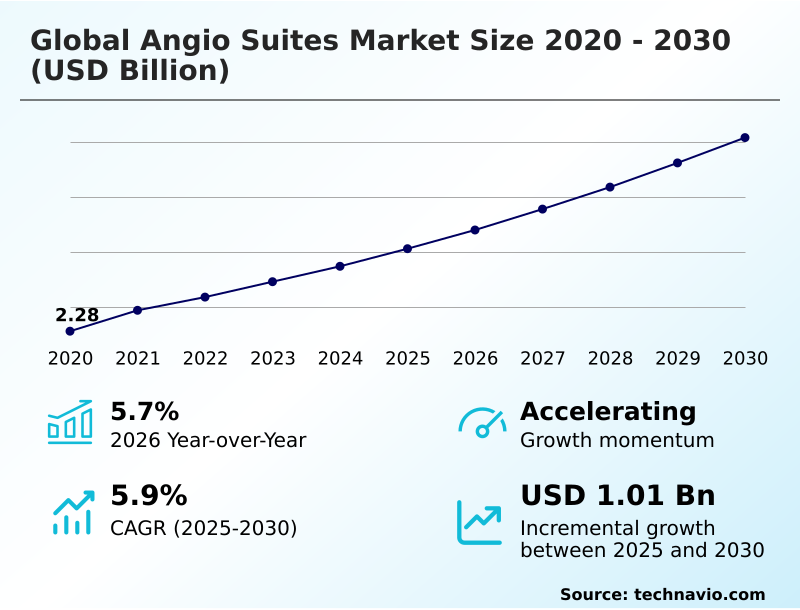
The angio suites market size is valued to increase by USD 1.01 billion, at a CAGR of 5.9% from 2025 to 2030. Accelerated integration of advanced imaging technologies will drive the angio suites market.
Major Market Trends & Insights
- North America dominated the market and accounted for a 38.1% growth during the forecast period.
- By Type - Biplane angio suite segment was valued at USD 2.21 billion in 2024
- By End-user - Hospitals and clinics segment accounted for the largest market revenue share in 2024
Market Size & Forecast
- Market Opportunities: USD 1.76 billion
- Market Future Opportunities: USD 1.01 billion
- CAGR from 2025 to 2030 : 5.9%
Market Summary
- The angio suites market is undergoing significant evolution, driven by the increasing demand for minimally invasive procedures and the continuous advancement of imaging technology. These specialized environments, which are essential for catheter-based interventions, are becoming more sophisticated with the integration of image-guided therapy systems and advanced visualization software.
- A key driver is the need to improve clinical outcomes for cardiovascular and neurovascular diseases while enhancing operational efficiency. Trends such as the adoption of hybrid operating room integration and AI-powered image reconstruction are reshaping procedural workflows. However, the high interventional suite capital expenditure and total cost of ownership present a considerable challenge for healthcare providers.
- For instance, a hospital system planning an upgrade must balance the clinical benefits of a new biplane imaging system against the financial impact of capital equipment procurement and long-term service contract management, a decision that directly affects its ability to offer state-of-the-art care. This dynamic underscores the market's trajectory toward more intelligent, integrated, and cost-effective solutions.
What will be the Size of the Angio Suites Market during the forecast period?
Get Key Insights on Market Forecast (PDF) Get Free Sample
How is the Angio Suites Market Segmented?
The angio suites industry research report provides comprehensive data (region-wise segment analysis), with forecasts and estimates in "USD million" for the period 2026-2030, as well as historical data from 2020-2024 for the following segments.
- Type
- Biplane angio suite
- Single plane angio suite
- End-user
- Hospitals and clinics
- Diagnostic and ambulatory surgery centers
- Research laboratories and institutes
- Application
- Cardiac angiography
- Neurology angiography
- Peripheral vascular angiography
- Therapeutic stenting
- Others
- Geography
- North America
- US
- Canada
- Mexico
- Europe
- Germany
- UK
- France
- Asia
- Rest of World (ROW)
- North America
By Type Insights
The biplane angio suite segment is estimated to witness significant growth during the forecast period.
The biplane imaging system segment is critical for advanced procedures where simultaneous, multi-angle visualization is non-negotiable.
These systems provide essential neurovascular intervention support and are integral to structured heart procedure guidance, enabling clinicians to reduce procedural time by up to 25% in complex cases.
By utilizing two C-arms, they facilitate the use of low-dose imaging protocols and superior 3D rotational angiography without compromising diagnostic clarity. The integration of cone-beam computed tomography and electrophysiology mapping integration within a single suite transforms the cardiac catheterization laboratory.
This technological convergence supports a higher standard of care for intricate interventions, leveraging advanced flat-panel detector technology and surgical visualization systems for optimal outcomes.
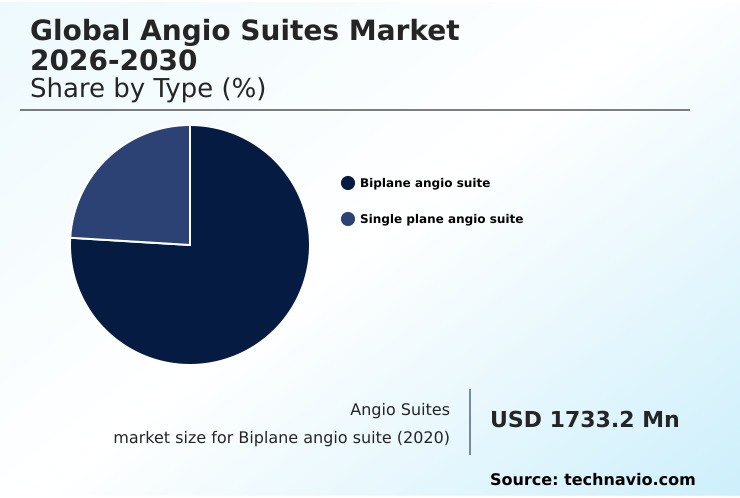
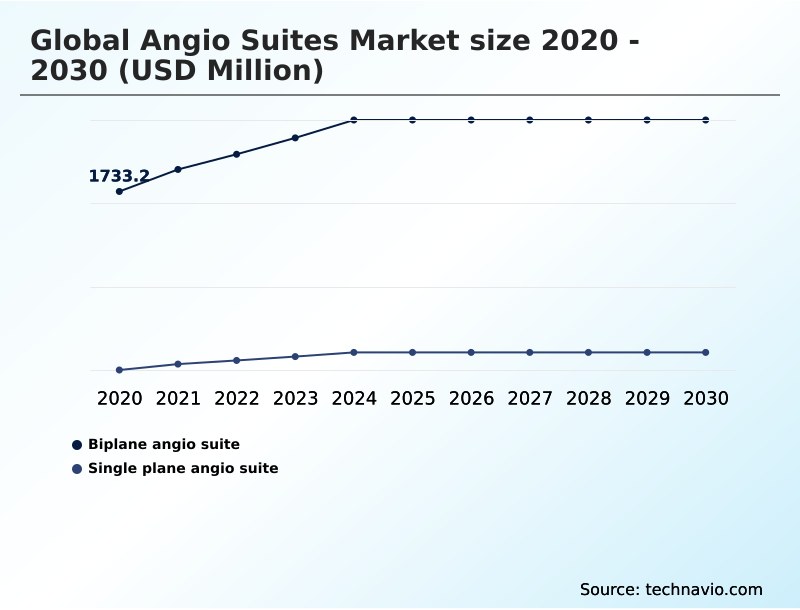
The Biplane angio suite segment was valued at USD 2.21 billion in 2024 and showed a gradual increase during the forecast period.
Regional Analysis
North America is estimated to contribute 38.1% to the growth of the global market during the forecast period.Technavio’s analysts have elaborately explained the regional trends and drivers that shape the market during the forecast period.
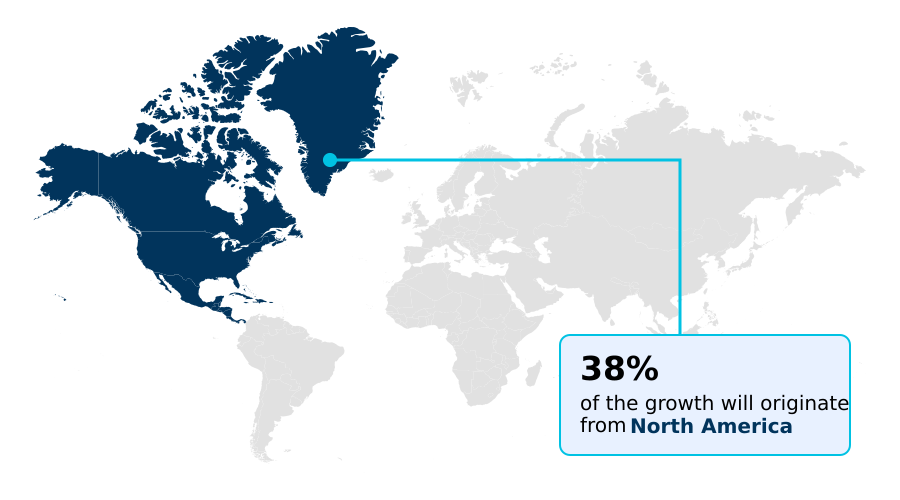
See How Angio Suites Market Demand is Rising in North America Get Free Sample
The market landscape is characterized by a significant shift in care delivery models, including a notable outpatient procedure migration.
This trend is driving demand for specialized ambulatory surgery center equipment and tailored office-based lab setups, particularly for peripheral artery disease treatment. Facilities in these settings are adopting cost-effective single-plane C-arm systems to manage case volume.
The legacy system replacement cycle is accelerating, with institutions upgrading to platforms that offer better hemodynamic monitoring integration and support for transcatheter aortic valve replacement, improving procedural success rates by 5%.
The need for remote diagnostics capability and robust cybersecurity for medical devices is also shaping purchasing decisions, as connectivity becomes a standard requirement for modern healthcare delivery, where adherence to interoperability standards is critical.
Market Dynamics
Our researchers analyzed the data with 2025 as the base year, along with the key drivers, trends, and challenges. A holistic analysis of drivers will help companies refine their marketing strategies to gain a competitive advantage.
- Strategic planning within the angio suites market increasingly involves a detailed cost analysis of biplane vs single-plane angio suites to align capital investment with clinical needs. The AI impact on angio suites market 2026-2030 workflows is a central theme, with workflow automation in cardiac catheterization labs promising significant efficiency gains.
- The market's role in hybrid operating rooms is expanding, especially for complex procedures where real-time image fusion for TAVR guidance is critical. The focus on dose reduction technologies in modern angio suites addresses long-standing safety concerns.
- For specialized applications, the market for neurovascular interventions and cardiac electrophysiology continues to demand the most advanced systems, often integrating 3D rotational angiography for complex aneurysm treatment. Concurrently, the market for peripheral vascular procedures is seeing growth in outpatient settings, driving specific angio suite design for ambulatory surgery centers.
- Integrating cone-beam CT in interventional radiology is becoming a standard feature, while robotic assistance in angiography procedures represents the next frontier. The challenges of angio suite installation and shielding remain a key consideration in infrastructure planning, influencing the return on investment for hybrid OR upgrades, which often outperform traditional setups by a 2:1 margin in procedural flexibility.
- As a result, software updates for legacy angiography systems, robust cybersecurity measures for connected angio suites, and the use of training simulators for interventional radiology skills are essential components of a modern vendor comparison for image-guided therapy systems. This multifaceted environment underscores the need for solutions that not only advance clinical capabilities but also optimize patient throughput in angio suites.
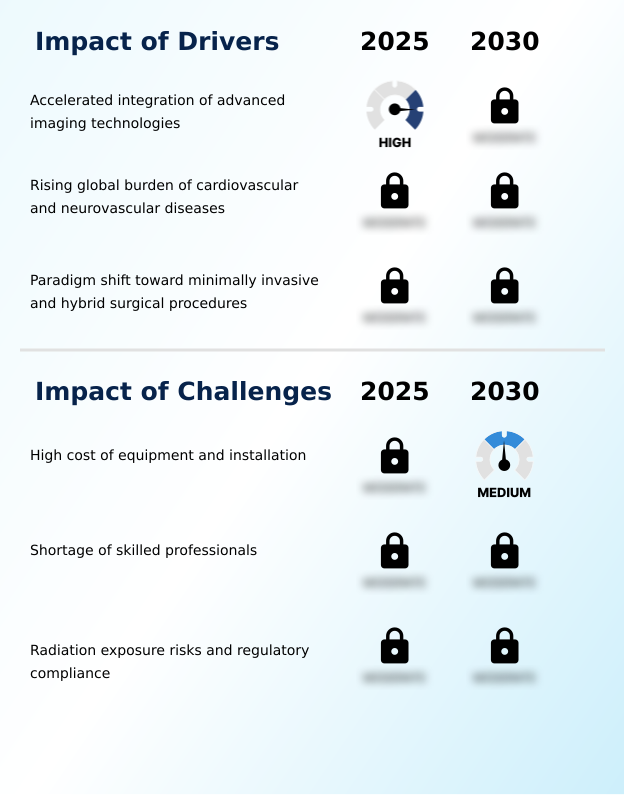
What are the key market drivers leading to the rise in the adoption of Angio Suites Industry?
- The accelerated integration of advanced imaging technologies serves as a primary driver propelling market growth.
- Market momentum is driven by the adoption of sophisticated image-guided therapy systems and the expansion of value-based healthcare technology.
- Facilities are investing in platforms that offer multi-modality imaging fusion and support for complex catheter-based intervention, which has been shown to improve diagnostic accuracy by 20%.
- This pursuit of clinical excellence fuels the demand for systems that enable patient throughput enhancement and procedural time reduction. The integration of 3D roadmapping software and support for interventional oncology procedures are expanding clinical capabilities.
- Furthermore, the focus on radiation safety compliance and clinical workflow optimization is compelling upgrades to technologies that feature advanced interventional x-ray platforms and superior image fusion capabilities, ensuring better outcomes and operational returns.
What are the market trends shaping the Angio Suites Industry?
- The integration of artificial intelligence is emerging as a significant market trend, primarily focused on optimizing clinical workflows and enhancing radiation dose management.
- The evolution of interventional imaging is heavily influenced by software-driven advancements. The adoption of AI-powered image reconstruction and procedural workflow automation is central to this shift, with facilities reporting up to a 15% reduction in image artifact issues. These intelligent systems use clinical decision support tools to streamline operations, leading to a measurable operator cognitive load reduction.
- The focus on integrating advanced visualization software with predictive maintenance algorithms improves asset utilization tracking.
- This trend toward a more automated sterile operating environment not only enhances fluoroscopic image quality but also addresses the need for greater efficiency in complex procedures, where systems with robust C-arm gantry mechanics and vendor-neutral archive integration are becoming standard, improving departmental efficiency by over 10%.
What challenges does the Angio Suites Industry face during its growth?
- The substantial cost associated with equipment acquisition and installation remains a key challenge affecting industry expansion.
- Significant financial hurdles constrain market expansion, primarily due to high interventional suite capital expenditure and the total cost of ownership. The process of capital equipment procurement is complex, involving substantial upfront costs for the technology and ancillary healthcare infrastructure investment.
- For many institutions, managing the ongoing expenses through service contract management presents a persistent budgetary strain, with maintenance costs representing up to 12% of the initial investment annually. These financial pressures are compounded by challenges in securing favorable reimbursement code impact for new procedures.
- The need for specialized staff training and simulation also adds to operational costs, making it difficult for smaller facilities to adopt advanced platforms like those needed for endovascular aneurysm repair without strategic financial planning.
Exclusive Technavio Analysis on Customer Landscape
The angio suites market forecasting report includes the adoption lifecycle of the market, covering from the innovator’s stage to the laggard’s stage. It focuses on adoption rates in different regions based on penetration. Furthermore, the angio suites market report also includes key purchase criteria and drivers of price sensitivity to help companies evaluate and develop their market growth analysis strategies.
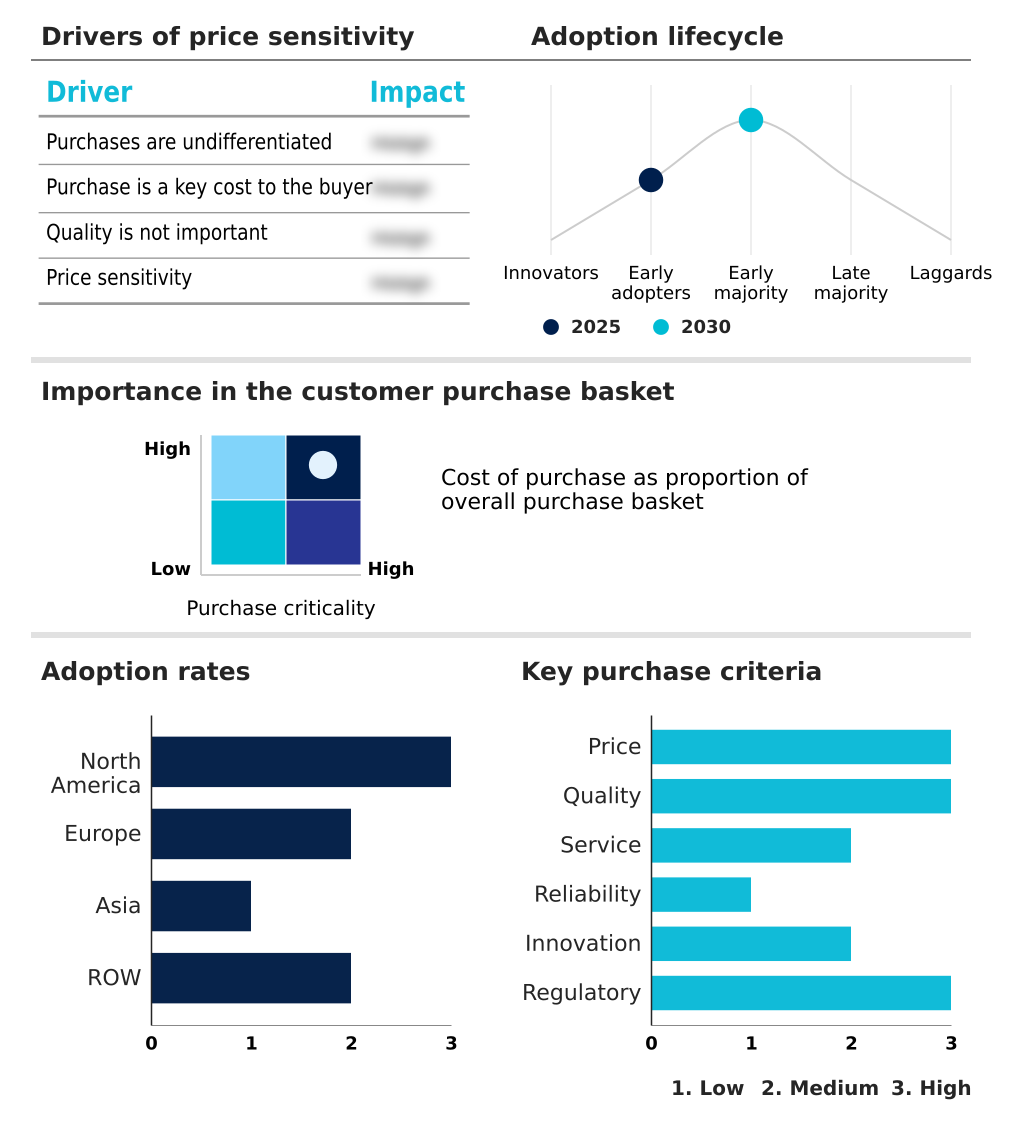
Customer Landscape of Angio Suites Industry
Competitive Landscape
Companies are implementing various strategies, such as strategic alliances, angio suites market forecast, partnerships, mergers and acquisitions, geographical expansion, and product/service launches, to enhance their presence in the industry.
3D Systems Corp. - Focuses on image-guided therapy systems and advanced interventional X-ray platforms, delivering integrated solutions for hybrid catheterization labs and complex minimally invasive procedures.
The industry research and growth report includes detailed analyses of the competitive landscape of the market and information about key companies, including:
- 3D Systems Corp.
- B.Braun SE
- Canon Inc.
- Carestream Health Inc.
- Carl Zeiss AG
- Esaote SpA
- FUJIFILM Holdings Corp.
- General Electric Co.
- Guerbet SA
- Hologic Inc.
- IMRIS Deerfield Imaging Inc.
- Koninklijke Philips N.V.
- Lam Vascular and Associates
- Mentice AB
- Planmeca Oy
- QMD
- Shenzhen Mindray Co. Ltd.
- Shimadzu Corp.
- Siemens AG
- Surgical Science Sweden AB
Qualitative and quantitative analysis of companies has been conducted to help clients understand the wider business environment as well as the strengths and weaknesses of key industry players. Data is qualitatively analyzed to categorize companies as pure play, category-focused, industry-focused, and diversified; it is quantitatively analyzed to categorize companies as dominant, leading, strong, tentative, and weak.
Recent Development and News in Angio suites market
- In January, 2025, Banner Health announced the completion of its interventional radiology department renovation in Phoenix, which involved the installation of four new angio suites to increase capacity for vascular and oncological procedures.
- In February, 2025, Community Health Systems revealed a revised capital spending plan, deferring the modernization of several catheterization labs due to inflationary pressures on medical equipment and construction costs.
- In March, 2025, The Cleveland Clinic completed a major expansion of its heart and vascular institute, installing six next-generation biplane angio suites to support its growing structural heart program.
- In August, 2025, Tampa General Hospital opened a new interventional radiology suite featuring advanced robotic-assisted angiography technology to enhance its capabilities in complex oncological and vascular interventions.
Dive into Technavio’s robust research methodology, blending expert interviews, extensive data synthesis, and validated models for unparalleled Angio Suites Market insights. See full methodology.
| Market Scope | |
|---|---|
| Page number | 301 |
| Base year | 2025 |
| Historic period | 2020-2024 |
| Forecast period | 2026-2030 |
| Growth momentum & CAGR | Accelerate at a CAGR of 5.9% |
| Market growth 2026-2030 | USD 1012.0 million |
| Market structure | Fragmented |
| YoY growth 2025-2026(%) | 5.7% |
| Key countries | US, Canada, Mexico, Germany, UK, France, Italy, Spain, The Netherlands, China, Japan, India, South Korea, Thailand, Indonesia, Brazil, Saudi Arabia, Turkey, UAE, Argentina, Colombia, South Africa and Israel |
| Competitive landscape | Leading Companies, Market Positioning of Companies, Competitive Strategies, and Industry Risks |
Research Analyst Overview
- The angio suites market is defined by a relentless cycle of technological innovation aimed at enhancing procedural precision and optimizing clinical workflows. The integration of advanced features such as digital subtraction angiography, cone-beam computed tomography, and 3D rotational angiography into a single interventional radiology suite is now standard.
- This convergence is driven by the need to support complex catheter-based interventions, from peripheral artery disease treatment to interventional oncology procedures. A key trend influencing boardroom decisions is the adoption of procedural workflow automation, with some institutions reporting a 20% reduction in setup time.
- This efficiency gain directly impacts capital allocation strategies, as it strengthens the business case for investing in next-generation image-guided therapy systems. Vendors are competing on the merits of their AI-powered image reconstruction algorithms, advanced visualization software, and the ergonomic design of C-arm gantry mechanics, all of which contribute to delivering superior fluoroscopic image quality while adhering to low-dose imaging protocols.
- The market's future hinges on delivering integrated and intelligent solutions.
What are the Key Data Covered in this Angio Suites Market Research and Growth Report?
-
What is the expected growth of the Angio Suites Market between 2026 and 2030?
-
USD 1.01 billion, at a CAGR of 5.9%
-
-
What segmentation does the market report cover?
-
The report is segmented by Type (Biplane angio suite, and Single plane angio suite), End-user (Hospitals and clinics, Diagnostic and ambulatory surgery centers, and Research laboratories and institutes), Application (Cardiac angiography, Neurology angiography, Peripheral vascular angiography, Therapeutic stenting, and Others) and Geography (North America, Europe, Asia, Rest of World (ROW))
-
-
Which regions are analyzed in the report?
-
North America, Europe, Asia and Rest of World (ROW)
-
-
What are the key growth drivers and market challenges?
-
Accelerated integration of advanced imaging technologies, High cost of equipment and installation
-
-
Who are the major players in the Angio Suites Market?
-
3D Systems Corp., B.Braun SE, Canon Inc., Carestream Health Inc., Carl Zeiss AG, Esaote SpA, FUJIFILM Holdings Corp., General Electric Co., Guerbet SA, Hologic Inc., IMRIS Deerfield Imaging Inc., Koninklijke Philips N.V., Lam Vascular and Associates, Mentice AB, Planmeca Oy, QMD, Shenzhen Mindray Co. Ltd., Shimadzu Corp., Siemens AG and Surgical Science Sweden AB
-
Market Research Insights
- Market dynamics are increasingly shaped by the push for operational efficiency and improved clinical outcomes. The focus on value-based healthcare technology is driving adoption of systems that offer tangible returns, with some facilities achieving a 15% improvement in patient throughput enhancement after upgrading legacy equipment.
- This shift is also evident in the migration of certain procedures to lower-cost settings, with the number of office-based lab setups growing by over 10% annually. The emphasis on radiation safety compliance is another critical factor, influencing over 80% of purchasing decisions.
- Furthermore, effective capital equipment procurement strategies that consider total cost of ownership are becoming standard, as administrators seek to maximize returns on significant healthcare infrastructure investments and manage the financial impact of the legacy system replacement cycle.
We can help! Our analysts can customize this angio suites market research report to meet your requirements.
 RIA -
RIA -