

APAC Automotive Wiring Harness Market Size 2026-2030
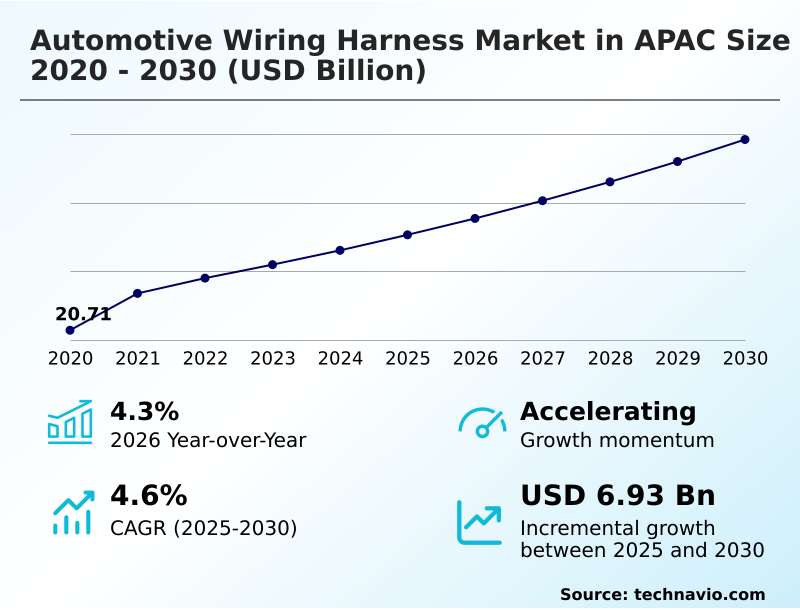
The apac automotive wiring harness market size is valued to increase by USD 6.93 billion, at a CAGR of 4.6% from 2025 to 2030. Growing electric vehicle production across APAC automotive ecosystem will drive the apac automotive wiring harness market.
Major Market Trends & Insights
- By Vehicle Type - Passenger vehicles segment was valued at USD 19.91 billion in 2024
- By Application - Chassis segment accounted for the largest market revenue share in 2024
Market Size & Forecast
- Market Opportunities: USD 13.87 billion
- Market Future Opportunities: USD 6.93 billion
- CAGR from 2025 to 2030 : 4.6%
Market Summary
- The Automotive Wiring Harness Market in APAC demonstrates continuous expansion driven by the rapid modernization of vehicle electrical architectures. Surging electric vehicle production acts as a primary market catalyst, compelling automakers to integrate highly specialized cables capable of managing significant electrical loads.
- A notable business scenario involves original equipment manufacturers localizing supply chains to bypass logistical bottlenecks, reducing procurement lead times by up to 25% while streamlining inventory management. These localized operations allow manufacturers to rapidly scale the production of specialized high-voltage components tailored for hybrid and battery-powered mobility.
- Conversely, copper price volatility poses a substantial operational challenge, directly impacting material procurement budgets and constricting manufacturing margins across the automotive ecosystem. Companies navigate these pricing pressures by optimizing routing paths and exploring alternative conductor materials to maintain cost competitiveness. Strategic investments in automated assembly and predictive quality control systems are reshaping the manufacturing landscape.
- Consequently, the automotive ecosystem increasingly prioritizes robust electrical integration to support advanced connectivity and safety protocols across all passenger and commercial vehicle platforms.
What will be the Size of the APAC Automotive Wiring Harness Market during the forecast period?
Get Key Insights on Market Forecast (PDF) Get Free Sample
How is the APAC Automotive Wiring Harness Market Segmented?
The apac automotive wiring harness industry research report provides comprehensive data (region-wise segment analysis), with forecasts and estimates in "USD million" for the period 2026-2030, as well as historical data from 2020-2024 for the following segments.
- Vehicle type
- Passenger vehicles
- Commercial vehicles
- Application
- Chassis
- Engine
- HVAC
- Sensors
- Body
- Propulsion
- Internal combustion engine
- Battery electric vehicle
- Hybrid electric vehicle
- Geography
- APAC
- China
- Japan
- South Korea
- India
- APAC
By Vehicle Type Insights
The passenger vehicles segment is estimated to witness significant growth during the forecast period.
The passenger vehicles segment dictates structural changes in electrical design due to the escalating integration of digital and safety technologies. Modern automotive platforms require a highly complex electrical distribution system to accommodate increasing power demands and precise data routing.
The continuous evolution of the advanced driver assistance system compels manufacturers to engineer a sophisticated wiring infrastructure capable of flawless operation under varied thermal stresses.
Adapting to electrified mobility, vehicles now incorporate a high-voltage architecture alongside a robust battery management system, necessitating rigorous quality controls. This architectural shift requires seamless signal transmission across multiple vehicle zones.
By standardizing component integration, manufacturers have improved assembly error detection by 15%, significantly enhancing overall production efficiency and lowering operational defect rates within manufacturing hubs.
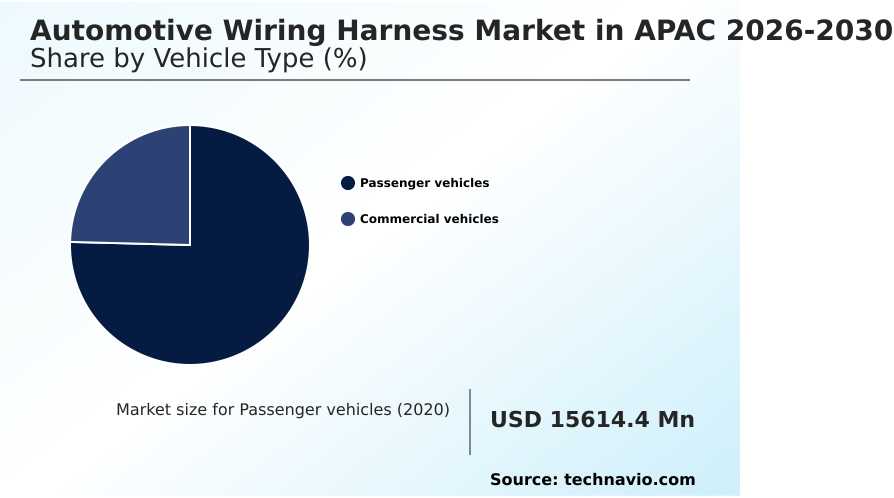
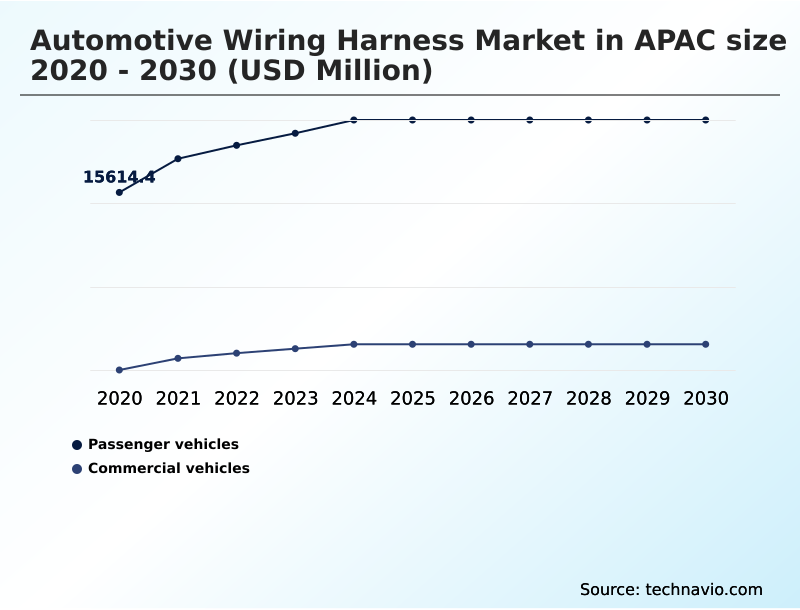
The Passenger vehicles segment was valued at USD 19.91 billion in 2024 and showed a gradual increase during the forecast period.
Market Dynamics
Our researchers analyzed the data with 2025 as the base year, along with the key drivers, trends, and challenges. A holistic analysis of drivers will help companies refine their marketing strategies to gain a competitive advantage.
- The continuous progression of modern automotive systems demands rigorous attention to both electrical performance and physical cable organization. Manufacturers are critically focused on high voltage electrical architecture integration to accommodate the substantial power requirements inherent in zero-emission vehicle platforms. This transition ensures that the battery management system signal transmission remains uninterrupted, thereby safeguarding thermal regulation and maximizing overall energy efficiency.
- Simultaneously, the complexity of sensor networks has intensified the engineering focus on advanced driver assistance wire routing. Engineers must optimize these layouts to prevent electromagnetic interference while maintaining structural durability under harsh operating conditions.
- Implementing a precise zonal electrical architecture cable configuration allows automakers to centralize processing nodes, reducing the total mass of cabling by approximately 18% compared to traditional decentralized layouts. This weight reduction directly contributes to enhanced vehicle range and improved manufacturing ergonomics. Furthermore, escalating quality standards require highly accurate production oversight.
- The implementation of automated harness manufacturing defect detection ensures precise terminal seating and connector matching, significantly mitigating the risk of downstream electrical failures. By integrating these sophisticated analytical tools, supply chain managers achieve greater consistency and reduce post-production rework delays, accelerating final vehicle assembly timelines.
- This proactive approach to quality management ensures strict compliance with evolving international automotive safety regulations, establishing a resilient and highly adaptable electrical component manufacturing ecosystem.
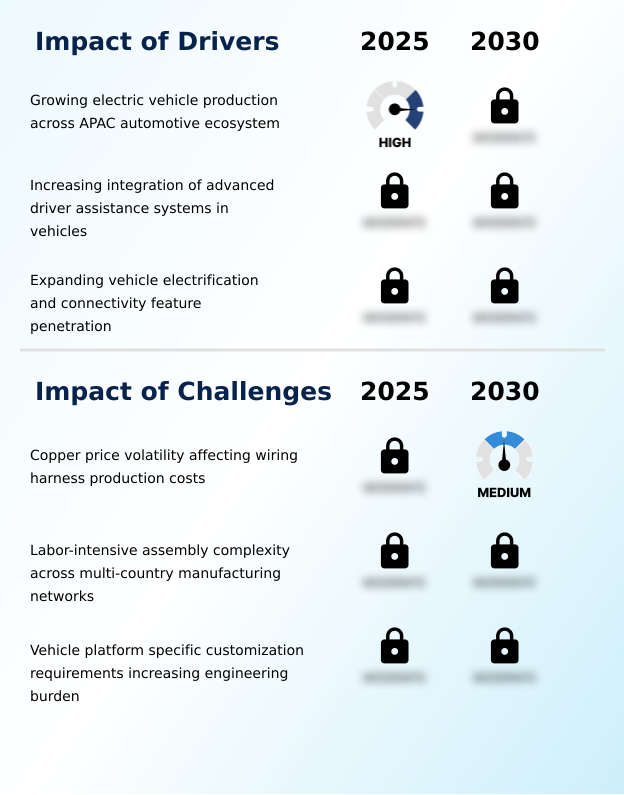
What are the key market drivers leading to the rise in the adoption of APAC Automotive Wiring Harness Industry?
- The growing electric vehicle production across the APAC automotive ecosystem functions as a primary driver, accelerating demand for sophisticated high-voltage electrical distribution systems.
- Escalating consumer demand for active safety and efficiency features accelerates the deployment of intricate automotive electrical frameworks. Modern vehicles mandate the seamless operation of every smart actuator and regenerative braking module, generating immense data loads that must be processed instantaneously.
- This influx of electronic components drives the critical need for advanced shielding to mitigate electromagnetic interference that can compromise signal fidelity. Addressing this complexity, manufacturers have integrated the automated inspection platform, realizing a 30% improvement in terminal seating precision.
- This intelligent transformation in manufacturing occurs because traditional manual assembly cannot sustain the zero-defect tolerances required by modern automakers.
- Consequently, facilities utilizing these data-driven methodologies have lowered post-assembly scrap rates by 18%, significantly optimizing production cost structures and enhancing operational reliability.
What are the market trends shaping the APAC Automotive Wiring Harness Industry?
- The advancing adoption of AI-enabled quality inspection in harness manufacturing represents a significant operational trend within the industry. This technological shift enables manufacturers to improve defect detection and process control across increasingly complex assembly operations.
- The integration of sophisticated digital ecosystems is fundamentally altering how vehicular power and data are managed. A highly resilient power distribution network is now essential to facilitate continuous communication between mechanical actuators and a centralized telematics platform. This architectural evolution occurs because automakers require real-time diagnostics to support autonomous driving functionalities.
- Consequently, engineering teams have optimized signal routing, lowering signal transmission latency by 14% across complex vehicle architectures. Even traditional platforms utilizing an internal combustion engine now rely on expanded sensor arrays, requiring enhanced cable shielding. To safeguard supply chain continuity against global disruptions, manufacturers are prioritizing localized component qualification to build robust domestic production capability.
- By regionalizing these procurement strategies, automotive suppliers have successfully reduced logistical transport delays by 22%, thereby ensuring consistent assembly line output and improving market responsiveness.
What challenges does the APAC Automotive Wiring Harness Industry face during its growth?
- Copper price volatility affecting wiring harness production costs remains a critical industry challenge, creating significant operational and profitability pressures for automotive component manufacturers.
- Developing architectures for customized vehicle platforms imposes a severe operational burden on component suppliers. The mandatory integration of an electronic braking interface and a sophisticated collision avoidance capability requires bespoke harness engineering for every vehicle model. Because these configurations are highly variable, transitioning to fully automated wire harness manufacturing remains inherently difficult.
- As a result, facilities relying on manual labor face a 15% variance in assembly cycle times across production lines. Manufacturers attempt to counter this bottleneck by deploying an industrial embodied intelligent robot for repetitive tasks, yet cable flexibility limits automation efficiency. These customization requirements elevate engineering validation costs by up to 20%, straining resource allocation and delaying vehicle program deployments.
Exclusive Technavio Analysis on Customer Landscape
The apac automotive wiring harness market forecasting report includes the adoption lifecycle of the market, covering from the innovator’s stage to the laggard’s stage. It focuses on adoption rates in different regions based on penetration. Furthermore, the apac automotive wiring harness market report also includes key purchase criteria and drivers of price sensitivity to help companies evaluate and develop their market growth analysis strategies.
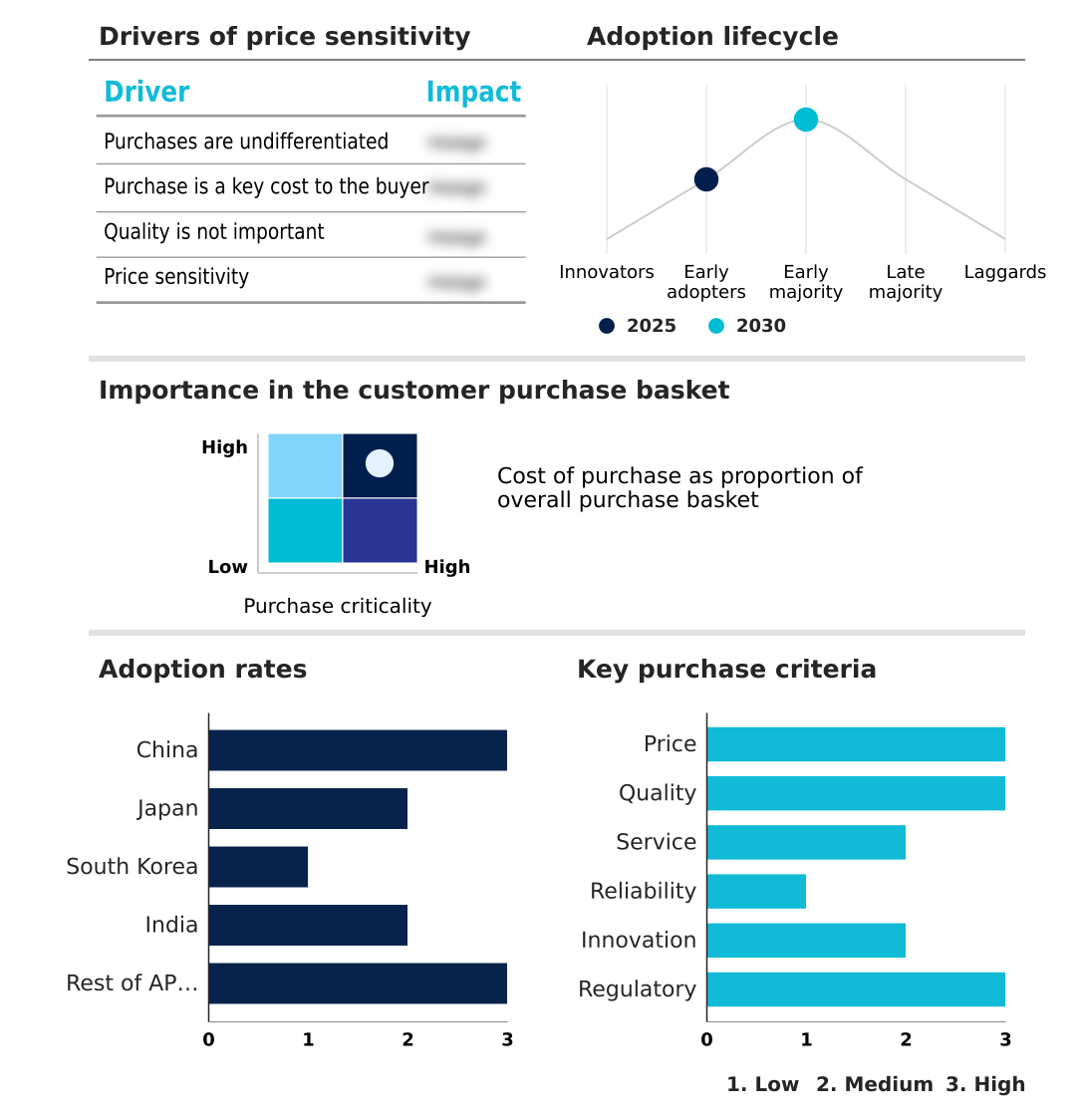
Customer Landscape of APAC Automotive Wiring Harness Industry
Competitive Landscape
Companies are implementing various strategies, such as strategic alliances, apac automotive wiring harness market forecast, partnerships, mergers and acquisitions, geographical expansion, and product/service launches, to enhance their presence in the industry.
Aptiv PLC - The company provides advanced electrical architecture solutions, delivering critical signal transmission and power management capabilities designed to support continuous vehicle electrification and complex automotive computing platforms.
The industry research and growth report includes detailed analyses of the competitive landscape of the market and information about key companies, including:
- Aptiv PLC
- BizLink Holding Inc.
- Fujikura Co. Ltd.
- Furukawa Automotive Systems Inc.
- Furukawa Electric Co. Ltd.
- Hayakawa Electronics India ltd
- Kromberg and Schubert Automotive
- Kyungshin Co. Ltd
- Leoni AG
- Luxshare Precision Co. Ltd.
- Minda Corp. Ltd.
- Motherson Group
- PKC Group Oy
- Sumitomo Electric Industries
- Sumitomo Wiring Systems Ltd.
- Tianhai Auto Electronics Group
- Yazaki Corp.
- Yura Corp
Qualitative and quantitative analysis of companies has been conducted to help clients understand the wider business environment as well as the strengths and weaknesses of key industry players. Data is qualitatively analyzed to categorize companies as pure play, category-focused, industry-focused, and diversified; it is quantitatively analyzed to categorize companies as dominant, leading, strong, tentative, and weak.
Recent Development and News in Apac automotive wiring harness market
- In the Automotive Parts and Equipment industry, the transition toward a zonal electrical architecture has reorganized modules into a centralized computing framework, directly impacting Automotive Wiring Harness demand by requiring a highly consolidated modular electrical system.
- The widespread adoption of automated wire harness manufacturing using an industrial embodied intelligent robot has improved operational precision, directly impacting Automotive Wiring Harness demand by lowering labor dependencies and enhancing defect detection during assembly.
- The integration of collision avoidance capability and an electronic braking interface into standard vehicle platforms has increased the need for redundant electrical pathways, directly impacting Automotive Wiring Harness demand by requiring advanced harness engineering to maintain reliable high-speed data transmission.
- Stringent regulatory emission mandates have accelerated aluminum conductor substitution to achieve a lightweight harness design, directly impacting Automotive Wiring Harness demand by reducing vehicle weight and improving overall energy efficiency across passenger vehicle fleets.
Dive into Technavio’s robust research methodology, blending expert interviews, extensive data synthesis, and validated models for unparalleled APAC Automotive Wiring Harness Market insights. See full methodology.
| Market Scope | |
|---|---|
| Page number | 216 |
| Base year | 2025 |
| Historic period | 2020-2024 |
| Forecast period | 2026-2030 |
| Growth momentum & CAGR | Accelerate at a CAGR of 4.6% |
| Market growth 2026-2030 | USD 6930.6 million |
| Market structure | Fragmented |
| YoY growth 2025-2026(%) | 4.3% |
| Key countries | China, Japan, South Korea, India and Rest of APAC |
| Competitive landscape | Leading Companies, Market Positioning of Companies, Competitive Strategies, and Industry Risks |
Research Analyst Overview
- Corporate leadership teams within the automotive sector are actively redesigning procurement and product strategies to address the escalating complexity of vehicle electronics. Boardroom decisions increasingly prioritize component localization to secure a reliable supply of the advanced charging interface required for modern electrified fleets.
- The transition toward a highly integrated digital cockpit system forces engineering departments to implement rigorous quality validations using high-resolution imaging technology to verify intricate connector assemblies. Manufacturers implementing aluminum conductor substitution alongside advanced ultrasonic welding techniques have successfully reduced harness weight, achieving a 15% improvement in overall electrical efficiency compared to legacy copper-centric designs.
- This strategic material shift mitigates the impact of raw commodity price volatility while maintaining strict compliance with evolving energy efficiency mandates. Furthermore, the rapid deployment of direct current fast charging infrastructure demands robust cabling capable of enduring significant thermal loads without structural degradation.
- These ongoing investments empower organizations to differentiate their product portfolios, streamline compliance reporting, and ensure long-term operational resilience.
What are the Key Data Covered in this APAC Automotive Wiring Harness Market Research and Growth Report?
-
What is the expected growth of the APAC Automotive Wiring Harness Market between 2026 and 2030?
-
USD 6.93 billion, at a CAGR of 4.6%
-
-
What segmentation does the market report cover?
-
The report is segmented by Vehicle Type (Passenger vehicles, and Commercial vehicles), Application (Chassis, Engine, HVAC, Sensors, and Body), Propulsion (Internal combustion engine, Battery electric vehicle, and Hybrid electric vehicle) and Geography (APAC)
-
-
Which regions are analyzed in the report?
-
APAC
-
-
What are the key growth drivers and market challenges?
-
Growing electric vehicle production across APAC automotive ecosystem, Copper price volatility affecting wiring harness production costs
-
-
Who are the major players in the APAC Automotive Wiring Harness Market?
-
Aptiv PLC, BizLink Holding Inc., Fujikura Co. Ltd., Furukawa Automotive Systems Inc., Furukawa Electric Co. Ltd., Hayakawa Electronics India ltd, Kromberg and Schubert Automotive, Kyungshin Co. Ltd, Leoni AG, Luxshare Precision Co. Ltd., Minda Corp. Ltd., Motherson Group, PKC Group Oy, Sumitomo Electric Industries, Sumitomo Wiring Systems Ltd., Tianhai Auto Electronics Group, Yazaki Corp. and Yura Corp
-
Market Research Insights
- The structural layout of automotive electrical systems is undergoing rapid transformation to support digital mobility. By isolating functions into a specific physical zone, vehicle designers have reduced overall wiring complexity, achieving a 20% reduction in assembly time. Integrating advanced climate management technology and intelligent energy management protocols allows manufacturers to optimize battery performance across diverse temperature profiles.
- Furthermore, incorporating an over-the-air software update network ensures continuous functional enhancements without physical dealership visits, improving long-term vehicle reliability by 15%. Equipping these networks with a robust predictive maintenance capability allows fleet operators to anticipate component degradation, subsequently lowering unplanned mechanical downtime by 12% and maximizing the operational lifespan of core commercial transport platforms.
We can help! Our analysts can customize this apac automotive wiring harness market research report to meet your requirements.
 RIA -