


Arcade Gaming Market Size 2026-2030
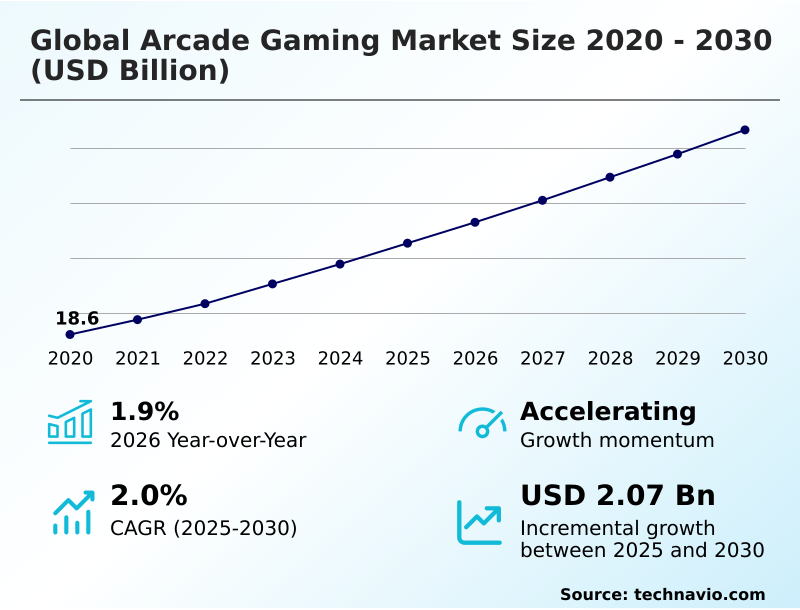
The arcade gaming market size is valued to increase by USD 2.07 billion, at a CAGR of 2% from 2025 to 2030. Rise of immersive and competitive socializing hubs will drive the arcade gaming market.
Major Market Trends & Insights
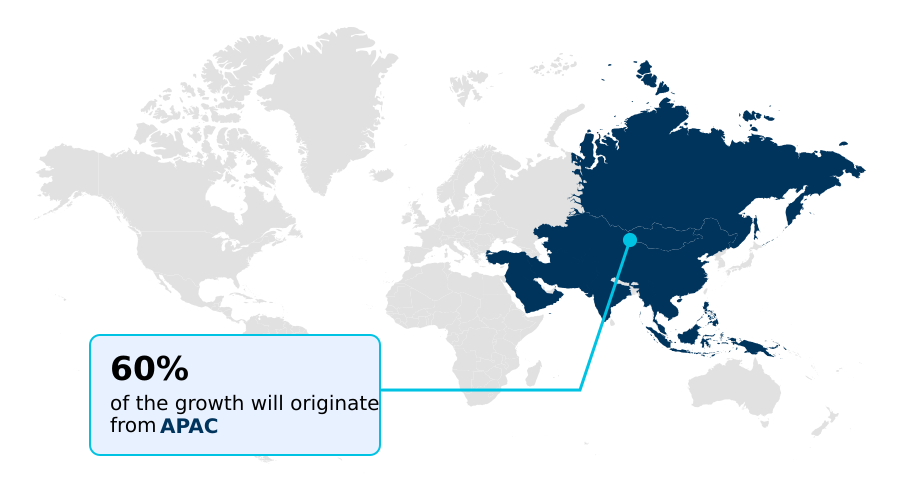
- APAC dominated the market and accounted for a 60.4% growth during the forecast period.
- By End-user - Gaming hubs segment was valued at USD 15.95 billion in 2024
- By Genre - Racing segment accounted for the largest market revenue share in 2024
Market Size & Forecast
- Market Opportunities: USD 3.72 billion
- Market Future Opportunities: USD 2.07 billion
- CAGR from 2025 to 2030 : 2%
Market Summary
- The arcade gaming market is defined by the ecosystem of pay-per-play entertainment hardware and software designed for out-of-home public venues. This industry encompasses traditional video cabinets, electromechanical games, and high-fidelity attractions like virtual reality platforms and motion simulators. These systems are engineered for durability in high-traffic environments, utilizing specialized hardware and cashless payment systems.
- The sector's relevance is maintained by offering unique physical interactions and high-end technological experiences that are difficult to replicate in a domestic setting, making it a vital component of the broader location-based entertainment industry. A key business scenario involves operators leveraging player behavior analytics from these connected machines to optimize game floor layouts and maintenance schedules, directly impacting profitability.
- However, the industry grapples with intense competition from home and mobile gaming, requiring continuous innovation in high-throughput attractions and social gameplay to retain a diverse demographic.
What will be the Size of the Arcade Gaming Market during the forecast period?
Get Key Insights on Market Forecast (PDF) Request Free Sample
How is the Arcade Gaming Market Segmented?
The arcade gaming industry research report provides comprehensive data (region-wise segment analysis), with forecasts and estimates in "USD million" for the period 2026-2030, as well as historical data from 2020-2024 for the following segments.
- End-user
- Gaming hubs
- Semi-commercial
- Residential
- Genre
- Racing
- Shooting
- Sports
- Action
- Type
- Video games
- Simulation games
- Mechanical games
- Geography
- APAC
- Japan
- China
- South Korea
- North America
- US
- Canada
- Mexico
- Europe
- UK
- Germany
- France
- Middle East and Africa
- UAE
- South Africa
- Saudi Arabia
- South America
- Brazil
- Argentina
- Colombia
- Rest of World (ROW)
- APAC
By End-user Insights
The gaming hubs segment is estimated to witness significant growth during the forecast period.
Gaming hubs, including family entertainment centers and dedicated amusement arcades, are the primary end-user segment.
These high-traffic destinations for shared social experiences are shifting toward competitive socializing, integrating coin-operated entertainment with boutique bowling and upscale dining to attract a broader demographic. This pivot requires sophisticated redemption arcade games and immersive virtual reality platforms.
Venues are leveraging digital card readers and cashless systems for frictionless transactions, enhancing operational efficiency and guest retention.
The focus is on offering high-performance hardware and large-scale motion-based racing simulators that are not replicable at home, maintaining their role as the location-based entertainment industry.
While this model drives engagement, some large-scale operators have reported a 5.0% decline in comparable store sales amid rising operational costs.
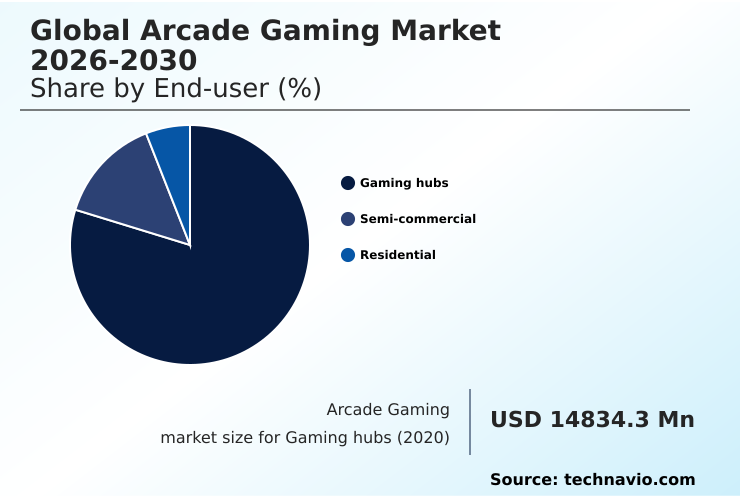
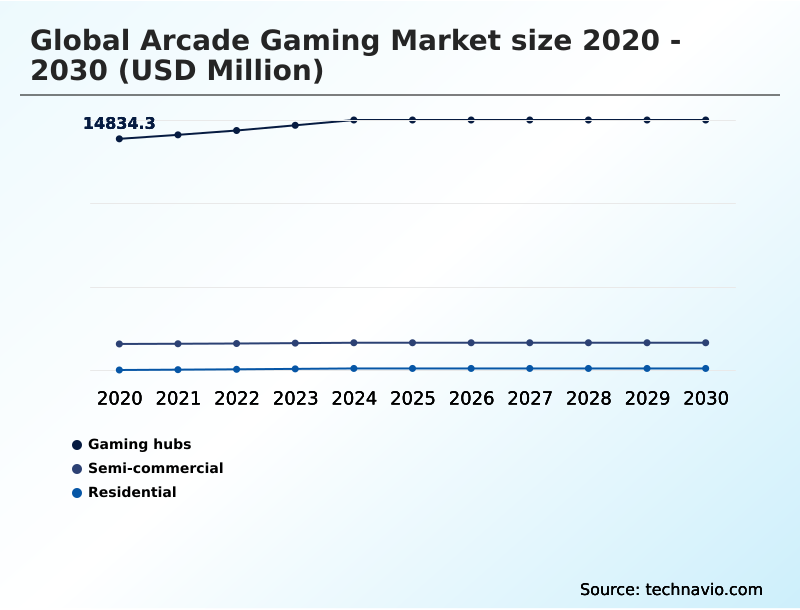
The Gaming hubs segment was valued at USD 15.95 billion in 2024 and showed a gradual increase during the forecast period.
Regional Analysis
APAC is estimated to contribute 60.4% to the growth of the global market during the forecast period.Technavio’s analysts have elaborately explained the regional trends and drivers that shape the market during the forecast period.
See How Arcade Gaming Market Demand is Rising in APAC Request Free Sample
The geographic landscape is dominated by the APAC region, which serves as a primary engine for both hardware production and software innovation, driven by a deep-rooted amusement culture.
Japan continues to lead in technological advancement with gesture-based arcade games and AI town systems, while China's massive manufacturing base supports the development of high-fidelity simulation hardware and interactive therapy gaming.
North America is characterized by a transition to large-scale entertainment models, although operators face significant overheads; in certain US urban hubs, data center expansion has pushed local power prices up by as much as 267%.
Europe is seeing a renaissance in competitive socializing venues, integrating augmented reality overlays and eco-friendly modular hardware design to meet regional standards.
Market Dynamics
Our researchers analyzed the data with 2025 as the base year, along with the key drivers, trends, and challenges. A holistic analysis of drivers will help companies refine their marketing strategies to gain a competitive advantage.
- Strategic planning in the arcade gaming market necessitates a deep understanding of evolving technologies and operational efficiencies. The impact of AI on arcade cabinet design is profound, enabling dynamic difficulty and personalized experiences. Concurrently, VR motion simulator latency reduction techniques are critical for creating immersive, comfortable attractions that justify premium pricing.
- The shift to cashless payment system integration for arcades is no longer optional, with security measures for unattended payment kiosks becoming a key investment area. Operationally, predictive maintenance for amusement machines is essential for maximizing uptime, directly influencing the ROI of high-fidelity arcade attractions.
- Operators use data analytics for player engagement optimization and develop player retention strategies in arcade gaming to build a loyal customer base. The future of electromechanical games in arcades depends on successful retro arcade cabinet restoration and modernization, often blending classic mechanics with digital enhancements. This is part of a broader digital ecosystem strategy for entertainment centers.
- On the hardware side, firms are constantly comparing haptic feedback in arcade games and refining designs for high-throughput redemption games. The competitive analysis of arcade racing simulators informs R&D, while the industry also explores integrating AR into traditional arcade games.
- The entire value chain is affected by supply chain risks for electronic amusement equipment, which have increased operational costs by over 10% in some cases, and the need for regulatory compliance for arcade gaming hardware. Developing successful social immersive entertainment business models and adapting console IPs for arcade cabinets are key growth strategies, ensuring both innovation and market relevance.
- Finally, a focus on energy efficiency in family entertainment centers is becoming a crucial factor for long-term sustainability.
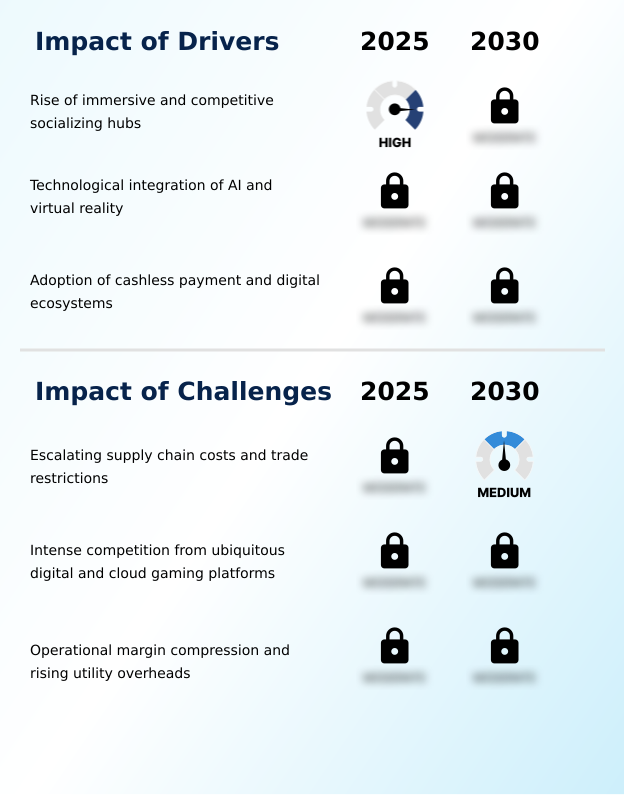
What are the key market drivers leading to the rise in the adoption of Arcade Gaming Industry?
- The rise of immersive and competitive socializing hubs serves as a key driver for market growth by creating destination venues.
- Technological innovation, particularly the convergence of AI with high-fidelity motion simulation, serves as a significant driver, enhancing the value of modern arcade cabinets.
- Manufacturers are focused on creating superior sensory experiences, exemplified by the debut of VR platforms with advanced haptic feedback technology.
- The widespread adoption of cashless payment systems and unified digital ecosystems is another critical driver, streamlining operations and improving the user experience.
- These systems facilitate frictionless transactions and loyalty rewards, with implementations showing a potential to boost repeat visits by up to 25%.
- Furthermore, the use of predictive maintenance and real-time performance analytics helps operators reduce machine downtime, which can improve overall revenue capture by 5% in high-traffic venues.
What are the market trends shaping the Arcade Gaming Industry?
- The expansion of hybrid family entertainment centers and integrated social amusement hubs represents a primary upcoming market trend. This shift caters to a growing consumer demand for comprehensive and varied leisure experiences.
- A dominant trend is the integration of traditional amusement machines into multifaceted social amusement hubs and hybrid family entertainment centers, extending guest dwell time. This model prioritizes high-throughput attractions and unattended systems to maximize peak-period efficiency.
- The focus on premium interactive experiences is evident in the adoption of high-fidelity virtual reality platforms and sophisticated motion simulation, which deliver sensory interactions impossible to replicate at home. In some venues, this has led to a 15% increase in average spend per visit.
- The adoption of digital wallet integration and other unattended payment solutions is also reshaping backend efficiency, with cloud-based operations providing real-time visibility into machine use, which has been shown to reduce hardware downtime by over 20%.
What challenges does the Arcade Gaming Industry face during its growth?
- Escalating supply chain costs and international trade restrictions represent a key challenge affecting the industry's growth and hardware procurement.
- A primary challenge is the intense competition from ubiquitous home console and cloud gaming platforms, which have narrowed the technical advantage of arcade cabinets. The convenience of subscription services also presents a difficult value proposition for location-based entertainment centers to match. Furthermore, operators face severe margin compression from rising operational costs.
- Electricity prices in some markets have surged by more than 12%, while tariffs on imported electronic components, such as those used in force feedback systems and prize redemption games, add significant financial pressure.
- These trade restrictions on amusement equipment have forced companies to seek more expensive alternative suppliers, increasing capital expenditure for new installations and limiting the ability of operators to refresh their coin pusher machines and other hardware.
Exclusive Technavio Analysis on Customer Landscape
The arcade gaming market forecasting report includes the adoption lifecycle of the market, covering from the innovator’s stage to the laggard’s stage. It focuses on adoption rates in different regions based on penetration. Furthermore, the arcade gaming market report also includes key purchase criteria and drivers of price sensitivity to help companies evaluate and develop their market growth analysis strategies.
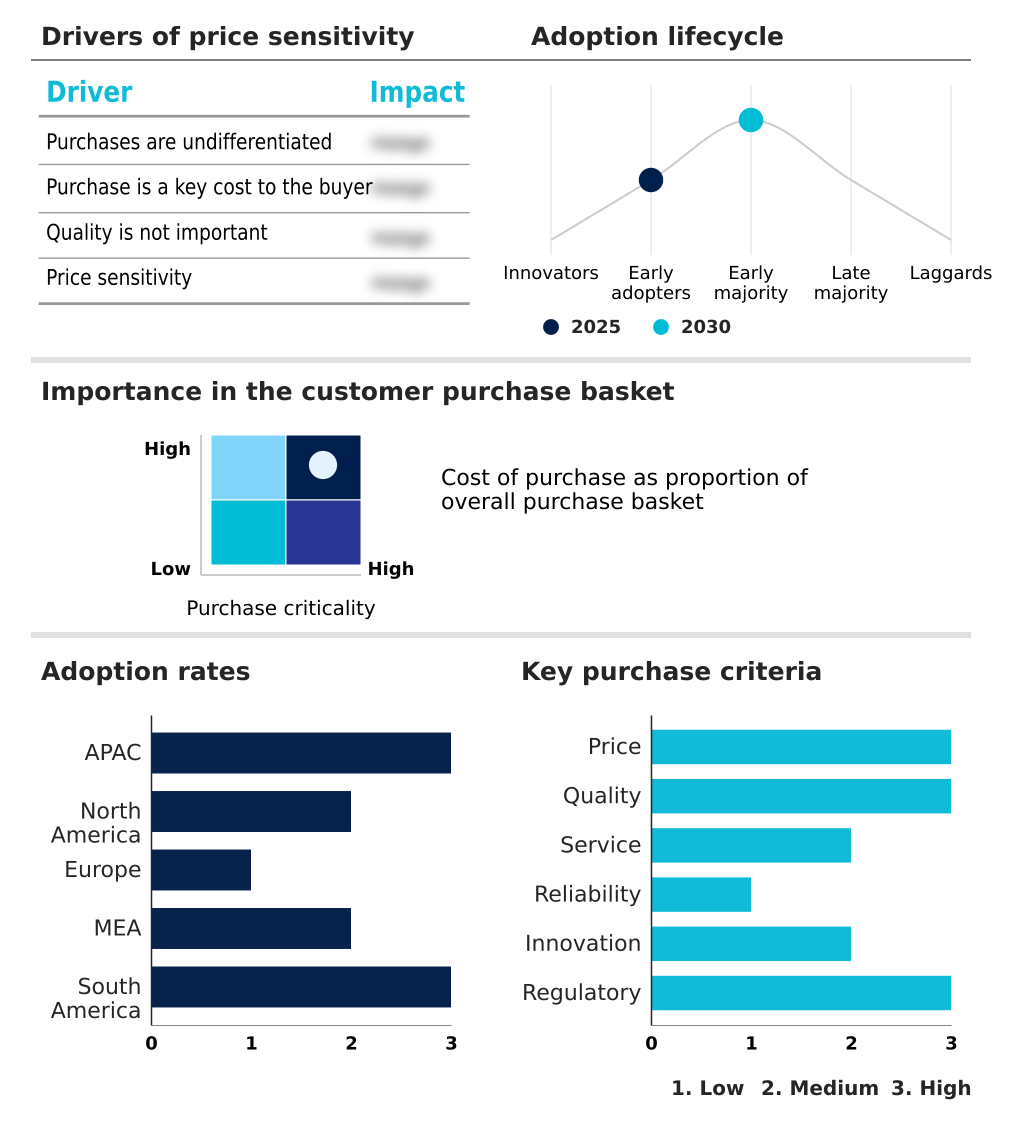
Customer Landscape of Arcade Gaming Industry
Competitive Landscape
Companies are implementing various strategies, such as strategic alliances, arcade gaming market forecast, partnerships, mergers and acquisitions, geographical expansion, and product/service launches, to enhance their presence in the industry.
Adrenaline Amusements Inc. - Analysis focuses on high-fidelity arcade systems, including immersive simulators and redemption games, designed for out-of-home entertainment venues.
The industry research and growth report includes detailed analyses of the competitive landscape of the market and information about key companies, including:
- Adrenaline Amusements Inc.
- Andamiro Co. Ltd.
- Bandai Namco Amusement Inc.
- Barron Games International
- Bay Tek Entertainment Inc.
- Benchmark Games Inc.
- Bobs Space Racers Inc.
- Chicago Gaming Co.
- Coastal Amusements Inc.
- Elaut Group
- Incredible Technologies Inc.
- Jersey Jack Pinball Inc.
- LAI Games
- Play Mechanix Inc.
- Raw Thrills Inc.
- Sega Amusements International
- Smart Industries Corporation
- Stern Pinball Inc.
- TouchMagix Media Pvt. Ltd.
- UNIS Technology Ltd.
Qualitative and quantitative analysis of companies has been conducted to help clients understand the wider business environment as well as the strengths and weaknesses of key industry players. Data is qualitatively analyzed to categorize companies as pure play, category-focused, industry-focused, and diversified; it is quantitatively analyzed to categorize companies as dominant, leading, strong, tentative, and weak.
Recent Development and News in Arcade gaming market
- In May, 2025, Konami established a dedicated subsidiary, Konami Arcade Games, to focus exclusively on amusement operations and enhance responsiveness to market trends.
- In September, 2025, the entertainment brand Brass Monkey announced its expansion into Abu Dhabi with a planned opening at The Galleria Al Maryah Island, integrating arcade classics with social activities.
- In January, 2026, Raw Thrills Inc. released a significant content update for its popular videmption titles, illustrating a move toward the games-as-a-service model within the arcade space.
- In March, 2026, Adrenaline Amusements Inc. launched Disney Speedstorm Arcade at the Amusement Expo International, successfully converting a popular digital racing title into a dedicated cabinet experience.
Dive into Technavio’s robust research methodology, blending expert interviews, extensive data synthesis, and validated models for unparalleled Arcade Gaming Market insights. See full methodology.
| Market Scope | |
|---|---|
| Page number | 292 |
| Base year | 2025 |
| Historic period | 2020-2024 |
| Forecast period | 2026-2030 |
| Growth momentum & CAGR | Accelerate at a CAGR of 2% |
| Market growth 2026-2030 | USD 2066.7 million |
| Market structure | Fragmented |
| YoY growth 2025-2026(%) | 1.9% |
| Key countries | Japan, China, South Korea, India, Australia, Indonesia, US, Canada, Mexico, UK, Germany, France, Italy, Spain, The Netherlands, UAE, South Africa, Saudi Arabia, Turkey, Israel, Brazil, Argentina and Colombia |
| Competitive landscape | Leading Companies, Market Positioning of Companies, Competitive Strategies, and Industry Risks |
Research Analyst Overview
- The arcade gaming market is evolving from a model based on standalone machines to integrated social ecosystems. This transition is driven by the need to create unique, non-replicable out-of-home experiences. Core to this shift is the deployment of coin-operated entertainment within larger competitive socializing venues that combine gameplay with hospitality.
- The technological backbone of these modern centers relies on high-fidelity motion simulation, advanced virtual reality platforms, and networked systems for cross-platform connectivity. Boardroom decisions are now heavily influenced by the need to invest in infrastructure that supports data-driven operational management, including cloud-based operations hubs and real-time performance analytics.
- These systems are critical for optimizing revenue and managing costs, with some operators achieving a 15% improvement in machine rotation efficiency. The focus is on leveraging player behavior analytics to enhance the guest journey and drive repeat business, ensuring the continued relevance and profitability of physical arcade installations.
What are the Key Data Covered in this Arcade Gaming Market Research and Growth Report?
-
What is the expected growth of the Arcade Gaming Market between 2026 and 2030?
-
USD 2.07 billion, at a CAGR of 2%
-
-
What segmentation does the market report cover?
-
The report is segmented by End-user (Gaming hubs, Semi-commercial, and Residential), Genre (Racing, Shooting, Sports, and Action), Type (Video games, Simulation games, and Mechanical games) and Geography (APAC, North America, Europe, Middle East and Africa, South America)
-
-
Which regions are analyzed in the report?
-
APAC, North America, Europe, Middle East and Africa and South America
-
-
What are the key growth drivers and market challenges?
-
Rise of immersive and competitive socializing hubs, Escalating supply chain costs and trade restrictions
-
-
Who are the major players in the Arcade Gaming Market?
-
Adrenaline Amusements Inc., Andamiro Co. Ltd., Bandai Namco Amusement Inc., Barron Games International, Bay Tek Entertainment Inc., Benchmark Games Inc., Bobs Space Racers Inc., Chicago Gaming Co., Coastal Amusements Inc., Elaut Group, Incredible Technologies Inc., Jersey Jack Pinball Inc., LAI Games, Play Mechanix Inc., Raw Thrills Inc., Sega Amusements International, Smart Industries Corporation, Stern Pinball Inc., TouchMagix Media Pvt. Ltd. and UNIS Technology Ltd.
-
Market Research Insights
- The market's dynamics are shaped by a strategic pivot towards high-value premium interactive experiences within multi-attraction facilities. This shift is essential to counter rising operational costs, with electricity expenses in some regions increasing by 12.7%, significantly outpacing general inflation. Operators are implementing advanced data-driven operational management and loyalty reward programs to improve margins and enhance guest journey optimization.
- The adoption of cloud infrastructure services for live service architectures enables dynamic content updates and centralized monitoring. This digital transformation is critical, as a focus on creating unique social amusement hubs is the primary strategy for competing against the convenience of at-home entertainment, where an improved ROI is now a key performance metric for venue operators.
We can help! Our analysts can customize this arcade gaming market research report to meet your requirements.
 RIA -
RIA -