



Artificial Intelligence (AI) In Sports Market Size 2024-2028
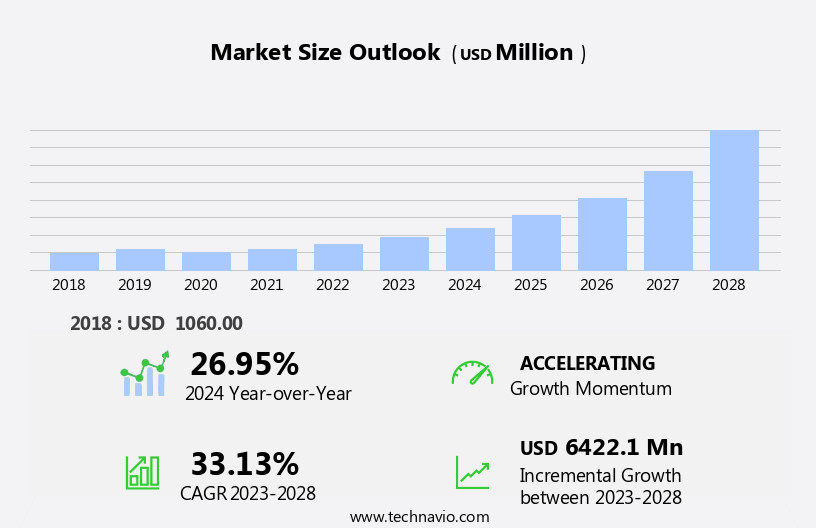
The artificial intelligence (ai) in sports market size is forecast to increase by USD 6.42 billion at a CAGR of 33.13% between 2023 and 2028.
- The market is experiencing significant growth, driven by the increasing demand for data integration and visual analytics in the sports industry. The integration of AI technologies enables sports teams and organizations to gain valuable insights from vast amounts of data, leading to improved performance and fan engagement. Moreover, the adoption of cloud-based AI solutions is on the rise, offering cost-effective and scalable alternatives to traditional on-premises systems. However, the market faces a notable challenge: the lack of a skilled workforce capable of developing and implementing AI algorithms. This shortage of expertise poses a significant obstacle for teams and organizations seeking to capitalize on the potential of AI in sports.
- To overcome this challenge, companies are exploring partnerships with AI companies and academic institutions, as well as investing in training and upskilling their existing workforce. Effective collaboration and strategic workforce development initiatives will be crucial for organizations looking to stay competitive in the rapidly evolving AI in Sports market.
What will be the Size of the Artificial Intelligence (AI) In Sports Market during the forecast period?
How is this Artificial Intelligence (AI) In Sports Industry segmented?
The artificial intelligence in sport market research report provides comprehensive data (region-wise segment analysis), with forecasts and estimates in "USD million" for the period 2024-2028, as well as historical data from 2018-2022 for the following segments.
- Type
- Football
- Cricket
- Tennis
- Basketball
- Other
- Offering
- Solution
- Services
- Fan engagement & Experience enhancement
- Solution
- Services
- Fan engagement & Experience enhancement
- Sport Type
- Team Sports
- Individual Sports
- E-Sport
- Team Sports
- Individual Sports
- E-Sport
- Technology
- Machine Learning
- Computer Vision
- Natural Language Processing
- Application
- Athlete Performance
- Fan Engagement
- Injury Prevention
- Game Strategy
- Geography
- North America
- US
- Canada
- Mexico
- Europe
- France
- Germany
- Italy
- Spain
- UK
- Middle East and Africa
- UAE
- APAC
- China
- India
- Japan
- South Korea
- South America
- Brazil
- Rest of World (ROW)
- North America
By Type Insights
The football segment is estimated to witness significant growth during the forecast period.
In the dynamic world of sports, Artificial Intelligence (AI) is revolutionizing various aspects, from recruitment and scouting to fan engagement. The football segment dominates the global AI market due to the integration of technologies like IoT devices, GPS trackers, and computer vision algorithms for player and ball movement tracking. Machine learning platforms, text analytics, robotic process automation, image and video analysis, deep learning, and speech recognition are driving growth. AI-powered coaching, predictive modeling, and performance measurement offer personalized training plans, while natural language processing facilitates social media integration and fan experience enhancement. Sports betting, fantasy sports, and sponsorship management also benefit from AI's predictive capabilities.
Smart stadiums, skill development, and sports governance are further areas of application. Computer vision, deep learning, and data-driven decision making optimize game strategy, performance, and fan engagement. Wearable technology, player health monitoring, and injury prediction are essential for athlete performance analysis and sports medicine. AI's role extends to referee assistance, fraud detection, ticket sales, and even game development with virtual athletes. The rise of AI in sports is a testament to the industry's embrace of technology, fostering a more immersive, harmonious, and data-driven sports ecosystem.
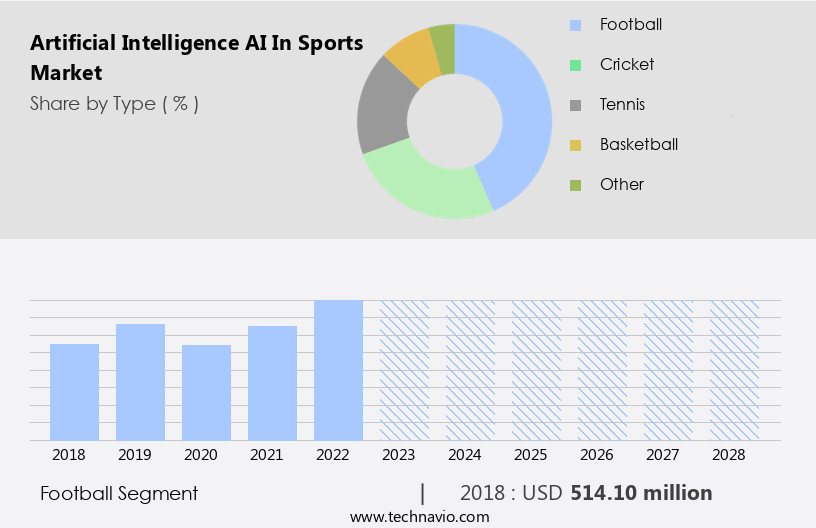
The Football segment was valued at USD 514.10 billion in 2018 and showed a gradual increase during the forecast period.
Regional Analysis
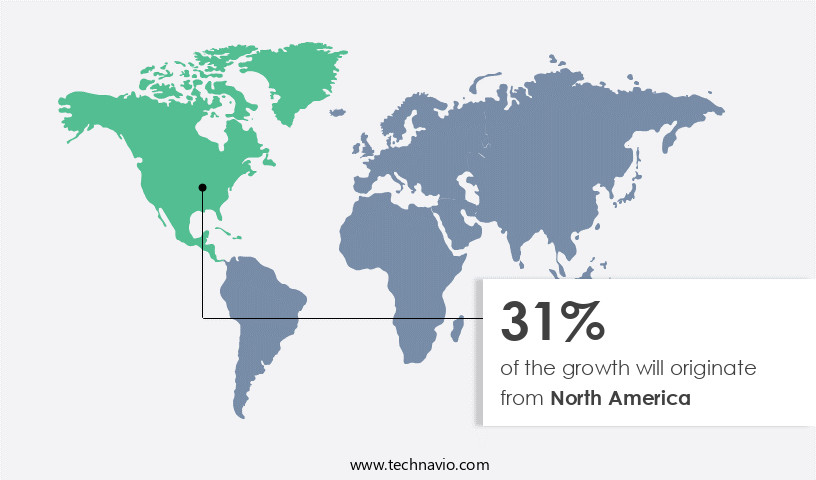
North America is estimated to contribute 31% to the growth of the global market during the forecast period.Technavio's analysts have elaborately explained the regional trends and drivers that shape the market during the forecast period.
In the dynamic world of sports, Artificial Intelligence (AI) is increasingly becoming a game-changer. Across North America, the use of AI is gaining momentum, driven by advanced economies such as the US and Canada. AI applications in sports span various sectors, from recruitment and scouting to player health and fan engagement. Management software in major sports events is a significant growth factor for the AI market in North America. AI-powered tools assist in fitness monitoring, motion capture, personalized recommendations, and game strategy optimization. Machine learning algorithms enable predictive modeling and performance measurement, while computer vision and deep learning facilitate athlete performance analysis and skill assessment.
The US market is particularly active, with a growing emphasis on technological developments and increased adoption rates. AI applications include sports analytics, wearable technology, and virtual athletes, all contributing to data-driven decision making and real-time analysis. Smart stadiums, sponsorship management, and team management systems are other areas where AI is making an impact. Injury prediction, fraud detection, and fan experience enhancement are other applications of AI in sports. AI-powered coaching and player tracking systems help optimize training regimens and performance. Sports broadcasting and ticket sales also benefit from AI, with automated replay systems, fan engagement, and ticket pricing based on demand.
AI's integration with natural language processing, gaming simulations, and social media further expands its reach. Fantasy sports, skill development, and sports governance are additional sectors where AI is making a mark. The future of AI in sports is promising, with continuous innovation and advancements in technology.
Market Dynamics
Our researchers analyzed the data with 2023 as the base year, along with the key drivers, trends, and challenges. A holistic analysis of drivers will help companies refine their marketing strategies to gain a competitive advantage.
The artificial intelligence in sport market is transforming athletic performance and fan experiences through cutting-edge technologies. Solutions like AI analytics for player performance in sports and real-time data analytics for sports teams are optimizing training and game strategies. AI-powered injury prevention in athletics and wearable AI technology for player monitoring enhance athlete safety and health. Leagues are adopting fan engagement AI solutions for sports leagues to personalize experiences. Meanwhile, predictive modeling for sports betting platforms is improving accuracy. Innovations such as AI-driven virtual coaching for athletes, computer vision for sports video analysis, and generative AI for sports content creation are reshaping the industry.
What are the key market drivers leading to the rise in the adoption of AI In Sports Industry?
- The escalating need for data integration and visual analytics is the primary market catalyst, fueling growth in this sector. The increasing data proliferation and complexities have made the process of deploying and maintaining reliable data interfaces difficult. Therefore, enterprises across the world are adopting data integration solutions. AI in construction allows real-time synthesizing of data to facilitate real-time analysis for effective decision-making, thereby enabling enterprises to monitor, transform, and deliver data, understand business processes, and bridge the gap between businesses and IT. Similarly, AI in sports helps companies to integrate technical and process data from different sources and convert them into meaningful business insights.Vendors operating in the market are introducing AI-based software to increase AI capabilities of analytics. AI solutions analyze the visual track movement of players and balls. With the exponential increase in data volume, the need for analysing, transforming, monitoring, and interpreting data has become a priority for monitoring activity. Hence, the demand for AI in sports is likely to increase significantly during the forecast period.
What are the market trends shaping the AI In Sports Industry?
- The increasing adoption of cloud-based solutions is a significant market trend. This shift towards cloud technology is driven by the benefits it offers, such as flexibility, cost savings, and enhanced security.
- The increasing application of robotics in repetitive and complex tasks such as monitoring the position of players is increasingly seeking avenues to ensure the elimination of limitations of technologies. These limitations arise due to factors such as the cost, computational capacity, storage, size, power supply, and a motion mode. The adoption of cloud-based AI solutions is increasing in sports to improve the capabilities of the existing systems. The emergence of AI-as-a-service (AIaaS) in sports is trending among users of AI, as it allows companies to access AI for various applications without heavy initial investment and lowers the risk of failure. AIaaS in sports can allow companies to experiment on samples of multiple public cloud platforms to test various machine learning algorithms. It helps vendors operating in the market to increase their awareness regarding AI and its benefits, such as efficiency and maintenance of a companies sales and marketing department, customer relation department, and risk management of financial and consumer behavior change plans. Alphabet, IBM, Microsoft, and several other companies are investing heavily in the development of predictive.
What challenges does the AI In Sports Industry face during its growth?
- The insufficient supply of proficient workforce capable of creating AI algorithms poses a significant challenge to the industry's expansion. End-user companies using AI on their IT platforms must have a thorough knowledge of the working of AI software platforms and periodically update specific information to ensure smooth operations. The lack of technical knowledge often deters end-users from adopting AI in their IT platforms, particularly in developing countries, such as the US, Brazil, Japan, and India, where end-users are reluctant to learn and adopt new technologies. Vendors must offer both online and offline training and consultation to ensure that end-users obtain the maximum benefits of AI. The lack of skilled operators and proper training adversely affects the execution of wide-scale automation, as substantial time, training, and budget have to be allocated for the successful implementation of AI on IT platforms. The scenario is likely to change gradually after the covid, with more end-users transitioning from traditional manual operations to automated functions to improve process efficiency during the forecast period. Successful analysis requires technical and functional expertise. End-users such as contractors and engineers use AI in their IT platforms for predictive maintenance and optimization of sales and marketing channels. However, the use of AI for analytics is challenging, requiring additional domain knowledge. An understanding of analytics is integral to the implementation of AI in sports. Such factors are expected to be a major challenge for the global AI market in sports during the forecast period.
Exclusive Customer Landscape
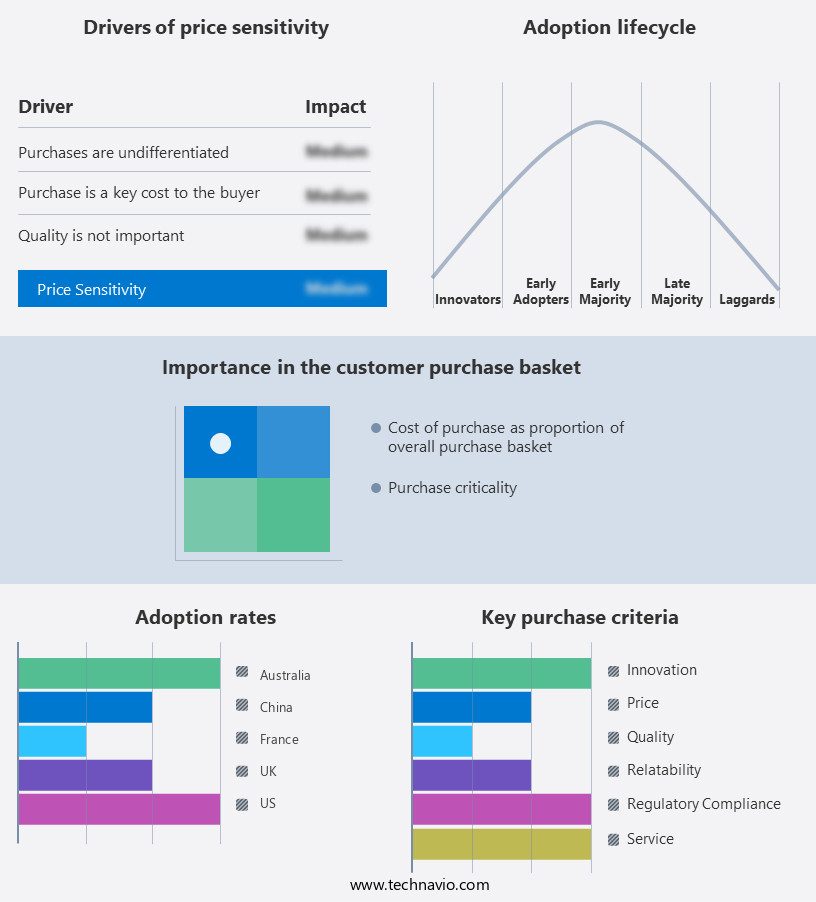
The artificial intelligence in sports market forecasting report includes the adoption lifecycle of the market, covering from the innovator's stage to the laggard's stage. It focuses on adoption rates in different regions based on penetration. Furthermore, the artificial intelligence in sports market report also includes key purchase criteria and drivers of price sensitivity to help companies evaluate and develop their market growth analysis strategies.
Customer Landscape
Key Companies & Market Insights
Companies are implementing various strategies, such as strategic alliances, artificial intelligence (ai) in sports market forecast, partnerships, mergers and acquisitions, geographical expansion, and product/service launches, to enhance their presence in the industry.
Catapult Group International - The company specializes in artificial intelligence technology, specifically in the sports sector. Our offering includes the advanced Versal AI Core series. This cutting-edge solution leverages machine learning algorithms to analyze data and provide insights, enhancing decision-making processes for sports organizations. By utilizing AI, teams can optimize performance, improve strategic planning, and gain a competitive edge. The technology's ability to process vast amounts of data in real-time sets it apart, offering unparalleled accuracy and efficiency. The Versal AI Core series is a game-changer, revolutionizing the way sports data is analyzed and utilized.
The industry research and growth report includes detailed analyses of the competitive landscape of the market and information about key companies, including:
- Catapult Group International
- Stats Perform
- IBM Sports
- Second Spectrum
- Sportradar
- Hudl
- Zelus Analytics
- Kitco
- PlaySight Interactive
- Trace
- Genius Sports
- FanAI
- Sportlogiq
- NexTeam
- SAP Sports One
- Atos SE
- Capgemini SE
- Tencent Sports
- Alibaba Sports
- Orreco
Qualitative and quantitative analysis of companies has been conducted to help clients understand the wider business environment as well as the strengths and weaknesses of key industry players. Data is qualitatively analyzed to categorize companies as pure play, category-focused, industry-focused, and diversified; it is quantitatively analyzed to categorize companies as dominant, leading, strong, tentative, and weak.
Recent Development and News in Artificial Intelligence (AI) In Sports Market
- In February 2024, IBM and Major League Soccer (MLS) announced a multi-year partnership to leverage IBM's AI technology for player performance analysis and fan engagement. This collaboration marked a significant stride in the application of AI in sports, enabling real-time data analysis and personalized fan experiences (IBM Press Release, 2024).
- In October 2024, Microsoft's Azure AI platform was selected by the National Basketball Association (NBA) to power its next-generation statistics and analytics system. This deal represented a major strategic move by the NBA to harness AI capabilities for enhancing game analysis and fan engagement (Microsoft News Center, 2024).
- In March 2025, Google's DeepMind AI subsidiary unveiled a new AI system designed to predict the outcome of tennis matches with remarkable accuracy. The system, trained on historical match data, was showcased to outperform human experts in predicting the winners of Grand Slam tournaments (DeepMind Blog, 2025).
Research Analyst Overview
Artificial Intelligence (AI) continues to revolutionize the sports industry, with dynamic market activities unfolding across various sectors. Fitness monitoring and personalized recommendations are transforming athlete performance, while AI-powered sports coaching optimizes training regimens. Natural language processing and machine learning algorithms enhance fan engagement and sponsorship management. In the realm of sports betting, predictive modeling and data-driven decision making offer new opportunities for automated insights. Computer vision and deep learning enable player health monitoring, injury prediction, and referee assistance. Motion capture and video analytics facilitate skill development and talent identification. AI applications extend to game strategy optimization, automated replay systems, and game development.
The market is rapidly advancing with technologies like Catapult One smart vests and HomeCourt AI apps enhancing player development. Tools such as Second Spectrum analytics and Zone7 injury prediction tools enable AI-powered injury forecasting and real-time biomechanical analysis. Platforms like Veritone Digital Media Hub and Hawk-Eye video analysis systems support automated sports journalism and decision-making. Innovations including AI-infused soccer balls, smart tennis rackets, and wearable fitness trackers offer precise tracking, while cloud-based AI analytics and wearable sensor integration deepen performance insights. From predictive game outcome models to personalized fan experience platforms, AI is redefining sports strategy, safety, and entertainmen
Interactive content, data visualization, and fan experience enhancement create immersive environments. Wearable technology and real-time data analysis provide personalized training plans and performance measurement. Sports governance and team management benefit from AI-driven insights, while fraud detection and player tracking systems ensure fair play. AI-powered broadcasting and skill assessment cater to diverse fan interests. The ongoing evolution of AI in sports is reshaping the industry, with continuous innovation and integration into ticket sales and beyond.
In the dynamic sports market, AI technologies are revolutionizing various aspects, from sports betting analytics to esports and traditional sports. AI-powered applications offer actionable insights for sports teams and organizations, enabling data-driven decision-making and performance enhancement. However, data privacy and ethical considerations are crucial as these technologies process vast amounts of personal data. Bias detection and algorithmic fairness are essential in ensuring sports governance and maintaining a level playing field. Immersive technology, such as VR and AR, combined with sports innovation, enhances fan experiences and provides new opportunities for data-driven marketing. Sports simulation and cognitive performance analysis help in player development, while fitness tracking and performance evaluation cater to individual athlete improvement.
Smart devices and remote coaching enable real-time feedback and support, contributing to the digital transformation of sports. AI integration in sports technology extends to sports psychology, automated reporting, skill acquisition, and personalized experiences, making training more effective and efficient. However, as AI becomes more prevalent, addressing ethical considerations and ensuring data security remains a priority.
Dive into Technavio's robust research methodology, blending expert interviews, extensive data synthesis, and validated models for unparalleled Artificial Intelligence (AI) In Sports Market insights. See full methodology.
|
Market Scope |
|
|
Report Coverage |
Details |
|
Page number |
146 |
|
Base year |
2023 |
|
Historic period |
2018-2022 |
|
Forecast period |
2024-2028 |
|
Growth momentum & CAGR |
Accelerate at a CAGR of 33.13% |
|
Market growth 2024-2028 |
USD 6422.1 million |
|
Market structure |
Fragmented |
|
YoY growth 2023-2024(%) |
26.95 |
|
Key countries |
US, China, Germany, Canada, India, South Korea, France, Japan, Italy, Brazil, UAE, UK, Spain, and Mexico |
|
Competitive landscape |
Leading Companies, Market Positioning of Companies, Competitive Strategies, and Industry Risks |
What are the Key Data Covered in this Artificial Intelligence (AI) In Sports Market Research and Growth Report?
- CAGR of the Artificial Intelligence (AI) In Sports industry during the forecast period
- Detailed information on factors that will drive the growth and forecasting between 2024 and 2028
- Precise estimation of the size of the market and its contribution of the industry in focus to the parent market
- Accurate predictions about upcoming growth and trends and changes in consumer behaviour
- Growth of the market across North America, Europe, APAC, Middle East and Africa, and South America
- Thorough analysis of the market's competitive landscape and detailed information about companies
- Comprehensive analysis of factors that will challenge the artificial intelligence (ai) in sports market growth of industry companies
We can help! Our analysts can customize this artificial intelligence (ai) in sports market research report to meet your requirements.