


Australia Methane Sensors Market Size 2025-2029
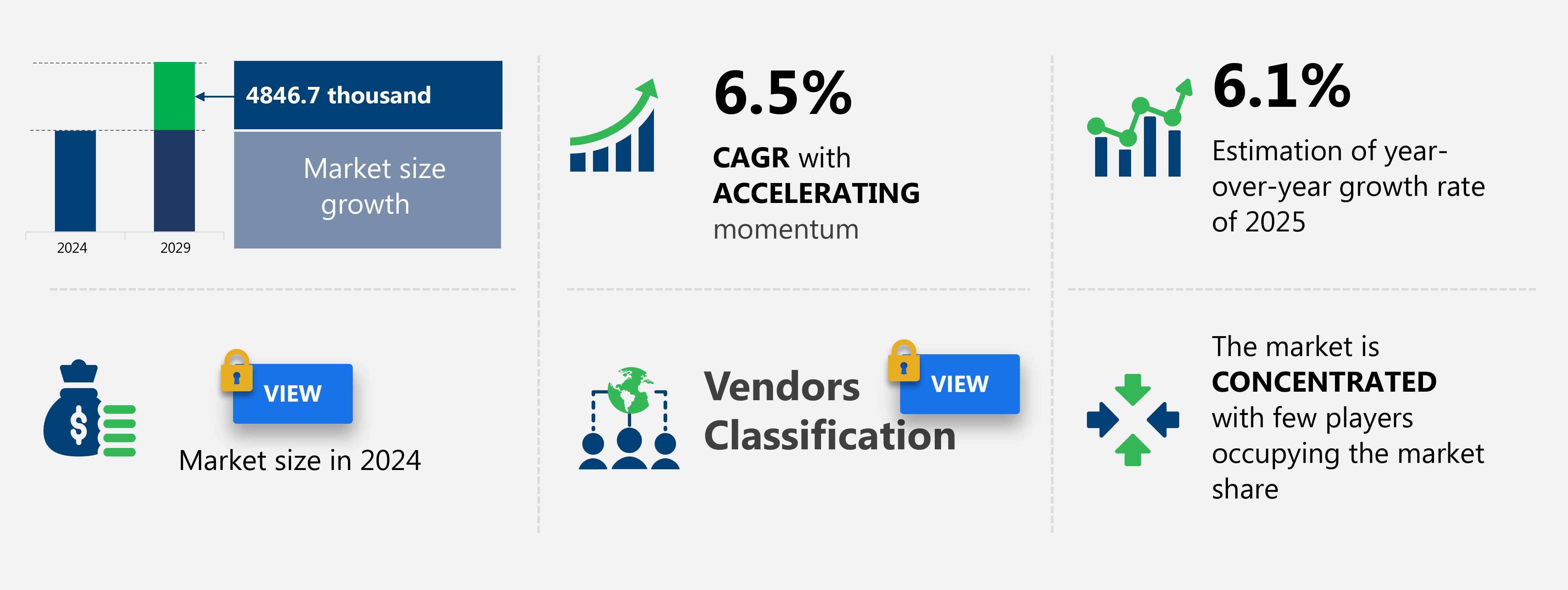
The methane sensors market in Australia size is forecast to increase by USD 4,846.7 thousand at a CAGR of 6.5% between 2024 and 2029.
- The market is witnessing significant growth due to several key trends and drivers. One of the primary factors fueling market growth is the increasing environmental regulations. Governments worldwide are imposing stringent rules to reduce greenhouse gas emissions, particularly methane, which is a potent contributor to global warming. This has led to the widespread adoption in various industries, including oil and gas, agriculture, and wastewater treatment. Another trend driving market growth is the use of sensors in monitoring satellites. Methane sensors installed on satellites enable the continuous monitoring of methane emissions from various sources, including natural gas fields and wetlands. Applications include detection in hydrocarbon processing, ammonia production, batteries, and wastewater treatment.
- This data is crucial for understanding methane emissions and their impact on the environment. Regulatory requirements for gas sensors are also driving market growth. For instance, the US Environmental Protection Agency (EPA) has set regulations for the monitoring and reporting of methane emissions from various sources. This has led to an increase in demand to ensure compliance with these regulations. In summary, the market is expected to grow significantly due to increasing environmental regulations, the use of sensors in monitoring satellites, and regulatory requirements for gas sensors. These trends are driving the adoption in various industries, leading to market growth.
What will be the Size of the Market During the Forecast Period?
- The market encompasses a diverse range of applications, from air quality monitoring in smart cities to disaster response, toxic detection in healthcare and agriculture, and cost optimization in commercial buildings and industrial processes. Sensor technology continues to innovate, offering portable devices, integration with control systems, and real-time data analysis for enhanced safety and compliance. Calibration services are essential for maintaining accuracy and ensuring the longevity, while regulations drive demand for reliable and compliant methane detection systems.
- Moreover, methane sensors play a crucial role in various industries, including automotive, building automation, electric vehicles, and food safety. Their benefits extend to leak detection, safety testing, and compliance with environmental regulations. Portable detectors offer flexibility for on-site monitoring, while alarm systems provide early warning for potential hazards. Distributors and consulting firms offer expertise in methane sensor selection, installation, and maintenance. Overall, the market is poised for growth, driven by increasing awareness of the environmental impact of methane emissions and the need for advanced monitoring and control systems.
How is this market segmented and which is the largest segment?
The market research report provides comprehensive data (region-wise segment analysis), with forecasts and estimates in "USD thousand" for the period 2025-2029, as well as historical data from 2019-2023 for the following segments.
- Type
- Catalytic bead sensors
- Non-dispersive infrared sensors
- Application
- Oil and gas
- Water treatment
- Mining
- Others
- Technology
- Wired
- Wireless
- Geography
- Australia
- Australia
- Australia
By Type Insights
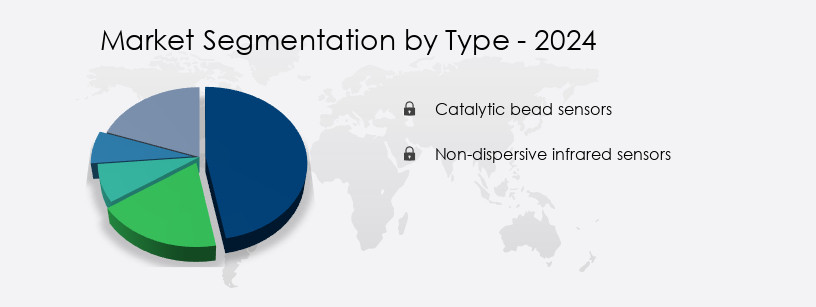
- The catalytic bead sensors segment is estimated to witness significant growth during the forecast period.
Methane sensors, specifically catalytic bead sensors, play a crucial role in various industries in Australia due to their reliability and cost-effectiveness. These sensors detect methane gas by oxidizing it on a heated catalytic bead, resulting in a measurable resistance change. They are widely used in mining, oil and gas, and industrial applications where methane presence is a safety concern. Catalytic bead sensors offer cost advantages compared to other methane detection technologies, making them an attractive choice for budget-conscious industries. Key industries utilizing these sensors include automotive safety, atmospheric pollution, emissions monitoring, and critical industries such as factories and energy production.
Catalytic bead sensors also find use in predictive maintenance for vehicles and continuous monitoring for pipelines. IoT integration enables data analytics and energy consumption optimization. These sensors contribute to personnel safety, reducing harmful emissions of methane, carbon dioxide, carbon monoxide, and other hazardous gases. In the context of climate change, methane sensors help mitigate greenhouse gas emissions and improve fuel efficiency in the automotive and energy sectors.
Get a glance at the market report of share of various segments Request Free Sample
Market Dynamics
Our market researchers analyzed the data with 2024 as the base year, along with the key drivers, trends, and challenges. A holistic analysis of drivers will help companies refine their marketing strategies to gain a competitive advantage.
What are the key market drivers leading to the rise in adoption of Australia Methane Sensors Market?
Environmental regulations is the key driver of the market.
- Methane sensors play a crucial role in addressing environmental concerns, particularly in Australia, where regulatory frameworks mandate the monitoring and reduction of methane emissions. These sensors are essential for detecting and controlling methane, a potent greenhouse gas with a higher warming potential than carbon dioxide, contributing to climate change mitigation efforts. The National Greenhouse and Energy Reporting (NGER) Scheme is one such regulatory initiative in Australia, requiring companies to annually report their greenhouse gas emissions, energy production, and energy consumption if they meet specific thresholds. This data collection supports the development of national policies and programs and contributes to international emissions reporting. Beyond environmental regulations, methane sensors offer benefits in various industries. In the automotive sector, they enhance automotive safety by detecting hazardous toxins such as methane in fuel systems, ensuring the safety of personnel, and reducing the risk of thermal runaway.
- In the energy sector, methane sensors help monitor and measure methane emissions from natural gas production and pipelines, improving efficiency and reducing greenhouse gas emissions. Moreover, methane sensors find applications in critical industries like factories, oil and drilling, and wastewater treatment, ensuring personnel safety and maintaining production process efficiency. In the agricultural sector, methane sensors aid in predictive maintenance, optimizing energy consumption, and reducing methane emissions from livestock and manure management. Advancements in sensor technology, such as miniaturization, wireless capabilities, and IoT integration, enable the development of more sophisticated methane detection equipment, including infrared sensors and catalytic bead sensors. These advancements enhance the accuracy and reliability of methane detection, making it an indispensable tool for industries dealing with methane emissions. They also play a role in the transition to electric vehicle technology, detecting hydrocarbons and other harmful emissions from batteries, ensuring the safety and efficiency of electric vehicles. Overall, methane sensors are a vital component in addressing environmental concerns, improving industrial efficiency, and ensuring personnel safety across various industries.
What are the market trends shaping the Australia Methane Sensors Market?
Use of sensors in monitoring satellites is the upcoming trend in the market.
- Methane sensors play a crucial role in detecting hazardous toxins, such as methane, in various industries and applications. The integration of wireless capabilities in methane sensors enhances their functionality, enabling continuous monitoring in workplaces, critical industries, and atmospheric pollution control. In the automotive sector, methane sensors are essential for automotive safety and emissions control, contributing to greenhouse emission standards, fuel efficiency, and hydrocarbon measurements. The chemical industry relies for detecting ammonia leaks and ensuring personnel safety. In the energy sector, they are used for detecting emissions from pipelines, power plants, and refined petroleum products.
- Moreover, the miniaturization of these enable their use in batteries, electric vehicle technology, and IoT integration. The detection of methane emissions is crucial for predictive maintenance in vehicles and infrastructure, as well as for thermal runaway prevention in lithium-ion batteries. The market dynamics are driven by the need for human health protection, climate change mitigation, and energy consumption reduction. Applications include methane emission detection using catalytic bead sensors, laser-based detection, and infrared sensors for permafrost monitoring, lockdown systems, and commercial applications. Methane sensors are also used in the agricultural sector for wastewater treatment and data analytics.
What challenges does Australia Methane Sensors Market face during the growth?
Regulatory requirements for gas sensors is a key challenge affecting the market growth.
- Methane sensors play a crucial role in ensuring workplace safety and addressing environmental concerns, particularly in industries prone to hazardous atmospheres and greenhouse gas emissions. Regulatory bodies, such as AS/NZS 60079.29 in Australia, set stringent performance standards in hazardous environments. These regulations focus on response times and accuracy in detecting methane and other harmful gases, ensuring quick identification and mitigation of hazardous situations. In the automotive sector, they are essential for automotive safety and emissions control, adhering to greenhouse emission standards and fuel efficiency requirements. Miniaturization and IoT integration enable the development of advanced methane detection solutions for various applications, including hydrocarbon leaks in factories, ammonia leaks in batteries, and hydrocarbon emissions in the energy sector. They are also critical in critical industries like oil and drilling, wastewater treatment, and the agricultural sector, where continuous monitoring is essential for personnel safety and predictive maintenance.
- Additionally, they play a vital role in detecting harmful emissions like carbon dioxide, carbon monoxide, and hydrocarbons in the energy sector, contributing to reducing energy consumption and improving overall efficiency. Sensor Electronics manufacturers, such as Emerson and Drager, provide advanced methane detection equipment, including infrared detection sensors and catalytic bead sensors, to meet the diverse needs of various industries. These sensors offer various detection capabilities, including laser-based detection, thermal runaway detection, and data analytics, to ensure optimal performance and reliability.
Exclusive Customer Landscape
The market forecasting report includes the adoption lifecycle of the market, covering from the innovator's stage to the laggard's stage. It focuses on adoption rates in different regions based on penetration. Furthermore, the market report also includes key purchase criteria and drivers of price sensitivity to help companies evaluate and develop their market growth analysis strategies.

Customer Landscape
Key Companies & Market Insights
Companies are implementing various strategies, such as strategic alliances, market forecast , partnerships, mergers and acquisitions, geographical expansion, and product/service launches, to enhance their presence in the market.
Aeroqual - The company offers methane sensors such as Methane Sensor 0-10000ppm which uses gas sensitive semiconductor technology for accurate methane detection.
The market research and growth report includes detailed analyses of the competitive landscape of the market and information about key companies, including:
- Aeroqual
- Amphenol Corp.
- Dragerwerk AG and Co. KGaA
- Edinburgh Instruments Ltd.
- Evikon MCI OU
- Figaro Engineering Inc.
- GasLab.com
- Honeywell International Inc.
- NevadaNano
- RKI Instruments
Qualitative and quantitative analysis of companies has been conducted to help clients understand the wider business environment as well as the strengths and weaknesses of key market players. Data is qualitatively analyzed to categorize companies as pure play, category-focused, industry-focused, and diversified; it is quantitatively analyzed to categorize companies as dominant, leading, strong, tentative, and weak.
Research Analyst Overview
Methane sensors play a crucial role in various industries by providing early detection of hazardous methane gas emissions. These sensors are essential in workplaces where the risk of methane presence is high, such as factories producing hydrocarbons, oil and drilling sites, and agricultural sectors. The demand is driven by several factors, including the need for automotive safety, atmospheric pollution reduction, and the implementation of greenhouse emission standards. Miniaturization is a significant trend in the methane sensor market, as wireless capabilities enable the integration of sensors into various applications, including commercial vehicles, passenger cars, and even IoT infrastructure.
The use in electric vehicle technology is particularly noteworthy, as they help detect harmful emissions from batteries and prevent thermal runaway. Methane sensors are also critical in critical industries, such as energy and power production, where continuous monitoring of methane emissions is necessary to ensure energy efficiency and reduce greenhouse gas emissions. In the energy sector, methane sensors are used in pipelines to detect leaks and prevent the release of harmful emissions. The use extends beyond industrial applications. In the agricultural sector, methane sensors help detect emissions from livestock and manure management systems, contributing to the reduction of greenhouse gases and improving sustainability.
In wastewater treatment, methane sensors are used to monitor and optimize the production process, reducing energy consumption and improving overall efficiency. Methane sensors are also used in various detection equipment, including infrared detection sensors and catalytic bead sensors, to provide accurate and reliable measurements of methane concentrations. These sensors are essential in personnel safety applications, as they help detect methane leaks and prevent exposure to harmful emissions. The methane sensor market is expected to grow significantly due to the increasing demand for methane detection in various industries. The use of communication technologies and data analytics in methane sensor systems enables predictive maintenance, reducing downtime and improving overall system efficiency.
Methane sensors are also used in various applications beyond industrial and commercial settings. For instance, they are used in the detection of hazardous gases in atmospheric pollution, ensuring human health and safety. In the automotive industry, methane sensors are used in the detection of hydrocarbons and other harmful emissions, contributing to the reduction of greenhouse gas emissions and improving fuel efficiency. In summary, the methane sensor market is a dynamic and growing industry, driven by the need for early detection of methane emissions in various applications. The trend towards miniaturization and wireless capabilities, the increasing demand for methane detection in various industries, and the use of data analytics and communication technologies are some of the key factors driving the growth of the methane sensor market.
|
Market Scope |
|
|
Report Coverage |
Details |
|
Page number |
158 |
|
Base year |
2024 |
|
Historic period |
2019-2023 |
|
Forecast period |
2025-2029 |
|
Growth momentum & CAGR |
Accelerate at a CAGR of 6.5% |
|
Market growth 2025-2029 |
USD 4,846.7 thousand |
|
Market structure |
Concentrated |
|
YoY growth 2024-2025(%) |
6.1 |
|
Key countries |
Australia and Australia |
|
Competitive landscape |
Leading Companies, Market Positioning of Companies, Competitive Strategies, and Industry Risks |
What are the Key Data Covered in this Market Research and Growth Report?
- CAGR of the market during the forecast period
- Detailed information on factors that will drive the market growth and forecasting between 2025 and 2029
- Precise estimation of the size of the market and its contribution of the market in focus to the parent market
- Accurate predictions about upcoming market growth and trends and changes in consumer behaviour
- Growth of the market across Australia
- Thorough analysis of the market's competitive landscape and detailed information about companies
- Comprehensive analysis of factors that will challenge the growth of market companies
We can help! Our analysts can customize this market research report to meet your requirements. Get in touch