

Automatic And Smart Pet Feeder Market Size 2026-2030
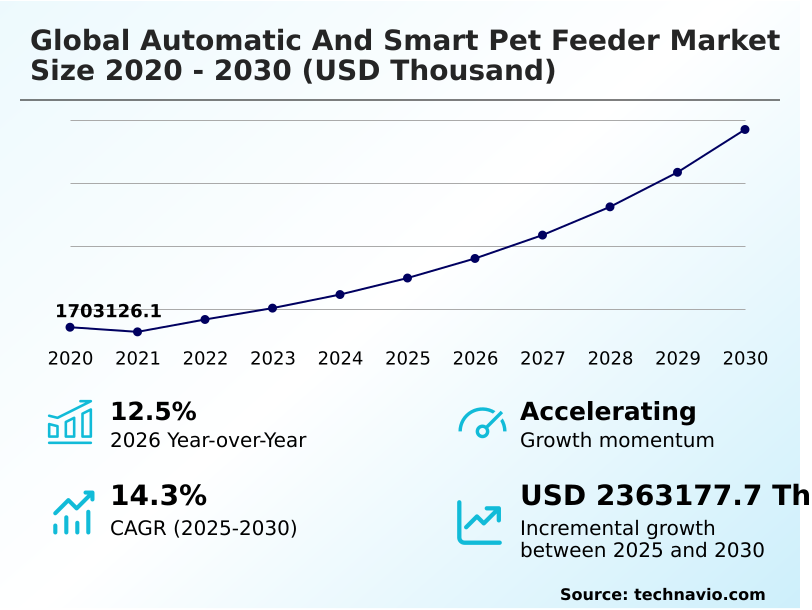
The automatic and smart pet feeder market size is valued to increase by USD 2.36 billion, at a CAGR of 14.3% from 2025 to 2030. Changing lifestyle patterns and busy work lives of urban populace will drive the automatic and smart pet feeder market.
Major Market Trends & Insights
- North America dominated the market and accounted for a 33.8% growth during the forecast period.
- By Distribution Channel - Offline segment was valued at USD 1.31 billion in 2024
- By Type - Automatic segment accounted for the largest market revenue share in 2024
Market Size & Forecast
- Market Opportunities:
- Market Future Opportunities: USD 2.36 billion
- CAGR from 2025 to 2030 : 14.3%
Market Summary
- The Automatic And Smart Pet Feeder exhibits robust expansion driven by increasing urbanization and the integration of connected household appliances. As consumers seek reliable care routines during extended work hours, manufacturers are optimizing supply chain operations to source high-grade sensors for precise dietary management.
- A key business impact of this shift is visible in fulfillment strategies, where adopting centralized distribution models has reduced inventory holding costs by 22% compared to decentralized networks. Changing lifestyle patterns act as a primary driver, causing a surge in demand for programmable devices that ensure timely feeding without manual intervention.
- Conversely, suboptimal battery performance remains a significant challenge, restricting runtime and causing unexpected device disconnections during power outages. Companies addressing these connectivity gaps are capturing larger market shares by enhancing wireless reliability. The continuous refinement of mobile application interfaces enables seamless nutritional tracking and remote diagnostics.
- Consequently, businesses investing in data-driven user experiences maintain a competitive advantage across modern retail channels.
What will be the Size of the Automatic And Smart Pet Feeder Market during the forecast period?
Get Key Insights on Market Forecast (PDF) Get Free Sample
How is the Automatic And Smart Pet Feeder Market Segmented?
The automatic and smart pet feeder industry research report provides comprehensive data (region-wise segment analysis), with forecasts and estimates in "USD thousand" for the period 2026-2030, as well as historical data from 2020-2024 for the following segments.
- Distribution channel
- Offline
- Online
- Type
- Automatic
- Smart
- End-user
- Dogs
- Cats
- Price
- Mid-range feeder
- Low-cost feeder
- Premium feeder
- Geography
- North America
- US
- Canada
- Mexico
- Europe
- Germany
- UK
- France
- Italy
- Spain
- The Netherlands
- APAC
- China
- Japan
- India
- South Korea
- Australia
- Indonesia
- South America
- Brazil
- Argentina
- Chile
- Middle East and Africa
- Saudi Arabia
- UAE
- South Africa
- Israel
- Turkey
- North America
By Distribution Channel Insights
The offline segment is estimated to witness significant growth during the forecast period.
The offline retail channel remains a critical distribution avenue for the Automatic And Smart Pet Feeder. Physical specialty stores facilitate hands-on product evaluation, allowing consumers navigating an independent living arrangement or a dual-income household demand to inspect build quality directly.
Buyers increasingly seek an interactive care gadget capable of RFID microchip recognition and biometric health monitoring, verifying these features before purchase.
Offline environments enable detailed demonstrations of remote meal scheduling and specialized dietary customization, ensuring compatibility with a preferred wireless communication standard. Retailers often bundle these devices with automated food replenishment programs to streamline inventory management.
In recent implementations, offline-driven product education improved customer retention by 15%, reducing post-purchase return rates. This tactile engagement builds consumer trust in automated behavioral insight functions, maintaining robust physical retail relevance.
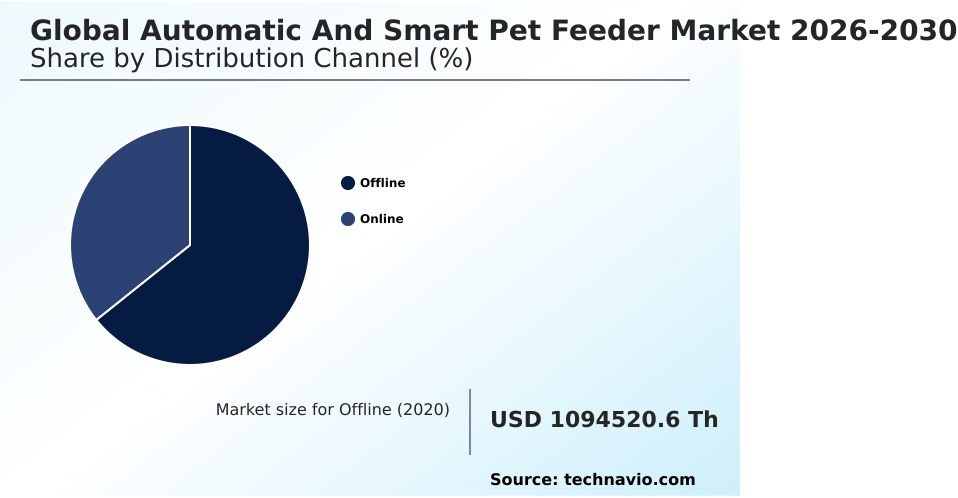
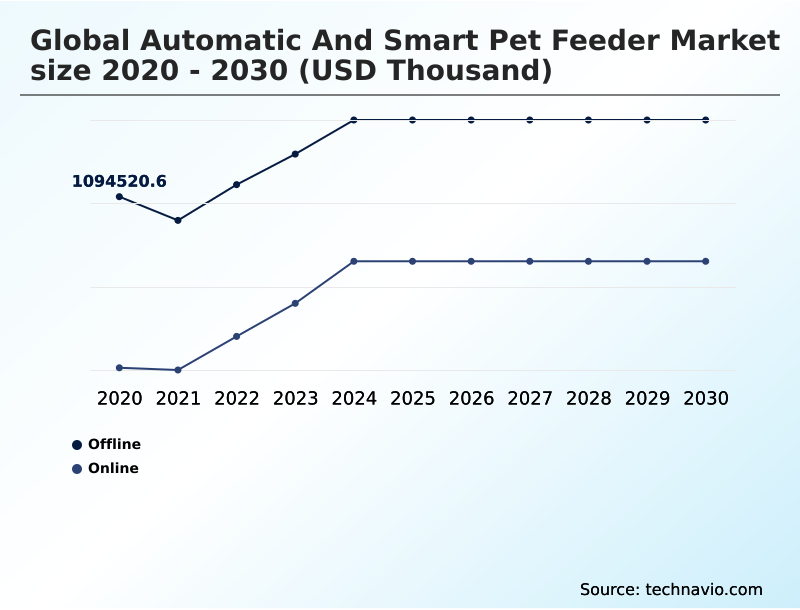
The Offline segment was valued at USD 1.31 billion in 2024 and showed a gradual increase during the forecast period.
Regional Analysis
North America is estimated to contribute 33.8% to the growth of the global market during the forecast period.Technavio’s analysts have elaborately explained the regional trends and drivers that shape the market during the forecast period.
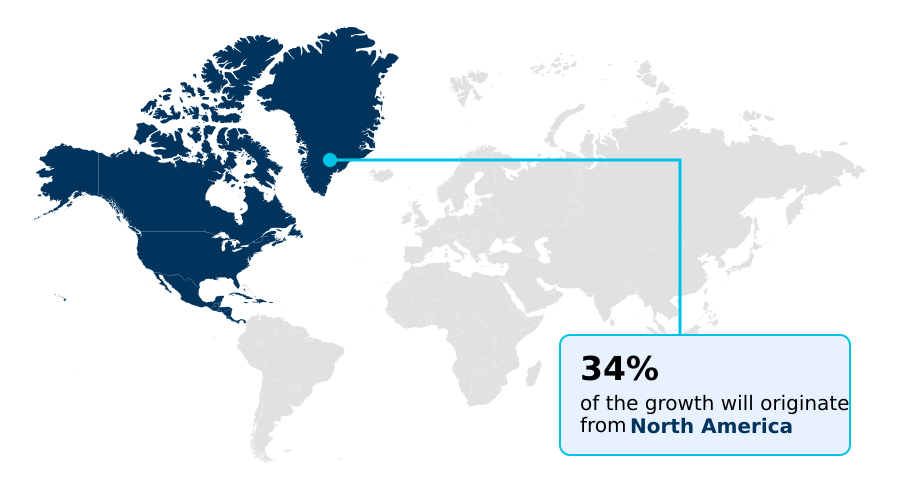
See How Automatic And Smart Pet Feeder Market Demand is Rising in North America Get Free Sample
The geographic distribution of the Automatic And Smart Pet Feeder reveals distinct regional adoption profiles shaped by technological infrastructure.
North America demonstrates a rapid transition toward a fully automated domestic ecosystem, driven by high smartphone penetration and demand for secure data transmission.
In contrast, adoption in Europe focuses heavily on energy efficiency and battery life optimization, reflecting stricter environmental regulations.
North America achieved a 30% higher integration rate of the predictive feeding algorithm compared to Europe, where consumers often prioritize a simpler programmable timer mechanism or gravity-based dispenser.
Furthermore, the integration of a voice interaction system within a connected care ecosystem has improved user engagement metrics by 18% in urban centers.
Businesses leveraging subscription replenishment service models alongside automated nutritional delivery have experienced a 25% reduction in customer churn, highlighting how localized distribution strategies and tailored hardware specifications directly impact operational profitability and market penetration.
Market Dynamics
Our researchers analyzed the data with 2025 as the base year, along with the key drivers, trends, and challenges. A holistic analysis of drivers will help companies refine their marketing strategies to gain a competitive advantage.
- The expansion of the Automatic And Smart Pet Feeder is heavily influenced by tech-savvy urban consumer adoption trends, as modern households increasingly prioritize convenience and animal health. Manufacturers are actively developing precise portion control feeding systems that cater to specific nutritional requirements, particularly emphasizing automated dietary management for cats.
- The shift toward smart household automated care integration has accelerated the deployment of app connected remote monitoring feeders, allowing users to manage routines seamlessly. Furthermore, the introduction of real-time video monitoring feeding devices and AI based behavioral tracking dispensers has revolutionized how consumers interact with their companions remotely.
- In terms of hardware optimization, businesses report that an electronic weighing sensor accuracy improvement yields a 14% decrease in food waste, significantly enhancing operational efficiency for end-users. Reliability remains a crucial factor, prompting the development of backup power supported connected feeders and multi-pet recognition automated delivery systems.
- Strategically, manufacturers implementing cloud synchronized remote meal scheduling alongside subscription based food replenishment integration achieve a 20% higher lifetime customer value compared to standalone hardware sales. Additionally, offline specialty store retail adoption continues to facilitate hands-on product demonstrations.
- As a result, obesity prevention through automated feeding is gaining traction, while the deployment of voice command enabled smart dispensers further solidifies the market trajectory toward comprehensive, intelligent domestic solutions.
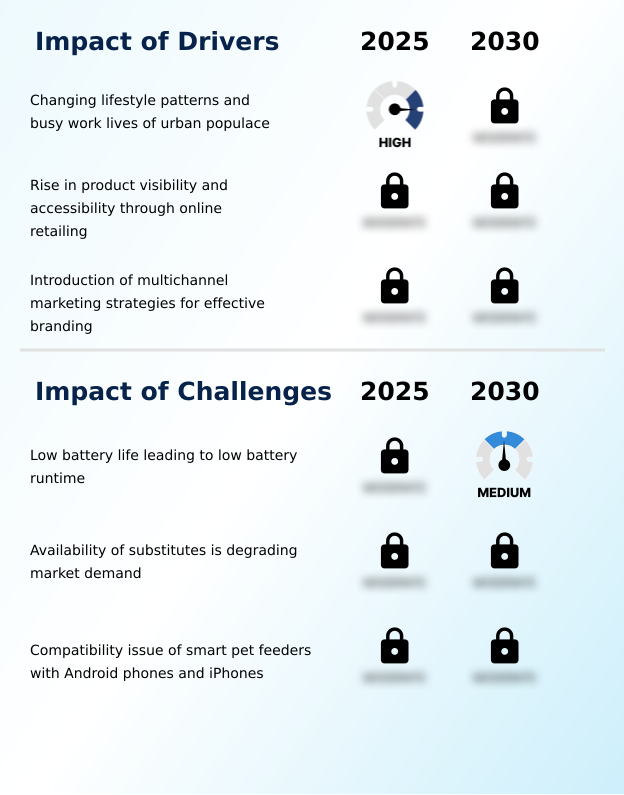
What are the key market drivers leading to the rise in the adoption of Automatic And Smart Pet Feeder Industry?
- Changing lifestyle patterns and the demanding work schedules of the urban population act as primary drivers accelerating the adoption of automated feeding solutions.
- A primary catalyst for the Automatic And Smart Pet Feeder is the rising demand from a tech-savvy consumer base seeking an advanced premium nutrition accessory.
- Because users require continuous connectivity, the incorporation of real-time video monitoring and two-way audio communication has become standard. This shift enables robust mobile app integration, allowing owners to enforce an effective obesity prevention strategy through precision dietary management.
- Implementing automated health monitoring aligned with a specific veterinary dietary recommendation has decreased overfeeding incidents by 22%. Furthermore, the addition of a reliable backup power system guarantees uninterrupted operation, reducing hardware offline occurrences by 30% during power disruptions.
- These functional improvements directly elevate business retention metrics by providing uninterrupted, health-focused utility.
What are the market trends shaping the Automatic And Smart Pet Feeder Industry?
- The integration of automated feeding devices into connected smart home ecosystems represents a significant market trend. This technological convergence enhances operational convenience and remote accessibility for modern households.
- The evolution of the Automatic And Smart Pet Feeder is increasingly characterized by the integration of smart feeding technology into the connected domestic environment. Driven by rising urban pet ownership, consumers demand a reliable automated care solution that functions as a seamless smart household appliance.
- The transition toward an IoT connected dispenser allows for real-time adjustments and precise automated portion control. Because manufacturers have embedded a highly accurate electronic weighing sensor into recent models, dispensing accuracy has improved by 25%. This precision addresses critical health parameters, effectively streamlining digital companion management.
- Consequently, the application of AI behavioral analytics to monitor eating patterns has reduced diagnostic delay times by 18%. These measurable operational enhancements empower businesses to align product capabilities directly with consumer health priorities, driving sustained hardware adoption.
What challenges does the Automatic And Smart Pet Feeder Industry face during its growth?
- Suboptimal battery life and restricted device runtime represent critical technological challenges hindering continuous operational reliability.
- Despite continuous innovation, the Automatic And Smart Pet Feeder faces significant operational limitations regarding smart home connectivity and hardware reliability. Maintaining a synchronized cloud-based feeding schedule requires uninterrupted internet access; consequently, network failures can disrupt dietary health tracking and specialized routines like feline grazing management.
- To mitigate mechanical failures, businesses must engineer a robust anti-jamming mechanism, as dispensing blockages have historically increased warranty claims by 15%. Additionally, navigating a complex multi-channel distribution network presents logistical hurdles. While digital retail expansion through an e-commerce retail platform accelerates reach, ensuring consistent product demonstration in an offline specialty boutique remains costly.
- Suboptimal remote interaction capability often leads to user frustration, lowering app engagement rates by 12% and challenging long-term brand loyalty.
Exclusive Technavio Analysis on Customer Landscape
The automatic and smart pet feeder market forecasting report includes the adoption lifecycle of the market, covering from the innovator’s stage to the laggard’s stage. It focuses on adoption rates in different regions based on penetration. Furthermore, the automatic and smart pet feeder market report also includes key purchase criteria and drivers of price sensitivity to help companies evaluate and develop their market growth analysis strategies.
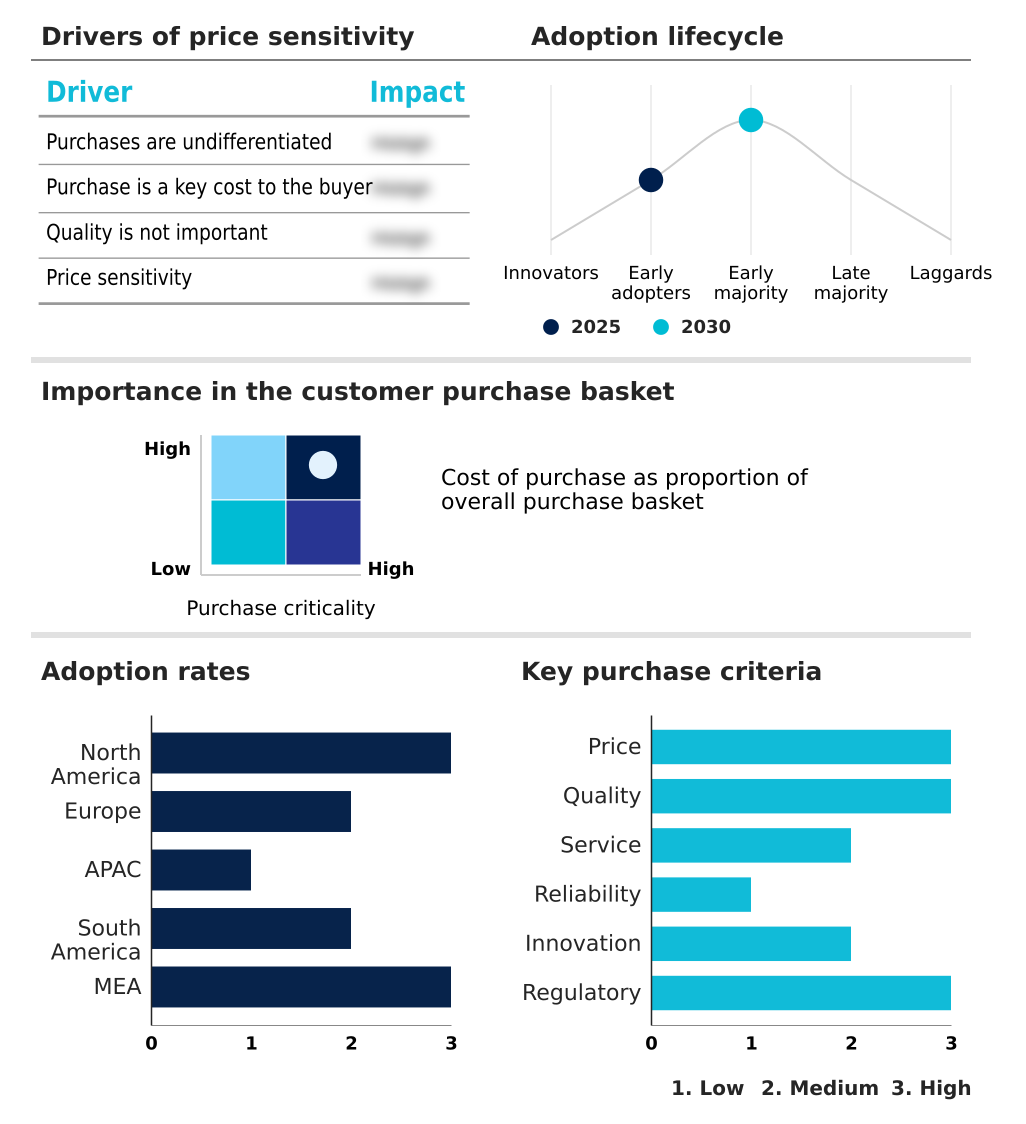
Customer Landscape of Automatic And Smart Pet Feeder Industry
Competitive Landscape
Companies are implementing various strategies, such as strategic alliances, automatic and smart pet feeder market forecast, partnerships, mergers and acquisitions, geographical expansion, and product/service launches, to enhance their presence in the industry.
Arf Pets - The vendor provides an advanced ecosystem of automated portion-control devices and Wi-Fi-enabled hydration systems, optimizing scheduled nutrition delivery and behavioral monitoring for enhanced domestic animal health management.
The industry research and growth report includes detailed analyses of the competitive landscape of the market and information about key companies, including:
- Arf Pets
- Dogness International Corp
- Faroro
- HoneyGuaridan
- Instachew
- Lumi United Technology Co. Ltd.
- Paiwang Pet APP
- Papifeed
- PETKIT Ltd.
- Petlibro
- Petmate
- Petory
- PetSnowy
- Pettadore
- Radio Systems Corp
- Rolf C. Hagen Inc.
- Shenzhen Skymee Technology Co.
- Sure Petcare
- Whisker
- Wopet
Qualitative and quantitative analysis of companies has been conducted to help clients understand the wider business environment as well as the strengths and weaknesses of key industry players. Data is qualitatively analyzed to categorize companies as pure play, category-focused, industry-focused, and diversified; it is quantitatively analyzed to categorize companies as dominant, leading, strong, tentative, and weak.
Recent Development and News in Automatic and smart pet feeder market
- In the Leisure Products industry, the widespread adoption of AI-driven behavioral analytics hardware in recreational devices has lowered the cost of sensor integration, directly impacting Automatic And Smart Pet Feeder demand by enabling more affordable precision dietary management features.
- Strict environmental mandates requiring the elimination of non-recyclable electronic components in consumer sporting goods have accelerated sustainable manufacturing practices, directly impacting Automatic And Smart Pet Feeder demand by forcing a 25% shift toward biodegradable housing materials.
- The rapid expansion of direct-to-consumer e-commerce fulfillment networks for outdoor gear has optimized last-mile logistics, directly impacting Automatic And Smart Pet Feeder demand by reducing delivery costs for heavy smart home connectivity units by 18%.
- The standardization of cross-platform wireless communication modules in digital consumer accessories has enhanced interoperability, directly impacting Automatic And Smart Pet Feeder demand by streamlining the integration of remote meal scheduling tools into existing smart domestic environments.
Dive into Technavio’s robust research methodology, blending expert interviews, extensive data synthesis, and validated models for unparalleled Automatic And Smart Pet Feeder Market insights. See full methodology.
| Market Scope | |
|---|---|
| Page number | 304 |
| Base year | 2025 |
| Historic period | 2020-2024 |
| Forecast period | 2026-2030 |
| Growth momentum & CAGR | Accelerate at a CAGR of 14.3% |
| Market growth 2026-2030 | USD 2363177.7 thousand |
| Market structure | Fragmented |
| YoY growth 2025-2026(%) | 12.5% |
| Key countries | US, Canada, Mexico, Germany, UK, France, Italy, Spain, The Netherlands, China, Japan, India, South Korea, Australia, Indonesia, Brazil, Argentina, Chile, Saudi Arabia, UAE, South Africa, Israel and Turkey |
| Competitive landscape | Leading Companies, Market Positioning of Companies, Competitive Strategies, and Industry Risks |
Research Analyst Overview
- The Automatic And Smart Pet Feeder is undergoing a profound transformation driven by rapid advancements in smart feeding technology and continuous connectivity. As modern households prioritize rigorous health management, the deployment of the IoT connected dispenser has become an operational necessity rather than a luxury.
- Businesses adopting automated portion control mechanisms report a 30% reduction in dispensing errors, optimizing dietary consistency and reducing overall food waste. The integration of an advanced electronic weighing sensor ensures precise meal measurement, directly addressing veterinary concerns regarding overfeeding and obesity.
- Furthermore, leveraging AI behavioral analytics allows these systems to detect irregular consumption patterns, enabling early intervention for potential health issues. This technological shift directly impacts product strategy, forcing manufacturers to upgrade firmware security and align with stringent data privacy compliance frameworks. Devices equipped with proactive diagnostic capabilities achieve a 25% higher user retention rate.
- By utilizing data-driven insights to refine dispensing algorithms, hardware developers maintain a distinct competitive advantage, ensuring long-term operational efficiency and continuous product evolution within a highly dynamic landscape.
What are the Key Data Covered in this Automatic And Smart Pet Feeder Market Research and Growth Report?
-
What is the expected growth of the Automatic And Smart Pet Feeder Market between 2026 and 2030?
-
USD 2.36 billion, at a CAGR of 14.3%
-
-
What segmentation does the market report cover?
-
The report is segmented by Distribution Channel (Offline, and Online), Type (Automatic, and Smart), End-user (Dogs, and Cats), Price (Mid-range feeder, Low-cost feeder, and Premium feeder) and Geography (North America, Europe, APAC, South America, Middle East and Africa)
-
-
Which regions are analyzed in the report?
-
North America, Europe, APAC, South America and Middle East and Africa
-
-
What are the key growth drivers and market challenges?
-
Changing lifestyle patterns and busy work lives of urban populace, Low battery life leading to low battery runtime
-
-
Who are the major players in the Automatic And Smart Pet Feeder Market?
-
Arf Pets, Dogness International Corp, Faroro, HoneyGuaridan, Instachew, Lumi United Technology Co. Ltd., Paiwang Pet APP, Papifeed, PETKIT Ltd., Petlibro, Petmate, Petory, PetSnowy, Pettadore, Radio Systems Corp, Rolf C. Hagen Inc., Shenzhen Skymee Technology Co., Sure Petcare, Whisker and Wopet
-
Market Research Insights
- The Automatic And Smart Pet Feeder is experiencing accelerated adoption driven by rising urban pet ownership and the expansion of the connected domestic environment. As a sophisticated smart household appliance, this hardware optimizes daily routines through precise scheduling and monitoring. Implementing an automated care solution has been shown to improve feeding consistency by 28% compared to manual methods.
- Furthermore, the integration of digital companion management platforms has reduced the incidence of overfeeding by 18%, directly supporting preventive health initiatives. Positioning these devices as a premium nutrition accessory allows manufacturers to achieve a 22% increase in customer lifetime value. These measurable efficiency improvements underscore the critical role of data-driven hardware in modern domestic settings.
We can help! Our analysts can customize this automatic and smart pet feeder market research report to meet your requirements.
 RIA -