

Automotive Battery Recycling Market Analysis APAC, Europe, North America, South America, Middle East and Africa - China, US, Germany, Japan, South Korea, Canada, Belgium, France, India, Sweden - Size and Forecast 2024-2028

Automotive Battery Recycling Market Analysis APAC, Europe, North America, South America, Middle East and Africa - China, US, Germany, Japan, South Korea, Canada, Belgium, France, India, Sweden - Size and Forecast 2024-2028

Published: Aug 2024 210 Pages SKU: IRTNTR80116

Market Overview at a Glance

$7954.5 B
Market Opportunity
9.24%
CAGR
8.31
YoY growth 2023-2024(%)

Automotive Battery Recycling Market Size 2024-2028

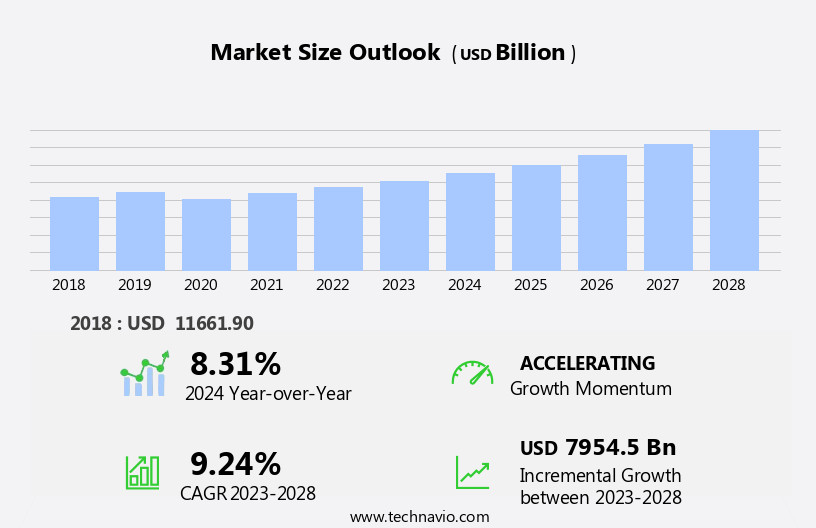
The automotive battery recycling market size is forecast to increase by USD 7954.5 billion at a CAGR of 9.24% between 2023 and 2028.

  • The market is experiencing significant growth due to several key trends. The widening lithium supply demand gap is one such trend, as the demand for lithium-ion batteries in electric vehicles (EVs) continues to rise. Another trend is the increasing demand for EVs themselves, which is driving the need for efficient and cost-effective battery recycling solutions. However, the involvement of high costs in automotive battery recycling remains a challenge for market growth. Despite these challenges, the market is expected to witness robust growth In the coming years, as advancements in technology and increasing government initiatives towards sustainable energy solutions continue to shape the industry landscape.
  • The market analysis report provides a comprehensive study of these trends and challenges, offering valuable insights for stakeholders and market participants.
  • What will be the Size of the Automotive Battery Recycling Market During the Forecast Period?
    Automotive Battery Recycling Market Size

     Request Free Sample

  • The market is gaining significant traction due to the increasing adoption of sustainable transportation solutions, particularly electric vehicles (EVs). With a focus on energy efficiency and pollution control, the automotive industry is shifting towards advanced battery technologies, such as lithium-ion batteries (LIBs), which offer higher energy density and improved charging capabilities. However, the end-of-life management of spent batteries poses challenges, as they contain hazardous materials, including toxic chemicals, heavy metals, flammable, corrosive materials, and in some cases, radioactive materials. These substances can lead to soil pollution and contamination if not properly disposed of, contributing to climate change through greenhouse gas emissions and the need for gasoline production.
  • The battery recycling industry plays a crucial role in mitigating these risks by recovering valuable materials and reducing the environmental impact of EV batteries. The market is expected to grow as the demand for EVs increases and regulations on battery disposal become more stringent.
  • How is this Automotive Battery Recycling Industry segmented and which is the largest segment?

    The automotive battery recycling industry research report provides comprehensive data (region-wise segment analysis), with forecasts and estimates in "USD billion" for the period 2024-2028, as well as historical data from 2018-2022 for the following segments.

    • Battery Type
      • Lead acid batteries
      • Lithium-ion batteries
      • Nickel-Metal Hydride (NiMH) batteries
      • Others
    • Vehicle Type
      • Passenger cars
      • Commercial vehicles
      • Electic vehicles (EV)
    • Geography
      • APAC
        • China
        • Japan
        • South Korea
      • Europe
        • Germany
      • North America
        • US
      • South America
        • Middle East and Africa

        By Battery Type Insights

        • The lead acid batteries segment is estimated to witness significant growth during the forecast period.

        Lead-acid batteries, a key component in various applications such as stationary power, automotive, and deep-cycle systems, are gaining significance due to their use in renewable energy storage for solar and wind power. The automotive sector, specifically, is witnessing a shift towards electric vehicles (EVs), which necessitates an increase In the production and adoption of advanced battery technologies like lithium-ion batteries (LIB). However, lead-acid batteries continue to dominate the market due to their energy efficiency, cost-effectiveness, and environmental benefits. The recycling of spent batteries is a crucial aspect of the battery ecosystem, addressing concerns related to pollution control and sustainable transportation.

        With nearly 100% of lead being recyclable, the lead-acid battery recycling market plays a vital role in minimizing hazardous waste and environmental risks. The recycling process includes collection and sorting, followed by the recovery of valuable materials such as nickel, cobalt, and rare earth metals. This closed-loop system contributes to the circular economy, reducing the dependence on primary resources and promoting a more sustainable approach to battery manufacturing. Incorporating
        Automotive Battery Recycling Market Size

        Get a glance at the  Automotive Battery Recycling Industry report of share of various segments Request Free Sample

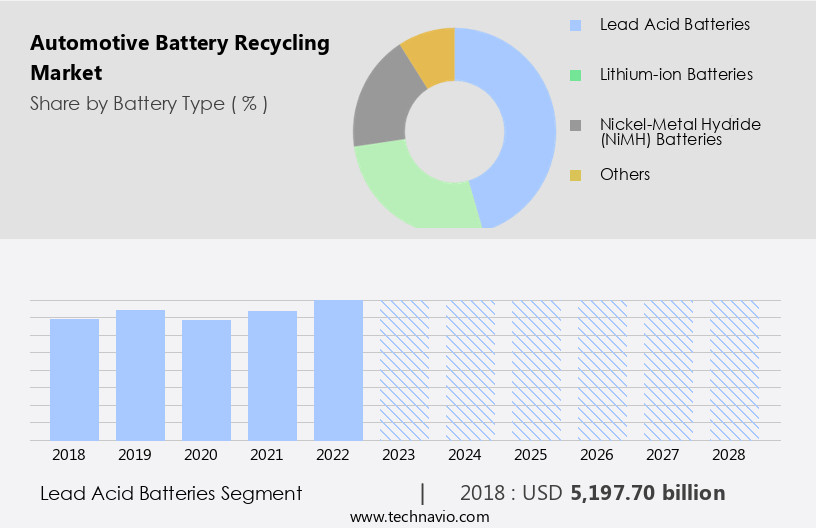
        The Lead acid batteries segment was valued at USD 5197.70 billion in 2018 and showed a gradual increase during the forecast period.

        Regional Analysis

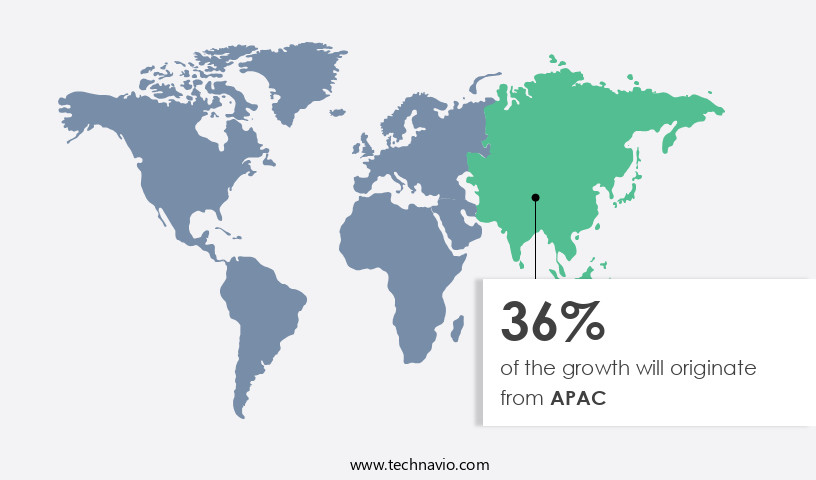
        • APAC is estimated to contribute 36% to the growth of the global market during the forecast period.

        Technavio’s analysts have elaborately explained the regional trends and drivers that shape the market during the forecast period.
        Automotive Battery Recycling Market Share by Geography

        For more insights on the market share of various regions, Request Free Sample

        The market is significantly driven by the increasing adoption of electric vehicles (EVs) and the need for sustainable transportation. With the shift towards renewable energy sources like solar and wind power, the demand for energy storage solutions, including automotive batteries, is on the rise. The market is particularly prominent In the Asia Pacific region due to the presence of numerous battery manufacturing companies and the growing market for electric vehicles. China, as the world's largest automotive market, is a key contributor to The market, driven by stringent regulations on hazardous waste disposal and the push for a circular economy.

        Japan, known for its advanced technological capabilities, is also making significant strides in battery recycling, supported by government initiatives promoting eco-friendly initiatives and the EV market. Automotive batteries, primarily Lithium-ion, Lead-acid, and Nickel-cadmium, contain valuable materials such as Nickel, Cobalt, and Rare earth metals. Proper recycling of these batteries is essential to mitigate environmental risks associated with hazardous materials, including toxic chemicals, heavy metals, and potential soil pollution from landfills. Advanced battery technologies, such as Lithium-ion batteries, require specialized recycling processes, including Hydrometallurgical and Pyrometallurgical processes, to recover valuable materials and reduce the environmental impact of battery disposal. The automotive battery recycling industry is expected to grow as electric vehicle adoption increases, contributing to the reduction of greenhouse gases and the transition towards sustainable fuels.

        Market Dynamics

        Our  researchers analyzed the data with 2023 as the base year, along with the key drivers, trends, and challenges. A holistic analysis of drivers will help companies refine their marketing strategies to gain a competitive advantage.

        What are the key market drivers leading to the rise In the adoption of Automotive Battery Recycling Industry?

        Widening lithium supply demand gap is the key driver of the market.

      • The market is a critical component of sustainable transportation as the adoption of Electric Vehicles (EVs) continues to grow. With increasing focus on energy efficiency and pollution control, advanced battery technologies such as Lithium-ion batteries (LIB), Lead acid batteries, and Sodium-sulfur batteries are gaining popularity. However, these batteries contain valuable materials like Nickel, Cobalt, and Rare earth metals, which can pose environmental risks if not disposed of properly. Spent batteries from EVs and other electronic gadgets can release hazardous materials, including toxic chemicals, heavy metals, and flammable, corrosive, and radioactive materials. These hazards can lead to soil pollution, landfills, and potential health risks.
      • The battery recycling market plays a crucial role in mitigating these risks by collecting and sorting spent batteries for valuable material recovery. The circular economy is gaining momentum In the renewable energy storage sector, with solar power and wind power increasingly relying on battery storage. The recycling process employs various technologies, including hydrometallurgical and pyrometallurgical processes, to recover valuable materials from spent batteries. The battery recycling industry is expected to grow significantly, driven by increasing EV sales, pollution reduction, and the need to reduce greenhouse gas emissions from gasoline production. Despite the benefits, challenges remain, including the complexity of recycling technologies and the need for significant Research and Development (R&D) investment to improve recycling capacity and efficiency.
      • The battery recycling ecosystem must address these challenges to ensure a sustainable and efficient battery value chain. In conclusion, the market is a vital aspect of the transition to sustainable transportation. With the increasing demand for EVs and renewable energy storage, it is essential to establish a robust battery recycling industry to mitigate environmental risks, recover valuable materials, and reduce the carbon footprint of the battery value chain.
      • What are the market trends shaping the Automotive Battery Recycling Industry?

        Increasing demand for electric vehicles is the upcoming market trend.

      • The market is experiencing significant growth due to the increasing adoption of electric vehicles (EVs) and the emphasis on sustainable transportation and pollution control. According to recent statistics, EV sales are on the rise, with companies such as Tesla, Nissan, and BMW driving this trend. This shift towards electric vehicles results in an increasing volume of spent lithium-ion batteries, which contain valuable materials like lithium, cobalt, nickel, and rare earth metals. Recycling these batteries not only reduces the need for new raw materials but also minimizes waste and environmental risks associated with hazardous waste disposal. The circular economy principle is becoming increasingly important In the automotive industry, with a focus on renewable energy storage and the reuse of batteries in solar and wind power systems.
      • The recycling process for automotive batteries involves collection and sorting, followed by various recycling technologies such as hydrometallurgical and pyrometallurgical processes. These processes enable the recovery of valuable materials from spent batteries, reducing the reliance on primary sources and minimizing the environmental impact of battery disposal. Moreover, the recycling industry is investing heavily in research and development to improve recycling technologies and increase recycling capacity. This includes the development of new processes such as Hydro-to-Anode and Graphite recovery, which can further enhance the efficiency and sustainability of the recycling process. As the demand for electric vehicles continues to grow, so too will the importance of the market.
      • The market dynamics are being shaped by factors such as the increasing focus on sustainability, energy efficiency, and pollution control, as well as the growing demand for renewable energy storage and the need to reduce reliance on non-renewable resources like gasoline. The recycling of automotive batteries is essential for reducing greenhouse gas emissions and minimizing the environmental risks associated with the disposal of hazardous materials, including toxic chemicals, heavy metals, and flammable, corrosive, and radioactive materials. By implementing effective recycling processes and technologies, the automotive battery recycling industry can contribute to a more sustainable and circular economy, while also reducing the environmental impact of electric vehicle manufacturing and use.
      • What challenges does the Automotive Battery Recycling Industry face during its growth?

        Involvement of high costs in automotive battery recycling is a key challenge affecting the industry growth.

      • The market is a critical component of sustainable transportation and pollution control, particularly with the increasing adoption of Electric Vehicles (EVs) and the transition towards energy efficiency. Advanced battery technologies, such as Lithium-ion batteries (LIB), Lead acid batteries, and Sodium-sulfur batteries, require specialized recycling processes due to their valuable materials and potential hazards. These batteries contain valuable materials like Nickel, Cobalt, and Rare earth metals, which can be recovered and reused in various industries. However, setting up an automotive battery recycling plant involves substantial initial investment and strict adherence to environmental and safety regulations. Companies employ advanced recycling technologies, such as Hydrometallurgical and Pyrometallurgical processes, to efficiently and safely extract these valuable materials.
      • The recycling process also involves collection and sorting of spent batteries, which can be complex due to the potential hazards, including toxic chemicals, heavy metals, and flammable, corrosive, or radioactive materials. The logistics of battery recycling are also challenging due to the classification of batteries as hazardous waste. This necessitates specialized handling and transportation methods, increasing costs and complicating logistics, particularly for cross-border transportation. Despite these challenges, the battery recycling industry is essential for reducing environmental risks associated with battery disposal and minimizing the demand for primary raw materials. The industry's growth is driven by the increasing sales of electric vehicles, the need for renewable energy storage, and the circular economy's principles, which prioritize the reuse and recycling of resources.
      • Exclusive Customer Landscape

        The automotive battery recycling market forecasting report includes the adoption lifecycle of the market, covering from the innovator’s stage to the laggard’s stage. It focuses on adoption rates in different regions based on penetration. Furthermore, the automotive battery recycling market report also includes key purchase criteria and drivers of price sensitivity to help companies evaluate and develop their market growth analysis strategies.
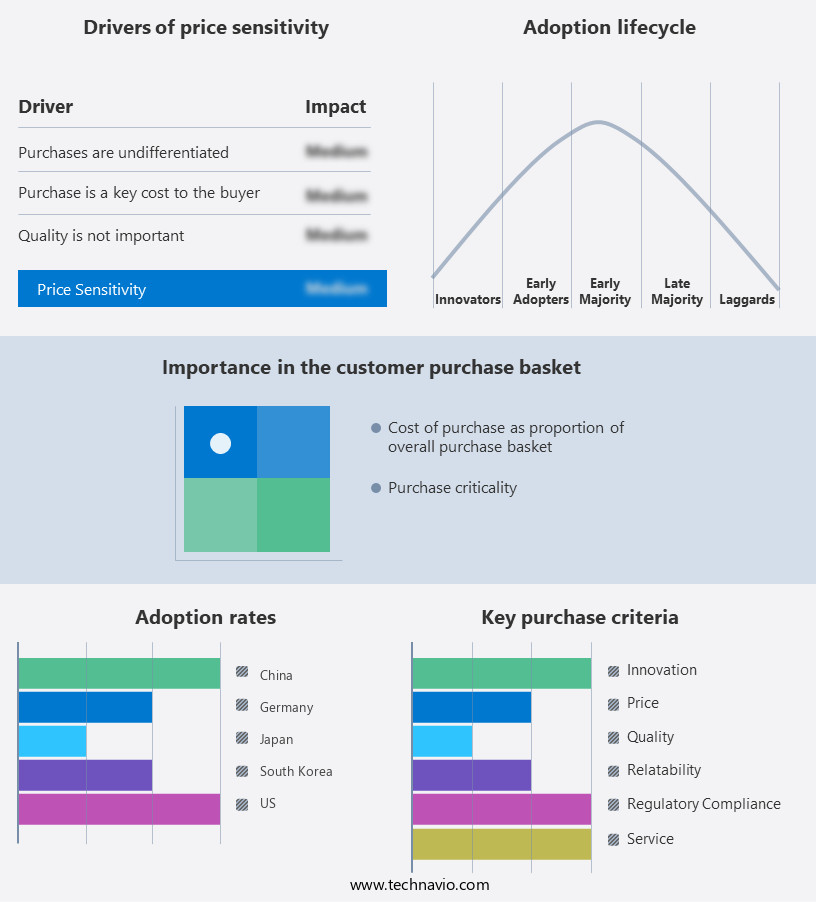
        Automotive Battery Recycling Market Share by Geography

         Customer Landscape

        Key Companies & Market Insights

        Companies are implementing various strategies, such as strategic alliances, automotive battery recycling market forecast, partnerships, mergers and acquisitions, geographical expansion, and product/service launches, to enhance their presence In the industry.

        Accurec Recycling GmbH - The market encompasses the collection and processing of spent lithium-ion, nickel metal hydride, and nickel cadmium batteries sourced from various applications, including electric vehicles and e-bikes. This market caters to the growing demand for sustainable solutions In the automotive industry, ensuring the efficient recovery of valuable metals and reducing the environmental impact of battery disposal. By implementing advanced recycling technologies, this sector contributes significantly to the circular economy, minimizing the need for virgin raw materials and promoting resource conservation.

        The industry research and growth report includes detailed analyses of the competitive landscape of the market and information about key companies, including:

        • Accurec Recycling GmbH
        • Call2Recycle Inc.
        • Contemporary Amperex Technology Co. Ltd.
        • Duesenfeld GmbH
        • East Penn Manufacturing Co. Inc.
        • Ecobat LLC
        • ENGITEC TECHNOLOGIES SPA
        • Exide Industries Ltd.
        • Fortum Oyj
        • Glencore Plc
        • Li Cycle Holdings Corp.
        • Redwood Materials Inc.
        • SK Inc.
        • SNAM Groupe
        • SungEel Hi Tech Co. Ltd.
        • Umicore SA

        Qualitative and quantitative analysis of companies has been conducted to help clients understand the wider business environment as well as the strengths and weaknesses of key industry players. Data is qualitatively analyzed to categorize companies as pure play, category-focused, industry-focused, and diversified; it is quantitatively analyzed to categorize companies as dominant, leading, strong, tentative, and weak.

        Research Analyst Overview

        The automotive battery market encompasses a significant portion of the global energy storage sector, with a substantial focus on sustainable transportation and the increasing adoption of electric vehicles (EVs). The shift towards energy efficiency and pollution control has led to an escalating demand for advanced battery technologies, such as lithium-ion batteries (LIB), lead-acid batteries, sodium-sulfur batteries, and others. As the market for EVs expands, so does the generation of spent batteries. These batteries, often containing valuable materials like nickel, cobalt, and rare earth metals, pose environmental risks if not disposed of properly. The hazardous materials within spent batteries, including toxic chemicals, heavy metals, flammable, corrosive materials, and even radioactive materials, necessitate the development of a robust battery recycling ecosystem.

        The recycling industry plays a crucial role in mitigating the environmental impact of battery disposal. The process involves collection and sorting of spent batteries, followed by the application of various recycling technologies to recover valuable materials. Hydrometallurgical and pyrometallurgical processes are commonly used to extract nickel, cobalt, and other valuable metals from spent batteries. The recycling of spent batteries is not only essential for the circular economy but also for the reduction of greenhouse gas emissions. The production of batteries, particularly LIBs, contributes significantly to gasoline production and the associated carbon emissions. By recycling batteries, the need for raw material extraction is reduced, thus minimizing the carbon footprint.

        The battery recycling market is a complex ecosystem that involves various stakeholders, including automotive manufacturers, battery producers, recycling facilities, and regulatory bodies. The industry faces numerous challenges, including the development of cost-effective and efficient recycling technologies, the collection and sorting of spent batteries, and the safe handling and disposal of hazardous materials. Renewable energy storage, such as solar power and wind power, also relies on batteries for energy storage and grid stability. The recycling of spent batteries from renewable energy applications is crucial to ensure a sustainable and circular economy for these energy sources. The battery recycling industry is an evolving landscape, with ongoing research and development (R&D) investments in new recycling technologies and processes.

        The circular economy is becoming increasingly important as the world transitions towards sustainable fuels and electric vehicles. The recycling capacity for batteries is expected to grow as the market for EVs continues to expand, making battery recycling a key focus area for businesses and governments alike. In conclusion, the market plays a vital role In the sustainable production and disposal of batteries. The recycling of spent batteries is essential for reducing environmental risks, minimizing the carbon footprint, and ensuring a circular economy for batteries used in various applications, including passenger vehicles, commercial vehicles, and renewable energy storage. The industry faces numerous challenges but also presents significant opportunities for innovation and growth.

        Market Scope

        Report Coverage

        Details

        Page number

        210

        Base year

        2023

        Historic period

        2018-2022

        Forecast period

        2024-2028

        Growth momentum & CAGR

        Accelerate at a CAGR of 9.24%

        Market growth 2024-2028

        USD 7954.5 billion

        Market structure

        Fragmented

        YoY growth 2023-2024(%)

        8.31

        Key countries

        China, US, Germany, Japan, and South Korea

        Competitive landscape

        Leading Companies, Market Positioning of Companies, Competitive Strategies, and Industry Risks

        Request Free Sample

        What are the Key Data Covered in this Automotive Battery Recycling Market Research and Growth Report?

        • CAGR of the Automotive Battery Recycling industry during the forecast period
        • Detailed information on factors that will drive the growth and forecasting between 2024 and 2028
        • Precise estimation of the size of the market and its contribution of the industry in focus to the parent market
        • Accurate predictions about upcoming growth and trends and changes in consumer behaviour
        • Growth of the market across APAC, Europe, North America, South America, and Middle East and Africa
        • Thorough analysis of the market’s competitive landscape and detailed information about companies
        • Comprehensive analysis of factors that will challenge the automotive battery recycling market growth of industry companies

        We can help! Our analysts can customize this automotive battery recycling market research report to meet your requirements.

        Get in touch


        Table of Contents not available.

        Research Methodology

        Technavio presents a detailed picture of the market by way of study, synthesis, and summation of data from multiple sources. The analysts have presented the various facets of the market with a particular focus on identifying the key industry influencers. The data thus presented is comprehensive, reliable, and the result of extensive research, both primary and secondary.

        INFORMATION SOURCES

        Primary sources

        • Manufacturers and suppliers
        • Channel partners
        • Industry experts
        • Strategic decision makers

        Secondary sources

        • Industry journals and periodicals
        • Government data
        • Financial reports of key industry players
        • Historical data
        • Press releases

        DATA ANALYSIS

        Data Synthesis

        • Collation of data
        • Estimation of key figures
        • Analysis of derived insights

        Data Validation

        • Triangulation with data models
        • Reference against proprietary databases
        • Corroboration with industry experts

        REPORT WRITING

        Qualitative

        • Market drivers
        • Market challenges
        • Market trends
        • Five forces analysis

        Quantitative

        • Market size and forecast
        • Market segmentation
        • Geographical insights
        • Competitive landscape

        Interested in this report?

        Get your sample now to see our research methodology and insights!

        Download Now

        Frequently Asked Questions

        Automotive Battery Recycling market growth will increase by $ 7954.5 bn during 2024-2028.

        The Automotive Battery Recycling market is expected to grow at a CAGR of 9.24% during 2024-2028.

        Automotive Battery Recycling market is segmented by Battery Type( Lead acid batteries, Lithium-ion batteries, Nickel-Metal Hydride (NiMH) batteries, Others) Vehicle Type( Passenger cars, Commercial vehicles, Electic vehicles (EV))

        Accurec Recycling GmbH, Call2Recycle Inc., Contemporary Amperex Technology Co. Ltd., Duesenfeld GmbH, East Penn Manufacturing Co. Inc., Ecobat LLC, ENGITEC TECHNOLOGIES SPA, Exide Industries Ltd., Fortum Oyj, Glencore Plc, Li Cycle Holdings Corp., Redwood Materials Inc., SK Inc., SNAM Groupe, SungEel Hi Tech Co. Ltd., Umicore SA are a few of the key vendors in the Automotive Battery Recycling market.

        APAC will register the highest growth rate of 36% among the other regions. Therefore, the Automotive Battery Recycling market in APAC is expected to garner significant business opportunities for the vendors during the forecast period.

        China, US, Germany, Japan, South Korea

        • Widening lithium supply demand gapAlthough there are sufficient lithium resources available to meet the world demand is the driving factor this market.
        • almost 70% of the global lithium reserves are concentrated in South America's ABC (Argentina is the driving factor this market.
        • Bolivia is the driving factor this market.
        • and Chile) region. There is an inherent danger due to the raw material limited accessibility. Such issues are anticipated to have an impact on lithium supply during the forecast period. The unsteadiness of governments in the abovementioned regions can significantly affect the supply. It can impact the automotive battery price is the driving factor this market.
        • which is the driving factor this market.
        • in turn is the driving factor this market.
        • will increase the vehicle cost.The lithium industry is facing a lithium deficit is the driving factor this market.
        • and it will continue during the forecast period. The lithium industry is experiencing tremendous demand from the EV battery sector is the driving factor this market.
        • leading to a strong lithium demand. This sudden strong demand has led to a supply deficit in the lithium industry.The consumption of lithium by the automotive industry is a large fraction. Lithium metal constitutes only a small portion of the cost of other raw materials required for battery manufacturing. However is the driving factor this market.
        • with the increasing EVs worldwide is the driving factor this market.
        • there will be substantial pressure on lithium suppliers to meet the demand.To protect lithium resources worldwide is the driving factor this market.
        • original equipment manufacturers (OEMs) and governments have collaborated with each other. Automotive manufacturers and national governments are considering lithium as the future energy source. This is owing to the broad-spectrum use of lithium. They have started collaborative steps to safeguard their needs. All these factors will fuel the growth of the global automotive battery recycling market during the forecast period. is the driving factor this market.

        The Automotive Battery Recycling market vendors should focus on grabbing business opportunities from the Lead acid batteries segment as it accounted for the largest market share in the base year.