
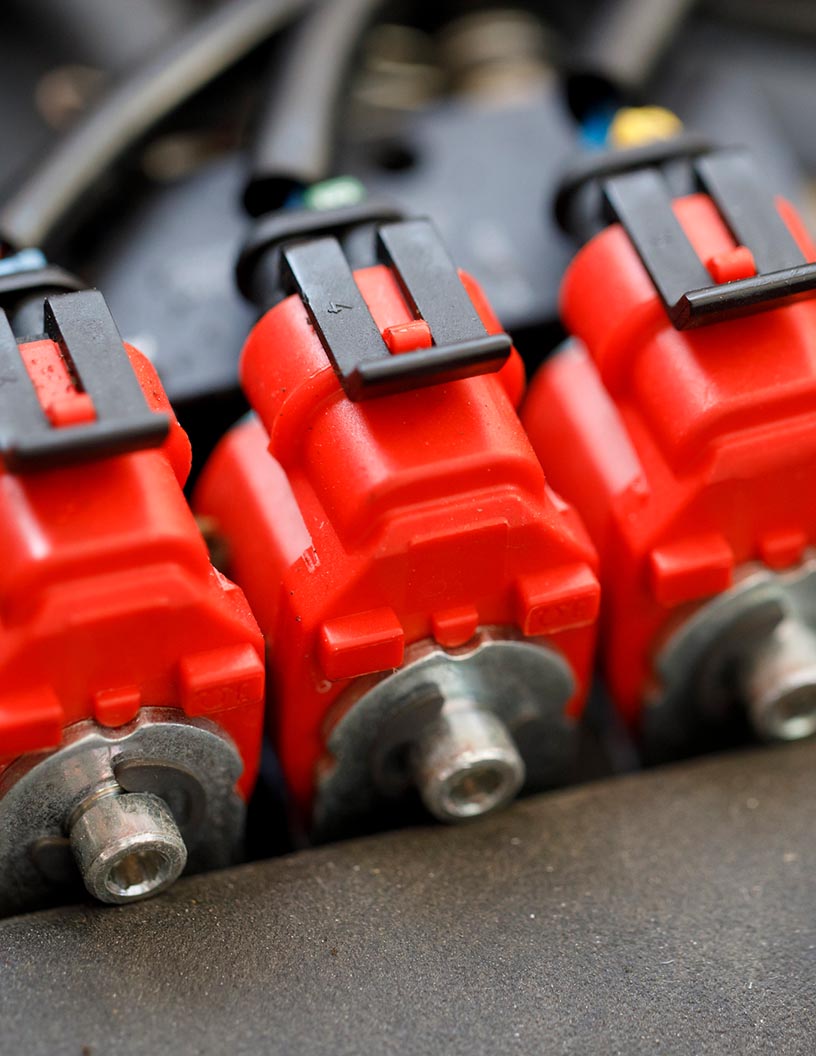


The automotive gasoline direct injection (GDI) systems market share is expected to increase by 2.92 million units from 2020 to 2025, and the market’s growth momentum will accelerate at a CAGR of 1.64%.
This automotive gasoline direct injection (GDI) systems market research report provides valuable insights on the post-COVID-19 impact on the market, which will help companies evaluate their business approaches. Furthermore, this report extensively covers automotive gasoline direct injection (GDI) systems market segmentation by application (passenger cars and commercial vehicles) and geography (APAC, Europe, North America, South America, and MEA). The automotive gasoline direct injection (GDI) systems market report also offers information on several market vendors, including BorgWarner Inc., Continental AG, DENSO Corp., Hitachi Ltd., Keihin Corp., MAHLE GmbH, Marelli Holdings Co. Ltd., Mitsubishi Electric Corp., Robert Bosch GmbH, and Stanadyne LLC among others.
What will the Automotive Gasoline Direct Injection (GDI) Systems Market Size be During the Forecast Period?
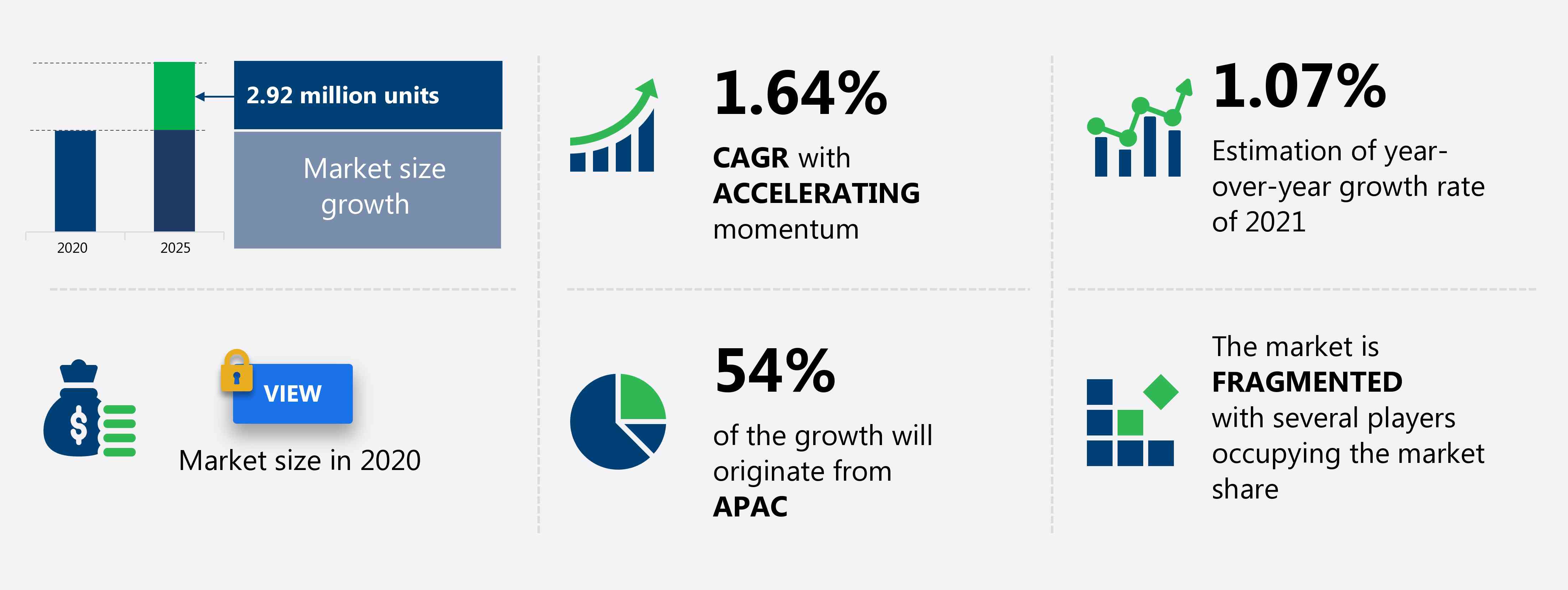
Download the Free Report Sample to Unlock the Automotive Gasoline Direct Injection (GDI) Systems Market Size for the Forecast Period and Other Important Statistics
Automotive Gasoline Direct Injection (GDI) Systems Market: Key Drivers, Trends, and Challenges
The adoption of new or improved emission standards is notably driving the automotive gasoline direct injection (GDI) systems market growth, although factors such as faulty GDI systems leading to vehicle recalls may impede the market growth. Our research analysts have studied the historical data and deduced the key market drivers and the COVID-19 pandemic impact on the automotive gasoline direct injection (GDI) systems market industry. The holistic analysis of the drivers will help in deducing end goals and refining marketing strategies to gain a competitive edge.
Key Automotive Gasoline Direct Injection (GDI) Systems Market Driver
One of the key factors driving the global automotive gasoline direct injection (GDI) systems market is the adoption of new or improved emission standards. Enforcement of stringent emission norms has necessitated the use of fuel-efficient technologies such as automotive GDI systems, especially in developing economies in APAC and MEA. This is because these technologies ensure proper combustion of fuel and reduce the toxicity of harmful emissions such as particulate matter, hydrocarbons, and carbon monoxide that are released into the environment. Furthermore, in most of the major automotive markets, such as the US, the UK, China, and India, Euro 6 emission standards or country-specific equivalents are expected to be implemented during the forecast period. For instance, the Government of India will be implementing the BS-VI by April 2020, for new vehicles, and by April 2021, for existing vehicles. Therefore, the introduction of new emission standards or modification of existing standards requires automotive component manufacturers to be proactive in adopting technologies in line with these standards. Furthermore, the adoption of new or improved emission standards mandates the incorporation of new or advanced technologies, which will have a positive impact on the growth of the global automotive GDI systems market during the forecast period.
Key Automotive Gasoline Direct Injection (GDI) Systems Market Trend
Developments in the field of automotive fuel injection systems are another factor supporting the global automotive gasoline direct injection (GDI) systems market growth in the forecast period. The prominent Tier-1 suppliers operating in the global automotive electric fuel pumps market are continually working on bringing innovations and improvements in fuel injection technology. Such developments and enhancements in the design of a fuel injection system or its components are aiding in improving its overall efficiency, leading to superior vehicle performance. For instance, Delphi Technologies recently developed a next-generation modular fuel injection system for automobiles. It is an ultra-high precision system, which is based on the Euro 6 common rail technology of the company. Furthermore, the system offers significant improvements in emissions, fuel efficiency, reliability, and refinement levels. The modular fuel injection system uses an advanced fuel injector that provides the electronic control unit with real-time information on the operability of the fuel injector. The data from the fuel injector allows the implementation of a closed-loop control technology, which monitors and optimizes the fuel injection events on a real-time basis. The closed-loop control technology also eliminates the compromise needed on fuel injector calibration as needed in conventional fuel injection systems.
Key Automotive Gasoline Direct Injection (GDI) Systems Market Challenge
Faulty GDI system leading to vehicle recalls will be a major challenge for the global automotive gasoline direct injection (GDI) systems market during the forecast period. Fault in the operability of GDI system components such as an electric fuel pump may hamper the overall performance of the engine and the vehicle. Malfunctioning of electric fuel pumps has also led to vehicle recalls occasionally, which have added to the cost burden on automakers as a part of recall costs. Such factors act as market inhibitors for the global automotive GDI systems market. In August 2017, Volkswagen AG (Volkswagen) recalled about 281,000 vehicles in the US due to faulty fuel pumps. The recall came after the diesel gate scandal that had a severe blow to the brand image of the company and its value on the stock market. It was found that the faulty fuel pump in affected vehicles could have caused vehicles to stall leading to safety concerns. Volkswagen was quoted as saying that the interruption of electric power to the fuel pump control module may damage the fuel pump functioning, potentially leading to failure of the fuel pump.
This automotive gasoline direct injection (GDI) systems market analysis report also provides detailed information on other upcoming trends and challenges that will have a far-reaching effect on the market growth. The actionable insights on the trends and challenges will help companies evaluate and develop growth strategies for 2021-2025.
Parent Market Analysis
Technavio categorizes the global automotive gasoline direct injection (GDI) systems market as a part of the global automotive components and accessories market. Our research report has extensively covered external factors influencing the parent market growth potential in the coming years, which will determine the levels of growth of the automotive gasoline direct injection (GDI) systems market during the forecast period.
Who are the Major Automotive Gasoline Direct Injection (GDI) Systems Market Vendors?
The report analyzes the market’s competitive landscape and offers information on several market vendors, including:
- BorgWarner Inc.
- Continental AG
- DENSO Corp.
- Hitachi Ltd.
- Keihin Corp.
- MAHLE GmbH
- Marelli Holdings Co. Ltd.
- Mitsubishi Electric Corp.
- Robert Bosch GmbH
- Stanadyne LLC
This statistical study of the automotive gasoline direct injection (GDI) systems market encompasses successful business strategies deployed by the key vendors. The automotive gasoline direct injection (GDI) systems market is fragmented and the vendors are deploying organic and inorganic growth strategies to compete in the market.
Product Insights and News
- Continental AG - The company manufactures automotive GDI systems for automotive OEMs.
To make the most of the opportunities and recover from the post-COVID-19 impact, market vendors should focus more on the growth prospects in the fast-growing segments, while maintaining their positions in the slow-growing segments.
The automotive gasoline direct injection (GDI) systems market forecast report offers in-depth insights into key vendor profiles. The profiles include information on the production, sustainability, and prospects of the leading companies.
Automotive Gasoline Direct Injection (GDI) Systems Market Value Chain Analysis
Our report provides extensive information on the value chain analysis for the automotive gasoline direct injection (GDI) systems market, which vendors can leverage to gain a competitive advantage during the forecast period. The end-to-end understanding of the value chain is essential in profit margin optimization and evaluation of business strategies. The data available in our value chain analysis segment can help vendors drive costs and enhance customer services during the forecast period.
The value chain of the global automotive components and accessories market includes the following core components:
- Inputs
- Inbound logistics
- Operations
- Outbound logistics
- Marketing and sales
- Service
- Support activities
- Innovation
The report has further elucidated other innovative approaches being followed by manufacturer providers to ensure a sustainable market presence.
Which are the Key Regions for Automotive Gasoline Direct Injection (GDI) Systems Market?
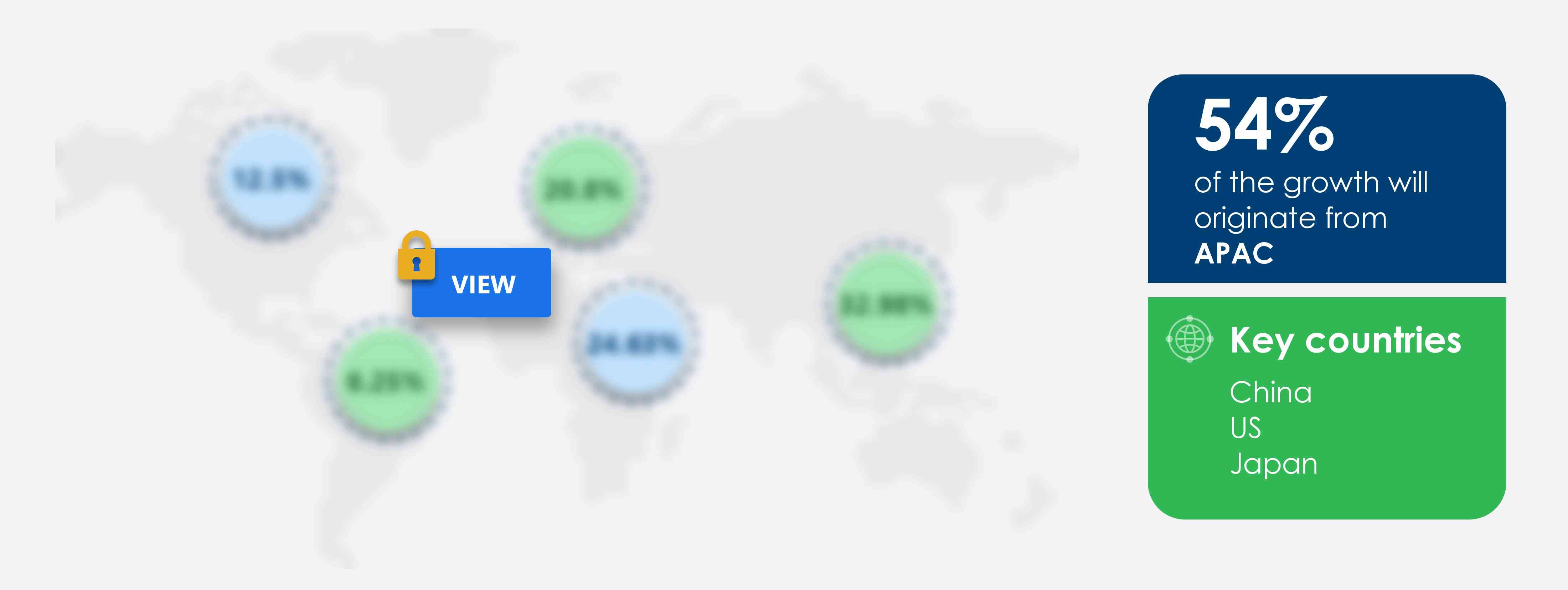
For more insights on the market share of various regions Request for a FREE sample now!
54% of the market’s growth will originate from APAC during the forecast period. China, Japan, and India are the key markets for the automotive gasoline direct injection (GDI) systems market in APAC. Market growth in this region will be faster than the growth of the market in other regions.
Increasing income levels and expanding the middle class in emerging economies will facilitate the automotive gasoline direct injection (GDI) systems market growth in APAC over the forecast period. This market research report entails detailed information on the competitive intelligence, marketing gaps, and regional opportunities in store for vendors, which will assist in creating efficient business plans.
COVID Impact and Recovery Analysis
The outbreak of COVID-19 in 2020 led to a temporary halt in the production and sales of automobiles and related components and accessories. This negatively impacted the export of automotive components from key APAC countries, such as China, India, and Taiwan in 2020. Therefore, the automotive GDI systems market witnessed a slow growth in APAC in 2020. In addition, the second wave of the pandemic in the majority of the countries in APAC has obstructed automotive sales and reduced the demand for automotive GDI systems in Q1 2021. However, the reopening of international boundaries for trade is likely to enhance the demand for automotive GDI systems in APAC during the forecast period.
What are the Revenue-generating Application Segments in the Automotive Gasoline Direct Injection (GDI) Systems Market?
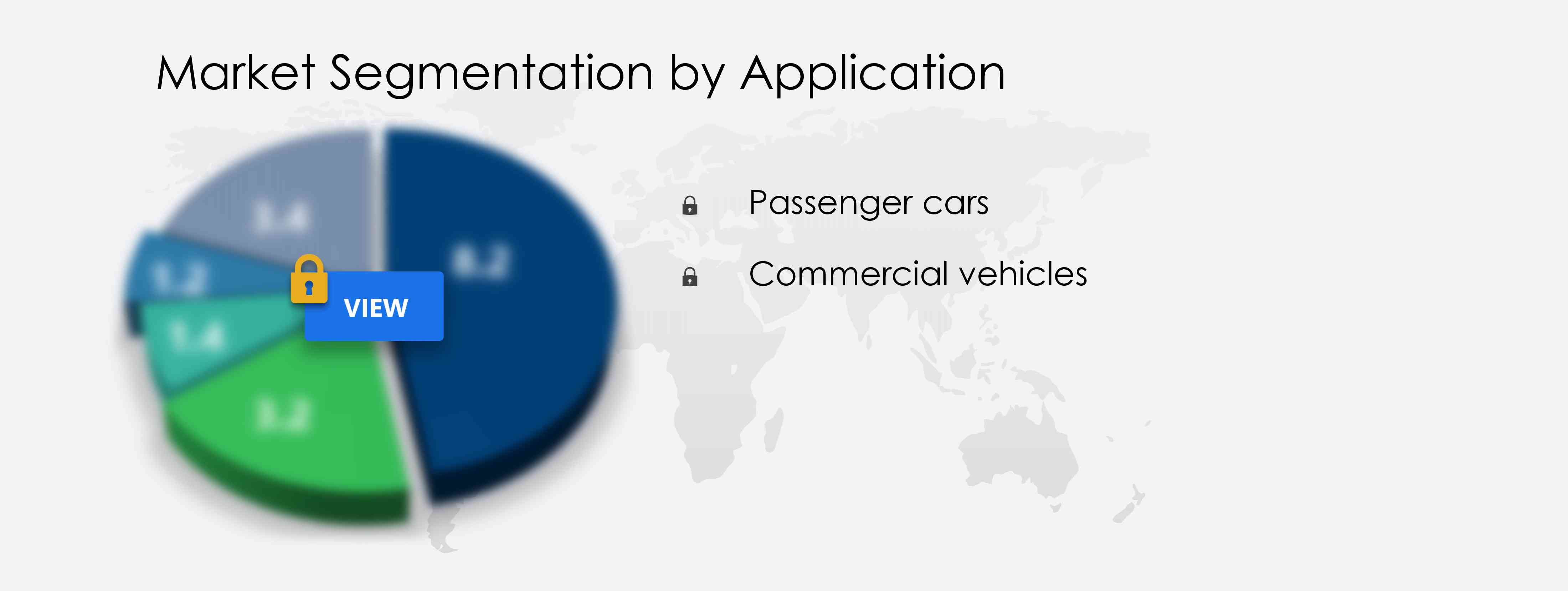
To gain further insights on the market contribution of various segments Request for a FREE sample
The automotive gasoline direct injection (GDI) systems market share growth by the segments. The passenger car segment will be significant during the forecast period. The automakers are focusing on increasing the fuel efficiency of passenger cars and reducing their emissions. Hence, the demand for advanced systems, such as GDI systems, is increasing at a rapid rate during the forecast period.
This report provides an accurate prediction of the contribution of all the segments to the growth of the automotive gasoline direct injection (GDI) systems market size and actionable market insights on the post-COVID-19 impact on each segment.
Similar Reports:
|
Automotive Gasoline Direct Injection (GDI) Systems Market Scope |
|
|
Report Coverage |
Details |
|
Page number |
120 |
|
Base year |
2020 |
|
Forecast period |
2021-2025 |
|
Growth momentum & CAGR |
Accelerate at a CAGR of 1.64% |
|
Market growth 2021-2025 |
2.92 million units |
|
Market structure |
Fragmented |
|
YoY growth (%) |
1.07 |
|
Regional analysis |
APAC, Europe, North America, South America, and MEA |
|
Performing market contribution |
APAC at 54% |
|
Key consumer countries |
China, US, Japan, Germany, and India |
|
Competitive landscape |
Leading companies, Competitive strategies, Consumer engagement scope |
|
Key companies profiled |
BorgWarner Inc., Continental AG, DENSO Corp., Hitachi Ltd., Keihin Corp., MAHLE GmbH, Marelli Holdings Co. Ltd., Mitsubishi Electric Corp., Robert Bosch GmbH, and Stanadyne LLC |
|
Market dynamics |
Parent market analysis, Market growth inducers and obstacles, Fast-growing and slow-growing segment analysis, COVID 19 impact and recovery analysis and future consumer dynamics, Market condition analysis for forecast period |
|
Customization purview |
If our report has not included the data that you are looking for, you can reach out to our analysts and get segments customized. |
What are the Key Data Covered in this Automotive Gasoline Direct Injection (GDI) Systems Market Report?
- CAGR of the market during the forecast period 2021-2025
- Detailed information on factors that will drive automotive gasoline direct injection (GDI) systems market growth during the next five years
- Precise estimation of the automotive gasoline direct injection (GDI) systems market size and its contribution to the parent market
- Accurate predictions on upcoming trends and changes in consumer behavior
- The growth of the automotive gasoline direct injection (GDI) systems industry across APAC, Europe, North America, South America, and MEA
- A thorough analysis of the market’s competitive landscape and detailed information on vendors
- Comprehensive details of factors that will challenge the growth of automotive gasoline direct injection (GDI) systems market vendors
We can help! Our analysts can customize this report to meet your requirements. Get in touch
 RIA -
RIA - 
