



Automotive Power Steering Motor Market Size 2025-2029
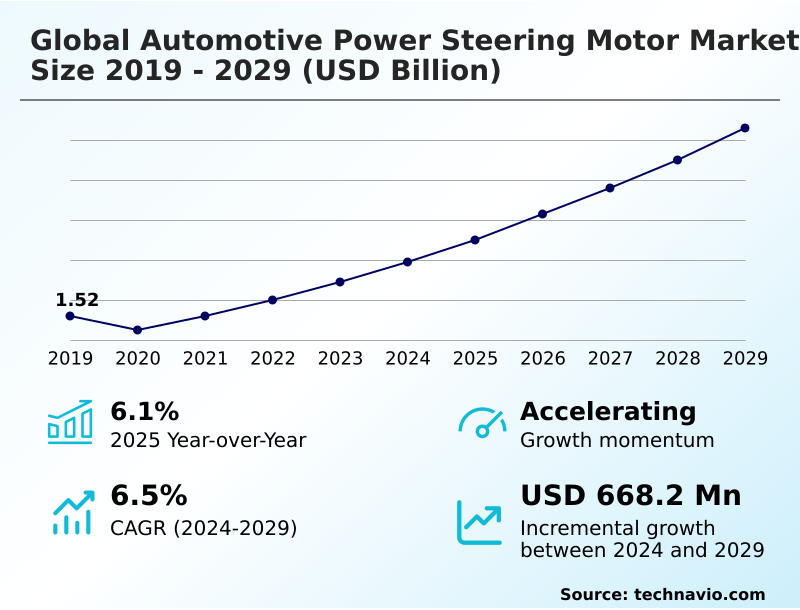
The automotive power steering motor market size is valued to increase by USD 668.2 million, at a CAGR of 6.5% from 2024 to 2029. Rise in demand from emerging APAC countries will drive the automotive power steering motor market.
Major Market Trends & Insights
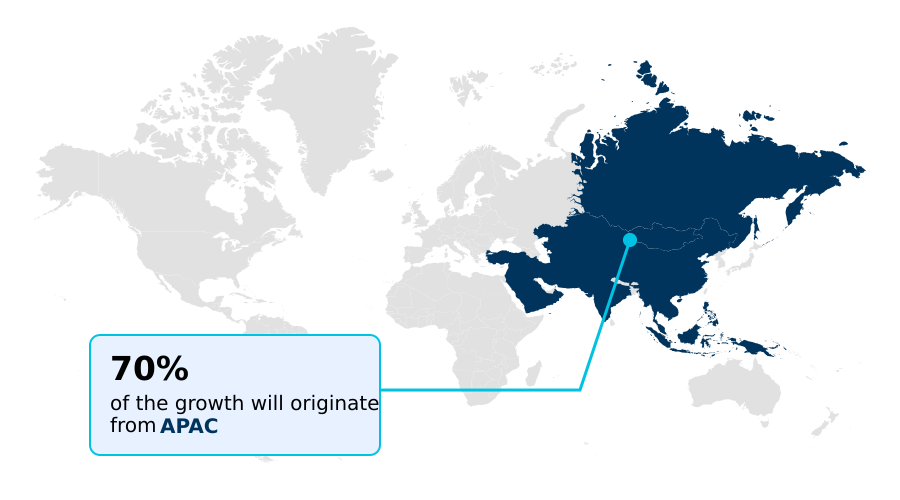
- APAC dominated the market and accounted for a 70.1% growth during the forecast period.
- By Application - PC segment was valued at USD 1.51 billion in 2023
- By Type - Electric power steering (EPS) segment accounted for the largest market revenue share in 2023
Market Size & Forecast
- Market Opportunities: USD 942.1 million
- Market Future Opportunities: USD 668.2 million
- CAGR from 2024 to 2029 : 6.5%
Market Summary
- The automotive power steering motor market is undergoing a significant transformation, defined by the shift from hydraulic systems to advanced electromechanical steering solutions. This evolution is crucial for enhancing vehicle handling, fuel efficiency, and enabling a new generation of safety features.
- A primary driver is the widespread adoption of electric power steering (EPS) and electro-hydraulic power steering (EHPS) across all vehicle segments, a trend reinforced by stringent emissions regulations. Concurrently, the industry is witnessing rapid innovation toward steer-by-wire technology, which promises to revolutionize vehicle interior design and pave the way for fully autonomous vehicle steering.
- For instance, an automaker developing a new EV platform faces the complex task of integrating a power steering motor control unit into a centralized E/E architecture. This scenario demands meticulous ECU integration, adherence to functional safety (ISO 26262) standards, and seamless CAN bus communication to ensure fail-safe operation.
- However, this increasing system complexity, coupled with persistent cost pressures from the demand side, presents a significant challenge. The market's trajectory will be shaped by how effectively manufacturers balance these demands while advancing high-power-density motors and robust redundancy designs.
What will be the Size of the Automotive Power Steering Motor Market during the forecast period?
Get Key Insights on Market Forecast (PDF) Request Free Sample
How is the Automotive Power Steering Motor Market Segmented?
The automotive power steering motor industry research report provides comprehensive data (region-wise segment analysis), with forecasts and estimates in "USD million" for the period 2025-2029, as well as historical data from 2019-2023 for the following segments.
- Application
- PC
- CV
- Type
- Electric power steering (EPS)
- Electro-hydraulic power steering (EHPS)
- Product type
- 12V
- 48V
- 24V
- Geography
- APAC
- China
- Japan
- India
- Europe
- Germany
- UK
- France
- North America
- US
- Canada
- Mexico
- South America
- Brazil
- Argentina
- Colombia
- Middle East and Africa
- Saudi Arabia
- UAE
- South Africa
- Rest of World (ROW)
- APAC
By Application Insights
The pc segment is estimated to witness significant growth during the forecast period.
The automotive power steering motor market is primarily segmented by application, with the passenger car (PC) segment representing the largest share.
The transition to advanced electric power steering (EPS) systems is a defining characteristic of this segment, driven by the need for improved fuel efficiency and the integration of advanced driver-assistance systems (ADAS).
This shift has made legacy hydraulic systems obsolete in new vehicle production. The adoption of EPS in new PCs is nearly 100%, which directly fuels demand for high-performance brushless dc motor technologies and sophisticated ECU integration.
Innovations such as lightweight motor design and steer-by-wire technology are becoming crucial differentiators, paving the way for next-generation vehicle architectures and enhanced autonomous driving capabilities.
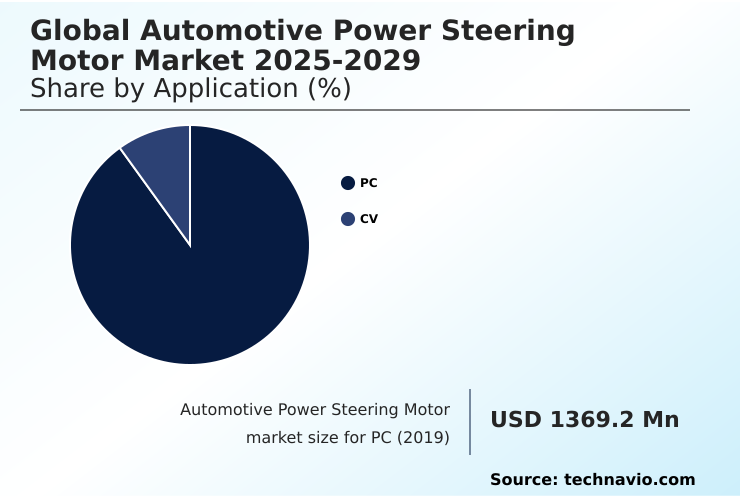
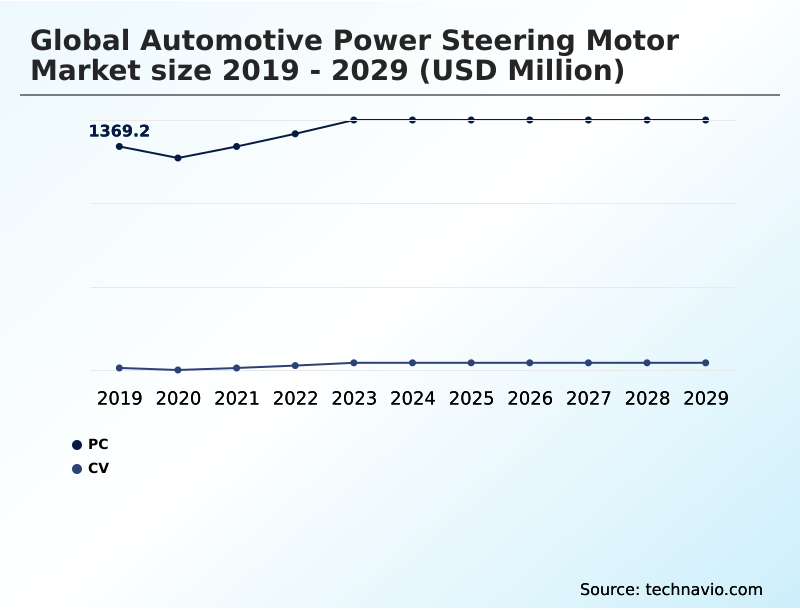
The PC segment was valued at USD 1.51 billion in 2023 and showed a gradual increase during the forecast period.
Regional Analysis
APAC is estimated to contribute 70.1% to the growth of the global market during the forecast period.Technavio’s analysts have elaborately explained the regional trends and drivers that shape the market during the forecast period.
See How Automotive Power Steering Motor Market Demand is Rising in APAC Request Free Sample
The market’s geographic landscape is shaped by varied regional dynamics, with APAC emerging as the central growth engine, projected to contribute approximately 70% of the market's incremental expansion.
This dominance is fueled by massive vehicle production volumes in China and rapid motorization in India.
Within APAC, the adoption of electric power steering (EPS) is nearly universal in new vehicles, supporting the rollout of both mass-market EVs and luxury models featuring technologies like rear-wheel steering systems.
In contrast, the mature markets of Europe and North America are concentrated on high-value applications.
These regions demand high-power-density motors and advanced EPS system thermal management solutions, particularly for premium EVs and platforms designed for autonomous vehicle steering, reflecting a focus on technological sophistication over sheer volume.
Market Dynamics
Our researchers analyzed the data with 2024 as the base year, along with the key drivers, trends, and challenges. A holistic analysis of drivers will help companies refine their marketing strategies to gain a competitive advantage.
- Strategic decision-making in the automotive sector is increasingly influenced by the nuances of steering technology. The debate over EPS vs EHPS fuel efficiency has largely concluded, with electric systems providing clear advantages that have cemented their market dominance.
- This technological shift enables new vehicle capabilities, making the impact of zonal architecture on steering a critical design consideration for OEMs pursuing streamlined electronic platforms. Forward-looking manufacturers are focused on realizing the full spectrum of steer-by-wire system benefits, which include modular vehicle design, enhanced safety through redundancy, and a more engaging driving experience.
- The undisputed brushless motor advantages in EPS—namely superior reliability, precision, and control—are fundamental to this progression. For corporate planning, a thorough cost analysis of different EPS types is essential for optimizing platform strategy, as a well-integrated system can simplify the supply chain and reduce component counts by over 20% compared to legacy hydraulic setups.
- The strategic choice between 12V vs 48V steering motor applications defines a vehicle's electrical architecture, separating standard models from mild-hybrids that require greater power. Seamless ADAS integration with electric steering is now a baseline expectation, placing immense pressure on ensuring functional safety in steering ECUs.
- This necessitates clear redundancy requirements for autonomous steering, making the role of torque sensor in EPS for delivering accurate driver feedback more critical than ever. Mastering the diagnostics for electric power steering faults and the calibration process for steering angle sensors are vital for lifecycle management.
- The quest for efficiency also drives innovation in lightweight materials in steering components and advanced thermal management for EPS motors. Concurrently, the segment for automotive power steering motor for commercial vehicles is expanding, and technologies such as rear-wheel steering for vehicle agility are becoming increasingly prevalent across premium segments.
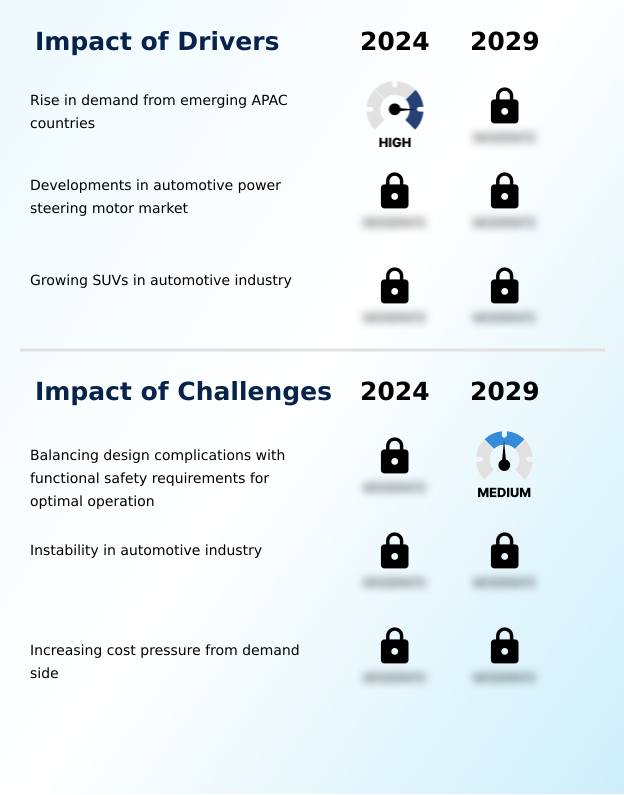
What are the key market drivers leading to the rise in the adoption of Automotive Power Steering Motor Industry?
- The rising demand for automobiles in emerging APAC countries, fueled by economic growth and increasing purchasing power, is a key driver for the market.
- Market growth is propelled by rising vehicle demand in emerging economies and the universal adoption of advanced steering technologies for efficiency and safety.
- In India, for example, the passenger vehicle market recently surpassed 4 million annual sales for the first time, while China’s massive production volume creates unparalleled demand for components like the 12V power steering motor.
- This expansion is intertwined with a crucial technological shift: adopting electric power steering (EPS) improves fuel efficiency by up to 5% over hydraulic systems, helping automakers meet stringent regulations.
- This demand for efficiency, coupled with a focus on lightweight motor design, is further amplified by the global transition to electric vehicles.
- As a result, seamless ECU integration and reliable CAN bus communication have become non-negotiable standards for all new automotive platforms.
What are the market trends shaping the Automotive Power Steering Motor Industry?
- Continuous advances in automotive steering technology represent a key upcoming market trend. This evolution is driven by the integration of electronics and safety systems to improve vehicle performance and the driving experience.
- Key market trends are centered on continuous technological advancement and deeper system integration. With the penetration of electric power steering (EPS) in new passenger cars approaching 100%, the landscape is both mature and highly innovative.
- The development of advanced electromechanical steering systems is enabling superior vehicle dynamics control, prompting leading suppliers to expand production capacity by over 35% in key growth regions to meet surging demand. The push toward steer-by-wire technology is also accelerating, a trend that facilitates autonomous vehicle steering and novel interior designs by removing the mechanical linkage.
- This shift simultaneously elevates the importance of sophisticated EPS fault diagnosis tools and robust fail-safe operation protocols, ensuring system reliability and safety. Additionally, a growing focus on enhancing driver steering feedback through advanced software and haptic feedback steering technologies is shaping the next generation of vehicles.
What challenges does the Automotive Power Steering Motor Industry face during its growth?
- A key challenge affecting industry growth is the need to balance increasing design complexity with stringent functional safety requirements to ensure optimal system operation.
- A primary market challenge is managing the escalating complexity of automotive mechatronics while guaranteeing absolute functional safety (ISO 26262). As vehicles transition toward a centralized E/E architecture, the software within a single power steering motor control unit grows exponentially more complex, even as these architectures aim to reduce physical ECU counts by over 75%.
- This deep integration creates significant validation hurdles, where a single software flaw in the steering ECU could necessitate safety recalls affecting tens of thousands of vehicles. Furthermore, the development of steer-by-wire systems introduces the need for complete steer-by-wire actuator redundancy.
- This requirement for dual or triple redundant hardware and software pathways adds considerable cost and engineering overhead, making robust fail-safe operation a critical but highly resource-intensive objective.
Exclusive Technavio Analysis on Customer Landscape
The automotive power steering motor market forecasting report includes the adoption lifecycle of the market, covering from the innovator’s stage to the laggard’s stage. It focuses on adoption rates in different regions based on penetration. Furthermore, the automotive power steering motor market report also includes key purchase criteria and drivers of price sensitivity to help companies evaluate and develop their market growth analysis strategies.
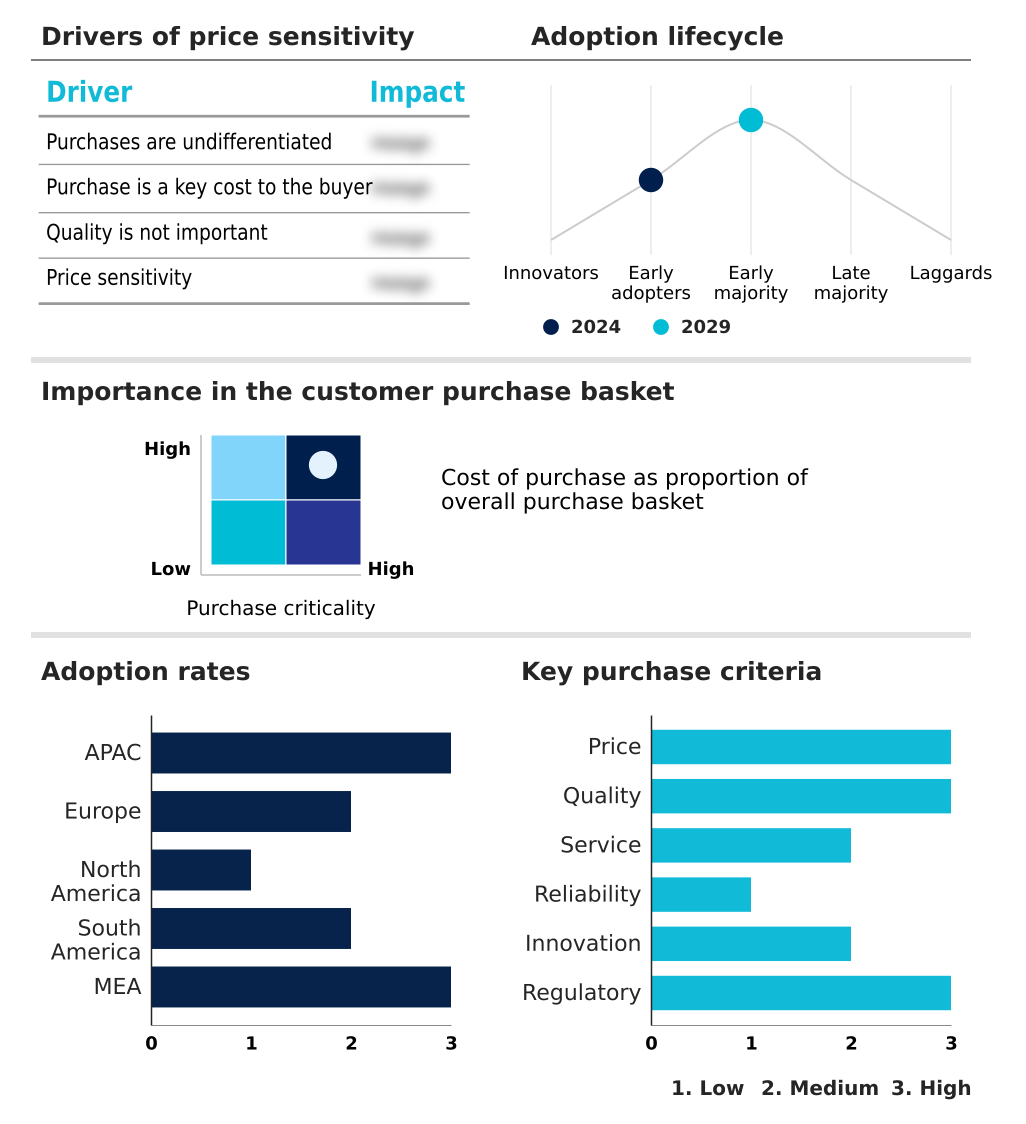
Customer Landscape of Automotive Power Steering Motor Industry
Competitive Landscape
Companies are implementing various strategies, such as strategic alliances, automotive power steering motor market forecast, partnerships, mergers and acquisitions, geographical expansion, and product/service launches, to enhance their presence in the industry.
Allied Motion Technologies Inc. - Key offerings include high-performance brushless motors and integrated electronic control units, enabling advanced electric power steering systems for diverse automotive platforms and applications.
The industry research and growth report includes detailed analyses of the competitive landscape of the market and information about key companies, including:
- Allied Motion Technologies Inc.
- BorgWarner Inc.
- Brose Fahrzeugteile SE and Co. KG
- DENSO Corp.
- General Motors Co.
- Hitachi Astemo Americas Inc.
- HL Mando Co. Ltd.
- Johnson Electric Holdings Ltd.
- JTEKT Corp.
- Lucas TVS LTD.
- Mitsubishi Electric Corp.
- Nexteer Automotive Corp.
- Nidec Corp.
- NSK Ltd.
- Robert Bosch Stiftung GmbH
- thyssenkrupp AG
- ZF Friedrichshafen AG
Qualitative and quantitative analysis of companies has been conducted to help clients understand the wider business environment as well as the strengths and weaknesses of key industry players. Data is qualitatively analyzed to categorize companies as pure play, category-focused, industry-focused, and diversified; it is quantitatively analyzed to categorize companies as dominant, leading, strong, tentative, and weak.
Recent Development and News in Automotive power steering motor market
- In January 2025, ZF Friedrichshafen AG and the Rane Group announced a joint venture to manufacture advanced electric power steering systems in India to address growing local demand for innovative automotive technologies.
- In November 2024, JTEKT Corp. completed a significant production capacity expansion for its Electric Power Steering (EPS) systems in India, increasing its output by over 35% to meet rising demand from domestic and international automakers.
- In October 2024, Honda showcased its advanced '0 Series' EV concepts, confirming the integration of steer-by-wire systems to enhance vehicle packaging and enable next-generation autonomous driving features.
- In September 2024, BMW confirmed its Neue Klasse electric vehicle platform, launching from 2025, will feature next-generation steer-by-wire technology and a redesigned steering wheel for integrated advanced driver-assistance systems.
Dive into Technavio’s robust research methodology, blending expert interviews, extensive data synthesis, and validated models for unparalleled Automotive Power Steering Motor Market insights. See full methodology.
| Market Scope | |
|---|---|
| Page number | 294 |
| Base year | 2024 |
| Historic period | 2019-2023 |
| Forecast period | 2025-2029 |
| Growth momentum & CAGR | Accelerate at a CAGR of 6.5% |
| Market growth 2025-2029 | USD 668.2 million |
| Market structure | Fragmented |
| YoY growth 2024-2025(%) | 6.1% |
| Key countries | China, Japan, India, South Korea, Australia, Indonesia, Germany, UK, France, Italy, The Netherlands, Spain, US, Canada, Mexico, Brazil, Argentina, Colombia, Saudi Arabia, UAE, South Africa, Israel and Turkey |
| Competitive landscape | Leading Companies, Market Positioning of Companies, Competitive Strategies, and Industry Risks |
Research Analyst Overview
- The evolution of the automotive power steering motor is pivotal to modern vehicle design, with the technology now forming the core of advanced automotive mechatronics. The market is defined by the industry-wide migration to electric power steering (EPS), which is further segmented into rack-assist EPS (REPS), column-assist EPS (CEPS), and pinion-assist EPS.
- A key boardroom consideration is that adopting these systems can reduce a vehicle's fuel consumption by up to 5%, directly impacting corporate compliance with stringent emissions standards. Standard systems integrate a brushless DC motor, a torque sensor, and a steering angle sensor, but the technological frontier is advancing rapidly toward steer-by-wire.
- This innovation demands an unwavering focus on fail-safe operation and sophisticated redundancy design within the power steering motor control unit. Advanced ADAS integration and precise vehicle dynamics control depend on flawless ECU integration via CAN bus communication.
- Key R&D challenges for manufacturers include perfecting lightweight motor design, managing NVH reduction through effective vibration damping, and ensuring the reliability of the complete steering gear assembly, from ubiquitous 12V power steering motor systems to emerging 48V mild-hybrid steering solutions. This landscape solidifies electromechanical steering as a critical domain of innovation and investment.
What are the Key Data Covered in this Automotive Power Steering Motor Market Research and Growth Report?
-
What is the expected growth of the Automotive Power Steering Motor Market between 2025 and 2029?
-
USD 668.2 million, at a CAGR of 6.5%
-
-
What segmentation does the market report cover?
-
The report is segmented by Application (PC, CV), Type (Electric power steering (EPS), Electro-hydraulic power steering (EHPS)), Product Type (12V, 48V, 24V) and Geography (APAC, Europe, North America, South America, Middle East and Africa)
-
-
Which regions are analyzed in the report?
-
APAC, Europe, North America, South America and Middle East and Africa
-
-
What are the key growth drivers and market challenges?
-
Rise in demand from emerging APAC countries, Balancing design complications with functional safety requirements for optimal operation
-
-
Who are the major players in the Automotive Power Steering Motor Market?
-
Allied Motion Technologies Inc., BorgWarner Inc., Brose Fahrzeugteile SE and Co. KG, DENSO Corp., General Motors Co., Hitachi Astemo Americas Inc., HL Mando Co. Ltd., Johnson Electric Holdings Ltd., JTEKT Corp., Lucas TVS LTD., Mitsubishi Electric Corp., Nexteer Automotive Corp., Nidec Corp., NSK Ltd., Robert Bosch Stiftung GmbH, thyssenkrupp AG and ZF Friedrichshafen AG
-
Market Research Insights
- The market's dynamics are dictated by a decisive shift toward advanced power assist modules, driven by stringent regulatory and performance mandates. Modern electric power steering systems can improve overall vehicle fuel efficiency by up to 5% compared to legacy hydraulic versions, a critical factor for manufacturers.
- These systems are foundational for effective vehicle stability management and enable a wide array of driver aids. The inherent complexity requires sophisticated EPS fault diagnosis capabilities and precise steering system calibration at the point of manufacture, which can reduce warranty-related service events by over 15%.
- This technological pivot compels suppliers to deliver high-reliability components that support enhanced driver steering feedback and fail-safe operations.
We can help! Our analysts can customize this automotive power steering motor market research report to meet your requirements.