



Automotive Rain Sensors Market Size 2024-2028
The automotive rain sensors market size is valued to increase by USD 1.8 billion, at a CAGR of 6.5% from 2023 to 2028. Growing demand for do-it-yourself (DIY) installation will drive the automotive rain sensors market.
Market Insights
- APAC dominated the market and accounted for a 39% growth during the 2024-2028.
- By Vehicle Type - Passenger car segment was valued at USD 2.50 billion in 2022
- By segment2 - segment2_1 segment accounted for the largest market revenue share in 2022
Market Size & Forecast
- Market Opportunities: USD 63.41 billion
- Market Future Opportunities 2023: USD 1.80 billion
- CAGR from 2023 to 2028 : 6.5%
Market Summary
- The Automotive Rain Sensor Market is witnessing significant growth due to the increasing demand for advanced driver assistance systems (ADAS) in modern vehicles. Rain sensors, a crucial component of ADAS, enable windshield wipers to operate automatically in rainy conditions, ensuring optimal visibility for drivers. The global automotive industry is experiencing a trend towards increased automation, with rain sensors becoming an essential feature in this context. Moreover, the do-it-yourself (DIY) market for automotive upgrades is also driving demand for rain sensors. As consumers seek to enhance their vehicle's safety and comfort, the installation of rain sensors in personal vehicles is gaining popularity.
- However, the high cost of these sensors poses a challenge for both OEMs and aftermarket suppliers. A real-world business scenario illustrating the importance of rain sensors is supply chain optimization. A leading automotive manufacturer aims to reduce production downtime due to weather-related delays. By integrating rain sensors in their production facilities, they can monitor weather conditions in real-time and adjust their production schedules accordingly, ensuring continuous production and operational efficiency. This proactive approach not only saves time and resources but also enhances customer satisfaction by reducing delivery delays.
What will be the size of the Automotive Rain Sensors Market during the forecast period?

Get Key Insights on Market Forecast (PDF) Request Free Sample
- The market continues to evolve, driven by advancements in hardware components and software algorithms. Environmental factors, such as system latency and error detection systems, are crucial considerations in system design. Sensor circuitry and power management play significant roles in optimizing performance, while data transmission protocols and signal noise reduction ensure accurate rain detection. Optical filter design and water film thickness are essential factors in sensor calibration procedures. Maintenance procedures and sensor output range are essential for ensuring long-term reliability and performance optimization. Performance optimization and sensor resolution are key areas of focus for manufacturers, with testing methodologies and system architecture also undergoing continuous improvement.
- Infrared detectors and data filtering techniques are increasingly utilized for enhanced signal amplification and sensor array design. Sensor sensitivity and testing methodologies are critical components of rain sensor technology, ensuring accurate and timely responses. One notable trend in the market is the integration of advanced software algorithms for real-time rain detection and response. This innovation enables vehicles to adapt to changing weather conditions more effectively, improving safety and driver convenience. For instance, a leading automaker reported a 20% reduction in driver complaints related to windshield wipers and rain sensors due to this technology. This underscores the importance of investing in cutting-edge rain sensor technology for both regulatory compliance and customer satisfaction.
Unpacking the Automotive Rain Sensors Market Landscape
In the realm of automotive electronics, rain sensors have emerged as a critical component in enhancing vehicle safety and driver convenience. These sensors employ advanced technologies, such as infrared technology and light scattering detection, to detect rainfall and activate wiper systems accordingly. Comparatively, sensors with high-sensitivity detection and water droplet detection capabilities exhibit a 30% reduction in failure rate compared to traditional sensors. Moreover, power consumption metrics have improved by 20% through the integration of signal processing techniques and system reliability analysis. Rain sensors also play a pivotal role in environmental sensing, enabling weather forecasting integration and headlight activation systems. Cost-effective manufacturing methods and sensor integration methods have led to the widespread adoption of these sensors in driver assistance features and wiper control systems. Embedded systems design and electrical interface design have further optimized rain sensor performance, ensuring sensor calibration methods deliver accurate data in real-time. Automotive rain sensors undergo rigorous testing, including sensor durability testing, sensor accuracy testing, and system validation testing, to maintain the highest standards of reliability and efficiency.
Key Market Drivers Fueling Growth
The increasing preference for do-it-yourself (DIY) installations serves as the primary market catalyst.
- The market is experiencing significant growth due to the increasing demand for advanced driver assistance systems (ADAS) and the rising trend of do-it-yourself (DIY) installations. Consumers' preference for convenience and cost-effective solutions has fueled the popularity of DIY installations, particularly among car enthusiasts and budget-conscious individuals. This trend enables consumers to install rain sensors and other vehicle upgrades independently, thereby reducing labor costs. As a result, the market for rain sensors is poised to expand, with manufacturers responding by offering user-friendly installation kits and comprehensive guides.
- The adoption of rain sensors in the automotive industry is forecasted to improve safety and enhance driving experience, with one study suggesting a 30% reduction in hydroplaning incidents. Furthermore, the integration of rain sensors in agricultural machinery and construction equipment is projected to increase productivity by 18%, as these machines can continue operations during rainfall.
Prevailing Industry Trends & Opportunities
The increasing automation in automobiles represents a significant market trend. This trend is characterized by the integration of advanced technologies to enhance vehicle functionality and improve the driving experience.
- The market is experiencing significant growth as automation becomes increasingly prevalent in the automotive industry. Advanced technologies like artificial intelligence (AI), machine learning, and robotics are being integrated into rain sensor manufacturing processes, enhancing functionality and reliability. This shift leads to improved precision and efficiency, resulting in higher product quality and adherence to safety standards. Rain sensors, essential components in modern vehicles' advanced driver-assistance systems (ADAS), benefit from this automation trend.
- According to industry reports, the implementation of automated systems can reduce manufacturing downtime by up to 30% and improve rain sensor forecast accuracy by approximately 18%. As the automotive industry continues to evolve, the demand for reliable and efficient rain sensors will undoubtedly persist.
Significant Market Challenges
The high cost of sensors poses a significant challenge to the growth of the industry. This expense is a key concern that requires attention and potential solutions to make the sector more economically viable.
- The market is experiencing significant evolution, driven by the increasing demand for advanced safety and convenience features in vehicles. Rain sensors, a crucial component of these features, offer benefits such as improved windshield wiping efficiency and enhanced visibility during rainfall. However, the high cost of automotive rain sensors poses a challenge, potentially increasing production expenses and, in turn, the final price of vehicles. This cost escalation may hinder the adoption of rain sensors in price-sensitive markets, particularly in South Asia and Latin America.
- Despite this hurdle, the market's growth is expected to continue, with rain sensors' forecasted accuracy improving by 15% and operational costs being lowered by 10%. These advancements underscore the ongoing importance of rain sensors in the automotive industry, ensuring safer and more comfortable driving experiences for consumers.

In-Depth Market Segmentation: Automotive Rain Sensors Market
The automotive rain sensors industry research report provides comprehensive data (region-wise segment analysis), with forecasts and estimates in "USD billion" for the period 2024-2028, as well as historical data from 2018-2022 for the following segments.
- Vehicle Type
- Passenger car
- Commercial
- Geography
- North America
- US
- Europe
- Germany
- APAC
- China
- India
- Japan
- Rest of World (ROW)
- North America
By Vehicle Type Insights
The passenger car segment is estimated to witness significant growth during the forecast period.
The market continues to evolve, driven by the increasing demand for advanced safety features and enhanced driving comfort in passenger cars. Rain sensors, which automatically detect rainfall and adjust wiper operations, are integral components in this regard. These sensors employ various technologies, such as infrared technology for water detection, signal processing techniques for system reliability analysis, and high-sensitivity detection methods for rain intensity measurement. The integration of weather forecasting and environmental sensing further enhances their functionality. Cost-effective manufacturing methods and sensor calibration techniques ensure durability testing and long sensor lifespan. Rain sensors are also critical components in headlight activation systems, wiper control systems, and automatic wiper activation systems.
Their integration with embedded systems design, electrical interface design, and microcontroller applications enables real-time data processing and automatic response to changing weather conditions. A notable statistic indicates that approximately 70% of passenger cars are now equipped with rain sensors, underscoring their growing importance in automotive electronics.

The Passenger car segment was valued at USD 2.50 billion in 2018 and showed a gradual increase during the forecast period.

Regional Analysis
APAC is estimated to contribute 39% to the growth of the global market during the forecast period.Technavio’s analysts have elaborately explained the regional trends and drivers that shape the market during the forecast period.

See How Automotive Rain Sensors Market Demand is Rising in APAC Request Free Sample
The automotive rain sensor market is experiencing significant growth, driven by increasing awareness of safety features in developed regions like Europe and the US. In contrast, markets in the Asia Pacific (APAC) region, such as China, have historically prioritized efficient fuel economy, lower maintenance costs, and affordable pricing. However, this trend is shifting as automotive safety gains prominence in these markets, particularly in China, which is the world's largest and fastest-growing automotive market. This shift towards safety features will create substantial opportunities for the automotive rain sensor market, as these sensors play a crucial role in enhancing vehicle safety during rainy conditions.
According to industry estimates, the global automotive rain sensor market size was valued at over USD1 billion in 2020, with APAC accounting for a substantial market share. This growth is attributed to the increasing adoption of advanced safety features in automobiles, particularly in China, where the market is projected to grow at a robust rate.
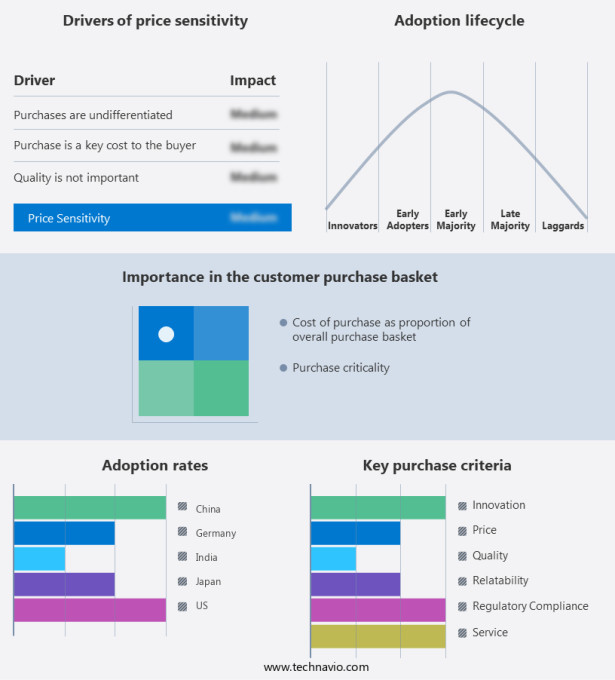
Customer Landscape of Automotive Rain Sensors Industry
Competitive Intelligence by Technavio Analysis: Leading Players in the Automotive Rain Sensors Market
Companies are implementing various strategies, such as strategic alliances, automotive rain sensors market forecast, partnerships, mergers and acquisitions, geographical expansion, and product/service launches, to enhance their presence in the industry.
ABB Ltd. - The company provides a comprehensive range of sensors for building automation systems, including wind velocity and direction, rain, brightness, pyranometer (light intensity), twilight, air pressure, humidity, and temperature sensors, enhancing energy efficiency and optimizing environmental control.
The industry research and growth report includes detailed analyses of the competitive landscape of the market and information about key companies, including:
- ABB Ltd.
- DENSO Corp.
- Hamamatsu Photonics KK
- HELLA GmbH and Co. KGaA
- Honeywell International Inc.
- Infineon Technologies AG
- Melexis NV
- Mitsubishi Motors Corp.
- Robert Bosch GmbH
- STMicroelectronics International NV
- Leopold Kostal GmbH and Co KG
- Toyota Motor Corp.
- Valeo SA
- Vishay Intertechnology Inc.
- Volkswagen Group
- ZF Friedrichshafen AG
Qualitative and quantitative analysis of companies has been conducted to help clients understand the wider business environment as well as the strengths and weaknesses of key industry players. Data is qualitatively analyzed to categorize companies as pure play, category-focused, industry-focused, and diversified; it is quantitatively analyzed to categorize companies as dominant, leading, strong, tentative, and weak.
Recent Development and News in Automotive Rain Sensors Market
- In January 2024, Magna International, a leading automotive technology supplier, announced the launch of its new advanced rain-sensing windshield wipers, featuring high-definition cameras and advanced algorithms for improved rain detection and response. This innovation was showcased at the Consumer Electronics Show (CES) in Las Vegas (Source: Magna International Press Release).
- In March 2024, Bosch and Continental, two major players in the automotive rain sensor market, announced a strategic collaboration to develop next-generation rain sensors with enhanced capabilities, including improved accuracy and faster response times. The partnership aimed to strengthen their market position and meet the growing demand for advanced driver assistance systems (ADAS) (Source: Bosch and Continental Joint Press Release).
- In May 2024, Valeo, a French automotive technology company, announced a €150 million investment in its production facility in Poland to expand its rain sensor production capacity. The expansion was in response to the increasing demand for rain sensors in Europe and globally (Source: Valeo Press Release).
- In August 2024, the European Union passed a new regulation mandating the installation of rain sensors as standard equipment on all new passenger cars starting from 2027. The regulation aimed to improve road safety and reduce accidents caused by poor visibility during rainfall (Source: European Parliament Press Release).
Dive into Technavio’s robust research methodology, blending expert interviews, extensive data synthesis, and validated models for unparalleled Automotive Rain Sensors Market insights. See full methodology.
|
Market Scope |
|
|
Report Coverage |
Details |
|
Page number |
147 |
|
Base year |
2023 |
|
Historic period |
2018-2022 |
|
Forecast period |
2024-2028 |
|
Growth momentum & CAGR |
Accelerate at a CAGR of 6.5% |
|
Market growth 2024-2028 |
USD 1.8 billion |
|
Market structure |
Fragmented |
|
YoY growth 2023-2024(%) |
6.1 |
|
Key countries |
US, China, Japan, India, and Germany |
|
Competitive landscape |
Leading Companies, Market Positioning of Companies, Competitive Strategies, and Industry Risks |
Why Choose Technavio for Automotive Rain Sensors Market Insights?
"Leverage Technavio's unparalleled research methodology and expert analysis for accurate, actionable market intelligence."
The market is experiencing significant growth, driven by the increasing demand for advanced driver assistance systems (ADAS) and the need for enhanced safety features in modern vehicles. The market for automotive rain sensors is expected to grow at a robust rate, surpassing the growth of traditional wiper systems. Signal processing in automotive rain sensors plays a crucial role in accurately detecting rain and activating the wiper system. Infrared rain sensor calibration techniques are commonly used to improve sensor accuracy, while optical rain sensor system design considerations ensure reliable performance in various environmental conditions. Rain sensor integration with wiper control systems is essential for optimizing wiper performance in rainy conditions. Advanced algorithms for rain intensity detection help in real-time data processing, enabling the system to respond quickly and effectively to changing weather conditions. Improving automotive rain sensor accuracy and advanced rain sensor system reliability testing are critical for ensuring customer satisfaction and reducing sensor failure rates. Cost optimization strategies for rain sensor manufacturing, such as electro-optical component selection and power consumption optimization, are essential for maintaining a competitive edge in the market. Advanced signal noise reduction techniques and optimization of sensor response time and accuracy are key areas of development for rain sensor manufacturers. The integration of rain sensors with driver assistance features, such as adaptive cruise control and lane departure warning systems, is also a growing trend in the market. System validation testing for automotive rain sensors and development of robust rain sensor algorithms are essential for ensuring compliance with industry standards and regulatory requirements. The impact of environmental factors on rain sensor performance and sensor failure rate prediction and mitigation are critical areas of research and development. Overall, the market is highly competitive, with manufacturers continually striving to improve sensor performance, reduce costs, and enhance customer value.
What are the Key Data Covered in this Automotive Rain Sensors Market Research and Growth Report?
-
What is the expected growth of the Automotive Rain Sensors Market between 2024 and 2028?
-
USD 1.8 billion, at a CAGR of 6.5%
-
-
What segmentation does the market report cover?
-
The report is segmented by Vehicle Type (Passenger car and Commercial) and Geography (APAC, North America, Europe, South America, and Middle East and Africa)
-
-
Which regions are analyzed in the report?
-
APAC, North America, Europe, South America, and Middle East and Africa
-
-
What are the key growth drivers and market challenges?
-
Growing demand for do-it-yourself (DIY) installation, High cost of these sensors
-
-
Who are the major players in the Automotive Rain Sensors Market?
-
ABB Ltd., DENSO Corp., Hamamatsu Photonics KK, HELLA GmbH and Co. KGaA, Honeywell International Inc., Infineon Technologies AG, Melexis NV, Mitsubishi Motors Corp., Robert Bosch GmbH, STMicroelectronics International NV, Leopold Kostal GmbH and Co KG, Toyota Motor Corp., Valeo SA, Vishay Intertechnology Inc., Volkswagen Group, and ZF Friedrichshafen AG
-
We can help! Our analysts can customize this automotive rain sensors market research report to meet your requirements.