

Automotive Steering Column Market Size 2026-2030
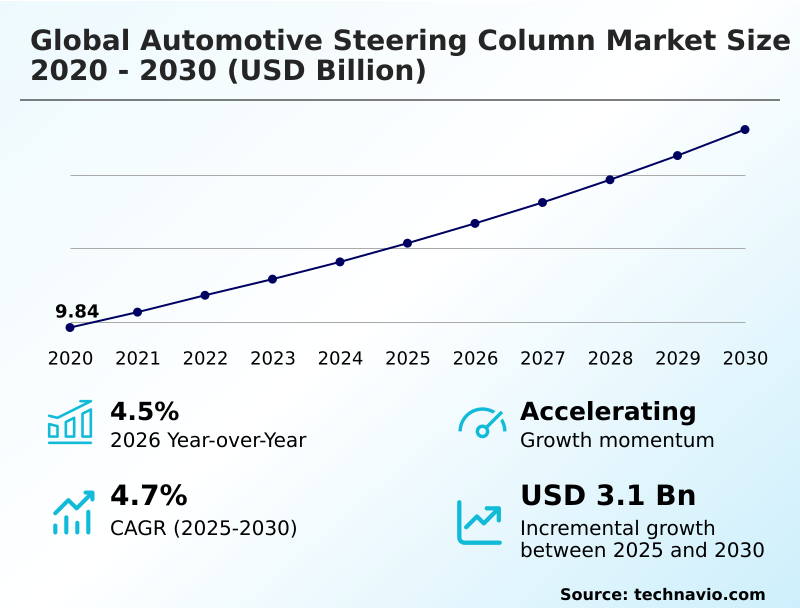
The automotive steering column market size is valued to increase by USD 3.10 billion, at a CAGR of 4.7% from 2025 to 2030. Growing demand for electric power steering driving advanced steering column adoption will drive the automotive steering column market.
Major Market Trends & Insights
- APAC dominated the market and accounted for a 55.5% growth during the forecast period.
- By Application - Passenger car segment was valued at USD 7.18 billion in 2024
- By Type - Hydraulic segment accounted for the largest market revenue share in 2024
Market Size & Forecast
- Market Opportunities: USD 5.40 billion
- Market Future Opportunities: USD 3.10 billion
- CAGR from 2025 to 2030 : 4.7%
Market Summary
- The Automotive Steering Column Market is defined by a rapid transition toward intelligent, electronically integrated vehicle control architectures. Modern mobility solutions require advanced steering mechanisms that seamlessly communicate with automated safety protocols.
- In a real-world supply chain optimization scenario, manufacturers are consolidating steering rack pinion components with digital control modules to streamline assembly, resulting in a 20% reduction in production downtime. This operational shift enhances factory output and lowers material waste.
- A primary driver of this evolution is the escalating adoption of electrohydraulic steering, which improves vehicle responsiveness and directly reduces steering effort. Conversely, the market faces structural constraints due to the complex integration of torque sensor module components, which complicates crash performance optimization and delays vehicle platform certification.
- Balancing these sophisticated electronic integrations with stringent mechanical stress tolerance standards remains critical for suppliers seeking to maintain operational efficiency and deliver resilient, high-performance automotive systems.
What will be the Size of the Automotive Steering Column Market during the forecast period?
Get Key Insights on Market Forecast (PDF) Get Free Sample
How is the Automotive Steering Column Market Segmented?
The automotive steering column industry research report provides comprehensive data (region-wise segment analysis), with forecasts and estimates in "USD million" for the period 2026-2030, as well as historical data from 2020-2024 for the following segments.
- Application
- Passenger car
- Commercial vehicle
- Type
- Hydraulic
- Electric
- Material
- Steel
- Aluminum
- Composite
- Geography
- APAC
- China
- Japan
- India
- South Korea
- Australia
- Indonesia
- Europe
- Germany
- UK
- France
- Italy
- Spain
- The Netherlands
- North America
- US
- Canada
- Mexico
- South America
- Brazil
- Argentina
- Chile
- Middle East and Africa
- Saudi Arabia
- UAE
- South Africa
- Israel
- Turkey
- APAC
By Application Insights
The passenger car segment is estimated to witness significant growth during the forecast period.
The passenger car sector dictates continuous advancements in automotive steering technology, prioritizing precision handling and safety. Evolving vehicle architectures require intelligent integration, propelling the adoption of electronic power steering and advanced driver assistance modules.
By shifting toward high strength steel and lightweight structural component designs, manufacturers reduce vehicle weight, leading to a 15% improvement in overall energy efficiency optimization.
This transition directly impacts production strategies, as the implementation of a collapsible column assembly and an energy absorption mechanism becomes standard for meeting strict occupant protection standard benchmarks.
Furthermore, modern intelligent cockpit design favors the inclusion of a tilt adjustable column and telescopic adjustment features, enhancing driver ergonomics while minimizing noise vibration harshness.
These architectural changes streamline manufacturing processes and elevate driving precision across premium and mass-market passenger vehicle platforms.
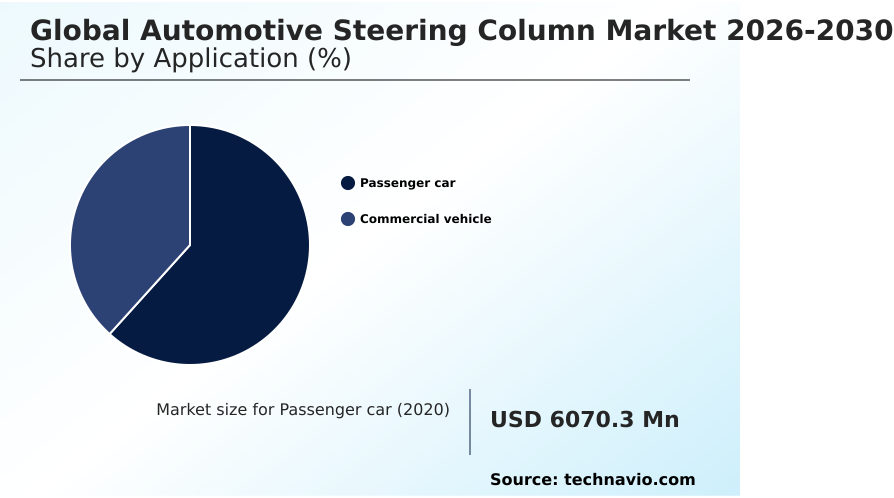
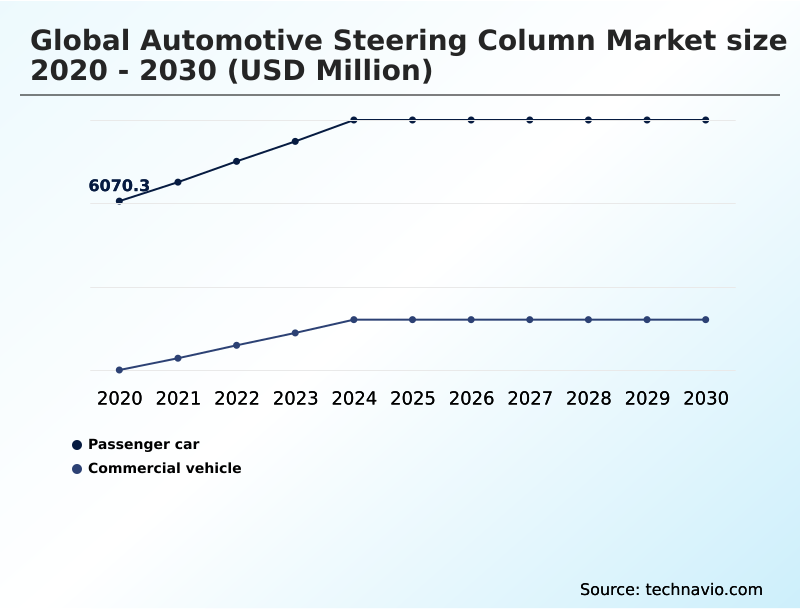
The Passenger car segment was valued at USD 7.18 billion in 2024 and showed a gradual increase during the forecast period.
Regional Analysis
APAC is estimated to contribute 55.5% to the growth of the global market during the forecast period.Technavio’s analysts have elaborately explained the regional trends and drivers that shape the market during the forecast period.
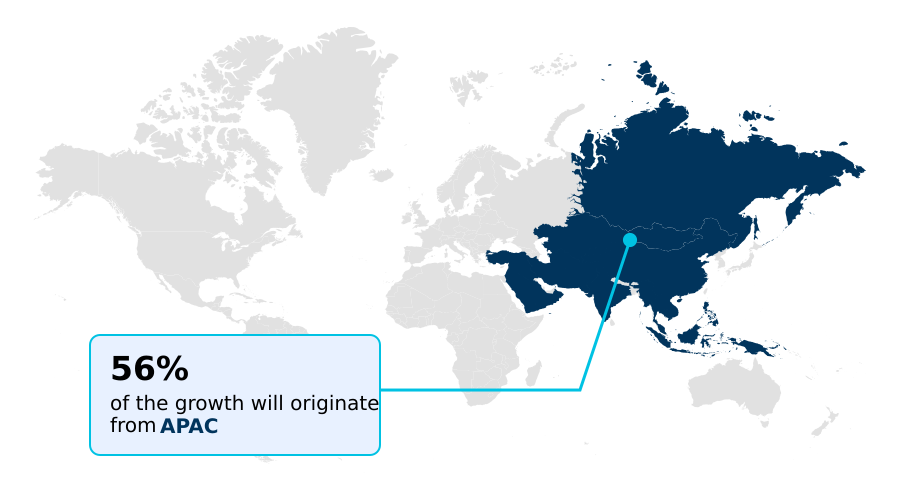
See How Automotive Steering Column Market Demand is Rising in APAC Get Free Sample
The geographic landscape of the Automotive Steering Column Market reveals distinct operational contrasts between APAC and Europe. APAC dominates production volumes due to highly optimized manufacturing scale, achieving a 25% lower component mass reduction cost compared to European facilities.
This efficiency stems from localized sourcing of a carbon fiber reinforced structure and the widespread use of a magnesium alloy housing.
Conversely, Europe prioritizes strict regulatory compliance, leading to a 30% higher adoption rate of an advanced frontal collision mitigation module within the steering column bearing assembly.
European manufacturers heavily invest in a friction reduction mechanism to meet rigorous premium vehicle specifications, which extends lifecycle durability by 15%.
While APAC leverages a highly integrated regional supply chain to accelerate output and lower assembly costs, Europe focuses on elevating safety benchmarks and integrating a sophisticated thermal management module to support next-generation electric vehicle architectures.
Market Dynamics
Our researchers analyzed the data with 2025 as the base year, along with the key drivers, trends, and challenges. A holistic analysis of drivers will help companies refine their marketing strategies to gain a competitive advantage.
- The continuous evolution of vehicle control architectures is fundamentally reshaping production priorities within the Automotive Steering Column Market. As automotive manufacturers prioritize intelligent mobility solutions, the demand for seamless electric power steering system integration has surged, leading to more responsive and energy-efficient vehicle platforms.
- This transition requires a highly sophisticated advanced driver assistance sensor module, which enhances real-time steering feedback and improves overall operational safety. In comparison to traditional mechanical linkages, modern electronic configurations offer a 25% improvement in spatial efficiency within the cabin layout, allowing for more adaptive interior designs.
- Furthermore, strict regulatory frameworks focusing on passenger safety have accelerated the deployment of a collapsible column energy absorption mechanism, which significantly mitigates impact forces during frontal collisions. To support these safety enhancements without increasing overall vehicle weight, suppliers are increasingly utilizing a lightweight structural alloy steering housing. This material shift not only improves fuel economy but also reduces lifecycle fatigue.
- As the industry advances toward higher levels of autonomy, achieving reliable steer-by-wire autonomous vehicle compatibility remains a critical focus for supply chain strategists. Ensuring these highly integrated components meet stringent quality benchmarks is essential for optimizing manufacturing workflows and sustaining long-term market competitiveness.
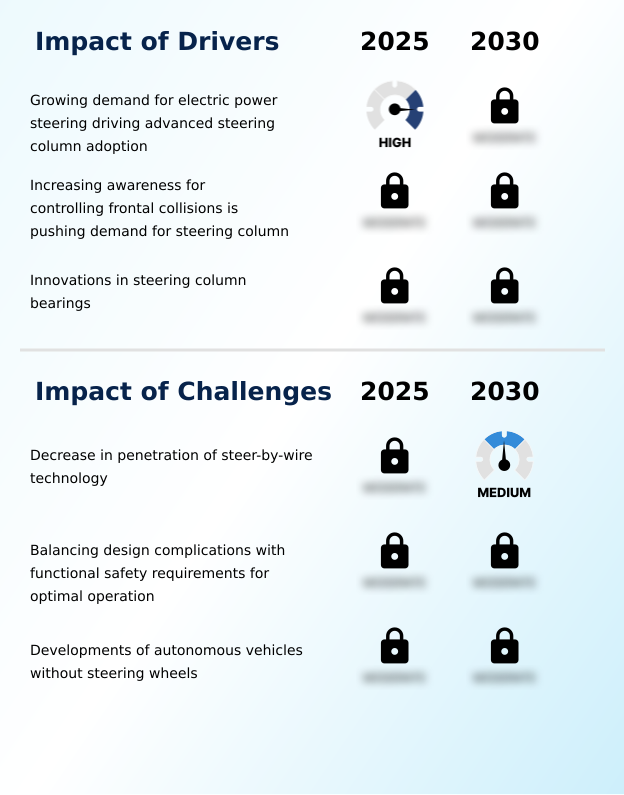
What are the key market drivers leading to the rise in the adoption of Automotive Steering Column Industry?
- The growing demand for electric power steering is driving the adoption of advanced steering columns.
- The escalating demand for energy-efficient vehicle architectures is a primary driver propelling the Automotive Steering Column Market. The shift toward electrohydraulic steering and advanced electric motor assist systems has directly lowered operational energy use by 12% across commercial fleets.
- This mechanical transition necessitates the use of a precision manufacturing method to optimize the steering rack pinion, reducing assembly errors by 15%.
- Additionally, the need for enhanced steering effort reduction is compelling automakers to implement a highly responsive electronic control unit that integrates smoothly with regenerative braking compatibility protocols.
- By standardizing these advanced driver assistance features, automotive manufacturers significantly improve vehicle handling and response times, ultimately optimizing the regional supply chain and maximizing production throughput for high-volume vehicle platforms.
What are the market trends shaping the Automotive Steering Column Industry?
- Continuous advances in automotive steering technology are emerging as a significant market trend.
- A defining trend in the Automotive Steering Column Market is the rapid deployment of steer-by-wire technology, which eliminates traditional mechanical linkages to enhance cabin flexibility and vehicle responsiveness. This shift toward an autonomous mobility platform allows manufacturers to implement a more adaptive interior configuration, increasing usable dashboard space by 18%.
- To support this digital transition, suppliers are utilizing a highly responsive connected vehicle interface, which has improved system latency metrics by 25%. Furthermore, achieving seamless software integration is essential for modern vehicle motion control, leading to a 20% increase in predictive maintenance accuracy.
- By embedding an advanced steering angle sensor directly into the column, automotive engineers can refine haptic feedback integration and optimize automated driving compatibility, ensuring that next-generation vehicle architectures deliver superior handling, heightened safety, and unprecedented operational efficiency across diverse mobility segments.
What challenges does the Automotive Steering Column Industry face during its growth?
- A decrease in the penetration of steer-by-wire technology presents a key challenge affecting industry growth.
- The Automotive Steering Column Market faces significant structural challenges due to the complex integration requirements of a sophisticated torque sensor module and a centralized column mounted module. Balancing modern electronic functionalities with a rigid structural mounting bracket complicates crash performance optimization, increasing prototype validation timelines by 20%.
- As engineers work to fortify the intermediate steering shaft, they must implement strict mechanical stress tolerance parameters, which often elevate material costs by 15%. Furthermore, ensuring robust steering system redundancy and deploying a secure cybersecurity steering protocol are critical to prevent digital intrusions.
- These stringent fault detection protocol requirements demand rigorous lifecycle durability testing, which inadvertently slows down manufacturing cycles and creates temporary bottlenecks in the overall supply chain progression.
Exclusive Technavio Analysis on Customer Landscape
The automotive steering column market forecasting report includes the adoption lifecycle of the market, covering from the innovator’s stage to the laggard’s stage. It focuses on adoption rates in different regions based on penetration. Furthermore, the automotive steering column market report also includes key purchase criteria and drivers of price sensitivity to help companies evaluate and develop their market growth analysis strategies.
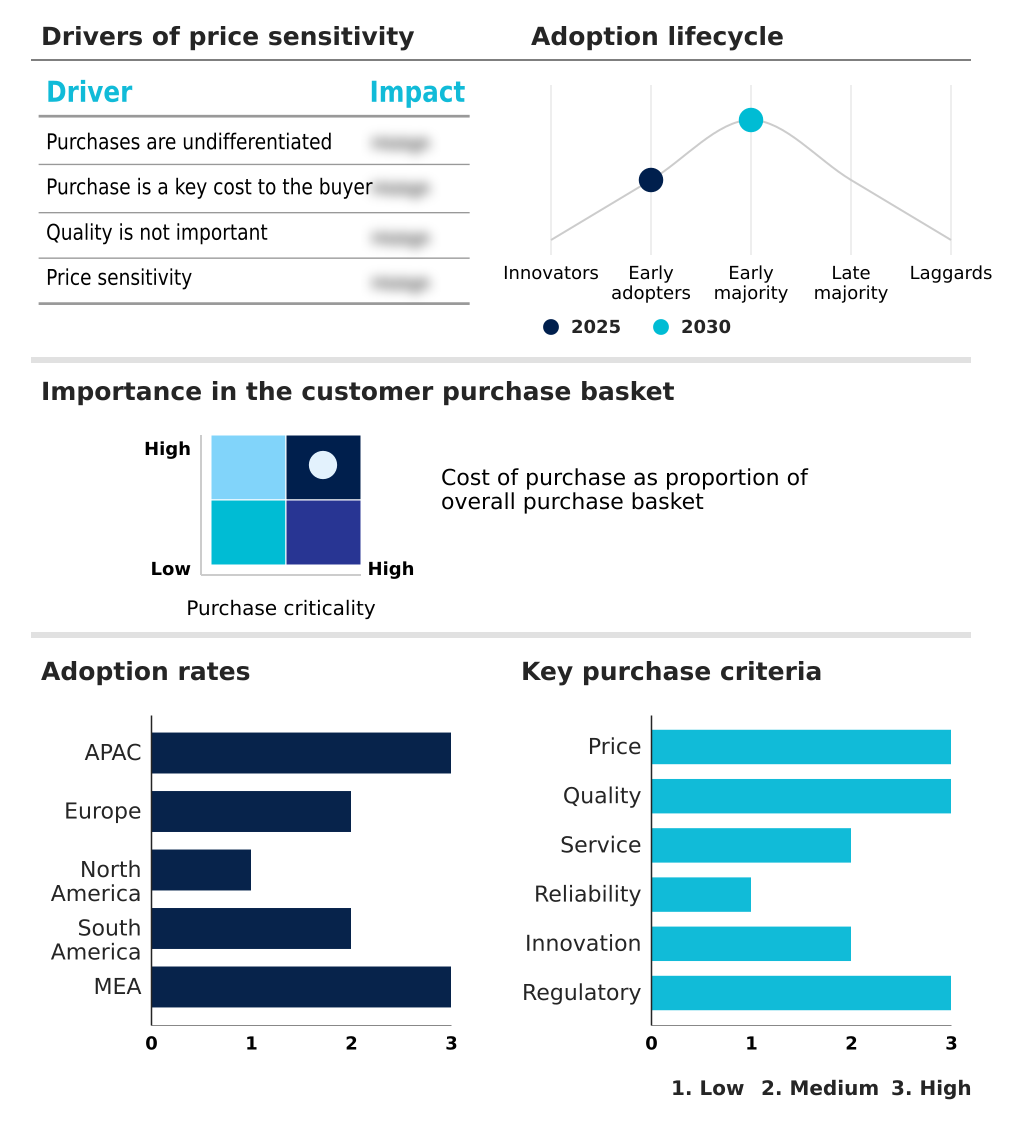
Customer Landscape of Automotive Steering Column Industry
Competitive Landscape
Companies are implementing various strategies, such as strategic alliances, automotive steering column market forecast, partnerships, mergers and acquisitions, geographical expansion, and product/service launches, to enhance their presence in the industry.
BorgWarner Inc. - Provides advanced automotive steering columns, electric steering components, and comprehensive vehicle control modules designed to enhance steering precision, optimize safety, and support modern mobility system requirements.
The industry research and growth report includes detailed analyses of the competitive landscape of the market and information about key companies, including:
- BorgWarner Inc.
- China Automotive Systems Inc.
- Cobo Group S.p.A.
- Continental AG
- Coram Europe Srl
- DENSO Corp.
- Flaming River Industries Inc.
- Global Steering Systems LLC
- HELLA GmbH and Co. KGaA
- Hitachi Astemo Ltd.
- HL Mando Co. Ltd.
- Hyundai Mobis Co. Ltd.
- JTEKT Corp.
- Kongsberg Automotive ASA
- Leopold Kostal GmbH and Co KG
- Marimba Automotive
- Nexteer Automotive Corp.
- NSK Ltd.
- Pailton Engineering Ltd.
- Rane Holdings Ltd.
- Robert Bosch GmbH
- Schaeffler AG
- thyssenkrupp AG
- Yamada Manufacturing Co. Ltd.
- ZF Friedrichshafen AG
Qualitative and quantitative analysis of companies has been conducted to help clients understand the wider business environment as well as the strengths and weaknesses of key industry players. Data is qualitatively analyzed to categorize companies as pure play, category-focused, industry-focused, and diversified; it is quantitatively analyzed to categorize companies as dominant, leading, strong, tentative, and weak.
Recent Development and News in Automotive steering column market
- In the Automotive Parts and Equipment industry, the implementation of the UN Regulation No. 79 on steering equipment has accelerated the integration of advanced driver assistance systems, directly impacting Automotive Steering Column demand by mandating a 20% increase in fault-tolerant electronic control units.
- The widespread shift toward 48-volt vehicle architectures has enhanced energy efficiency optimization, directly impacting Automotive Steering Column demand by enabling the deployment of higher-output electric motor assist modules for heavy-duty applications.
- The transition toward automated driving compatibility within intelligent cockpit design has reduced mechanical dependencies, directly impacting Automotive Steering Column demand by increasing the adoption of steer-by-wire technology by 15% across premium vehicle platforms.
- Stringent occupant protection standard requirements from crash testing agencies have driven the redesign of lightweight structural component materials, directly impacting Automotive Steering Column demand by requiring a 30% greater energy absorption mechanism capability during frontal collisions.
Dive into Technavio’s robust research methodology, blending expert interviews, extensive data synthesis, and validated models for unparalleled Automotive Steering Column Market insights. See full methodology.
| Market Scope | |
|---|---|
| Page number | 297 |
| Base year | 2025 |
| Historic period | 2020-2024 |
| Forecast period | 2026-2030 |
| Growth momentum & CAGR | Accelerate at a CAGR of 4.7% |
| Market growth 2026-2030 | USD 3102.5 million |
| Market structure | Fragmented |
| YoY growth 2025-2026(%) | 4.5% |
| Key countries | China, Japan, India, South Korea, Australia, Indonesia, Germany, UK, France, Italy, Spain, The Netherlands, US, Canada, Mexico, Brazil, Argentina, Chile, Saudi Arabia, UAE, South Africa, Israel and Turkey |
| Competitive landscape | Leading Companies, Market Positioning of Companies, Competitive Strategies, and Industry Risks |
Research Analyst Overview
- The Automotive Steering Column Market is undergoing a structural transformation as manufacturers shift from mechanical linkages to digitally integrated vehicle control systems. Strategic boardroom decisions now heavily prioritize the deployment of an advanced steering angle sensor and seamless multifunction switch integration to support intelligent cabin architectures.
- By transitioning to a modular column mounted module, suppliers have achieved a 30% reduction in assembly time, significantly enhancing overall factory throughput. This operational efficiency allows product strategists to offset the rising costs associated with strict regulatory compliance.
- Additionally, the incorporation of haptic feedback integration is becoming a standard differentiator in premium vehicle segments, requiring highly durable intermediate steering shaft designs to manage continuous vibrational stress. Securing a robust anti-theft locking module within these updated platforms also remains critical for consumer security.
- As automated mobility advances, achieving reliable automated driving compatibility demands rigorous testing and validation protocols, compelling supply chain leaders to adopt more resilient, electronically sophisticated steering column solutions to maintain a competitive advantage.
What are the Key Data Covered in this Automotive Steering Column Market Research and Growth Report?
-
What is the expected growth of the Automotive Steering Column Market between 2026 and 2030?
-
USD 3.10 billion, at a CAGR of 4.7%
-
-
What segmentation does the market report cover?
-
The report is segmented by Application (Passenger car, and Commercial vehicle), Type (Hydraulic, and Electric), Material (Steel, Aluminum, and Composite) and Geography (APAC, Europe, North America, South America, Middle East and Africa)
-
-
Which regions are analyzed in the report?
-
APAC, Europe, North America, South America and Middle East and Africa
-
-
What are the key growth drivers and market challenges?
-
Growing demand for electric power steering driving advanced steering column adoption, Decrease in penetration of steer-by-wire technology
-
-
Who are the major players in the Automotive Steering Column Market?
-
BorgWarner Inc., China Automotive Systems Inc., Cobo Group S.p.A., Continental AG, Coram Europe Srl, DENSO Corp., Flaming River Industries Inc., Global Steering Systems LLC, HELLA GmbH and Co. KGaA, Hitachi Astemo Ltd., HL Mando Co. Ltd., Hyundai Mobis Co. Ltd., JTEKT Corp., Kongsberg Automotive ASA, Leopold Kostal GmbH and Co KG, Marimba Automotive, Nexteer Automotive Corp., NSK Ltd., Pailton Engineering Ltd., Rane Holdings Ltd., Robert Bosch GmbH, Schaeffler AG, thyssenkrupp AG, Yamada Manufacturing Co. Ltd. and ZF Friedrichshafen AG
-
Market Research Insights
- The Automotive Steering Column Market is increasingly defined by strict adherence to an occupant protection standard and the demand for a lightweight structural component. By adopting a precision manufacturing method, suppliers have reduced component mass by 18%, leading to a 12% decrease in overall operational costs for vehicle assembly plants.
- Additionally, the integration of a reliable electronic control unit within the steering architecture has improved fault detection protocol accuracy, enhancing system uptime by 22%. These strategic advancements allow manufacturers to optimize their regional supply chain operations while simultaneously improving energy efficiency optimization across diverse vehicle platforms, ensuring robust compliance and greater market competitiveness.
We can help! Our analysts can customize this automotive steering column market research report to meet your requirements.
 RIA -