

Barcode Scanner Market Size 2025-2029
The barcode scanner market size is forecast to increase by USD 4.92 billion at a CAGR of 9% between 2024 and 2029.
- The market is experiencing significant growth, driven by the increasing adoption of wearable barcode scanners in the manufacturing industry and the rising use of two-dimensional (2D) barcodes. These advancements offer enhanced data capture capabilities and improved efficiency, making them increasingly popular in various sectors. However, regulatory hurdles and supply chain inconsistencies temper the market's growth potential. Regulatory compliance, particularly in healthcare and pharmaceuticals, can pose challenges due to stringent regulations governing data security and privacy. Inconsistencies in the supply chain can lead to delays and inefficiencies, which may discourage some businesses from adopting barcode scanning technology. Another trend is the use of smart wearable devices with capabilities of barcode scanner capabilities, enabling hands-free scanning and increasing productivity.
- Despite these challenges, the market's future looks promising as businesses continue to seek ways to streamline operations and enhance data accuracy. Companies can capitalize on this trend by focusing on regulatory compliance and supply chain optimization, ensuring a smooth adoption process and maximizing the potential benefits of barcode scanning technology. The market is expected to continue growing as industries embrace digitalization and automation.
What will be the Size of the Barcode Scanner Market during the forecast period?
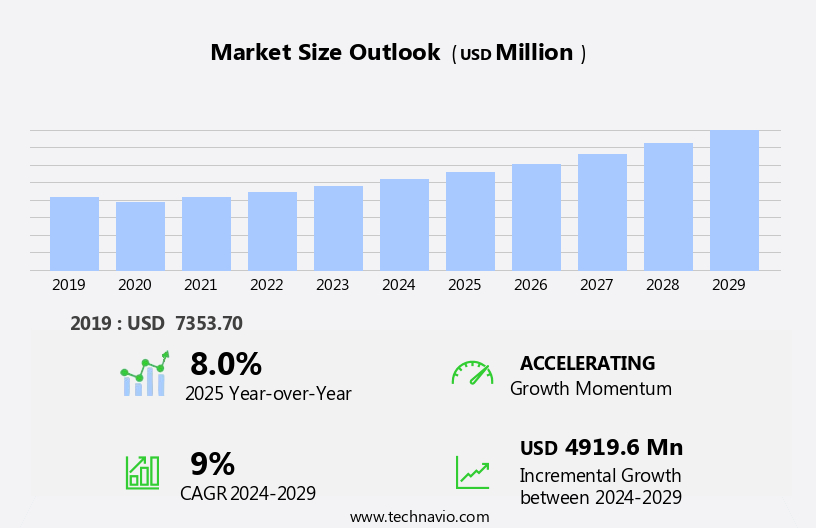
- The market exhibits dynamic activity, with various components and services gaining traction. Scanner warranties ensure business continuity, safeguarding investments. Scanner mounts optimize ergonomics and efficiency in diverse workplaces. Training equips users with essential skills, enhancing productivity. Integration services seamlessly connect scanners with enterprise systems. Calibration maintains scanner accuracy, crucial for error-free data capture. Barcode scanning forums foster knowledge sharing and best practices. The industrial barcode scanning market is witnessing significant growth due to the increasing automation in various industries, including e-commerce retail outlets, courier services, and e-retailers.
- Stands protect scanners from damage and improve accessibility. Customization caters to unique business requirements. Software updates introduce new features and enhance performance. Consulting offers expert guidance on scanner selection and implementation. Support addresses queries and troubleshoots issues promptly. Accessories expand scanner functionality, while maintenance ensures optimal performance. Barcode labels, a prerequisite for scanning, undergo continuous innovation. The smart warehousing sector is a major contributor to the market's growth potential due to the large-scale handling of goods and the need for accurate tracking and supply chain management.
How is this Barcode Scanner Industry segmented?
The barcode scanner industry research report provides comprehensive data (region-wise segment analysis), with forecasts and estimates in "USD million" for the period 2025-2029, as well as historical data from 2019-2023 for the following segments.
- Type
- Rugged barcode scanner
- Non-rugged barcode scanner
- Product
- Mobile computers
- Handheld barcode scanner
- Self-checkout barcode scanner
- POS retail barcode scanner
- Connectivity
- Wired barcode scanners
- Wireless barcode scanners
- Geography
- North America
- US
- Canada
- Europe
- France
- Germany
- UK
- APAC
- China
- India
- Japan
- South Korea
- South America
- Brazil
- Rest of World (ROW)
- North America
By Type Insights
The rugged barcode scanner segment is estimated to witness significant growth during the forecast period. The barcode scanning market is witnessing significant growth due to the increasing adoption of advanced technologies such as OCR technology, decoding algorithms, and image processing in barcode scanning devices. These technologies enable the scanning of various barcode symbologies, including 1D and 2D barcodes, QR codes, and Data Matrix, as well as RFID tags. The integration of GS1 standards and API integration further enhances the functionality of barcode scanners, allowing for real-time data capture and analysis. The mobile workforce is a key driver of the market, with mobile barcode scanners gaining popularity due to their convenience and flexibility. These scanners offer Bluetooth connectivity, Wi-Fi connectivity, and USB connectivity, enabling seamless data transfer and integration with business software and systems. Barcode scanners are indispensable tools in various industries, including manufacturing, logistics, healthcare, retail, and warehousing.
Mobile app scanning and cloud-based scanning solutions are also gaining traction, allowing for remote data access and real-time decision making. Rugged handheld scanners, including imaging scanners and fixed mount scanners, are widely used in industries such as retail, logistics, and healthcare for inventory management and asset tracking. These scanners offer long battery life, error correction, and barcode verification, ensuring accurate and efficient data capture. The use of rugged barcode scanners leads to cost savings by reducing the need for manual data entry and improving operational efficiency. Barcode software and data analytics solutions provide valuable insights for businesses, enabling them to gain a better understanding of their inventory levels, customer demands, and supply chain performance. Real-time insight into inventory levels, component locations, and production progress is crucial for industrial businesses to maintain efficiency and productivity. Barcode scanning technology, including 2D imaging and Machine Learning (ML), ensures high scanning accuracy, even with damaged or poorly printed barcodes.
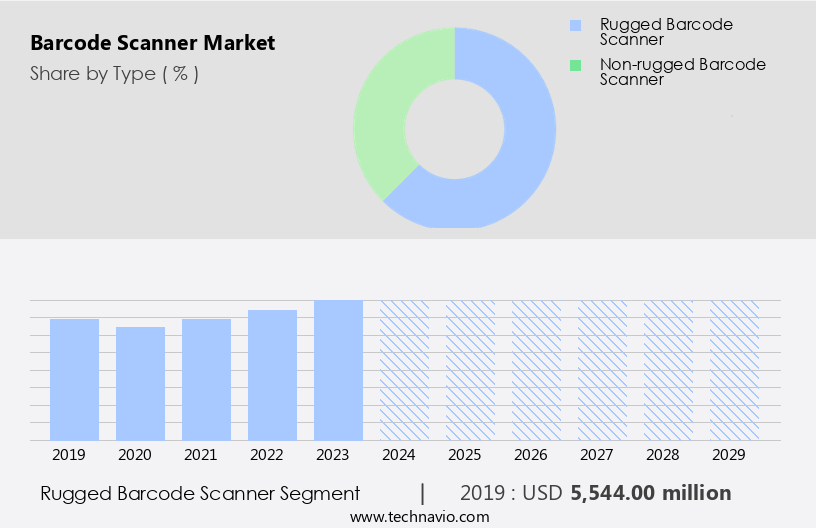
The Rugged barcode scanner segment was valued at USD 5.54 billion in 2019 and showed a gradual increase during the forecast period. These solutions offer features such as data validation, data entry, and document scanning, making data capture and management more efficient and accurate. Scan speed is a crucial factor in the barcode scanning market, with high-speed scanners offering significant advantages in applications such as point of sale and warehouse management. Laser scanners and laser imaging scanners offer the fastest scanning speeds, making them ideal for high-volume applications. The barcode scanning market is experiencing significant growth due to the increasing adoption of advanced technologies, the growing demand for real-time data, and the need for efficient and accurate data capture and management. Rugged handheld scanners, mobile barcode scanners, and barcode software and data analytics solutions are key areas of focus in the market, offering significant benefits for businesses in various industries.
Regional Analysis
North America is estimated to contribute 31% to the growth of the global market during the forecast period. Technavio's analysts have elaborately explained the regional trends and drivers that shape the market during the forecast period.
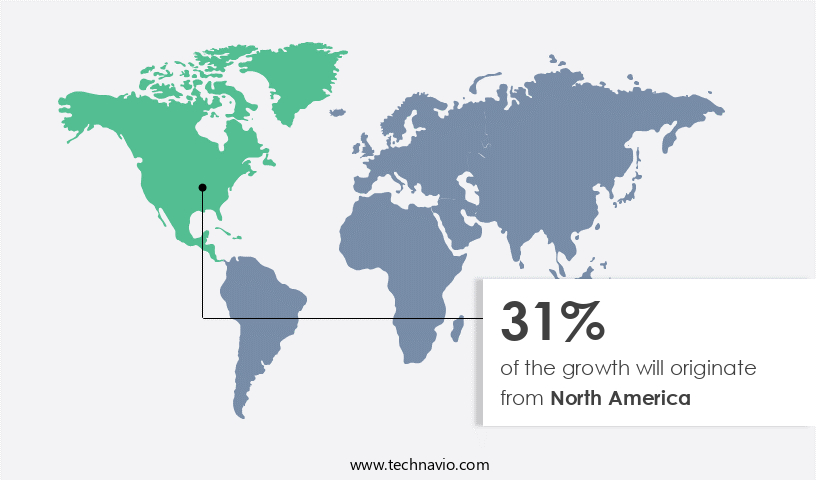
The market in North America is experiencing notable growth due to technological innovations and the expanding utilization of barcode labels in diverse industries. Barcode scanners facilitate the automated scanning of various materials, including paper, plastic, and metal, enhancing productivity and minimizing human errors. The retail sector in North America is a significant driver of the market, with businesses leveraging barcode scanners for efficient inventory management and product tracking. Advancements in OCR technology and the integration of GS1 standards have expanded the capabilities of barcode scanners, enabling them to read multiple barcode symbologies and QR codes. Mobile workforces benefit from handheld scanners and mobile app scanning, while businesses integrate barcode software and data analytics for enhanced decision-making capabilities.
Barcode scanners come in various forms, such as imaging scanners, fixed mount scanners, and mobile barcode scanners, catering to different industries and applications. Technological advancements have led to improvements in scan speed, battery life, error correction, and Bluetooth connectivity. Furthermore, cloud-based scanning and API integration offer real-time data and seamless data entry. Barcode scanners are essential for inventory management, asset tracking, and point of sale transactions, offering significant cost savings. In addition, the integration of RFID and laser scanners extends the functionality of barcode scanning technology, enabling real-time data capture and extended read ranges. Overall, the North American market continues to evolve, driven by technological advancements and the growing demand for automated data capture solutions.
Market Dynamics
Our researchers analyzed the data with 2024 as the base year, along with the key drivers, trends, and challenges. A holistic analysis of drivers will help companies refine their marketing strategies to gain a competitive advantage.
What are the Barcode Scanner market drivers leading to the rise in the adoption of Industry?
- The manufacturing industry's increasing implementation of wearable barcode scanners serves as the primary market driver. Wearable barcode scanners have become essential tools in various industries for managing assets and inventory. These scanners offer several benefits, including increased asset availability, reliability, production output quality, labor efficiency, and material optimization. In the manufacturing sector, particularly in the automotive industry, wearable barcode scanners are increasingly being adopted for their ability to facilitate complex logistics operations. With professionals required to perform multiple tasks simultaneously, such as production and inventory management, the use of these scanners streamlines processes and enhances operational efficiency. Key features of wearable barcode scanners include long battery life, advanced error correction capabilities, and seamless barcode integration.
- The handheld design allows for flexibility and mobility, while the use of barcode software enables data analytics and business intelligence. Scan speed is another crucial factor, ensuring that tasks are completed efficiently. Fixed mount scanners, while effective in stationary environments, cannot match the versatility of wearable scanners. Wearable barcode scanners employ sophisticated technologies, such as 1D barcode verification, to ensure accurate data capture. The user experience and design make these devices user-friendly and easy to use, even in challenging environments. The commerce printing of barcodes ensures seamless integration, making barcode readers an essential tool for merchants and businesses seeking to streamline their operations. By investing in wearable barcode scanners, businesses can gain a competitive edge through improved operational efficiency and data-driven insights.
What are the Barcode Scanner market trends shaping the Industry?
- Two-dimensional (2D) barcodes are gaining significant traction in the market, representing an emerging trend. This advancement in barcode technology offers increased data capacity and improved scanning capabilities compared to traditional one-dimensional codes. The market is experiencing significant growth due to the increasing adoption of advanced 2D barcodes, such as QR codes, Data Matrix, and PDF417. These barcodes are gaining popularity in various industries, including retail, healthcare, and transportation and logistics, for data capture and asset tracking purposes. Among the 2D barcodes, QR codes are the most widely used, enabling data capture through mobile devices like smartphones and tablets. PDF417, which consists of four bars with each pattern being 17 units long, is primarily utilized for inventory management in retail, healthcare, and transportation industries.
- The implementation of cloud-based scanning solutions and the integration of real-time data into decision-making processes are further driving the market growth. RFID scanners and laser scanners continue to hold importance in specific applications, but the user experience offered by mobile app scanning using 2D barcodes is a significant market trend. The Barcode Scanner Market is growing with enhanced scanner accessories and sturdy scanner stands, ensuring efficiency. Regular scanner software updates, scanner maintenance, and scanner calibration improve accuracy and longevity. Troubleshooting solutions, like scanner troubleshooting and scanner training, help businesses optimize performance. Reliable scanner support and scanner warranty provide customer assurance. Tailored scanner customization meets diverse industry needs, while scanner integration services streamline operations. Expert scanner consulting assists companies in maximizing barcode technology benefits. StartFragment EndFragment
How does Barcode Scanner market faces challenges during its growth?
- The expansion of RFID technology implementation is a significant challenge contributing to the industry's growth trajectory. Barcode scanning technology continues to be a vital tool for businesses seeking to streamline inventory management, data entry, and point-of-sale transactions. Two popular types of barcode scanners are Wi-Fi and USB-connected models. While USB scanners offer direct connectivity to computers, Wi-Fi scanners enable remote scanning and real-time data transfer. Both wired and wireless barcode scanners facilitate cost savings by reducing manual data entry and minimizing errors. Advanced features, such as API integration and document scanning, further enhance their functionality. Inventory management systems can benefit significantly from these scanners, ensuring accurate stock levels and efficient order processing.
- Barcode readers are available in various form factors, including handheld, desktop, and industrial-grade models. The integration of RFID technology in barcode scanners has led some businesses to adopt RFID tags instead of traditional barcodes. RFID tags offer longer read ranges and contactless scanning capabilities, making them suitable for large-scale inventory management and supply chain applications. Moreover, barcode scanners can be integrated with POS systems, enabling seamless transactions and improving customer experience. As businesses continue to digitize their operations, the demand for advanced barcode scanning solutions is expected to grow.
Exclusive Customer Landscape
The barcode scanner market forecasting report includes the adoption lifecycle of the market, covering from the innovator's stage to the laggard's stage. It focuses on adoption rates in different regions based on penetration. Furthermore, the barcode scanner market report also includes key purchase criteria and drivers of price sensitivity to help companies evaluate and develop their market growth analysis strategies.
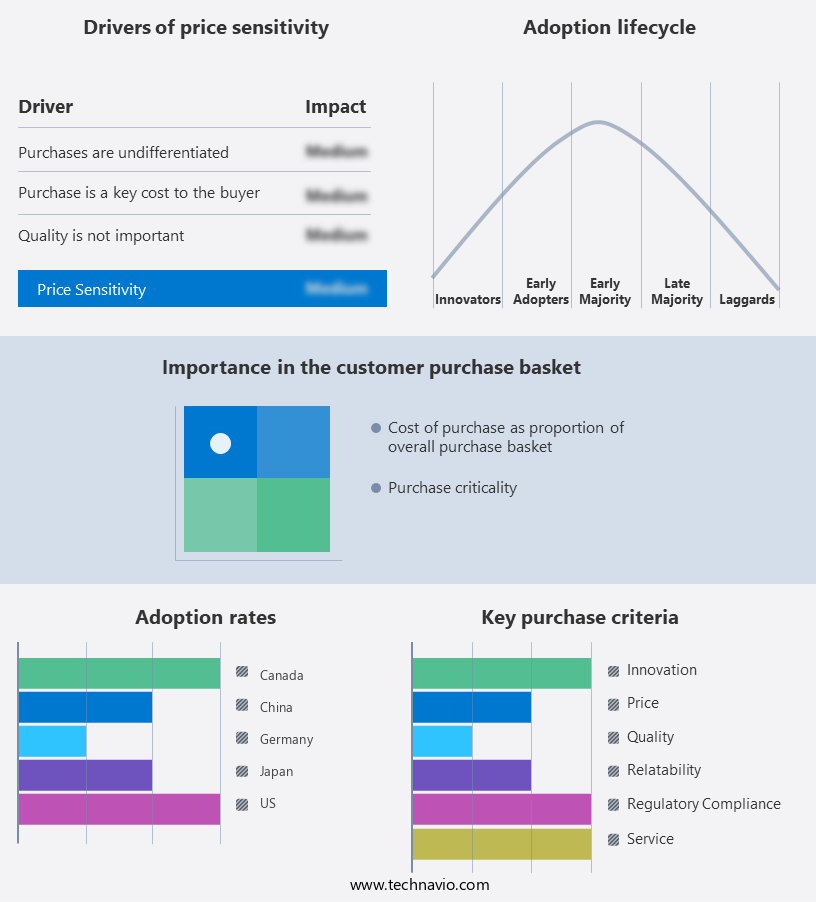
Customer Landscape
Key Companies & Market Insights
Companies are implementing various strategies, such as strategic alliances, barcode scanner market forecast, partnerships, mergers and acquisitions, geographical expansion, and product/service launches, to enhance their presence in the industry.
ASSA ABLOY AB - The company specializes in providing advanced barcode scanning solutions for various industries.
The industry research and growth report includes detailed analyses of the competitive landscape of the market and information about key companies, including:
- ASSA ABLOY AB
- ADVANTECH-AURES
- Bluebird Inc.
- Brady Corp.
- CipherLab Co. Ltd.
- Cognex Corp.
- Datalogic SpA
- DENSO Corp.
- Generalscan
- Honeywell International Inc.
- MilDef Group AB
- NCR Voyix Corp.
- Newland Digital Technology Co. Ltd.
- OMRON Corp.
- Opticon Sensors Europe BV
- SATO Holdings Corp.
- SICK AG
- TVS Electronics Ltd
- Unitech Computer Co. Ltd.
- Zebra Technologies Corp.
Qualitative and quantitative analysis of companies has been conducted to help clients understand the wider business environment as well as the strengths and weaknesses of key industry players. Data is qualitatively analyzed to categorize companies as pure play, category-focused, industry-focused, and diversified; it is quantitatively analyzed to categorize companies as dominant, leading, strong, tentative, and weak.
Recent Development and News in Barcode Scanner Market
- In January 2024, Honeywell Intelligrated launched its new CT40 handheld rugged computer, integrating advanced barcode scanning technology and contactless temperature screening capabilities, addressing the evolving needs of businesses in the wake of the pandemic (Honeywell Press Release).
- In March 2025, DHL and Zebra Technologies announced a strategic partnership to implement Zebra's enterprise-grade barcode scanning solutions across DHL's global network, enhancing operational efficiency and accuracy (DHL Press Release). In the same year, Scandit, a leading barcode scanning technology provider, secured a USD 30 million Series C funding round, fueling its growth in the market and enabling further advancements in its mobile data capture solutions (Crunchbase News).
Research Analyst Overview
The market continues to evolve, driven by advancements in technology and the expanding application scope across various sectors. Barcode scanning technology, encompassing OCR technology and diverse barcode symbologies, underpins efficient supply chain management. GS1 standards ensure universal compatibility, enabling seamless integration of barcode readers into mobile workforces and imaging scanners. Barcode scanning extends beyond 1D and QR codes, encompassing decoding algorithms for Data Matrix and Data Matrix 2D barcodes. Bluetooth connectivity and USB compatibility facilitate integration with business intelligence software and data analytics tools. Real-time data capture from barcode readers fuels decision-making, enhancing inventory management and cost savings. Industrial barcode scanners are essential for data exchange between cyber-physical systems, robots, and other industrial equipment.
Barcode scanning technology is not confined to handheld scanners; it also includes fixed mount scanners and RFID scanners, offering extended read ranges and real-time data. Barcode software, mobile apps, and cloud-based scanning solutions streamline data capture and entry, enabling label printing and asset tracking. Barcode scanners offer various features, including error correction, scan speed, and battery life, catering to diverse industry needs. Barcode verification and API integration further expand their functionality, ensuring data accuracy and streamlining document scanning at the point of sale. Wireless scanners, including Wi-Fi connectivity, enable mobile workforces to capture data anywhere, anytime.
Dive into Technavio's strong research methodology, blending expert interviews, extensive data synthesis, and validated models for unparalleled Barcode Scanner Market insights. See full methodology.
|
Market Scope |
|
|
Report Coverage |
Details |
|
Page number |
219 |
|
Base year |
2024 |
|
Historic period |
2019-2023 |
|
Forecast period |
2025-2029 |
|
Growth momentum & CAGR |
Accelerate at a CAGR of 9% |
|
Market growth 2025-2029 |
USD 4.92 billion |
|
Market structure |
Fragmented |
|
YoY growth 2024-2025(%) |
8.0 |
|
Key countries |
US, China, Germany, Canada, Japan, UK, Brazil, India, France, and South Korea |
|
Competitive landscape |
Leading Companies, Market Positioning of Companies, Competitive Strategies, and Industry Risks |
What are the Key Data Covered in this Barcode Scanner Market Research and Growth Report?
- CAGR of the Barcode Scanner industry during the forecast period
- Detailed information on factors that will drive the growth and forecasting between 2025 and 2029
- Precise estimation of the size of the market and its contribution of the industry in focus to the parent market
- Accurate predictions about upcoming growth and trends and changes in consumer behaviour
- Growth of the market across North America, APAC, Europe, South America, and Middle East and Africa
- Thorough analysis of the market's competitive landscape and detailed information about companies
- Comprehensive analysis of factors that will challenge the barcode scanner market growth of industry companies
We can help! Our analysts can customize this barcode scanner market research report to meet your requirements.
 RIA -
RIA -