

Boron Market Size 2024-2028
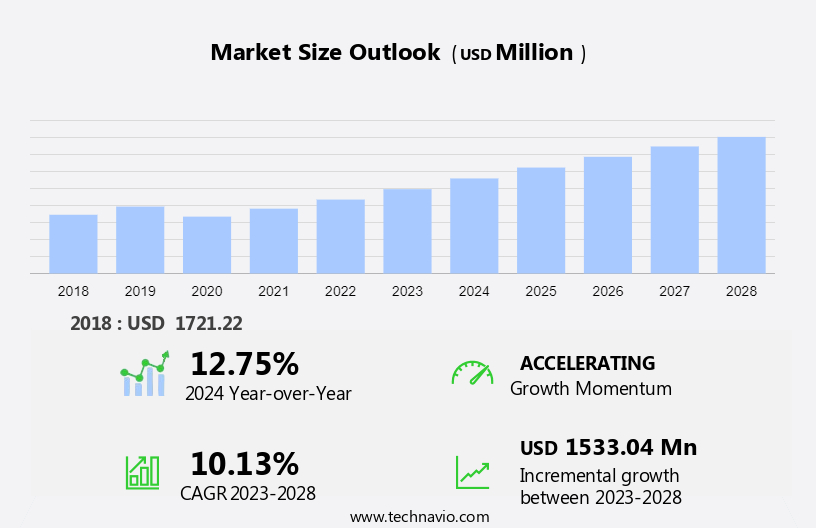
The boron market size is forecast to increase by USD 1.53 billion at a CAGR of 10.13% between 2023 and 2028.
- The market is experiencing significant growth due to several key trends and factors. One of the primary drivers is the increasing demand from developing countries, particularly in Asia Pacific, as they expand their infrastructure and industries. Another trend is the growing demand from the renewable energy sector, where boron is used in the production of solar panels and wind turbines. Additionally, stringent regulations and policies aimed at reducing carbon emissions and promoting sustainable energy are boosting the market. These factors are expected to continue driving the growth of the market in the coming years. Boron's unique properties, such as its high thermal and electrical conductivity, make it an essential element in various industries, including glass, ceramics, and electronics. As the demand for these industries continues to grow, so too will the demand for boron. Overall, the market is poised for steady expansion in the coming years, driven by these key trends and factors.
What will the size of the market be during the forecast period?
- Boron, a naturally occurring element, plays a vital role in various industries, including semiconductors and steel alloys. In semiconductors, boron functions as a dopant, enhancing the electrical conductivity of silicon. In steel alloys, it improves strength and resistance to thermal expansion. Mitigating the environmental impact of boron extraction is a significant concern. Boron is primarily sourced from mine ores, raising sustainability concerns. To address these issues, the industry is exploring boron-containing fertilizers derived from natural sources and sustainable practices. Boron's applications extend beyond semiconductors and steel alloys. In agriculture, boron deficit can negatively impact crop health, necessitating the use of boron-containing fertilizers.
- Boron also plays a role in genetic alteration and crop tolerance, enhancing agricultural demand. Boron's versatility is evident in its use in electronic devices, ceramics, and glass. Boron's high melting temperature and fluidity make it an essential component in the production of high-strength concrete and flat glass. Boron's role in offline distribution systems, such as GPS and electronic circuits, ensures efficient infrastructure development. Sustainability concerns surrounding boron mining have led to the exploration of alternative sources, such as cosmic ray spallation. This process generates boron-10 isotopes, which can be extracted and used as a substitute for mined boron.
How is this market segmented and which is the largest segment?
The market research report provides comprehensive data (region-wise segment analysis), with forecasts and estimates in "USD billion" for the period 2024-2028, as well as historical data from 2018-2022 for the following segments.
- Application
- Glass
- Fertilizers
- Ceramics
- Detergents
- Others
- End-user
- Construction
- Agriculture
- Personal care
- Automotive
- Others
- Geography
- APAC
- China
- India
- Japan
- North America
- US
- Europe
- Germany
- South America
- Middle East and Africa
- APAC
By Application Insights
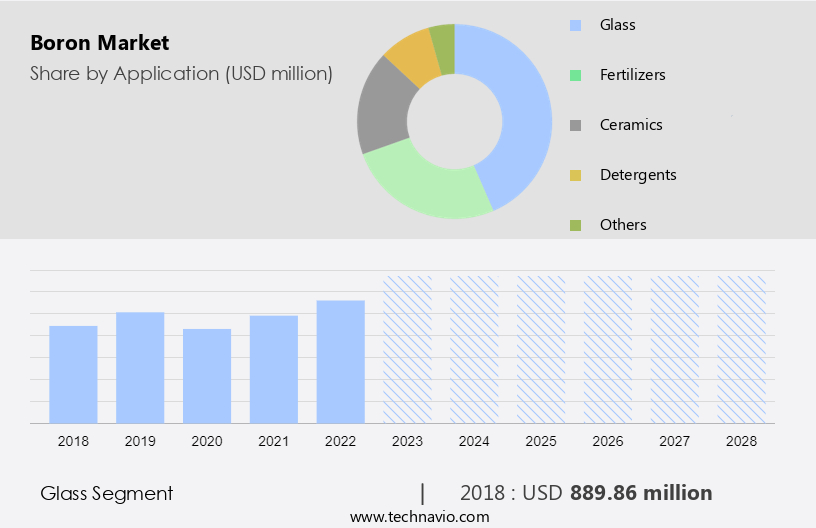
- The glass segment is estimated to witness significant growth during the forecast period.
Boron is an essential micronutrient for soil and plays a crucial role in the production of various industries, particularly in the manufacturing of glass. Boron-rich soils are vital for the growth of boron-responsive crops, which include fruits, vegetables, and nuts. The bioavailability of boron in soil can be improved through proper management practices, such as irrigation and fertilizer application. Boron-efficient crops, like cotton, rice, and wheat, require minimal boron supplementation, reducing the need for excessive fertilizer use. Maintaining optimal soil boron levels is essential for plant growth and development. Boron's mobility in soil is naturally limited, making it necessary to apply boron as a fertilizer to ensure adequate supply. The increasing demand for energy-efficient buildings and high-quality glass products, such as borosilicate glass, is expected to drive the market during the forecast period. Boron's unique properties, including scratch resistance, electrical neutrality, high strength, and chemical resistance, make it an indispensable ingredient in the production of various glass products.
Get a glance at the market report of share of various segments Request Free Sample
The Glass segment was valued at USD 889.86 million in 2018 and showed a gradual increase during the forecast period.
Regional Analysis
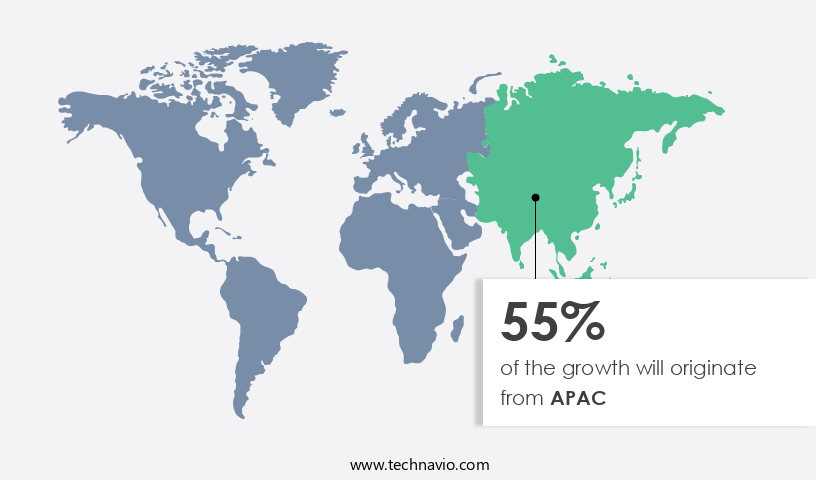
- APAC is estimated to contribute 55% to the growth of the global market during the forecast period.
Technavio's analysts have elaborately explained the regional trends and drivers that shape the market during the forecast period.
For more insights on the market share of various regions, Request Free Sample
The APAC the market is experiencing significant growth due to increasing demand from various industries, including glass and ceramics, pharmaceuticals, cosmetics, and detergents. The construction sector's expansion, particularly in developing countries like India and China, is driving this trend. Boron is essential for producing IFT glass for energy-efficient buildings and is used in the production of gypsum board, ceramic and enamel coating, and other construction materials. The market in APAC is expected to continue growing during the forecast period, fueled by the increasing demand for glass and ceramics in the construction industry.
Market Dynamics
Our researchers analyzed the data with 2023 as the base year, along with the key drivers, trends, and challenges. A holistic analysis of drivers will help companies refine their marketing strategies to gain a competitive advantage.
What are the key market drivers leading to the rise in the adoption of the Boron Market?
Increase in demand from developing countries is the key driver of the market.
- Boron is an essential micronutrient for plant nutrition, playing a vital role in boron fixation and crop growth. Boron-deficient soils can lead to leaching and boron-induced stress, resulting in reduced crop quality and yield. Boron-responsive crops and boron-efficient fertilizers are crucial for addressing deficiencies and improving soil boron levels. Boron is also used in various industries, including glass manufacturing, nuclear reactors, and the production of boron-based catalysts, boron nitride, and boron carbide. The global demand for boron is on the rise, particularly in developing countries like China, India, Brazil, Mexico, the Philippines, and Indonesia. Factors such as low transportation costs, easy land availability, cheap labor, and less stringent regulations are attracting boron companies to set up manufacturing units in these regions.
- The expanding population and increasing disposable income in these countries are driving investments in industries like construction, glass manufacturing, pharmaceuticals, and cosmetics, further fueling the demand for boron. Boron is an essential component in the production of glass and ceramics, making it a crucial element in the glassblowing industry. Glassblowing classes, schools, workshops, and studios use boron-rich soils for glass production. Boron-containing nanoparticles, boron-doped graphene, and flame retardant coatings are also significant applications of boron. In addition, boron is used in various industries, including water treatment, medical devices, composites, solar cells, polymers, aerospace materials, LED lighting, food additives, and cosmetics.
What are the market trends shaping the Boron Market?
Growing demand from the renewable energy sector is the upcoming trend in the market.
- Boron is an essential micronutrient for plant nutrition, playing a crucial role in cell wall metabolism and lignin biosynthesis. Boron deficiency in soils can lead to reduced crop yield and quality, as well as boron-induced stress and toxicity, resulting in boron-related diseases. Boron fixation and mobility in soil depend on factors like pH, temperature, and soil structure. Boron-rich soils and boron-responsive crops can improve bioavailability, while fertilizer application and management practices can enhance boron efficiency. Boron is also used in various industries, including glass manufacturing, nuclear reactors, and boron-based catalysts for doping in semiconductors and solar cells. Boron is a vital component in the production of boron nitride, which is used as a glassblowing tool and in the manufacture of nitride ceramics, flame retardant coatings, water treatment, medical devices, composites, and LED lighting.
- Boron carbide is another industrial application, used in aerospace materials and abrasives. Boron is also used in food additives, boron-doped graphene, and neutron capture therapy in the medical field. The growing demand for boron in various industries is expected to drive the market's growth. For instance, the increasing use of borosilicate glass in solar thermal heating systems is a significant factor. Boron is an essential component of this glass, which is used to carry heat transfer fluids in large solar power plants. The declining cost of solar technologies and the growing focus on renewable energy sources are expected to boost the demand for solar thermal heating systems, thereby driving the market's growth.
What challenges does Boron Market face during the growth?
Stringent regulations and policies is a key challenge affecting the market growth.
- Boron, a naturally occurring element, plays a vital role in various industries, including agriculture, glass manufacturing, and pharmaceuticals. In agriculture, boron is essential for nutrient uptake and plant growth, particularly in boron-deficient soils. Boron fixation and mobility are crucial factors in ensuring boron bioavailability for boron-responsive crops. However, excessive boron levels can lead to toxicity and boron-induced stress, causing boron-related diseases. In glass manufacturing, boron is used for crystallization during glassblowing classes and workshops. Boron nitride and boron carbide are essential components of glassblowing tools and glassblowing books. Boron is also used in glass recycling and in the production of boron-based catalysts, nitride ceramics, flame retardant coatings, water treatment, medical devices, composites, solar cells, polymers, aerospace materials, LED lighting, food additives, boron-doped graphene, and neutron capture therapy.
- Regulatory bodies, such as the Environmental Protection Agency (EPA) and the European Union's Registration, Evaluation, Authorization, and Restriction of Chemicals (REACH), regulate the use of boron in various applications to ensure safety and environmental sustainability. The Occupational Safety and Health Administration (OSHA) sets workplace safety regulations related to airborne fibers, including those from glass and glass fiber. Proper management of boron application in fertilizers and other industrial processes is essential to maintain soil boron levels and prevent boron leaching. Boron-efficient crops and innovative glassblowing techniques contribute to reducing the environmental impact of boron production.
Exclusive Customer Landscape
The market forecasting report includes the adoption lifecycle of the market, covering from the innovator's stage to the laggard's stage. It focuses on adoption rates in different regions based on penetration. Furthermore, the market report also includes key purchase criteria and drivers of price sensitivity to help companies evaluate and develop their market growth analysis strategies.
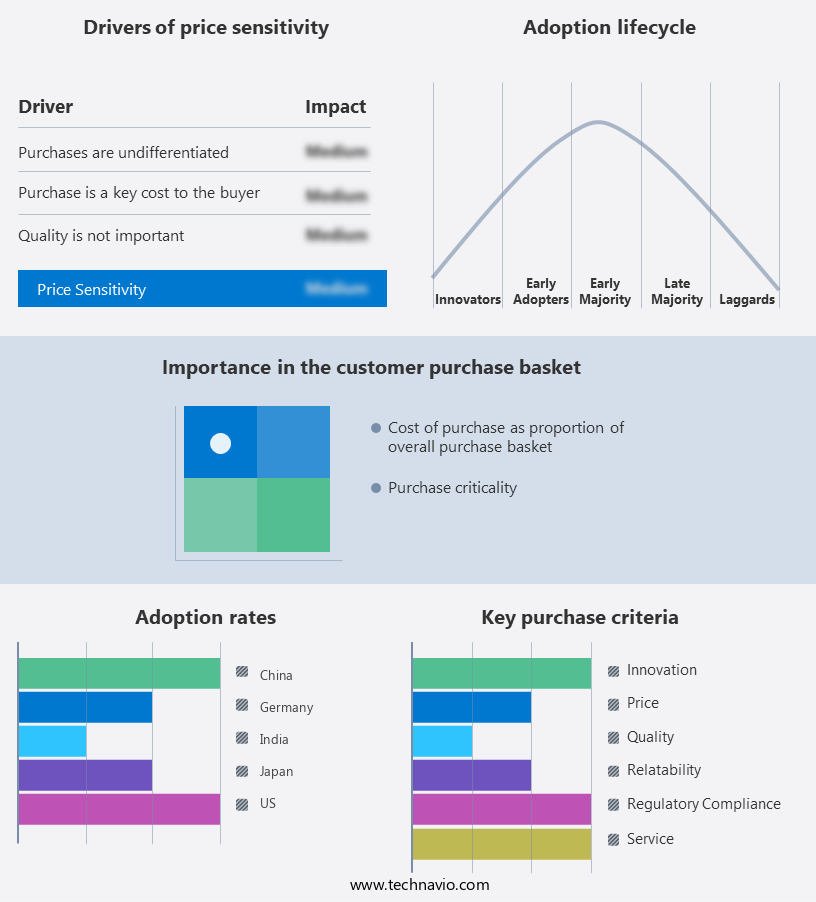
Customer Landscape
Key Companies & Market Insights
Companies are implementing various strategies, such as strategic alliances, market forecast , partnerships, mergers and acquisitions, geographical expansion, and product/service launches, to enhance their presence in the market.
The market research and growth report includes detailed analyses of the competitive landscape of the market and information about key companies, including:
- 3M Co.
- Alpha Chemika
- American Borate Co.
- Boron Rubbers India
- Boron Specialties LLC
- Central Drug House P Ltd.
- Eti Maden isletmeleri Genel Mudurlugu
- Goodfellow Cambridge Ltd.
- Minera Santa Rita Srl
- MSE Supplies LLC
- NANOGRAFI Co. Inc.
- Nanoshel LLC
- Orocobre Ltd.
- Quiborax
- Rose Mill Co.
- SB Boron Corp.
- SCL Italia Spa
- Stanford Advanced Materials
- Welvic Australia Pty Ltd.
- Rio Tinto Ltd.
Qualitative and quantitative analysis of companies has been conducted to help clients understand the wider business environment as well as the strengths and weaknesses of key market players. Data is qualitatively analyzed to categorize companies as pure play, category-focused, industry-focused, and diversified; it is quantitatively analyzed to categorize companies as dominant, leading, strong, tentative, and weak.
Research Analyst Overview
A Comprehensive Overview of Boron's Role in Agriculture, Industry, and Science Boron is an essential micronutrient for plants and animals, playing a crucial role in various biological processes. In agriculture, boron contributes to the growth and development of crops by enhancing root growth, improving fruit setting, and increasing sugar content. Boron deficiency in soils can lead to reduced crop yields and quality, making boron fixation a vital aspect of agricultural management. Boron's importance extends beyond agriculture, as it is a versatile element used in numerous industrial applications. Boron-deficient soils can be remedied through boron application, ensuring optimal soil conditions for boron-responsive crops. The mobility of boron in soils is a critical factor in its bioavailability, and proper fertilizer application is essential for maintaining healthy soil boron levels. Boron's role in industry is significant, with applications ranging from glass manufacturing to nuclear reactors. In glassblowing, boron is used to create borosilicate glass, which is known for its high resistance to thermal shock. Boron nitride, another boron compound, is used in various industries, including aerospace materials, solar cells, and polymers. Boron-based catalysts are also widely used in the production of nitride ceramics, flame retardant coatings, and water treatment. Boron's toxicity and boron-induced stress can pose challenges in both agriculture and industry.
Moreover, boron toxicity can lead to boron-related diseases in crops, while excessive boron levels can negatively impact glass manufacturing processes. Proper management practices, such as optimizing fertilizer application and monitoring soil boron levels, can help mitigate these issues. Boron production methods include open-pit mining and crystallization, with boron deposits found in various parts of the earth's crust. Boron is also recycled from glass waste, making it an environmentally friendly alternative to primary production. Boron's unique properties make it an essential element in various industries, from glassblowing to high-tech applications. In conclusion, boron is a vital micronutrient with a wide range of applications in agriculture, industry, and science. Its role in agriculture ensures healthy crop growth and development, while its industrial applications include glass manufacturing, nuclear reactors, and various high-tech industries. Proper management practices, such as optimizing fertilizer application and monitoring soil boron levels, are essential for maintaining healthy boron levels in both agriculture and industry. Boron's versatility and unique properties make it an essential element for various industries and applications.
|
Market Scope |
|
|
Report Coverage |
Details |
|
Page number |
161 |
|
Base year |
2023 |
|
Historic period |
2018-2022 |
|
Forecast period |
2024-2028 |
|
Growth momentum & CAGR |
Accelerate at a CAGR of 10.13% |
|
Market growth 2024-2028 |
USD 1.53 billion |
|
Market structure |
Fragmented |
|
YoY growth 2023-2024(%) |
12.75 |
|
Key countries |
US, China, India, Japan, and Germany |
|
Competitive landscape |
Leading Companies, Market Positioning of Companies, Competitive Strategies, and Industry Risks |
What are the Key Data Covered in this Market Research and Growth Report?
- CAGR of the market during the forecast period
- Detailed information on factors that will drive the market growth and forecasting between 2024 and 2028
- Precise estimation of the size of the market and its contribution of the market in focus to the parent market
- Accurate predictions about upcoming market growth and trends and changes in consumer behaviour
- Growth of the market across APAC, North America, Europe, South America, and Middle East and Africa
- Thorough analysis of the market's competitive landscape and detailed information about companies
- Comprehensive analysis of factors that will challenge the growth of market companies
We can help! Our analysts can customize this market research report to meet your requirements. Get in touch
 RIA -
RIA -