


Bronchitis Treatment Market Size and Growth Forecast 2026-2030
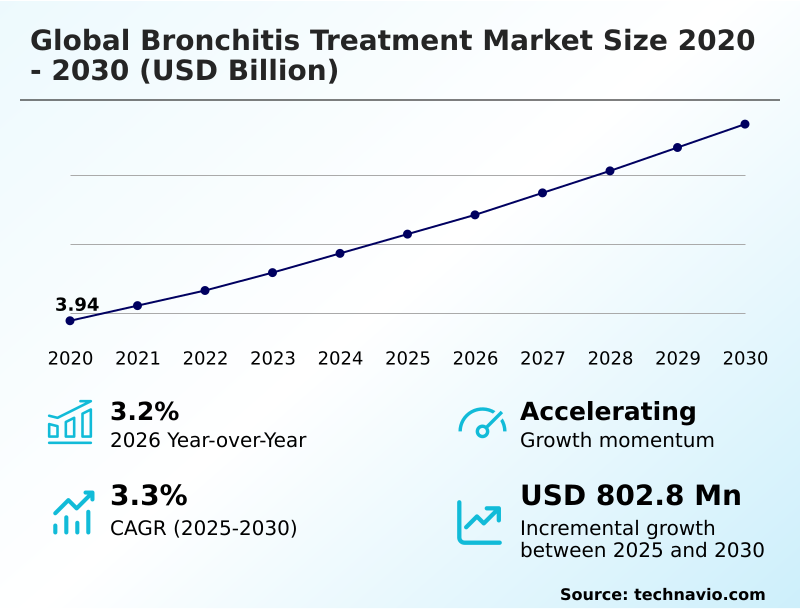
The Bronchitis Treatment Market size was valued at USD 4.57 billion in 2025 growing at a CAGR of 3.3% during the forecast period 2026-2030.
North America accounts for 38.8% of incremental growth during the forecast period. The Antibiotics segment by Drug Class was valued at USD 1.93 billion in 2024, while the Acute bronchitis segment holds the largest revenue share by Type.
The market is projected to grow by USD 1.43 billion from 2020 to 2030, with USD 802.8 million of the growth expected during the forecast period of 2025 to 2030.
Get Key Insights on Market Forecast (PDF) Request Free Sample
Bronchitis Treatment Market Overview
The bronchitis treatment market is undergoing a significant evolution, prioritizing disease modification over purely symptomatic relief through innovations in biologic therapies and targeted treatments. North America currently leads the market, contributing nearly 39% of the opportunity, but rapid expansion in Asia highlights a global shift in demand drivers. In this evolving landscape, a specialized pulmonary clinic managing patients with chronic bronchial inflammation might deploy spirometry testing and analysis of inflammatory biomarkers to stratify patients. This approach enables clinicians to practice effective antimicrobial stewardship, prescribing antibiotics only for confirmed bacterial respiratory infections while opting for targeted cytokine inhibition or advanced bronchodilators like long-acting beta-agonists (LABA) for managing underlying inflammation. This strategy, which aligns with modern clinical practice guidelines for acute exacerbation management, improves outcomes but also underscores the challenge of healthcare access disparities, as the high cost of monoclonal antibody therapies and other advanced treatments limits their availability in many regions.
Drivers, Trends, and Challenges in the Bronchitis Treatment Market
The strategic direction within the bronchitis treatment market is increasingly shaped by the pursuit of personalized medicine, heavily influenced by frameworks like the Global Initiative for Chronic Obstructive Lung Disease (GOLD) guidelines. For procurement decision-makers in health systems, the cost-effectiveness of combination inhaler therapy is a primary consideration, weighing upfront costs against long-term patient outcomes.
The debate over nebulizer versus inhaler drug delivery persists, often resolved based on patient-specific needs and capabilities. A critical challenge arises in cases of severe eosinophilic asthma unresponsive to ICS, where clinicians must evaluate biologic therapy for eosinophilic asthma. This decision carries significant budgetary implications, as the cost of these biologics can be over ten times that of standard care.
The analysis must consider the unfavorable oral corticosteroid side effect profile and the potential corticosteroid-sparing effect of biologics. A deep understanding of the long-acting muscarinic antagonist mechanism and the advantages of dual bronchodilator therapy for COPD is essential for optimizing standard care pathways.
Simultaneously, the threat of antibiotic resistance in respiratory pathogens necessitates improved diagnostics, while ensuring patient adherence to inhaled medication regimens remains fundamental to therapeutic success.
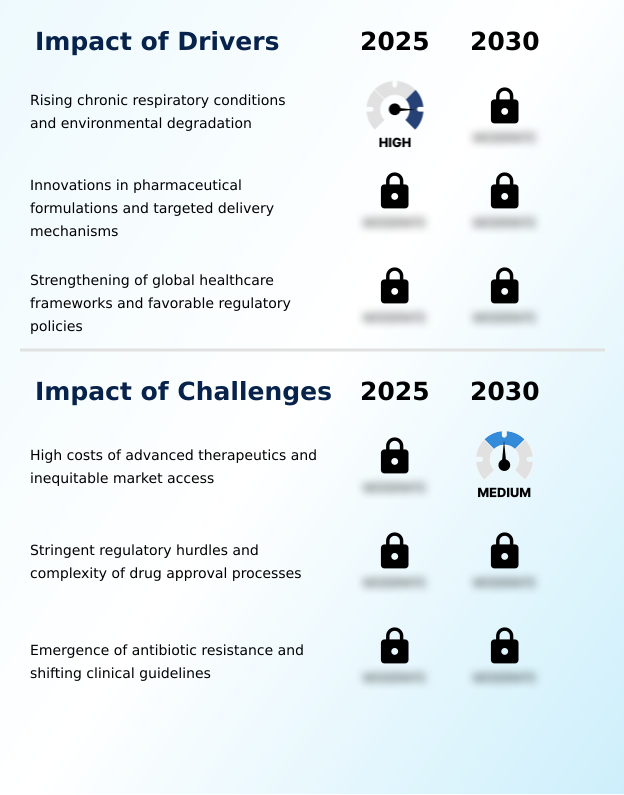
Primary Growth Driver: Market growth is primarily driven by the rising prevalence of chronic respiratory conditions, which are exacerbated by widespread environmental degradation.
Market demand is fundamentally driven by respiratory health epidemiology, notably an aging global population and the high prevalence of chronic obstructive pulmonary disease (COPD).
Environmental factors, particularly exposure to air pollution particulate matter in urban centers, act as a significant catalyst for bronchial episodes.
While efforts around tobacco smoking cessation are widespread, their delayed impact ensures a large patient cohort with compromised lung function persists.
The market's expansion is most pronounced in regions like Asia, which exhibits the highest growth rate at 4.5%, reflecting the nexus of industrialization, environmental degradation, and a growing need for effective management of chronic bronchial inflammation.
Emerging Market Trend: The market is increasingly influenced by the emergence of precision medicine. This shift is characterized by the development of biologic interventions targeting specific patient phenotypes.
A primary trend is the shift toward personalized respiratory medicine, driven by advances in patient phenotyping and the identification of specific inflammatory biomarkers. This allows for the targeted application of advanced biologic therapies designed to interrupt key inflammatory cascade pathways.
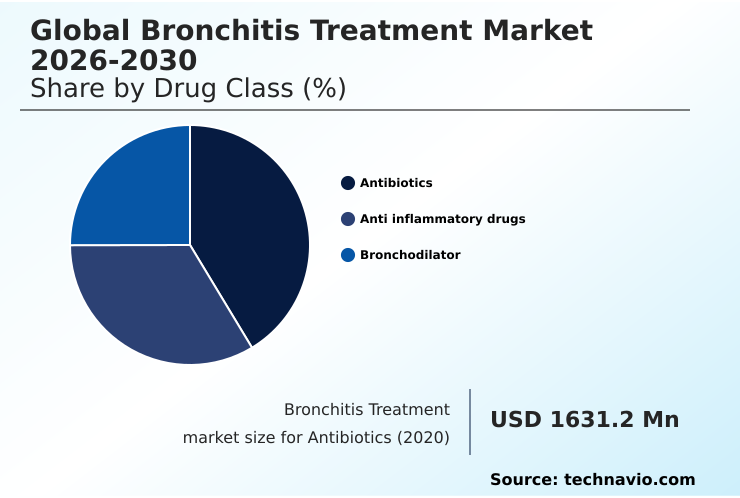
The anti-inflammatory drug segment commands a larger market share than bronchodilators, underscoring the industry's focus on addressing the root causes of chronic inflammation. This move toward targeted cytokine inhibition and a deeper understanding of eosinophilic and neutrophilic inflammation is redefining treatment protocols for severe respiratory conditions, paving the way for more effective, individualized patient care and improved clinical outcomes.
Key Industry Challenge: Industry growth is constrained by the high costs associated with advanced therapeutics and the resulting inequitable market access for patients.
A significant market restraint stems from challenges in drug pricing and reimbursement, which creates profound healthcare access disparities for advanced therapies. While generic drug competition helps control costs for standard treatments, novel biologics and combination inhalers remain prohibitively expensive in many regions.
For instance, studies in lower-income countries have shown chronic bronchitis prevalence nearing 10% in adult populations, yet access to essential maintenance therapy is severely limited. This economic barrier directly impacts treatment adherence and prevents the full market potential of innovative drugs from being realized, creating a fragmented landscape where advanced care is not universally available.
Explore Full Market Dynamics Analysis Request Free Sample
Bronchitis Treatment Market Segmentation
The bronchitis treatment industry research report provides comprehensive data including region-wise segment analysis, with forecasts and analysis for the period 2026-2030, as well as historical data from 2020-2024 for the following segments.
Drug Class Segment Analysis
The antibiotics segment is estimated to witness significant growth during the forecast period.
The antibiotics segment remains a cornerstone of the bronchitis treatment market, primarily addressing acute exacerbations and managing secondary bacterial respiratory infections.
This segment, which accounts for a substantial 44% of the market by drug class, is defined by the high-volume prescription of macrolides and penicillins.
Despite a strong industry push for antimicrobial stewardship to combat antimicrobial resistance, demand is sustained by the critical need to prevent the progression of bronchitis to more severe conditions.
Innovations are now focused on developing inhaled antibiotic formulations and leveraging rapid pathogen identification to ensure targeted, effective treatment, aligning with evolving clinical practice guidelines and improving patient outcomes in acute care settings.
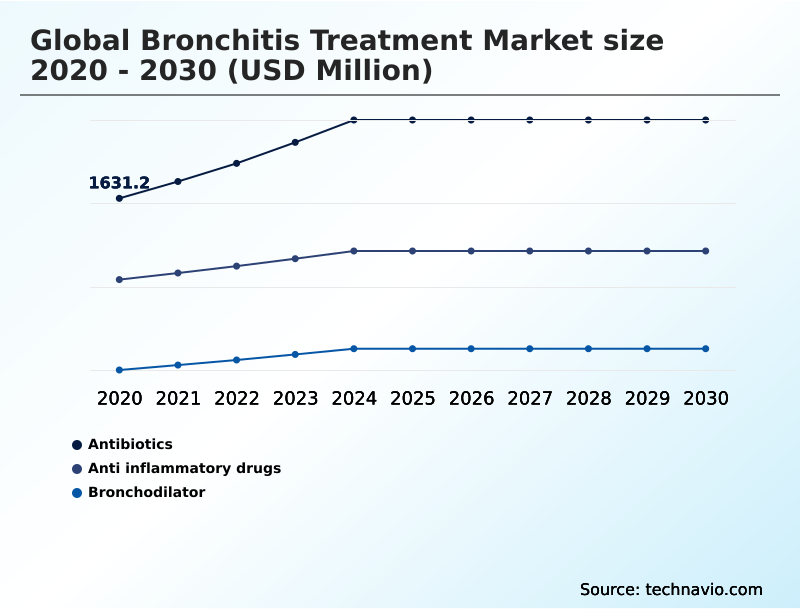
The Antibiotics segment was valued at USD 1.93 billion in 2024 and showed a gradual increase during the forecast period.
Bronchitis Treatment Market by Region: North America Leads with 38.8% Growth Share
North America is estimated to contribute 38.8% to the growth of the global market during the forecast period.
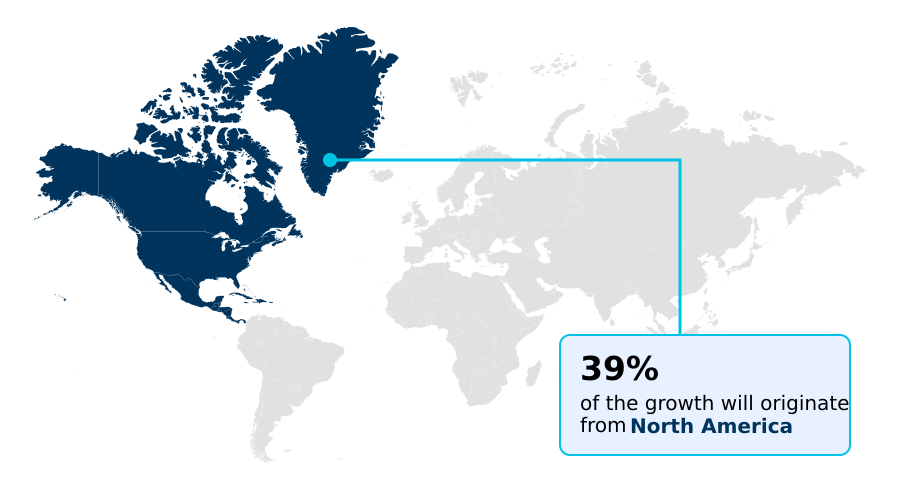
The geographic landscape of the bronchitis treatment market is led by North America, which accounts for over 38% of the opportunity, supported by advanced clinical infrastructure and high adoption of novel biologic therapies.
Asia, representing approximately 30% of the market, is a key expansion front, driven by urbanization and a growing focus on respiratory health, though it continues to navigate healthcare access disparities.
In Europe, which holds a stable 24% share, established healthcare systems ensure consistent demand for pulmonary function tests and advanced diagnostics like spirometry testing.
Across all major regions, the persistent challenge of poor environmental air quality is a unifying driver, compelling a focus on both acute interventions and long-term management strategies for chronic bronchial inflammation.
Customer Landscape Analysis for the Bronchitis Treatment Market
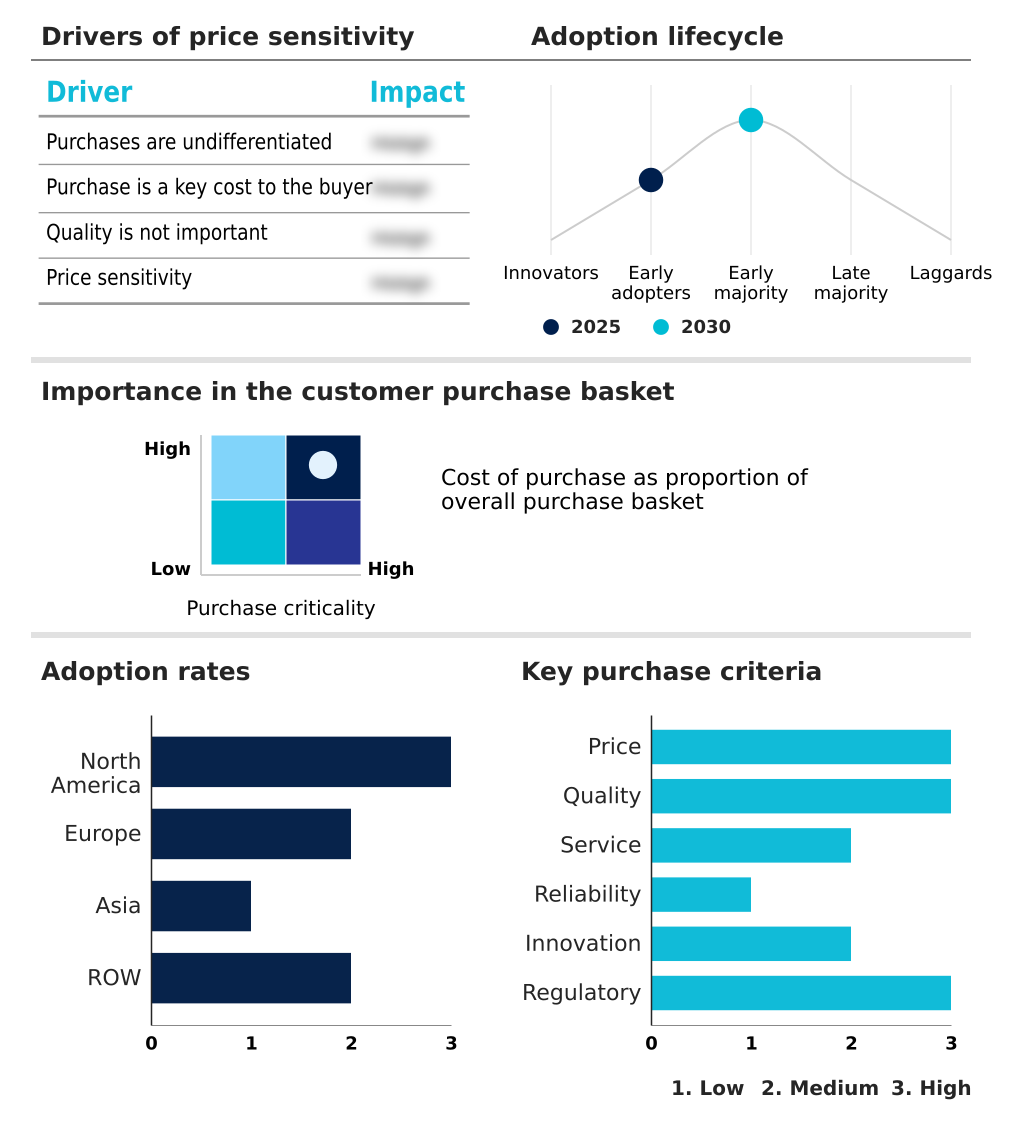
The bronchitis treatment market forecasting report includes the adoption lifecycle of the market, covering from the innovator’s stage to the laggard’s stage. It focuses on adoption rates in different regions based on penetration. Furthermore, the bronchitis treatment market report also includes key purchase criteria and drivers of price sensitivity to help companies evaluate and develop their market growth analysis strategies.
Competitive Landscape of the Bronchitis Treatment Market
Companies are implementing various strategies, such as strategic alliances, partnerships, mergers and acquisitions, geographical expansion, and product/service launches, to enhance their presence in the bronchitis treatment market industry.
Abbott Laboratories - Analysis indicates a focus on pharmacological interventions for managing respiratory inflammation and treating various bronchial conditions.
The industry research and growth report includes detailed analyses of the competitive landscape of the market and information about key companies, including:
- Abbott Laboratories
- Astellas Pharma Inc.
- AstraZeneca Plc
- Boehringer Ingelheim GmbH
- Chiesi Farmaceutici S.p.A.
- Cipla Inc.
- Dr. Reddys Laboratories Ltd.
- F. Hoffmann La Roche Ltd.
- GlaxoSmithKline Plc
- Glenmark Pharmaceuticals Ltd.
- Lupin Ltd.
- Mankind Pharma Ltd.
- Merck and Co. Inc.
- Novartis AG
- Pfizer Inc.
- Sanofi SA
- Sun Pharmaceutical Industries
- Teva Pharmaceutical Ltd.
- Torrent Pharmaceuticals Ltd.
Qualitative and quantitative analysis of companies has been conducted to help clients understand the wider business environment as well as the strengths and weaknesses of key industry players. Data is qualitatively analyzed to categorize companies as pure play, category-focused, industry-focused, and diversified; it is quantitatively analyzed to categorize companies as dominant, leading, strong, tentative, and weak.
Recent Developments in the Bronchitis Treatment Market
- In April, 2025, TytoCare received clearance from the United States Food and Drug Administration for its AI-powered diagnostic device, Tyto Insights, which is designed to identify abnormal lung sounds indicative of acute bronchitis.
- In May, 2025, Thirona formed a partnership with the COPD Foundation to utilize its advanced lung image analysis technology, aiming to improve disease management and patient outcomes for chronic respiratory conditions.
- In July, 2025, Sanofi acquired Vicebio as part of a strategic move to bolster its pipeline of respiratory vaccines and expand its portfolio in the respiratory health sector.
- In August, 2025, the US Food and Drug Administration approved Brinsupri, also known as brensocatib, as the first treatment specifically indicated for managing non-cystic fibrosis bronchiectasis, addressing a significant unmet need for patients with chronic airway inflammation.
Research Analyst Overview: Bronchitis Treatment Market
Strategic R&D investment decisions are pivoting from symptomatic relief toward therapies targeting the underlying mechanisms of chronic bronchial inflammation. For a pharmaceutical board, allocating capital now involves assessing the complex inflammatory cascade pathways and the potential of monoclonal antibody therapies, a process guided by regulatory frameworks such as the FDA's accelerated approval pathway for conditions like non-cystic fibrosis bronchiectasis.
The development of advanced long-acting beta-agonists (LABA) and exploring the phosphodiesterase-4 (PDE4) inhibitor mechanism represent major financial commitments. Clinical trial design must account for the heterogeneity of COPD, using spirometry testing and pulmonary function tests to stratify patients effectively. Concurrently, the prevalence of bacterial respiratory infections and concerns over antimicrobial resistance demand innovation in antibiotics.
Future market leadership will be determined by companies that master the science of eosinophilic and neutrophilic inflammation and deliver therapies that fundamentally alter disease progression, addressing a market where the chronic bronchitis segment represents more than 41% of cases.
Dive into Technavio’s robust research methodology, blending expert interviews, extensive data synthesis, and validated models for unparalleled Bronchitis Treatment Market insights. See full methodology.
| Market Scope | |
|---|---|
| Page number | 285 |
| Base year | 2025 |
| Historic period | 2020-2024 |
| Forecast period | 2026-2030 |
| Growth momentum & CAGR | Accelerate at a CAGR of 3.3% |
| Market growth 2026-2030 | USD 802.8 million |
| Market structure | Fragmented |
| YoY growth 2025-2026(%) | 3.2% |
| Key countries | US, Canada, Mexico, Germany, UK, France, Italy, Spain, The Netherlands, China, India, Japan, South Korea, Indonesia, Thailand, Brazil, Saudi Arabia, UAE, South Africa, Turkey, Argentina, Colombia and Israel |
| Competitive landscape | Leading Companies, Market Positioning of Companies, Competitive Strategies, and Industry Risks |
Bronchitis Treatment Market: Key Questions Answered in This Report
-
What is the expected growth of the Bronchitis Treatment Market between 2026 and 2030?
-
The Bronchitis Treatment Market is expected to grow by USD 802.8 million during 2026-2030, registering a CAGR of 3.3%. Year-over-year growth in 2026 is estimated at 3.2%%. This acceleration is shaped by rising chronic respiratory conditions and environmental degradation, which is intensifying demand across multiple end-use verticals covered in the report.
-
-
What segmentation does the market report cover?
-
The report is segmented by Drug Class (Antibiotics, Anti inflammatory drugs, and Bronchodilator), Type (Acute bronchitis, and Chronic bronchitis), Route of Administration (Oral, Parenteral, and Inhalation) and Geography (North America, Europe, Asia, Rest of World (ROW)). Among these, the Antibiotics segment is estimated to witness significant growth during the forecast period, driven by rising adoption across key application areas. Each segment includes detailed qualitative and quantitative analysis, along with historical data from 2020-2024 and forecasts through 2030 with year-over-year growth rates.
-
-
Which regions are analyzed in the report?
-
The report covers North America, Europe, Asia and Rest of World (ROW). North America is estimated to contribute 38.8% to market growth during the forecast period. Country-level analysis includes US, Canada, Mexico, Germany, UK, France, Italy, Spain, The Netherlands, China, India, Japan, South Korea, Indonesia, Thailand, Brazil, Saudi Arabia, UAE, South Africa, Turkey, Argentina, Colombia and Israel, with dedicated market size tables and year-over-year growth for each.
-
-
What are the key growth drivers and market challenges?
-
The primary driver is rising chronic respiratory conditions and environmental degradation, which is accelerating investment and industry demand. The main challenge is high costs of advanced therapeutics and inequitable market access, creating operational barriers for key market participants. The report quantifies the impact of each driver and challenge across 2026 and 2030 with comparative analysis.
-
-
Who are the major players in the Bronchitis Treatment Market?
-
Key vendors include Abbott Laboratories, Astellas Pharma Inc., AstraZeneca Plc, Boehringer Ingelheim GmbH, Chiesi Farmaceutici S.p.A., Cipla Inc., Dr. Reddys Laboratories Ltd., F. Hoffmann La Roche Ltd., GlaxoSmithKline Plc, Glenmark Pharmaceuticals Ltd., Lupin Ltd., Mankind Pharma Ltd., Merck and Co. Inc., Novartis AG, Pfizer Inc., Sanofi SA, Sun Pharmaceutical Industries, Teva Pharmaceutical Ltd. and Torrent Pharmaceuticals Ltd.. The report provides qualitative and quantitative analysis categorizing companies as dominant, leading, strong, tentative, and weak based on their market positioning. Company profiles include business segment analysis, SWOT assessment, key offerings, and recent strategic developments.
-
Bronchitis Treatment Market Research Insights
Under the stringent efficacy standards of regulatory bodies like the EMA, market dynamics favor therapies proven to aid in reducing pulmonary exacerbations and improving lung function. Hospital formulary committees now rigorously evaluate inhaled corticosteroid efficacy against the benefits of corticosteroid-sparing agents to align with long-term patient safety goals.
This focus on value-based care is particularly critical in Asia, where market expansion is outpacing North America, driven by a pressing need for effective strategies in managing airway obstruction. The successful implementation of tailored treatment strategies is therefore essential for optimizing clinical outcomes and addressing the diverse needs of this complex patient population.
We can help! Our analysts can customize this bronchitis treatment market research report to meet your requirements.
 RIA -
RIA -