



Car Rental Market Size 2026-2030
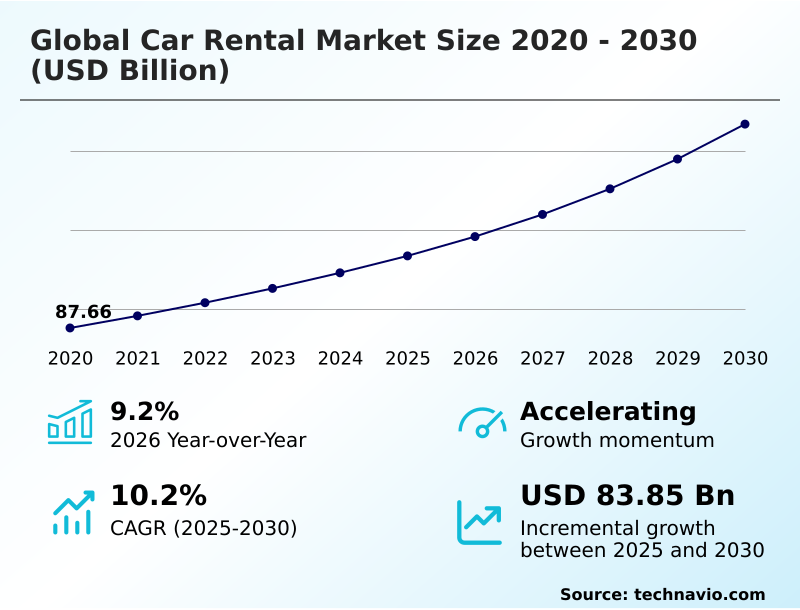
The car rental market size is valued to increase by USD 83.85 billion, at a CAGR of 10.2% from 2025 to 2030. Rise in vehicle ownership cost will drive the car rental market.
Major Market Trends & Insights
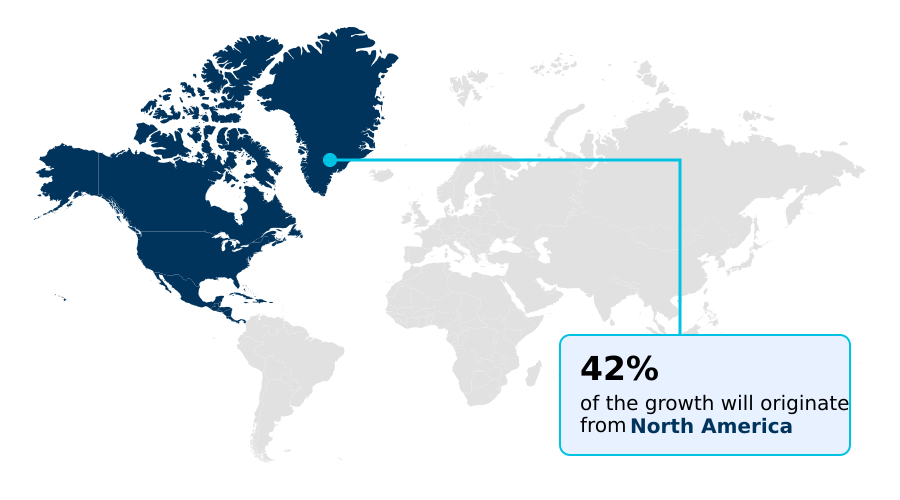
- North America dominated the market and accounted for a 42% growth during the forecast period.
- By Mode of Booking - Offline segment was valued at USD 65.72 billion in 2024
- By Rental Category - Airport transport segment accounted for the largest market revenue share in 2024
Market Size & Forecast
- Market Opportunities: USD 129.71 billion
- Market Future Opportunities: USD 83.85 billion
- CAGR from 2025 to 2030 : 10.2%
Market Summary
- The car rental market is undergoing a profound transformation driven by shifts in consumer behavior and technological innovation. Rising vehicle ownership costs and urbanization are compelling individuals and corporations to favor access over ownership, turning to rentals for flexibility and cost-effectiveness.
- This trend is amplified by the integration of digital platforms, which have streamlined the entire rental process from booking to return. A key business scenario involves a logistics company that eschews a wholly owned fleet, instead using a mix of long-term rentals for predictable routes and on-demand rentals to manage seasonal demand peaks.
- This approach, supported by fleet utilization optimization and advanced demand forecasting models, minimizes capital expenditure and reduces operational risks associated with vehicle maintenance and depreciation. Concurrently, the industry is navigating challenges from car-sharing and ride-hailing services by diversifying into subscription models and enhancing the customer experience with personalized, data-driven offerings.
What will be the Size of the Car Rental Market during the forecast period?
Get Key Insights on Market Forecast (PDF) Get Free Sample
How is the Car Rental Market Segmented?
The car rental industry research report provides comprehensive data (region-wise segment analysis), with forecasts and estimates in "USD million" for the period 2026-2030, as well as historical data from 2020-2024 for the following segments.
- Mode of booking
- Offline
- Online
- Rental category
- Airport transport
- Local transport
- Outstation transport
- Others
- Type
- Economy cars
- Executive cars
- Luxury cars
- SUVs
- MUVs
- Geography
- North America
- US
- Canada
- Mexico
- Europe
- Germany
- France
- UK
- APAC
- China
- Japan
- Australia
- Middle East and Africa
- Saudi Arabia
- UAE
- South Africa
- South America
- Brazil
- Argentina
- Rest of World (ROW)
- North America
By Mode of Booking Insights
The offline segment is estimated to witness significant growth during the forecast period.
Offline channels remain a vital component of the car rental market, particularly for high-value transactions in corporate travel management and luxury car hire services.
These segments often require personalized interaction for arranging chauffeur-driven services or complex corporate car leasing solutions, which strengthens customer relationship management (CRM) and loyalty program management.
While digital payment gateways are standard online, offline touchpoints provide opportunities for direct upselling and addressing nuanced needs for business travel car rental.
In certain regions, particularly for car rental for international travel and vacation car rentals, physical counters build trust and facilitate automated vehicle inspection before vehicle handover.
Operators use sophisticated demand forecasting models to balance inventory between online and offline channels, ensuring availability for premium and specialized premium vehicle rental requests, which contribute over 35% of revenue in the corporate sector.
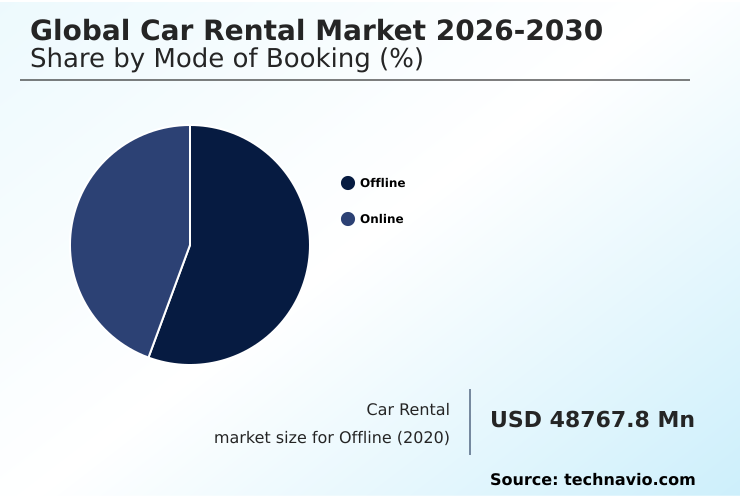
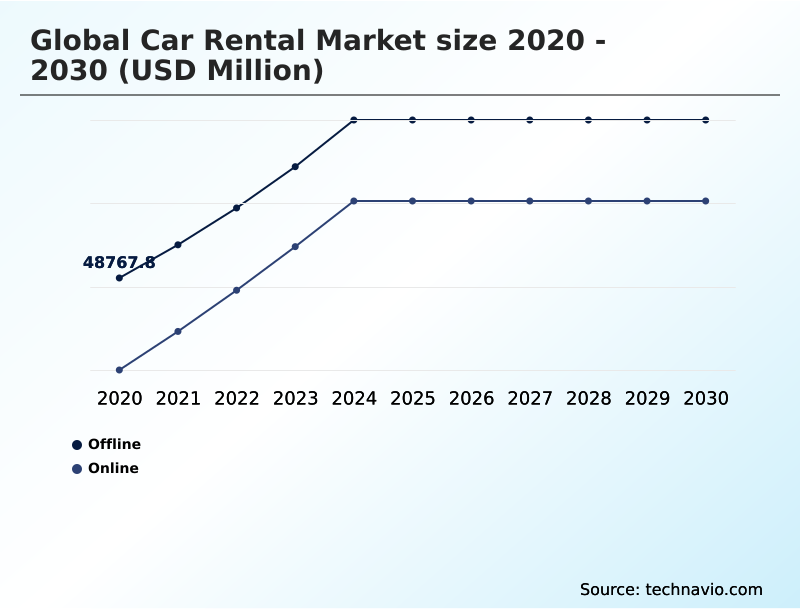
The Offline segment was valued at USD 65.72 billion in 2024 and showed a gradual increase during the forecast period.
Regional Analysis
North America is estimated to contribute 42% to the growth of the global market during the forecast period.Technavio’s analysts have elaborately explained the regional trends and drivers that shape the market during the forecast period.
See How Car Rental Market Demand is Rising in North America Get Free Sample
The geographic landscape is diverse, with North America contributing 42% of incremental growth, driven by extensive airport car rental services and a mature corporate market.
Europe is focusing on sustainability, with rapid adoption of vehicle-to-grid (V2G) technology and comprehensive electric vehicle (EV) charging infrastructure to support electric fleets. In this region, mobility-as-a-service (MaaS) integration has improved connectivity, reducing urban congestion.
The APAC region, exhibiting the highest growth at 11.4%, is a hub for innovation in autonomous vehicle rental and battery health monitoring for its expanding EV fleets.
Across regions, firms are implementing predictive maintenance scheduling and fleet utilization optimization powered by car rental fleet management software.
Offering flexible car rental insurance packages, diverse options for family car rental, and attractive car rental loyalty programs for frequent travelers, alongside convenient one-way car rental deals are key competitive strategies.
Market Dynamics
Our researchers analyzed the data with 2025 as the base year, along with the key drivers, trends, and challenges. A holistic analysis of drivers will help companies refine their marketing strategies to gain a competitive advantage.
- Strategic decision-making in the global car rental market 2026-2030 increasingly revolves around complex operational questions. Executives are evaluating how to integrate telematics in car rental systems to unlock the full benefits of dynamic pricing for car rentals and improve asset tracking.
- A primary focus is addressing the challenges of managing an EV rental fleet, from optimizing charging cycles to mitigating battery degradation. Boardroom discussions frequently involve comparing car rental vs car sharing costs to understand shifting consumer preferences and the competitive threat.
- Furthermore, the impact of MaaS on the global car rental market 2026-2030 is forcing a re-evaluation of traditional business models, pushing firms to adopt best practices for car rental fleet utilization.
- Technology is at the forefront, with a push to define the future of autonomous car rental services and explore AI applications in car rental customer service to enhance user experience. The role of IoT in predictive vehicle maintenance is another critical area, with firms using this technology reporting vehicle-on-road availability rates nearly double those of competitors relying on reactive repairs.
- Security features in contactless car rental and data privacy concerns in car rental telematics are non-negotiable considerations. Operationally, the industry is focused on optimizing car rental airport operations, reducing operational costs in car rental business, and managing corporate car rental sustainability reporting mandates.
- The market is also shaped by how online travel agencies affect car rental pricing, the need for effective software for managing peer-to-peer car rentals, and the logistics of implementing subscription models for car rentals.
- Finally, post-pandemic operational adjustments include implementing stringent vehicle sanitization protocols for rental fleets and developing robust strategies for managing residual value risk, alongside integrating car rentals with public transport apps.
What are the key market drivers leading to the rise in the adoption of Car Rental Industry?
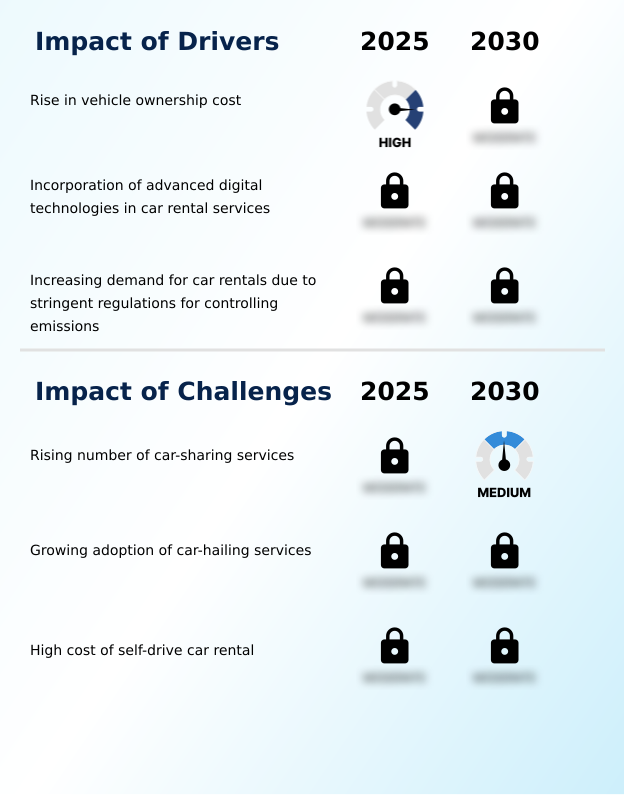
- The increasing cost of vehicle ownership stands as a key market driver, prompting a shift in consumer preference toward more flexible and financially viable rental options.
- Advanced digital technologies are a primary driver, transforming service delivery and operational efficiency. The adoption of AI-powered revenue management and dynamic pricing algorithms allows for real-time rate adjustments, optimizing yield by over 15% during peak seasons.
- The customer experience is enhanced through contactless vehicle access, enabled by keyless entry systems and digital key solutions managed via smartphone, with firms reporting a 40% reduction in customer wait times at pickup locations.
- This move toward contactless car pickup aligns with demand for sustainable transportation rental and flexible vehicle hire.
- Furthermore, the development of software-defined vehicles and connected car platforms is paving the way for advanced diagnostics and feature customization, making economy car rental and long-term car rental subscription offerings more appealing.
- The shift towards electric vehicle rental options is also accelerating.
What are the market trends shaping the Car Rental Industry?
- The advent of intermediaries is significantly reshaping the global car rental market's competitive landscape. These platforms are altering how supply meets demand and how customer relationships are managed.
- The rise of digital intermediaries, including online travel agencies (OTAs) and car rental booking aggregators, is fundamentally reshaping market dynamics. These platforms, accessible via on-demand car rental app interfaces, create a transparent digital car rental marketplace where consumers use car rental price comparison tools to find deals.
- This trend is complemented by the integration of rentals into broader multi-modal travel platforms, blending car access with public transit. Concurrently, the use of vehicle telematics systems is surging, with IoT-enabled fleet management and telematics data analytics enabling new models like usage-based insurance (UBI).
- This shift supports flexible subscription-based mobility and short-term vehicle rental options, with data showing that telematics can improve fleet efficiency by up to 18%. Operators offering monthly car rental plans through these advanced systems report higher customer retention.
What challenges does the Car Rental Industry face during its growth?
- The rising prevalence of car-sharing services presents a key challenge to industry growth by offering a highly convenient and flexible alternative to traditional car rentals.
- The market faces significant challenges from alternative smart mobility solutions that redefine urban transport. The proliferation of peer-to-peer (P2P) carsharing and self-drive car rental platform models erodes the traditional rental market, particularly for short-term urban use cases and last-mile mobility solutions. These platforms offer greater flexibility to car rental for gig economy workers and other users in urban mobility services.
- Simultaneously, the rising popularity of ride-hailing services diminishes the need for rentals, especially for airport transfers. Internally, operators grapple with complex one-way rental logistics and effective residual value risk management for large fleets of SUV rental services and van and truck rental services.
- The high capital outlay for corporate fleet leasing and advanced technology like advanced driver-assistance systems (ADAS) and biometric authentication adds to the cost pressures, impacting profitability.
Exclusive Technavio Analysis on Customer Landscape
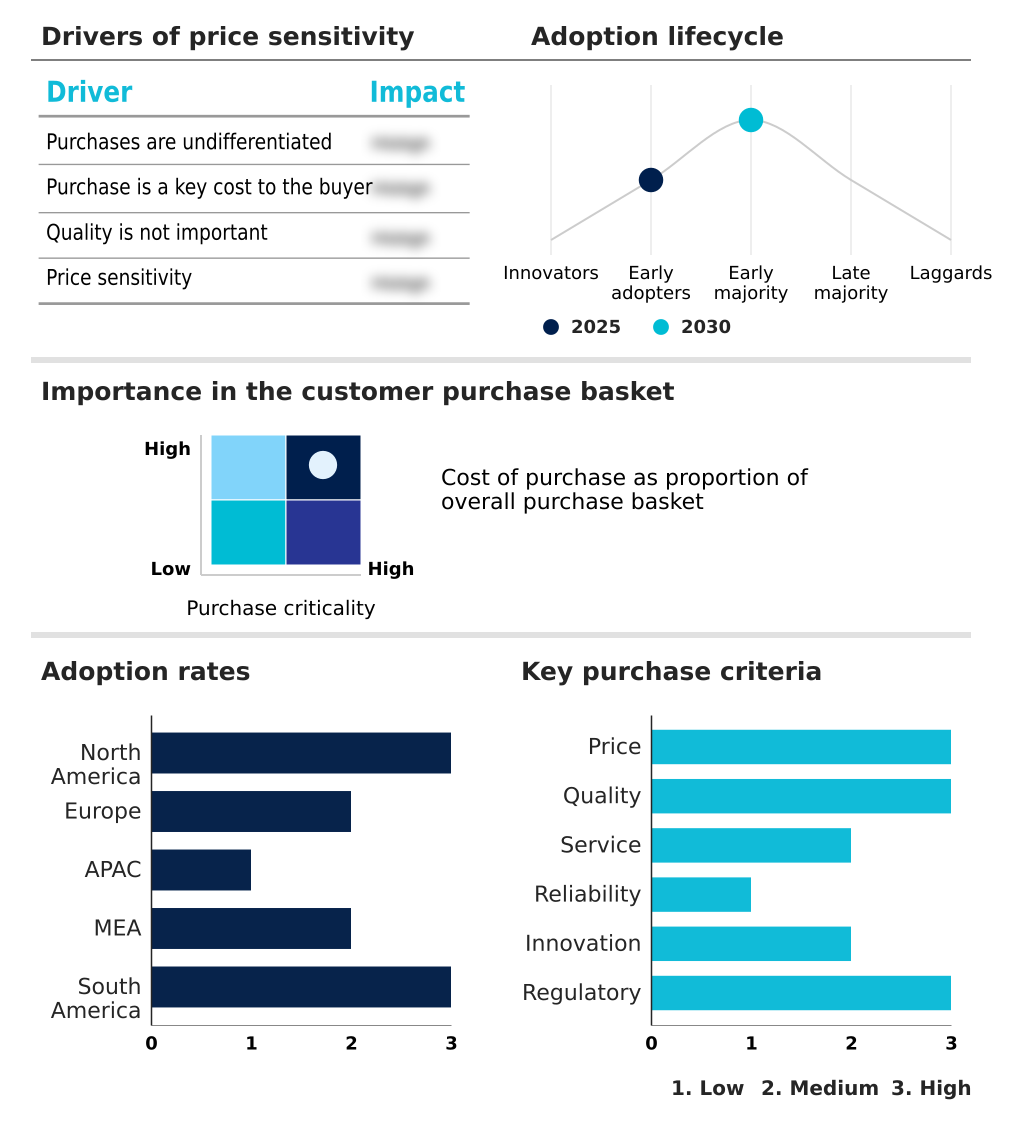
The car rental market forecasting report includes the adoption lifecycle of the market, covering from the innovator’s stage to the laggard’s stage. It focuses on adoption rates in different regions based on penetration. Furthermore, the car rental market report also includes key purchase criteria and drivers of price sensitivity to help companies evaluate and develop their market growth analysis strategies.
Customer Landscape of Car Rental Industry
Competitive Landscape
Companies are implementing various strategies, such as strategic alliances, car rental market forecast, partnerships, mergers and acquisitions, geographical expansion, and product/service launches, to enhance their presence in the industry.
ACE Rent A Car Reservations Inc - The global booking platform aggregates multiple rental brands, offering extensive car rental services across 180 countries to enhance market access for consumers and partners.
The industry research and growth report includes detailed analyses of the competitive landscape of the market and information about key companies, including:
- ACE Rent A Car Reservations Inc
- AutoEurope LLC
- Avis Budget Group Inc.
- eHi Car Services Ltd.
- Enterprise Holdings Inc.
- Europcar Group UK Ltd.
- Europcar Mobility Group SA
- Green Motion International
- Hertz Global Holdings Inc.
- Nippon Rent A Car Service Inc.
- Orix Corp.
- Primemover Mobility Pvt. Ltd.
- Record Go Alquiler Vacacional
- SIXT SE
- SK Rent a Car
- Thrifty Car Rental
- TIMES MOBILITY CO LTD
- Toyota Rent A Lease
- Unidas Locadora S.A
- Zoomcar India Pvt. Ltd.
Qualitative and quantitative analysis of companies has been conducted to help clients understand the wider business environment as well as the strengths and weaknesses of key industry players. Data is qualitatively analyzed to categorize companies as pure play, category-focused, industry-focused, and diversified; it is quantitatively analyzed to categorize companies as dominant, leading, strong, tentative, and weak.
Recent Development and News in Car rental market
- In July 2025, Baidu's Apollo unit partnered with CAR Inc. to introduce a fully autonomous car rental service, allowing users to book and operate self-driving vehicles via a mobile application.
- In November 2025, Omani entrepreneurs launched Ajarlee, Oman's first native car rental application, enhancing digital access to local rental providers and supporting the nation's technology-driven mobility strategy.
- In December 2025, RateGain Travel Technologies released Rev AI Clarity, an artificial intelligence-powered revenue assistant designed for car rental companies to convert complex data into actionable insights for fleet and revenue management.
- In February 2025, the American Vehicle Owners Alliance was established with founding members from the car rental sector to advocate for secure access to vehicle-generated data, promoting consumer rights and competition.
Dive into Technavio’s robust research methodology, blending expert interviews, extensive data synthesis, and validated models for unparalleled Car Rental Market insights. See full methodology.
| Market Scope | |
|---|---|
| Page number | 298 |
| Base year | 2025 |
| Historic period | 2020-2024 |
| Forecast period | 2026-2030 |
| Growth momentum & CAGR | Accelerate at a CAGR of 10.2% |
| Market growth 2026-2030 | USD 83853.4 million |
| Market structure | Fragmented |
| YoY growth 2025-2026(%) | 9.2% |
| Key countries | US, Canada, Mexico, Germany, France, UK, Italy, Spain, The Netherlands, China, Japan, Australia, India, South Korea, Indonesia, Saudi Arabia, UAE, South Africa, Israel, Turkey, Brazil, Argentina and Chile |
| Competitive landscape | Leading Companies, Market Positioning of Companies, Competitive Strategies, and Industry Risks |
Research Analyst Overview
- The car rental market is evolving into a technology-driven mobility ecosystem where competitive advantage is dictated by operational intelligence and asset efficiency. Core to this shift is the application of telematics data analytics for fleet utilization optimization and predictive maintenance scheduling, directly impacting boardroom decisions on capital expenditure and residual value risk management.
- The integration of AI-powered revenue management and dynamic pricing algorithms has become standard, while contactless vehicle access via digital key solutions and biometric authentication is redefining the customer journey. Operators are expanding beyond traditional models, embracing subscription-based mobility, peer-to-peer (P2P) carsharing, and mobility-as-a-service (MaaS) integration with multi-modal travel platforms.
- The transition to software-defined vehicles and connected car platforms with advanced driver-assistance systems (ADAS) is critical, especially as fleets incorporate more electric vehicle (EV) charging infrastructure and battery health monitoring.
- Firms that successfully leverage IoT-enabled fleet management, smart mobility solutions, and vehicle telematics systems for everything from one-way rental logistics to managing corporate fleet leasing and corporate travel management are achieving superior performance.
- Integration with online travel agencies (OTAs) and effective customer relationship management (CRM) and loyalty program management through digital payment gateways are essential for market leadership, particularly as the industry prepares for autonomous vehicle rental and vehicle-to-grid (V2G) technology. The industry's transformation to automated vehicle inspection has reduced vehicle downtime by 15%, enhancing fleet readiness.
- The future also includes chauffeur-driven services and demand forecasting models.
What are the Key Data Covered in this Car Rental Market Research and Growth Report?
-
What is the expected growth of the Car Rental Market between 2026 and 2030?
-
USD 83.85 billion, at a CAGR of 10.2%
-
-
What segmentation does the market report cover?
-
The report is segmented by Mode of Booking (Offline, and Online), Rental Category (Airport transport, Local transport, Outstation transport, and Others), Type (Economy cars, Executive cars, Luxury cars, SUVs, and MUVs) and Geography (North America, Europe, APAC, Middle East and Africa, South America)
-
-
Which regions are analyzed in the report?
-
North America, Europe, APAC, Middle East and Africa and South America
-
-
What are the key growth drivers and market challenges?
-
Rise in vehicle ownership cost, Rising number of car-sharing services
-
-
Who are the major players in the Car Rental Market?
-
ACE Rent A Car Reservations Inc, AutoEurope LLC, Avis Budget Group Inc., eHi Car Services Ltd., Enterprise Holdings Inc., Europcar Group UK Ltd., Europcar Mobility Group SA, Green Motion International, Hertz Global Holdings Inc., Nippon Rent A Car Service Inc., Orix Corp., Primemover Mobility Pvt. Ltd., Record Go Alquiler Vacacional, SIXT SE, SK Rent a Car, Thrifty Car Rental, TIMES MOBILITY CO LTD, Toyota Rent A Lease, Unidas Locadora S.A and Zoomcar India Pvt. Ltd.
-
Market Research Insights
- The market's dynamism is driven by the rapid adoption of digital solutions and evolving consumer expectations for urban mobility services. The proliferation of the on-demand car rental app has become central to customer acquisition, with platforms offering contactless car pickup reducing customer processing times by over 40%.
- This shift toward sustainable transportation rental is evident as operators offering electric vehicle rental options see a 15% higher booking rate in environmentally conscious urban centers. Corporate car leasing solutions are also transforming, with businesses leveraging long-term car rental subscription models that provide greater financial flexibility than traditional ownership.
- This asset-light approach, which offers cost savings of up to 20% on fleet management, is becoming a strategic imperative for companies navigating economic uncertainties while demanding flexible vehicle hire.
We can help! Our analysts can customize this car rental market research report to meet your requirements.
 RIA -
RIA - 
