
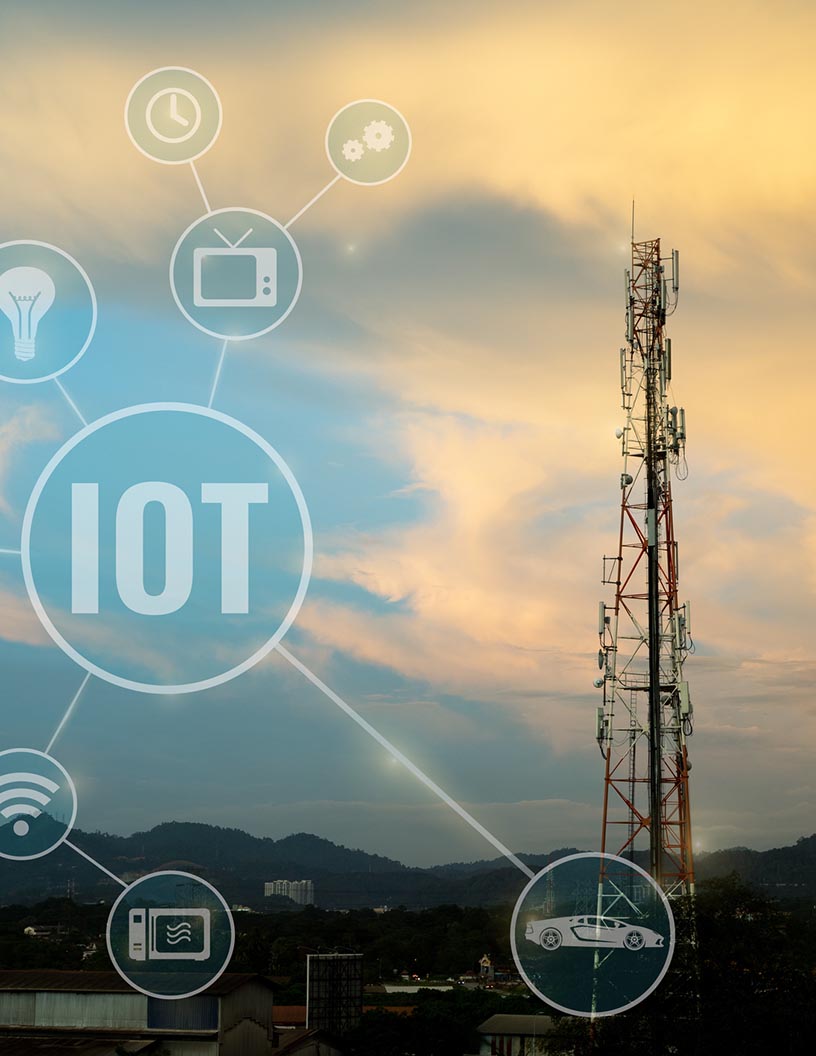


Cellular Iot Market Size 2024-2028
The cellular iot market size is valued to increase USD 16.45 billion, at a CAGR of 32.14% from 2023 to 2028. Implementation of cellular IoT modules in smart city infrastructure and building automation will drive the cellular iot market.
Major Market Trends & Insights
- North America dominated the market and accounted for a 33% growth during the forecast period.
- By Component - Hardware segment was valued at USD 1.63 billion in 2022
- By Type - 3G segment accounted for the largest market revenue share in 2022
Market Size & Forecast
- Market Opportunities: USD 655.66 million
- Market Future Opportunities: USD 16445.70 million
- CAGR from 2023 to 2028 : 32.14%
Market Summary
- The market encompasses the use of cellular technology to connect Internet of Things (IoT) devices and enable seamless communication between them. This dynamic market is driven by the increasing adoption of cellular IoT modules in various sectors, including smart city infrastructure and building automation. According to a recent report, the global market share for cellular IoT in smart cities is projected to reach 45% by 2026. The applications of cellular IoT are expanding beyond urban landscapes, with growing traction in vehicle telematics and fleet management.
- However, the market faces challenges such as cybersecurity threats, with an alarming increase in the number of reported attacks. Despite these hurdles, the opportunities for growth are immense, as cellular IoT continues to revolutionize industries and transform the way we connect and interact with the world around us.
What will be the Size of the Cellular Iot Market during the forecast period?

Get Key Insights on Market Forecast (PDF) Request Free Sample
How is the Cellular Iot Market Segmented ?
The cellular iot industry research report provides comprehensive data (region-wise segment analysis), with forecasts and estimates in "USD million" for the period 2024-2028, as well as historical data from 2018-2022 for the following segments.
- Component
- Hardware
- Software
- Type
- 3G
- 2G
- 4G
- Others
- Geography
- North America
- US
- Europe
- Germany
- UK
- APAC
- China
- Japan
- Rest of World (ROW)
- North America
By Component Insights
The hardware segment is estimated to witness significant growth during the forecast period.
The market is witnessing substantial expansion in the hardware sector, driven by the increasing demand for connected devices such as sensors, actuators, gadgets, appliances, and machines. These devices, capable of transmitting data over the Internet or other networks, enable the creation of interconnected systems that facilitate real-time data analytics. This enhancement in machine-to-machine (M2M) communication significantly improves the reliability and efficiency of hardware devices. Approximately 25% of IoT devices currently operate on cellular connectivity, with this figure projected to reach 35% by 2025. Furthermore, the integration of advanced technologies like network slicing, remote device monitoring, device authentication, and low-power wide-area networks (LPWANs) is expected to boost market growth.
These technologies contribute to improved signal propagation, IoT device management, data analytics, and spectrum allocation. Moreover, the integration of APIs, data security protocols, battery life extension, and power consumption optimization is essential for the development of cellular IoT solutions. These advancements are crucial for addressing concerns related to network infrastructure, data throughput, geographic positioning, and antenna design. Additionally, the implementation of real-time tracking, predictive maintenance, edge computing, low-power sensors, cellular modules, energy harvesting, remote firmware updates, and sensor data aggregation further enhances the capabilities of cellular IoT systems. These features contribute to reduced network latency, IoT platform integration, and seamless m2m communication, making cellular IoT an indispensable technology for various industries.

The Hardware segment was valued at USD 1.63 billion in 2018 and showed a gradual increase during the forecast period.

Regional Analysis
North America is estimated to contribute 33% to the growth of the global market during the forecast period.Technavio’s analysts have elaborately explained the regional trends and drivers that shape the market during the forecast period.

See How Cellular Iot Market Demand is Rising in North America Request Free Sample
The market in North America is experiencing significant growth, fueled by the expanding industrial, automotive, and healthcare sectors. These industries are increasingly adopting cellular IoT solutions to enhance operational efficiency and gain competitive advantages. The advantages of cellular IoT, including low power consumption and quicker data transfer speeds, are catalyzing their integration into various IoT devices. The US plays a pivotal role in the expansion of the market in North America. Underpinning this growth are the rapid technological advancements and evolving consumer preferences for IoT devices.
The market's expansion is expected to continue, with the number of cellular IoT connections projected to reach 1.5 billion by 2026. Furthermore, the integration of 5G technology is anticipated to accelerate the adoption of cellular IoT solutions, enabling faster data transfer and more reliable connectivity.
Market Dynamics
Our researchers analyzed the data with 2023 as the base year, along with the key drivers, trends, and challenges. A holistic analysis of drivers will help companies refine their marketing strategies to gain a competitive advantage.
The market is experiencing significant growth as businesses and industries increasingly adopt LPWAN network deployment strategies to connect their sensor-laden devices for predictive maintenance and remote device management. This shift towards Cellular IoT is driven by the need for optimizing battery life, ensuring data security, and improving network coverage for various applications. One notable trend is the integration of sensor data analytics for predictive maintenance, which allows businesses to identify potential issues before they escalate, reducing downtime and maintenance costs. Remote device management using cellular connectivity also enables real-time monitoring and control, enhancing operational efficiency.
Another critical aspect of Cellular IoT is power consumption optimization. With the increasing number of connected devices, minimizing power usage is essential to extend battery life and reduce operational expenses. Power consumption optimization techniques, such as adaptive modulation and sleep modes, are being employed to address this challenge. Data security protocols are also a significant concern for Cellular IoT networks. Implementing edge computing in Cellular IoT deployments and integrating cloud platforms and API's for secure data transfer help ensure data privacy and security. Geographic positioning system (GPS) integration and real-time tracking solutions are also gaining popularity in the market.
These applications provide valuable insights for asset tracking, fleet management, and location-based services. Moreover, the market is witnessing intense competition, with players focusing on improving network coverage, reducing latency, and enhancing data throughput for their offerings. Software-defined networking and network slicing are being employed to provide customized solutions and improve performance. A recent study reveals that over 70% of new product developments in the industrial sector focus on optimizing battery life and improving network coverage for their Cellular IoT devices. This share is significantly larger than that of the consumer segment, indicating the growing importance of these factors in the market.
In conclusion, the market is witnessing rapid growth, driven by the need for predictive maintenance, remote device management, and power consumption optimization. With a focus on data security, improving network coverage, and reducing latency, players in the market are innovating to meet the evolving needs of businesses and industries.

What are the key market drivers leading to the rise in the adoption of Cellular Iot Industry?
- The integration of cellular Internet of Things (IoT) modules into smart city infrastructure and building automation systems is a primary market driver, significantly advancing connectivity and efficiency in urban development and management.
- Cellular IoT modules have gained significant traction in two primary vertical deployments: smart city infrastructure and building automation. These sectors account for a substantial portion of the market's revenue, driven by the adoption of advanced technologies such as NB-LTE-M, NB-IoT, and 5G. These innovations enable battery-powered devices to connect to the Internet more efficiently than previous 2G and 3G technologies. In the realm of smart cities, cellular IoT is revolutionizing various applications, from smart parking and traffic management to street lighting and waste management. Governments worldwide are prioritizing modern infrastructure reforms, with numerous pilot projects underway to enhance urban connectivity and efficiency.
- Streetlights, for instance, can now be remotely monitored and controlled, reducing energy consumption and maintenance costs. Traffic sensing and control devices enable real-time traffic analysis and optimize traffic flow, while parking management systems ensure efficient use of parking spaces. The evolving landscape of cellular IoT continues to present new opportunities across these sectors, fostering a data-driven, connected future.
What are the market trends shaping the Cellular Iot Industry?
- In the realm of technology, the expansion of vehicle telematics and fleet management applications represents an emerging market trend.
- Cellular IoT is increasingly being adopted in the vehicle telematics sector, particularly for off-highway applications. This trend is driven by the need to enhance performance, connectivity, and asset optimization. Off-highway vehicles, such as cranes and excavators, often have limited on-site technicians, making real-time monitoring essential. Telematics solutions, incorporating cellular IoT, enable fleet managers and OEMs to collect and analyze field data, trends, and issues.
- The implementation of these technologies simplifies problem-solving and enhances overall efficiency. The off-highway telematics market is projected to witness significant growth due to the increasing demand for real-time monitoring and predictive maintenance. The integration of cellular IoT into telematics solutions offers a cost-effective and scalable approach to managing off-road assets.
What challenges does the Cellular Iot Industry face during its growth?
- The escalating prevalence of cyber attacks poses a significant threat to industry growth, requiring heightened vigilance and robust security measures to mitigate potential damages and ensure business continuity.
- A connectivity ecosystem, essential for cellular IoT functionality, simplifies applications across various industries. However, it presents new security challenges. The increasing number of IoT devices on cellular networks has made them susceptible to cyberattacks. These vulnerabilities can be exploited by cybercriminals, leading to potential data breaches or device hijacking. The majority of cellular IoT devices depend on cloud networks for operation. Insecure cloud infrastructure poses a significant risk, as it can result in data theft or unauthorized access.
- For instance, a cloud-based IoT device like a surveillance drone, which processes navigation instructions and image data independently, is at risk. Ensuring robust cloud-based security is crucial in mitigating these threats and maintaining the integrity of cellular IoT applications.
Exclusive Technavio Analysis on Customer Landscape
The cellular iot market forecasting report includes the adoption lifecycle of the market, covering from the innovator’s stage to the laggard’s stage. It focuses on adoption rates in different regions based on penetration. Furthermore, the cellular iot market report also includes key purchase criteria and drivers of price sensitivity to help companies evaluate and develop their market growth analysis strategies.

Customer Landscape of Cellular Iot Industry
Competitive Landscape
Companies are implementing various strategies, such as strategic alliances, cellular iot market forecast, partnerships, mergers and acquisitions, geographical expansion, and product/service launches, to enhance their presence in the industry.
AT and T Inc. - This company specializes in providing cellular IoT solutions, including the ETM ADB PLS63 module, which supports 2G, 3G, and 4G networks for OEM applications. The module's advanced features enable seamless connectivity and data transfer for various industries. With a focus on innovation and reliability, the company's offerings cater to diverse IoT projects worldwide.
The industry research and growth report includes detailed analyses of the competitive landscape of the market and information about key companies, including:
- AT and T Inc.
- Celplan
- ETM Matteknik AB
- Fibocom Wireless Inc.
- floLIVE
- Huawei Technologies Co. Ltd.
- Intel Corp.
- MediaTek Inc.
- Nordic Semiconductor ASA
- Qorvo Inc.
- Qualcomm Inc.
- Quectel Wireless Solutions Co. Ltd.
- Semtech Corp.
- Shield IoT
- Skyworks Solutions Inc.
- Sony Group Corp.
- Telit
- Texas Instruments Inc.
- Thales Group
- u blox AG
- UNISOC Shanghai Technologies Co. Ltd.
- ZTE Corp.
Qualitative and quantitative analysis of companies has been conducted to help clients understand the wider business environment as well as the strengths and weaknesses of key industry players. Data is qualitatively analyzed to categorize companies as pure play, category-focused, industry-focused, and diversified; it is quantitatively analyzed to categorize companies as dominant, leading, strong, tentative, and weak.
Recent Development and News in Cellular Iot Market
- In January 2024, leading technology company, Intel, announced the launch of its new IoT platform, Intel® Sentry ADK 3.0, designed to simplify cellular IoT device onboarding and management (Intel Press Release). In March 2024, telecommunications giant, Vodafone, and automotive technology company, Bosch, joined forces to accelerate the development and deployment of cellular IoT solutions in the automotive sector (Vodafone Press Release).
- In April 2024, American multinational corporation, Cisco Systems, raised the stakes in the market with a USD2.3 billion investment in its IoT business unit to expand its cellular IoT offerings and enhance its IoT platform (Cisco Systems SEC Filing). In May 2025, the European Union approved the European Chip Act, a €29 billion initiative aimed at boosting Europe's semiconductor industry and driving the adoption of cellular IoT technologies across various sectors (European Commission Press Release).
Dive into Technavio’s robust research methodology, blending expert interviews, extensive data synthesis, and validated models for unparalleled Cellular Iot Market insights. See full methodology.
|
Market Scope |
|
|
Report Coverage |
Details |
|
Page number |
180 |
|
Base year |
2023 |
|
Historic period |
2018-2022 |
|
Forecast period |
2024-2028 |
|
Growth momentum & CAGR |
Accelerate at a CAGR of 32.14% |
|
Market growth 2024-2028 |
USD 16445.7 million |
|
Market structure |
Fragmented |
|
YoY growth 2023-2024(%) |
24.42 |
|
Key countries |
US, China, Germany, UK, and Japan |
|
Competitive landscape |
Leading Companies, Market Positioning of Companies, Competitive Strategies, and Industry Risks |
Research Analyst Overview
- In the ever-evolving landscape of technology, the market continues to unfold with significant advancements. This dynamic sector is characterized by the integration of network slicing, enabling customized network solutions for diverse IoT applications. Remote device monitoring, a crucial aspect, ensures efficient management and maintenance of dispersed assets. Device authentication plays a pivotal role in securing the vast network of connected devices. Low-power wide-area networks (LPWANs) dominate the scene, offering extended battery life and reduced network infrastructure costs. Signal propagation and spectrum allocation are key areas of focus, optimizing data throughput and network latency. Machine-to-machine communication (M2M) and real-time tracking are essential components, driving the need for advanced API integration and data security protocols.
- LPWAN networks, such as cellular IoT, offer significant improvements in data transmission compared to traditional wired networks. Geographic positioning and antenna design are essential in ensuring accurate location services. Bandwidth allocation and power consumption optimization are ongoing concerns, with energy harvesting and remote firmware updates offering potential solutions. Edge computing and IoT platform integration further enhance the capabilities of cellular IoT systems. Cellular connectivity and IoT device management are at the core of this market, with data analytics playing a vital role in extracting valuable insights. Predictive maintenance and network latency reduction are ongoing priorities, as is the integration of low-power sensors and cellular modules.
- The future of the market lies in continuous innovation, with advancements in radio frequency, spectrum allocation, and data security protocols shaping its trajectory.
What are the Key Data Covered in this Cellular Iot Market Research and Growth Report?
-
What is the expected growth of the Cellular Iot Market between 2024 and 2028?
-
USD 16.45 billion, at a CAGR of 32.14%
-
-
What segmentation does the market report cover?
-
The report is segmented by Component (Hardware and Software), Type (3G, 2G, 4G, and Others), and Geography (North America, APAC, Europe, South America, and Middle East and Africa)
-
-
Which regions are analyzed in the report?
-
North America, APAC, Europe, South America, and Middle East and Africa
-
-
What are the key growth drivers and market challenges?
-
Implementation of cellular IoT modules in smart city infrastructure and building automation, Increasing number of cyber attacks
-
-
Who are the major players in the Cellular Iot Market?
-
AT and T Inc., Celplan, ETM Matteknik AB, Fibocom Wireless Inc., floLIVE, Huawei Technologies Co. Ltd., Intel Corp., MediaTek Inc., Nordic Semiconductor ASA, Qorvo Inc., Qualcomm Inc., Quectel Wireless Solutions Co. Ltd., Semtech Corp., Shield IoT, Skyworks Solutions Inc., Sony Group Corp., Telit, Texas Instruments Inc., Thales Group, u blox AG, UNISOC Shanghai Technologies Co. Ltd., and ZTE Corp.
-
Market Research Insights
- The market is characterized by the integration of Application Programming Interfaces (APIs) and HTTP protocol in NB-IoT technology and LTE-M technology devices for seamless cloud connectivity. According to industry estimates, the number of Cellular IoT connections is projected to reach 4.8 billion by 2025, marking a significant growth from the current 1.5 billion. Network optimization and fault detection are critical components of Cellular IoT systems, ensuring efficient data transmission and minimizing downtime. Compliance regulations, such as data privacy and security, are essential considerations in the design and implementation of these platforms. Software-defined networking and virtual network functions enable network security and access control, while data encryption and protocols like MQTT, CoAP, and HTTPS ensure data privacy and integrity.
- Scalability requirements necessitate the adoption of advanced technologies like 5G NR and system architecture designs that accommodate large-scale deployments. Alerting systems and remote diagnostics facilitate proactive maintenance and issue resolution. LoraWAN technology offers an alternative, low-power solution for IoT applications. The market continues to evolve, with ongoing developments in system architecture, device provisioning, and data visualization.
We can help! Our analysts can customize this cellular iot market research report to meet your requirements.