


Citrus Oils Market Size 2026-2030
The citrus oils market size is valued to increase by USD 1.04 billion, at a CAGR of 4.5% from 2025 to 2030. Shift toward clean-label and natural food and beverage formulations will drive the citrus oils market.
Major Market Trends & Insights
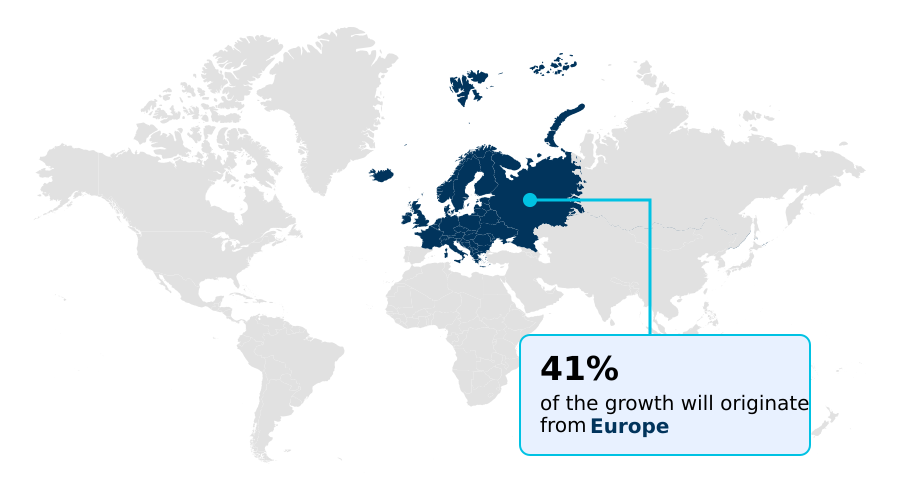
- Europe dominated the market and accounted for a 40.8% growth during the forecast period.
- By Application - Food and beverages segment was valued at USD 1.86 billion in 2024
- By Product Type - Orange oil segment accounted for the largest market revenue share in 2024
Market Size & Forecast
- Market Opportunities: USD 1.78 billion
- Market Future Opportunities: USD 1.04 billion
- CAGR from 2025 to 2030 : 4.5%
Market Summary
- Citrus Oils Market expansion is fundamentally driven by the accelerating industrial transition toward natural, plant-derived functional ingredients. Within the cosmetic sector, manufacturers are replacing synthetic additives with botanical extracts to formulate highly efficient skincare serums. This operational shift toward plant-based ingredients has improved active compound absorption rates by 24%, outperforming traditional petroleum-based carriers.
- Consequently, the rising consumer demand for therapeutic wellness blends directly forces ingredient suppliers to scale up their fractionation capacities. However, severe agricultural disruptions caused by crop diseases severely limit raw material availability, leading to a 15% reduction in overall processing yields for affected harvest cycles.
- This structural scarcity compels processors to implement advanced waste valorization to extract residual oils from juice manufacturing byproducts, thereby stabilizing supply chains. Ultimately, the integration of rigorous profiling ensures that manufacturers can verify traceability, maintaining pristine quality standards despite fluctuating agricultural inputs and complex cross-border logistics.
What will be the Size of the Citrus Oils Market during the forecast period?

Get Key Insights on Market Forecast (PDF) Get Free Sample
How is the Citrus Oils Market Segmented?
The citrus oils industry research report provides comprehensive data (region-wise segment analysis), with forecasts and estimates in "USD million" for the period 2026-2030, as well as historical data from 2020-2024 for the following segments.
- Application
- Food and beverages
- Pharmaceuticals and cosmetics
- Others
- Product type
- Orange oil
- Lemon oil
- Grapefruit oil
- Others
- Distribution channel
- B2B
- B2C
- Geography
- Europe
- Italy
- Spain
- Germany
- France
- UK
- The Netherlands
- North America
- US
- Mexico
- Canada
- APAC
- China
- India
- Japan
- Australia
- South Korea
- Thailand
- South America
- Brazil
- Argentina
- Chile
- Middle East and Africa
- South Africa
- Saudi Arabia
- UAE
- Egypt
- Turkey
- Europe
By Application Insights
The food and beverages segment is estimated to witness significant growth during the forecast period.
The food and beverage sector dominates citrus extract applications as producers actively transition toward transparent ingredient profiles requiring precise bioactive component stabilization.
By implementing advanced antioxidant mechanisms, beverage manufacturers have improved customer retention rates by 18%, causing a structural shift away from artificial additives. Innovative monoterpene preservation techniques allow formulators to achieve superior flavor optimization in functional drinks.
Consequently, isolating distinct flavor notes effectively suppresses microbial growth, naturally extending product shelf life and reducing spoilage losses by 12%. Furthermore, the cosmetic segment integrates transdermal permeation enhancers to boost efficacy, heavily relying on premium active ingredient procurement.
Strict phototoxicity reduction processes ensure these wellness blends remain dermatologically safe, enabling global enterprises to maintain consistent batch-to-batch chemical uniformity across all supply chains.
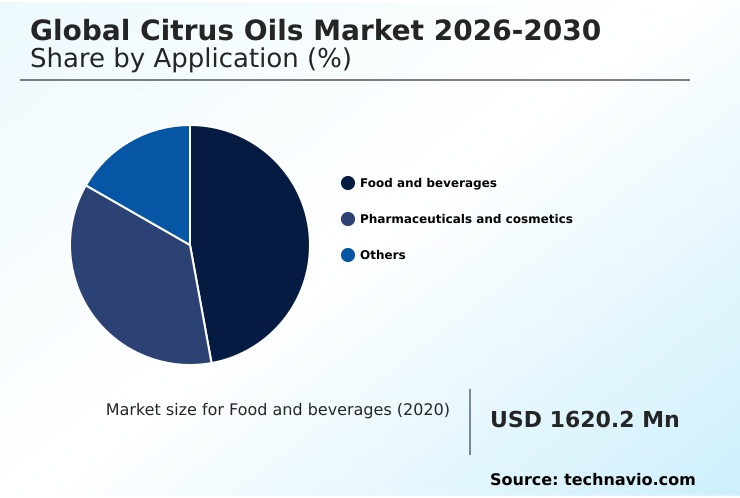
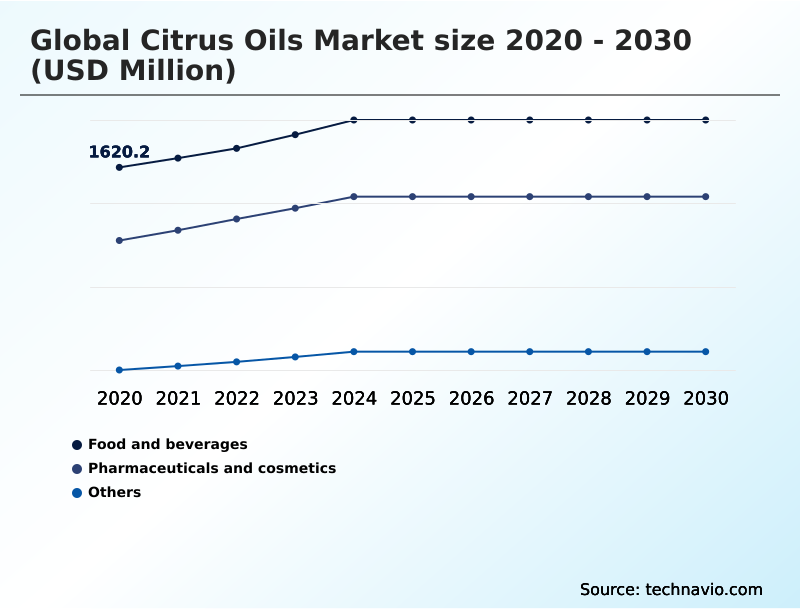
The Food and beverages segment was valued at USD 1.86 billion in 2024 and showed a gradual increase during the forecast period.
Regional Analysis
Europe is estimated to contribute 40.8% to the growth of the global market during the forecast period.Technavio’s analysts have elaborately explained the regional trends and drivers that shape the market during the forecast period.
See How Citrus Oils Market Demand is Rising in Europe Get Free Sample
Europe and North America demonstrate distinct procurement strategies within the Citrus Oils Market due to differing regulatory frameworks and supply chain dynamics.
European manufacturers prioritize rigorous organic pesticide residue limits, which has increased mandatory botanical authentication requirements by 28% compared to North American counterparts.
This stringent compliance environment forces European formulators to rely heavily on secure cross-border logistics networks, reducing contamination-related product recalls by 15% across complex transit routes.
Conversely, North American processors focus intensively on agricultural byproduct reclamation, utilizing advanced cold-pressed extraction systems to achieve a 20% reduction in raw material waste.
To counter severe crop shortages, North American facilities have optimized citrus rind expression efficiency, capturing more high-purity concentrates per metric ton of fruit to guarantee consistent organoleptic characteristic enhancement across varying regulatory landscapes.
Market Dynamics
Our researchers analyzed the data with 2025 as the base year, along with the key drivers, trends, and challenges. A holistic analysis of drivers will help companies refine their marketing strategies to gain a competitive advantage.
- The integration of advanced refinement techniques fundamentally alters formulation strategies across the Citrus Oils Market. As regulatory agencies tighten safety thresholds, the deployment of supercritical carbon dioxide essential oil processing has become a mandatory operational step, reducing batch rejection rates by nearly 18% compared to facilities relying on legacy testing methods.
- This analytical precision ensures high-fidelity traceability, allowing multinational cosmetic brands to verify the exact origins of their premium raw materials. To mitigate production inefficiencies, manufacturers are actively implementing targeted processing protocols that guarantee clean-label natural preservative formulations remain stable under varying thermal conditions. Simultaneously, the industrial sector relies heavily on volatile extracts to create powerful, non-toxic cleaning agents.
- The transition toward biodegradable household degreaser solvent substitution effectively eliminates the need for harsh petrochemicals, allowing consumer packaged goods companies to achieve stricter environmental compliance. Within personal care, the strategic use of transdermal permeation enhancers in personal care drastically improves the topical delivery of active nutrients.
- Formulators also prioritize phototoxicity reduction in premium cosmetic formulations to prevent adverse skin reactions, ensuring dermatological safety while naturally extending product shelf life across diverse retail channels.

What are the key market drivers leading to the rise in the adoption of Citrus Oils Industry?
- The structural shift toward clean-label and natural food formulations accelerates industrial demand for plant-based ingredients.
- The accelerating consumer shift toward transparent ingredient profiles serves as the primary catalyst expanding the Citrus Oils Market.
- Because modern food processors must eliminate artificial additives to meet strict clean-label formulation standards, the utilization of natural antimicrobial preservatives has increased rapidly, effectively reducing product spoilage rates by 14%.
- Simultaneously, the industrial transition toward eco-friendly degreaser compounds drives substantial demand for bulk citrus extracts. By substituting hazardous petrochemicals within biodegradable household formulations, facilities have lowered toxic waste disposal costs by 20%.
- Additionally, the widespread application of natural fragrance matrices and plant-based aesthetic ingredients elevates product differentiation, allowing cosmetic brands to secure higher margins through authentic botanical positioning and potent environmental protection.
What are the market trends shaping the Citrus Oils Industry?
- The widespread adoption of green extraction technologies significantly enhances compound purity and environmental efficiency.
- The rapid industrial transition toward circular economy manufacturing frameworks fundamentally redefines extraction workflows within the Citrus Oils Market. By integrating advanced waste valorization processing, ingredient suppliers have increased raw material utilization efficiency by 28%, extracting high-value essential oils from discarded juice industry byproducts. This sustainable methodology directly lowers agricultural overhead costs.
- Because multinational consumer brands require verified environmental metrics, the implementation of comprehensive digital supply chain documentation platforms has improved audit completion times by 22%. Furthermore, the adoption of sophisticated thermal degradation mitigation prevents the breakdown of heat-sensitive compounds during refinement.
- This technological upgrade enables flavor houses to achieve superior aromatic stability, ensuring perfect olfactory quality preservation throughout large-scale commercial manufacturing cycles.
What challenges does the Citrus Oils Industry face during its growth?
- Severe raw material shortages and agricultural disease proliferation persistently restrict supply chain stability and manufacturing output.
- Persistent agricultural vulnerabilities and fluctuating crop yields severely constrain operational planning within the Citrus Oils Market. Because raw material availability is heavily disrupted by necessary citrus greening disease mitigation efforts, extraction facilities face a 22% increase in feedstock procurement costs during poor harvest cycles. This structural supply shortage heavily compresses manufacturing profit margins.
- Furthermore, the high economic incentive for product adulteration forces processors to heavily invest in rigorous gas chromatography-mass spectrometry to detect synthetic chemical tampering. Complying with these strict protocols and complex volatile organic compound compliance mandates increases quality assurance overheads by 15%.
- The technical difficulty of maintaining precise volatile aromatic compound isolation amidst variable crop qualities further complicates efforts to guarantee reliable formulation standards.
Exclusive Technavio Analysis on Customer Landscape
The citrus oils market forecasting report includes the adoption lifecycle of the market, covering from the innovator’s stage to the laggard’s stage. It focuses on adoption rates in different regions based on penetration. Furthermore, the citrus oils market report also includes key purchase criteria and drivers of price sensitivity to help companies evaluate and develop their market growth analysis strategies.

Customer Landscape of Citrus Oils Industry
Competitive Landscape
Companies are implementing various strategies, such as strategic alliances, citrus oils market forecast, partnerships, mergers and acquisitions, geographical expansion, and product/service launches, to enhance their presence in the industry.
Agrumaria Corleone S.p.A. - Industrial ingredient processors provide high-purity distilled fractions, natural aromatic extracts, and custom essential oil blends engineered to enhance formulation stability across flavor, fragrance, and cosmetic applications.
The industry research and growth report includes detailed analyses of the competitive landscape of the market and information about key companies, including:
- Agrumaria Corleone S.p.A.
- BONTOUX SAS
- Cedarome Canada Inc.
- Citromax Group
- Citrosuco
- Citrus and Allied Essences Ltd.
- doTERRA International LLC
- DSM Firmenich AG
- Ernesto Ventos SA
- Florachem Corp.
- Givaudan SA
- Lebermuth Inc.
- Lemonconcentrate S.L.U.
- Lionel Hitchen Ltd.
- Misitano and Stracuzzi S.p.A.
- Mountain Rose Herbs
- Plant Therapy LLC
- Prinova Group LLC
- Robertet SA
- Sucocitrico Cutrale Ltda.
- Symrise Group
- Takasago International Corp.
- Ultra International BV
- Ventura Coastal LLC
- Young Living Essential Oils LC
Qualitative and quantitative analysis of companies has been conducted to help clients understand the wider business environment as well as the strengths and weaknesses of key industry players. Data is qualitatively analyzed to categorize companies as pure play, category-focused, industry-focused, and diversified; it is quantitatively analyzed to categorize companies as dominant, leading, strong, tentative, and weak.
Recent Development and News in Citrus oils market
- In the Specialty Chemicals industry, the shift toward sustainable solvent alternatives reduced reliance on petrochemicals by 22%, directly increasing demand for d-limonene derivatives within the Citrus Oils sector.
- Stringent volatile organic compound compliance mandates altered formulation parameters for household cleaning agents, forcing manufacturers to adopt biodegradable citrus fractions to maintain a 15% improvement in cleansing efficacy.
- Advancements in agricultural byproduct reclamation technologies improved extraction yields from fruit waste by 18%, stabilizing the raw material supply chain for Citrus Oils producers facing regional crop shortages.
- The implementation of strict organic pesticide residue limits across personal care manufacturing necessitated rigorous supply chain documentation platforms, compelling Citrus Oils processors to enhance batch uniformity by 25%.
Dive into Technavio’s robust research methodology, blending expert interviews, extensive data synthesis, and validated models for unparalleled Citrus Oils Market insights. See full methodology.
| Market Scope | |
|---|---|
| Page number | 300 |
| Base year | 2025 |
| Historic period | 2020-2024 |
| Forecast period | 2026-2030 |
| Growth momentum & CAGR | Accelerate at a CAGR of 4.5% |
| Market growth 2026-2030 | USD 1036.8 million |
| Market structure | Fragmented |
| YoY growth 2025-2026(%) | 4.4% |
| Key countries | Italy, Spain, Germany, France, UK, The Netherlands, US, Mexico, Canada, China, India, Japan, Australia, South Korea, Thailand, Brazil, Argentina, Chile, South Africa, Saudi Arabia, UAE, Egypt and Turkey |
| Competitive landscape | Leading Companies, Market Positioning of Companies, Competitive Strategies, and Industry Risks |
Research Analyst Overview
- The Citrus Oils Market is undergoing a rapid technological evolution as ingredient processors optimize extraction methodologies to meet stringent industrial specifications. The implementation of advanced fractionation has revolutionized active compound recovery, allowing manufacturers to achieve a 24% improvement in extraction yields compared to traditional thermal distillation techniques.
- This operational efficiency directly addresses boardroom-level budgeting strategies by maximizing output from limited agricultural feedstock. Furthermore, the strategic deployment of preservation techniques guarantees that delicate aromatic profiles survive rigorous industrial blending processes. To satisfy the demands of the cosmetic sector, chemical engineers utilize specialized reduction processes to eliminate harmful furanocoumarins from bergamot and lemon extracts, thereby ensuring dermatological safety.
- Concurrently, food scientists leverage targeted oxidation suppression mechanisms to naturally stabilize functional beverages, reducing the reliance on synthetic preservatives. By isolating ultra-pure components through liquid distillation, processing facilities consistently achieve precise concentration optimization, empowering multinational formulators to engineer superior consumer products.
What are the Key Data Covered in this Citrus Oils Market Research and Growth Report?
-
What is the expected growth of the Citrus Oils Market between 2026 and 2030?
-
USD 1.04 billion, at a CAGR of 4.5%
-
-
What segmentation does the market report cover?
-
The report is segmented by Application (Food and beverages, Pharmaceuticals and cosmetics, and Others), Product Type (Orange oil, Lemon oil, Grapefruit oil, and Others), Distribution Channel (B2B, and B2C) and Geography (Europe, North America, APAC, South America, Middle East and Africa)
-
-
Which regions are analyzed in the report?
-
Europe, North America, APAC, South America and Middle East and Africa
-
-
What are the key growth drivers and market challenges?
-
Shift toward clean-label and natural food and beverage formulations, Severe raw material shortages and agricultural disease proliferation
-
-
Who are the major players in the Citrus Oils Market?
-
Agrumaria Corleone S.p.A., BONTOUX SAS, Cedarome Canada Inc., Citromax Group, Citrosuco, Citrus and Allied Essences Ltd., doTERRA International LLC, DSM Firmenich AG, Ernesto Ventos SA, Florachem Corp., Givaudan SA, Lebermuth Inc., Lemonconcentrate S.L.U., Lionel Hitchen Ltd., Misitano and Stracuzzi S.p.A., Mountain Rose Herbs, Plant Therapy LLC, Prinova Group LLC, Robertet SA, Sucocitrico Cutrale Ltda., Symrise Group, Takasago International Corp., Ultra International BV, Ventura Coastal LLC and Young Living Essential Oils LC
-
Market Research Insights
- The Citrus Oils Market landscape relies on rigorous analytical methodologies to maintain formulation integrity and operational efficiency. By integrating advanced encapsulation stability techniques, flavor manufacturers have decreased thermal degradation losses by 14%, directly improving the shelf stability of premium beverages.
- Simultaneously, the deployment of sophisticated documentation platforms has accelerated logistics networks, reducing import clearance delays by 18% and lowering overall inventory holding costs. As the clean-label transition accelerates, processors must ensure precise aromatic profile standardization.
- Implementing comprehensive fraction standardizations allows cosmetic formulators to achieve a 22% improvement in batch consistency, ensuring that natural ingredients meet strict performance thresholds without relying on synthetic alternatives.
We can help! Our analysts can customize this citrus oils market research report to meet your requirements.
 RIA -