

The clinical mass spectrometry market share is expected to increase by USD 1.83 billion from 2020 to 2025, and the market’s growth momentum will accelerate at a CAGR of 6.03%.
This clinical mass spectrometry market research report provides valuable insights on the post COVID-19 impact on the market, which will help companies evaluate their business approaches. Furthermore, this report extensively covers clinical mass spectrometry market segmentation by end-user (healthcare facilities and pharma and biotech companies and research labs and institutes) and geography (North America, Europe, Asia, and ROW). The clinical mass spectrometry market report also offers information on several market vendors, including Agilent Technologies Inc., Bruker Corp., Hitachi High-Technologies Corp., JEOL Ltd., Kore Technology Ltd., LECO Corp., PerkinElmer Inc., Shimadzu Corp., Thermo Fisher Scientific Inc., and Waters Corp. among others.
What will the Clinical Mass Spectrometry Market Size be During the Forecast Period?
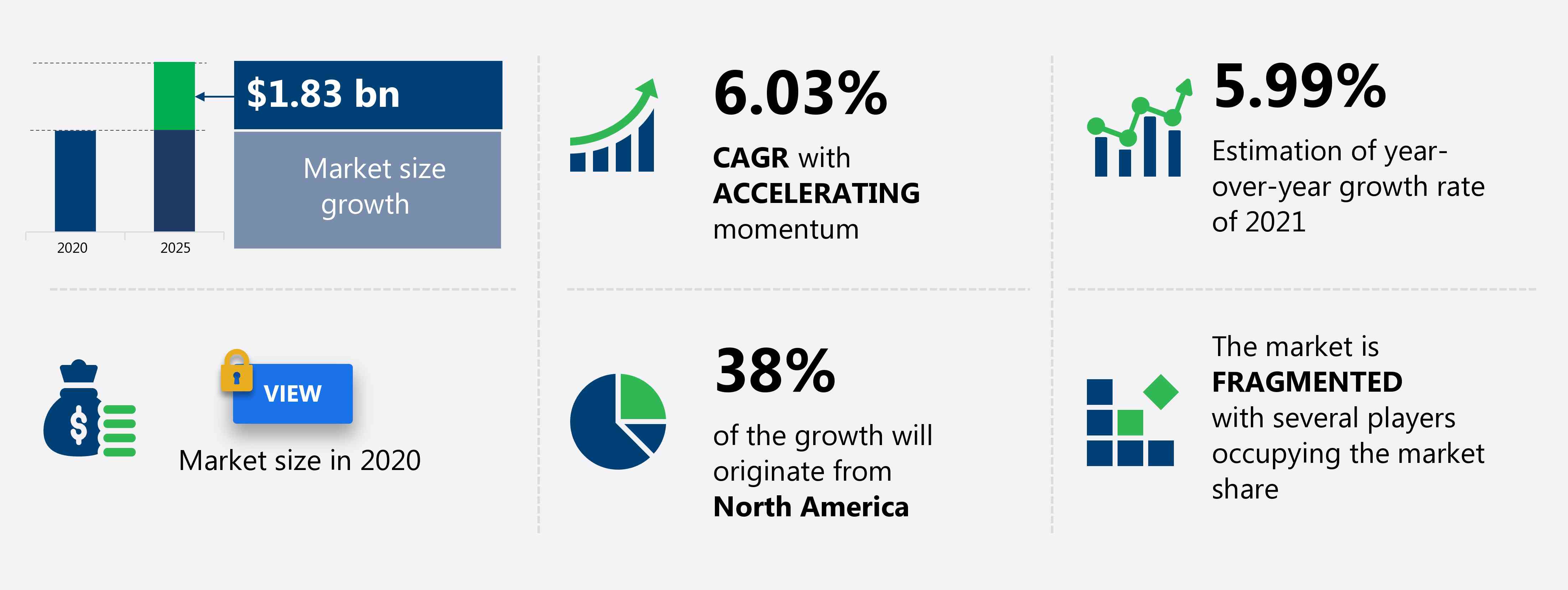
Download Report Sample to Unlock the Clinical Mass Spectrometry Market Size for the Forecast Period and Other Important Statistics
Clinical Mass Spectrometry Market: Key Drivers, Trends, and Challenges
An increase in the use of hyphenated technology is notably driving the clinical mass spectrometry market growth, although factors such as the high cost of instruments may impede the market growth. Our research analysts have studied the historical data and deduced the key market drivers and the COVID-19 pandemic impact on the clinical mass spectrometry industry. The holistic analysis of the drivers will help in deducing end goals and refining marketing strategies to gain a competitive edge.
Key Clinical Mass Spectrometry Market Driver
An increase in the use of hyphenated technology is one of the major drivers of the clinical mass spectrometry market growth. The coupling of GC separation with mass characterization has been employed in a wide range of clinical applications, which include- the detection of steroid drugs in body fluids and profiling endogenous steroids, analysis of blood samples of newborn babies using LC-MS to detect metabolic disorders, determination of vitamin in plasma, genetic testing, as well as for microbial identification In the GC-MS hyphenated technique, the selected samples are intermediately parked in sample loops and transferred to clinical mass spectrometers after the end of the chromatographic separation. In this procedure, sample handling is minimized. This means that after the injection of the mixture, the separated compounds are transferred onto the clinical mass spectrometer without access to air or light and without any manual handling of the sample. In addition, the delay between the separation and the start of the mass measurement is reduced. Thus, the use of hyphenated technology helps vendors save on cost, resulting in accurate and faster results, higher sample throughput, better reproducibility, greater reduction of contamination due to its closed system, and enhanced separation and quantification. All these factors drive the demand for hyphenated clinical mass spectrometry.
Key Clinical Mass Spectrometry Market Trend
Technological advances are one of the major trends in the clinical mass spectrometry market growth. The need for quality and error-free results has compelled laboratories to lean toward automated and advanced systems with effective workflow solutions. In recent years, there has been rapid adoption of automated systems in different sectors such as the healthcare sector and clinical research laboratories for the diagnosis of samples. Clinical mass spectrometry has enhanced the activities of health and research centers by providing models for cancer research, screening of anti-cancerous drugs, and effects of cytotoxicity. Laboratories are approaching institutes to get valid certifications in automation. Healthcare centers and laboratories are likely to benefit from standardization and automation as fully automated molecular platforms are emerging in the marketplace as game-changers. For instance, Thermo Fisher Scientific provides Cascadion SM Clinical Analyzer. It is an all-in-one clinical analyzer with LC-MS/MS technology; it is designed to meet the requirement of clinical laboratories in routine checkups. It is fully automated and allows the easy performance of tests, which were earlier restricted to specialty laboratories. Such developments will increase the adoption of mass spectrometers during the forecast period.
Key Clinical Mass Spectrometry Market Challenge
The high cost of instruments is one of the major challenges for the clinical mass spectrometry market growth. On average, the price of a clinical mass spectrometry instrument ranges between $200,000-$500,000. Subsequently, the total cost of ownership is the overall cost of the equipment over its useful life, and for a standard clinical mass spectrometer, the cost of maintenance, service, and repair increases with the total cost of ownership, making the clinical mass spectrometer more expensive during its lifetime. Further, there is a requirement for continuous maintenance of the instrument that further escalates the cost of the instrument over its lifetime. The maintenance cost of these devices is high as these devices experience changes in pressure and temperature and undergo mechanical stress and optical decay. The regular maintenance of the instrument is a necessity as it has specific performance criteria for delivering accurate results. Additionally, the instrument must be used as per the guidelines provided to avoid any sort of contamination with microorganisms and alcohol-based solutions. Therefore, the cost of expenditure for the initial setup and instrumentation and the high cost of maintenance is likely to hamper the market growth
This clinical mass spectrometry market analysis report also provides detailed information on other upcoming trends and challenges that will have a far-reaching effect on the market growth. The actionable insights on the trends and challenges will help companies evaluate and develop growth strategies for 2021-2025.
Parent Market Analysis
Technavio categorizes the global clinical mass spectrometry market as a part of the global life sciences tools and services market. Our research report has extensively covered external factors influencing the parent market growth potential in the coming years, which will determine the levels of growth of the clinical mass spectrometry market during the forecast period.
Who are the Major Clinical Mass Spectrometry Market Vendors?
The report analyzes the market’s competitive landscape and offers information on several market vendors, including:
- Agilent Technologies Inc.
- Bruker Corp.
- Hitachi High-Technologies Corp.
- JEOL Ltd.
- Kore Technology Ltd.
- LECO Corp.
- PerkinElmer Inc.
- Shimadzu Corp.
- Thermo Fisher Scientific Inc.
- Waters Corp.
This statistical study of the clinical mass spectrometry market encompasses successful business strategies deployed by the key vendors. The clinical mass spectrometry market is fragmented and the vendors are deploying growth strategies such as technological innovations and mergers and acquisitions (M&A) to compete in the market.
To make the most of the opportunities and recover from post COVID-19 impact, market vendors should focus more on the growth prospects in the fast-growing segments, while maintaining their positions in the slow-growing segments.
The clinical mass spectrometry market forecast report offers in-depth insights into key vendor profiles. The profiles include information on the production, sustainability, and prospects of the leading companies.
Clinical Mass Spectrometry Market Value Chain Analysis
Our report provides extensive information on the value chain analysis for the clinical mass spectrometry market, which vendors can leverage to gain a competitive advantage during the forecast period. The end-to-end understanding of the value chain is essential in profit margin optimization and evaluation of business strategies. The data available in our value chain analysis segment can help vendors drive costs and enhance customer services during the forecast period.
The value chain of the global life sciences tools and services market includes the following core components:
- Inputs
- Inbound logistics
- Operations
- Outbound logistics
- Marketing and sales
- Service
- Support activities
- Innovation
The report has further elucidated other innovative approaches being followed by manufacturers to ensure a sustainable market presence.
Which are the Key Regions for Clinical Mass Spectrometry Market?
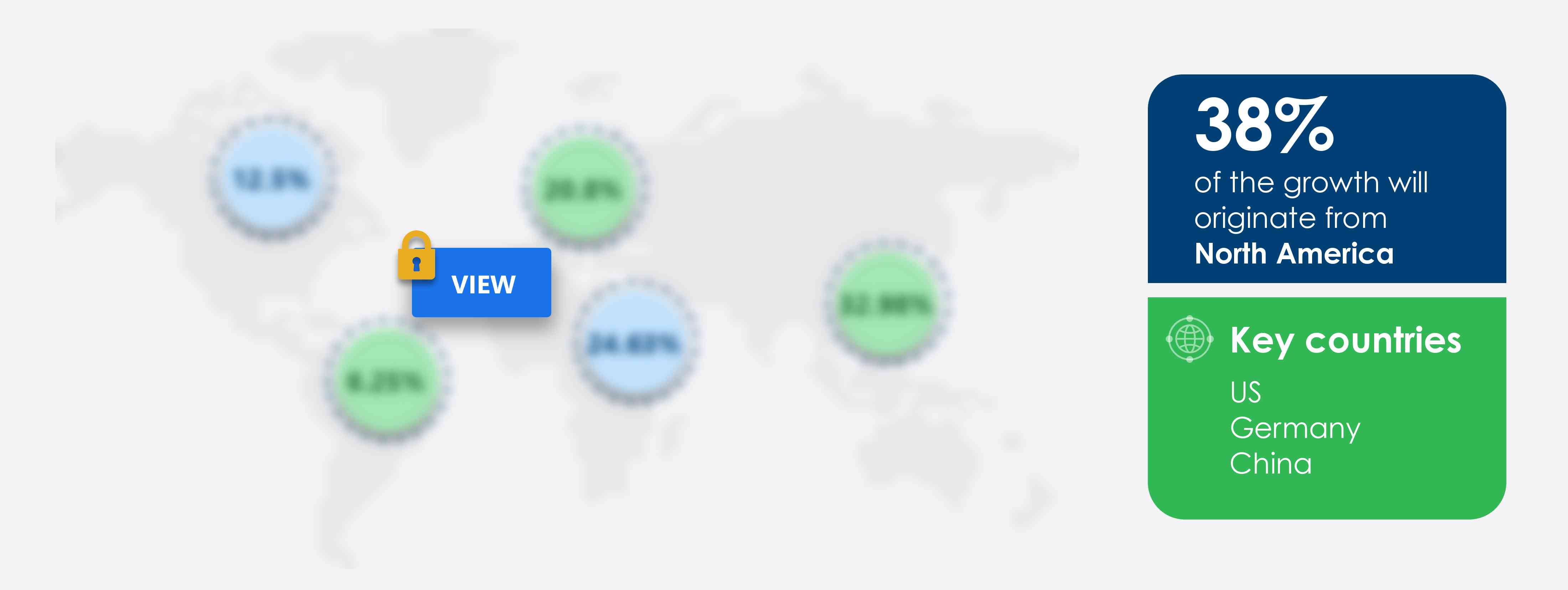
For more insights on the market share of various regions Request PDF Sample now!
38% of the clinical mass spectrometry market growth will originate from North America during the forecast period. The US is the key market for clinical mass spectrometry market in North America.
Factors such as the growing focus on drug and vaccine discovery and development, recent advances in biotechnology and pharmaceutical research, and the presence of several vendors in the country offering a wide range of mass spectrometers will facilitate the clinical mass spectrometry market growth in North America over the forecast period. This market research report entails detailed information on the competitive intelligence, marketing gaps, and regional opportunities in store for vendors, which will assist in creating efficient business plans.
COVID Impact and Recovery Analysis
The COVID-19 pandemic led to disruptions in the operations of various end-user industries, it resulted in new opportunities for pharmaceutical and biotech companies in 2020. Moreover, medical product manufacturers have currently shifted their focus to developing vaccination and medication for COVID-19 treatment. Owing to the COVID-19 crisis, routine research in the field of life sciences is hindered. However, the market is expected to return to normalcy during the forecast period as the number of COVID-19 cases is reducing, and a major portion of the US population (44%) has been completely vaccinated; therefore, end-users like pharmaceutical, biotech companies, and clinical diagnostic centers will resume their work with full strength. Hence, the regional market will witness growth during the forecast period.
What are the Revenue-generating End User Segments in the Clinical Mass Spectrometry Market?
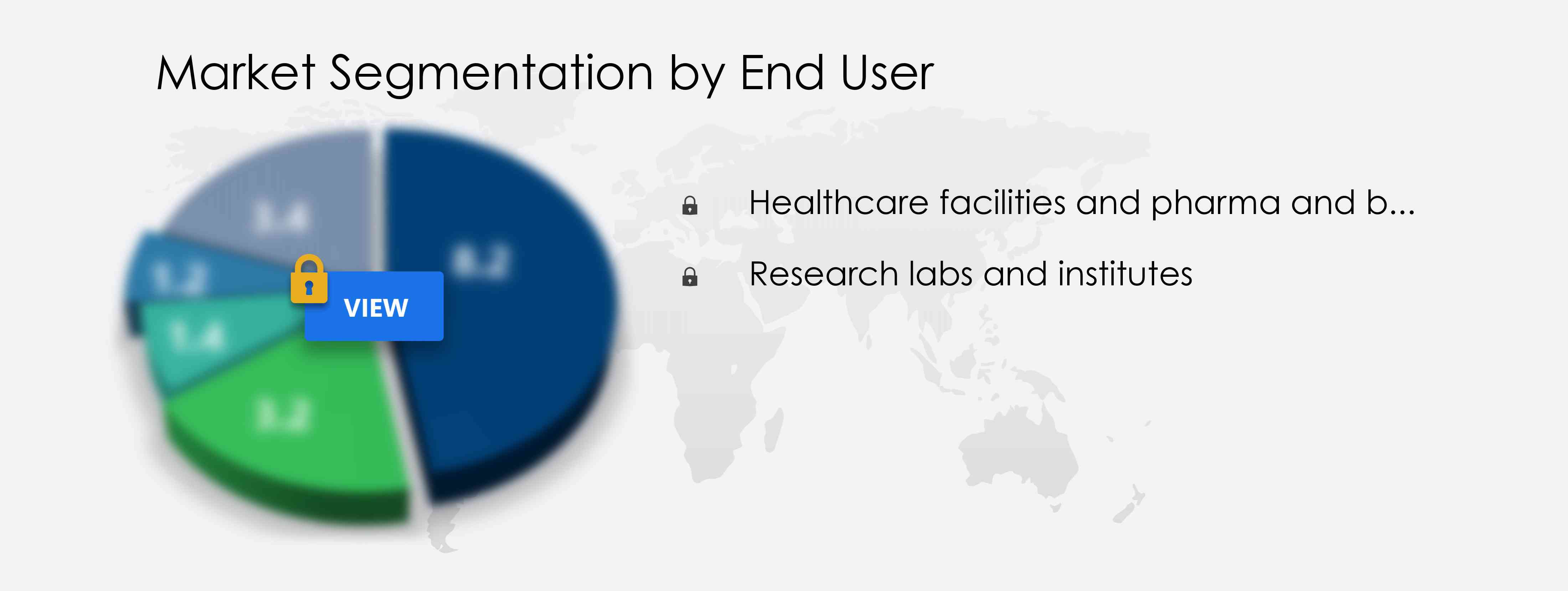
To gain further insights on the market contribution of various segments Request PDF Sample
The clinical mass spectrometry market share growth in the healthcare facilities and pharma and biotech companies segment will be significant during the forecast period. This segment includes end-users such as hospitals, clinical research laboratories, diagnostic centers, and pharmaceutical and biotechnology companies that perform analytical tests on specimens for diagnosing diseases and identifying causal microorganisms. Clinical mass spectrometry in healthcare plays an important role in ensuring the quality of care and patient safety. The increasing use of mass spectrometry in healthcare facilities and pharma and biotech companies is boosting the clinical mass spectrometry market growth.
This report provides an accurate prediction of the contribution of all the segments to the growth of the clinical mass spectrometry market size and actionable market insights on post COVID-19 impact on each segment.
|
Clinical Mass Spectrometry Market Scope |
|
|
Report Coverage |
Details |
|
Page number |
120 |
|
Base year |
2020 |
|
Forecast period |
2021-2025 |
|
Growth momentum & CAGR |
Accelerate at a CAGR of 6.03% |
|
Market growth 2021-2025 |
$ 1.83 billion |
|
Market structure |
Fragmented |
|
YoY growth (%) |
5.99 |
|
Regional analysis |
North America, Europe, Asia, and ROW |
|
Performing market contribution |
North America at 38% |
|
Key consumer countries |
US, Germany, China, Japan, and France |
|
Competitive landscape |
Leading companies, Competitive strategies, Consumer engagement scope |
|
Key companies profiled |
Agilent Technologies Inc., Bruker Corp., Hitachi High-Technologies Corp., JEOL Ltd., Kore Technology Ltd., LECO Corp., PerkinElmer Inc., Shimadzu Corp., Thermo Fisher Scientific Inc., and Waters Corp. |
|
Market dynamics |
Parent market analysis, Market growth inducers and obstacles, Fast-growing and slow-growing segment analysis, COVID 19 impact and recovery analysis and future consumer dynamics, Market condition analysis for forecast period |
|
Customization purview |
If our report has not included the data that you are looking for, you can reach out to our analysts and get segments customized. |
What are the Key Data Covered in this Clinical Mass Spectrometry Market Report?
- CAGR of the market during the forecast period 2021-2025
- Detailed information on factors that will drive clinical mass spectrometry market growth during the next five years
- Precise estimation of the clinical mass spectrometry market size and its contribution to the parent market
- Accurate predictions on upcoming trends and changes in consumer behavior
- The growth of the clinical mass spectrometry industry across North America, Europe, Asia, and ROW
- A thorough analysis of the market’s competitive landscape and detailed information on vendors
- Comprehensive details of factors that will challenge the growth of clinical mass spectrometry market vendors
We can help! Our analysts can customize this report to meet your requirements. Get in touch
 RIA -
RIA -