


Commercial Aircraft Piezoelectric Accelerometer Market Size 2024-2028
The commercial aircraft piezoelectric accelerometer market size is forecast to increase by USD 51.26 million at a CAGR of 4.07% between 2023 and 2028.
- The market is experiencing significant growth, driven primarily by the increasing demand for newer-generation aircraft. These modern aircraft rely heavily on advanced sensing technologies for improved safety, efficiency, and performance. Piezoelectric acceleromers, with their ability to convert mechanical energy into electrical energy, are a crucial component in these systems. Another key trend in the market is the emergence of nanoelectromechanical systems (NEMS). NEMS piezoelectric accelerometers offer enhanced sensitivity and miniaturization, making them ideal for use in aerospace applications. However, the market also faces challenges, particularly the adverse effect of temperature dissimilarity on piezoelectric accelerometers. Temperature variations between different components in an aircraft can lead to errors in sensor readings, affecting the overall system's accuracy and reliability.
- To mitigate this challenge, manufacturers are investing in advanced materials and design techniques to improve temperature stability and ensure consistent performance. Companies seeking to capitalize on market opportunities should focus on developing innovative solutions that address these challenges while leveraging the growing demand for advanced sensing technologies in the aerospace industry.
What will be the Size of the Commercial Aircraft Piezoelectric Accelerometer Market during the forecast period?
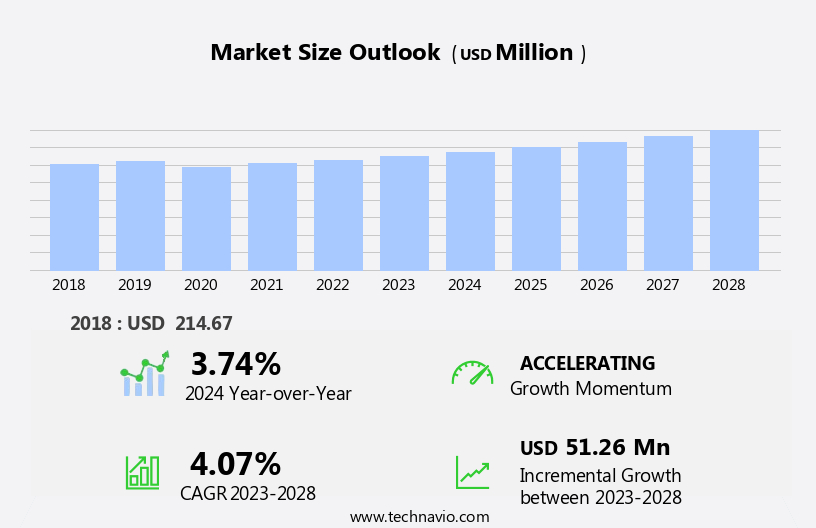
- The market continues to evolve, driven by the increasing demand for advanced sensor technologies in the aerospace industry. These sensors play a crucial role in data acquisition for aircraft design, damage detection, aircraft noise reduction, and aircraft certification. The integration of cloud-based data management systems enables real-time monitoring and analysis of vibration signatures, which is essential for aircraft maintenance schedules and component life assessment. Data analytics and vibration analysis are key applications of piezoelectric accelerometers in the aviation sector. These technologies help aircraft manufacturers and operators optimize aircraft performance and ensure compliance with environmental regulations.
- Additionally, they facilitate fault diagnosis and aircraft certification standards, enhancing safety and fuel efficiency. The ongoing development of smart aircraft and the implementation of stress measurement and structural health monitoring systems further expand the market's potential. These technologies enable remote monitoring and real-time analysis, providing valuable insights into aircraft performance and operation. The aerospace industry's relentless pursuit of innovation continues to drive the evolution of piezoelectric accelerometer technology, ensuring its continued relevance in the commercial aviation sector.
How is this Commercial Aircraft Piezoelectric Accelerometer Industry segmented?
The commercial aircraft piezoelectric accelerometer industry research report provides comprehensive data (region-wise segment analysis), with forecasts and estimates in "USD million" for the period 2024-2028, as well as historical data from 2018-2022 for the following segments.
- Type
- Narrow-body aircraft
- Wide-body aircraft
- Regional aircraft
- Application
- Monitoring
- Safety and control
- Navigation
- Technology Specificity
- Analog
- Digital
- Aircraft Type
- Commercial Jets
- Business Jets
- Helicopters
- End-User
- OEMs
- Aftermarket
- Geography
- North America
- US
- Mexico
- Europe
- France
- Germany
- Italy
- Spain
- UK
- Middle East and Africa
- UAE
- APAC
- Australia
- China
- India
- Japan
- South Korea
- South America
- Brazil
- Rest of World (ROW)
- North America
By Type Insights
The narrow-body aircraft segment is estimated to witness significant growth during the forecast period.
In the dynamic world of commercial aviation, the integration of advanced technologies has become a necessity to enhance aircraft performance, safety, and efficiency. Piezoelectric sensors, a key technology in this domain, are increasingly being adopted for various applications. These sensors, which utilize the piezoelectric effect of certain materials to measure mechanical variables such as acceleration, vibration, and mechanical shock, are particularly valuable in the aerospace industry. Aircraft design and manufacturing companies are integrating piezoelectric sensors for damage detection, aircraft noise reduction, and structural health monitoring. Real-time monitoring of aircraft components is essential for optimizing aircraft performance, adhering to flight safety regulations, and ensuring aircraft maintenance schedules align with component life.
Cloud-based data management and data analytics enable vibration signature analysis, fault diagnosis, and stress measurement, all of which are critical for maintaining aircraft safety and efficiency. The aerospace industry's focus on smart aircraft and industrial vibration monitoring has led to the increased use of piezoelectric sensors for dynamic load measurement and remote monitoring. These sensors are also instrumental in aircraft fuel efficiency and signal processing, contributing to the optimization of aircraft performance and adherence to environmental regulations. Aircraft certification standards mandate rigorous testing and monitoring, and piezoelectric sensors play a crucial role in this process. From aircraft oems to maintenance providers, the use of piezoelectric sensors is transforming the aviation landscape, enabling predictive maintenance, fatigue analysis, and real-time monitoring. The integration of these sensors is also essential for ensuring aircraft safety and optimizing aircraft operation, making them an indispensable component of the commercial aviation sector.
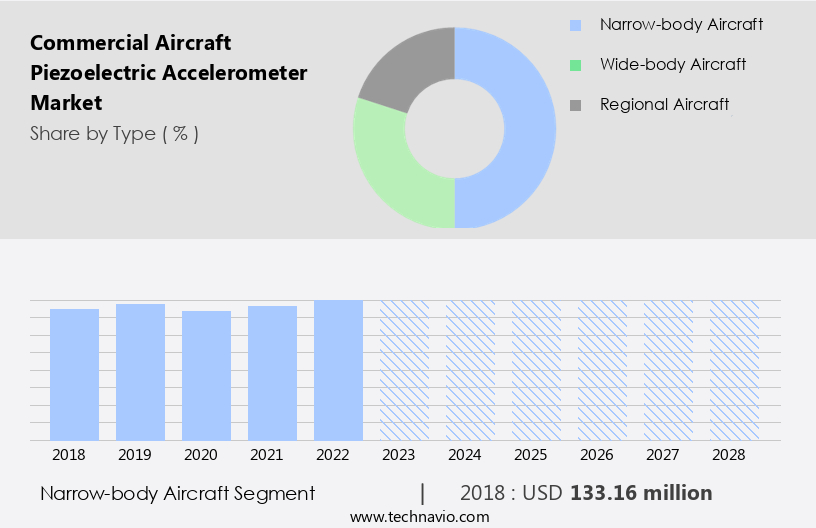
The Narrow-body aircraft segment was valued at USD 133.16 million in 2018 and showed a gradual increase during the forecast period.
Regional Analysis
North America is estimated to contribute 29% to the growth of the global market during the forecast period.Technavio's analysts have elaborately explained the regional trends and drivers that shape the market during the forecast period.

In the dynamic aerospace industry, commercial aviation continues to expand with increasing passenger traffic and new aircraft deliveries. To ensure safety and efficiency, aircraft manufacturers and operators integrate advanced technologies, such as piezoelectric sensors, into their designs. These sensors play a crucial role in data acquisition for navigation systems, damage detection, noise reduction, and structural health monitoring. With the focus on real-time monitoring and predictive maintenance, cloud-based data management and vibration signature analysis have become essential. Data visualization tools enable aircraft maintenance teams to assess aircraft component life and optimize aircraft performance, adhering to certification standards and environmental regulations.
Furthermore, smart aircraft and dynamic load measurement contribute to aircraft fuel efficiency and stress measurement, enhancing overall safety and operational excellence. The aerospace industry's relentless pursuit of innovation and optimization drives the demand for piezoelectric sensors and associated systems, ensuring a safer, more efficient, and sustainable future for commercial aviation.
Market Dynamics
Our researchers analyzed the data with 2023 as the base year, along with the key drivers, trends, and challenges. A holistic analysis of drivers will help companies refine their marketing strategies to gain a competitive advantage.
The Global Commercial Aircraft Piezoelectric Accelerometer Market advances with piezoelectric accelerometers for aircraft navigation and sensors for flight control systems. Aircraft accelerometer market trends highlight piezoelectric sensors for vibration monitoring and accelerometers for structural health. Piezoelectric accelerometers for avionics and sensors for aircraft safety drive growth, per aircraft accelerometer market forecast. High-precision piezoelectric sensors leverage accelerometers with digital output, while piezoelectric accelerometers for turbulence detection ensure reliability. Sensors for aircraft maintenance and accelerometers for engine monitoring enhance performance. Piezoelectric accelerometers for flight testing, advanced accelerometer technologies, and aircraft sensor supply chain optimize operations. Piezoelectric accelerometers for aerospace, sensors for regulatory compliance, accelerometers for global aviation, piezoelectric sensors for flight data, accelerometers for aircraft retrofitting, and piezoelectric accelerometers for B2B markets fuel growth through 2028.
What are the key market drivers leading to the rise in the adoption of Commercial Aircraft Piezoelectric Accelerometer Industry?
- The market is primarily fueled by the growing demand for advanced-generation aircraft. This trend is driven by various factors, including technological advancements, increasing passenger traffic, and the need for more fuel-efficient and eco-friendly aircraft. As a result, aircraft manufacturers and airlines are investing heavily in research and development to meet this demand and stay competitive in the industry.
- Commercial aircraft Original Equipment Manufacturers (OEMs) are focusing on developing next-generation aircraft that offer improved fuel efficiency and reduced noise and carbon emissions. The global air travel market is projected to double in the next two decades due to growing economies and rising tourism in countries like China, India, Indonesia, Russia, and the US. This increasing air traffic necessitates the introduction of new aircraft to meet the growing demand. The global air traffic growth is influenced by economic expansion and tourism trends. Aircraft piezoelectric accelerometer companies have experienced significant demand from these markets as these components play a crucial role in smart aircraft applications such as fatigue analysis, aircraft vibration monitoring, dynamic load measurement, and remote strain measurement.
- These technologies contribute to enhancing flight safety and improving overall aircraft performance. Signal processing is a critical aspect of these applications, ensuring accurate data collection and analysis. Flight safety regulations mandate the implementation of advanced monitoring systems to ensure safe and efficient aircraft operations.
What are the market trends shaping the Commercial Aircraft Piezoelectric Accelerometer Industry?
- Nanoelectromechanical systems represent the latest trend in emerging technologies. These advanced systems combine the properties of mechanics and electronics at the nanoscale.
- Piezoelectric sensors, derived from Nanoelectromechanical systems (NEMS), are gaining traction in the commercial aviation industry due to their unique advantages. NEMS devices, which integrate mechanical actuators, motors, or pumps with transistor-like nanoelectronics, offer higher frequency applications than traditional MEMS sensors. These miniature devices, with dimensions in the nanometer range, have low mass and high mechanical resonance frequencies. In commercial aviation, piezoelectric sensors are used for data acquisition in aircraft design, damage detection, aircraft noise reduction, and aircraft certification. The data acquired from these sensors is crucial for aircraft manufacturing and maintenance, enabling data visualization and analysis for optimizing aircraft performance.
- Companies are investing in R&D to advance the development of these sensors, recognizing their potential to revolutionize the aviation industry. Piezoelectric sensors' ability to convert mechanical energy into electrical energy makes them ideal for various applications. Their small size and high sensitivity make them suitable for use in aircraft, where lightweight and precise measurements are essential. The integration of these sensors in commercial aviation is expected to enhance safety, efficiency, and overall aircraft performance.
What challenges does the Commercial Aircraft Piezoelectric Accelerometer Industry face during its growth?
- The adverse impact of temperature disparities on the performance of piezoelectric accelerometers represents a significant challenge to the growth of the industry, as these sensors are essential for various applications and their accuracy can be compromised by substantial variations in temperature.
- Commercial aircraft accelerometers, a crucial component in aircraft maintenance schedules, are designed to measure shock and vibration in extreme environmental conditions. Their installation is essential for monitoring aircraft component life and ensuring compliance with aircraft environmental regulations. Vibration signature analysis, a key application of accelerometers, is used for fault diagnosis and aircraft performance optimization. Cloud-based data management and data analytics enable real-time monitoring and analysis of accelerometer data, enhancing maintenance efficiency and safety. Piezoelectric materials, the foundation of accelerometer technology, exhibit unique properties that influence their performance. Both natural and synthetic materials have distinct advantages. For instance, natural materials like quartz offer high temperature stability, while synthetic materials like lead zirconate titanate provide excellent piezoelectric properties.
- Accuracy, reliability, and stability are paramount for aircraft accelerometers, as they operate under harsh conditions. The design and manufacturing process must consider these factors to ensure optimal performance. Vibration analysis plays a significant role in engine monitoring, and the selection of appropriate piezoelectric materials can enhance the accelerometer's high-temperature performance. In conclusion, the integration of advanced accelerometer technology in aircraft maintenance enhances safety, efficiency, and compliance with certification standards. The choice of piezoelectric materials significantly influences the performance of these devices, making their selection a critical consideration in the design and manufacturing process.
Exclusive Customer Landscape
The commercial aircraft piezoelectric accelerometer market forecasting report includes the adoption lifecycle of the market, covering from the innovator's stage to the laggard's stage. It focuses on adoption rates in different regions based on penetration. Furthermore, the commercial aircraft piezoelectric accelerometer market report also includes key purchase criteria and drivers of price sensitivity to help companies evaluate and develop their market growth analysis strategies.

Customer Landscape
Key Companies & Market Insights
Companies are implementing various strategies, such as strategic alliances, commercial aircraft piezoelectric accelerometer market forecast, partnerships, mergers and acquisitions, geographical expansion, and product/service launches, to enhance their presence in the industry.
Honeywell - The company specializes in providing advanced commercial aircraft testing solutions, including piezoelectric accelerometers, such as Endevco Accelerometers. These instruments are essential for flight test, inertial measurement, flutter testing, engine testing, and static and dynamic vibration assessments. With unwavering precision and accuracy, these accelerometers enhance the effectiveness of aircraft testing procedures, ensuring optimal performance and safety.
The industry research and growth report includes detailed analyses of the competitive landscape of the market and information about key companies, including:
- Honeywell
- TE Connectivity
- Meggitt PLC
- Kistler Group
- PCB Piezotronics
- Brüel & Kjær
- Dytran Instruments
- Emerson Electric
- Safran Electronics
- Endevco
- Analog Devices
- STMicroelectronics
- NXP Semiconductors
- Murata Manufacturing
- Sensata Technologies
- Bosch Sensortec
- Kionix
- Silicon Sensing
- Colibrys
- Jewell Instruments
Qualitative and quantitative analysis of companies has been conducted to help clients understand the wider business environment as well as the strengths and weaknesses of key industry players. Data is qualitatively analyzed to categorize companies as pure play, category-focused, industry-focused, and diversified; it is quantitatively analyzed to categorize companies as dominant, leading, strong, tentative, and weak.
Recent Development and News in Commercial Aircraft Piezoelectric Accelerometer Market
- In February 2023, Honeywell Aerospace introduced its new generation piezoelectric accelerometer, the HMC15000 series, which offers improved accuracy and reliability for commercial aircraft applications (Honeywell, 2023). This development is expected to strengthen Honeywell's position in the market.
- In November 2022, TE Connectivity and Sensirion AG announced a strategic collaboration to develop and manufacture advanced piezoelectric accelerometers for aerospace applications (TE Connectivity, 2022). This partnership aims to leverage TE Connectivity's aerospace expertise and Sensirion's piezoelectric technology, potentially leading to innovative solutions and increased market share.
- In July 2021, Rockwell Collins, now part of Collins Aerospace, received FAA approval for its new piezoelectric accelerometer, the AC-2000 series, designed to enhance aircraft safety and performance (Collins Aerospace, 2021). This approval marks a significant milestone for Collins Aerospace in the market.
- In March 2020, Safran Electronic & Defense signed a multi-year agreement with Airbus to supply piezoelectric accelerometers for the A320neo family aircraft (Safran, 2020). This strategic partnership represents a substantial investment in Safran's piezoelectric accelerometer technology and underscores its importance in the commercial aircraft market.
Research Analyst Overview
The market is experiencing significant growth, driven by the integration of advanced technologies in hybrid aircraft and the shift towards sustainable aviation. Prognostic modeling, utilizing wireless sensors and human-machine interfaces (HMI), is revolutionizing aircraft maintenance by predicting vibration severity and identifying potential issues in real-time. These systems, which include piezoelectric transducers, boast high dynamic range and temperature compensation capabilities, ensuring accurate data transmission from aircraft avionics and control systems. Composite materials and advanced materials are increasingly being used in aircraft structures, leading to a demand for lightweight, shock-resistant piezoelectric accelerometers. Data security and logging are essential considerations in this market, as aircraft liability and fleet management require secure and reliable data transmission.
Moreover, the implementation of condition-based maintenance, autonomous aircraft, and electric aircraft necessitates advanced piezoelectric accelerometers with high frequency response and sensitivity. Ground vibration testing and aircraft operations optimization further expand the market's scope, as these technologies enable aircraft structural integrity monitoring and cost savings through efficient maintenance practices. In summary, the market is witnessing dynamic growth, fueled by the integration of advanced technologies, the shift towards sustainable aviation, and the need for improved aircraft maintenance, control, and structural integrity.
Dive into Technavio's robust research methodology, blending expert interviews, extensive data synthesis, and validated models for unparalleled Commercial Aircraft Piezoelectric Accelerometer Market insights. See full methodology.
|
Market Scope |
|
|
Report Coverage |
Details |
|
Page number |
171 |
|
Base year |
2023 |
|
Historic period |
2018-2022 |
|
Forecast period |
2024-2028 |
|
Growth momentum & CAGR |
Accelerate at a CAGR of 4.07% |
|
Market growth 2024-2028 |
USD 51.26 million |
|
Market structure |
Fragmented |
|
YoY growth 2023-2024(%) |
3.74 |
|
Key countries |
US, China, Germany, Japan, UK, Australia, India, France, Brazil, UAE, Rest of World (ROW), Saudi Arabia, France, South Korea, Mexico, Italy, and Spain |
|
Competitive landscape |
Leading Companies, Market Positioning of Companies, Competitive Strategies, and Industry Risks |
What are the Key Data Covered in this Commercial Aircraft Piezoelectric Accelerometer Market Research and Growth Report?
- CAGR of the Commercial Aircraft Piezoelectric Accelerometer industry during the forecast period
- Detailed information on factors that will drive the growth and forecasting between 2024 and 2028
- Precise estimation of the size of the market and its contribution of the industry in focus to the parent market
- Accurate predictions about upcoming growth and trends and changes in consumer behaviour
- Growth of the market across North America, Europe, APAC, South America, and Middle East and Africa
- Thorough analysis of the market's competitive landscape and detailed information about companies
- Comprehensive analysis of factors that will challenge the commercial aircraft piezoelectric accelerometer market growth of industry companies
We can help! Our analysts can customize this commercial aircraft piezoelectric accelerometer market research report to meet your requirements.
 RIA -
RIA -