

Commercial HVAC Market Size 2026-2030
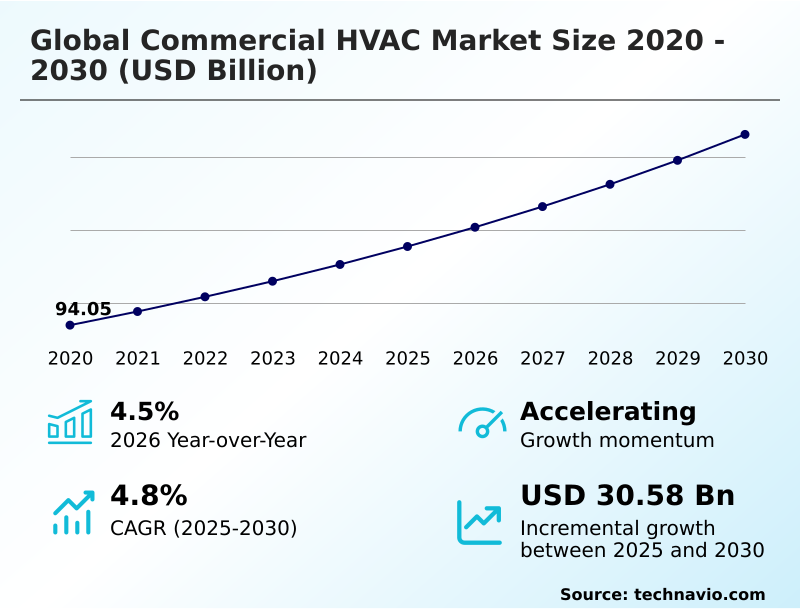
The commercial hvac market size is valued to increase by USD 30.58 billion, at a CAGR of 4.8% from 2025 to 2030. Rising number of data centres will drive the commercial hvac market.
Major Market Trends & Insights
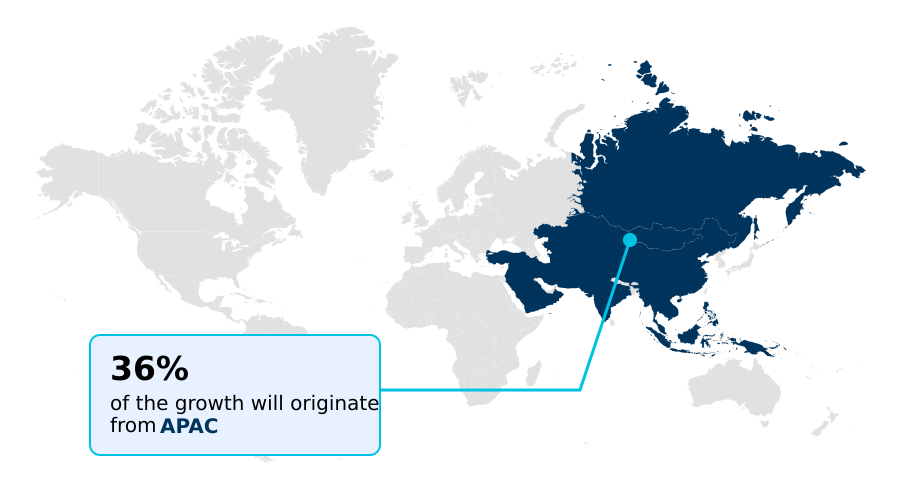
- APAC dominated the market and accounted for a 36.1% growth during the forecast period.
- By Application - Equipment segment was valued at USD 72.76 billion in 2024
- By Type - Heat pump segment accounted for the largest market revenue share in 2024
Market Size & Forecast
- Market Opportunities: USD 52.03 billion
- Market Future Opportunities: USD 30.58 billion
- CAGR from 2025 to 2030 : 4.8%
Market Summary
- The commercial HVAC market is defined by a continuous push toward greater efficiency and intelligent control. Key drivers include the global expansion of commercial real estate and the stringent need for climate management in critical facilities like data centers.
- Simultaneously, the industry is shaped by the trend of integrating building automation systems and smart technologies, which enable predictive maintenance and optimized energy use. For instance, a large retail chain might deploy variable refrigerant flow (VRF) systems connected to a central management platform.
- This allows facility managers to monitor energy consumption across hundreds of stores in real time, adjusting settings remotely to reduce operational costs and align with corporate sustainability targets. However, the market's trajectory is constrained by challenges such as high upfront capital expenditure for advanced equipment and the complexities of retrofitting older buildings.
- Navigating the evolving landscape of environmental regulations, particularly concerning refrigerants and emissions, also remains a critical factor for manufacturers and end-users, influencing both product design and investment decisions. The interplay of these dynamics underscores a market moving toward more integrated, data-driven, and sustainable climate solutions.
What will be the Size of the Commercial HVAC Market during the forecast period?
Get Key Insights on Market Forecast (PDF) Get Free Sample
How is the Commercial HVAC Market Segmented?
The commercial hvac industry research report provides comprehensive data (region-wise segment analysis), with forecasts and estimates in "USD million" for the period 2026-2030, as well as historical data from 2020-2024 for the following segments.
- Application
- Equipment
- Services
- Type
- Heat pump
- Furnaces
- Boilers
- Unitary heaters
- Technology
- Conventional HVAC systems
- Smart HVAC systems
- Variant
- Retrofit and replacement
- New installation
- Geography
- APAC
- China
- Japan
- India
- North America
- US
- Canada
- Mexico
- Europe
- Germany
- UK
- France
- South America
- Brazil
- Argentina
- Middle East and Africa
- Saudi Arabia
- UAE
- Turkey
- Rest of World (ROW)
- APAC
By Application Insights
The equipment segment is estimated to witness significant growth during the forecast period.
The equipment segment is pivotal, driven by demand for advanced hardware in commercial applications. This includes core components like rooftop units, air handling units, and modular chillers, which form the backbone of modern climate control infrastructure.
Innovation is centered on enhancing product performance and lifecycle efficiency, with manufacturers integrating variable speed compressors and sophisticated air purification systems.
The adoption of these technologies supports green building certifications and contributes to significant operational efficiency gains, with some integrated systems achieving up to 15% improvement in performance.
As facility managers prioritize hvac performance monitoring and life cycle cost analysis through advanced facility management platforms, demand for efficient hydronic heating systems and flexible ductless mini split systems continues to expand, supporting the broader need for advanced climate control.
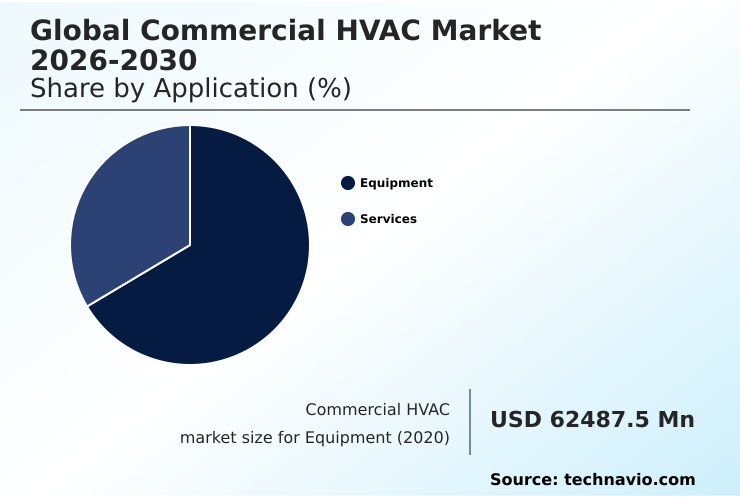
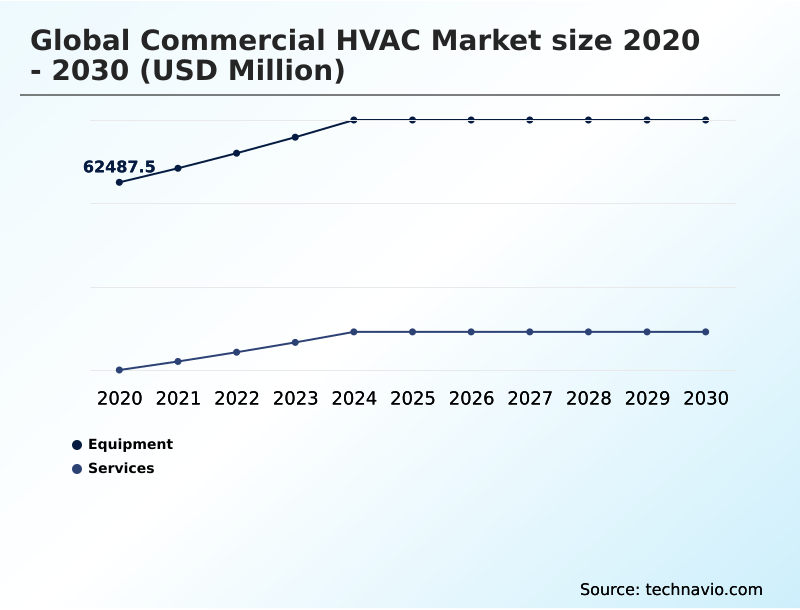
The Equipment segment was valued at USD 72.76 billion in 2024 and showed a gradual increase during the forecast period.
Regional Analysis
APAC is estimated to contribute 36.1% to the growth of the global market during the forecast period.Technavio’s analysts have elaborately explained the regional trends and drivers that shape the market during the forecast period.
See How Commercial HVAC Market Demand is Rising in APAC Get Free Sample
Regional dynamics are reshaping the commercial HVAC market, with APAC poised for expansion at a rate nearly 13% faster than North America.
This growth is fueled by new climate control infrastructure projects demanding advanced technologies like centrifugal chillers and geothermal heat pumps.
In mature markets, hvac system modernization is the primary focus, with an emphasis on energy consumption reduction through smart building integration.
The adoption of predictive diagnostics and automated system monitoring for components like heat exchangers is improving operational uptime by over 25% in some applications.
Technologies such as radiant cooling panels and systems with demand response capabilities are gaining traction globally, supported by platforms enabling remote diagnostics and real time performance tracking to meet evolving efficiency standards.
Market Dynamics
Our researchers analyzed the data with 2025 as the base year, along with the key drivers, trends, and challenges. A holistic analysis of drivers will help companies refine their marketing strategies to gain a competitive advantage.
- Strategic decision-making in the commercial HVAC market requires a deep understanding of specific applications and technologies. For instance, evaluating the energy efficiency of commercial heat pumps versus traditional furnaces is crucial for businesses aiming to align with green building certification standards.
- In parallel, the deployment of smart hvac systems for data centers is no longer optional, as precise climate control is vital for operational integrity. Facility managers are increasingly analyzing the benefits of vrf systems in office buildings, which offer superior zone control and efficiency.
- A major consideration is the transition to low gwp refrigerants for commercial chillers, a shift driven by stringent environmental regulations. The roi of upgrading commercial hvac controls is another key focus, as modern systems can significantly reduce energy waste. Organizations are weighing the cost of retrofitting commercial hvac systems against the long-term savings from improved performance.
- Understanding the impact of building automation on energy use is fundamental to this calculation. For specialized facilities, improving indoor air quality in hospitals with advanced filtration for commercial buildings is a top priority. Planners are also comparing chillers and rooftop units for retail spaces to find the optimal balance of cost and performance.
- The broader goal of creating hvac solutions for sustainable infrastructure involves exploring everything from the role of digital twins in hvac design to the viability of geothermal heat pumps for commercial use. These data-driven approaches show that proactive strategies, such as leveraging hvac predictive maintenance using iot sensors, can reduce unexpected equipment failures by over 40% compared to reactive models.
- The industry must also address challenges of hvac in extreme climates by integrating hvac with renewable energy sources. Successfully managing hvac in multi zone buildings and designing effective hvac systems for industrial facilities are testament to the complexity and importance of modern climate control engineering.
What are the key market drivers leading to the rise in the adoption of Commercial HVAC Industry?
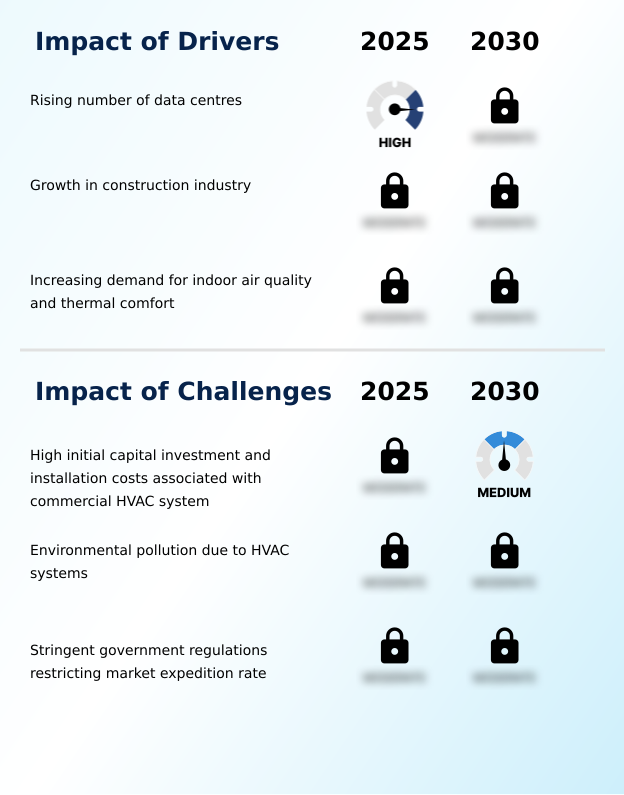
- The rapid global expansion of data centers is a major driver for the commercial HVAC market, creating significant demand for specialized, high-reliability cooling systems.
- The expansion of global construction, particularly for sustainable infrastructure and smart city projects, is a major market driver. New commercial developments require advanced HVAC systems that meet strict energy efficiency standards and enhance indoor environmental quality.
- This has fueled demand for solutions like high-efficiency condensing boilers and precision cooling systems, especially in data centers where uptime is critical. Advanced airflow management solutions can improve thermal comfort optimization and reduce energy use by over 10%.
- Furthermore, growing emphasis on occupant well-being is increasing the adoption of technologies providing zone-specific heating and superior air filtration.
- This aligns with broader building decarbonization goals, where asset optimization software helps manage complex systems, including those using next generation refrigerants or evaporative cooling systems, to ensure both comfort and compliance.
What are the market trends shaping the Commercial HVAC Industry?
- The emergence of smart and connected HVAC systems represents a major technological trend. This evolution is shaping the market by enabling real-time monitoring and advanced building automation.
- The emergence of smart and connected HVAC systems is a defining market trend, driven by the integration of integrated building technologies. Modern solutions use IoT enabled sensors and smart HVAC controllers to enable automated system monitoring and predictive maintenance capabilities, reducing system failures by up to 40%.
- The adoption of building information modeling and digital twin technology during the design phase improves system performance accuracy by 15%. This shift toward intelligent facility management not only enhances operational efficiency but also supports environmental impact reduction and simplifies regulatory compliance management.
- Innovations like inverter driven compressors, energy recovery solutions, and connected cooling solutions are becoming standard, transforming how commercial buildings manage climate control and energy consumption.
What challenges does the Commercial HVAC Industry face during its growth?
- A significant challenge impacting the commercial HVAC market is the high initial capital investment and associated installation costs required for advanced systems.
- High initial capital investment remains a primary market challenge, particularly for advanced equipment like variable refrigerant flow systems and large centrifugal chillers. While these technologies offer long-term energy consumption reduction, their upfront cost can be 20-30% higher than conventional rooftop units. This financial barrier complicates hvac system retrofitting and slows hvac system modernization efforts.
- Furthermore, stringent regulations mandating the transition to low gwp refrigerants and supporting the decarbonization of buildings add complexity and cost to manufacturing and installation.
- Implementing integrated building automation systems or upgrading hydronic distribution systems requires specialized labor, which can increase project costs and delay the realization of operational efficiency gains, thereby restraining the market's growth potential despite the clear benefits of smart ventilation and modular chillers.
Exclusive Technavio Analysis on Customer Landscape
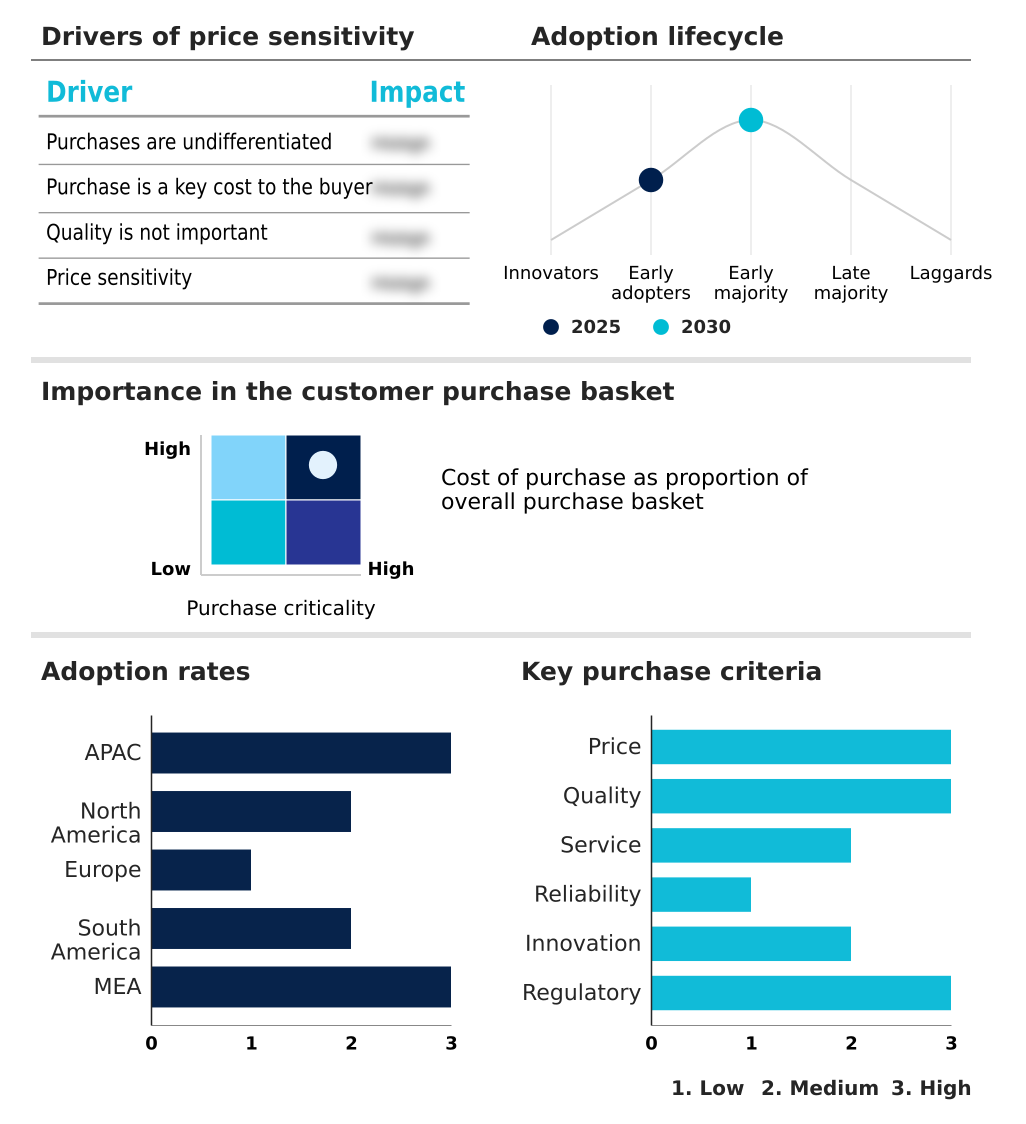
The commercial hvac market forecasting report includes the adoption lifecycle of the market, covering from the innovator’s stage to the laggard’s stage. It focuses on adoption rates in different regions based on penetration. Furthermore, the commercial hvac market report also includes key purchase criteria and drivers of price sensitivity to help companies evaluate and develop their market growth analysis strategies.
Customer Landscape of Commercial HVAC Industry
Competitive Landscape
Companies are implementing various strategies, such as strategic alliances, commercial hvac market forecast, partnerships, mergers and acquisitions, geographical expansion, and product/service launches, to enhance their presence in the industry.
Addison HVAC - Key offerings focus on large-scale climate control, including commercial chillers and integrated rooftop units designed for diverse building applications.
The industry research and growth report includes detailed analyses of the competitive landscape of the market and information about key companies, including:
- Addison HVAC
- Carrier Global Corp.
- Daikin Industries Ltd.
- Danfoss AS
- Emerson Electric Co.
- Fujitsu Ltd.
- Haier Smart Home Co. Ltd.
- Hitachi Ltd.
- Honeywell International Inc.
- Johnson Controls International
- Lennox International Inc.
- LG Electronics Inc.
- Midea Group Co. Ltd.
- Mitsubishi Electric Corp.
- Nortek Air Solutions LLC
- Panasonic Holdings Corp.
- Robert Bosch GmbH
- Samsung Electronics Co. Ltd.
- Trane Technologies plc
- Whirlpool Corp.
Qualitative and quantitative analysis of companies has been conducted to help clients understand the wider business environment as well as the strengths and weaknesses of key industry players. Data is qualitatively analyzed to categorize companies as pure play, category-focused, industry-focused, and diversified; it is quantitatively analyzed to categorize companies as dominant, leading, strong, tentative, and weak.
Recent Development and News in Commercial hvac market
- In February 2025, Johnson Controls showcased its next-generation cooling and smart building technologies designed for high-demand environments like data centers at the ACREX India 2025 exhibition.
- In February 2025, GE Appliances Air and Water Solutions introduced an expanded portfolio of commercial HVAC offerings with enhanced connectivity and efficiency features at the AHR Expo.
- In February 2025, Daikin Applied Americas presented a new range of electrified heating solutions, including inverter-driven compressors and low-emission technologies, to accelerate building decarbonization at the AHR Expo.
- In January 2025, Daikin announced its updated refrigerant strategy and introduced new HVAC solutions utilizing alternative refrigerants like R290 and R454C to improve sustainability for the upcoming ISH25 exhibition.
Dive into Technavio’s robust research methodology, blending expert interviews, extensive data synthesis, and validated models for unparalleled Commercial HVAC Market insights. See full methodology.
| Market Scope | |
|---|---|
| Page number | 320 |
| Base year | 2025 |
| Historic period | 2020-2024 |
| Forecast period | 2026-2030 |
| Growth momentum & CAGR | Accelerate at a CAGR of 4.8% |
| Market growth 2026-2030 | USD 30577.8 million |
| Market structure | Fragmented |
| YoY growth 2025-2026(%) | 4.5% |
| Key countries | China, Japan, India, South Korea, Australia, Indonesia, US, Canada, Mexico, Germany, UK, France, Italy, Spain, The Netherlands, Brazil, Argentina, Chile, Saudi Arabia, UAE, Turkey, South Africa and Israel |
| Competitive landscape | Leading Companies, Market Positioning of Companies, Competitive Strategies, and Industry Risks |
Research Analyst Overview
- The commercial HVAC market is evolving from standalone equipment to integrated climate control infrastructure. Boardroom decisions now pivot on life cycle cost analysis rather than just initial CAPEX, especially when choosing between traditional rooftop units, air handling units, and high-efficiency centrifugal chillers or modular chillers.
- The shift toward electrification is evident in the adoption of electrified heating solutions and geothermal heat pumps, which leverage variable speed compressors and inverter driven compressors to meet sustainability goals. This transition has proven to reduce energy expenses by up to 25% in modernized buildings.
- Technologies like variable refrigerant flow and hydronic heating systems with advanced hydronic distribution systems and heat exchangers offer granular control. Specialized solutions such as precision cooling systems for data centers and flexible ductless mini split systems are also becoming prevalent. For improved indoor environmental quality, smart ventilation, airflow management solutions, and air purification systems are key.
- The integration of building automation systems using smart hvac controllers, IoT enabled sensors, and predictive diagnostics is fundamental. Building information modeling and digital twin technology are streamlining design and operations, while connected cooling solutions offer enhanced demand response capabilities.
- The regulatory push for low GWP refrigerants and next generation refrigerants is driving innovation in energy recovery solutions, thermal energy storage systems, and alternative methods like evaporative cooling systems and radiant cooling panels to provide efficient zone-specific heating and cooling.
What are the Key Data Covered in this Commercial HVAC Market Research and Growth Report?
-
What is the expected growth of the Commercial HVAC Market between 2026 and 2030?
-
USD 30.58 billion, at a CAGR of 4.8%
-
-
What segmentation does the market report cover?
-
The report is segmented by Application (Equipment, and Services), Type (Heat pump, Furnaces, Boilers, and Unitary heaters), Technology (Conventional HVAC systems, and Smart HVAC systems), Variant (Retrofit and replacement, and New installation) and Geography (APAC, North America, Europe, South America, Middle East and Africa)
-
-
Which regions are analyzed in the report?
-
APAC, North America, Europe, South America and Middle East and Africa
-
-
What are the key growth drivers and market challenges?
-
Rising number of data centres, High initial capital investment and installation costs associated with commercial HVAC system
-
-
Who are the major players in the Commercial HVAC Market?
-
Addison HVAC, Carrier Global Corp., Daikin Industries Ltd., Danfoss AS, Emerson Electric Co., Fujitsu Ltd., Haier Smart Home Co. Ltd., Hitachi Ltd., Honeywell International Inc., Johnson Controls International, Lennox International Inc., LG Electronics Inc., Midea Group Co. Ltd., Mitsubishi Electric Corp., Nortek Air Solutions LLC, Panasonic Holdings Corp., Robert Bosch GmbH, Samsung Electronics Co. Ltd., Trane Technologies plc and Whirlpool Corp.
-
Market Research Insights
- Market dynamics are driven by a strategic focus on building energy efficiency and the decarbonization of buildings. HVAC system retrofitting projects that incorporate smart building integration are delivering operational efficiency gains of over 20% compared to legacy systems.
- Centralized building management through advanced energy management platforms enables real time performance tracking and hvac performance monitoring, leading to better thermal comfort optimization. These platforms leverage predictive maintenance capabilities to reduce equipment downtime by up to 30%, shifting the paradigm from reactive repairs to proactive asset management.
- This transition toward sustainable climate control is not only meeting regulatory demands but also providing clear ROI through reduced energy expenditure and improved operational resilience.
We can help! Our analysts can customize this commercial hvac market research report to meet your requirements.
 RIA -
RIA -