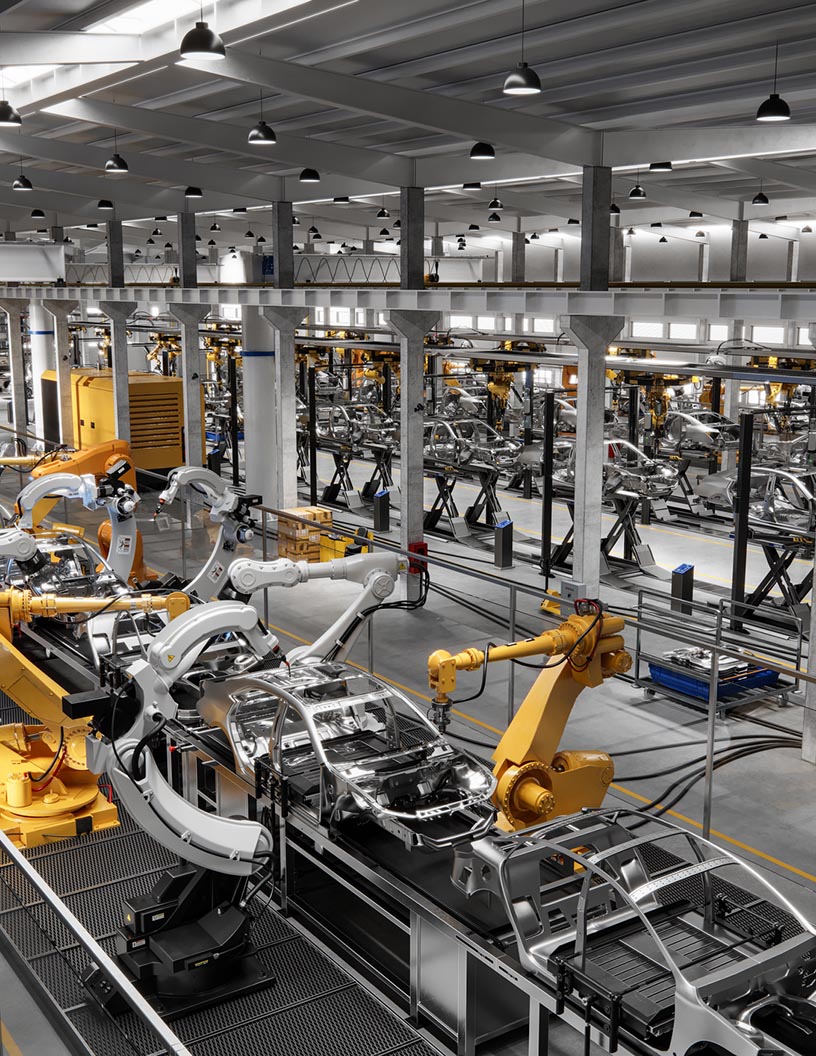


Commercial Robotics Market Size 2024-2028
The commercial robotics market size is forecast to increase by USD 31.39 billion, at a CAGR of 26.39% between 2023 and 2028.
- The market is experiencing significant growth, driven primarily by the increasing demand for automation and productivity enhancements in various industries. A key trend fueling this growth is the integration of Internet of Things (IoT) technology with robotics, enabling remote monitoring, control, and data analysis capabilities. However, high costs remain a significant challenge for businesses looking to adopt robotic systems, limiting the market's growth potential. Despite this obstacle, companies can capitalize on the market's opportunities by focusing on cost reduction strategies, such as modular design and economies of scale, and exploring applications in industries with high labor costs or complex processes.
- Additionally, collaborative robots, or cobots, are gaining popularity due to their ability to work alongside human workers, increasing efficiency and flexibility in manufacturing and logistics operations. Overall, the market presents a compelling opportunity for businesses seeking to streamline operations, enhance productivity, and remain competitive in an increasingly automated business landscape.
What will be the Size of the Commercial Robotics Market during the forecast period?
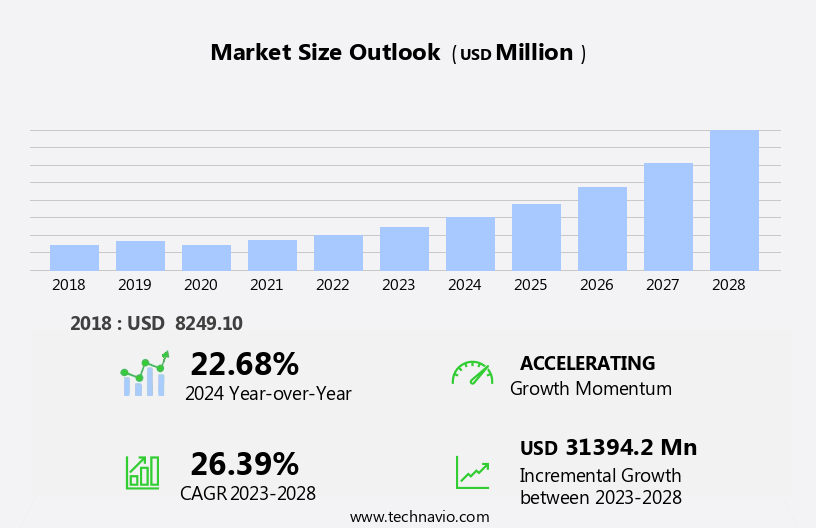
- The market continues to evolve, driven by advancements in human-robot collaboration, mobility platforms, productivity gains, machine vision, safety protocols, operational efficiency, predictive maintenance, and payload capacity. Human-robot collaboration enables seamless interaction between humans and robots, enhancing manufacturing processes and improving overall operational efficiency. Mobility platforms offer flexibility and adaptability, enabling robots to navigate complex environments and perform tasks in various sectors. Machine vision technology enhances automation capabilities, allowing robots to identify and sort objects with high precision. Safety protocols ensure secure and reliable robot operation, while predictive maintenance optimizes downtime and reduces maintenance costs. Payload capacity expansion enables robots to handle heavier loads, expanding their applications across industries.
- Artificial intelligence and deep learning enhance robot autonomy, enabling autonomous navigation and path planning. IoT integration and sensor fusion provide real-time data analytics, driving cost savings and operational efficiency. Regulatory compliance and data privacy concerns continue to shape market dynamics, with companies focusing on seamless integration and addressing these challenges. Robots find applications in diverse sectors, including food processing, remote operation, and supply chain management. Cost savings and return on investment remain key drivers, with deployment costs offset by operational efficiency gains and productivity improvements. Mobile robots and warehouse automation are gaining popularity, with cloud connectivity enabling remote operation and real-time data access.
How is this Commercial Robotics Industry segmented?
The commercial robotics industry research report provides comprehensive data (region-wise segment analysis), with forecasts and estimates in "USD million" for the period 2024-2028, as well as historical data from 2018-2022 for the following segments.
- Application
- Medical and healthcare
- Defense and security
- Agriculture and forestry
- Marine
- Others
- Geography
- North America
- US
- Europe
- Germany
- APAC
- China
- Japan
- South Korea
- Rest of World (ROW)
- North America
By Application Insights
The medical and healthcare segment is estimated to witness significant growth during the forecast period.
In the dynamic the market of 2023, the healthcare sector holds a significant share due to its application in various tasks, including long-term care, public service, patient monitoring, and home-based care. For instance, during the pandemic, robots were employed in hospitals to deliver food and medicines to COVID-19 patients, ensuring safety and efficiency. In the realm of healthcare provision, advanced technologies such as artificial intelligence (AI) and machine vision are transforming surgical procedures. BLK-Max Super Specialty Hospital in India, for one, introduced an AI-enabled robotic system for joint replacement surgeries, enhancing accuracy, minimizing blood loss, and ensuring a well-balanced joint.
Moreover, mobility platforms are revolutionizing industrial automation by enabling seamless transportation of goods within factories and warehouses. These platforms, integrated with IoT and data analytics, optimize operational efficiency and predictive maintenance, thereby reducing maintenance costs and enhancing cost savings. Regulatory compliance and safety protocols are crucial considerations in the deployment of commercial robots, ensuring a harmonious integration of man and machine. Autonomous navigation and path planning are essential features of mobile robots, enabling them to navigate complex environments and optimize supply chain management. Robotic arms, sensor fusion, and deep learning are integral components of industrial automation, driving productivity gains and enhancing operational efficiency.
The integration of these advanced technologies, however, poses challenges in terms of data privacy and data analytics. In conclusion, the market is characterized by the integration of various advanced technologies, including AI, machine vision, mobility platforms, and IoT, to optimize productivity, enhance operational efficiency, and ensure regulatory compliance. The market's evolution is driven by the need for cost savings, improved safety, and the integration of advanced technologies to streamline processes and improve overall performance.
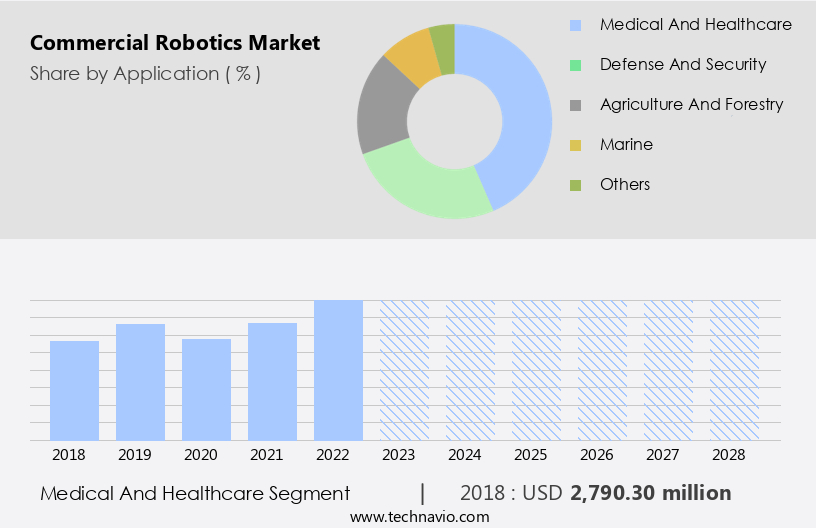
The Medical and healthcare segment was valued at USD 2.79 billion in 2018 and showed a gradual increase during the forecast period.
Regional Analysis
APAC is estimated to contribute 48% to the growth of the global market during the forecast period.Technavio’s analysts have elaborately explained the regional trends and drivers that shape the market during the forecast period.
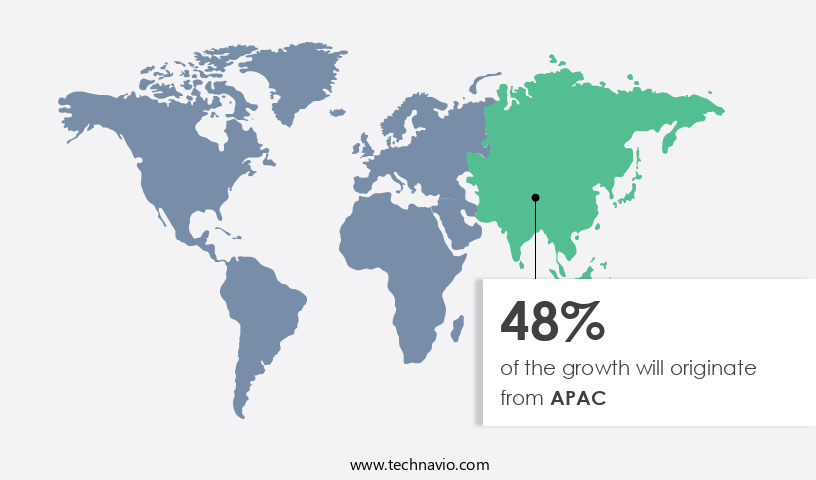
The market in APAC is experiencing significant growth, with Japan, China, Singapore, and South Korea leading the way in manufacturing high-end robotics. The healthcare sector in Japan and Singapore is driving the adoption of commercial robotics, particularly in surgical applications. China, a pioneer in the adoption of surgical robots, is a major contributor to the market's growth. Government initiatives, increasing demand from the automotive industry, and a robust manufacturing sector are key factors fueling the market's expansion in APAC. Productivity gains and operational efficiency are primary benefits of commercial robotics, making them increasingly popular in industries such as food processing, supply chain management, and warehouse automation.
Safety protocols and regulatory compliance are essential considerations, with companies focusing on developing advanced safety features and complying with industry standards. Artificial intelligence, deep learning, and machine vision are integral to the development of advanced robotics, enabling capabilities such as predictive maintenance, autonomous navigation, and path planning. Integration challenges, such as IoT integration and sensor fusion, are being addressed through collaboration between robotics companies and technology providers. Robotic arms, mobile robots, and industrial automation are key areas of investment, with companies focusing on developing cost-effective solutions to increase return on investment and reduce deployment costs.
Data analytics and cloud connectivity are also essential components of modern commercial robotics, enabling real-time data processing and remote operation. Data privacy and maintenance costs are critical concerns for businesses adopting commercial robotics, with companies focusing on developing secure solutions and offering maintenance services to minimize costs. The market's evolution is expected to continue, with advancements in technology and increasing adoption across various industries.
Market Dynamics
Our researchers analyzed the data with 2023 as the base year, along with the key drivers, trends, and challenges. A holistic analysis of drivers will help companies refine their marketing strategies to gain a competitive advantage.
What are the key market drivers leading to the rise in the adoption of Commercial Robotics Industry?
- The surge in demand for commercial robotics is the primary catalyst fueling market growth in this sector.
- The market has experienced significant growth due to the increasing automation of industrial processes. Robotic arms, equipped with sensor fusion and data analytics capabilities, are increasingly being adopted by manufacturers to enhance production efficiency and ensure greater employee safety. SMEs, in particular, are under pressure to meet capacity demands and address labor shortages, making the deployment of robotic solutions an attractive investment. Object recognition technology and food processing applications are among the key areas driving market growth. However, concerns around return on investment and deployment costs, as well as data privacy, remain important considerations for market participants.
- Despite these challenges, the potential benefits of commercial robotics, including increased accuracy and productivity, make it a worthwhile investment for businesses seeking to remain competitive in today's industrial landscape.
What are the market trends shaping the Commercial Robotics Industry?
- The integration of Internet of Things (IoT) technology with robotics is an emerging market trend. This fusion of technologies is set to revolutionize industries by enhancing automation, efficiency, and data collection capabilities.
- The Internet of Things (IoT) has revolutionized industries by enabling the interconnection of devices for seamless data transfer without human intervention. This technological advancement, coupled with IoT's commercialization, has led to the widespread adoption of automated technologies, including commercial robotics. Mobile robots, a significant segment of commercial robotics, are gaining popularity in various sectors due to their ability to enhance supply chain management through remote operation. These robots offer cost savings by reducing labor costs and maintenance expenses. Cloud connectivity further enables real-time monitoring and control, increasing operational efficiency.
- Warehouse automation is another key application area for commercial robotics, where these machines perform repetitive tasks, ensuring accuracy and consistency. The integration of IoT and cloud technology in commercial robotics is expected to drive market growth in the future.
What challenges does the Commercial Robotics Industry face during its growth?
- The escalating costs of implementing robotic systems represent a significant challenge to the industry's growth trajectory.
- The market adoption faces challenges due to the high cost of advanced software and sensors, which enable image processing and independent decision-making. End-users, particularly in emerging economies, are hesitant to invest in expensive commercial robotics. This reluctance poses a significant hurdle to market penetration. To overcome this, robotics companies must prioritize research and development (R&D) efforts to integrate advanced technologies, leading to the launch of new and sophisticated commercial robotics models.
- This continuous innovation increases the cost of robots, which may further deter some potential buyers. Despite these challenges, the market is expected to grow due to productivity gains from human-robot collaboration, the implementation of safety protocols, operational efficiency, mobility platforms, machine vision, predictive maintenance, and payload capacity.
Exclusive Customer Landscape
The commercial robotics market forecasting report includes the adoption lifecycle of the market, covering from the innovator’s stage to the laggard’s stage. It focuses on adoption rates in different regions based on penetration. Furthermore, the commercial robotics market report also includes key purchase criteria and drivers of price sensitivity to help companies evaluate and develop their market growth analysis strategies.
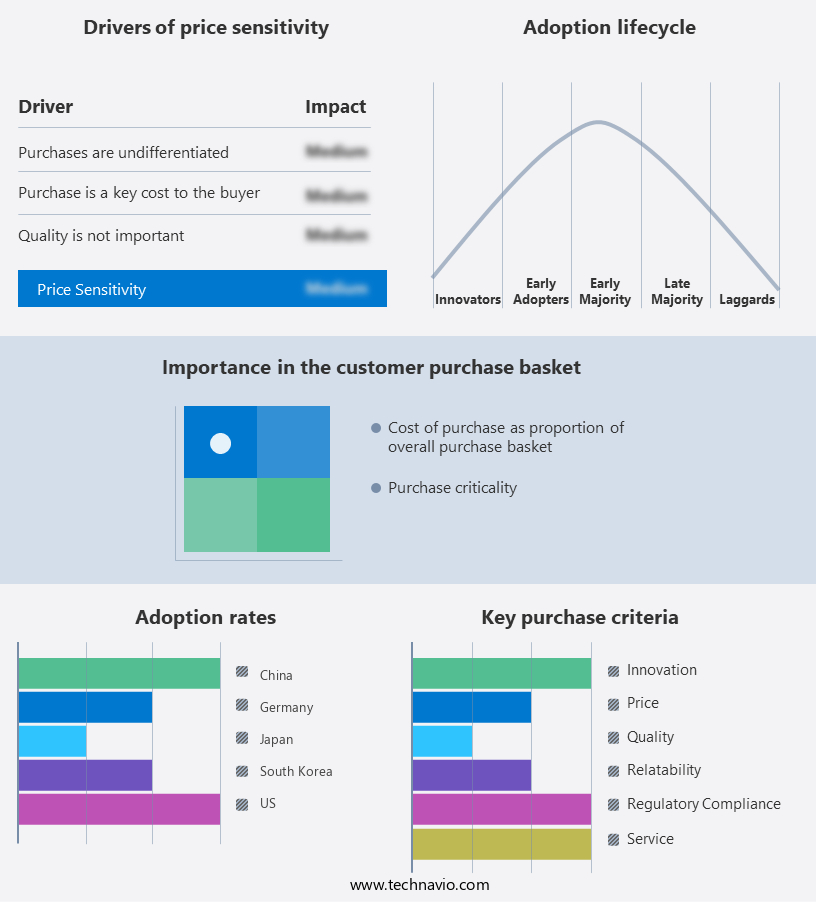
Customer Landscape
Key Companies & Market Insights
Companies are implementing various strategies, such as strategic alliances, commercial robotics market forecast, partnerships, mergers and acquisitions, geographical expansion, and product/service launches, to enhance their presence in the industry.
3D Robotics Inc. - The company showcases a range of commercial robotics, including the H520G hexacopter, E90 camera, car charger adapter, SD card, DY5 dual smart charger, ST10C controller, propeller pairs, SC400-4H balancing smart charger, and Hardcase, all under the 3DR brand. These advanced technologies are designed to enhance operational efficiency and productivity. The hexacopter offers superior stability and maneuverability, while the high-definition camera captures clear, detailed imagery. Charging accessories ensure optimal battery performance, and the controller offers intuitive operation. The Hardcase provides durable protection during transportation. 3DR's commercial robotics deliver innovative solutions for various industries.
The industry research and growth report includes detailed analyses of the competitive landscape of the market and information about key companies, including:
- 3D Robotics Inc.
- Accuray Inc.
- AeroVironment Inc.
- Autel Intelligent Technology Co.
- General Electric Co.
- Honda Motor Co. Ltd.
- Intuitive Surgical Inc.
- Irobot Corp.
- KUKA AG
- Northrop Grumman Corp.
- OMRON Corp.
- Smith and Nephew plc
- Yaskawa Electric Corp.
- Yuneec International Co. Ltd.
- Zimmer Biomet Holdings Inc.
Qualitative and quantitative analysis of companies has been conducted to help clients understand the wider business environment as well as the strengths and weaknesses of key industry players. Data is qualitatively analyzed to categorize companies as pure play, category-focused, industry-focused, and diversified; it is quantitatively analyzed to categorize companies as dominant, leading, strong, tentative, and weak.
Recent Development and News in Commercial Robotics Market
- In February 2023, Fanuc Corporation, a leading manufacturer of industrial robots, introduced its new CR-35iA collaborative robot, designed for small parts assembly and material handling in various industries (Fanuc Press Release, 2023). This robot, featuring a 7-degree-of-freedom arm, is designed to work alongside human operators, enhancing productivity and flexibility.
- In August 2024, ABB Robotics and Microsoft Corporation announced a strategic partnership to integrate Microsoft's Azure IoT and AI technologies with ABB's robotic systems (ABB Press Release, 2024). This collaboration aims to provide advanced analytics, predictive maintenance, and remote assistance capabilities, enabling customers to optimize their manufacturing processes and improve overall equipment effectiveness.
- In December 2024, Softbank Robotics, a leading provider of humanoid robots, raised USD300 million in a funding round led by Foxconn Technology Group (Softbank Robotics Press Release, 2024). The investment will support the expansion of its robotics business, including the development of new products and services, as well as the growth of its global sales and marketing efforts.
- In March 2025, the European Union approved the deployment of collaborative robots in food processing industries, marking a significant regulatory milestone for the market (European Parliament Press Release, 2025). This decision is expected to boost the adoption of collaborative robots in the European food industry, enhancing productivity, food safety, and flexibility.
Research Analyst Overview
The market is experiencing significant advancements, driven by the integration of technologies such as natural language processing and machine learning for human-robot interaction. Virtual commissioning and software platforms enable user-friendly automation solutions, while digital transformation propels the adoption of robotics in various industries. Payload handling and motion control systems are essential components of robotic workforces, which are increasingly incorporating collaborative robots and ultrasonic sensors for task scheduling and fleet management. Machine learning algorithms facilitate data visualization and obstacle avoidance through computer vision and camera systems.
Robotic simulation and 5G connectivity streamline remote monitoring and API integration, allowing for voice control and edge computing capabilities. Laser scanners and robot programming further enhance the versatility of robotic systems in the manufacturing sector. Overall, these trends are shaping the future of robotics, offering businesses increased efficiency, flexibility, and productivity.
Dive into Technavio’s robust research methodology, blending expert interviews, extensive data synthesis, and validated models for unparalleled Commercial Robotics Market insights. See full methodology.
|
Market Scope |
|
|
Report Coverage |
Details |
|
Page number |
146 |
|
Base year |
2023 |
|
Historic period |
2018-2022 |
|
Forecast period |
2024-2028 |
|
Growth momentum & CAGR |
Accelerate at a CAGR of 26.39% |
|
Market growth 2024-2028 |
USD 31394.2 million |
|
Market structure |
Fragmented |
|
YoY growth 2023-2024(%) |
22.68 |
|
Key countries |
China, US, Japan, Germany, and South Korea |
|
Competitive landscape |
Leading Companies, Market Positioning of Companies, Competitive Strategies, and Industry Risks |
What are the Key Data Covered in this Commercial Robotics Market Research and Growth Report?
- CAGR of the Commercial Robotics industry during the forecast period
- Detailed information on factors that will drive the growth and forecasting between 2024 and 2028
- Precise estimation of the size of the market and its contribution of the industry in focus to the parent market
- Accurate predictions about upcoming growth and trends and changes in consumer behaviour
- Growth of the market across APAC, North America, Europe, South America, and Middle East and Africa
- Thorough analysis of the market’s competitive landscape and detailed information about companies
- Comprehensive analysis of factors that will challenge the commercial robotics market growth of industry companies
We can help! Our analysts can customize this commercial robotics market research report to meet your requirements.
 RIA -
RIA -